Search results for: “vorticity”

  • Viscoelastic Vortex Street

    Viscoelastic Vortex Street

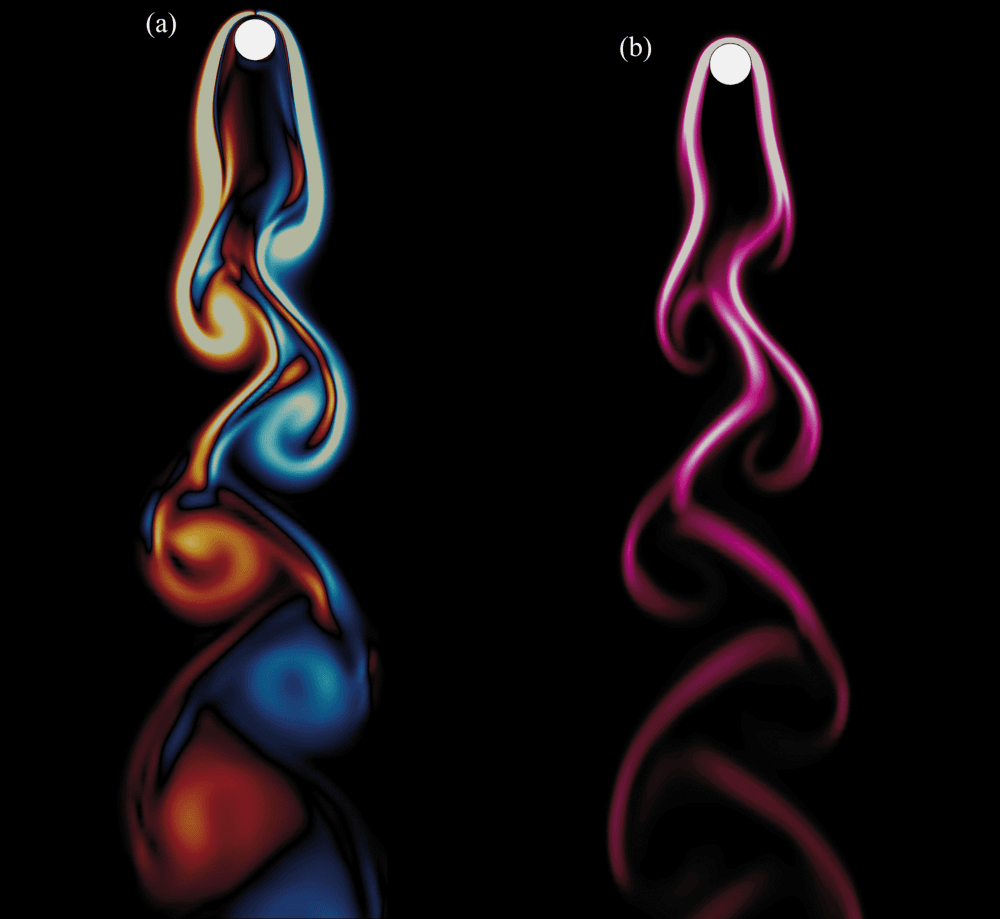
    When flow moves past a cylinder, vortices get shed in its wake. Known as a von Karman vortex street, this distinctive pattern is seen behind flags, islands, and even behind starships. Here, researchers are simulating flow of a viscoelastic fluid, where–unlike water or other Newtonian fluids–elastic stresses can build up.

    As the flow hits the leading edge of the cylinder, the polymers in the fluid compress and then get stretched as the flow moves around the cylinder. The left image shows vorticity in the flow; the right shows elastic stresses. The large swirls are primary vortices–those shed off the cylinder. But look closely and you’ll see smaller secondary vortices curled up beside the primaries. These form when the elastic stresses in the fluid pull some of the shear layer into the wake. (Image and research credit: U. Patel et al.)

    Simulation of a flow around a cylinder in a viscoelastic flow. Left, vorticity; right, elastic stresses.
  • Inside Cepheid Variable Stars

    Inside Cepheid Variable Stars

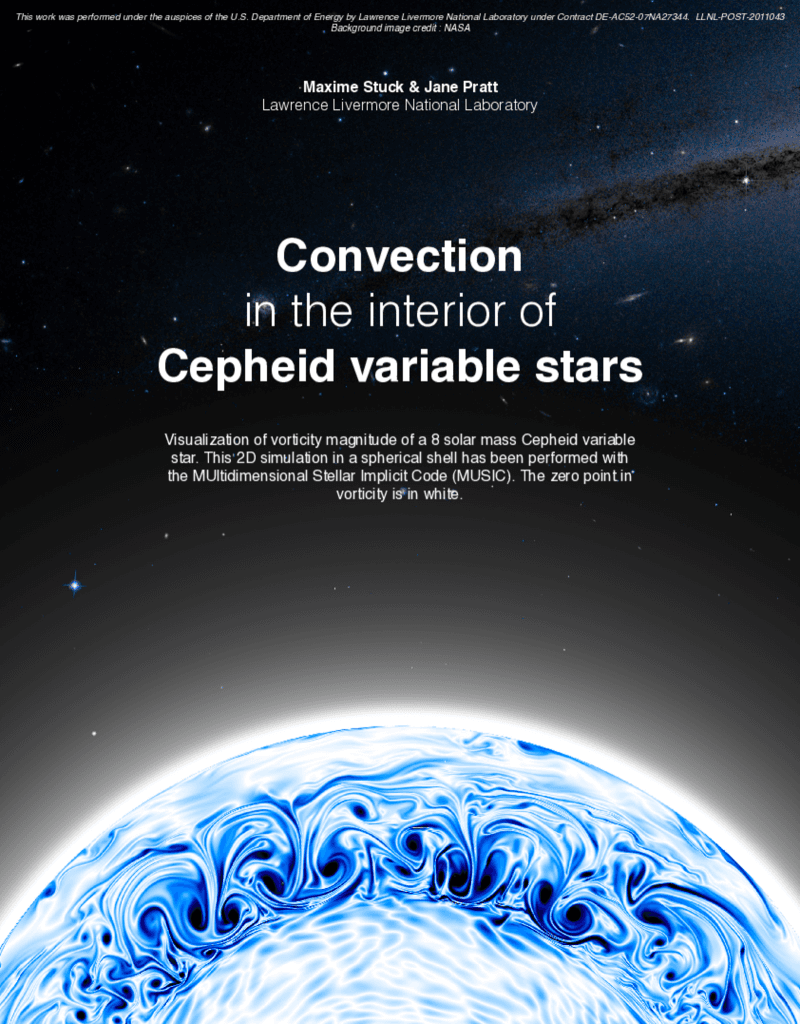
    Cepheid variable stars pulsate in brightness over regular periods. That’s one reason astronomers use them as a standard candle to judge distances–even for stars well outside our galaxy. In this image, researchers display a simulation of convection inside a Cepheid eight times more massive than our sun. The colors represent vorticity, with zero vorticity in white.(Image credit: M. Stuck and J. Pratt)

    A research poster showing a simulation of convection inside a Cepheid variable star with 8 solar masses.
    Fediverse Reactions
  • The Best of FYFD 2025

    The Best of FYFD 2025

    Happy 2026! This will be a big year for me. I’ll be finishing up and turning in the manuscript for my first book — which flows between cutting edge research, scientists’ stories, and the societal impacts of fluid physics. It’s a culmination of 15 years of FYFD, rendered into narrative. I’m so excited to share it with you when it’s published in 2027.

    As always, though, we’ll kick off the year with a look back at some of FYFD’s most popular posts of 2025. (You can find previous editions, too, for 2024,Β 2023,Β 2022,Β 2021,Β 2020,Β 2019,Β 2018,Β 2017,Β 2016,Β 2015, andΒ 2014.) Without further ado, here they are:

    What a great bunch of topics! I’m especially happy to see so many research and research-adjacent posts were popular. And a couple of history-related posts; I don’t write those too often, but I love them for showing just how wide-ranging fluid physics can be.

    Interested in keeping up with FYFD in 2026? There areΒ lots of ways to follow alongΒ so that you don’t miss a post.

    And if you enjoy FYFD, please remember that it’s a reader-supported website. I don’t run ads, and it’s been years since my last sponsored post. You can help support the site byΒ becoming a patron,Β buying some merch, or simply by sharing on social media. And if you find yourself struggling to remember to check the website, remember you can get FYFD in your inbox every two weeks withΒ our newsletter. Happy New Year!

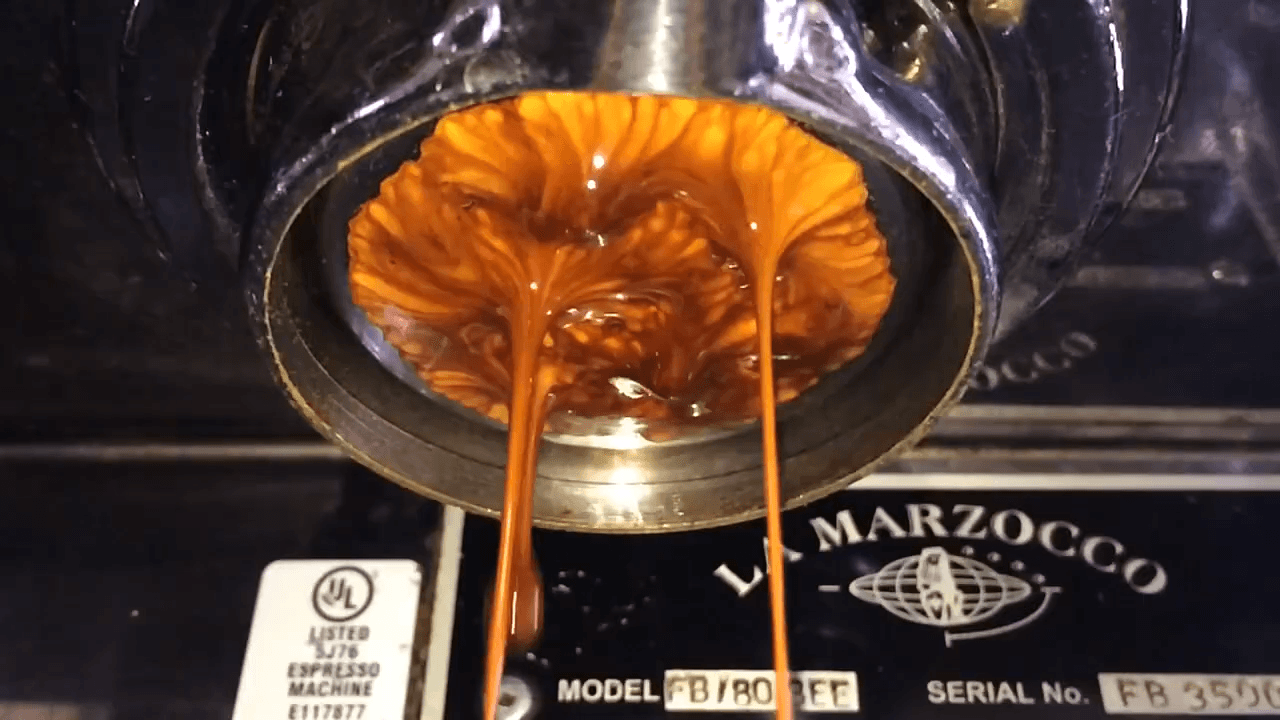
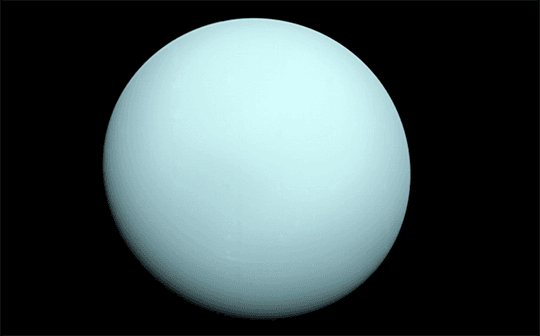
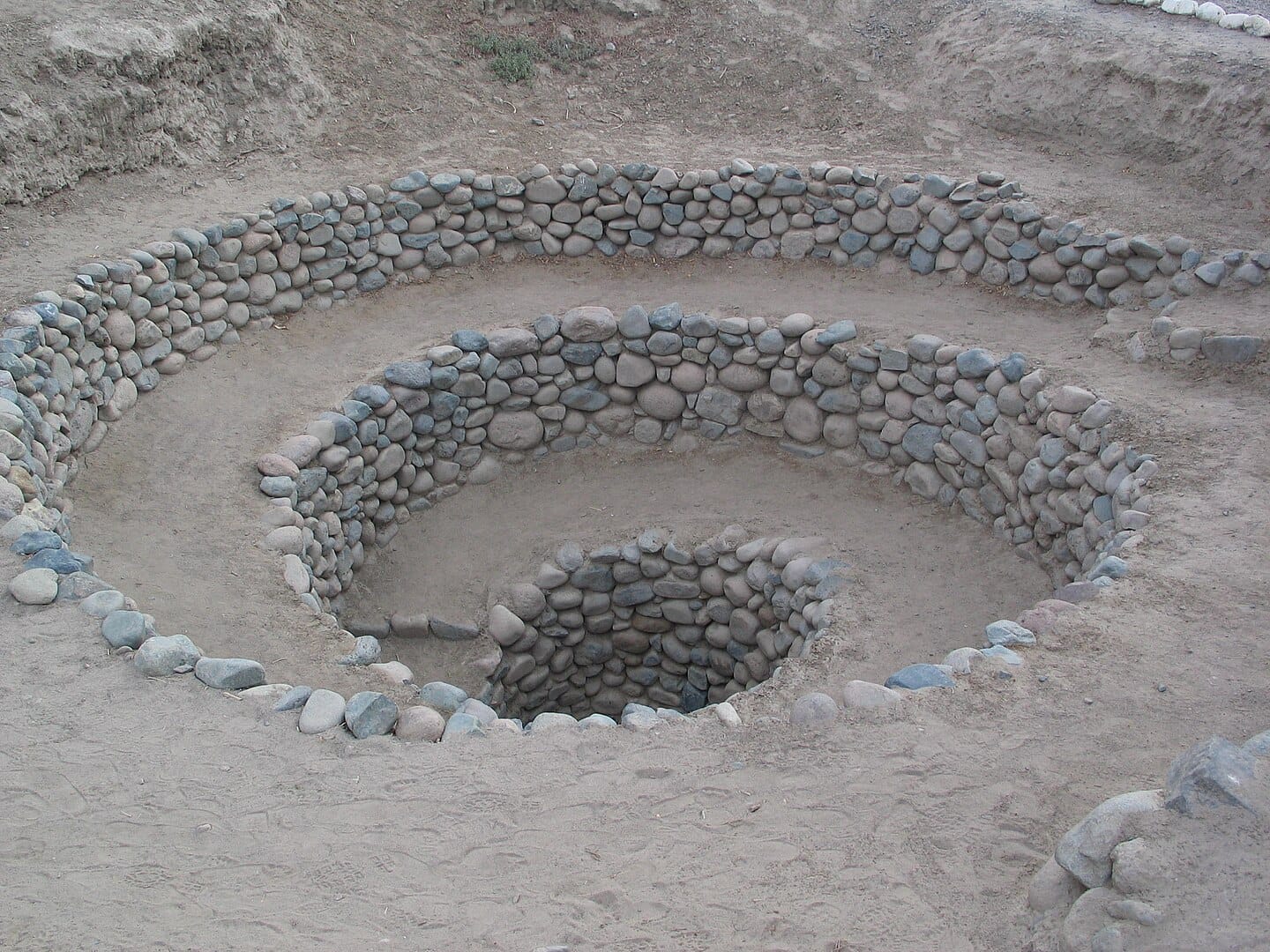
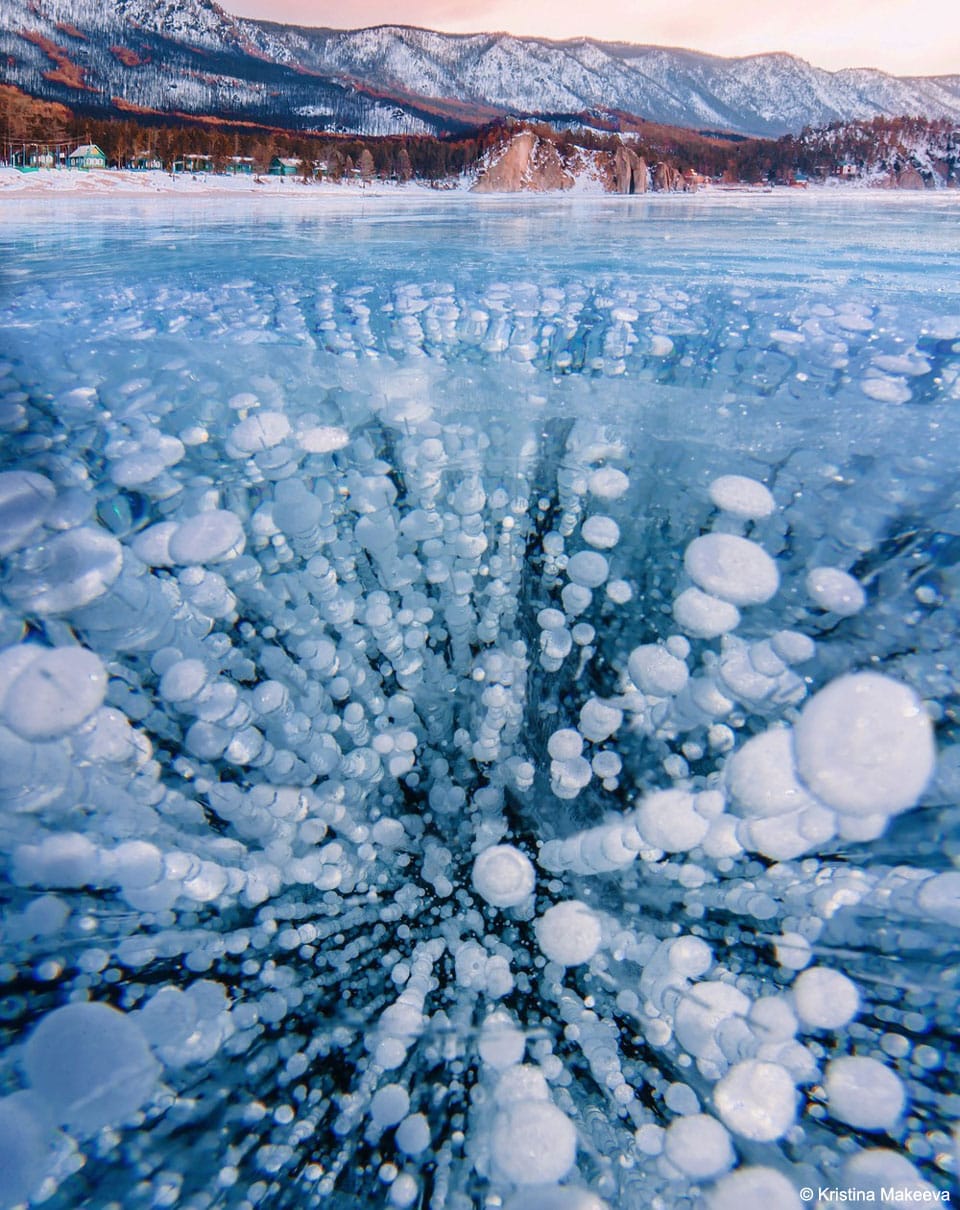
    (Image credits: droplet – F. Yu et al., starlings – K. Cooper, espresso – YouTube/skunkay, fountain – Primal Space, Uranus – NASA, turbulence – C. Amores and M. Graham, capsule – A. Álvarez and A. Lozano-Duran, melting ice – S. Bootsma et al., puquios – Wikimedia, cooling towers – BBC, solar wind – NASA/APL/NRL, Lake Baikal – K. Makeeva, sprite – NASA, roots – W. van Egmond, sunflowers – Deep Look)
    1. I know what I did. β†©οΈŽ
    Fediverse Reactions
  • Bow Shock Instability

    Bow Shock Instability

    There are few flows more violent than planetary re-entry. Crossing a shock wave is always violent; it forces a sudden jump in density, temperature, and pressure. But at re-entry speeds this shock wave is so strong the density can jump by a factor of 13 or more, and the temperature increase is high enough that it literally rips air molecules apart into plasma.

    Here, researchers show a numerical simulation of flow around a space capsule moving at Mach 28. The transition through the capsule’s bow shock is so violent that within a few milliseconds, all of the flow behind the shock wave is turbulent. Because turbulence is so good at mixing, this carries hot plasma closer to the capsule’s surface, causing the high temperatures visible in reds and yellows in the image. Also shown — in shades of gray — is the vorticity magnitude of flow around the capsule. (Image credit: A. Álvarez and A. Lozano-Duran)

    Fediverse Reactions
  • Featured Video Play Icon

    “Legend”

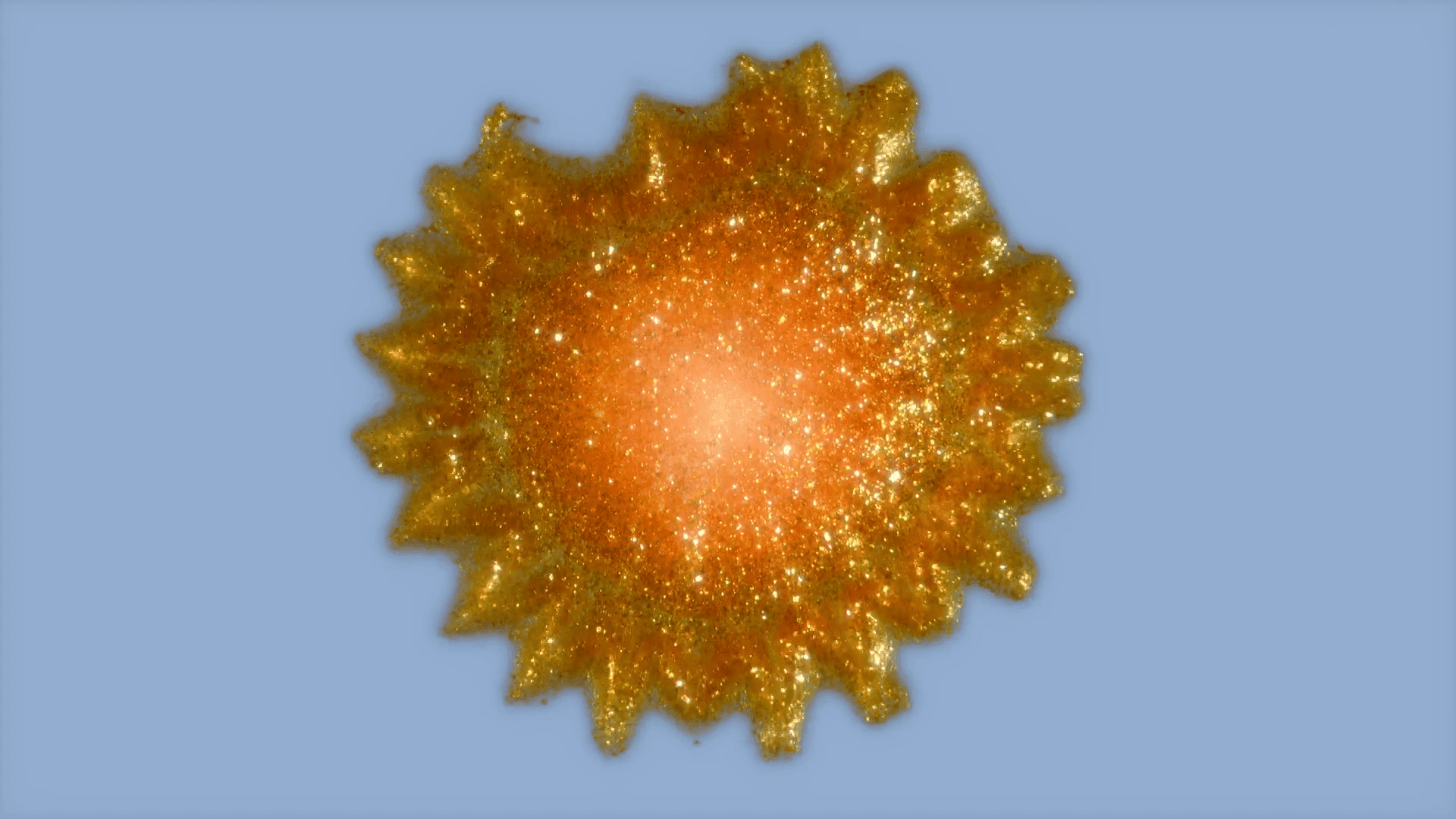
    Filmmaker Roman De Giuli returns to his roots with this short fluid-filled film inspired by the color gold. He combines paint, ink, powders, and particles in a mix of micro- and macroscale photography. As always, the results are a mesmerizing plethora of fluid phenomena: Marangoni flows, turbulence, vorticity, viscous fingering and so much more. (Video and image credit: R. De Giuli)

  • Featured Video Play Icon

    Playful Martian Dust Devils

    The Martian atmosphere lacks the density to support tornado storm systems, but vortices are nevertheless a frequent occurrence. As sun-warmed gases rise, neighboring air rushes in, bringing with it any twisted shred of vorticity it carries. Just as an ice skater pulling her arms in spins faster, the gases spin up, forming a dust devil.

    Black and white video illustrating a small Martian dust devil catching up to and getting swallowed up by a larger dust devil.

    In this recent footage from the Perseverance Rover, four dust devils move across the landscape. In the foreground, a tiny one meets up with a big 64-meter dust devil, getting swallowed up in the process. It’s hard to see the details of their crossing, but you can see other vortices meeting and reconnecting here. (Video and image credit: NASA/JPL-Caltech/LANL/CNES/CNRS/INTA-CSIC/Space Science Institute/ISAE-Supaero/University of Arizona; via Gizmodo)

  • Kolmogorov Turbulence

    Kolmogorov Turbulence

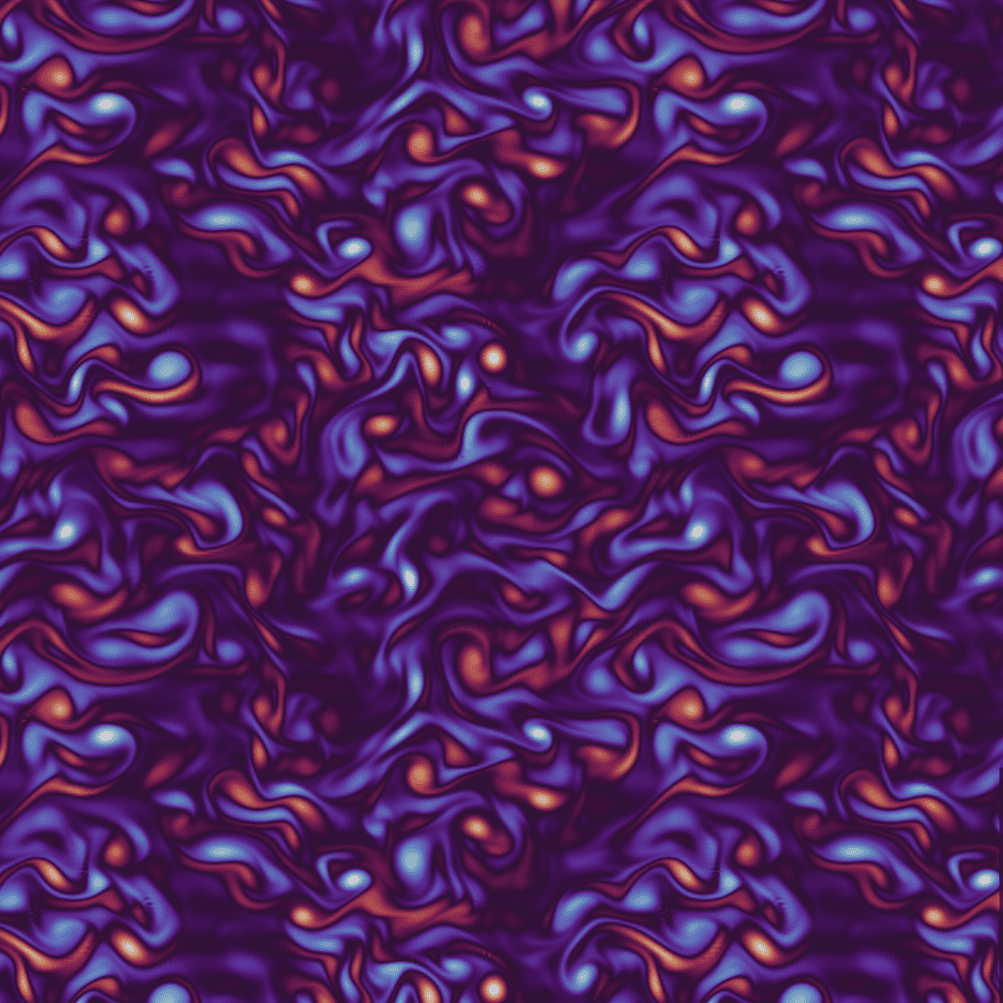
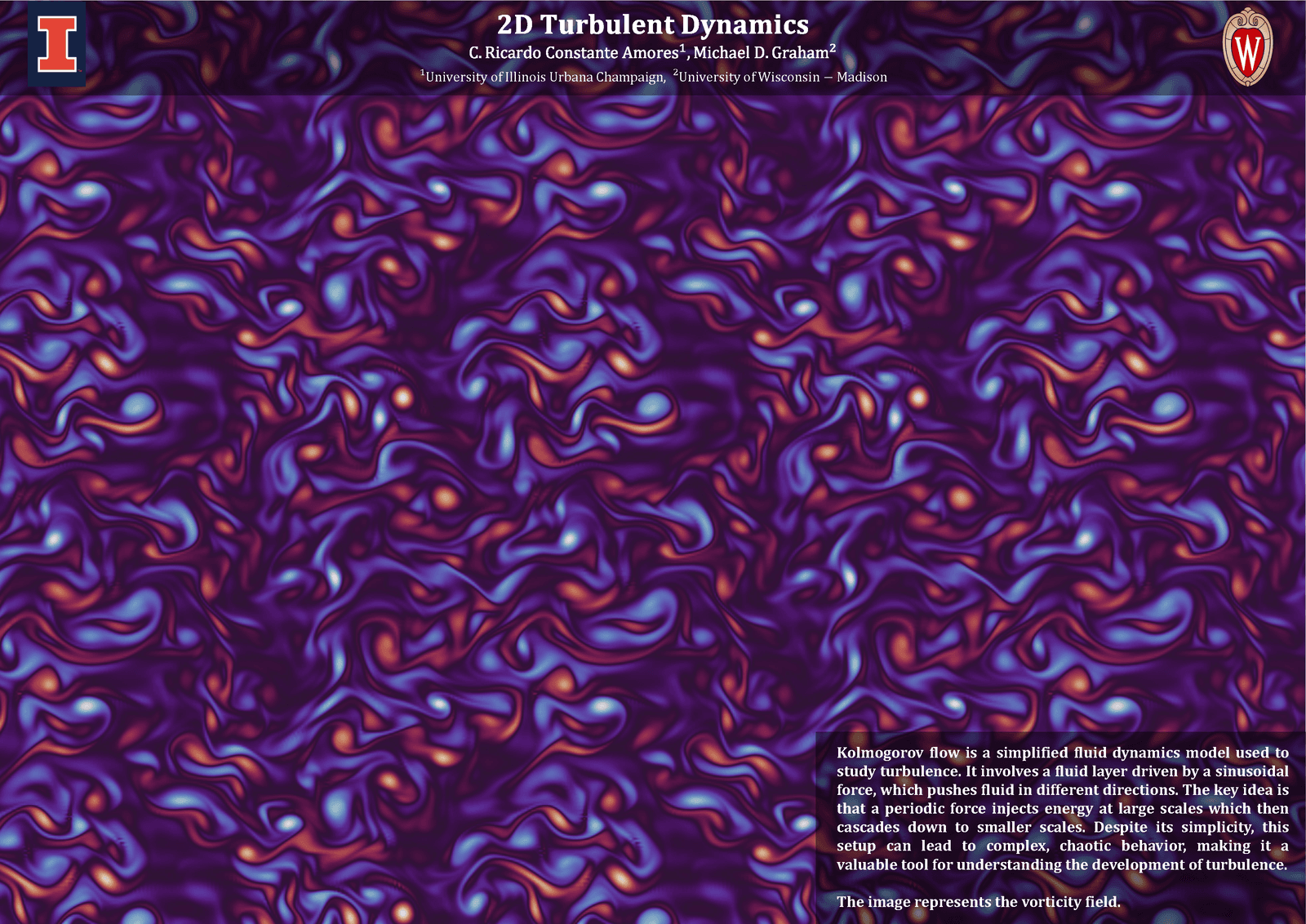
    Turbulent flows are ubiquitous, but they’re also mindbogglingly complex: ever-changing in both time and space across length scales both large and small. To try to unravel this complexity, scientists use simplified model problems. One such simplification is Kolmogorov flow: an imaginary flow where the fluid is forced back and forth sinusoidally. This large-scale forcing puts energy into the flow that cascades down to smaller length scales through the turbulent energy cascade. Here, researchers depict a numerical simulation of a turbulent Kolmogorov flow. The colors represent the flow’s vorticity field. Notice how your eye can pick out both tiny eddies and larger clusters in the flow; those patterns reflect the multi-scale nature of turbulence. (Image credit: C. Amores and M. Graham)

    Fediverse Reactions
  • Featured Video Play Icon

    Bubbly Tornadoes Aspin

    Rotating flows are full of delightful surprises. Here, the folks at the UCLA SpinLab demonstrate the power a little buoyancy has to liven up a flow. Their backdrop is a spinning tank of water; it’s been spinning long enough that it’s in what’s known as solid body rotation, meaning that the water in the tank moves as if it’s one big spinning object. To demonstrate this, they drop some plastic tracers into the water. These just drop to the floor of the tank without fluttering, showing that there’s no swirling going on in the tank. Then they add Alka-Seltzer tablets.

    As the tablets dissolve, they release a stream of bubbles, which, thank to buoyancy, rise. As the bubbles rise, they drag the surrounding water with them. That motion, in turn, pulls water in from the surroundings to replace what’s moving upward. That incoming water has trace amounts of vorticity (largely due to the influence of friction near the tank’s bottom). As that vorticity moves inward, it speeds up to conserve angular momentum. This is, as the video notes, the same as a figure skater’s spin speeding up when she pulls in her arms. The result: a beautiful, spiraling bubble-filled vortex. (Video and image credit: UCLA SpinLab)

    Composite image showing far (left) and close (right) views of a bubbly vortex in a rotating water tank.
    Fediverse Reactions
  • Why Tornado Alley is North American

    Why Tornado Alley is North American

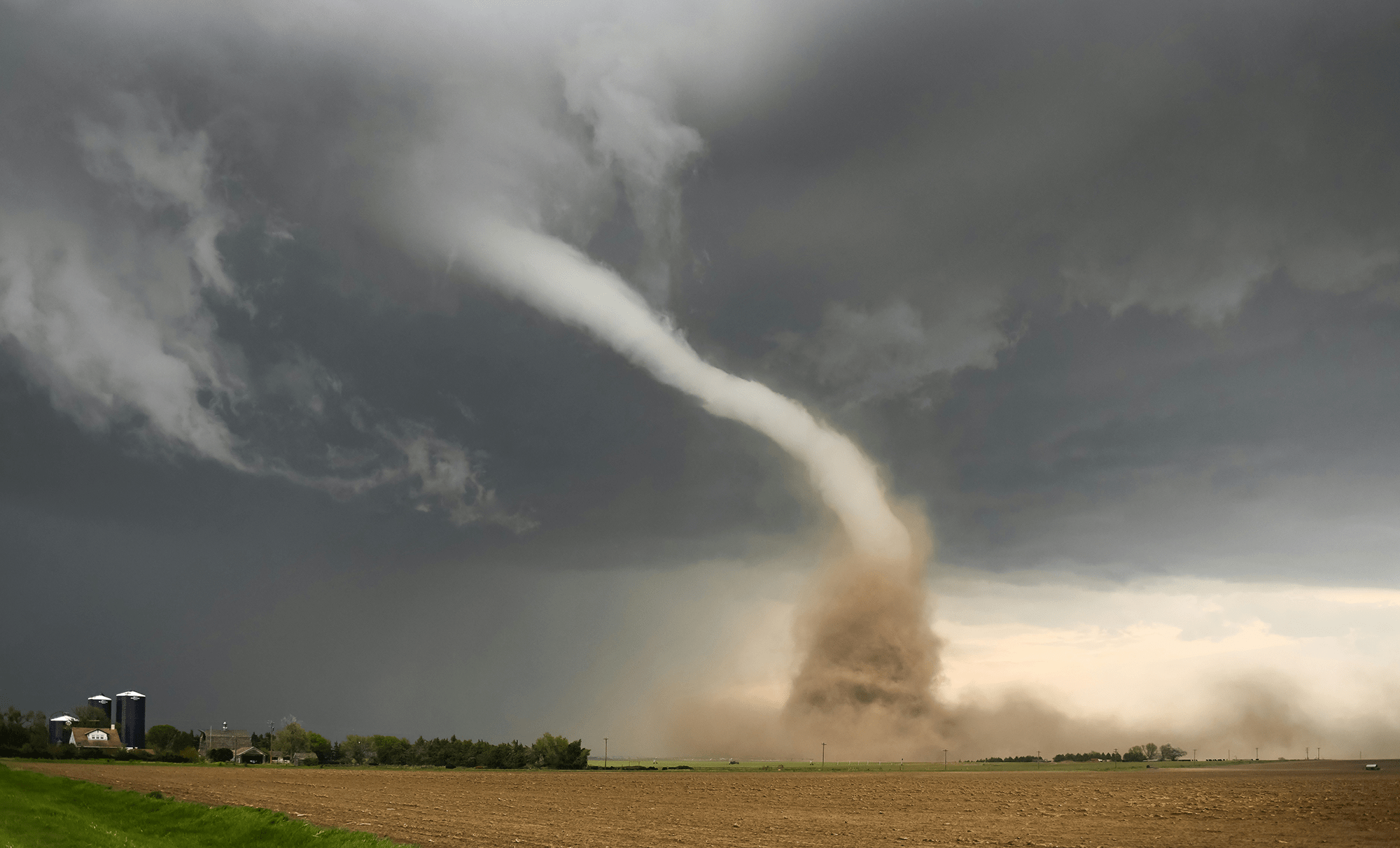
    Growing up in northwest Arkansas, I spent my share of summer nights sheltering from tornadoes. Central North America — colloquially known as Tornado Alley — is especially prone to violent thunderstorms and accompanying tornadoes. That’s due, in part, to two geographical features: the Rocky Mountains and the Gulf of Mexico. Trade winds hitting the eastern slope of the Rockies get turned northward, imparting a counterclockwise vorticity. At the same time, warm moist air carried from the Gulf feeds into the atmosphere, creating perfect conditions for powerful thunderstorms. By this logic, though, South America should see lots of tornadoes, too, courtesy of the Andes Mountains and the moist environs of the Amazon Basin. To understand why South America doesn’t have a Tornado Alley, researchers used global weather models to investigate alternate North and South Americas.

    They found that smoothness is a key ingredient for the upstream, moisture-generating region. Compared to the Amazon, the Gulf of Mexico is incredibly flat. With a flat Gulf, tornadoes abounded in North America, but their numbers dropped once that area was roughened to mimic the Amazon. The opposite held true, too: a smoothed-out Amazon Basin resulted in more simulated South American tornadoes.

    For those in Tornado Alley, the results don’t offer much hope for mitigating our summer storms — we can’t exactly roughen the ocean. But the study does sound a word for warning for South America; the smoother the Amazon region becomes — due to mass deforestation — the more likely tornadoes become in parts of South America. (Image credit: G. Johnson; research credit: F. Li et al.; via Physics World)

  • Paris 2024: Gunwale Bobbing

    Paris 2024: Gunwale Bobbing

    In the Olympics, you won’t see anyone win a rowing event without a paddle, but it turns out that you don’t really need one for a canoe or paddleboard. How can you get around when you’ve lost your paddle? You stand up on one end and start bobbing. This is known as gunwale (pronounced gunnel) bobbing, and it’s pretty impressively effective! With optimal parameters, scientists found that a canoe could move about 1 m/s with the technique.

    As the bobber pushes, it generates an asymmetric wave field on the water surface. The canoe or paddleboard then essentially surfs those waves, turning the vertical displacement into a horizontal thrust. The researchers expect that the effect matters for competitive rowing, too, where the athletes’ rowing motions cause some vertical displacement. Clearly, the biggest effect comes from the oars themselves, but optimal bobbing could provide enough of an edge to ensure the gold. (Image credit: top – R. Chisu; others – G. Benham et al.; research credit: G. Benham et al.; via APS Physics; submitted by Kam-Yung Soh)

    Related topics: Optimizing oar length, vorticity around an oar, and a vibration-propelled biorobot

    See more of our past and ongoing Olympic coverage here.