Tag: olympics

  • Milano Cortina 2026: Cortina Sliding Center

    Milano Cortina 2026: Cortina Sliding Center

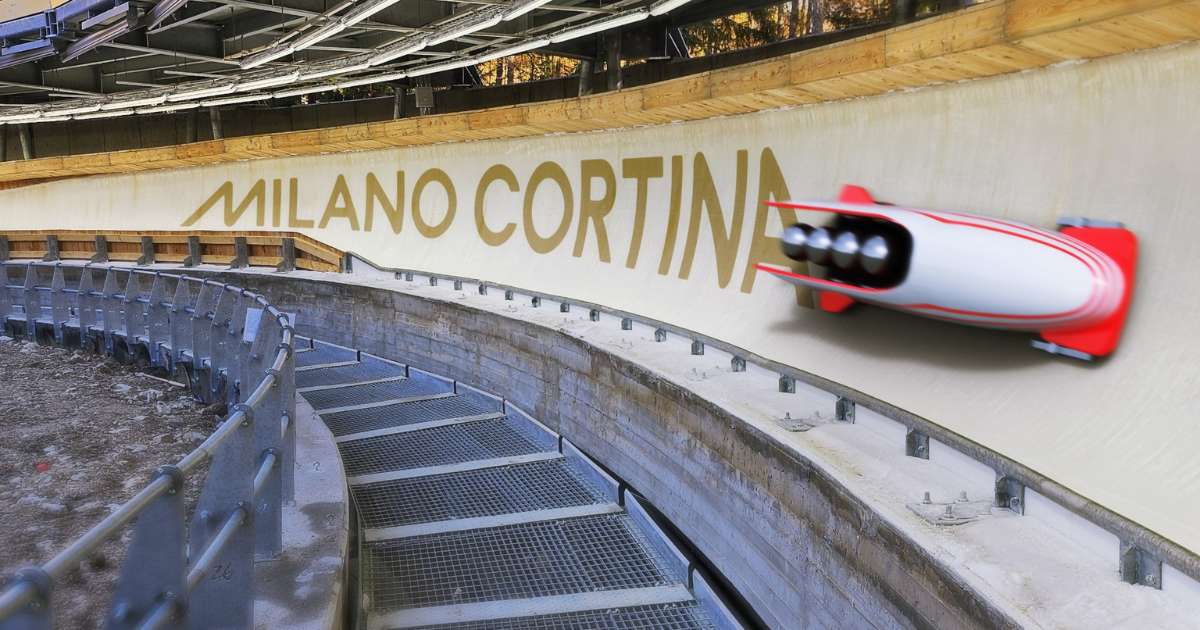
    This year’s sliding events–bobsleigh, luge, and skeleton–will take place at the brand-new Cortina Sliding Center. Built on the site of a historic sliding track, this new venue came together in only the last couple of years. It features a state-of-the-art refrigeration system that pumps a mixture of water and ethylene glycol beneath the track surface to keep the ice properly chilled. Each section of the track is continuously monitored to optimize the flow rate, temperature, and pressure of the refrigerant to keep the track at maximum performance while minimizing environmental impact.

    According to the designers, it’s the first competition track to use a glycol-based refrigeration system, which should be more sustainable than the ammonia-based systems used elsewhere. For a sense of what a run is like, check out this skeleton driver POV run from the facility’s shakedown competition last year. (Image credit: LMSteel; video credit: tuff sledding)

    Fediverse Reactions
  • Milano Cortina 2026: Curling Stones

    Milano Cortina 2026: Curling Stones

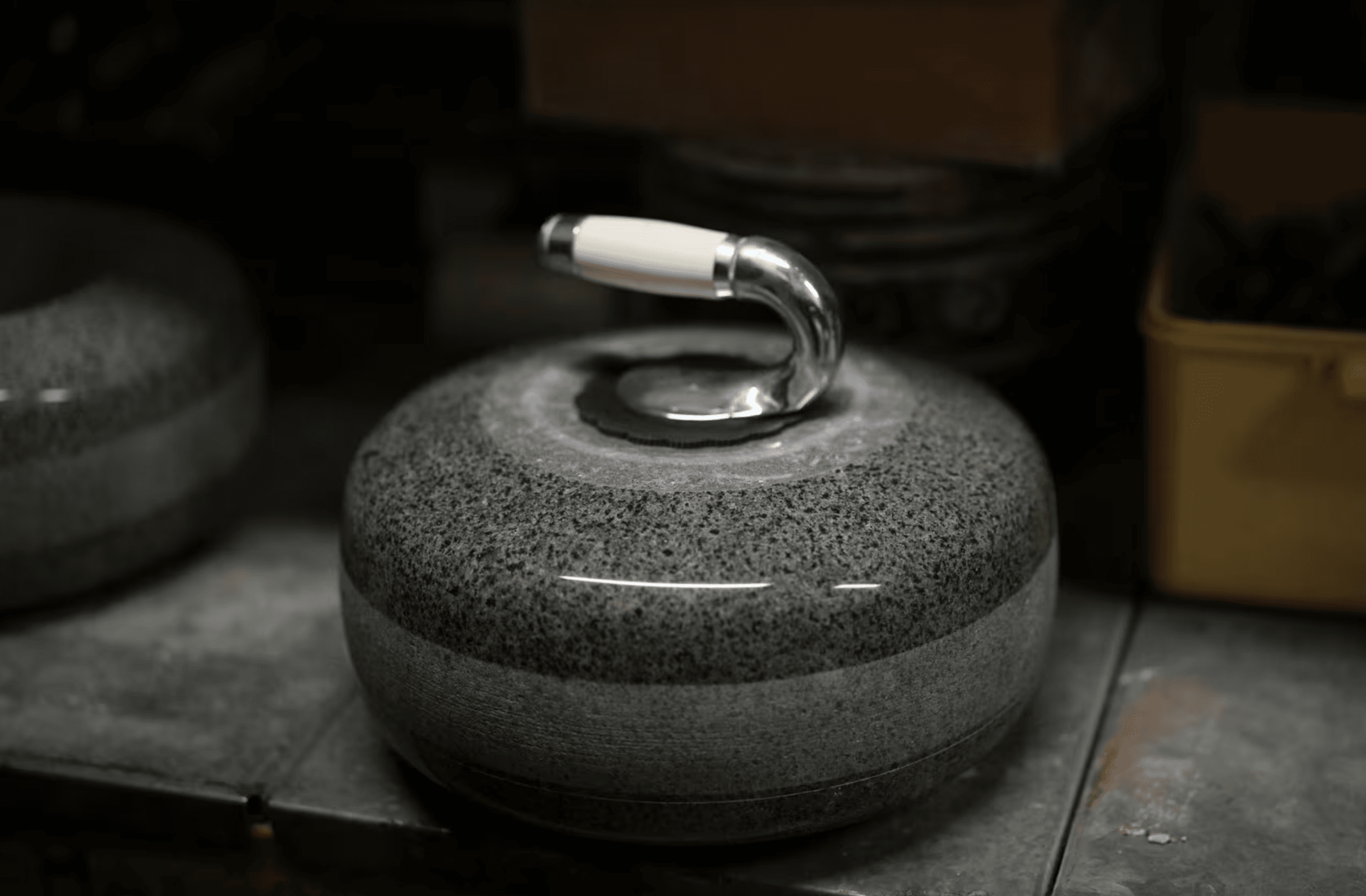
    Ailsa Craig sits about 10 miles off the Scottish coast, a granite dome left behind by a volcanic event millions of years ago. This small, now-uninhabited crag is the birthplace for every Olympic curling stone. It’s where Kays of Scotland, which has made curling stones for the Olympics since the sport appeared in the first Winter Games in 1924, gets their granite.

    Ailsa Craig, an uninhabited Scottish granite isle, sits in the distance.

    Curling stones have to withstand both cold and collisions, something Ailsa’s microgranite excels at. Its elasticity keeps it from cracking, and Ailsa’s unique blue hone granite resists water absorption, so that freeze-thaw cycles don’t erode the surface. That waterproofing makes for the perfect running surface. It’s no wonder that the majority of curling stones in the world originate in Ailsa. (Image credit: A. Grant/AP; via AP)

  • Milano Cortina 2026: Ice’s Many Forms

    Milano Cortina 2026: Ice’s Many Forms

    Welcome to another Olympic year and another FYFD celebration of the fluid physics that enable these sports! All Winter Olympic sports are required, per the IOC, to take place on snow or ice–one of the strangest substances we know of.

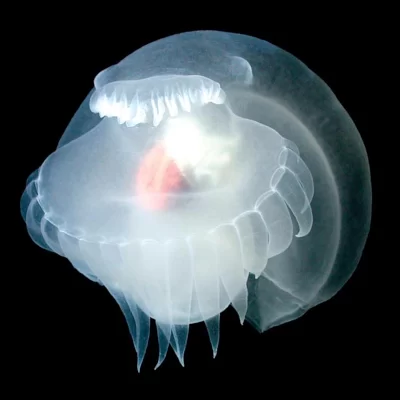
    Despite consisting of two simple elements–hydrogen and oxygen–water manages to find a shocking number of ways to configure itself into a solid. So far, scientists have described 21 different configurations for solid water ice. The latest one was created at room temperature and extreme pressures. (The apparatus used can reach pressures 20,000 times atmospheric pressure.)

    This particular form of ice is metastable, meaning that it balances on a knife’s edge, existing briefly at conditions where other ice structures are energetically preferable. It’s likely that many such high-temperature, metastable ice forms exist. How many more do you suppose researchers will discover before the next Olympics? (Image credit: L. Borghese; research credit: Y. Lee et al.; via Gizmodo)

    P.S. – Dig into past Olympics with posts from Beijing, PyeongChang, and Sochi.

    Fediverse Reactions
  • Paris 2024: Diving

    Paris 2024: Diving

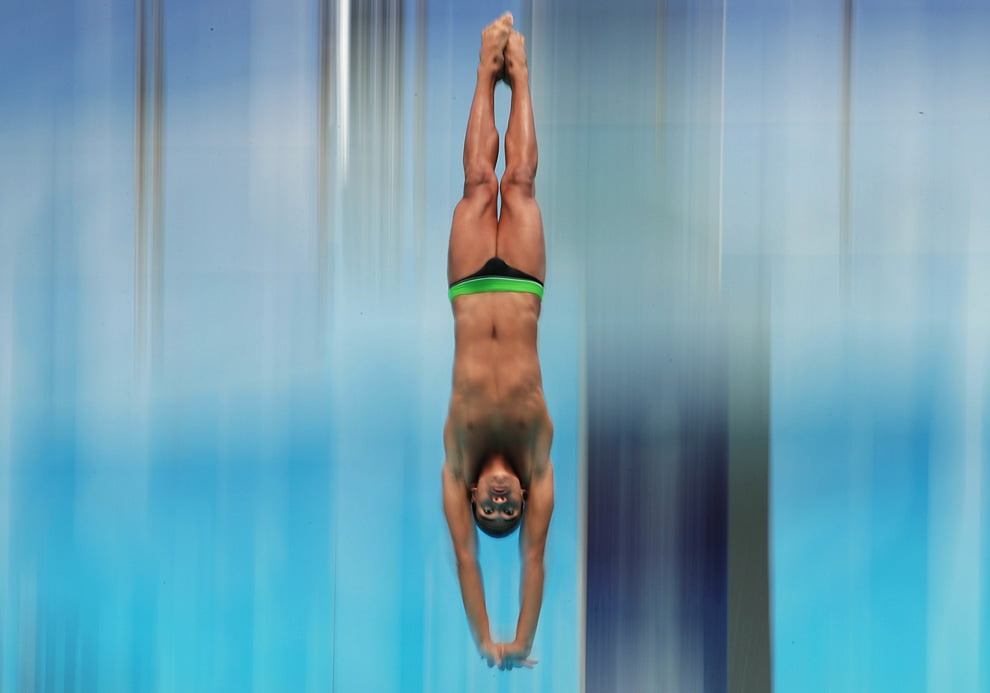
    In competition diving, athletes chase a rip entry, the nearly splash-less dive that sounds like paper tearing. Part of a successful rip dive comes in the impact, where divers try to open a small air cavity with their hands that their entire body then enters. But the other key component happens below the surface, where divers bend at the hips once underwater. This maneuver enlarges the air cavity underwater and disrupts the formation of a jet that would typically shoot back upwards. Done properly, the result is an entry with little to no splash at the surface and a panel full of pleased judges. (Image credits: top – A. Pretty/Getty Images, other – E. Gregorio; research credit: E. Gregorio et al.; via Science News; submitted by Kam-Yung Soh)

    Sequence of images showing a synthetic diver bending underwater to disrupt splash formation.
    Sequence of images showing a synthetic diver bending underwater to disrupt splash formation.

    Related topics: Rip entry physics, how pelicans dive safely, and how boobies plunge dive

    This post marks the end of our Olympic coverage for this year’s Games, but if you missed any previous entries, you can find them all here.

  • Paris 2024: Clearing the Air

    Paris 2024: Clearing the Air

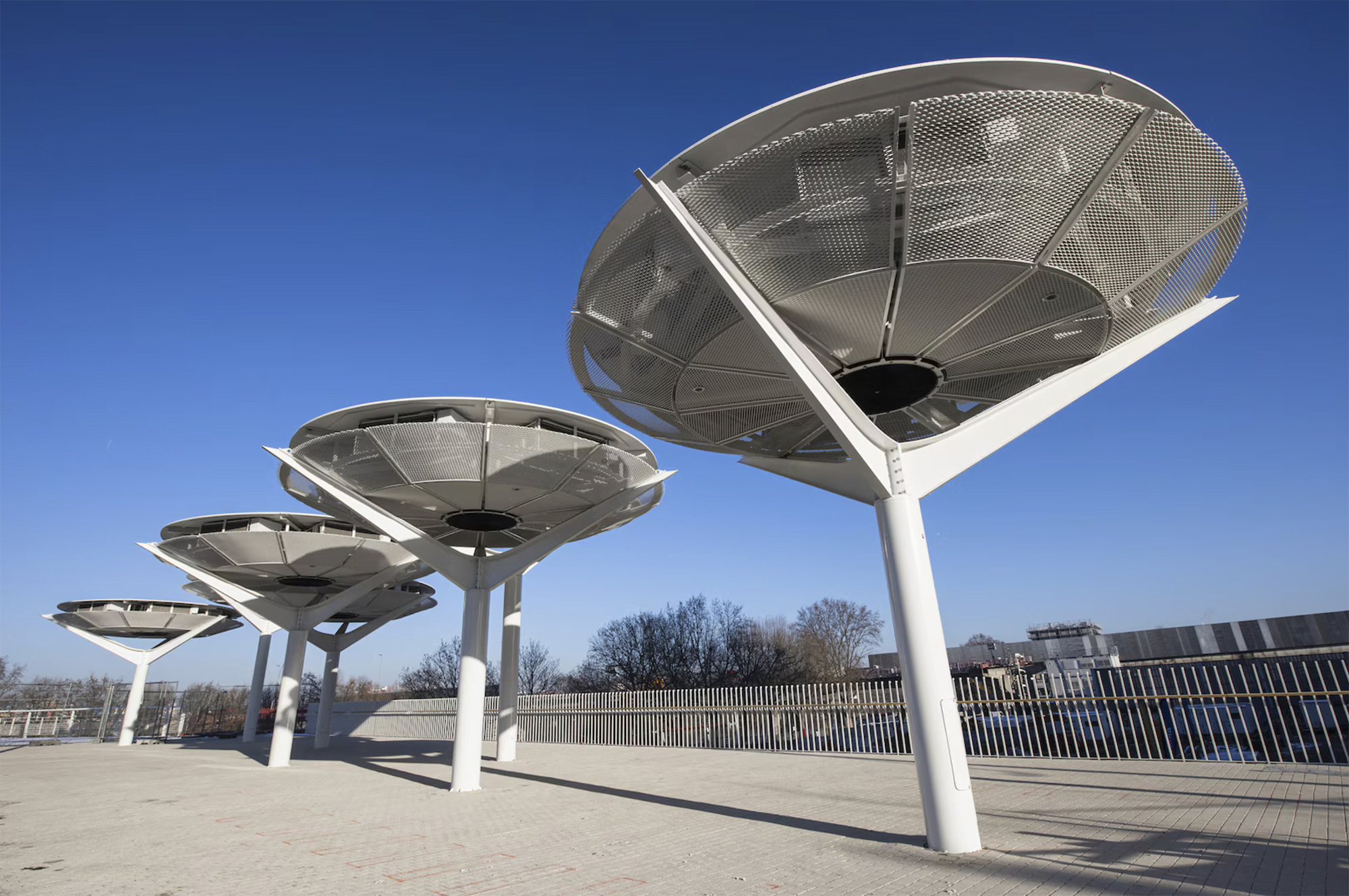
    A quartet of mushroom-shaped structures tower nearly 6 meters above the Olympic Village. Known as Aerophiltres, these devices filter particulates out of the air to provide cleaner air for the Village, despite its proximity to major roadways. There’s no need to change out the filters in the Aerophiltres, though, because they don’t have any. Instead, the devices ionize fine particles, encourage them to clump together, and then capture them on highly-charged metal plates. A fan near the base sucks polluted air in through the top and expels clean air at the ground level. According to the engineers, the system is capable of removing 95% of particulates and producing nine Olympic-sized swimming pools’ worth of clean air each hour. Compared to traditional systems — which require lots of power to suck air through filters that get progressively more clogged — the Aerophiltres are energy efficient, highly effective, and easy to maintain. (Image credit: SOLIDEO/C. Badet; via DirectIndustry)

    Related topics: How manta rays filter without clogging, making artificial snow, and building whitewater rafting courses

    Catch our past and ongoing Olympic coverage here.

  • Paris 2024: Gunwale Bobbing

    Paris 2024: Gunwale Bobbing

    In the Olympics, you won’t see anyone win a rowing event without a paddle, but it turns out that you don’t really need one for a canoe or paddleboard. How can you get around when you’ve lost your paddle? You stand up on one end and start bobbing. This is known as gunwale (pronounced gunnel) bobbing, and it’s pretty impressively effective! With optimal parameters, scientists found that a canoe could move about 1 m/s with the technique.

    As the bobber pushes, it generates an asymmetric wave field on the water surface. The canoe or paddleboard then essentially surfs those waves, turning the vertical displacement into a horizontal thrust. The researchers expect that the effect matters for competitive rowing, too, where the athletes’ rowing motions cause some vertical displacement. Clearly, the biggest effect comes from the oars themselves, but optimal bobbing could provide enough of an edge to ensure the gold. (Image credit: top – R. Chisu; others – G. Benham et al.; research credit: G. Benham et al.; via APS Physics; submitted by Kam-Yung Soh)

    Related topics: Optimizing oar length, vorticity around an oar, and a vibration-propelled biorobot

    See more of our past and ongoing Olympic coverage here.

  • Paris 2024: Tennis Racket Physics

    Paris 2024: Tennis Racket Physics

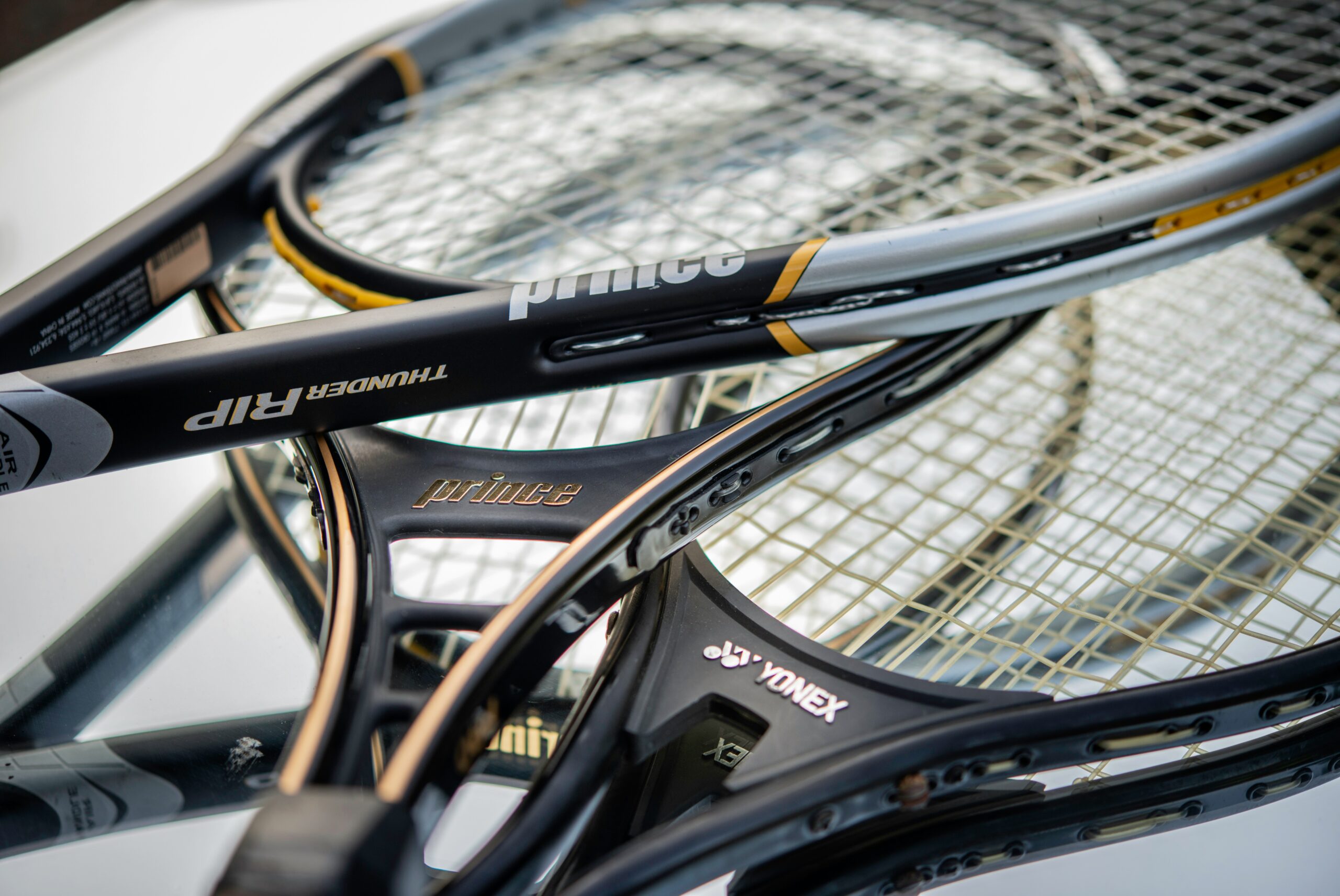
    Like many sports that feature balls, spin plays a big role in tennis. By imparting a topspin or backspin to a tennis ball, players can alter the ball’s trajectory after a bounce and, using the Magnus effect to alter lift around the ball, change how it travels through the air. For example, a ball hit with backspin can dive just after the net, forcing an opponent to scramble after it. How much spin a player can impart depends on the speed of the racket’s head. Competitive rackets are carefully engineered — in terms of weight, string tension, and frame stiffness — to translate the kinetic energy of a player’s swing into the ball. But aerodynamics also play a role: new rackets designed to minimize drag hit the market 15-20 years ago, promising drag reductions up to 24% compared to previous rackets. That gives a player more swing speed and higher spins at a lower energy cost. (Image credit: C. Costello)

    Related topics: The Magnus effect in table tennis and in golf; the reverse Magnus effect

    Check out more of our ongoing and past Olympic coverage here.

  • Paris 2024: Beach Versus Indoor Volleyballs

    Paris 2024: Beach Versus Indoor Volleyballs

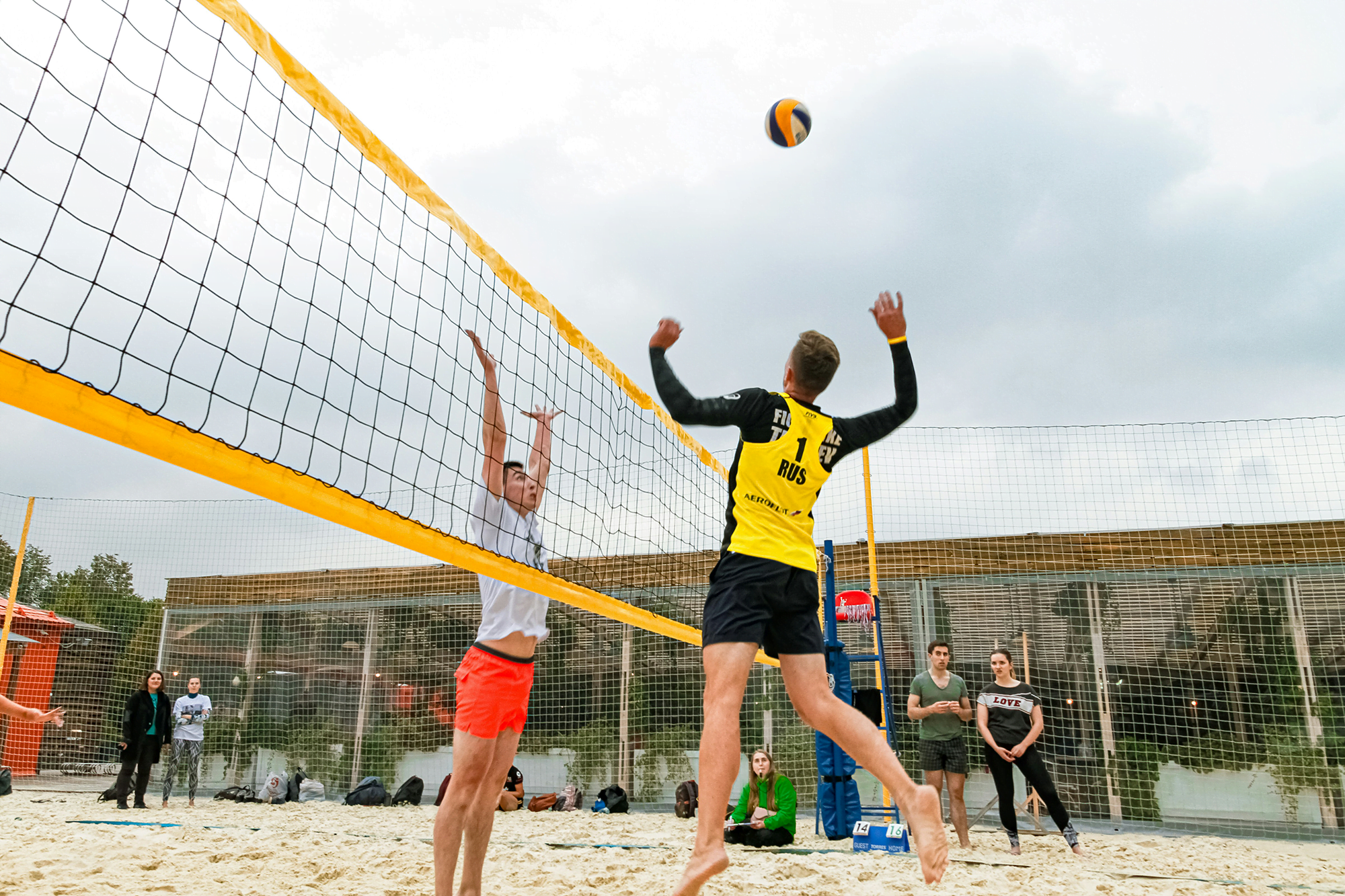
    Some of the differences between beach volleyball and indoor volleyball are obvious, like the number of players allowed — two versus six — and the courts — a smaller sand court versus a bigger indoor court. But there are subtle and significant differences in the balls themselves. Both beach and indoor volleyballs used for competition are required to weigh between 260 and 280 grams, but the expected diameter of the balls differs by about 1 centimeter, with beach volleyballs coming out slightly larger. The balls differ in their surface roughness, too, with indoor models being smoother, even before in-game wear.

    Although these differences seem minor, they can make a significant impact in the game. Volleyball regulations don’t specify a ball’s expected surface roughness or how many panels they should be made with. As in football, these seemingly cosmetic changes can strongly affect airflow around the ball and change its trajectory. Regulations require that all balls used in a given match be uniform, but that still requires athletes to potentially adjust to the behavior of a new ball at each competition. (Image credits: I. Garifullin, C. Chaurasia, C. Oskay, and M. Teirlinck)

    Related topics: How smoothness and panel design affect a football, volleyball aerodynamics, and vortex generators on cycling skinsuits

    For more ongoing and past Olympic coverage, click here.

  • Paris 2024: Cycling in Crosswinds

    Paris 2024: Cycling in Crosswinds

    Wind plays a major role in cycling, since aerodynamic drag is the greatest force hampering a cyclist. In road racing, both individual cyclists and teams use tactics that vary based on the wind speed and direction. Crosswinds — when the apparent wind comes from the side in the cyclist’s point of view — are some of the toughest conditions to deal with. In races, groups will often form echelons to minimize the group’s overall effort in a crosswind. Alternatively, racers looking to tire their competitors out will position themselves on the road so that the rider behind them gets little to no shelter from the wind; this is known as guttering an opponent.

    In this study, researchers put a lone cyclist in a wind tunnel and measured the effects of crosswind from a pure headwind to a pure tailwind and every possible angle in between. From that variation, they were able to mathematically model the aerodynamic effects of crosswind on a cyclist from every angle. With rolling resistance (a cyclist’s second largest opposing force) included, they found relatively few conditions where a crosswind actually helped a cyclist. Most of the time — as any cyclist can tell you — hiding from the wind is beneficial. (Image credit: J. Dylag; research credit: C. Clanet et al.)

    Related topics: The physics of the Tour de France, how the peloton protects riders aerodynamically, track cycling physics, and a look inside wind tunnel testing bikes and cyclists

    Catch all of our ongoing Olympics coverage here.

  • Paris 2024: Coordinating the Front-Crawl

    Paris 2024: Coordinating the Front-Crawl

    Of all the swimming strokes humans have invented, none is faster or more efficient than the front-crawl. That’s why all competitors use it in freestyle events, and why it’s the only stroke that appears in races longer than 200 meters. But elite swimmers don’t perform the front-crawl the same way in a sprint as they do in a longer race. Instead, researchers found that swimmers use three different regimes of arm coordination.

    For long-distance races, elite swimmers adopt a stroke that has only one arm in the water at a time. Each stroke is followed by a glide phase with one arm stretched in front of them. Researchers compared this to the burst-and-coast method that fish use to minimize the energy they use. As a swimmer’s speed increases, they shorten the glide phase and begin to maximize the force produced with each propulsive stroke.

    In the third regime — the fastest one used by elite sprinters — the strokes of a swimmer’s arms are superposed, with both arms engaged in propulsion at the same time during parts of the cycle. This mode maximizes propulsive force but requires a lot of energy, so swimmers can only sustain it for a short while.

    Since researchers built their observations into a physical model that explains how and why elite swimmers do this, the model can actually be used to advise individual swimmers on how they can adapt their stroke based on their size, desired speed, and other physical characteristics. (Image credit: J. Chng; research credit: R. Carmigniani et al.)

    Related topics: More on swimming physics including why swimmers are faster underwater and how to design faster pools.

    Find all of our current and past Olympics coverage here.