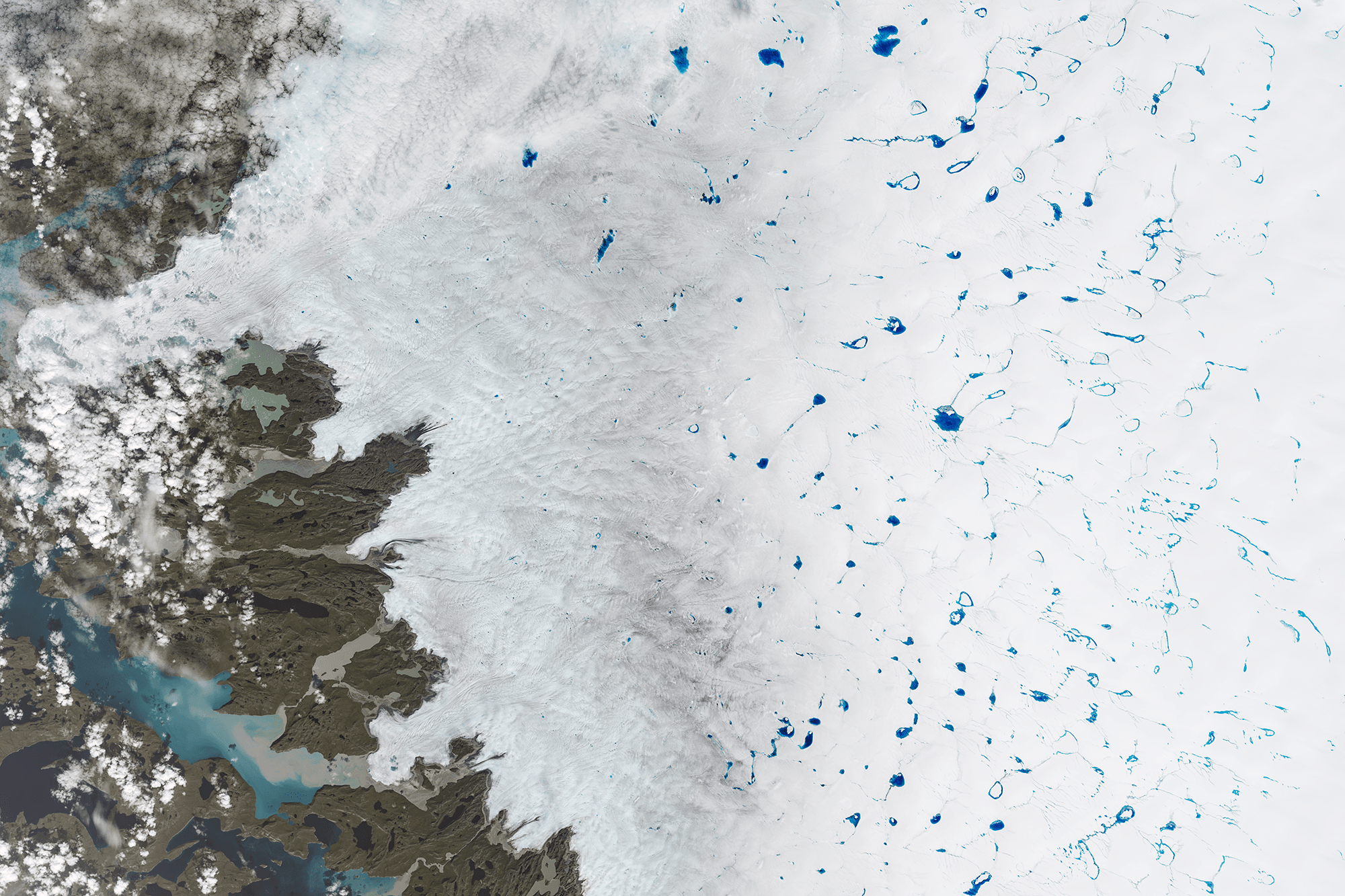
Beginning in early spring, brilliant blue ponds form on Greenland’s ice sheets as meltwater gathers in indentations. This satellite image shows the ice east of Nordenskiöld Glacier, which is the tongue of ice projecting on the left side of the image. The center region of ice is darker, marked by soot, ash, and dirt left behind after previous ice layers have melted. These darker remains make the ice less reflective to sunlight; with less reflectivity, the ice absorbs more sunlight, melting faster. (Image credit: M. Garrison/NASA Earth Observatory)

Leave a Reply