Tag: vortices

  • Chronoscapes

    Chronoscapes

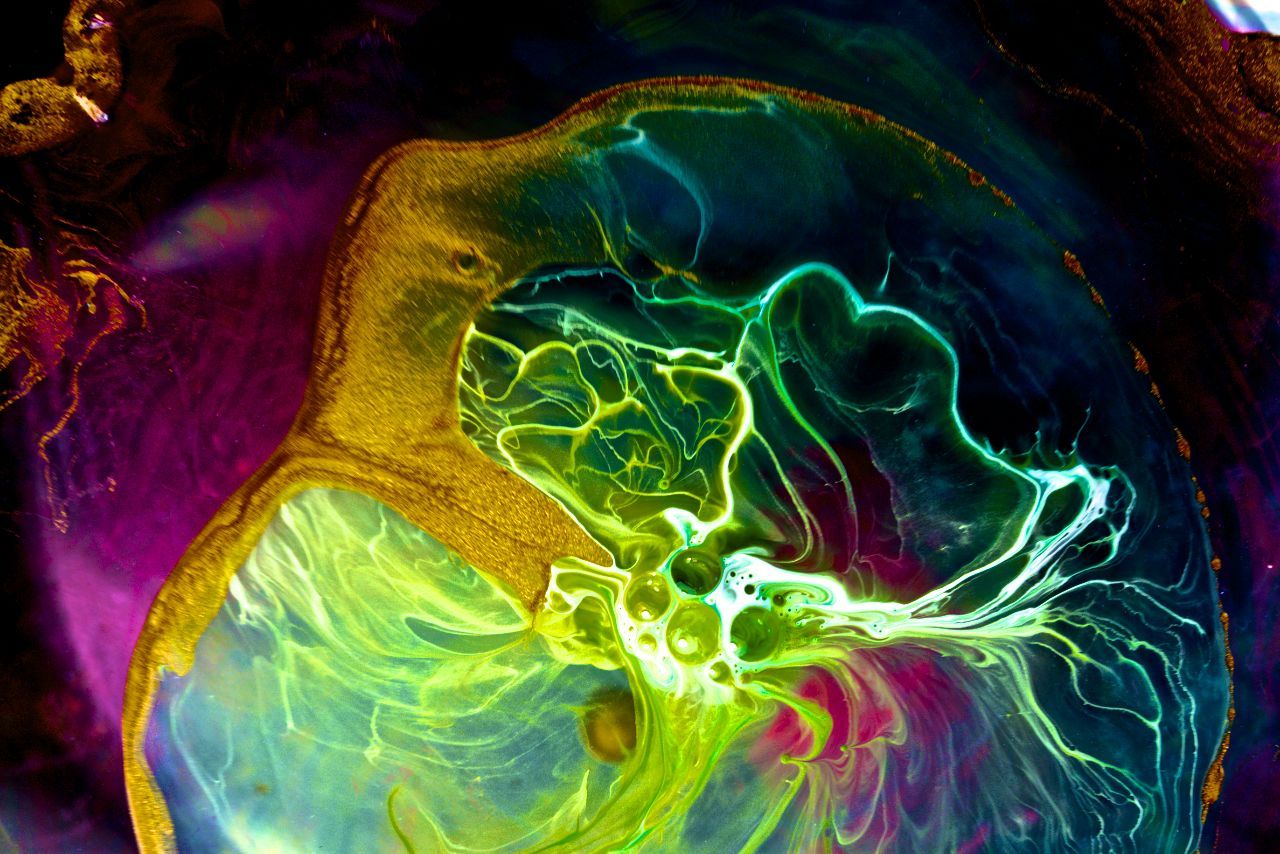
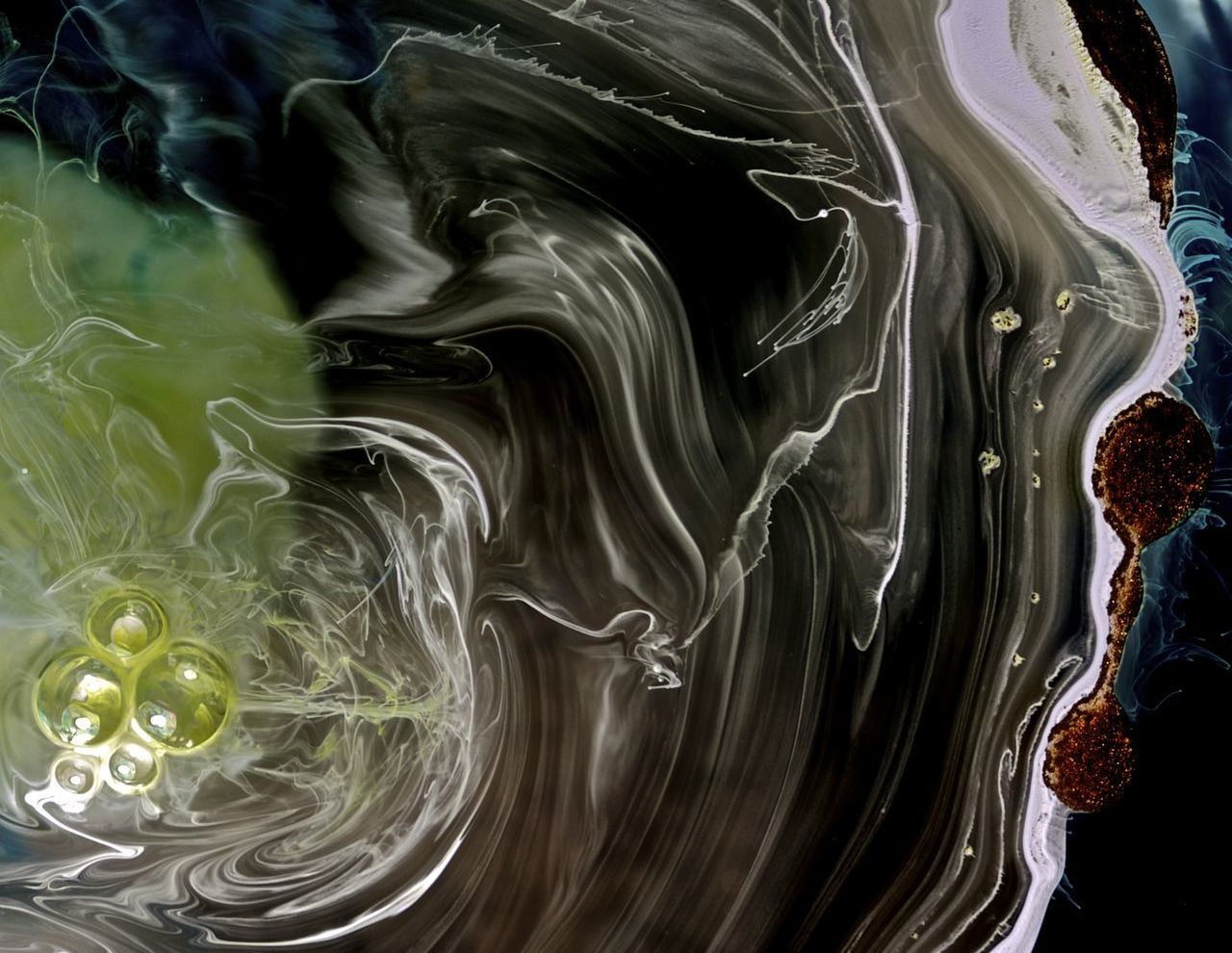
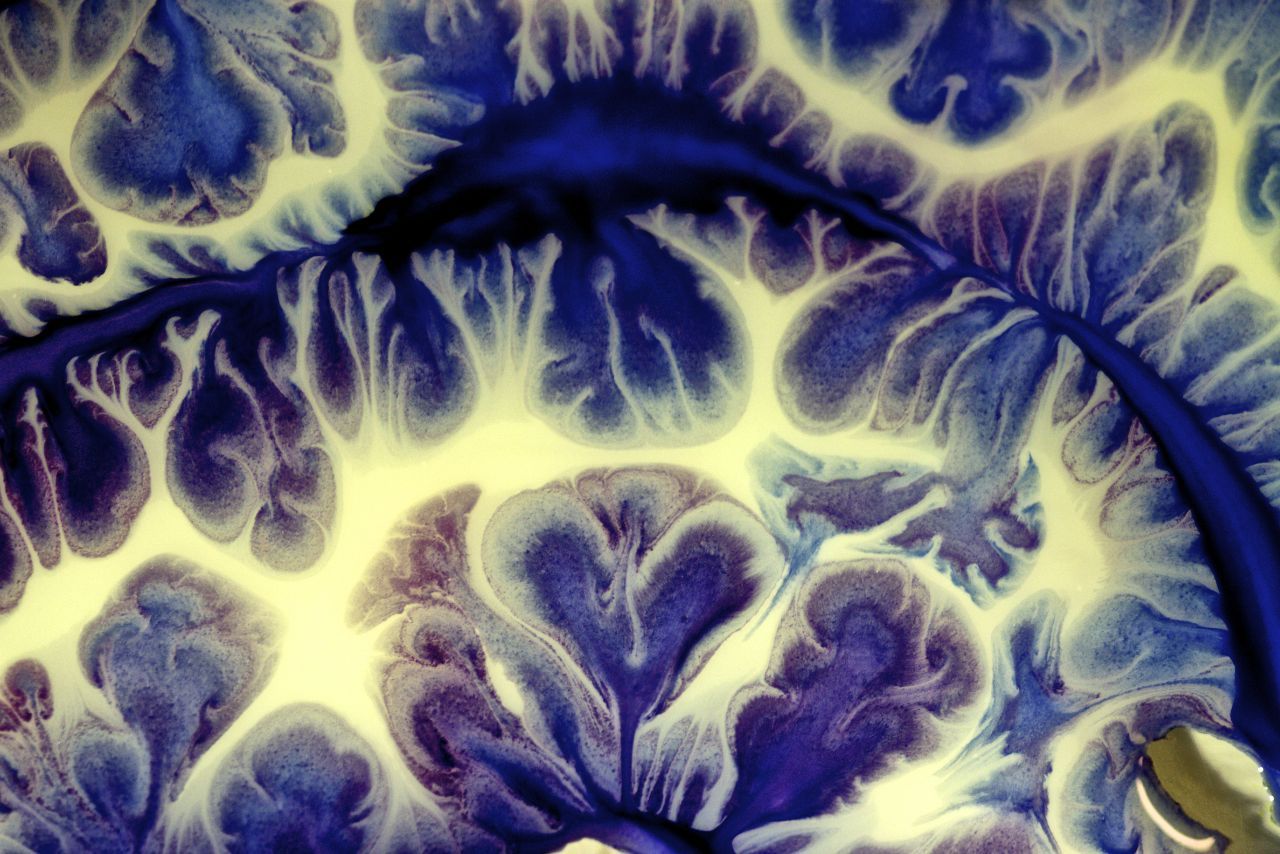
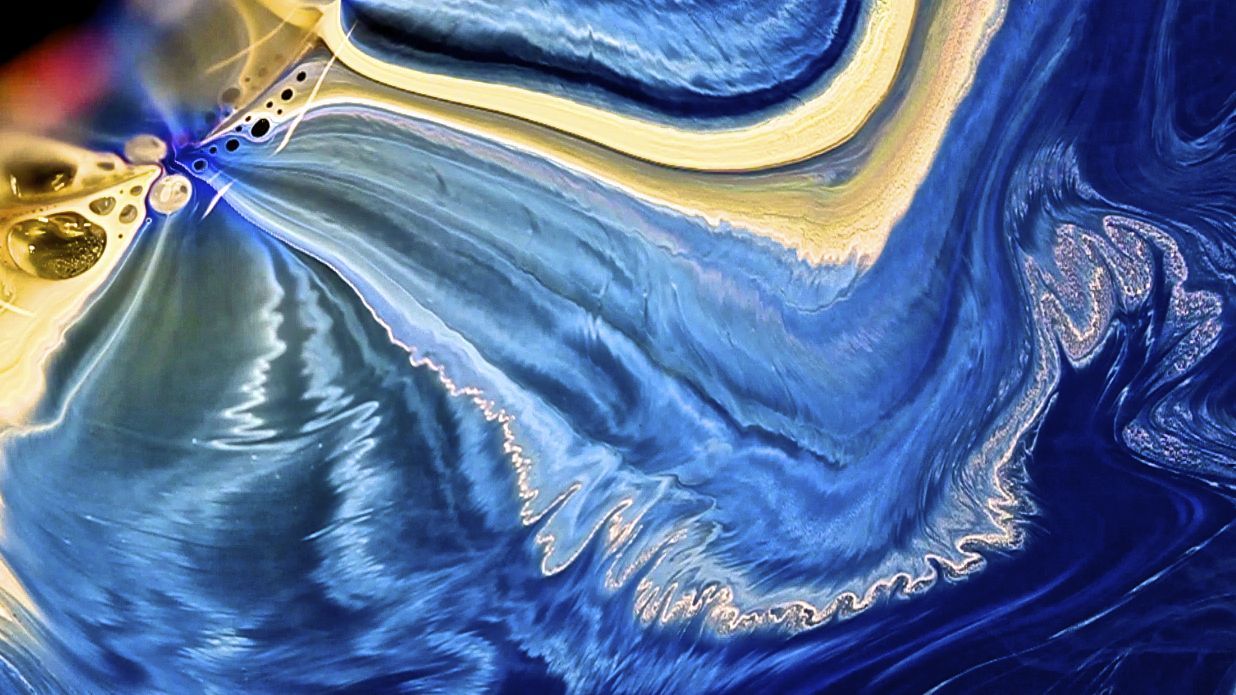
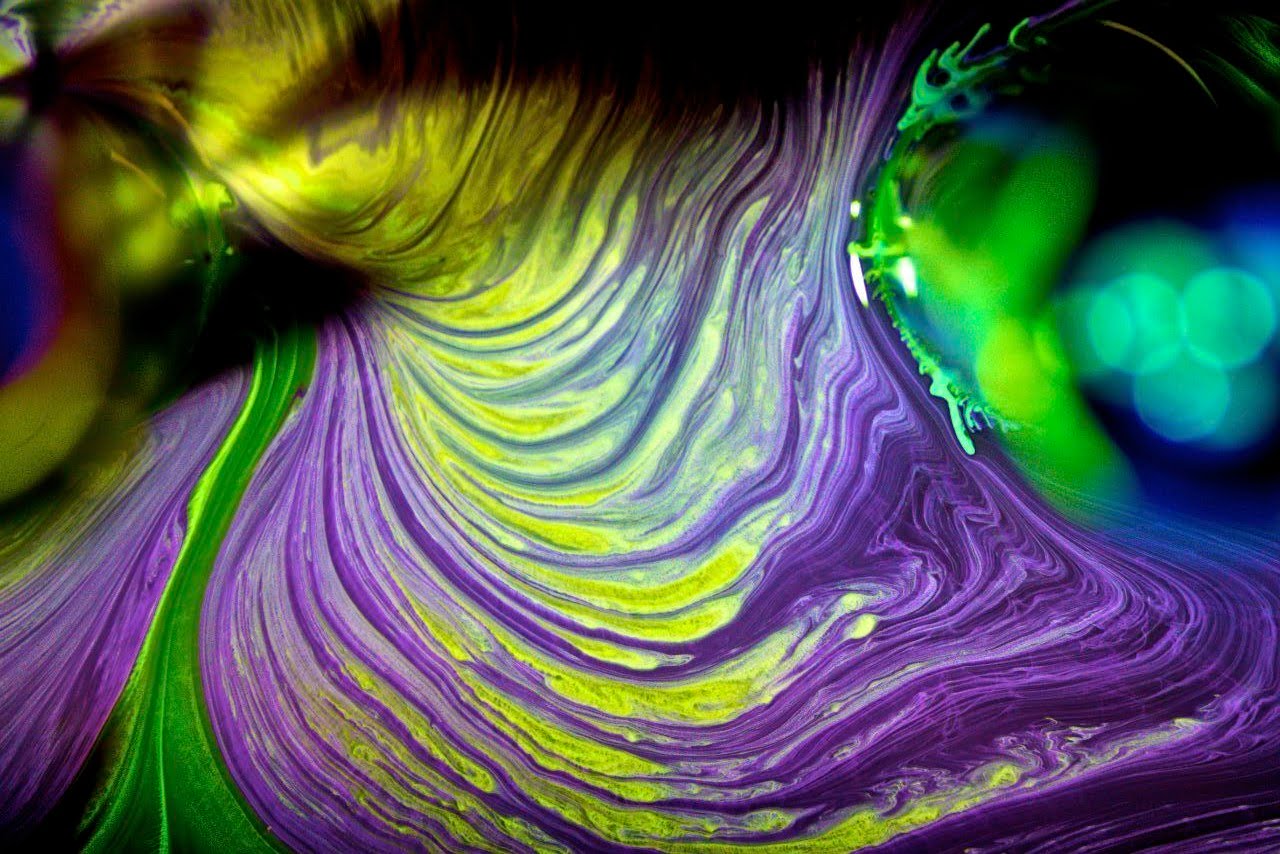
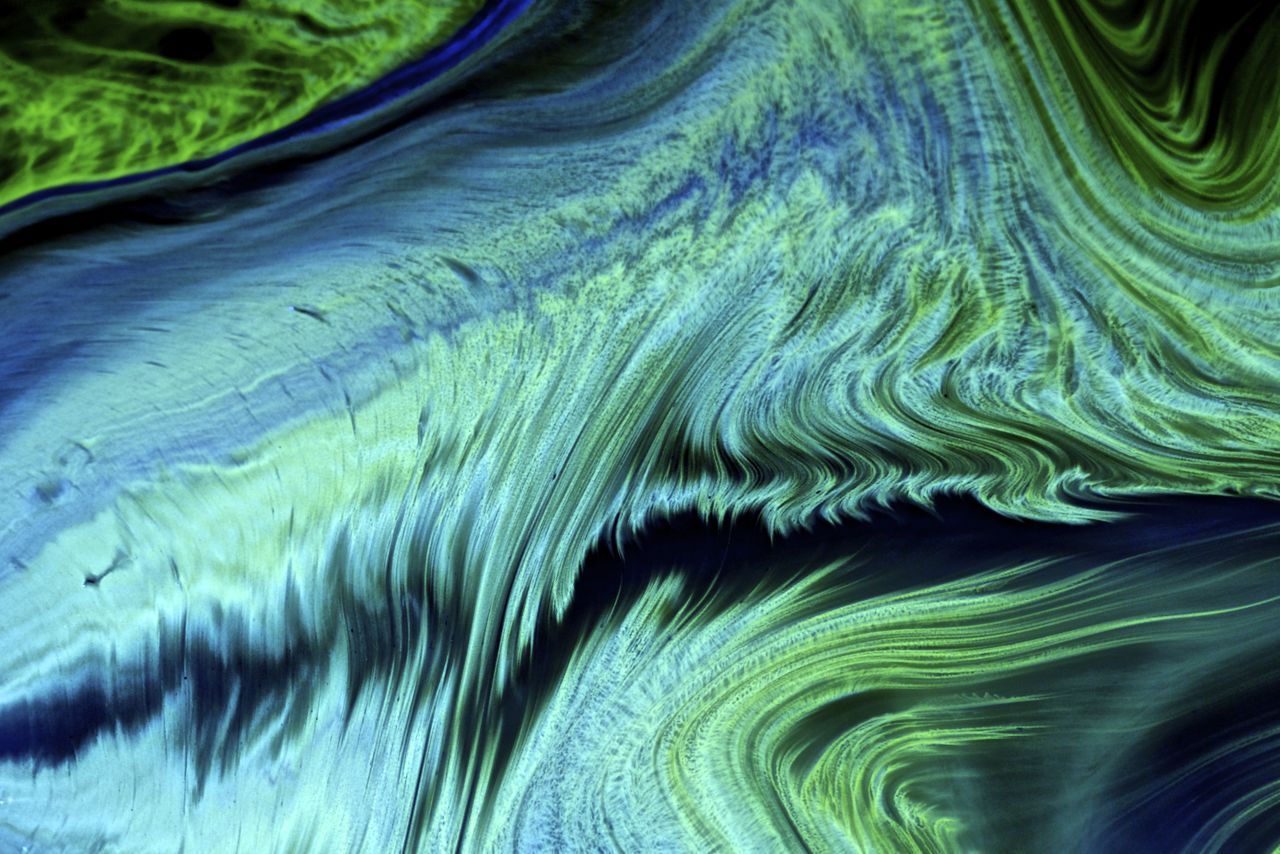
    Exeter University artist-in-residence Pery Burge uses ink, water, soap films, and other fluids to create her spectacular “artistic flow visualization”. Looking closely, one sees the influence of bubbles, vortices, diffusion, and many fluid instabilities, all combined to create psychedelic and dream-like landscapes. For more on her work and additional galleries, see her website Chronoscapes. (Photo credit: Pery Burge)

  • Flapping Flags

    Flapping Flags

    The flapping of flexible objects like flags have long fascinated mankind. The figure above from Shelley and Zhang 2011 shows several possible flapping states.  In (a) a thread immersed in a running soap film displays the standard von Karman vortex street of shed vortices in its wake. Parts (b) and © show the thread in coherent flapping motion; (b) shows an snapshot of the flapping thread in the soap film whereas © is a timelapse of the thread showing its full range of motion.  Image (d) shows the effects of a higher flow speed–the flapping motion becomes aperiodic. Image (e) shows a stiff metal wire bent into the shape of a flapping filament; note the strong boundary layer separation around the wire compared to the thread in Image (b). As one might expect, the drag on the unflapping wire is significantly greater than the drag on the flapping thread. (Image credit: M. Shelley and J. Zhang, Shelley and Zhang 2011)

  • Featured Video Play Icon

    Liquid Pearls

    Researchers create liquid pearls–a liquid droplet surrounded by a gel-like exterior–by dropping the fluid through a special bath. The initial droplet contains a mixture of the liquid core and an alginate solution. When the drop falls through a bath containing calcium ions, the alginate turns into a hydrogel shell around the liquid core. In order to prevent mixing during the droplet impact, researchers use a surfactant that helps the thin alginate layer persist while gelling takes place. The resulting liquid pearl is permeable to chemicals; researchers hope this may allow them to be used to contain microorganisms or cells in a three-dimensional environment during testing. (Video credit: New Scientist, N. Bremond et al.; see also Gallery of Fluid Motion)

  • Flapping Wakes

    Flapping Wakes

    As a flapping object moves through a fluid, many patterns of vortices can form in its wake. The familiar von Karman vortex street, so often seen in clouds or behind cylinders, is only the beginning. In the photo above, a symmetric foil flaps in a vertical soap film; as the amplitude and frequency of the oscillation varies, the wake patterns it produces change dramatically.  From left to right, a) a von Karman wake; b) an inverted von Karman wake; c) a 2P wake, in which two vortex pairs are shed with each cycle; d) a 2P+2S wake, in which two vortex pairs and two single vortices are shed per cycle; e) a 4P wake; and f) a 4P+2S wake. See some of these flows in action in these videos. (Photo credit: T. Schnipper et al.)

  • Sunset Vortices

    Sunset Vortices

    Wingtip vortices roll up in the wake of this U.S. Coast Guard C-130J. At the edge of a wing high-pressure, low velocity air is able to creep around the edge of the wingtip toward the low-pressure, high-velocity air atop the wing. This creates a swirling vortex that trails behind each wing, made visible here by the clouds entrained in the plane’s wake.  Over time, these counter-rotating vortices will sink downward and break up due to viscosity and instabilities induced by their proximity. (via Aviationist)

  • Volcanic Vortices

    Volcanic Vortices

    The volcanoes of the South Sandwich Islands, located in the South Atlantic, have a notable effect on cloud formation in this satellite photo. Visokoi Island, on the right, sheds a wake of large vortices that distort the cloud layer above it.  On the left, Zavodovski Island’s volcano does the same, with the added effect of low-level volcanic emissions, which include aerosols. These tiny particles provide a nucleus around which water droplets form, causing an marked increase in cloud formation visible in the bright tail streaming off the island. (Photo credit: NASA, via Earth Observatory)

  • Portrait of Gas Giants

    [original media no longer available]

    Here raw footage from NASA’s Cassini and Voyager missions has been combined in a stunning portrait of Saturn and Jupiter. Watch as tiny moons create gravity waves in the rings of Saturn and observe the complicated relative motion between the cloud bands on Jupiter and the swirls and vortices that result. Fluid dynamics are truly everywhere. (Video credit: Sander van den Berg; submitted by Daniel B)

  • Helicopter Vortices

    Helicopter Vortices

    When conditions are just right, the low pressure at the center of a wingtip vortex can drop the local temperature below the dew point, causing condensation to form. Here vortices are visible extending from the tips of the propellers in addition to the wingtip. Because of the spinning of the propeller and the forward motion of the airplane, the prop vortices extend backwards in a twisted spiral that will quickly break down into turbulence. The same behavior can be observed with helicopter blades. (Photo credit: benurs)

  • Featured Video Play Icon

    Brine Shrimp Swimming

    For small creatures, swimming is dominated by viscosity. Here researchers use particle image velocimetry (PIV) to explore the flow field around brine shrimp. Its motion is divided into two vorticity-generating phases–the wide power stroke where the shrimp generates most of its forward motion and the recovery stroke where the shrimp returns its starting position while generating as little motion and drag as it can. (Video credit: B. Johnson, D. Garrity, L. Dasi)

  • Featured Video Play Icon

    Tornado in a Bubble

    In this video, a miniature tornado-like vortex is created inside a soap bubble.  Here’s how it works: after the first bubble is formed and the smoke-filled bubble is attached to the outside, he blows into the main bubble, creating a weak angular velocity, before breaking the interface between the two bubbles.  As the smoke mixes in the main bubble, note how it is already spinning slowly due to the free vortex he created. Then, when the top of the bubble is popped, surface tension pulls the bubble’s surface inward. Because the bubble radius is decreasing, conservation of angular momentum causes the angular velocity of the fluid inside to increase, pulling the smoke into a tight vortex, much like a spinning ice skater who pulls her arms inward.