A toad swims across a pond in this award-winning image from photographer Paul Hobson. The shot was actually captured from below the water, with the camera kept dry in a glass housing. Although the frog appears to be mid-leap, the light-distorting ripples around its feet hint at the flow its kick generated. It’s reminiscent of the vortices left by water striders as they move. (Image credit: P. Hobson/BWPA; via Colossal)
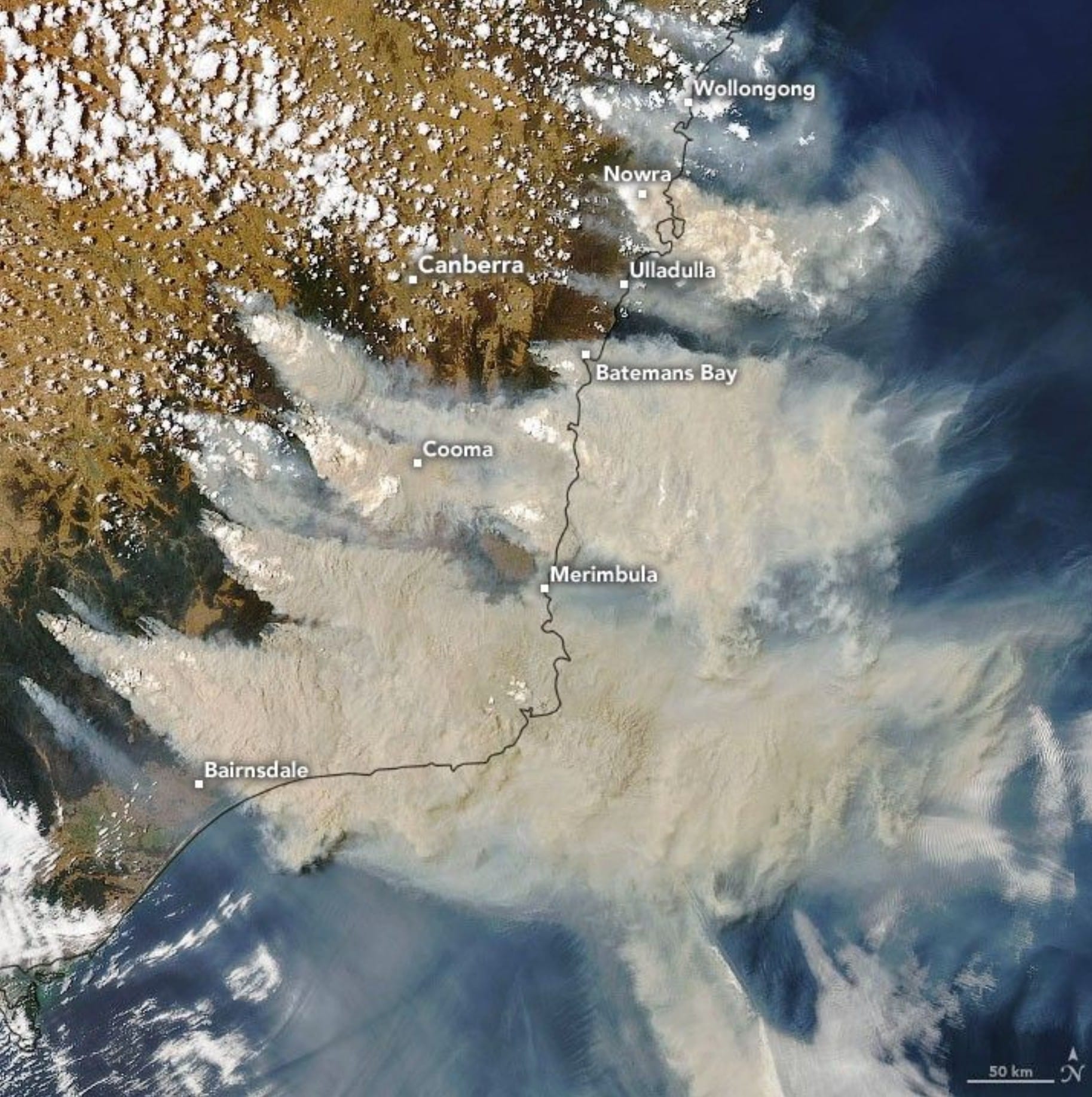
In recent years, smoke from powerful wildfires has raised questions among atmospheric scientists by always swirling in the same direction. The confounding structures were observed in the stratosphere, where smoke injected at around 15 kilometers in altitude absorbed sunlight and rose further, up to about 35 kilometers of altitude. The rising column of fluid would stretch, causing any residual rotation to get stronger and form vortices.
None of this was a surprise. What was surprising is that all of the observed vortices were anticyclones, when theory–at least for a heat-driven vortex from a stationary heating source–called for a cyclone-anticyclone pair.
Researchers looked at how a self-heating (and, therefore, moving) source would rotate. They concluded that this, too, would create a pair of vortices–one cyclonic and one anticyclonic–but the anticyclone would be stronger than the cyclone that trailed behind it. By further considering the vertical shear the vortex pair would encounter, the researchers found that the trailing cyclone could get stripped away, leaving behind only the anticyclone–matching our wildfire observations. (Image credit: J. Stevens/NASA Earth Observatory; research credit: K. Shah and P. Haynes 1, 2; via APS)
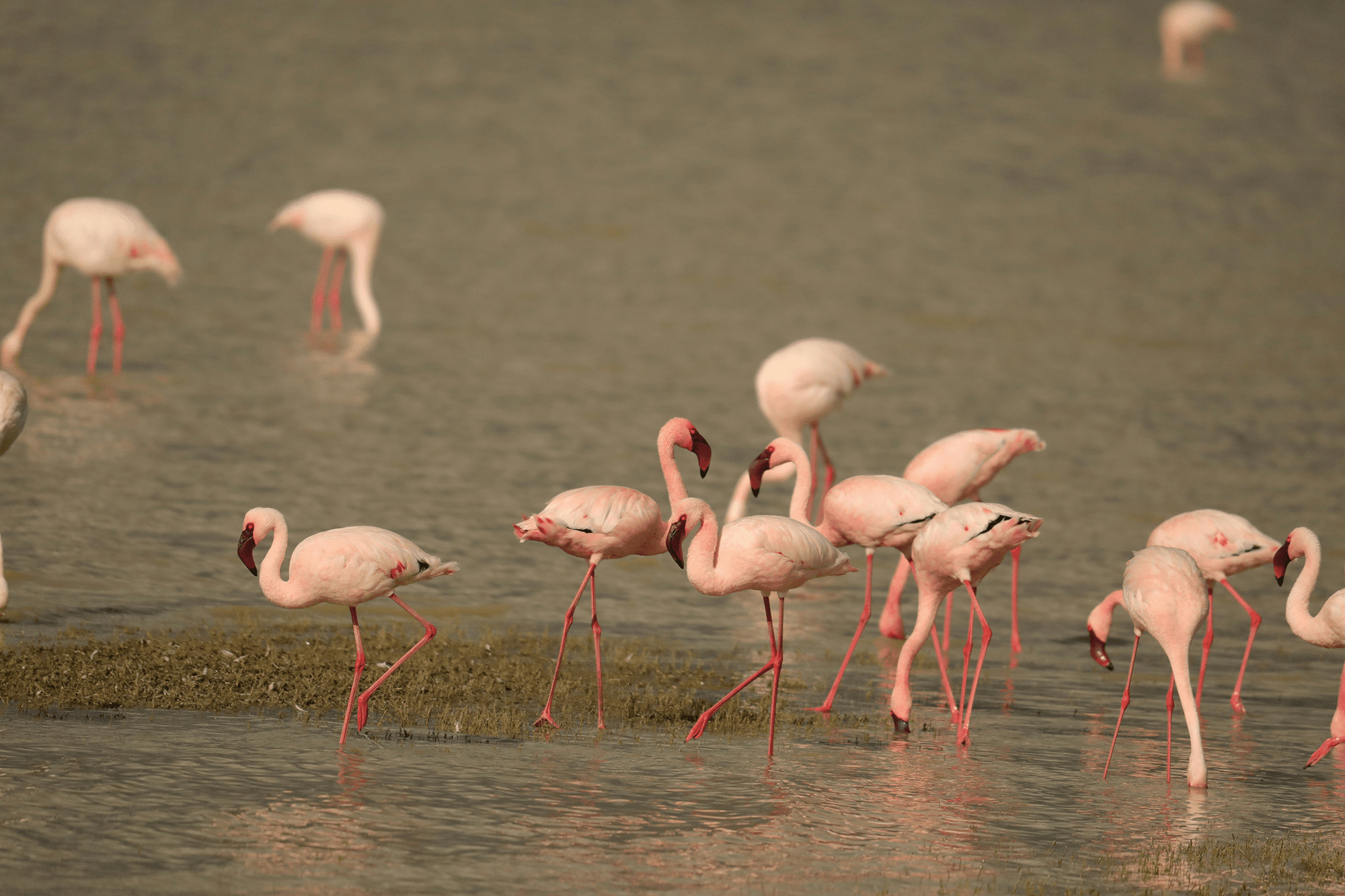
Yesterday we saw how hunting flamingos use their heads and beaks to draw out and trap various prey. Today we take another look at the same study, which shows that flamingos use their footwork, too. If you watch flamingos on a beach, in muddy waters, or in a shallow pool, you’ll see them shifting back and forth as they lift and lower their feet. In humans, we might attribute this to nervous energy, but it turns out it’s another flamingo hunting habit.
As a flamingo raises its foot, it draws its toes together; when it stomps down, its foot spreads outward. This morphing shape, researchers discovered, creates a standing vortex just ahead of its feet — right where it lowers its head to sample whatever hapless creatures it has caught in this swirling vortex. And the vortex, as shown below, is strong enough to trap even active swimmers, making the flamingo a hard hunter to escape. (Image credit: top – L. Yukai, others – V. Ortega-Jimenez et al.; research credit: V. Ortega-Jimenez et al.; submitted by Soh KY)
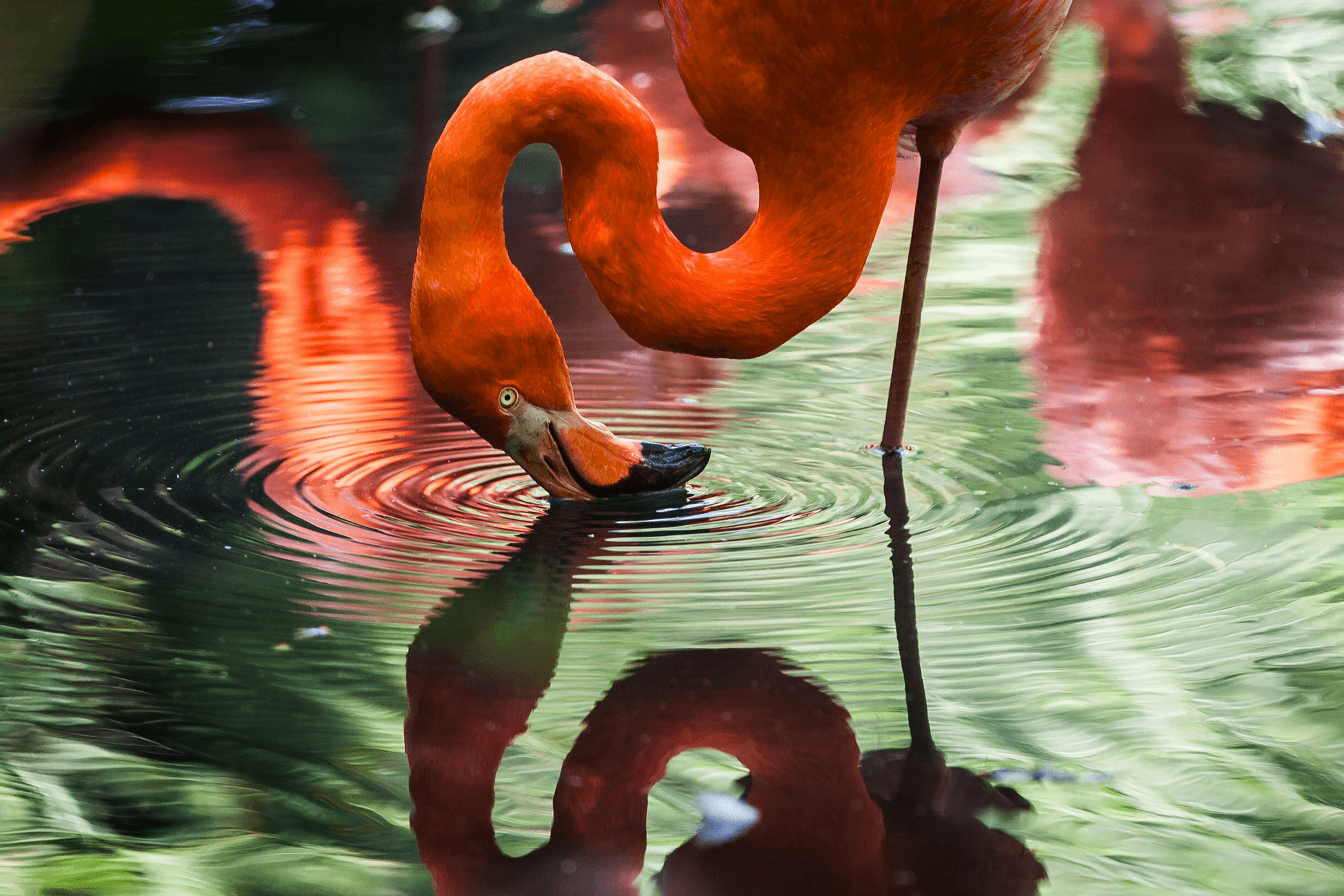
Flamingos are unequivocally odd-looking birds with their long skinny legs, sinuous necks, and bent L-shaped beaks. They are filter-feeders, but a new study shows that they are far from passive wanderers looking for easy prey in shallow waters. Instead, flamingos are active hunters, using fluid dynamics to draw out and trap the quick-moving invertebrates they feed on. In today’s post, I’ll focus on how flamingos use their heads and beaks; next time, we’ll take a look at what they do with their feet.
Feeding flamingos often bob their heads out of the water. This, it turns out, is not indecision, but a strategy. Lifting its flat upper forebeak from near the bottom of a pool creates suction. That suction creates a tornado-like vortex that helps draw food particles and prey from the muddy sediment.
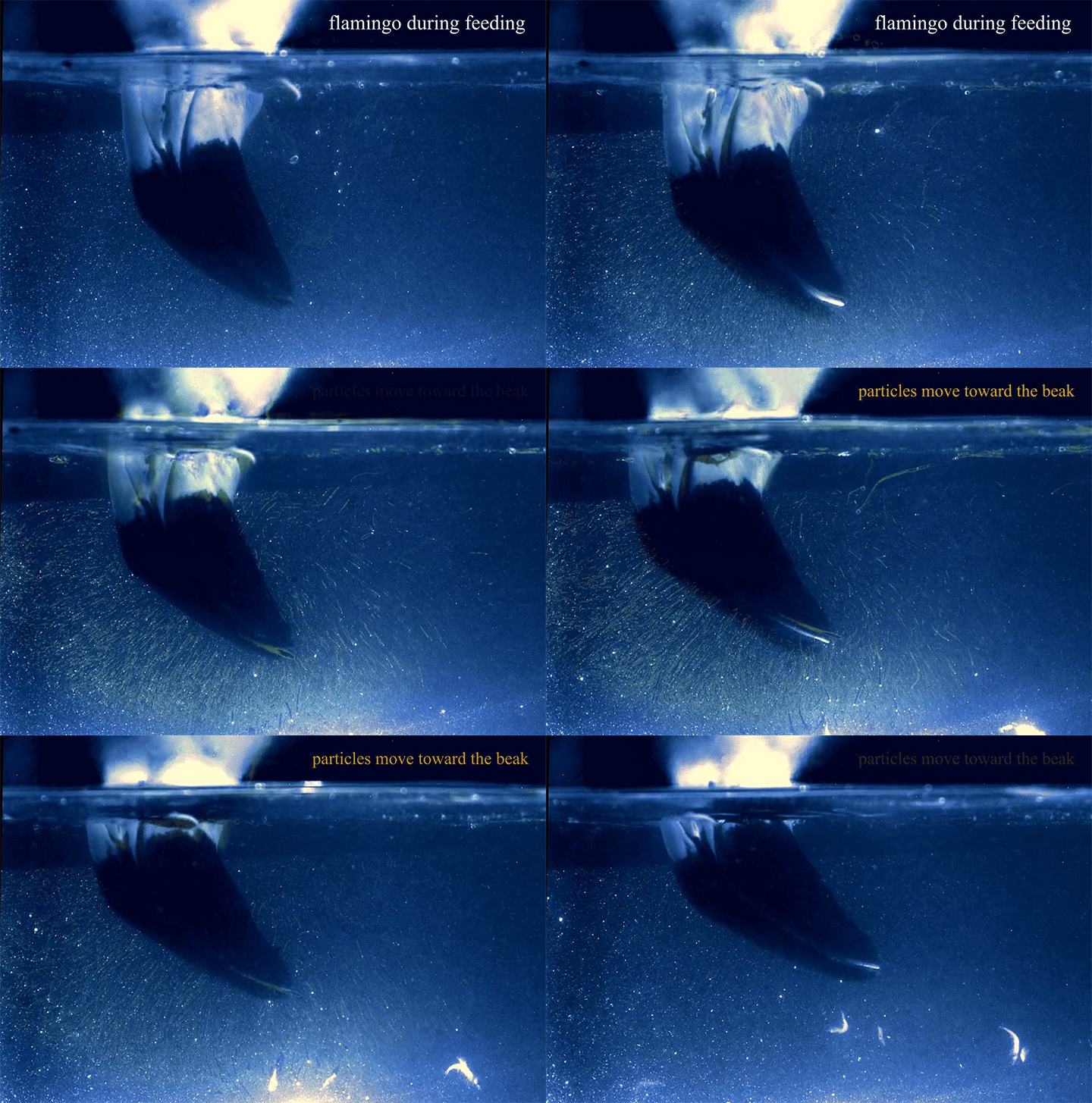
When feeding, flamingos will also open and close their mandibles about 12 times a second in a behavior known as chattering. This movement, as seen in the video above, creates a flow that draws particles — and even active swimmers! — toward its beak at about seven centimeters a second.
Staying near the surface won’t keep prey safe from flamingos, either. In slow-flowing water, the birds will set the upper surface of their forebeak on the water, tip pointed downstream. This seems counterintuitive, until you see flow visualization around the bird’s head, as above. Von Karman vortices stream off the flamingo’s head, which creates a slow-moving recirculation zone right by the tip of the bird’s beak. Brine shrimp eggs get caught in these zones, delivering themselves right to the flamingo’s mouth.
Clearly, the flamingo is a pretty sophisticated hunter! It’s actively drawing out and trapping prey with clever fluid dynamics. Tomorrow we’ll take a look at some of its other tricks. (Image credit: top – G. Cessati, others – V. Ortega-Jimenez et al.; research credit: V. Ortega-Jimenez et al.; submitted by Soh KY)
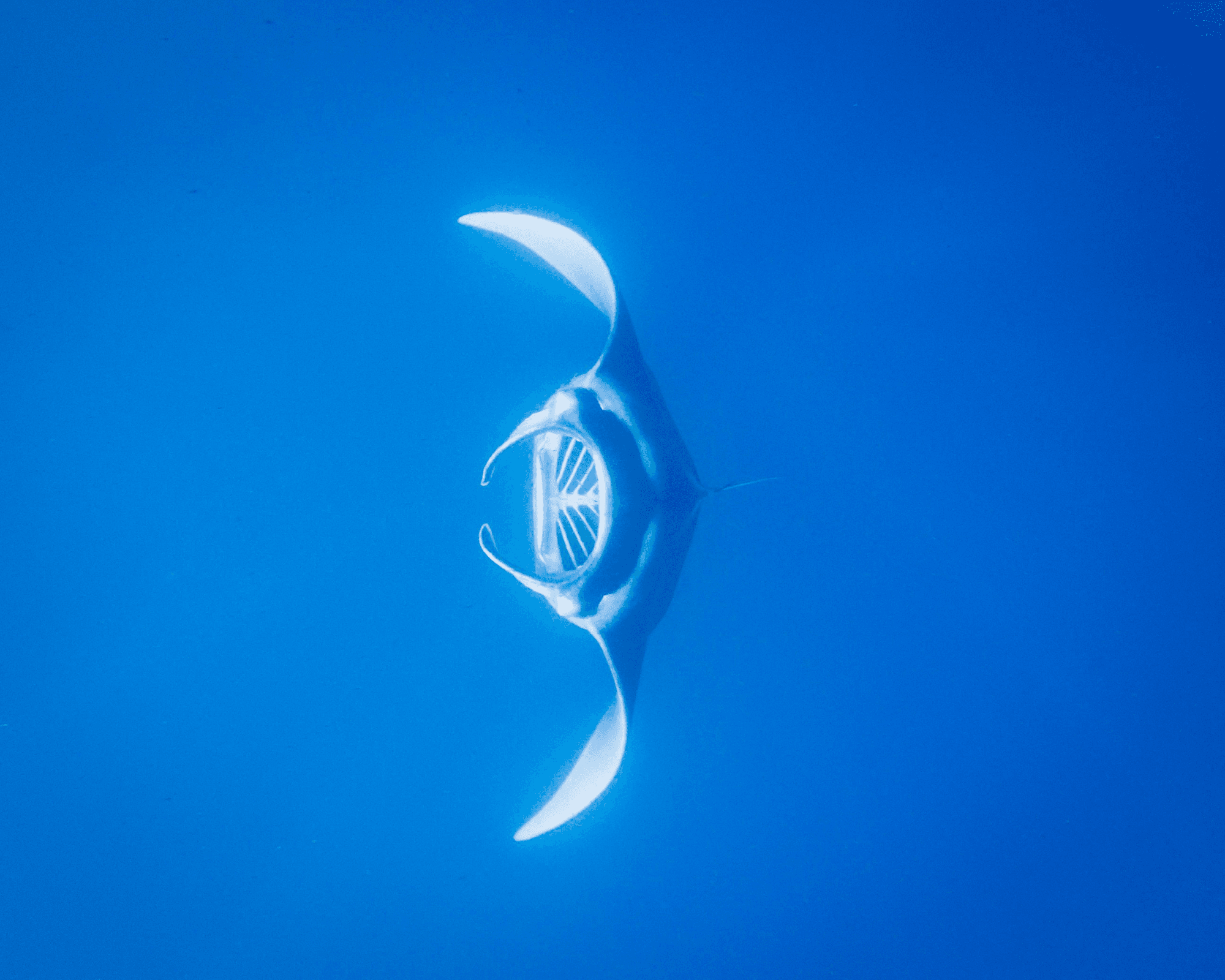
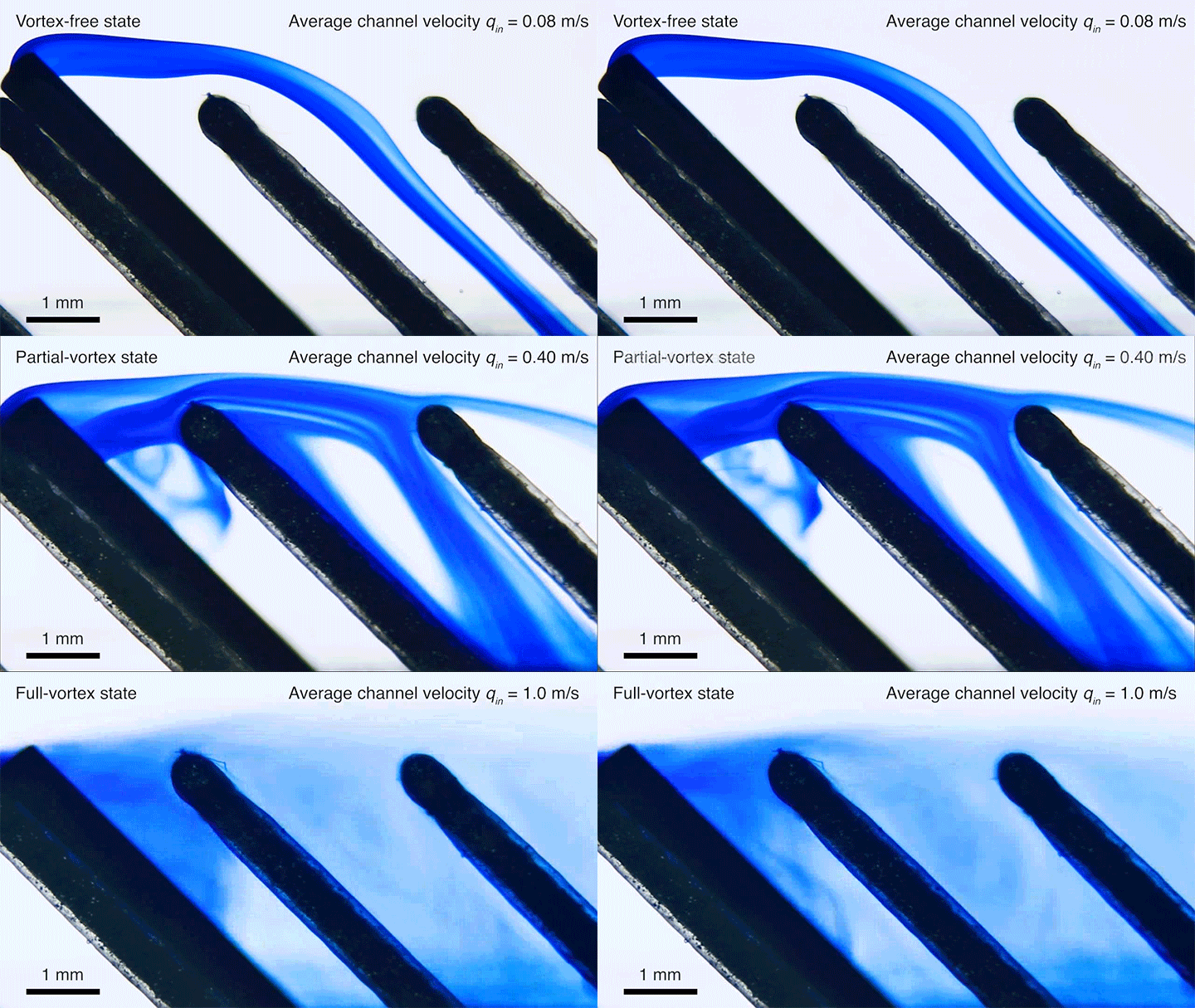
As manta rays swim, they’re constantly doing two important — but not necessarily compatible — things: getting oxygen to breathe and collecting plankton to eat. That requires some expert filtering to send food particles toward their stomach and oxygen-rich water to their gills. Manta rays do this with a built-in filter that resembles an industrial crossflow filter. Researchers built a filter inspired by a manta ray’s geometry, and found that it has three different flow states, based on the flow speed. At low speeds, flow moves freely down the filter’s channels; in a manta, this would carry both water and particles toward the gills. At medium speeds, vortices start to form at the entrance to the filter channels. This sends large particles downstream (toward a manta’s digestive system) while water passes down the channels. At even greater speeds, each channel entrance develops a vortex. That allows water to pass down the filter channels but keeps particles out. (Image credit: manta – N. Weldingh, filter – X. Mao et al.; research credit: X. Mao et al.; via Ars Technica)
Depending on the flow speed, a manta-inspired filter can allow both water and particles in or filter particles out of the water.
The Feast of San Fermín in Pamplona, Spain draws crowds of thousands. Scientists recently published an analysis of the crowd motion in these dense gatherings. The team filmed the crowds at the festival from balconies overlooking the plaza in 2019, 2022, 2023, and 2024. Analyzing the footage, they discovered that at crowd densities above 4 people per square meter, the crowd begins to move in almost imperceptible eddies. In the animation below, lines trace out the path followed by single individuals in the crowd, showing the underlying “vortex.” At the plaza’s highest density — 9 people per square meter — one rotation of the vortex took about 18 seconds.
The team found similar patterns in footage of the crowd at the 2010 Love Parade disaster, in which 21 people died. These patterns aren’t themselves an indicator of an unsafe crowd — none of the studied Pamplona crowds had a problem — but understanding the underlying dynamics should help planners recognize and prevent dangerous crowd behaviors before the start of a stampede. (Image credit: still – San Fermín, animation – Bartolo Lab; research credit: F. Gu et al.; via Nature)
Massive black holes drag and warp the spacetime around them in extreme ways. Observing these effects firsthand is practically impossible, so physicists look for laboratory-sized analogs that behave similarly. Fluids offer one such avenue, since fluid dynamics mimics gravity if the fluid viscosity is low enough. To chase that near-zero viscosity, experimentalists turned to superfluid helium, a version of liquid helium near absolute zero that flows with virtually no viscosity. At these temperatures, vorticity in the helium shows up as quantized vortices. Normally, these tiny individual vortices repel one another, but a spinning propeller — much like the blades of a blender — draws tens of thousands of these vortices together into a giant quantum vortex.
Here superfluid helium whirls in a quantum vortex.
With that much concentrated vorticity, the team saw interactions between waves and the vortex surface that directly mirrored those seen in black holes. In particular, they detail bound states and black-hole-like ringdown phenomena. Now that the apparatus is up and running, they hope to delve deeper into the mechanics of their faux-black holes. (Image credit: L. Solidoro; research credit: P. Švančara et al.; via Physics World)
Some 20,000 years ago, a massive star blew off a ring of dust and gas that expanded into the surrounding interstellar medium. Later, in 1987, the star exploded as supernova 1987A. That explosion lit the surrounding area, revealing a clumpy ring astronomers have struggled to explain. But a new team believes they have a fluid dynamical answer: the Crow instability.
Closer to home, we see the Crow instability when an airplane’s contrails break up. It happens when two vortices that rotate in opposite directions are close to one another. Any wobble in one vortex is enhanced by the influence of its neighbor. Eventually, this breaks the original vortices apart and causes them to reform as a series of smaller vortex rings.
A comparison between an image of SN 1987A and an illustration of the vortex ring interaction thought to create that shape.
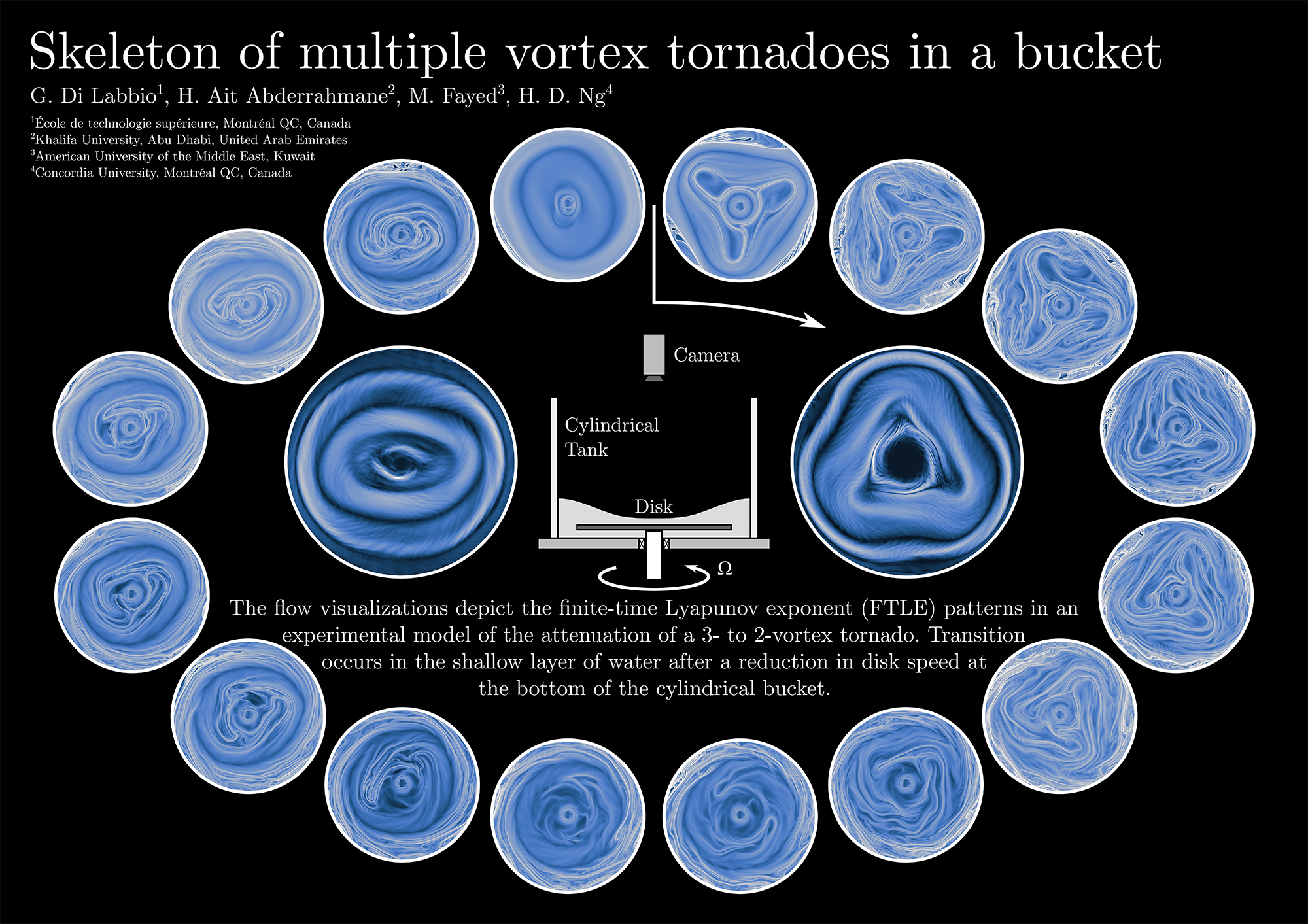
In nature, some powerful tornadoes form additional tornadoes within their shear layer. These subvortices revolve around the main tornado, causing massive destruction in their wake. In the laboratory, researchers create a similar multi-tornado system with a spinning disk at the bottom of a shallow, cylindrical layer of water. Depending on how fast the disk spins, different numbers of subvortices form around the main vortex.
In this poster, researchers show the transition from a 3-subvortex system to a 2-subvortex one. Starting at the 12 o’clock position and moving clockwise, we see 3 subvortices arranged in a triangle. A sudden change in the disk’s rotation speed destabilizes the system, causing the subvortices to break down and shift into a new 2-subvortex configuration. As this happens, material that was isolated in each subvortex (darker blue regions) is suddenly able to mix. That suggests that a real-world multiple vortex tornado might suddenly shed debris if it lost enough angular momentum. Back in the lab, though, the shift to a stable 2-subvortex system once again isolates material in individual subvortices and prevents it from mixing with the rest of the flow. (Image and research credit: G. Di Labbio et al. 1, 2)
Every child learns to blow soap bubbles, but it’s rare that we have a chance to look inside them and see the flow there. In this poster, researchers seed a growing bubble with olive oil droplets, then illuminate them with a laser. This provides a glimpse inside the bubble. In the center, we see the incoming jet dividing the bubble in two and forming two large, counter-rotating vortices. Along the left side, snapshots show the bubble’s interior as it grows and, eventually, pops. (Image credit: S. Rau et al.)















































_(SN1987a-1).jpg)