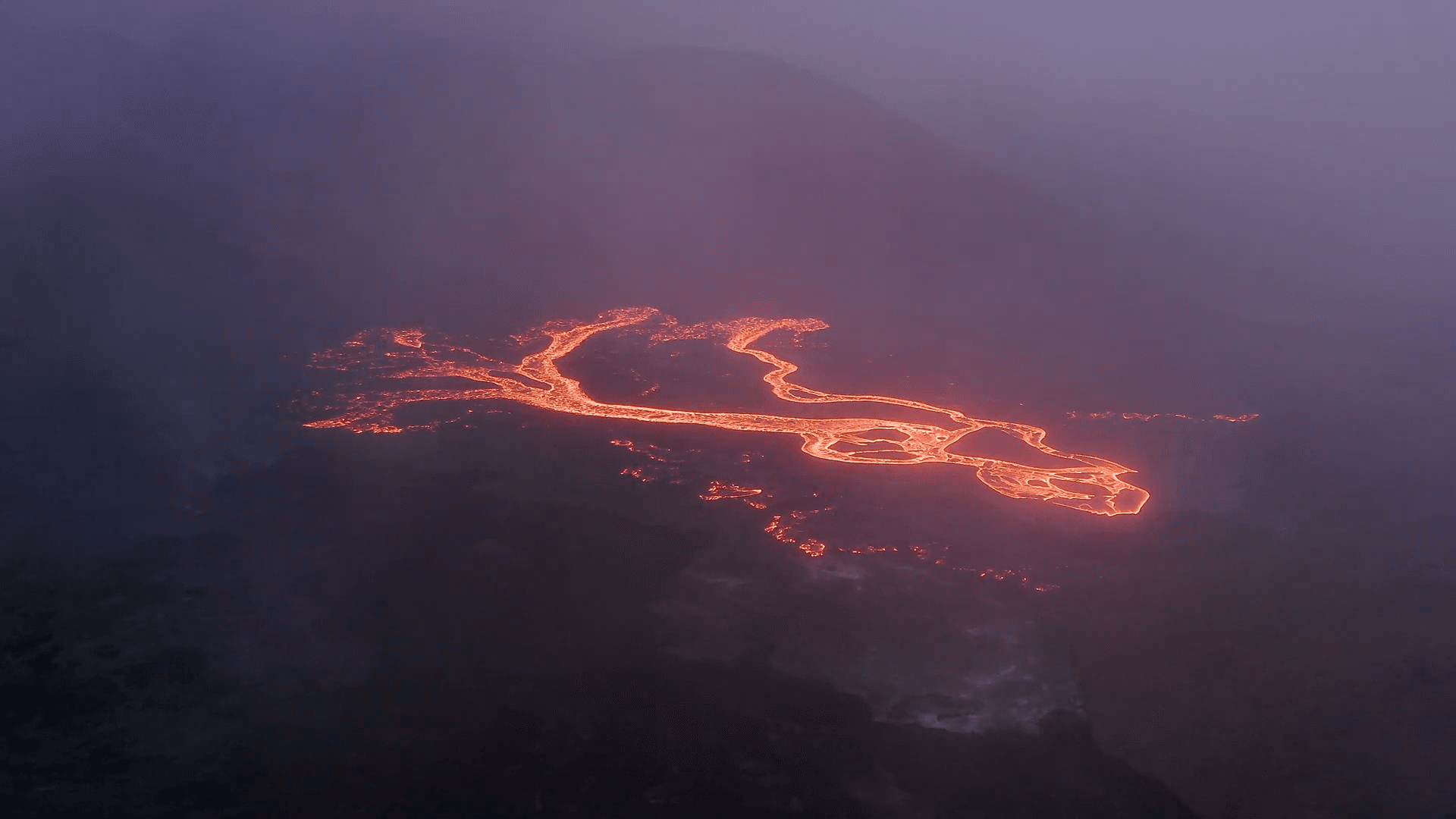
Tag: volcano

  • Venusian Gravity Currents

    Venusian Gravity Currents

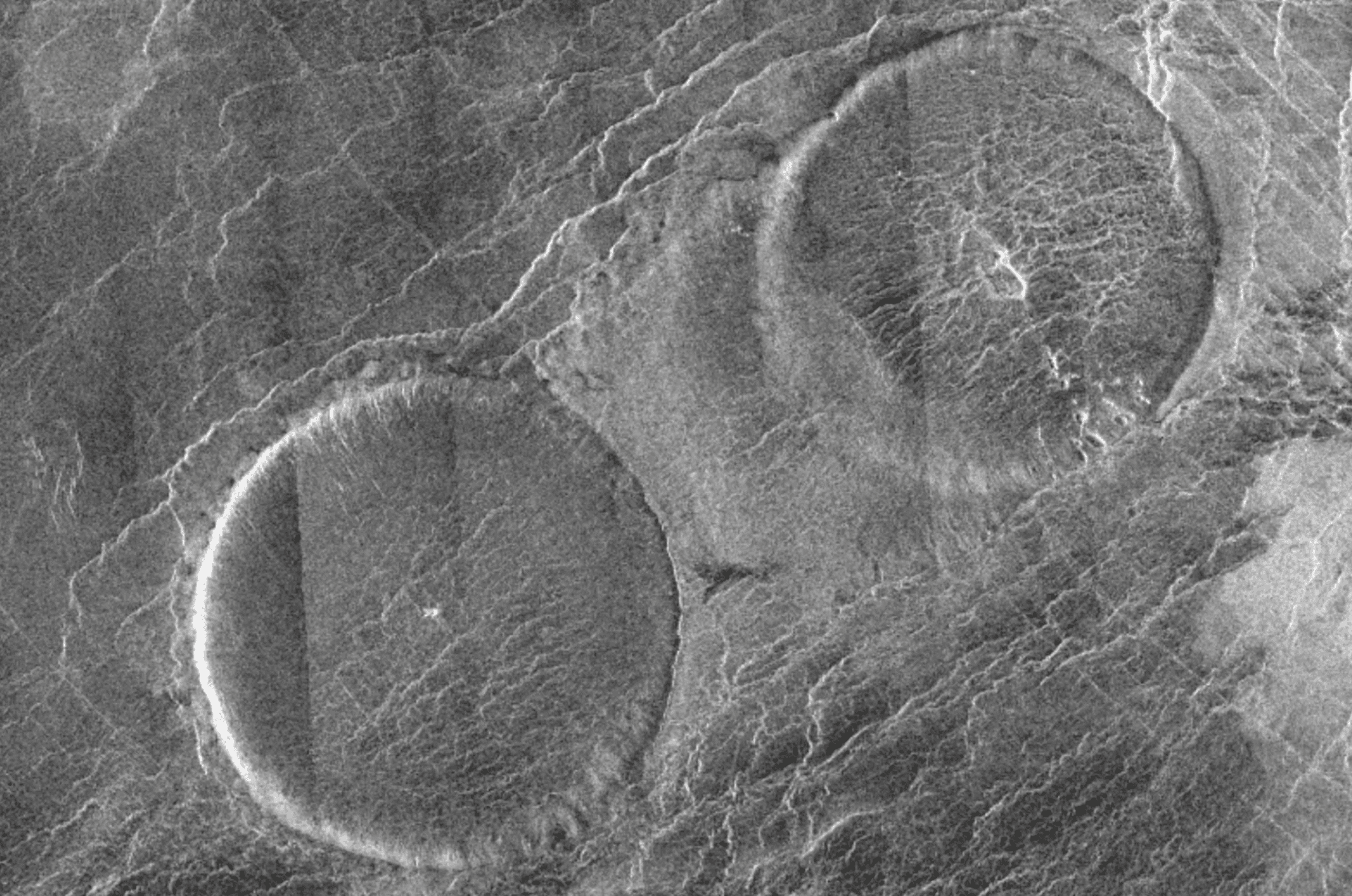
    Radar measurements of Venus‘s surface reveal the remains of many volcanic eruptions. One type of feature, known as a pancake dome, has a very flat top and steep sides; one dome, Narina Tholus, is over 140 kilometers wide. Since their discovery, scientists have been puzzling out how such domes could form. A recent study suggests that the Venusian surface’s elasticity plays a role.

    According to current models, the pancake domes are gravity currents (like a cold draft under your door, an avalanche, or the Boston Molasses Flood), albeit ones so viscous that they may require hundreds of thousands of Earth-years to settle. Researchers found that their simulated pancake domes best matched measurements from Venus when the lava was about 2.5 times denser than water and flowed over a flexible crust.

    We might have more data to support (or refute) the study’s conclusions soon, but only if NASA’s VERITAS mission to Venus is not cancelled. (Image credit: NASA; research credit: M. Borelli et al.; via Gizmodo)

    Fediverse Reactions
  • Io’s Missing Magma Ocean

    Io’s Missing Magma Ocean

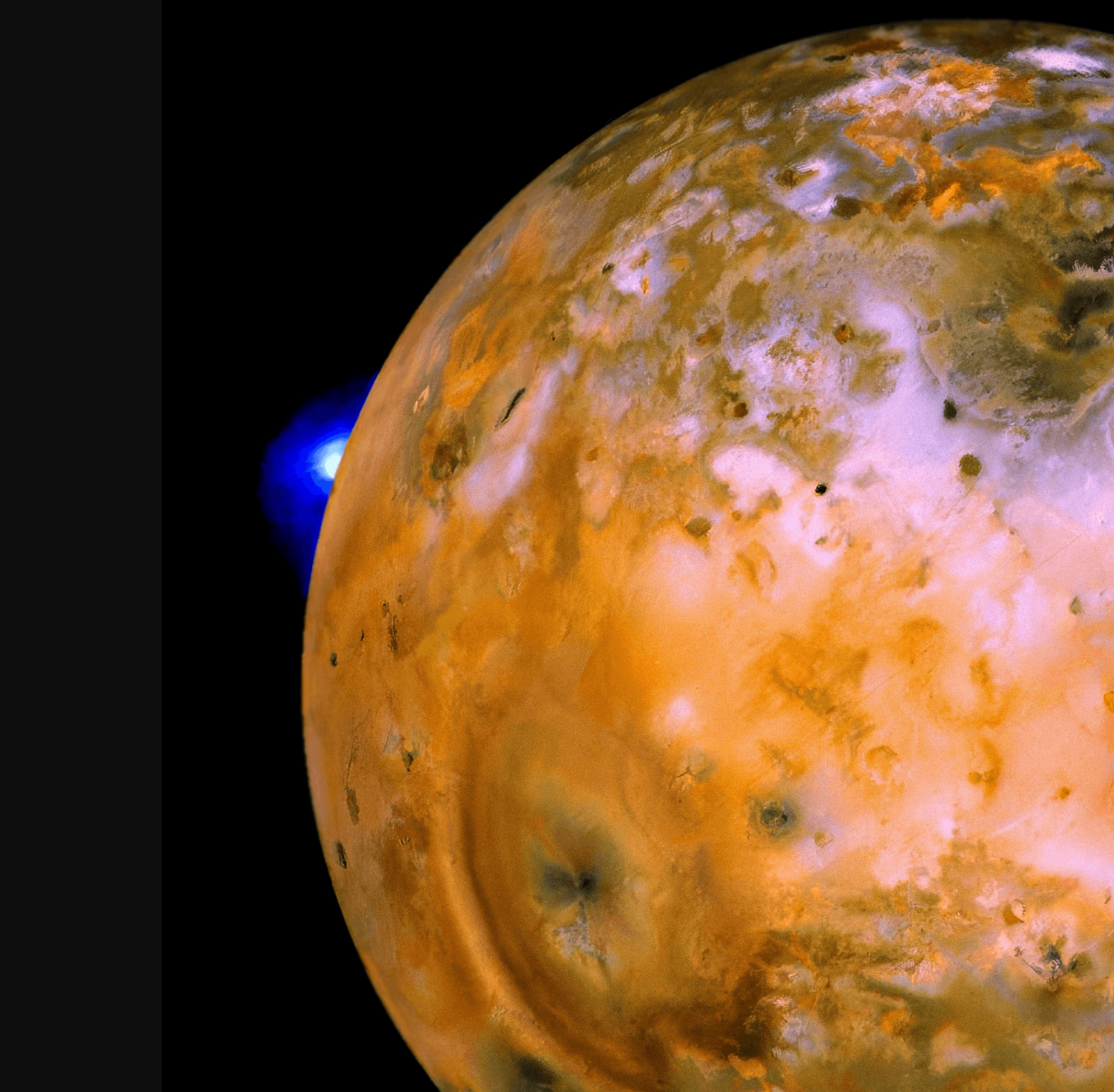
    In the late 1970s, scientists conjectured that Io was likely a volcanic world, heated by tidal forces from Jupiter that squeeze it along its elliptical orbit. Only months later, images from Voyager 1’s flyby confirmed the moon’s volcanism. Magnetometer data from Galileo’s later flyby suggested that tidal heating had created a shallow magma ocean that powered the moon’s volcanic activity. But newly analyzed data from Juno’s flyby shows that Io doesn’t have a magma ocean after all.

    The new flyby used radio transmission data to measure any little wobbles that Io caused by tugging Juno off its expected course. The team expected a magma ocean to cause plenty of distortions for the spacecraft, but the effect was much slighter than expected. Their conclusion? Io has no magma ocean lurking under its crust. The results don’t preclude a deeper magma ocean, but at what point do you distinguish a magma ocean from a body’s liquid core?

    Instead, scientists are now exploring the possibility that Io’s magma shoots up from much smaller pockets of magma rather than one enormous, shared source. (Image credit: NASA/JPL/USGS; research credit: R. Park et al.; see also Quanta)

    Fediverse Reactions
  • Non-Newtonian Effects in Magma Flows

    Non-Newtonian Effects in Magma Flows

    As magma approaches the surface, it forces its way through new and existing fractures in the crust, forming dikes. When a volcano finally erupts, the magma’s viscosity is a major factor in just how explosive and dangerous the eruption will be, but a new study shows that what we see from the surface is a poor predictor of how magma actually flows within the dike.

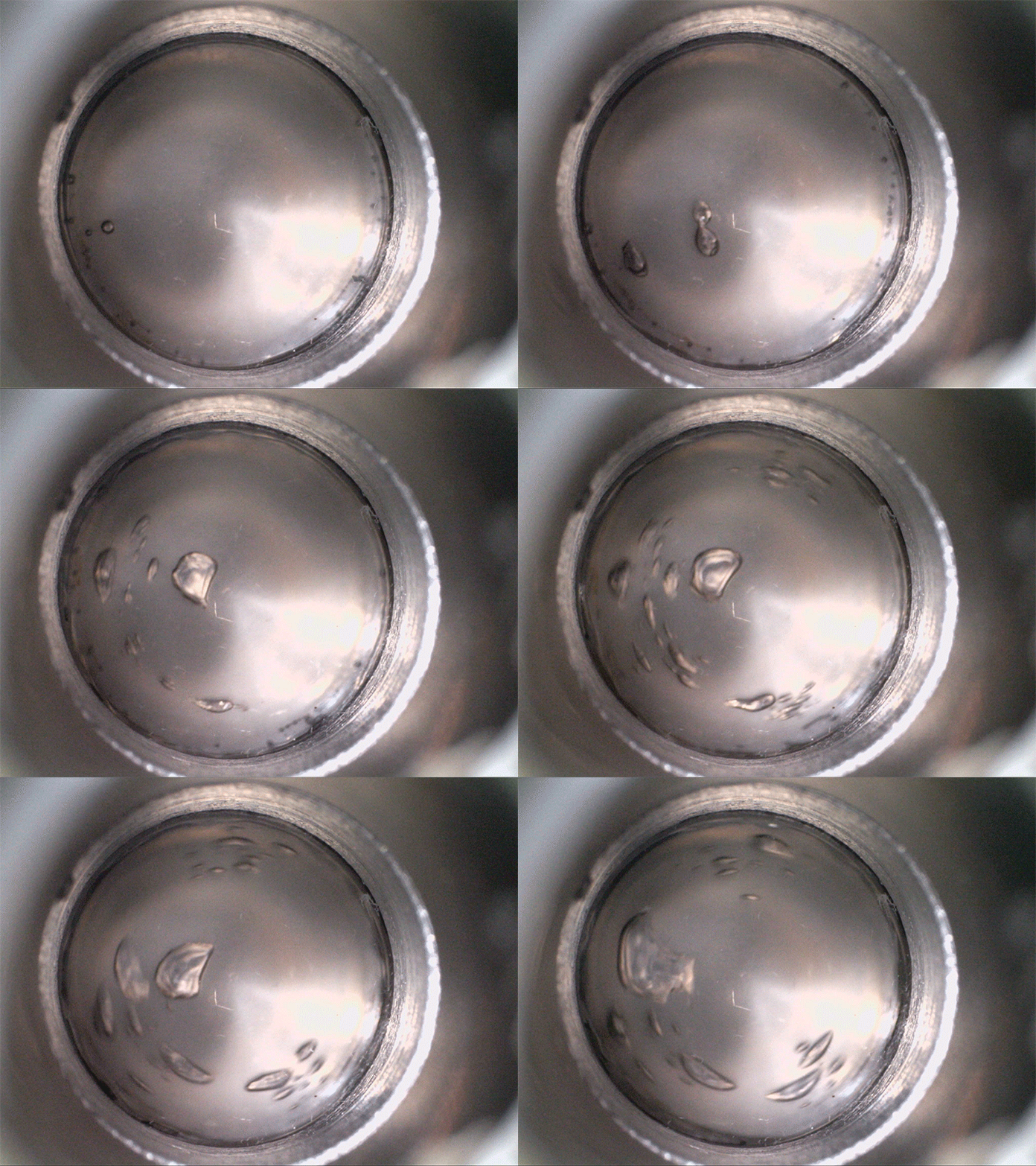
    Researchers built their own artificial dike using a clear elastic gelatin, which they injected water and shear-thinning magma-mimics into. By tracking particles in the liquids, they could observe how each liquid followed on its way to the surface. All of the liquids formed similar-looking dikes at a similar speed, but within the dike, the liquids flowed very differently. Water cut a central jet through the gelatin, then showed areas of recirculation along the outer edges. In contrast, the shear-thinning liquids — which are likely more representative of actual magma — showed no recirculation. Instead, they flowed through the dike in a smooth, fan-like shape.

    The team cautions that surface-level observations of developing magma dikes provide little information on the flow going on underneath. Instead, their results suggest that volcanologists modeling magma underground should take care to include the magma’s shear-thinning to properly capture the flow. (Image credit: T. Grypachevska; research credit: J. Kavanagh et al.; via Eos)

    Fediverse Reactions
  • The Underwater Effects of Volcanoes

    The Underwater Effects of Volcanoes

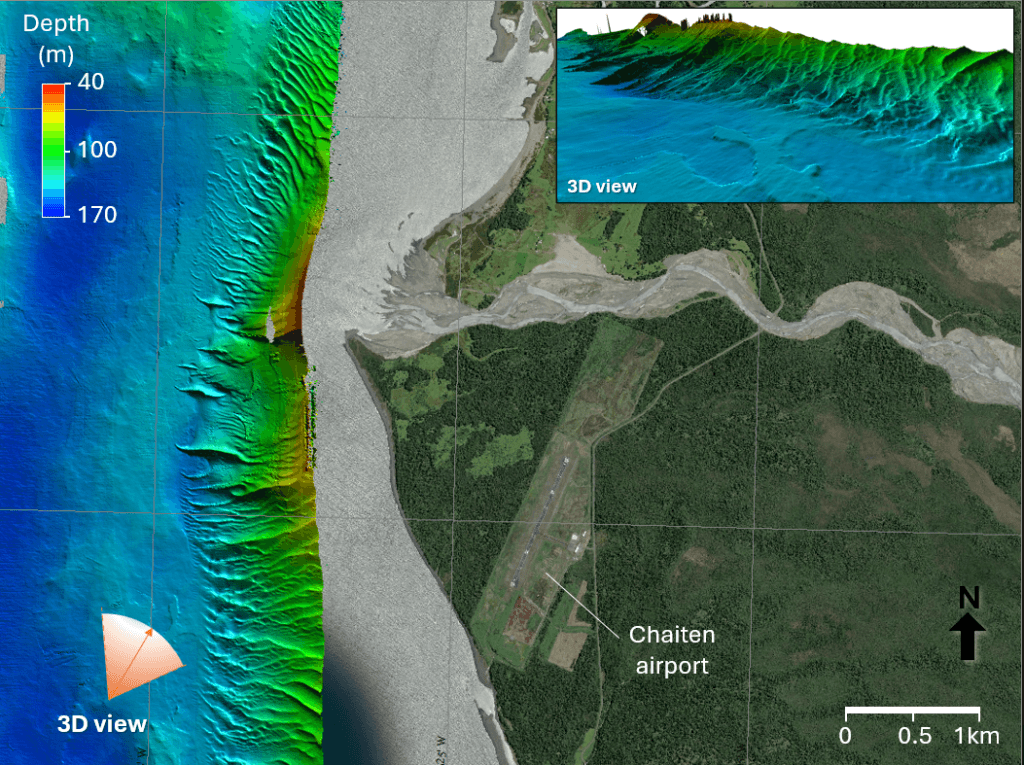
    Although volcanoes are typically located in or near the ocean, we’ve spent relatively little effort studying how eruptions affect the marine environment. A recent research voyage aimed to change that by studying the Patagonian Sea near the site of the 2008 Chaitén eruption. Marked by massive ashfalls that, when mixed with heavy rains, created huge mudslides, the 2008 eruption was the Chaitén volcano’s first in 9,000 years.

    The researchers mapped the seafloor near the volcano, finding massive dunes shaped by strong currents. Using a remotely operated vehicle, the team surveyed and sampled the seafloor, collecting sediments reaching back some 15,000 years. They also located ash from the 2008 eruption over 24 kilometers from the volcano. With their data, they hope to understand both how the recent eruption changed the marine environment as well as how older eruptions affected the area. (Image credits: volcano – USGS, dunes – Schmidt Ocean Institute; see also Schmidt Ocean Institute; via Ars Technica)

    Composite image showing the massive underwater dunes off the coast.
    Composite image showing the massive underwater dunes off the coast.

    P.S. – This Friday, January 24th from 12 to 1:30pm Eastern I’m moderating a panel discussion on the Traveling Gallery of Fluid Motion and how art and science can work together in public outreach. Register here to join. It’s free!

    Fediverse Reactions
  • Tracking Tonga’s Boom

    Tracking Tonga’s Boom

    When the Hunga Tonga-Hunga Ha’apai volcano erupted in January 2022, its effects were felt — and heard — thousands of kilometers away. A new study analyzes crowdsourced data (largely from Aotearoa New Zealand) to estimate the audible impact of the eruption. The researchers found that the volume, arrival time, and nature of the rolling rumble reported by survey takers correlated well with seismic measurements. But humans provided data that monitoring equipment couldn’t. For example, reports of shaking buildings and rattling windows let researchers estimate the shock wave‘s overpressure far from the volcano. The team suggests that acting quickly to collect human impressions of rare events like this one can add valuable data that’s otherwise overlooked. (Image credit: NASA; research credit: M. Clive et al.; via Gizmodo)

  • A Seismic Warning for the Tongan Eruption

    A Seismic Warning for the Tongan Eruption

    In mid-January 2022, the Hunga Tonga-Hunga Ha’apai (HTHH) volcano had one of the most massive eruptions ever recorded, destroying an island, generating a tsunami, and blanketing Tonga in ash. Volcanologists are accustomed to monitoring nearby seismic equipment for signs of an imminent eruption, but researchers found that the HTHH eruption generated a surface-level seismic wave picked up by detectors 750 kilometers away about 15 minutes before the eruption began. They propose that the seismic wave occurred when the oceanic crust beneath the caldera fractured. That fracture could have allowed seawater and magma to mix above the volcano’s subsurface magma chamber, creating the explosive trigger for the eruption. Their finding suggests that real-time monitoring for these distant signals could provide valuable early warning of future eruptions. (Image credit: NASA Earth Observatory; research credit: T. Horiuchi et al.; via Gizmodo and AGU News)

    Fediverse Reactions
  • “Stomp-Rocket”: A New Type of Eruption

    “Stomp-Rocket”: A New Type of Eruption

    When Kilauea‘s caldera collapsed in 2018, it came with a sequence of 12 closely-timed eruptions that did not match either of the typical volcanic eruption types. Usually, eruptions are either magmatic — caused by rising magma — or phreatic — caused by groundwater flash-boiling into steam. The data from Kilauea matched neither type.

    Instead, scientists proposed a new model for eruption, based around a mechanism similar to the stomp-rockets that kids use. They suggested that, before the eruption, Kilauea’s magma reservoir contained a mixture of magma and a pocket of gas. When part of the magma reservoir collapsed, the falling rock compressed the gases in the chamber — much the way a child’s foot compresses the air reservoir of a stomp rocket — building up enough gas pressure to explosively launch debris and hot gas up to the surface.

    The team found that computer simulations of this new eruption model matched well with observations and measurements taken at Kilauea in 2018. Kilauea is one of the most closely monitored volcanoes in the world; although the team suspects this mechanism occurs during caldera collapse of other volcanoes, it’s unlikely they could have pieced together such a convincing case for an eruption anywhere else. (Image credit: O. Holm; research credit: J. Crozier et al.; via Physics World)

  • Venusian Lava Flows

    Venusian Lava Flows

    Venus is often known as Earth’s twin, given its similar size and proximity. But, thanks to its runaway greenhouse effect, Venus is a hellish landscape buried beneath a hot atmosphere of carbon dioxide and sulfuric acid. Unlike Earth, Venus is not tectonically active, though it does have active volcanoes. A recent study re-examined synthetic aperture radar data from the Magellan spacecraft mission in the early 1990s and found that the data contained evidence of fresh lava flows.

    The team found two areas near volcanoes where the surface backscatter changed significantly between orbital observations. After examining many possible explanations for the changes, the team concluded that the differences were most likely due to new lava. They even performed the same analysis for a volcanic field here on Earth between known lava flows and observed the same behavior. Combined with another recent study that found evidence of volcanic activity in Magellan data, signs are pointing toward Venus being about as volcanically active as our own planet, even if the mechanisms driving the volcanism differ. (Image credit: NASA/JPL-Caltech; research credit: D. Sulcanese et al.; via Gizmodo)

  • Vortex Rings at Dawn

    Vortex Rings at Dawn

    Vortex rings blown from Mount Etna’s vents drift through the dawn light in this beautiful image from Dario Giannobile. Little is required to create vortex rings — they are a puff of fluid shaped by an orifice — but they are relatively unusual to see around volcanoes. Etna is an exception; it happens to have one or more vents that frequently form rings. Their shape and the venting pattern of the volcano must be unusually well-suited to ring formation. (Image credit: D. Giannobile; via APOD)

  • Featured Video Play Icon

    Etna’s Blowing Rings

    Mount Etna has long been known for its smoke rings, but thanks to the opening of a new vent on the volcano’s southeast crater, it’s now making more rings than ever. Etna’s smoke rings are, more precisely, vortex rings — produced in the same way dolphins, swimmers, and whales make vortex rings: a sudden push of air through a roughly circular opening. It’s likely that Etna and other volcanoes make far more rings than those we see; we’re limited to noticing only the ones that entrain smoke and condensation to make them visible. (Video and image credit: The Straits Times; via Colossal)