In applications like drug delivery, it’s often desirable to encapsulate one or more liquid droplets in an additional immiscible fluid. These drops-within-drops, called double emulsions, are typically a multi-step process, created from the innermost drop outward. In this new microfluidic technique, though, researchers are able to create multi-component emulsions in a single step. A double-bored capillary tube creates the two inner droplets (both water, dyed different colors) while oil flows down the outside of the injection tube to encapsulate the droplets. The multi-component double emulsions then flow as one to the right in the outer carrier fluid. The spacing of the capillary tubes is critical to prevent the inner droplets from coalescing with one another. (Video credit: L. L. A. Adams et al.)
Category: Phenomena

Real-Life Whirlpools

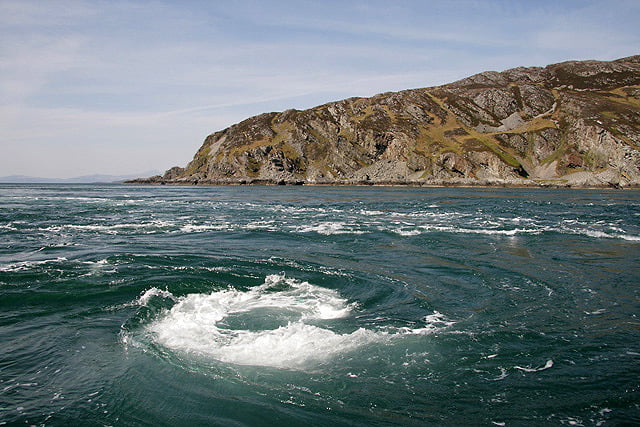
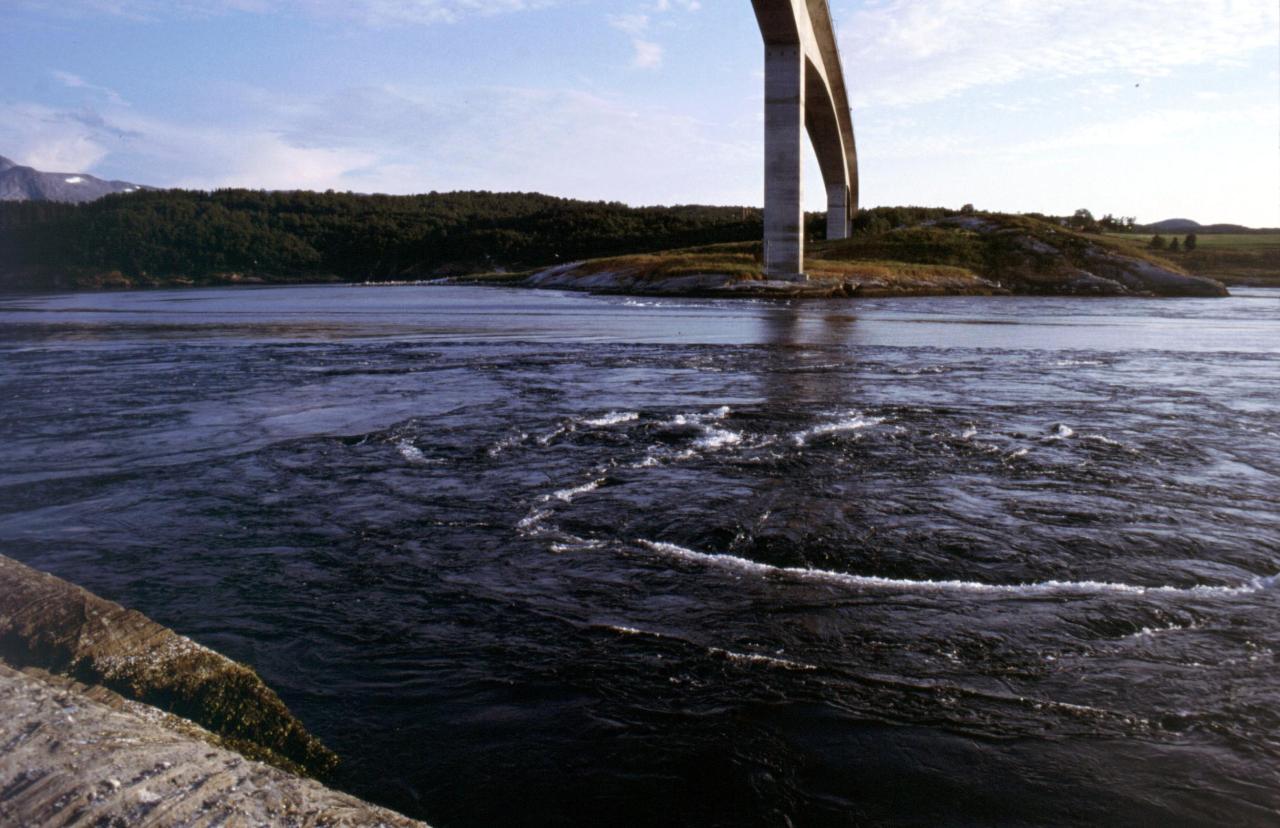
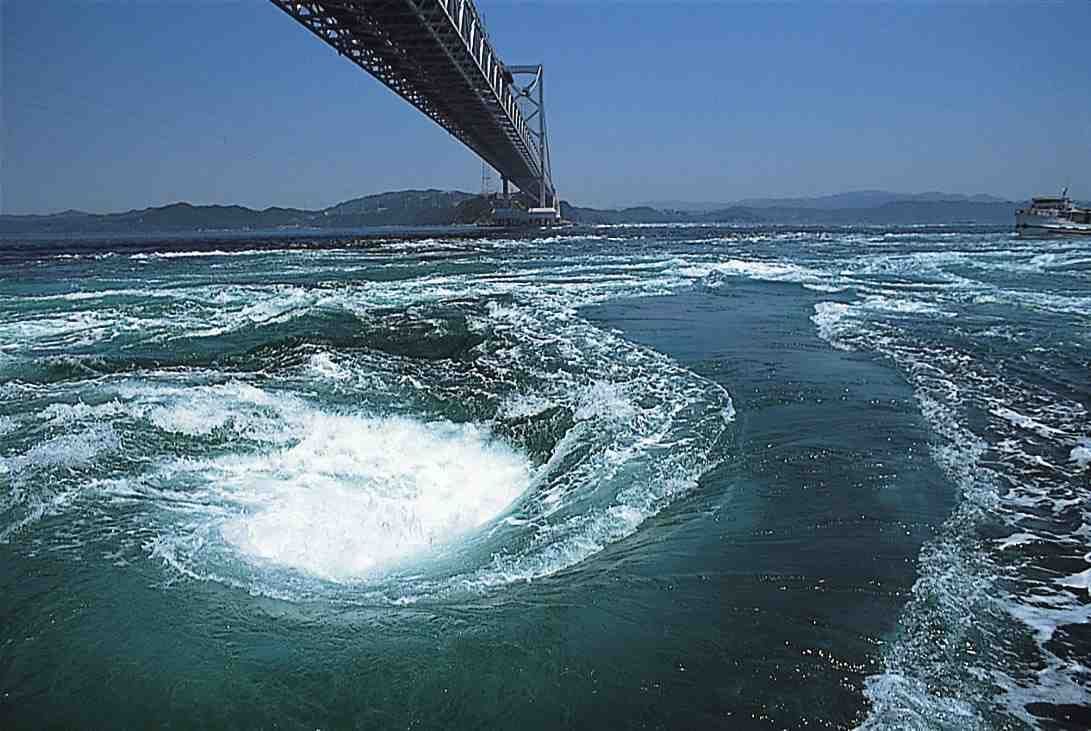
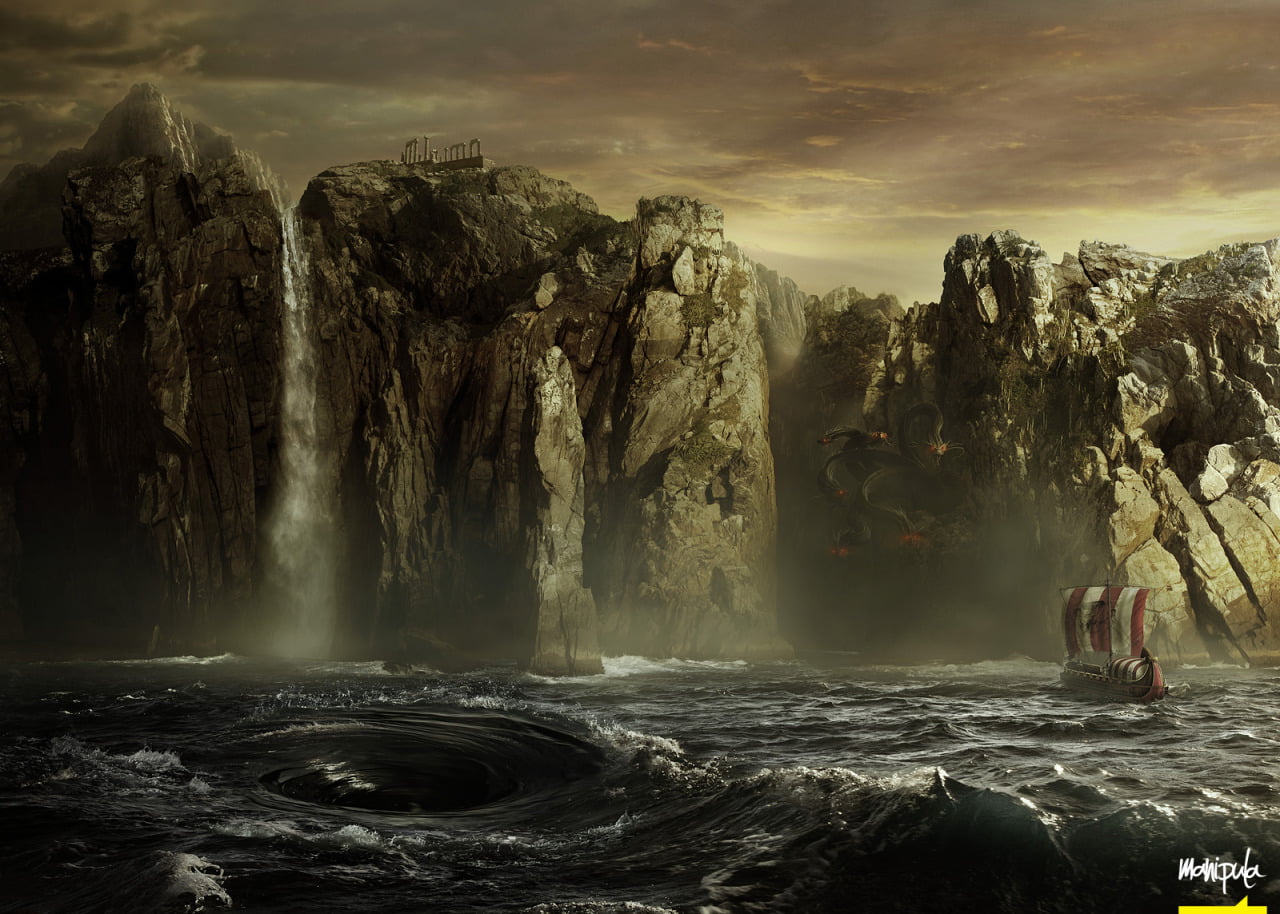
Literature is full of descriptions of monstrous whirlpools like Charybdis, which threatens Homer’s Odysseus. While it’s not unusual to see a small free vortex in bodies of water, most people would chalk boat-swallowing maelstroms up to literary device. But it turns out that, while there may not be permanent Hollywood-style whirlpools, there are several places in the world where the local tides, currents, and topology combine to produce turbulence, dangerously vortical waters, and even standing vortices on a regular basis.
One example is the Corryvreckan, between the islands of Jura and Scarba off Scotland. In this narrow strait, Atlantic currents are funneled down a deep hole and then thrust upward by a pinnacle of rock that rises some 170 m to only 30 m below the surface. The swift waters and unusual topology produce strong turbulence near the surface and whirlpools pop up throughout the strait. Other “permanent” maelstroms, such as those in Norway and Japan, arise from tidal interactions with similar structures rising from the sea floor.
For more, check out this Smithsonian article, Gjevik et al., Moe et al., and the videos linked above! (Photo credits: Manipula, Tokushima Gov’t, Wikimedia, and W. Baxter; requested by @kb8s)

SpaceShipTwo Lights It Up

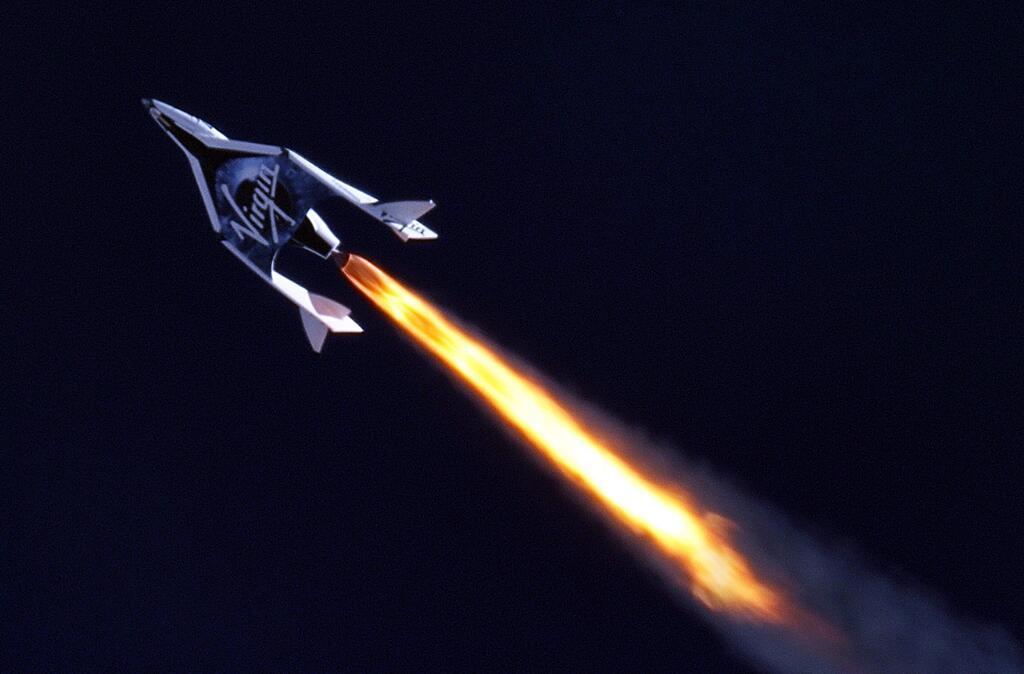
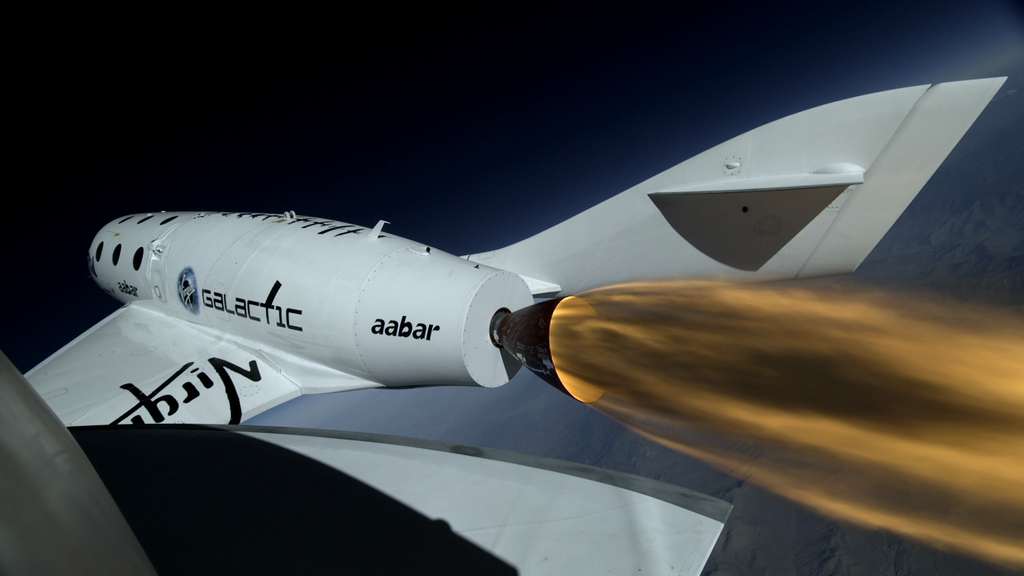
Monday morning Virgin Galactic and their partners at Scaled Composites reached a new milestone in their commercial sub-orbital spaceflight program, firing SpaceShipTwo’s main engine for the first time and accelerating to supersonic speeds. The upper image shows hints of Mach diamonds, formed by a series of shock waves and expansions, in its exhaust. This is very common for rockets since most have a fixed geometry, and, by extension, a fixed Mach number and exhaust pressure. (Photo credits: Virgin Galactic and Mars Scientific)

Wake Vortices at Night
The ends of an airplane’s wings generate vortices that stretch back in the wake of the plane. Most of the time these vortices are invisible, even if their effects on lift are distinctive. Here an A-340 coming in for a foggy landing demonstrates the size and strength of these vortices. Notice how the fog gets swept up and away by the vortices. Pilots will sometimes use this effect to their advantage in clearing a runway of fog by making repeated low-passes to clear the fog before landing. (Video credit: A. Ruesch; submitted by Jens F.)
Tears of Wine
Wine drinkers may be familiar with the “tears of wine” often seen on the wall’s of a glass. The effect is a combination of evaporation and surface tension. As the low-surface-tension alcohol evaporates from the wine film left by swirling the glass, the higher local surface tension draws wine up the walls of the glass. Eventually enough wine gathers that droplets form and slide back down. This timelapse video shows how the beads form and move, almost dancing around the glass. The video’s author, Dan Quinn, has a second video with an awesome visual explanation of the behavior that’s well worth watching, too! (Video credit and submission: D. Quinn)
Internal Wave Demo
This video has a fun and simple demonstration of the importance of fluid density in buoyancy and stratification. Fresh water (red) and salt water (blue) are released together into a small tank. Being lighter and less dense, the red water settles on top of the blue water, though some internal waves muddy their interface. After the water settles, a gate is placed between them once more and one side is thoroughly mixed to create a third fluid density (purple), which, when released, settles between the red and blue layers. In addition to displaying buoyancy, this demo does a great job ofaa showing the internal waves that can occur within a fluid, especially one of varying density like the ocean. (Video credit: UVic Climate Modeling Group)
Washing Your Face in Space
What happens to a wet washcloth when wrung out in space? Astronaut Chris Hadfield answers this question from students with a demonstration. Without gravity to pull the water downward, surface tension effects dominate and the wrung cloth forms a tube of water around it. Surface tension and capillary action draw the fluid up and onto Hadfield’s hands as long as he holds the cloth. After he lets go, we see that the water remaining around the cloth soaks back in (again due to capillary action) and the wet, twisted washcloth simply floats without releasing water or relaxing its shape. While pretty much what I would have expected, this was a very cool result to see! (Video credit: C. Hadfield/CSA; submitted by Bobby E)
Bottle Rocket Shock Waves
This high speed video shows schlieren photography of a bottle rocket’s exhaust. The supersonic CO2 leaving the nozzle is underexpanded, meaning its pressure is still higher than the ambient atmosphere. As a result, a series of diamond-shaped shock waves and expansion fans appear in the exhaust jet. Each shock and expansion changes the pressure of the exhaust until it ultimately reaches the same pressure as the ambient air. This distinctive pattern, also known as Mach diamonds or shock diamonds, often occurs in wake of rockets. (Video credit: P. Peterson and P. Taylor)
Diving Peregrines
Few animals can compete with a peregrine falcon for pure speed. There is evidence that, when diving, the falcon can reach speeds upward of 200 mph (320 kph). That the birds can achieve this by pulling their wings back into a low-drag profile is impressive, but the control they exert to do so is even more astounding. The placement and acuity of a falcon’s eyes would require tilting its head roughly 40 degrees if diving straight down on its prey. Such asymmetry increases their drag by more than 50% and creates a torque that yaws the bird. Instead, as seen in the video above, the falcon keeps its head straight and flies in a spiral-like dive, allowing it to maintain sight contact with its target and maximizing its speed despite the extended dive. (Video credit: BBC; research credit: V. A. Tucker)
Cracks in Sea Ice
Arctic sea ice often appears as a single extensive sheet when, in reality, it is made up of many smaller sections of ice shifting and grinding against one another under the influence of winds and ocean currents. This can cause cracks–known as leads–to open up between sections of the ice. This animation, constructed from infrared satellite images, shows the growth of several cracks, leading to extensive break-up of the ice sheet from late-January through March. The fracturing was driven by a high-pressure system that parked over the region, bringing warmer temperatures and southwesterly winds that fueled the Beaufort Gyre, a large-scale, wind-driven, clockwise circulation in the sea that helped pull the ice apart. For more, see NASA EO’s explanation. (Video credit: NASA Earth Observatory)