Tag: lava

  • Earth’s Core is Leaking

    Earth’s Core is Leaking

    In Earth’s primordial days, liquid iron fell through the ball of magma that was our planet, collecting elements–like ruthenium-100–that are attracted to iron. All of that material ended up in Earth’s outer core, a dense sea of liquid metal that geoscientists assumed was unable to cross into the lighter mantle. But recent observations suggest instead that core material is making its way to the surface.

    Measurements from volcanic rocks in the Galapagos Islands, Hawai’i, and Canada’s Baffin Island all contain ruthenium isotopes associated with that primordial core material, indicating that that magma came from the core, not the mantle. Separately, seismic analyses suggest that this material could be crossing through continent-sized blobs of warm, large-grained crystals caught deep below Africa and the Pacific, at the boundary between the mantle and the outer core. For more, check out this Quanta Magazine article. (Image credit: B. Andersen; research credit: N. Messling et al. and S. Talavera-Soza et al.; via Quanta)

    Fediverse Reactions
  • Lava Meets Leidenfrost

    Lava Meets Leidenfrost

    Drop water on a surface much hotter than its boiling point, and the liquid will bead up and skitter over the surface, levitated on a cushion of its own vapor. In addition to making the drop hypermobile, this vapor layer insulates it from the heat of the surface, allowing it to survive longer than it would at lower temperatures. Known as the Leidenfrost effect, this phenomenon can show up in lava flows, as well.

    Pillow lava is a smooth, bulbous rock formed when lava breaks out underwater. The exiting lava is incandescent and, therefore, incredibly hot — hot enough to vaporize a layer of water surrounding it. The lava can continue to expand until it cools too much to sustain the vapor layer. An elastic skin builds up over the cooling lava. Eventually, a new pillow will bud off, possibly due to a surge in the lava flow or a weak point in the developing skin. (Image credit: J. de Gier; research credit: A. Mills; via LeidenForce)

    Fediverse Reactions
  • Reclaiming the Land

    Reclaiming the Land

    Lava floods human-made infrastructure on Iceland’s Reykjanes peninsula in this aerial image from photographer Ael Kermarec. Protecting roads and buildings from lava flows is a formidable challenge, but it’s one that researchers are tackling. But the larger and faster the lava flow, the harder infrastructure is to protect. Sometimes our best efforts are simply overwhelmed by nature’s power. (Image credit: A. Kermarec/WNPA; via Colossal)

  • “Magic of the North”

    “Magic of the North”

    Fires glow above and below in this award-winning image from photographer Josh Beames. In the foreground, lava from an Icelandic eruption spurts into the air and seeps across the landscape as it slowly cools. Above, the northern aurora ripples through the night sky, marking the dance of high-energy particles streaming into our atmosphere, guided by the lines of our magnetic field. Throw in some billowing turbulent smoke, and it’s hard to get more fluid dynamical (or beautiful!) than this. (Image credit: J. Beames/NLPOTY; via Colossal)

  • Featured Video Play Icon

    Icelandic Eruption

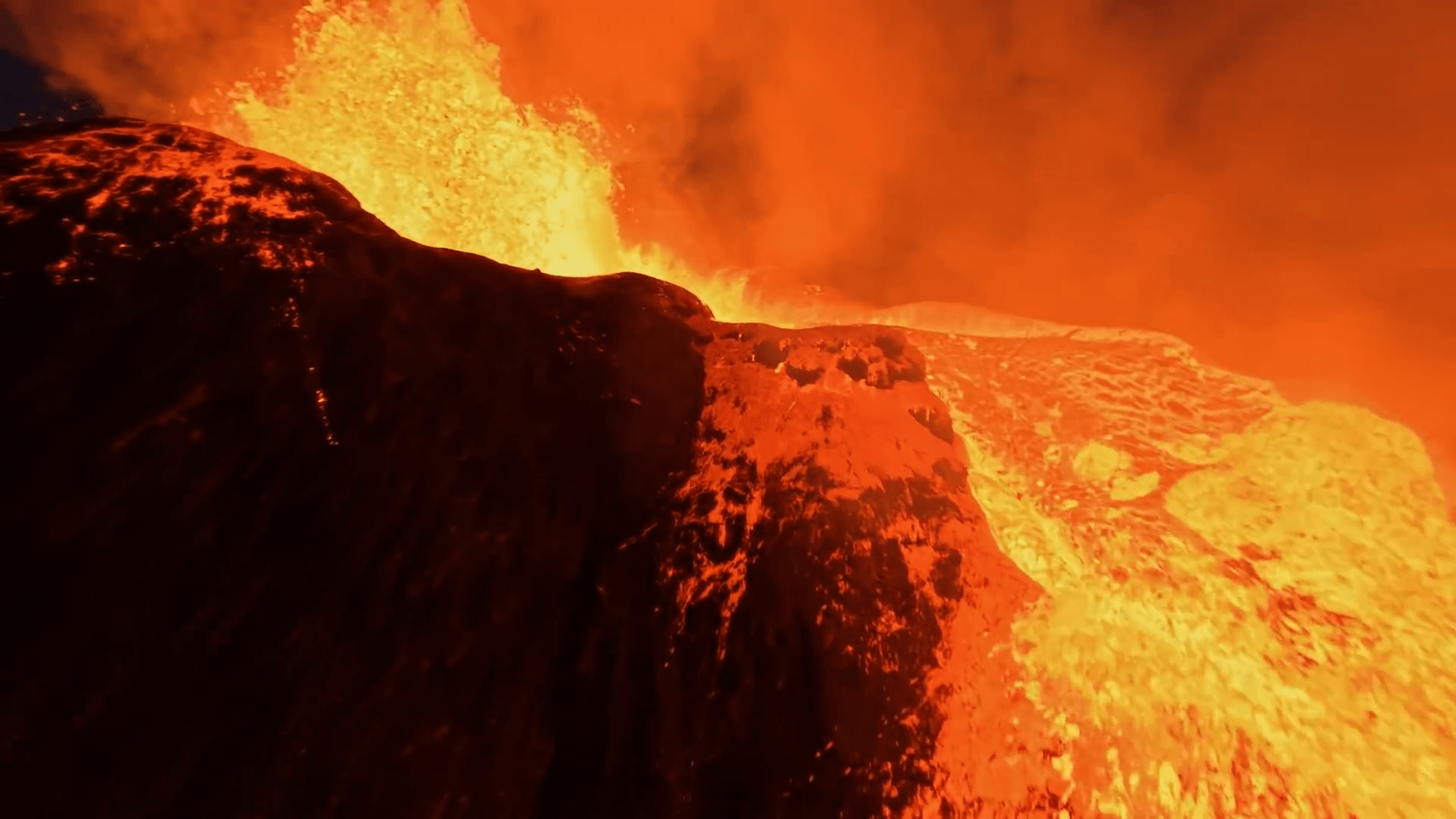
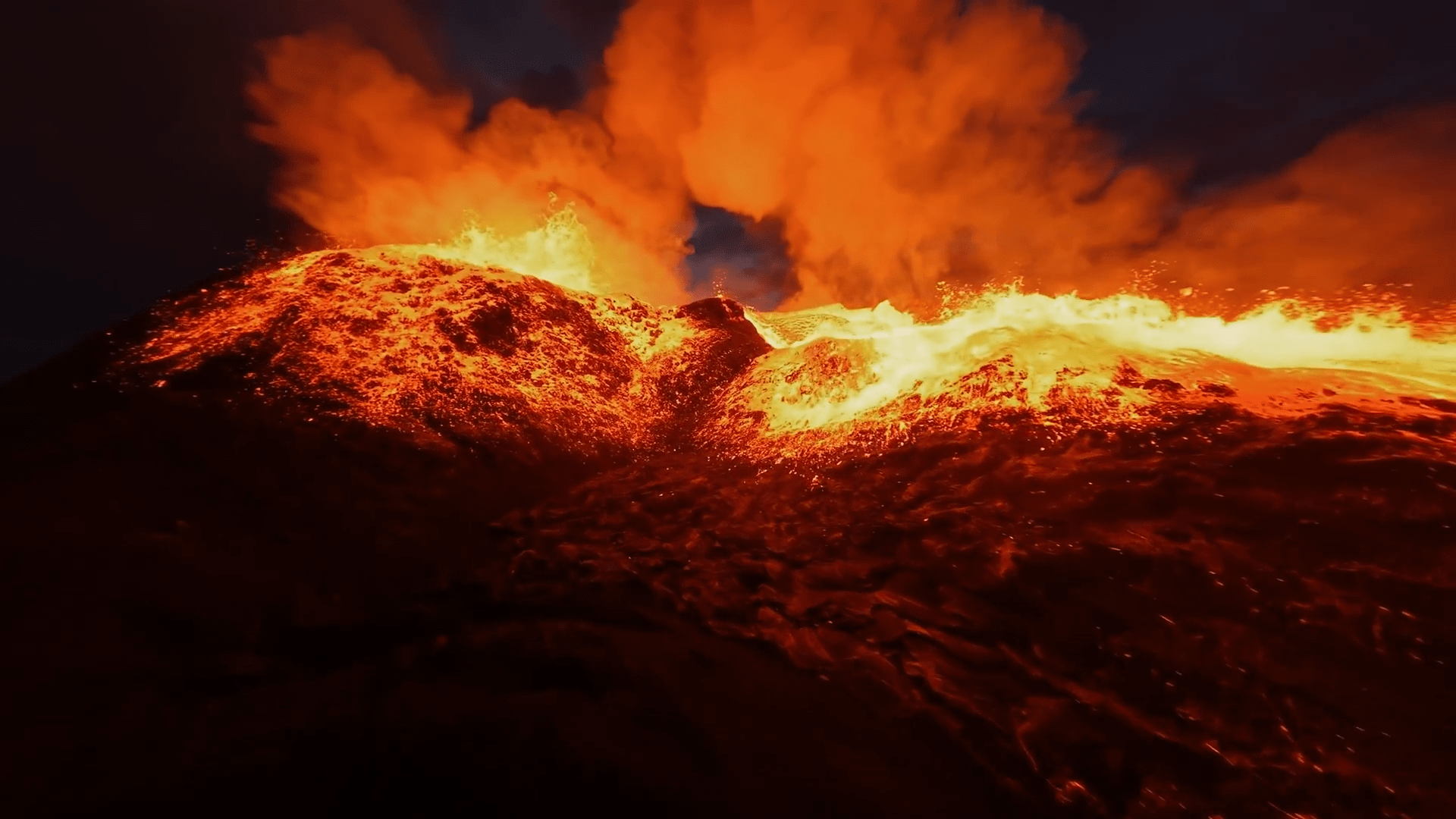
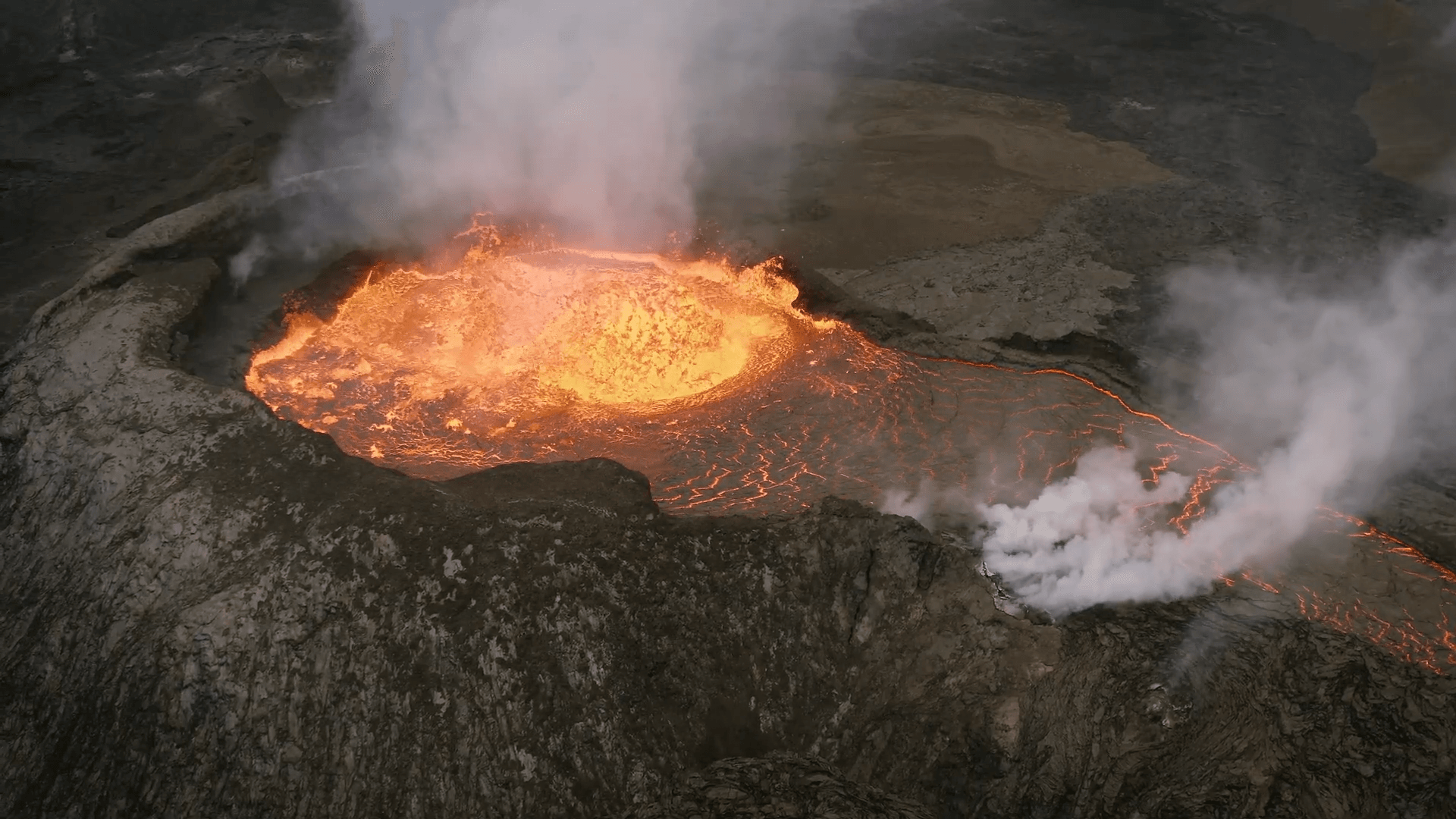
    When I started FYFD, volcano footage was far rarer. These days the affordability and durability of drones and action cameras — along with the relative accessibility of eruptions in places like Iceland and Hawaii — means we get to see volcanic flows in glorious high definition. This footage comes from the recent Icelandic eruption on the Reykjanes peninsula. Lava fountains line the four-kilometer lava vent seen here, and flows from the vent spread into a delta-like fan in the field below. I never get tired of staring at molten rock that flows like water. (Video and image credit: I. Finnbogason; via Colossal)

  • Featured Video Play Icon

    Fresh Fissures

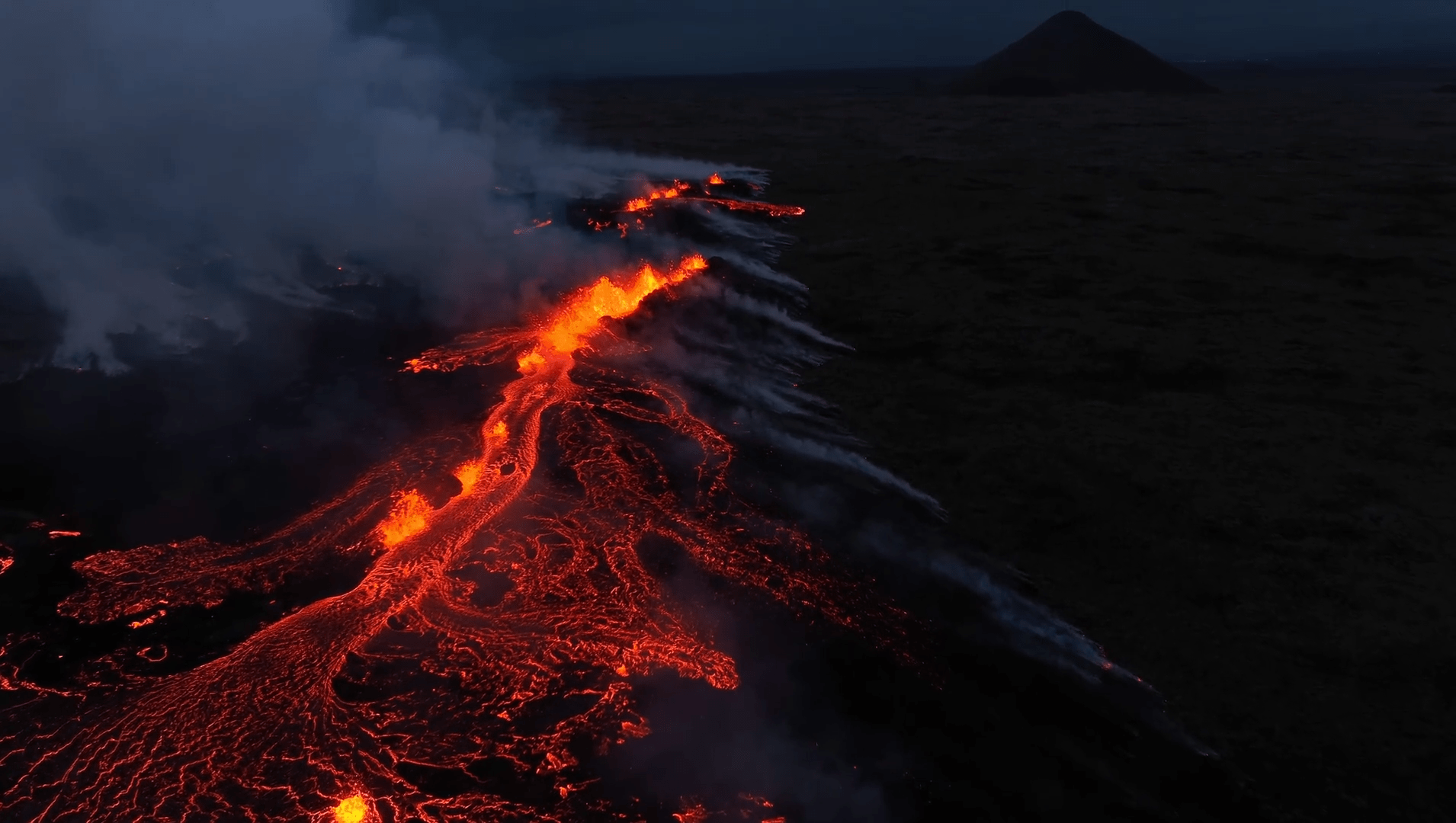
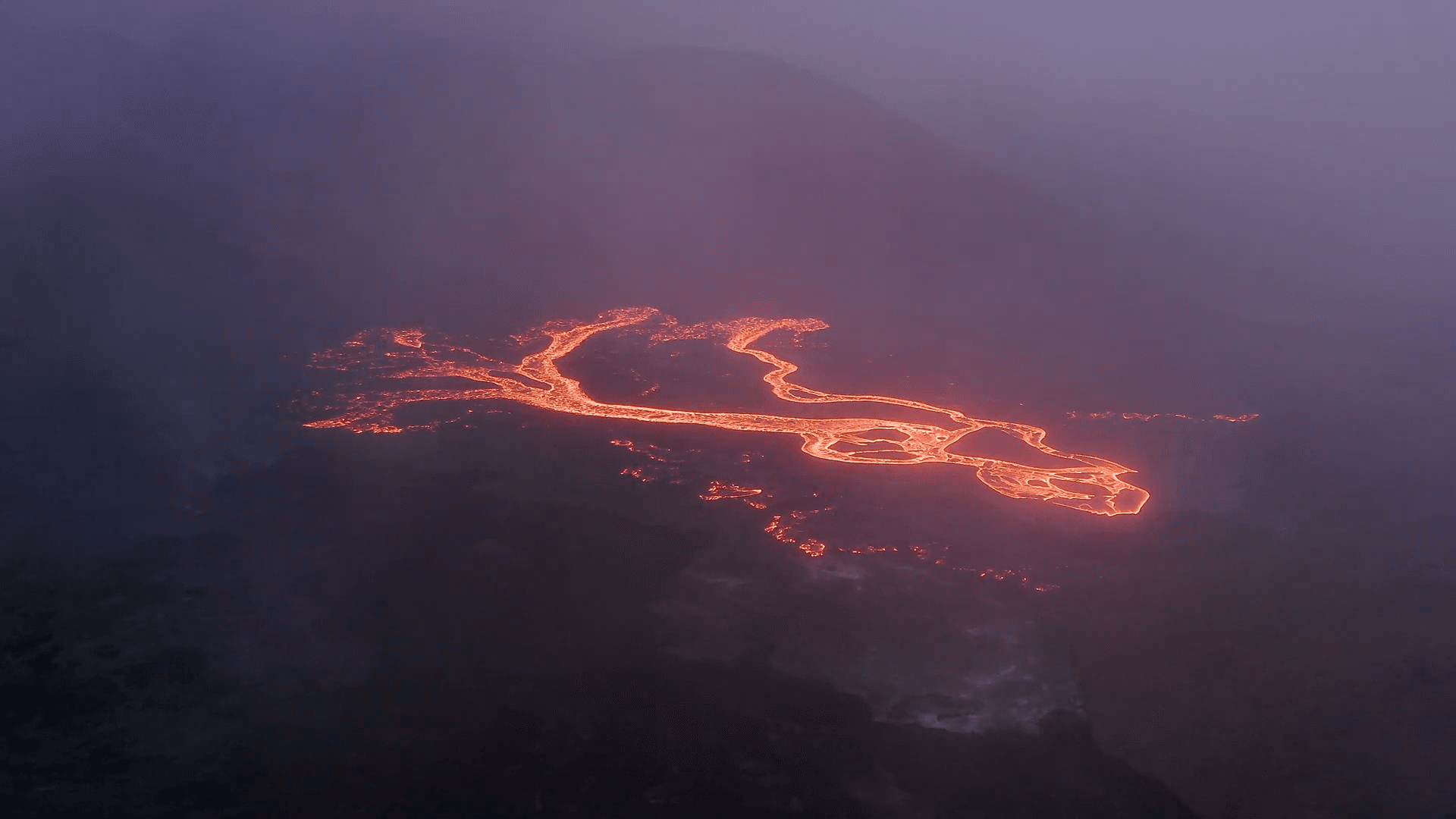
    North of Iceland’s Fagradalsfjall, a new volcanic fissure opened in July 2023. This drone footage from Isak Finnbogason captures that fissure on its first night. Lava fountains jet from the earth, forming a complex, slow-moving river. The similarities between flowing lava and more common liquids like water never ceases to fascinate me. Even with the vast differences in temperature and viscosity, so much of their physics remains recognizably the same. (Image and video credit: I. Finnbogason; via Colossal)

  • Featured Video Play Icon

    “The Beauty in Creation”

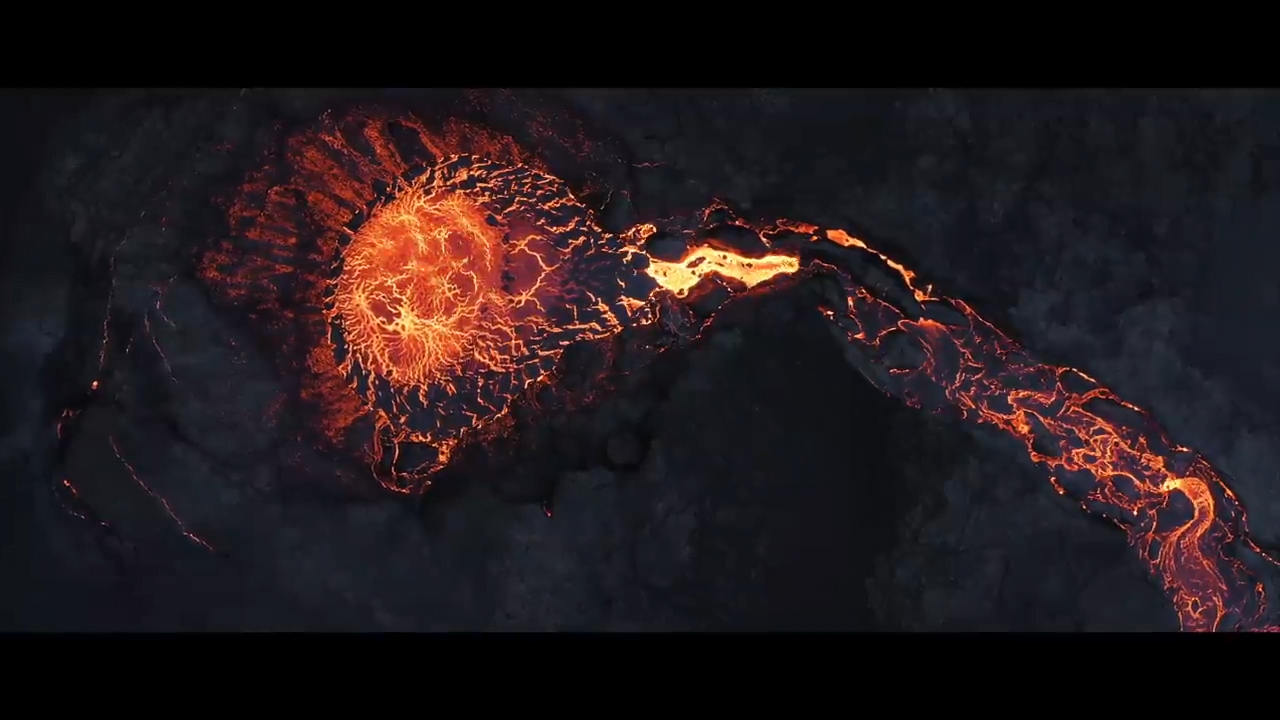
    Volcanoes are endlessly fascinating to watch, especially in this era of drone photography. Joey Helms’s short film “The Beauty in Creation” shows the Fagradalsfjall eruption in Iceland. Sail over rivers of lava, watch fountains spurting, and even see lava dripping back into the caldera. They’re views that no human gets to witness directly, but they certainly do highlight the peculiar collision of destruction and creation inherent in volcanic eruption. (Video credit: J. Helms)

  • A Glimpse of Earth’s Interior

    A Glimpse of Earth’s Interior

    Lava spurts from the Fagradalsfjall volcano in Iceland in this award-winning photo by Riten Dharia. It’s always bizarre to see molten rock flowing in fountains and rivers because it’s so unlike our daily experiences. Some deeply buried areas of the Earth, including the outer part of the core, are often described as liquid rock, which brings to mind lava. But that’s not, in fact, what those regions are like. If you were to visit Earth’s outer core in some super-submersible, you would not find a sea of lava. Instead, you would find yourself surrounded by what seemed to be solid rock. That’s not to say that the outer core is solid — just that it flows on geological timescales that are far longer than any human’s lifetime! (Image credit: R. Dharia; via Gizmodo)

  • Featured Video Play Icon

    Fagradalsfjall Volcano

    We’ve seen a lot of drone photography from volcanic eruptions in the last few years, but this footage from Iceland Aerials seems even more daredevil than usual. In this video, you can cruise over fountains of lava and watch as it cascades downhill. The perspective on some of these shots is absolutely unreal; it almost seems like it would have to be CGI. (Video credit: Iceland Aerials; via Colossal)

  • Lava Landscapes

    Lava Landscapes

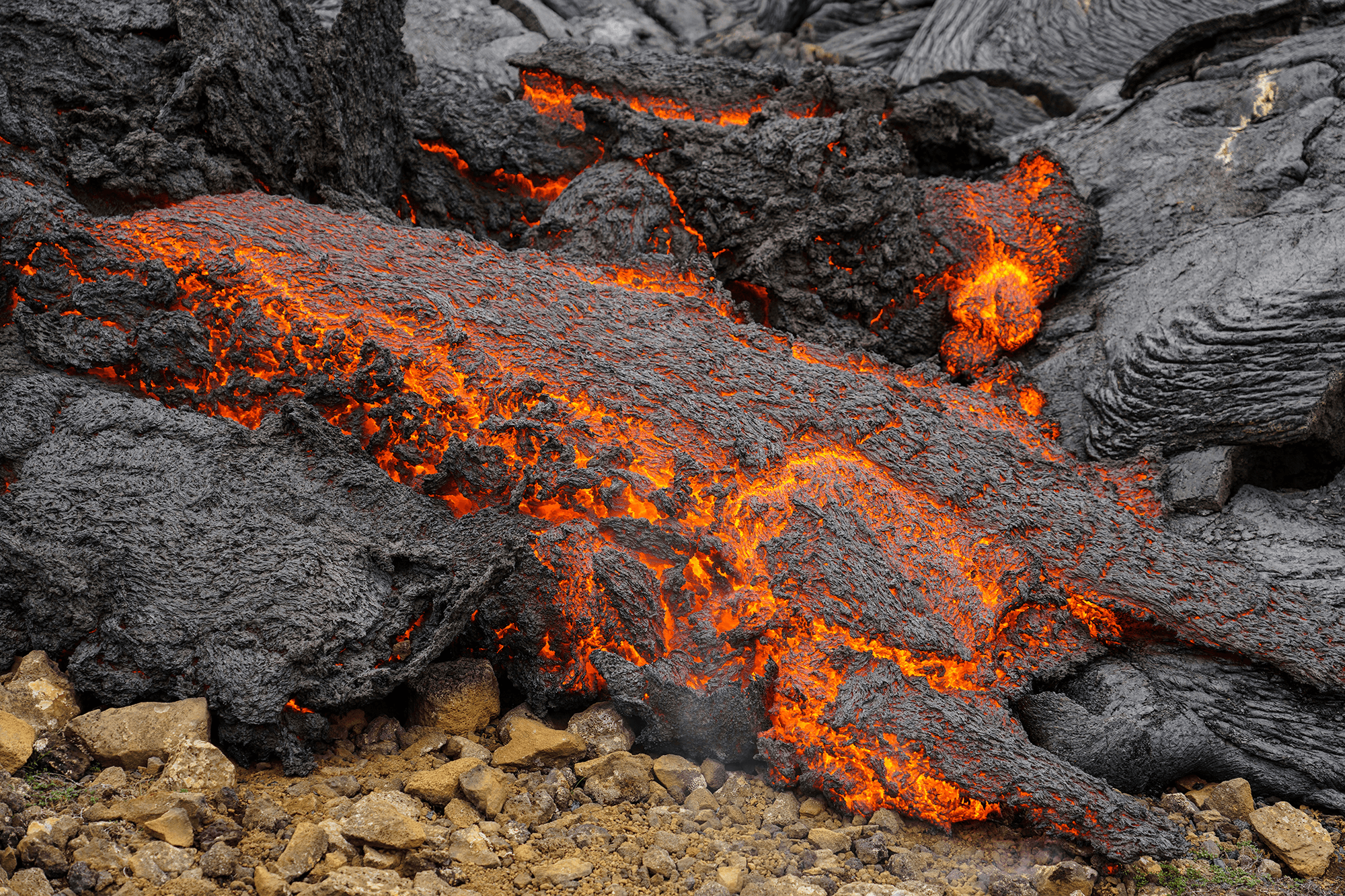
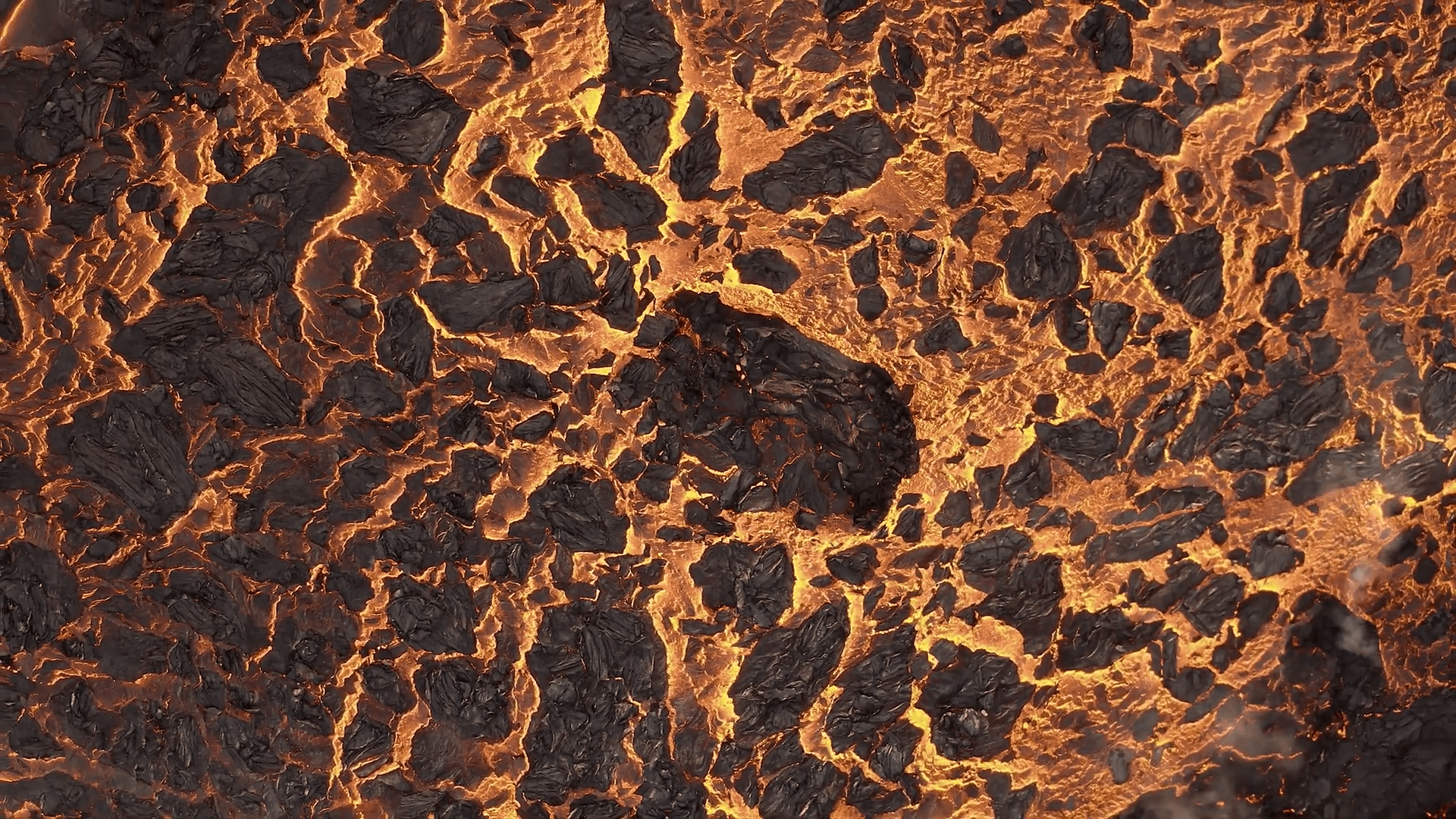
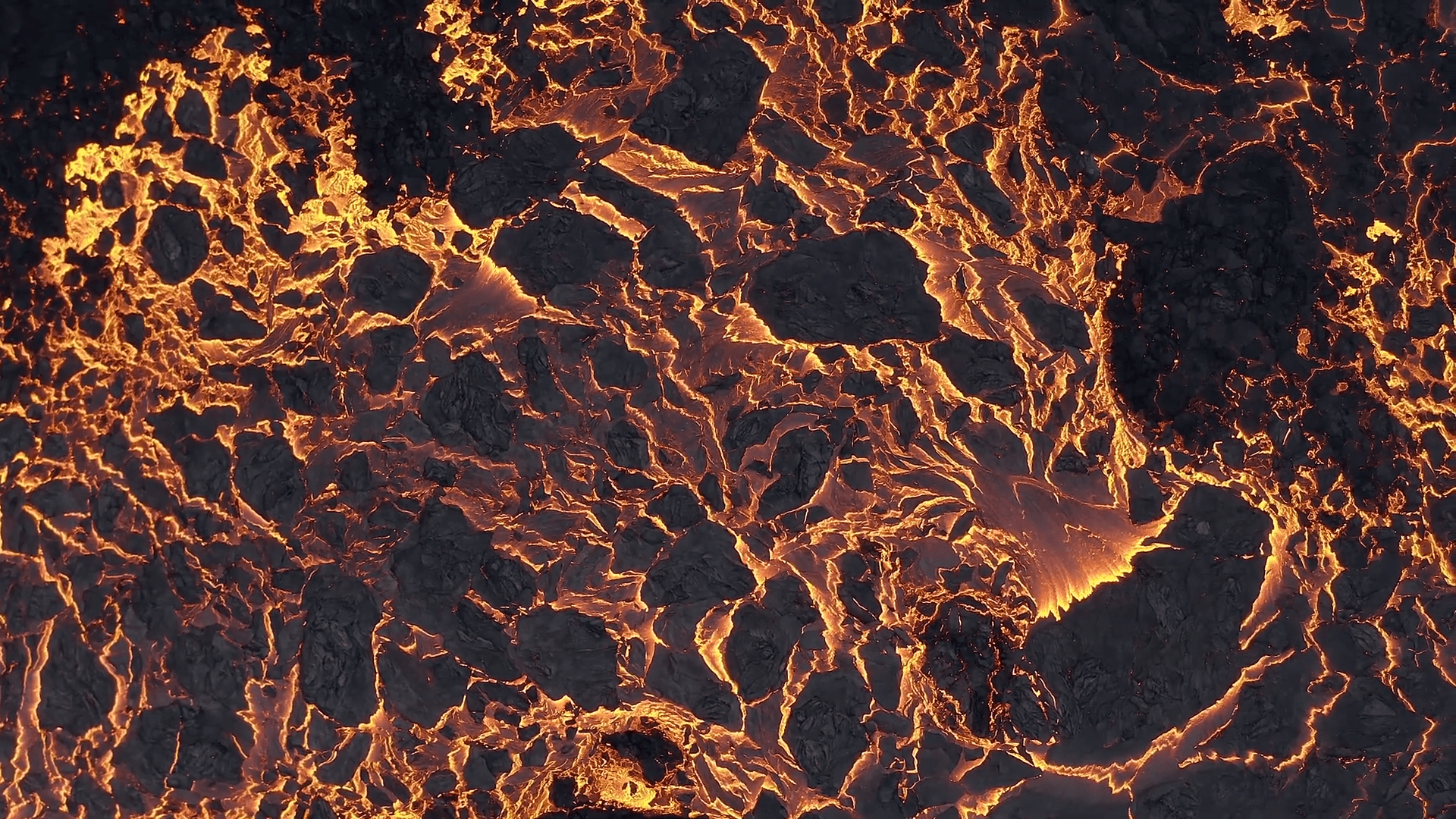
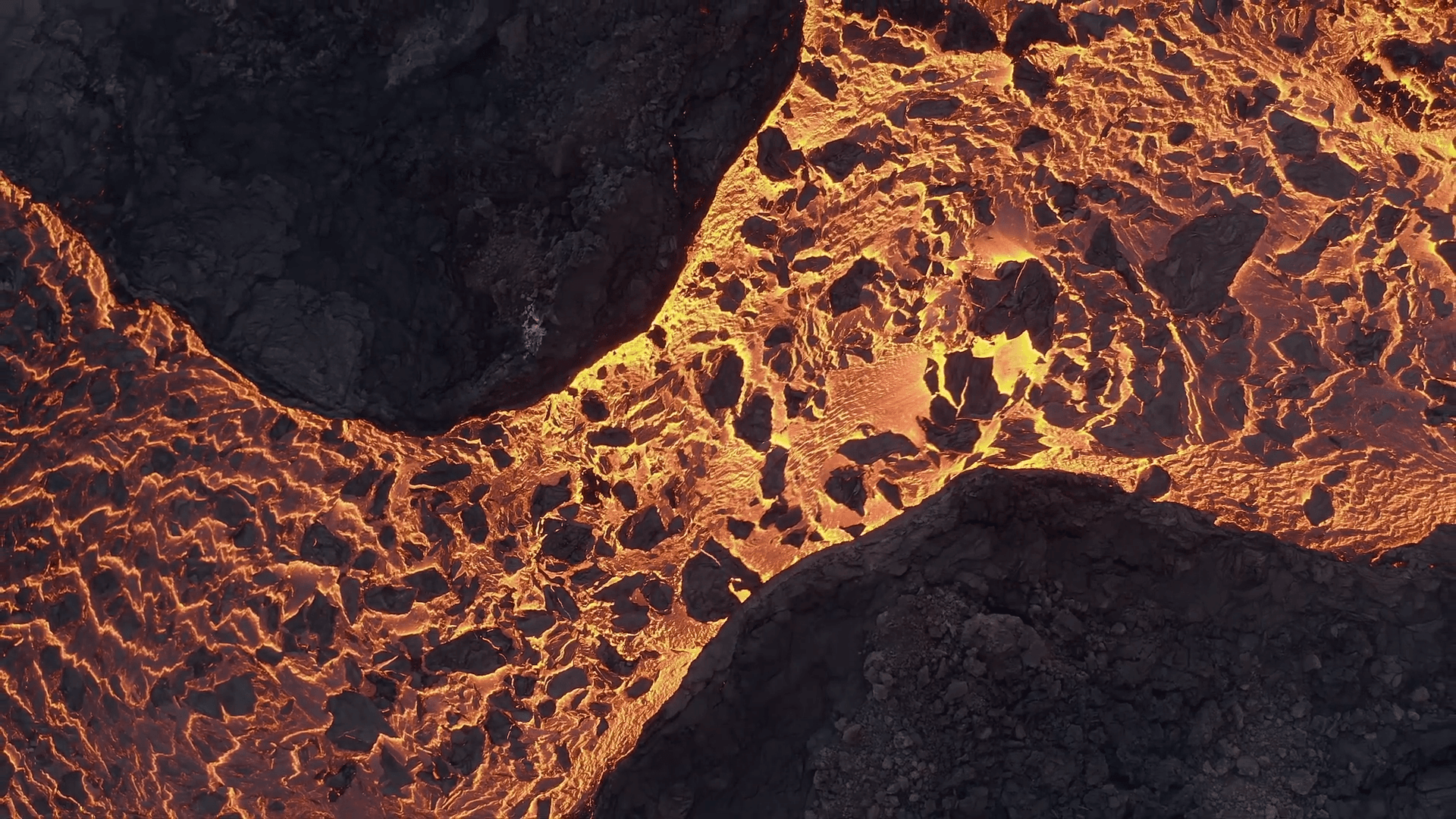
    Lava flows are, by definition, transient. In his LAVA series, photographer Jan Erik Waider explores the changing vistas and textures of Iceland’s Fagradalsfjall volcano eruption. Using a telephoto lens, he captures incredible details of the charred, cooling outer crust of the lava and the glowing molten interior. Only minutes later, fresh lava tore through, destroying these natural sculptures. You can find prints of his images on his website. (Image credit: J. Waider; via Colossal)