A lone shark cruises a sandy shoreline in the Maldives in this image from photographer Tim Burgess. Its path parallels the footsteps left by humans on the beach. Between the beach’s sand and the ocean’s deeper water, there’s a narrow stripe of sand ripples. Constantly formed and reformed by the crashing waves, these ripples act like miniature dunes. Any time a flat particle bed endures a passing flow above a critical speed, it will form ripples like these. (Image credit: T. Burgess/OPOTY; via Colossal)
The fundamental feature that connects all of these examples is the acceleration of a lighter fluid into a heavier one. For many of them that acceleration is simply the force of gravity, but as with the supernova and nebula, other forces can be responsible for the acceleration. The instability also looks a little different depending on the geometry. The simulation in this post shows a 2D example of the Rayleigh-Taylor instability; three-dimensional versions often look more like umbrellas or mushrooms. (Video and image credit: C. van Heerwaaden)
Thirteen years ago, I made a prediction that work on how to avoid urinal splashback would win an Ig Nobel Prize. Today, I am, at last, vindicated. Randy Hurd, Zhao Pan, Tadd Truscott, and Kaveeshan Thurairajah shared the 2026 Ig Nobel Prize in Physics for their work designing a splash-free urinal.
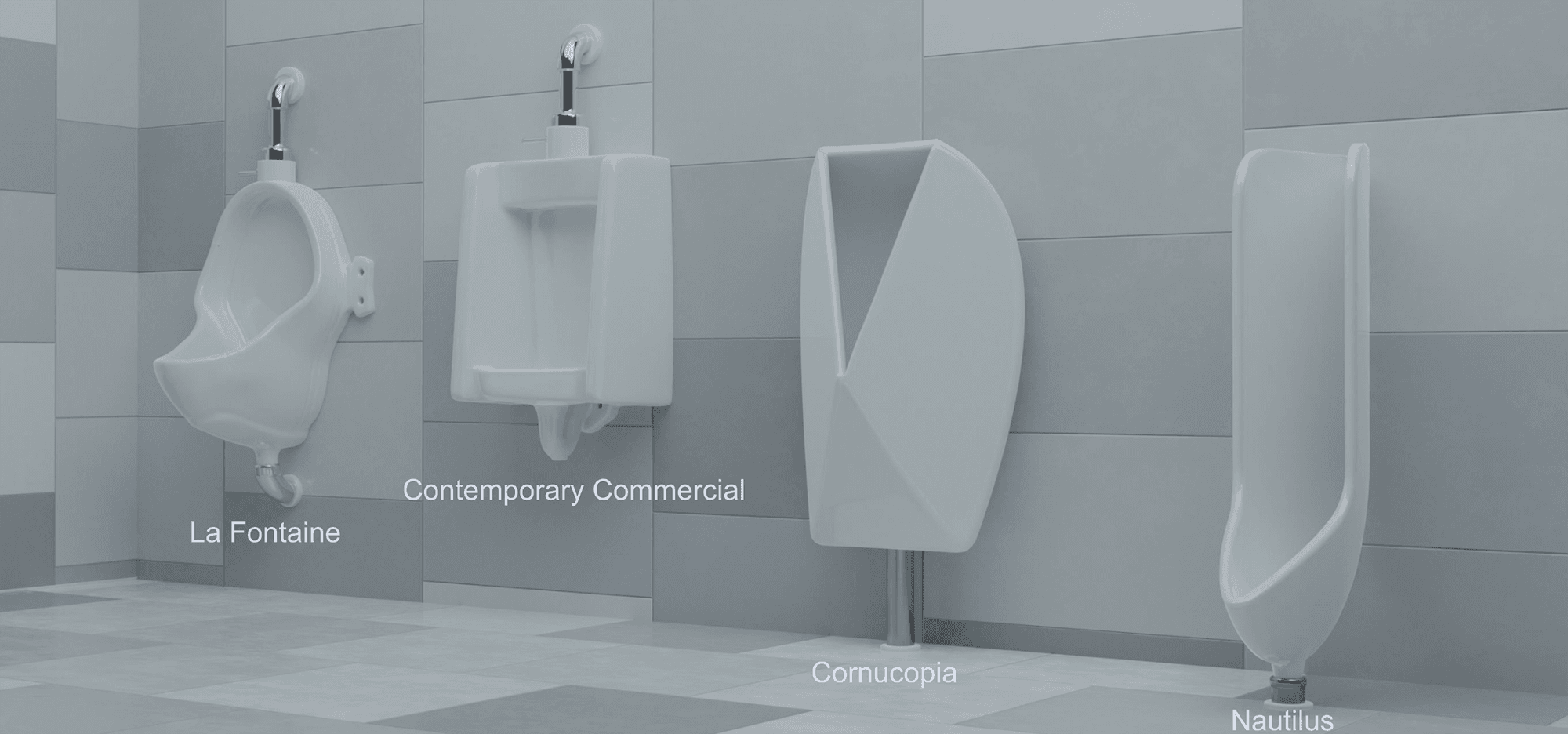
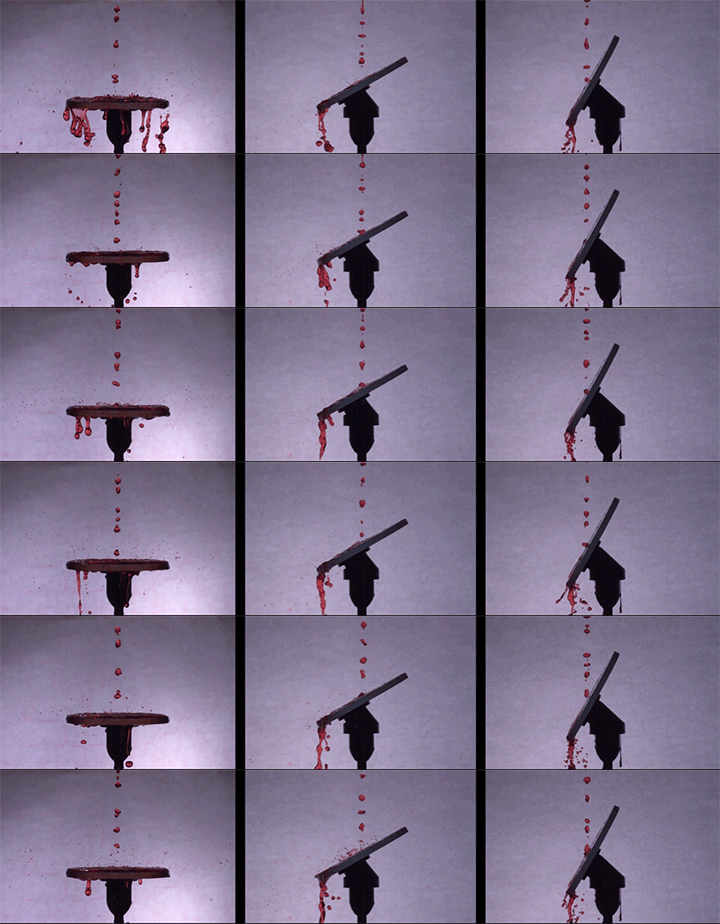
The culmination of this decade-plus of research are two urinal designs, the Cornucopia (“Cornucopeea”) and the Nautilus (“Nauti-Loo”). Both designs minimize splash, in part, through their geometry. As you may have noticed when rinsing dishes, having a stream of droplets hit a surface at a high impact angle creates lots of splash. But at a low impact angle, very little splash occurs. The team took this observation and created designs that minimized impact angle no matter where a user aimed.
How splashback varies with impact angle. High and medium impact angles (left and middle, respectively) generate a lot of splashing from a stream of impacting droplets. In contrast, below a critical impact angle, the splashing is negligible (right).
Naturally, they tested the two new designs, alongside two existing urinal designs, finding that the new urinals reduced splashing by as much as 95% across a range of flow rates and user heights. Although the Cornucopia was the least splashy urinal, the team gave the Nautilus an overall edge because its design is easier to clean and works for children, adults, and wheelchair users.
Considering the estimated 1 million liters of urine contemporary urinals splash across U.S. restrooms daily, the Nautilus could save significant labor and cleaning costs, if implemented. (Image credits: urinals and experiment – K. Thurairajah et al., poster – R. Hurd et al.; research credit: K. Thurairajah et al. and R. Hurd et al.)
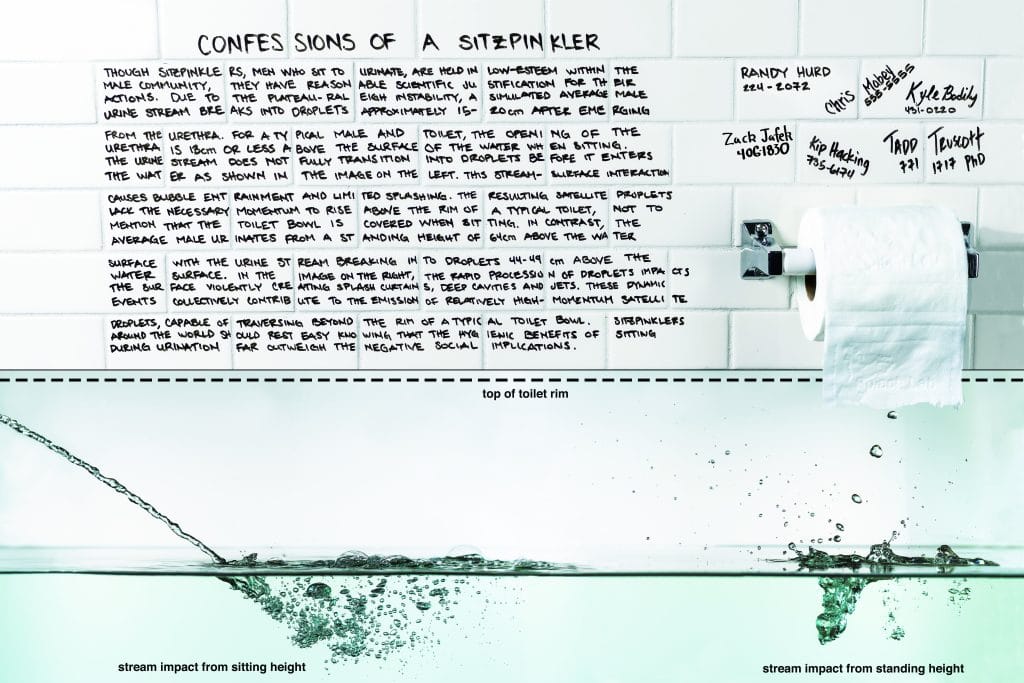
P.S. – As indicated, I’ve followed this work for a long time. In addition to this post, we did a webcast (10 years ago, yikes!) that touched on the topic. But my most in-depth coverage of the story is still to appear in print; you’ll get to enjoy the whole tale–stretching all the way back to 2012–in a chapter of my forthcoming book. More on that soon! In the meantime, please enjoy this gem of a scientific poster from the project’s early days in 2013:
One of the best research posters of all time, designed to look like it’s been written on a tiled bathroom wall. The text reads, “Confessions of a Sitzpinkler. Though Sitzpinklers, men who sit to urinate, are held in low-esteem within the male community, they have reasonable scientific justification for their actions. Due to the Plateau-Rayleigh instability, a simulated average male urine stream breaks into droplets approximately 15-20 cm after emerging from the urethra. For a typical male and toilet, the opening of the urethra is 13 cm or less above the surface of the water when sitting. The urine stream does not fully transition into droplets before it enters the water as shown in the image on the left. This stream-surface interaction causes bubble entrainment and limited splashing. The resulting satellite droplets lack the necessary momentum to rise above the rim of a typical toilet, not to mention that they toilet bowl is covered when sitting.
In contrast, the average male urinates from a standing height of 64 cm above the water surface with the urine stream breaking into droplets 44-49 cm above the water surface. In the image on the right, the rapid procession of droplets impacts the surface violently, creating splash curtains, deep cavities and jets. These dynamic events collectively contribute to the emission of relatively high-momentum satellite droplets, capable of traversing beyond the rim of a typical toilet bowl.
Sitzpinklers around the world should rest easy knowing that the hygienic benefits of sitting during urination far outweigh the negative social implications.”
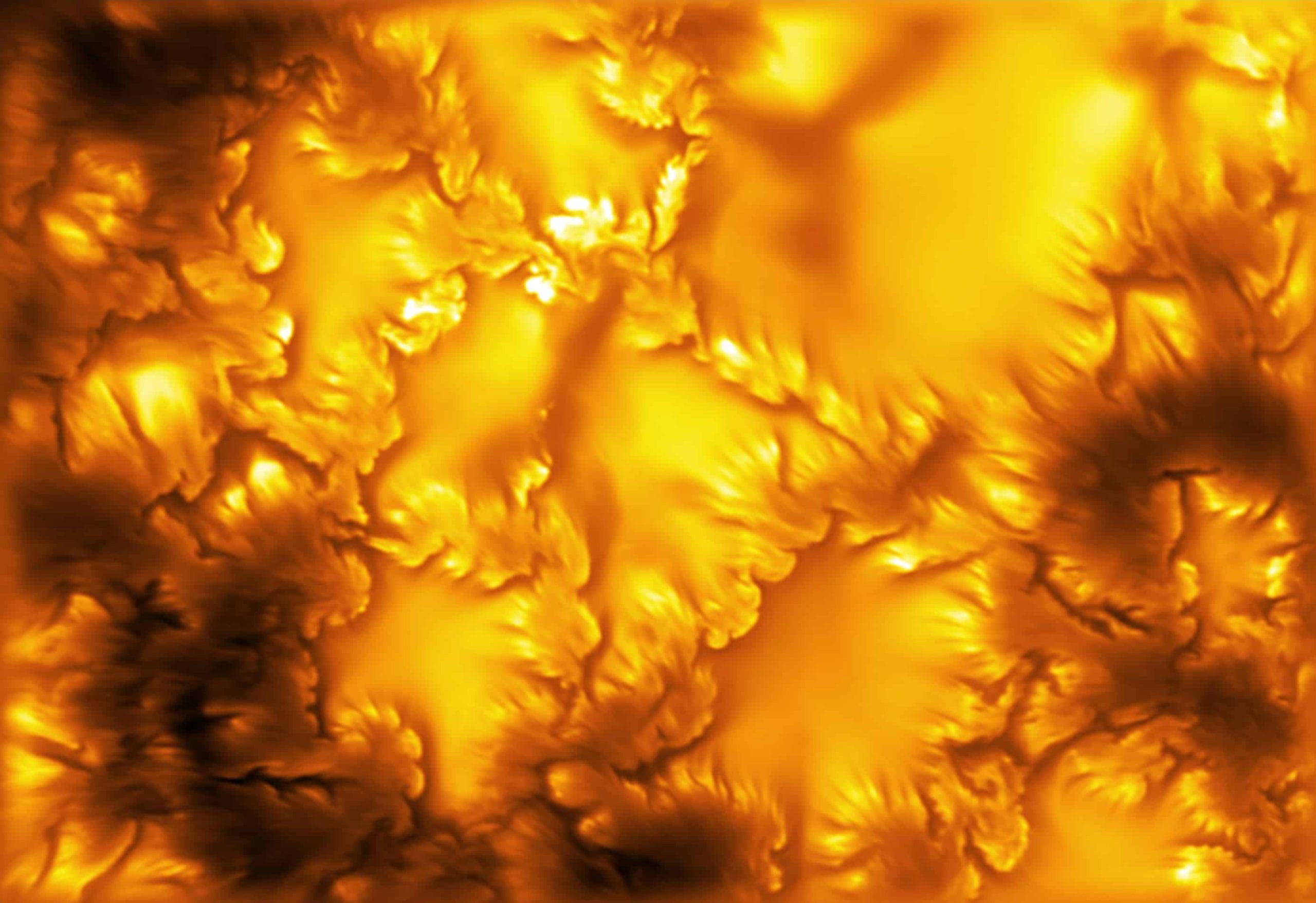
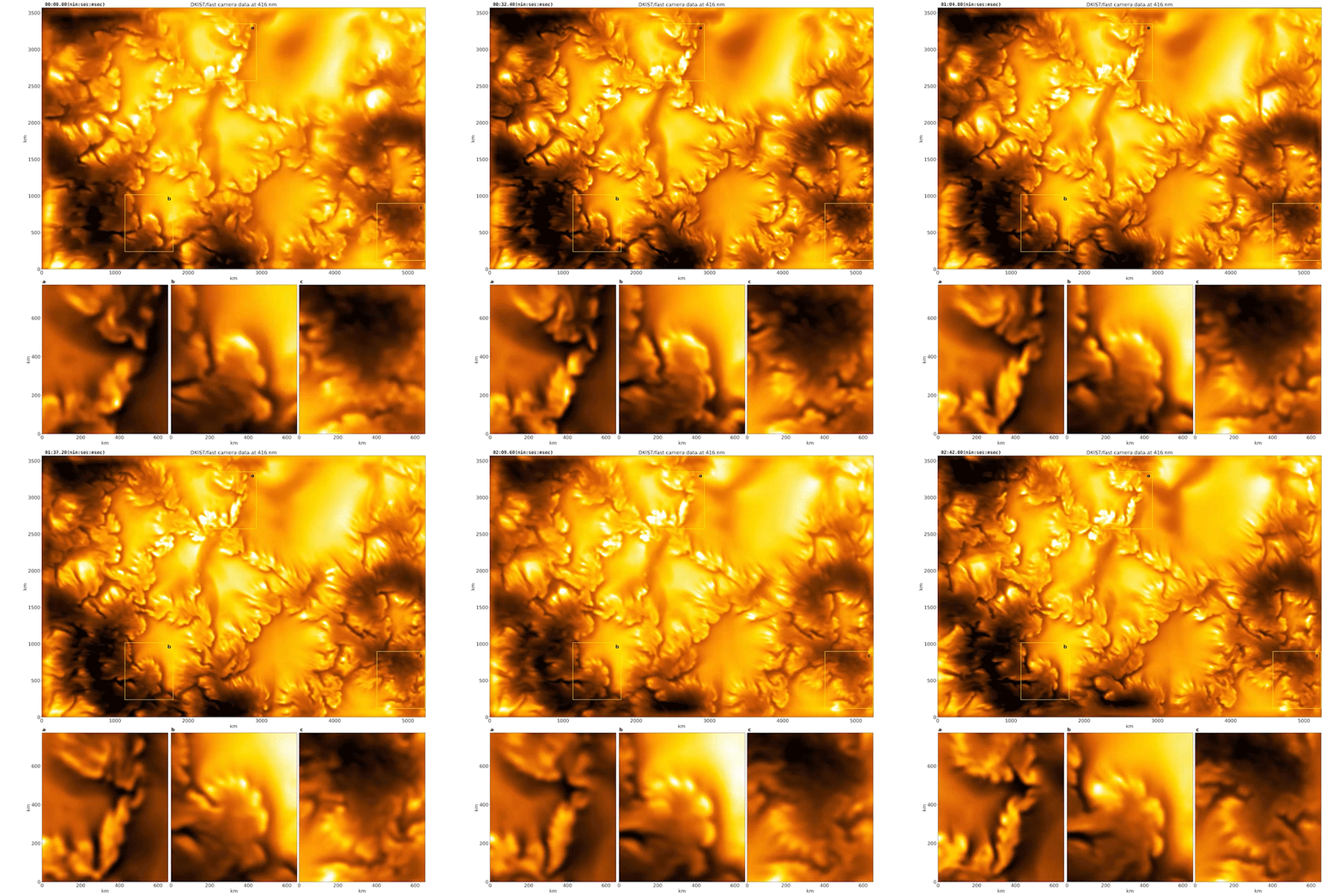
When it comes to how stars like our Sun work, scientists have long relied on theoretical predictions to describe processes we couldn’t observe firsthand. But new images from our most powerful solar telescope have finally revealed a phenomenon that’s long been predicted: Kelvin-Helmholtz waves on the Sun’s photosphere.
Even if the name is unfamiliar, you’re no stranger to Kelvin-Helmholtz waves. They occur where two fluid layers move past one another at different speeds, causing the interface between them to distort and curl into waves. They’re the reason that wind generates waves, whether it’s rippling waves on a lake or giant breaking waves on the ocean.
Animation showing Kelvin-Helmholtz instabilities swirling on the Sun’s photosphere.
On the Sun, small-scale (roughly city-sized) Kelvin-Helmholtz waves were hypothesized to move magnetized plasma in ways that leads to magnetic lines reconnecting in the violent solar eruptions that drive space weather. Although we saw these waves in numerical simulations, this marks their first actual observation on our star. (Image credit: NSF/NSO/AURA/MPS; research credit: D. Kuridze et al.; via APOD)
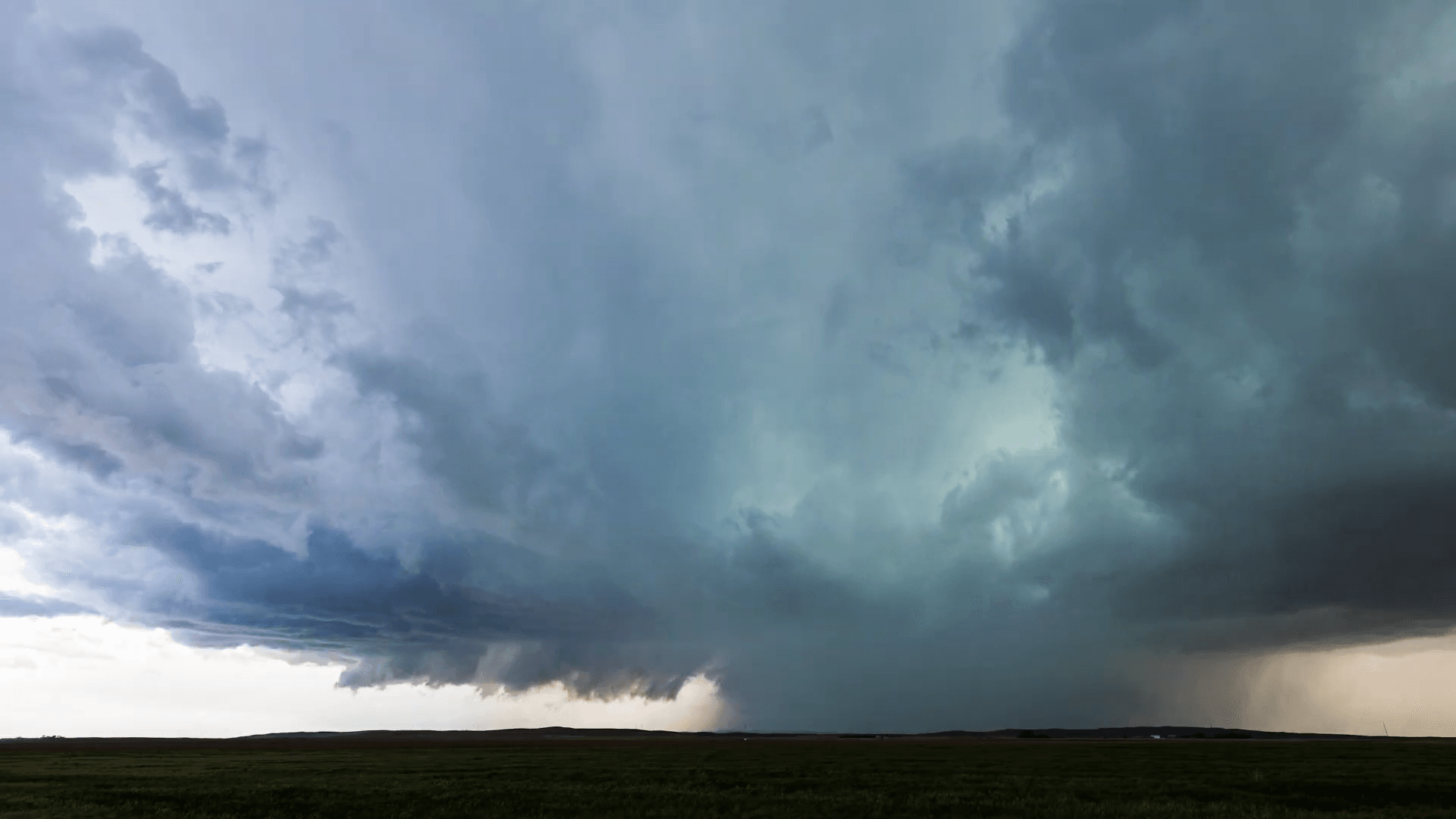
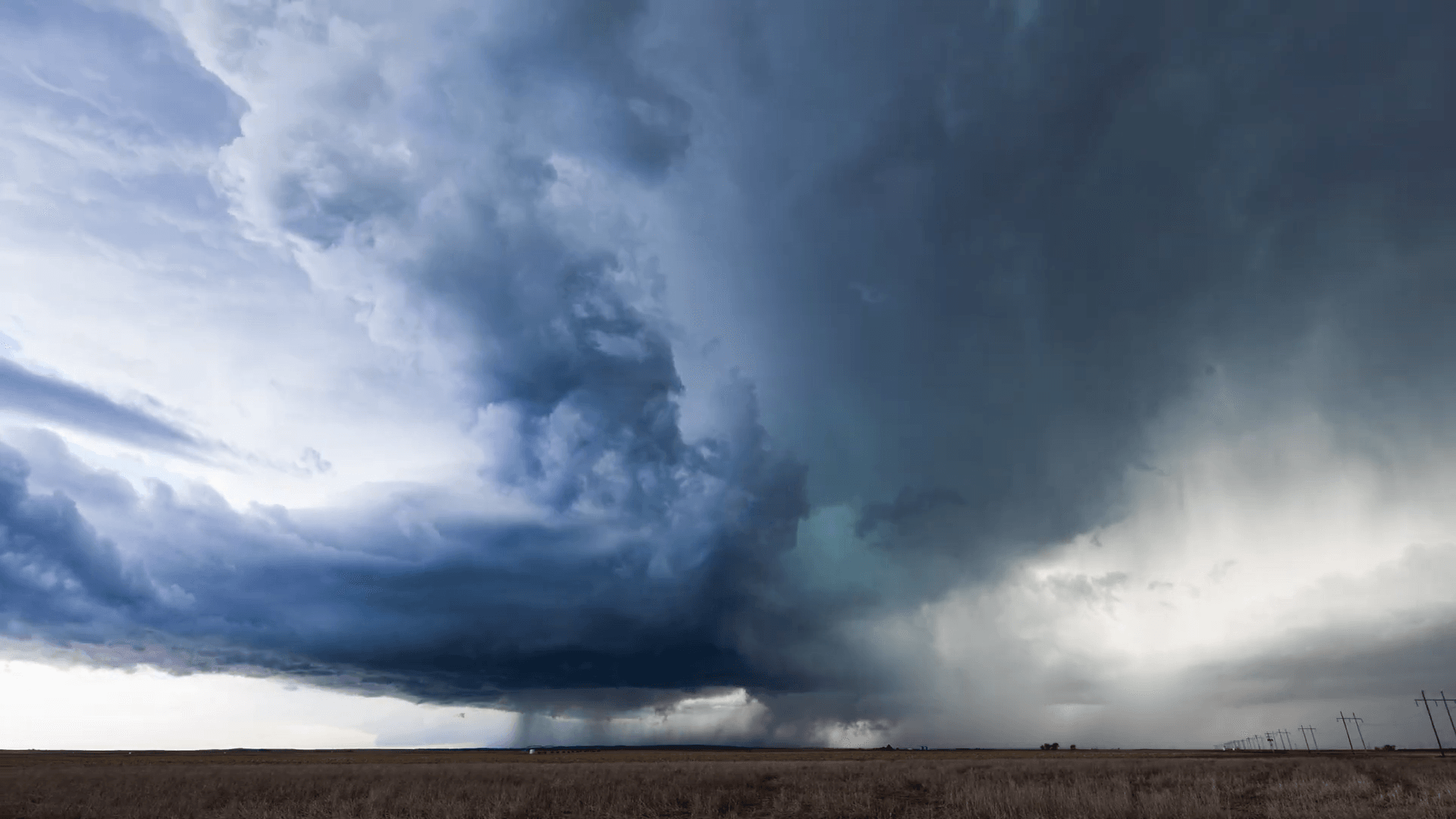
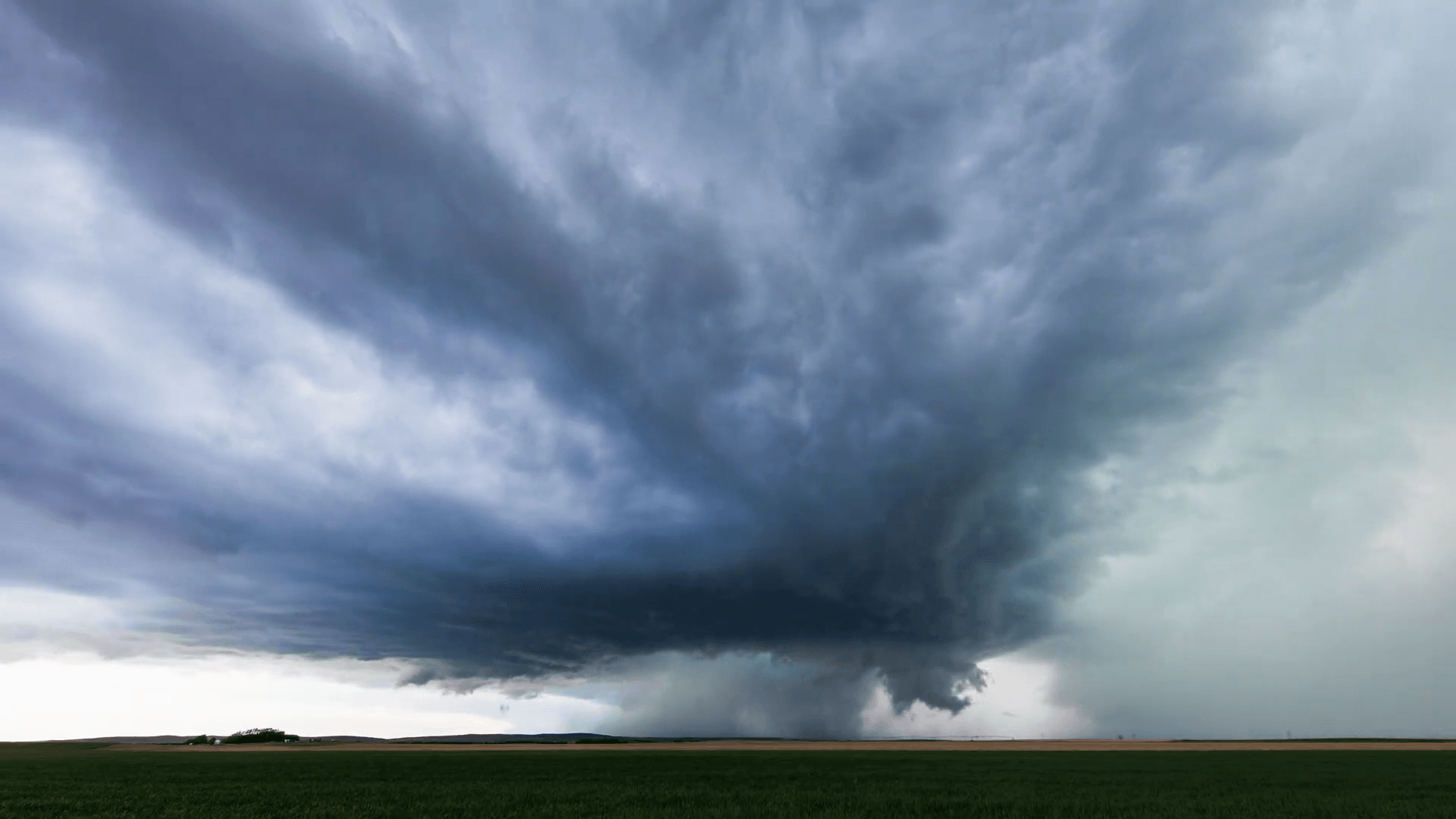
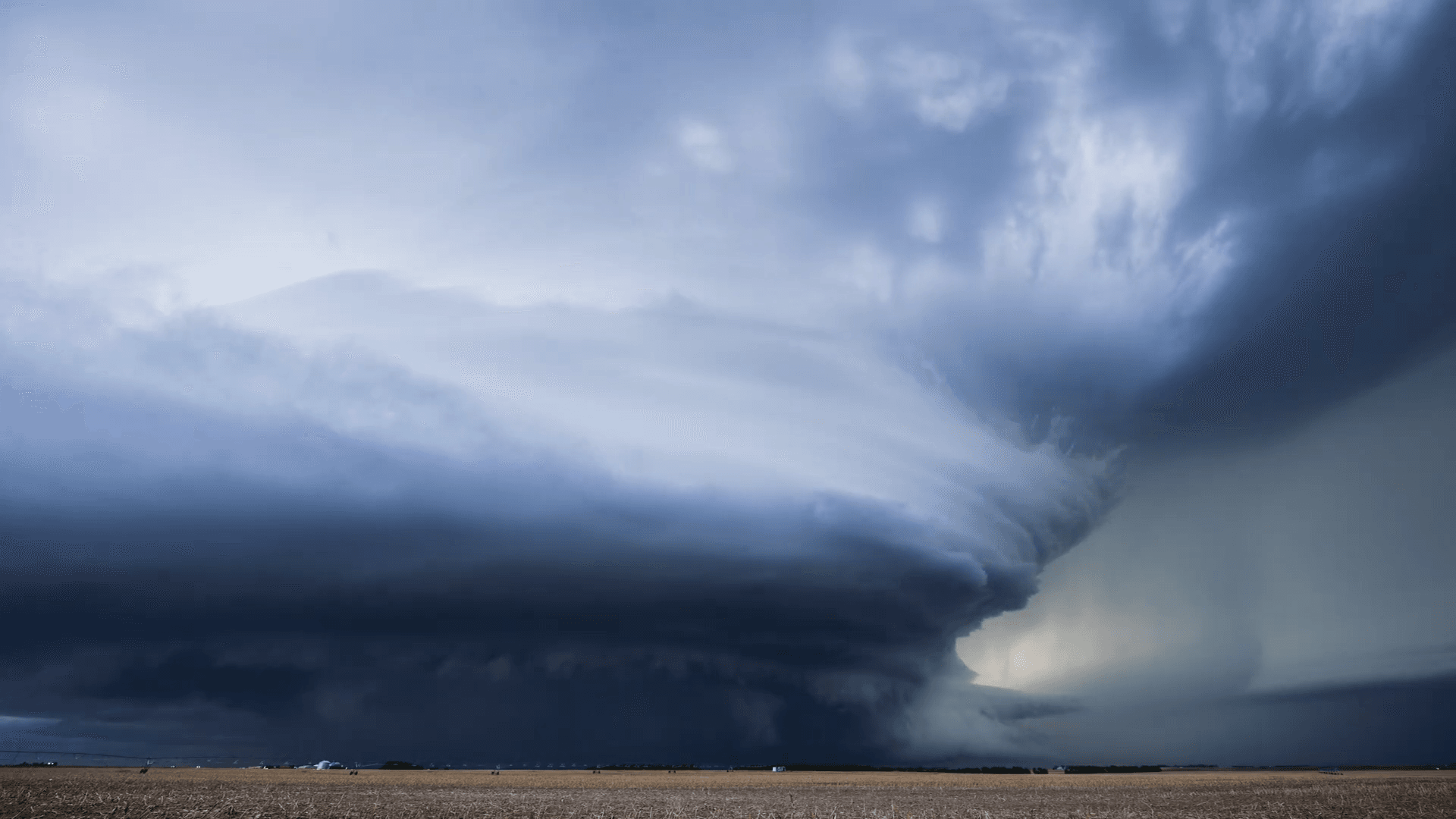
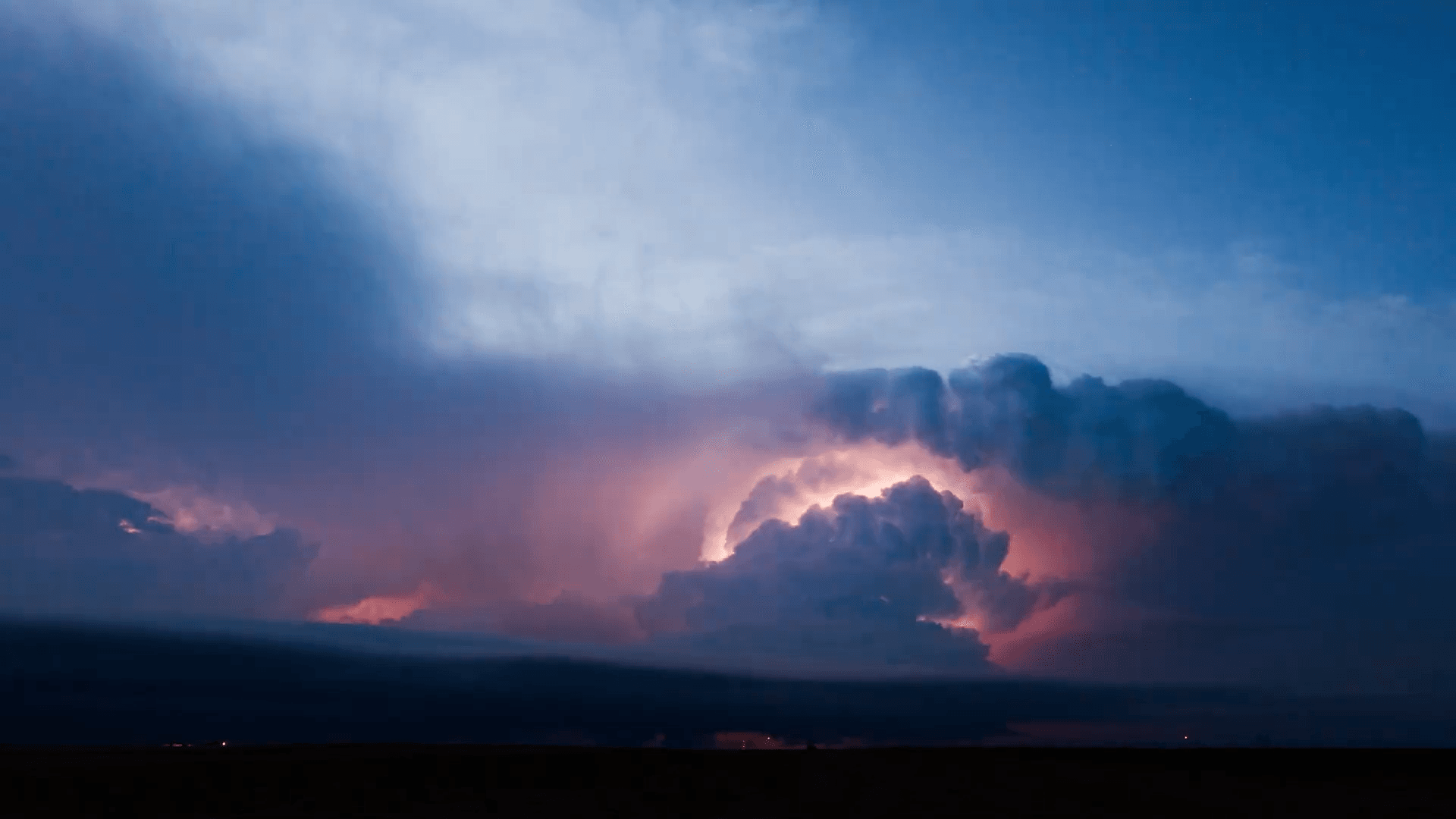
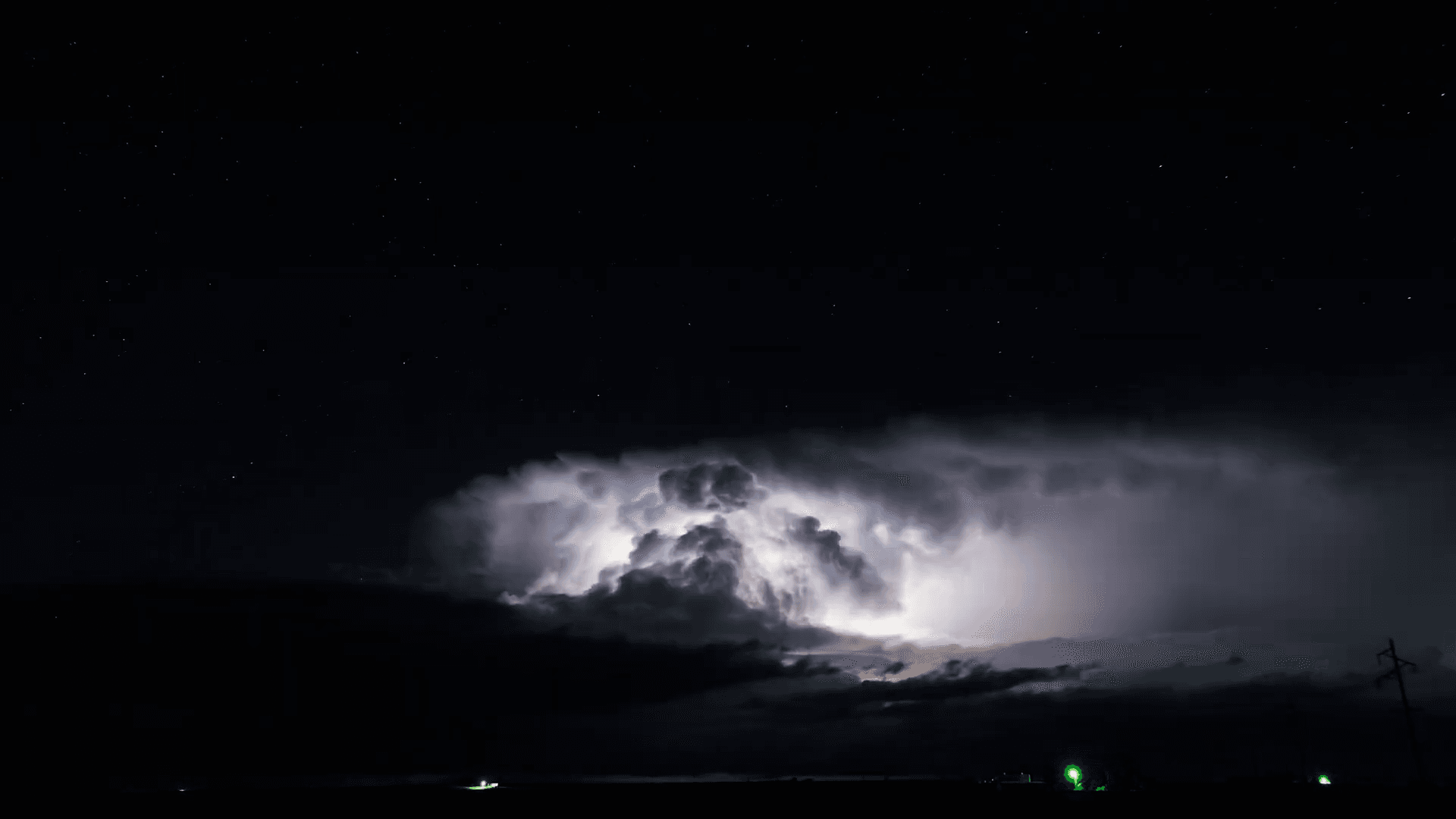
This timelapse from photographer Mike Olbinski shows a supercell thunderstorm that developed over Colorado and headed to Nebraska. The churning convection of the early storm makes for a dramatic backdrop to stormcloud’s growing rotation. By sunset, the sky was lit with lightning, which continued to illuminate the storm well after darkness fell. (Video and image credit: M. Olbinkski)
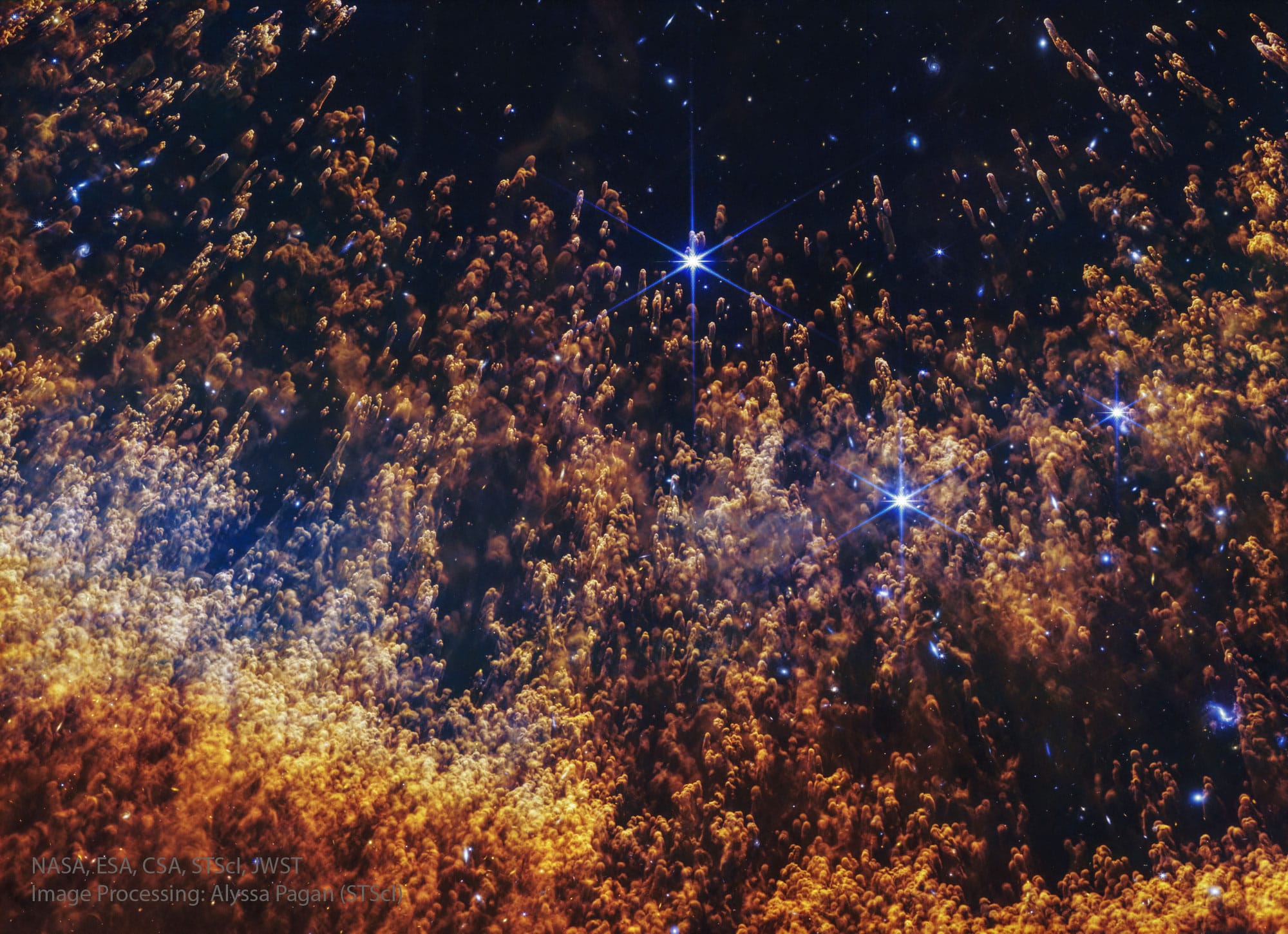
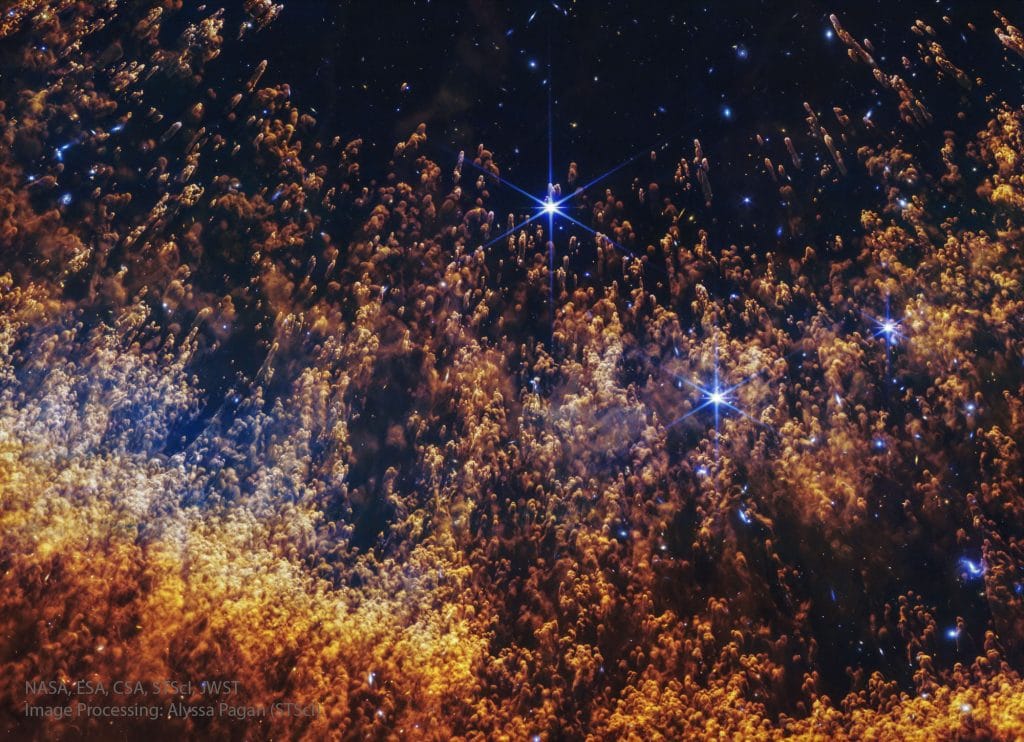
Within the Helix Nebula, a planetary nebula about 650 light-years away, knots of dust and gas stream away from the central star. Though they appear small here, each contains a mass similar to the Earth’s, spread out over an area larger than Pluto’s orbit. Although the structures’ origins are not fully understood, an enduring hypothesis describes them as a Rayleigh-Taylor instability, where the energetic solar wind from the central star blows away denser gas and dust. (Image credit: NASA/ESA/CSA/STScI/JWST/A. Pagan; via APOD)
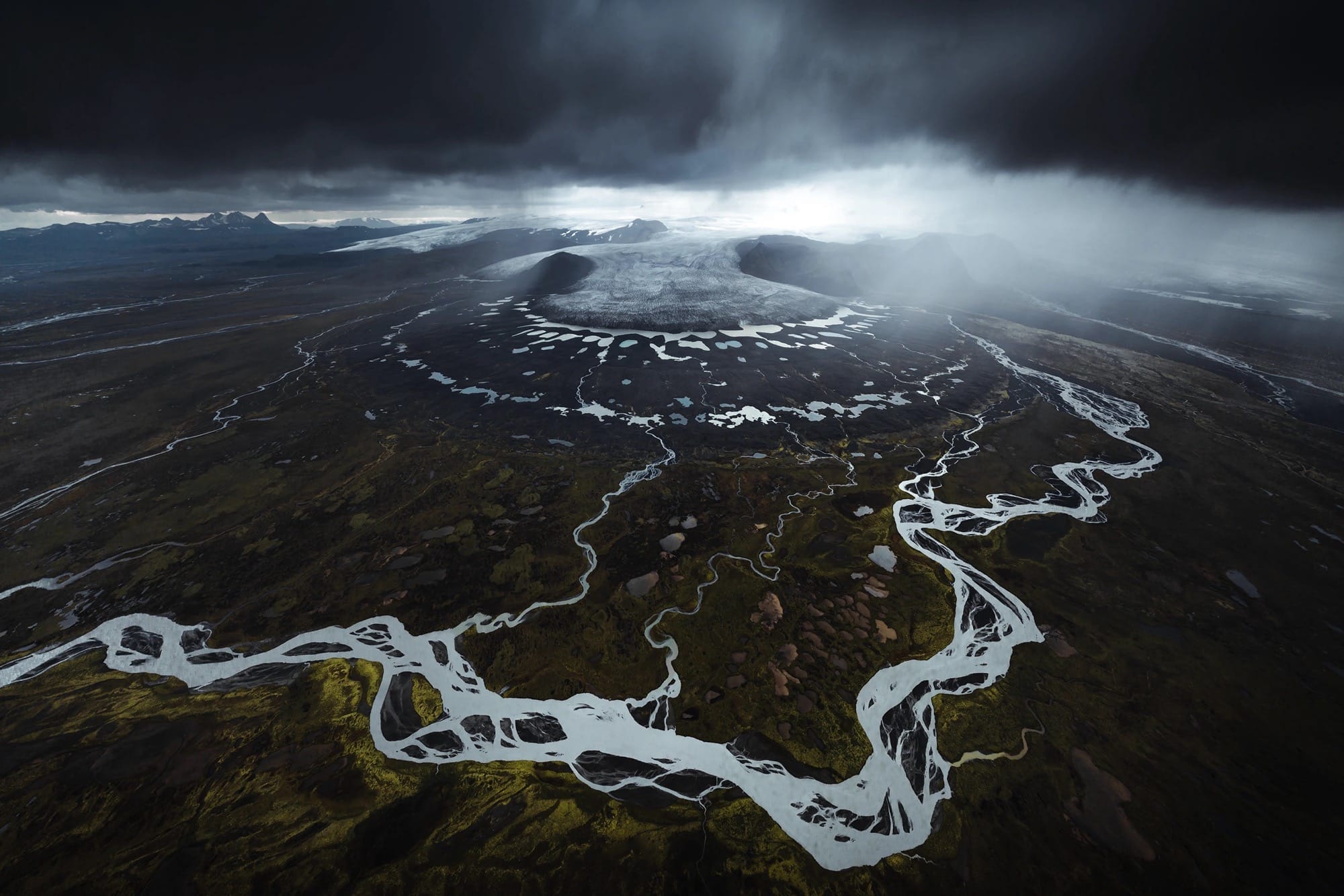
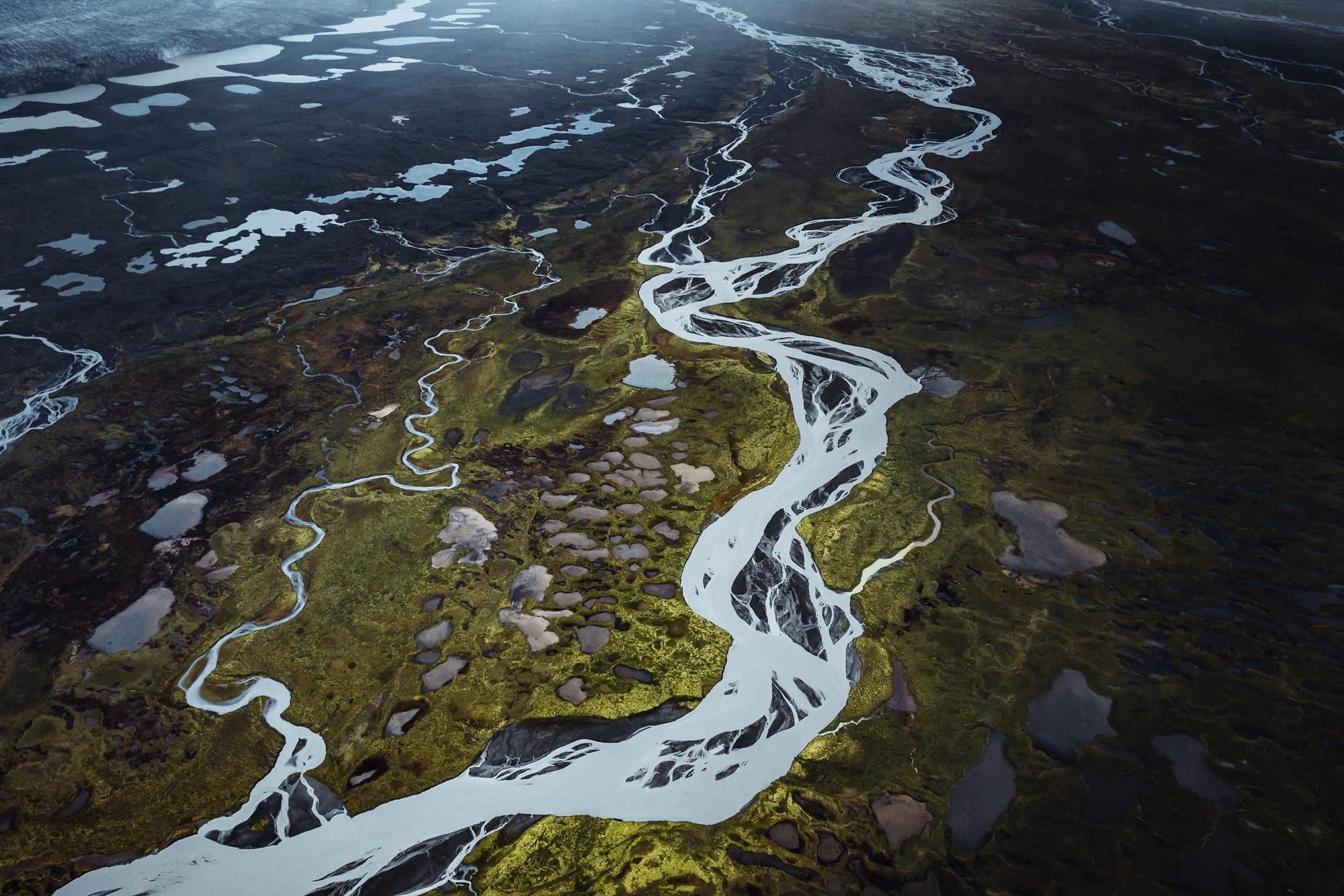
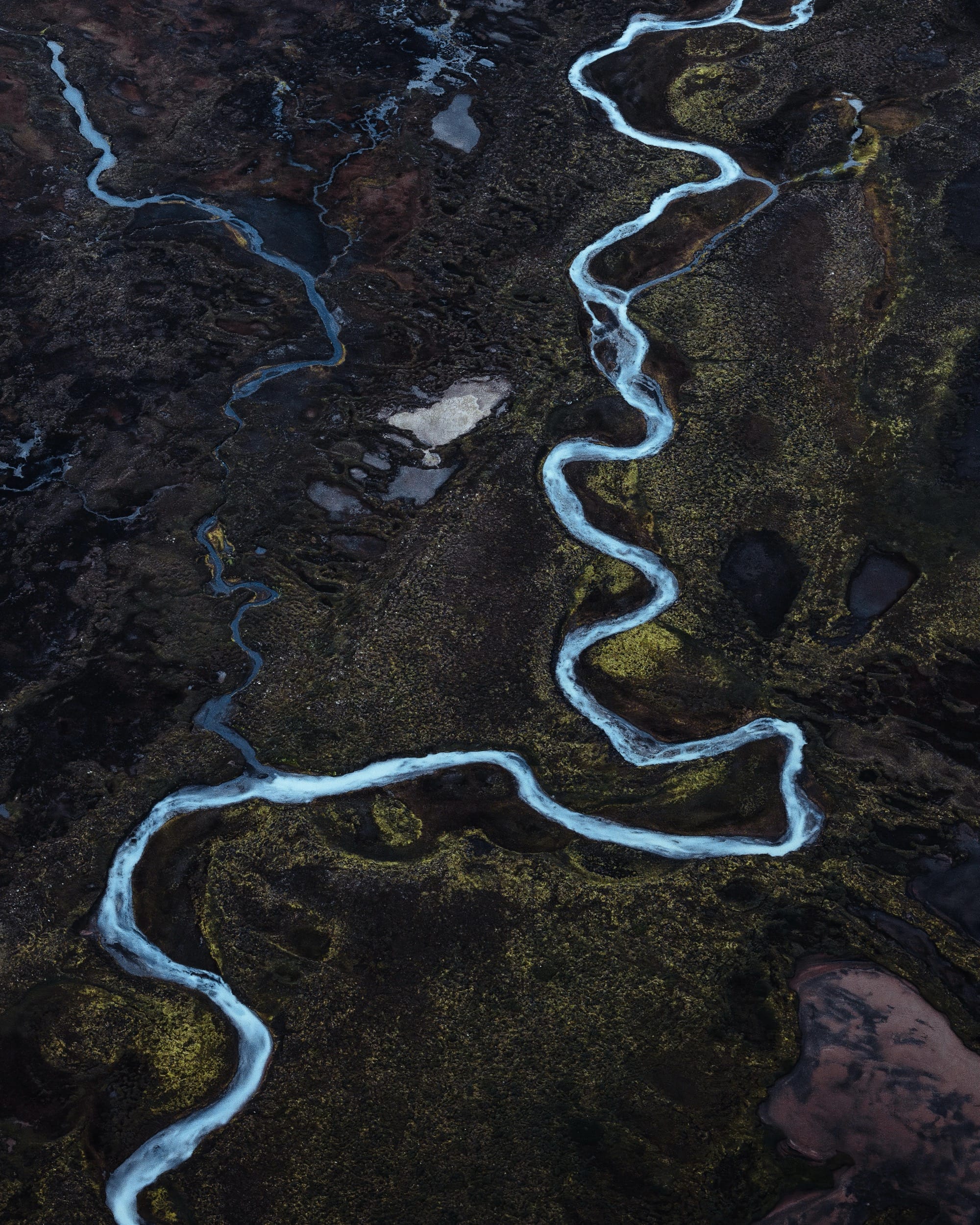
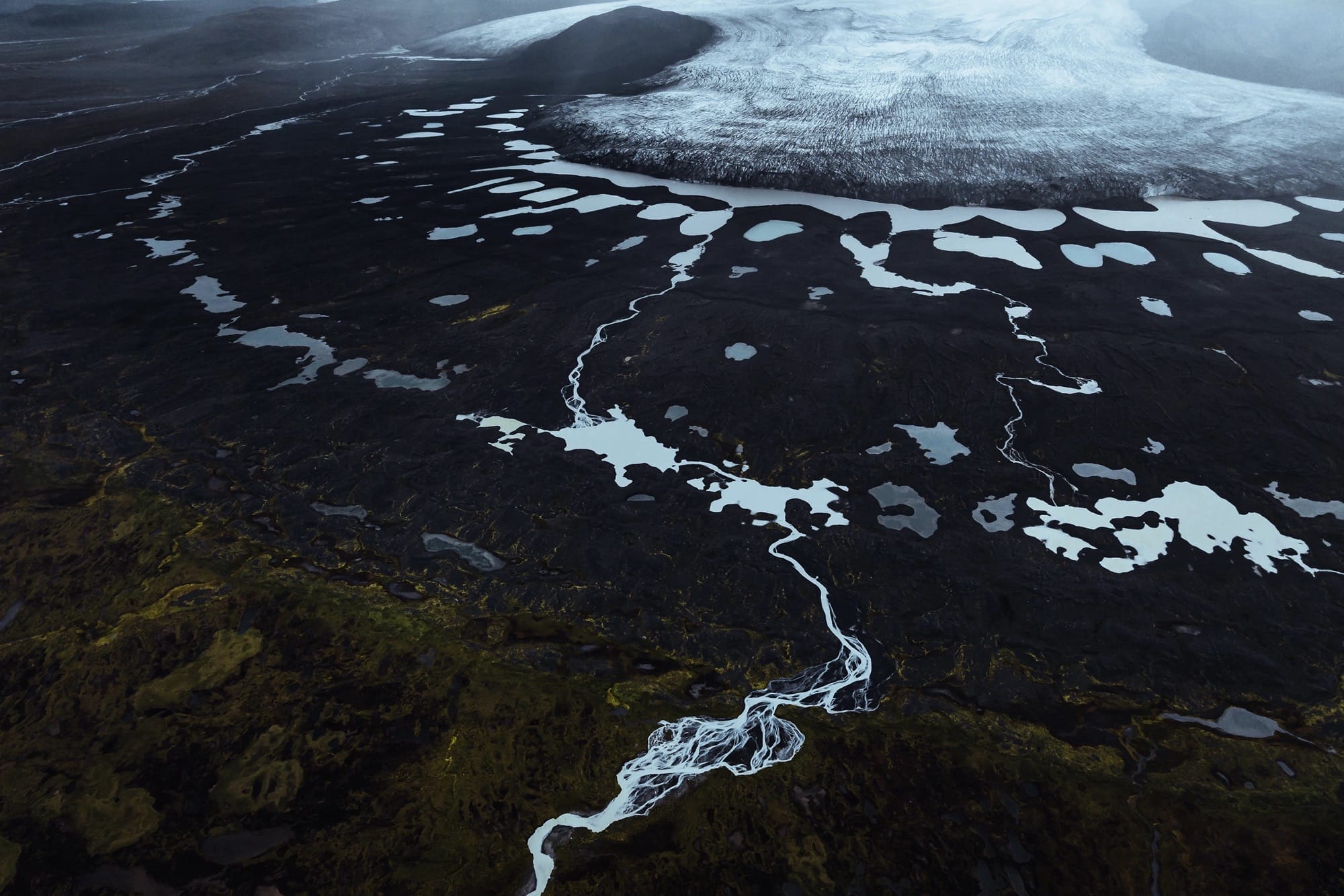
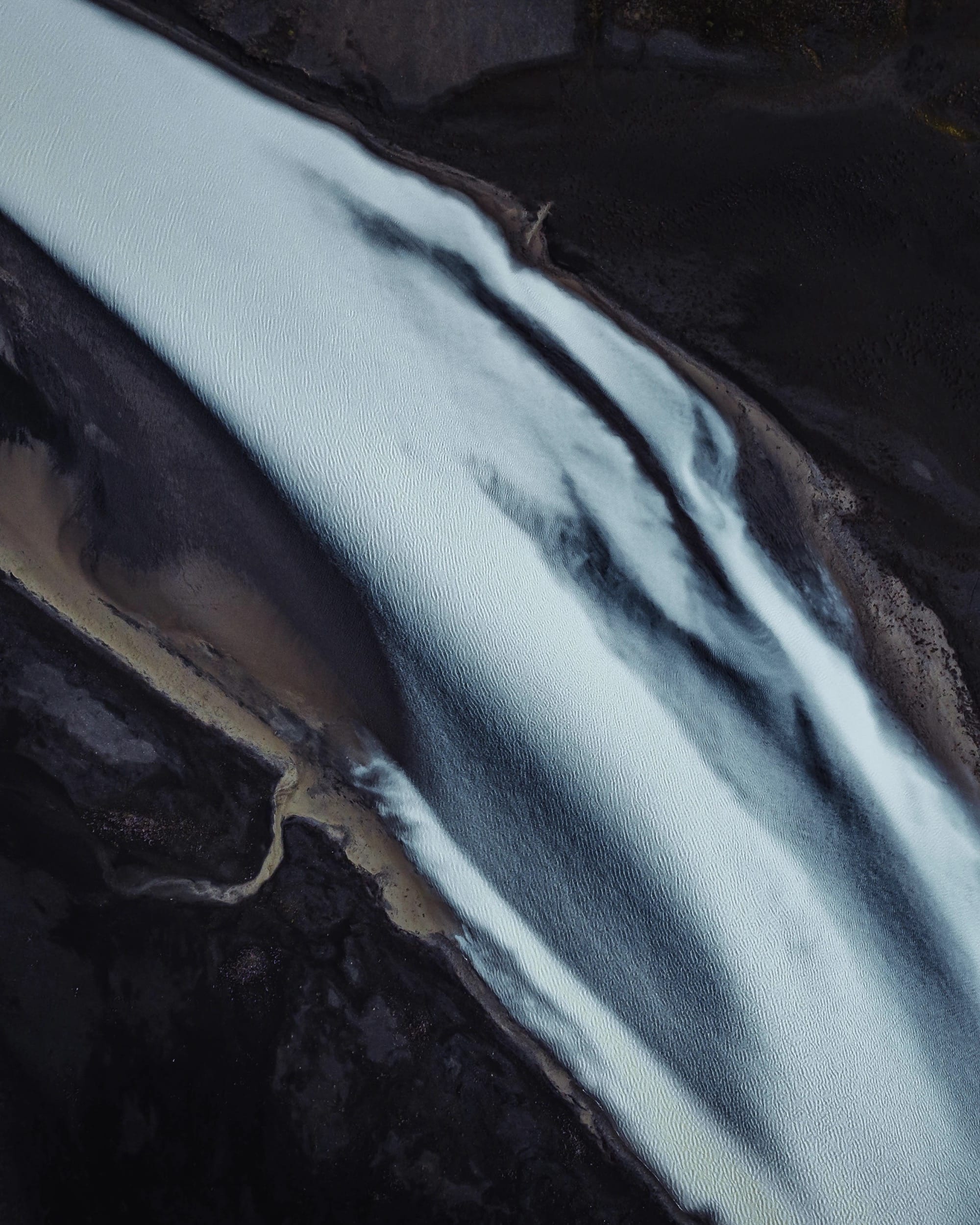
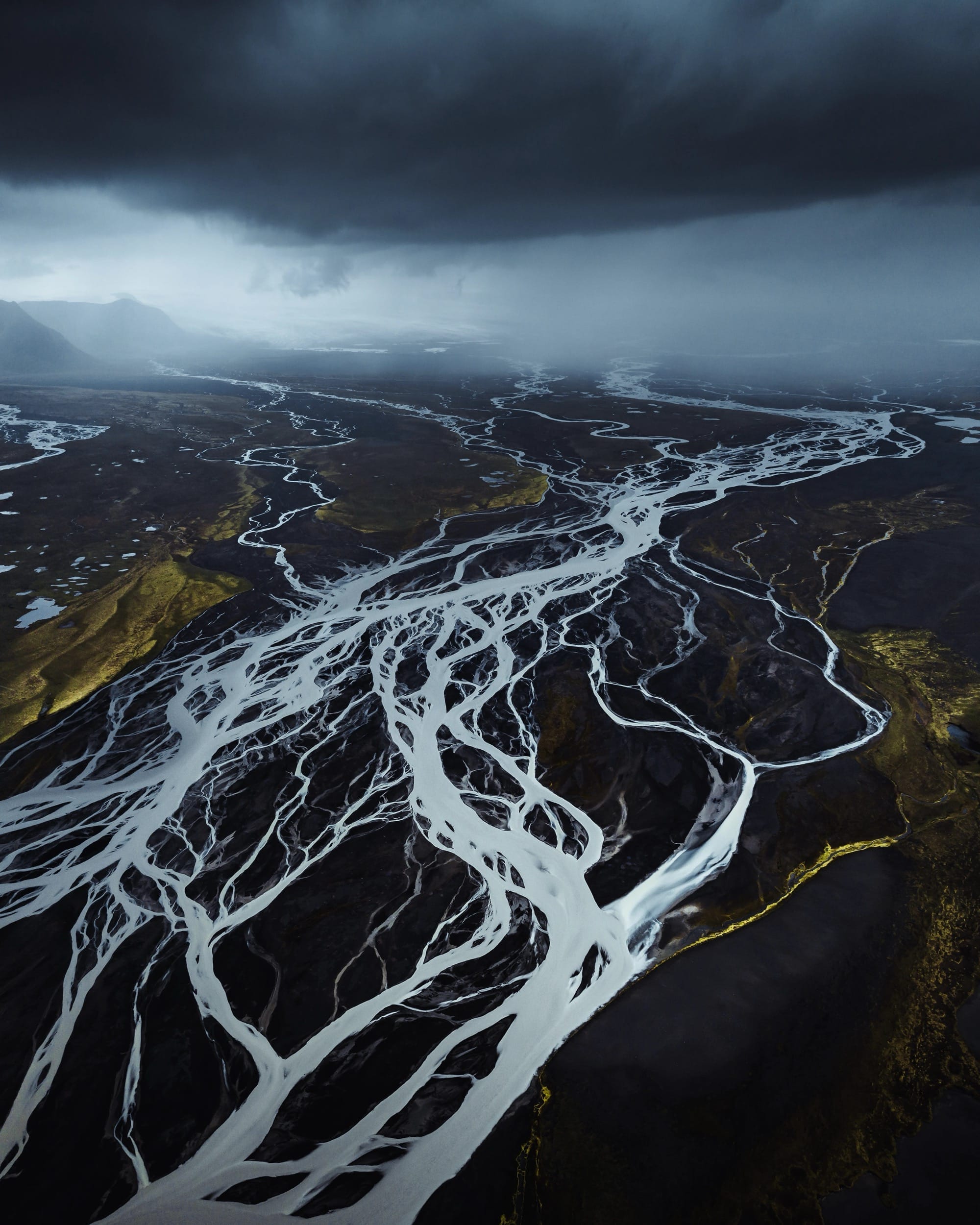
Iceland’s Múlajökull glacier is prone to sudden surges, where rapid ice flow is interspersed between periods of quiescence or retreat. The isolated nature of the glacier and its marshy surroundings make approaching on foot almost impossible, but photographer Dani Guindo captured gorgeous aerial images of the glacier’s many rivulets ribboning about the landscape it’s carved. (Image credit: D. Guindo; via Colossal)
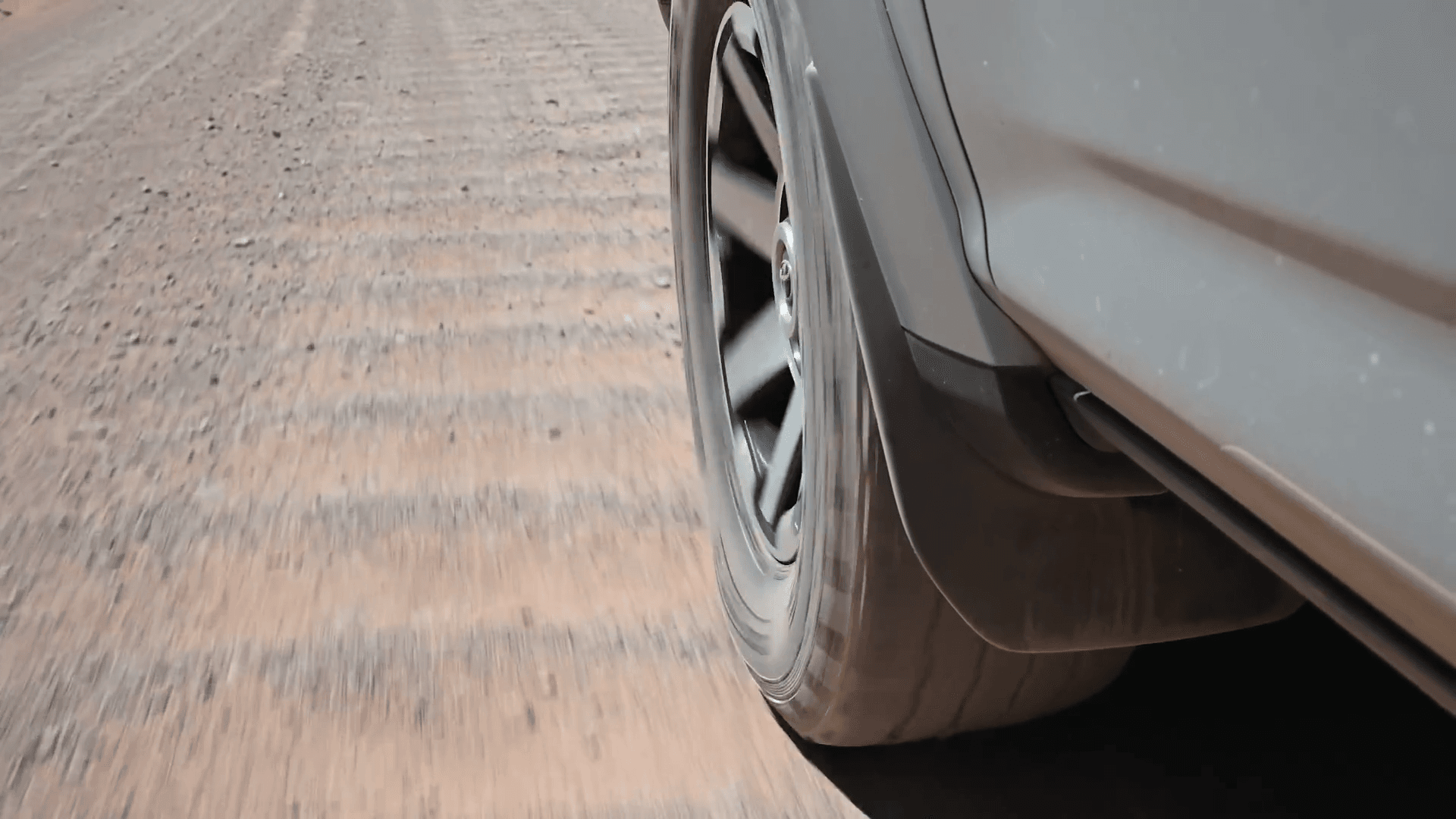
As anyone who has regularly traveled unpaved roads knows, they have a tendency to develop regularly spaced corrugations, otherwise known as washboarding. In addition to shaking cars and passengers, these uneven surfaces make cars harder to control, sicne the wheels can lose contact with the ground entirely at times.
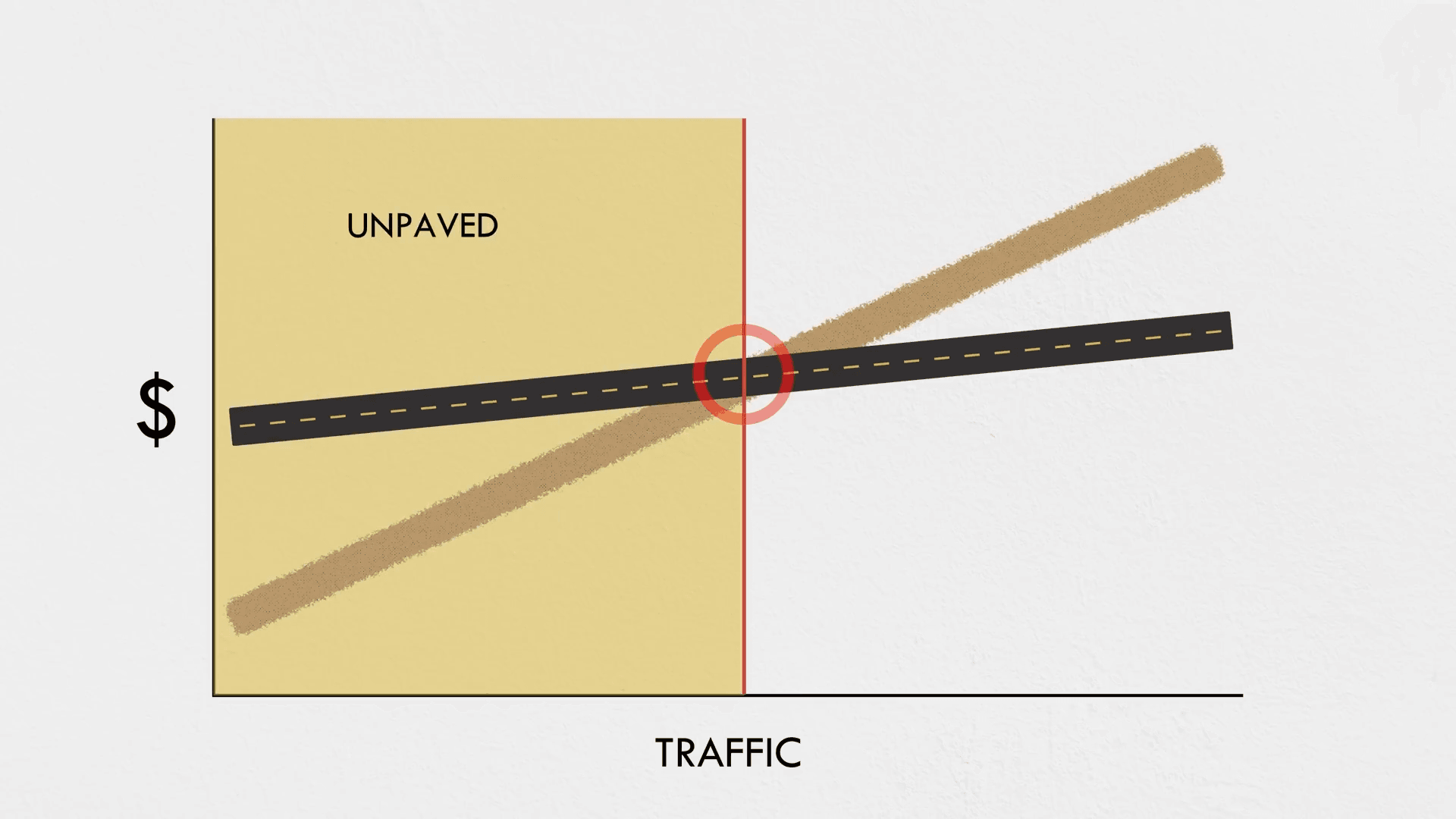
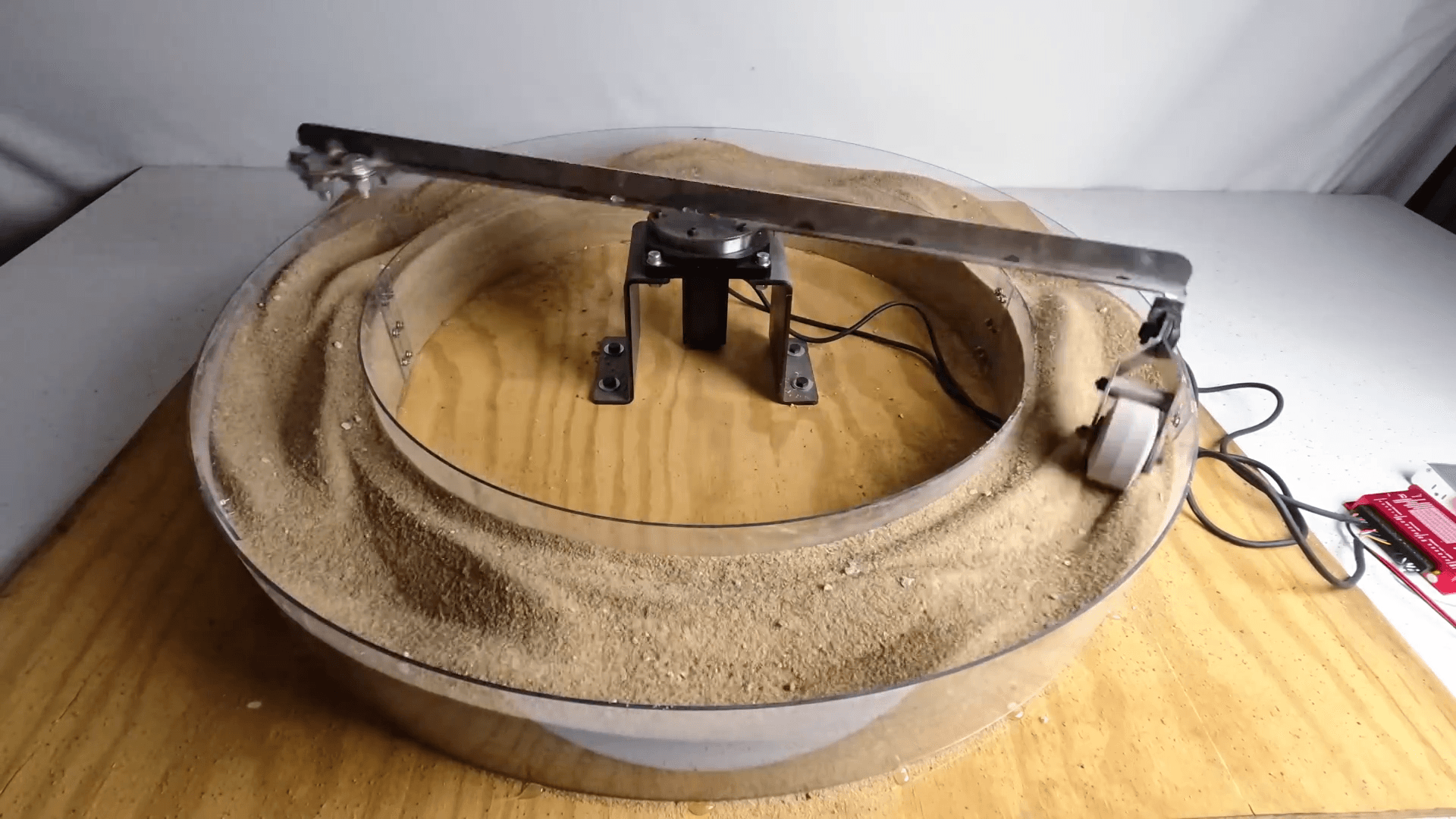
Unfortunately, this phenomenon is fairly unavoidable. Once you have a wheel moving across a granular surface above a critical speed, you get these self-reinforcing patterns. It’s similar to the way that tidal ripples and sand dunes form, and it’s how you get moguls on a ski run, too!
Although they’re somewhat inevitable, as Grady describes, engineers are hard at work figuring out how to keep them from forming too quickly. (Video and image credit: Practical Engineering; research credit: N. Taberlet et al. and I. Hewitt et al.)
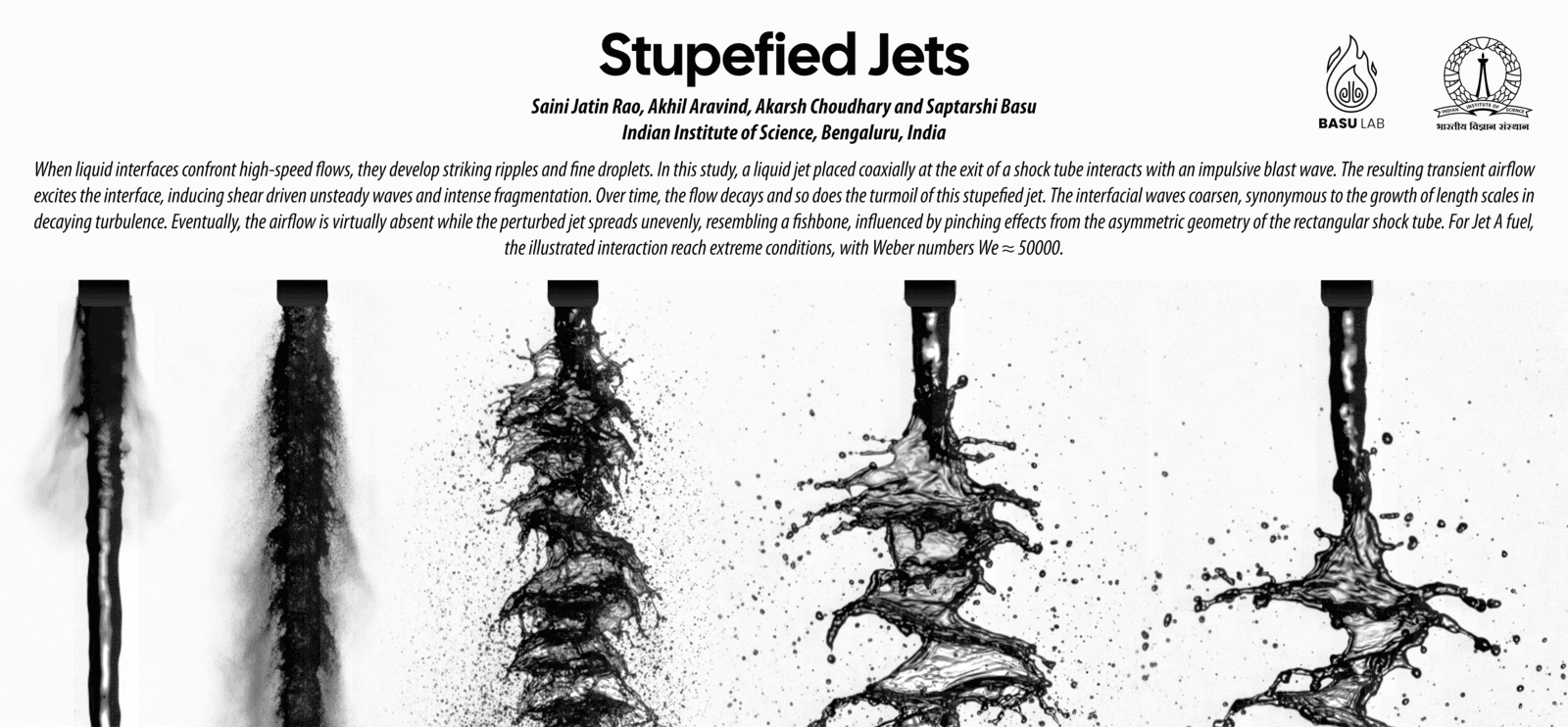
Breaking a jet of liquid into droplets lies at the heart of many industrial processes: spray painting, fuel injection, and asthma inhalers, to name a few. Here, researchers are looking at a different method of breaking up a liquid jet: shooting a shock wave along its length. The poster shows five different snapshots of the jet’s response. There are, variously, mists of fine droplets, wavy distortions of the jet, sheets, ligaments, and droplets of many sizes. (Image credit: S. Rao et al.)
Research poster showing black and white images of liquid jets after a shock wave passed along the length of each jet.
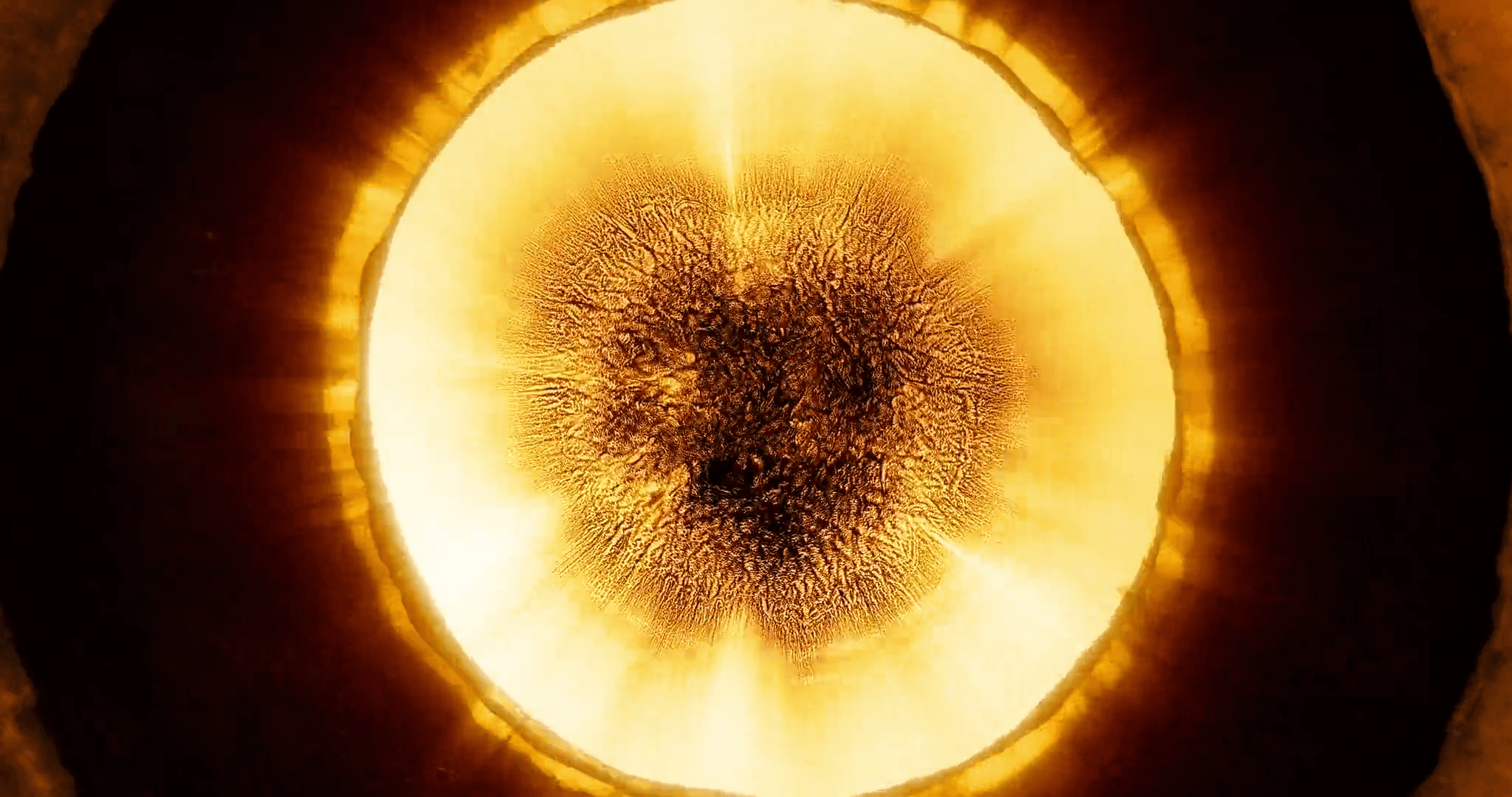
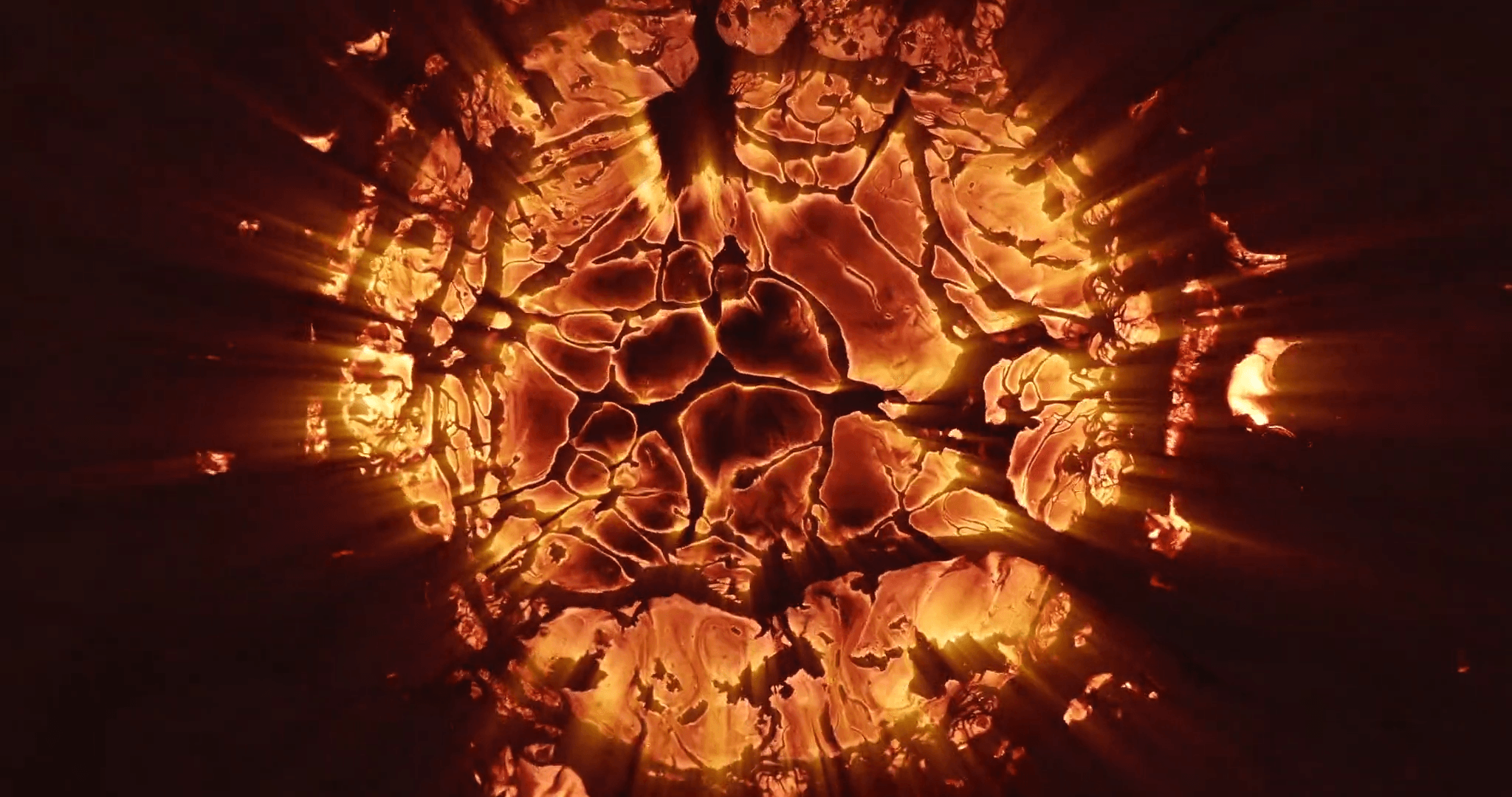
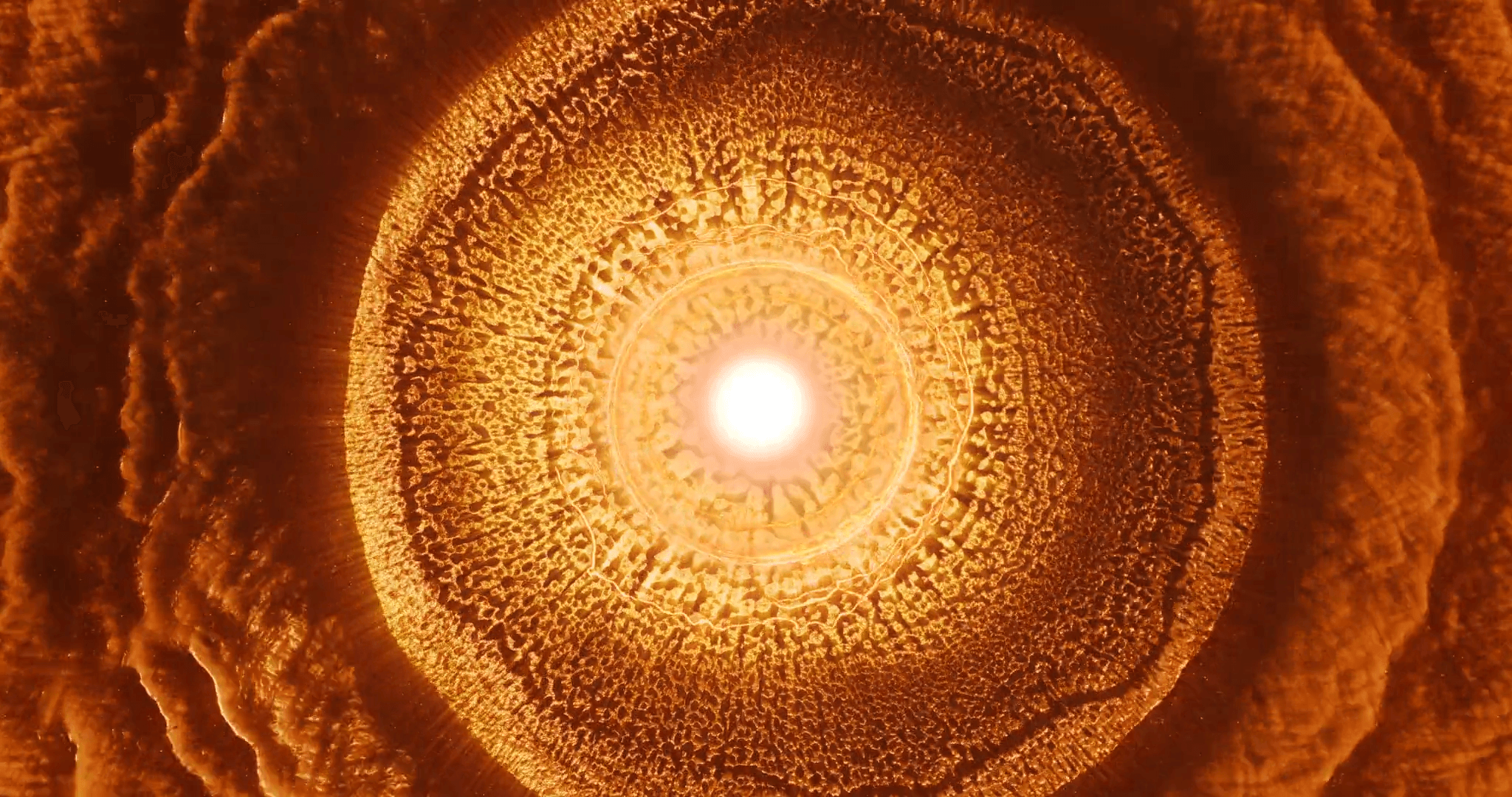
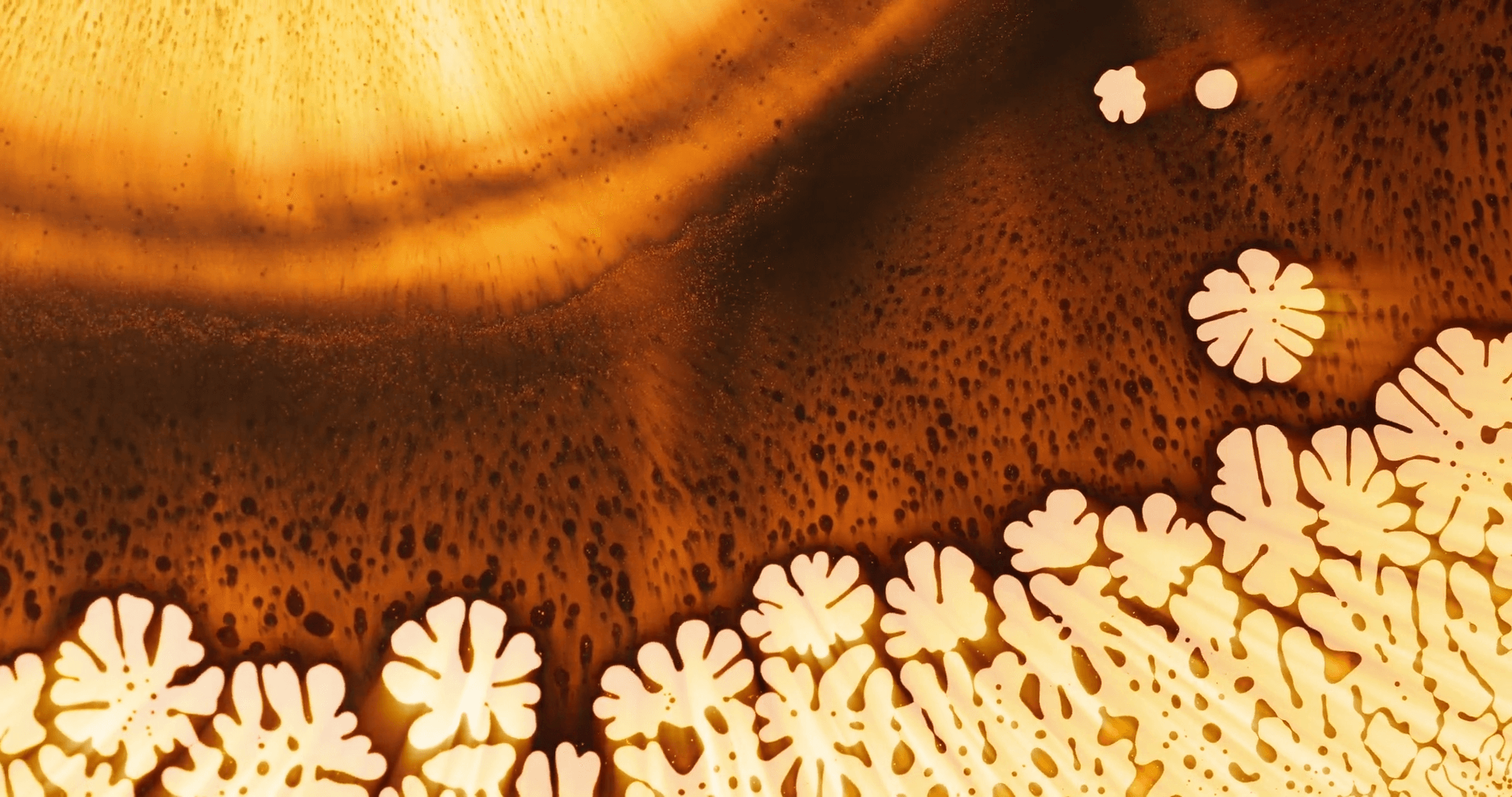
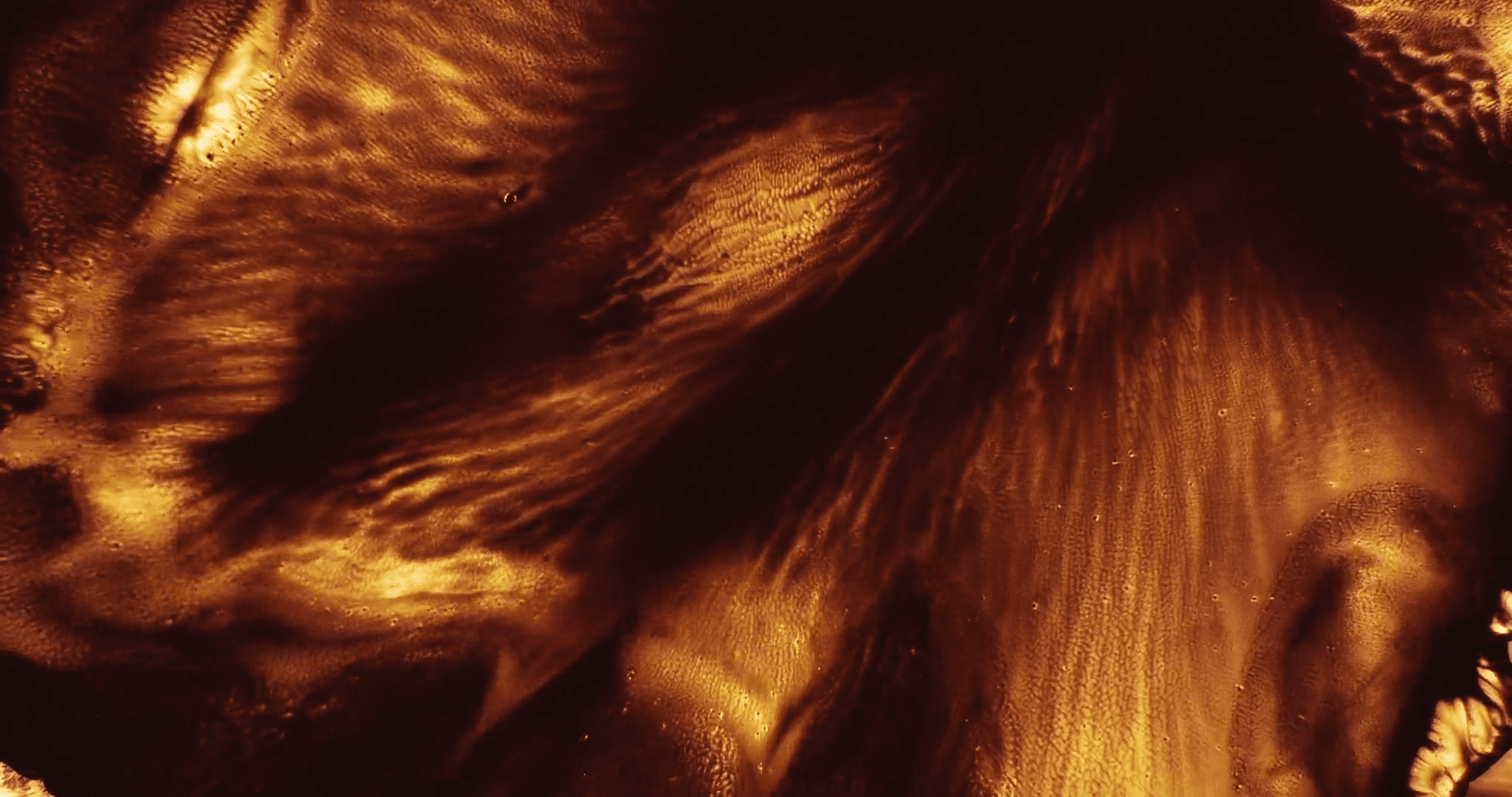
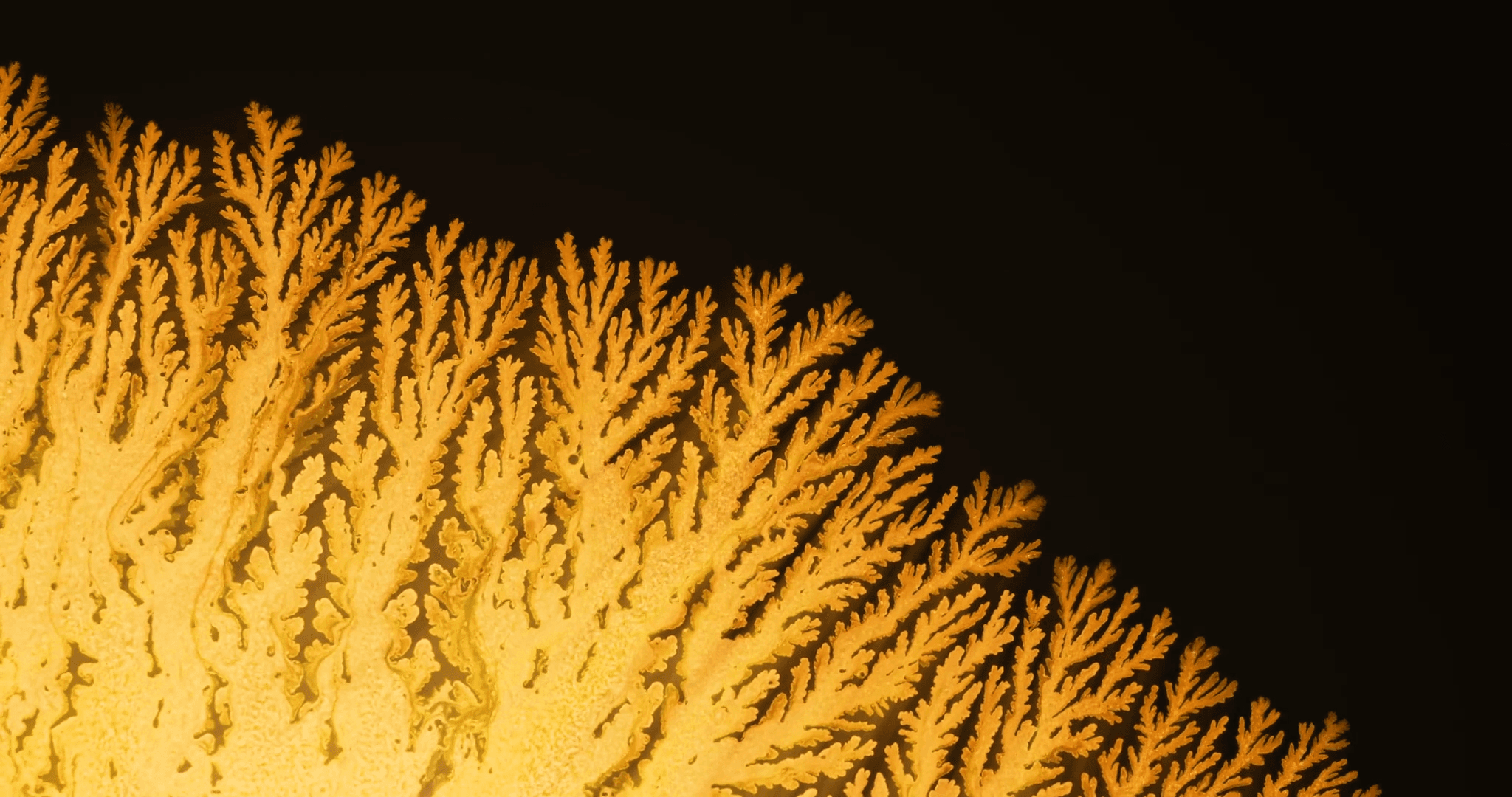
Artist Thomas Blanchard likes to create wild visuals from a mixture of mundane ingredients like ink, soap, oils, and ferrofluids. In this latest video, he’s mixed chemical reactions and physical phenomena into something reminiscent of a god’s eye staring across time and space, creation and destruction. (Video and image credit: T. Blanchard)