Tag: fluid dynamics

  • “Alive Painting”

    “Alive Painting”

    Artist Akiko Nakayama’s intuitive grasp of fluid dynamics is so good that she manipulates liquids live to musical accompaniment. Her dendritic paintings — made from a combination of acrylic paint and isopropyl alcohol — inspired scientific research papers. There’s no substitute, I’m sure, for seeing her art live, but you can get a taste of her performances in the video below. Then you can head over to Physics World for more on the artist, her inspirations, and her scientific collaborations. (Image credits: H. Akagi and A. Nakayama; video credit: Eternal Art Space; via Physics World)

  • How Magnetic Fields Shape Core Flows

    How Magnetic Fields Shape Core Flows

    The Earth’s inner core is a hot, solid iron-rich alloy surrounded by a cooler, liquid outer core. The convection and rotation in this outer core creates our magnetic fields, but those magnetic fields can, in turn, affect the liquid metal flowing inside the Earth. Most of our models for these planetary flows are simplified — dropping this feedback where the flow-induced magnetic field affects the flow.

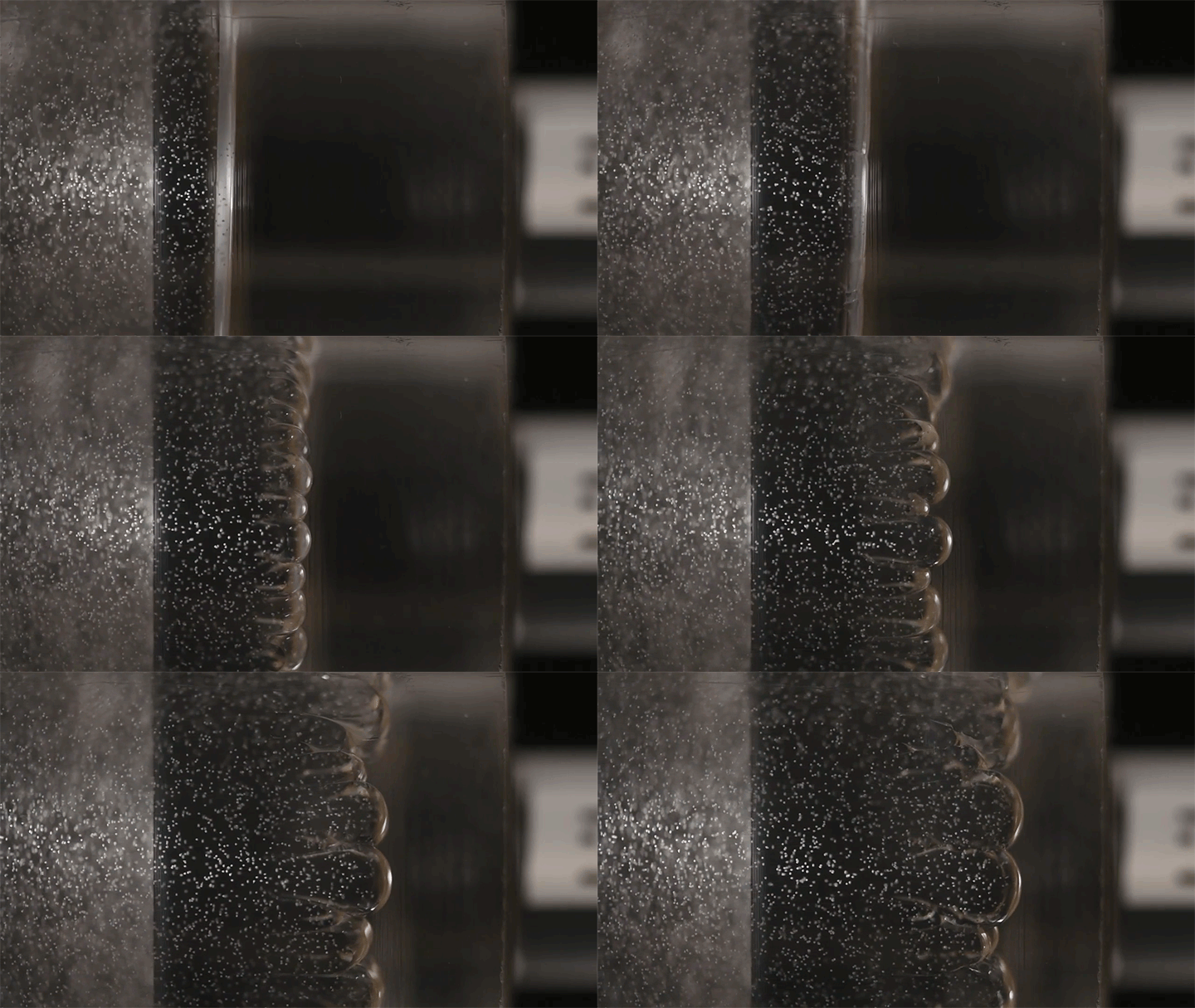
    The simplification used, the Taylor-Proudman theorem, assumes that in a rotating flow, the flow won’t cross certain boundaries. (To see this in action, check out this Taylor column video.) The trouble is, our measurements of the Earth’s actual interior flows don’t obey the theorem. Instead, they show flows crossing that imaginary boundary.

    To explore this problem, researchers built a “Little Earth Experiment” that placed a rotating tank (representing the Earth’s inner and outer core) filled with a transparent, magnetically-active fluid inside a giant magnetic. This setup allowed researchers to demonstrate that, in planetary-like flows, the magnetic field can create flow across the Taylor-Proudman boundary. (Image credit: C. Finley et al.; research credit: A. Pothérat et al.; via APS Physics)

  • Featured Video Play Icon

    The Taum Sauk Dam Failure and Its Legacy

    Managing an electrical grid is all about balancing the electricity that plants can supply with the instantaneous demands of consumers. If there’s more power available than people need, it needs to get stored somehow. And for decades, the best way to store that excess supply has been in hydroelectric reservoirs like at the Taum Sauk Dam. These facilities pump water to a reservoir at a higher elevation when there’s extra electrical power available, and, when more power is needed, release that water to run through hydroturbines.

    But storing water atop a mountain comes with unusual challenges for dam, and the 2005 failure of the Taum Sauk Dam facility highlights some important lessons for engineers. As Grady lays out in this Practical Engineering video, there was no single mistake that led directly to the dam’s failure. Instead, post-collapse investigations found a series of seemingly minor issues that, together, led to catastrophe. It’s well worth watching, especially for engineers; we could all use an occasional reminder that a “quick stopgap measure” isn’t enough. (Video and image credit: Practical Engineering)

  • Ember Bursts Spread Wildfires

    Ember Bursts Spread Wildfires

    In a wildfire, a burst of embers lofted upward can travel far, starting a new spot fire when they land. Although large ember bursts only happen occasionally, researchers found that these events — with orders of magnitude more embers than usual — play an outsized role in wildfire spread. In their experiments, researchers observed a bonfire with high-speed cameras to track ember bursts, and they also collected fallen embers from around their fire. They found large (>1 mm) embers could travel much further than current fire models predicted, carried by rare but powerful updrafts that coincided with large bursts. Their work indicates that wildfire models need a better way to simulate these kinds of events that are far from the fire’s baseline state but which occur often enough and with enough impact that they can spread fires. (Image credit: C. Cook; research credit: A. Peterson and T. Banerjee; via Physics World)

  • Featured Video Play Icon

    Convection in Blue

    Convection cells like these are all around us — in the clouds, on the Sun, and in our pans — but we rarely get to watch them in action. Convection results from densities differing in different areas of a fluid. Under gravity’s influence, having a dense fluid over a lighter one is unstable; the dense fluid will always sink and the lighter one will rise. When that motion has to take place across a large surface area, we often end up with cells like the ones seen here.

    Convection cells in an alcohol-paint mixture.
    Convection cells in an alcohol-paint mixture.

    What drives the density differences in the fluid? That depends. Often there’s a temperature difference that drives warmer fluid to rise and cool fluid to sink. But that’s not always the source of convection. Evaporating a volatile chemical — like alcohol — out of a mixture can also create the density differences needed for convection. That may be the source of the convection we see here in a mixture of paint and alcohol. (Video and image credit: W. Zhu; via Nikon Small World in Motion)

  • Ice Without Gravity

    Ice Without Gravity

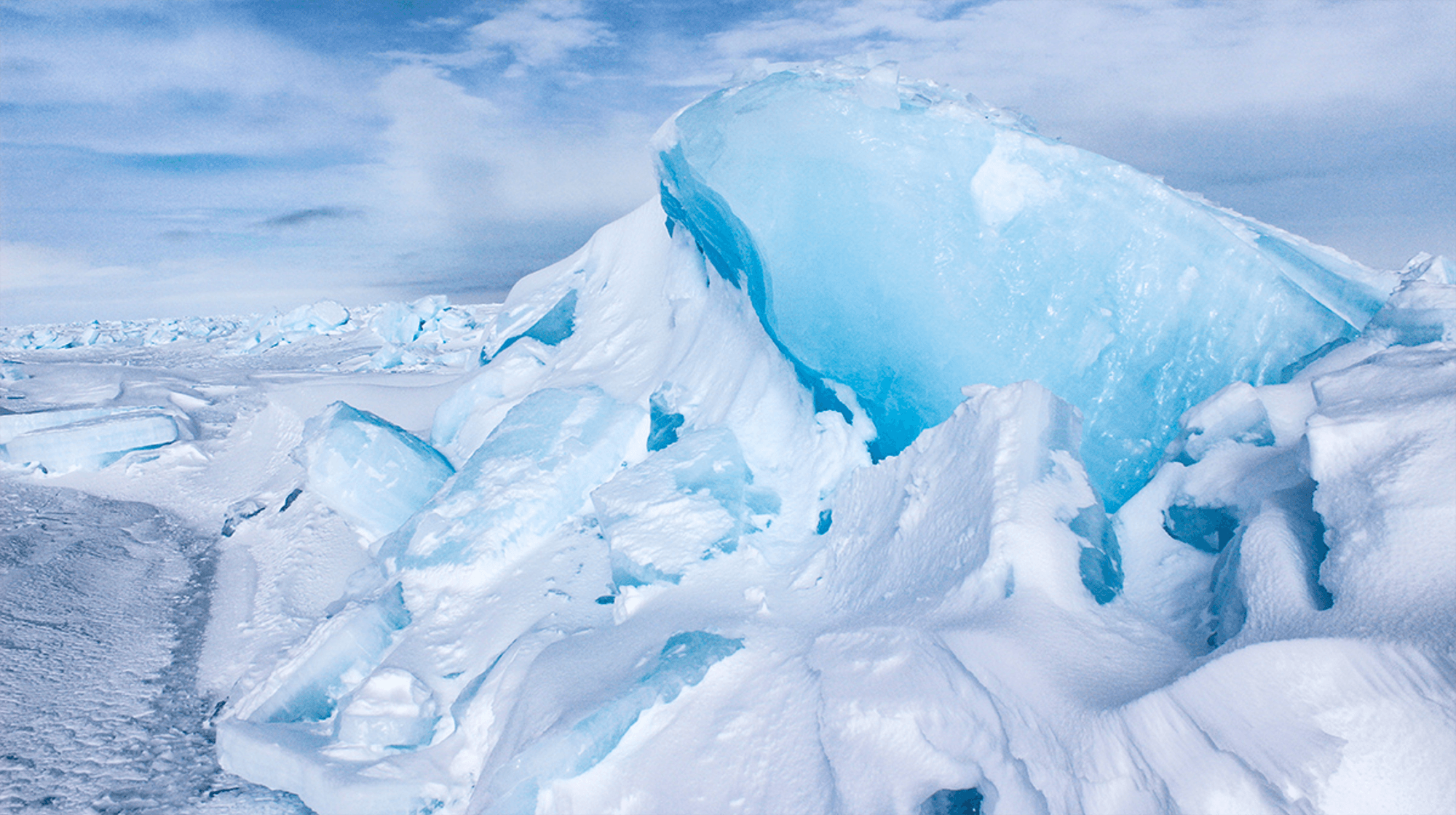
    Astronaut Don Pettit is back in space, and that means lots of awesome microgravity experiments. Here, he grew thin wafers of ice in microgravity in a -95 degree Celsius freezer. Then he took the ice wafers and photographed them between crossed polarizers, creating this colorful image. The colors highlight different crystal orientations within the ice and give us a hint about how the freezing front formed and expanded. I can’t wait to see more examples! (Image credit: D. Pettit/NASA; via Ars Technica; submitted by J. Shoer)

    Fediverse Reactions
  • Seeking Mars’ Past

    Seeking Mars’ Past

    Although Mars is quite dry and inhospitable today, our rovers continue to search for evidence of a past Mars that could have sustained life. A recent study suggests that, at least in Gale Crater, the opportunities for life to flourish may have been short-lived. In particular, the team looked at carbonates found by the Curiosity rover. These minerals contain varying amounts of carbon and oxygen isotopes that can hint at the conditions the carbonates formed under. The team found a high proportion of heavier isotopes, which suggest one of two possible formation paths. In the first, Gale Crater underwent wet-dry cycles that alternated between more- and less-habitable conditions for life. The second possibility is a cryogenic past, where most of the local water was locked in ice, and life would have had to survive — if possible — in small pockets of extremely salty water. Neither possibility is a great one for the kinds of life we’re accustomed to. (Image credit: NASA; research credit: D. Burtt et al.; via Gizmodo)

  • Herding Sheep

    Herding Sheep

    Flocks of birds, schools of fish, and herds of sheep all resemble fluids at times, and physicists have been trying to recreate their collective motion for decades. Many of these models simplify the animals into particles that follow simple rules based on the direction and speed of their neighbors. Over time, the models have grown more complex; for example, some might differentiate a “sheepdog” particle from “sheep” particles. And some models even tweak the “sheep” to account for the personality traits that real sheep show, like how skittish they behave toward a sheepdog. Physics World has a neat overview of several studies in this vein. (Image credit: E. Osmanoglu; via Physics World)

  • Featured Video Play Icon

    Non-Newtonian Raindrops

    Fluids like air and water are called Newtonian because their viscosity does not vary with the force that’s applied to them. But many common fluids — almost everything in your fridge or bathroom drawer, for example — are non-Newtonian, meaning that their viscosity changes depending on how they’re deformed.

    Non-Newtonian droplets can behave very differently than Newtonian ones, as this video demonstrates. Here, their fluid of choice is water with varying amounts of silica particles added. Depending on how many silica particles are in the water, the behavior of an impacting drop varies from liquid-like to completely solid and everything in between. Why such a great variation? It all has to do with how quickly the droplet tries to deform and whether the particles within it can move in that amount of time. Whenever they can’t, they jam together and behave like a solid. (Image, video, and research credit: S. Arora and M. Driscoll)

  • Featured Video Play Icon

    Who Killed the Colorado River?

    From its source high in the snowy Rocky Mountains, the Colorado River runs through two countries and five states on its way to the Gulf of California. Or at least it used to. The river hasn’t met the sea in decades. All that water disappeared into a complicated web of poor management, short-sighted policies, and human infrastructure, as this video from PBS Terra explores. Unfortunately, while the details vary, this story is not unique, and many rivers around the world are no longer completing their journey. The good news is that we can still change that and rehabilitate the landscapes we’ve lost. (Video and image credit: PBS Terra)