Search results for: “water droplet”

  • Moving Droplets

    Moving Droplets

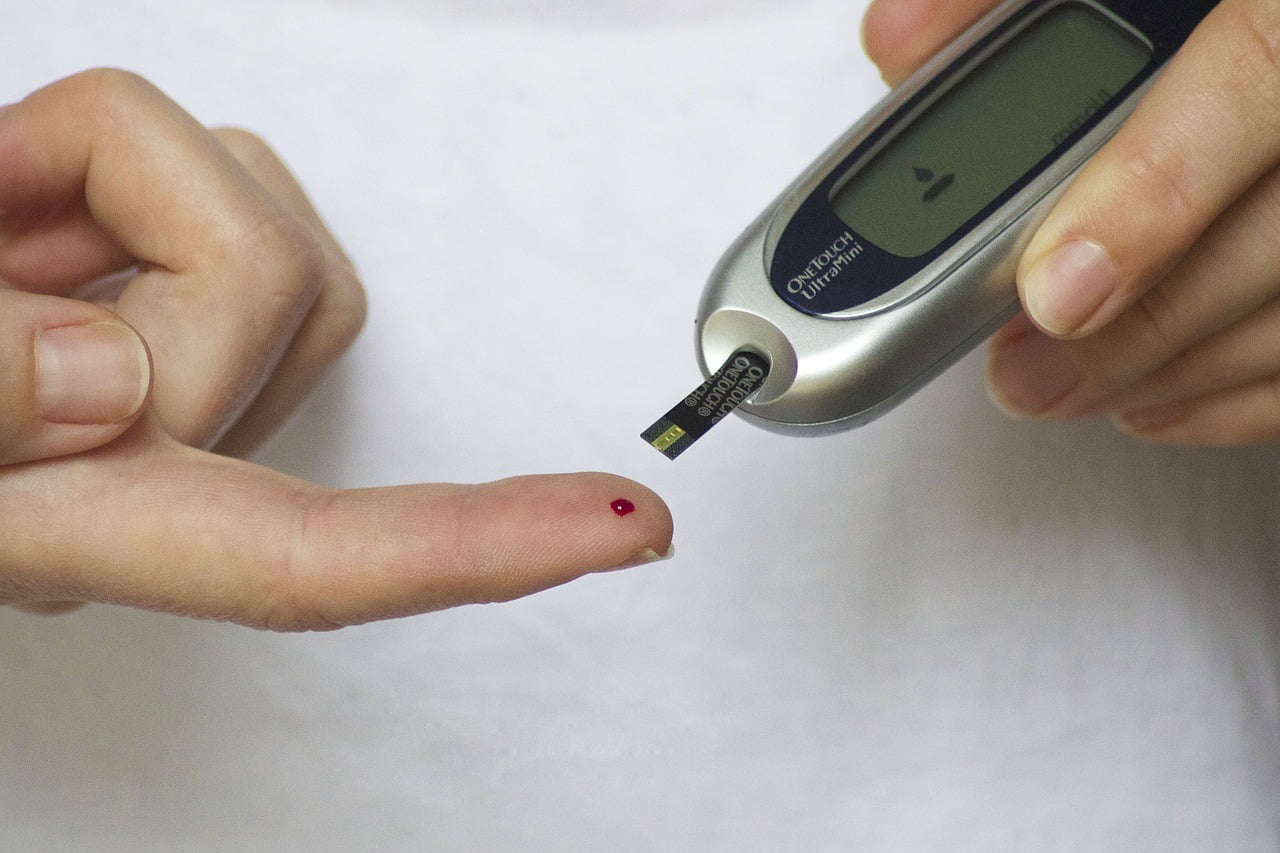
    Microfluidic devices – such as those used by individuals with diabetes to monitor their blood glucose levels – are all about transport. Typically, these devices use some kind of externally applied force, like a temperature gradient or electrical field, to force liquids through the device’s narrow channels. But a new study describes a way to move droplets without an external force.

    The researchers built their devices using two slips of glass, coated with an oil-attracting, water-repellent mixture. They attached the glass slips with a narrow spacer at one end, leaving the other end free. This made a narrow, but slightly flexible gap. When the scientists placed an oil drop inside the closed end, it spread on the glass, pulling the two sides closer to one another. Water drops, on the other hand, tried to force the walls apart, in an effort to minimize contact. Both sets of drops, interestingly, moved toward the open end of the device.

    The researchers found that the shapes assumed by the droplets create an internal pressure gradient, which, in both cases, slowly moves the drops. They call this method bendotaxis, a type of self-propulsion driven by the drops’ ability to bend the material they’re touching. It’s not a fast way to transport fluids – the drops moved only a few micrometers per second – but it may be useful for applications like drug deliveries where the liquid needs to be administered slowly over a longer period. (Image credit: TesaPhotography; research credit: A. Bradley et al.; via APS Physics; submitted by Kam-Yung Soh)

  • Growing Droplets

    Growing Droplets

    The moisture in clouds eventually condenses into droplets that grow into raindrops and fall. Some steps in this process are well understood, but others are not. In particular, scientists have struggled with the problem of how droplets grow from about 30 microns to 80 microns, where they’re big enough to start falling and merging.

    Laboratory experiments and numerical simulations (below) have shown that turbulence can help drive small water drops together. When droplets are tiny and light, they simply follow the air flow. But when they’re a little heavier, turbulent eddies (seen in orange below) act like miniature centrifuges, flinging larger water droplets (shown in cyan below) out into clusters, where they’re more likely to collide with one another.

    Although this effect has been seen in experiments and simulation, it’s been difficult to capture in clouds themselves. But a new set of test flights (above) confirms that this mechanism is present in the wild as well! (Image credit: UCAR/NCAR Earth Observing Laboratory, P. Ireland et al., source; research credits: M. Larsen et al., P. Ireland et al.; via APS Physics; submitted by Kam-Yung Soh)

    image
  • Spinning Droplet Galaxies

    Spinning Droplet Galaxies

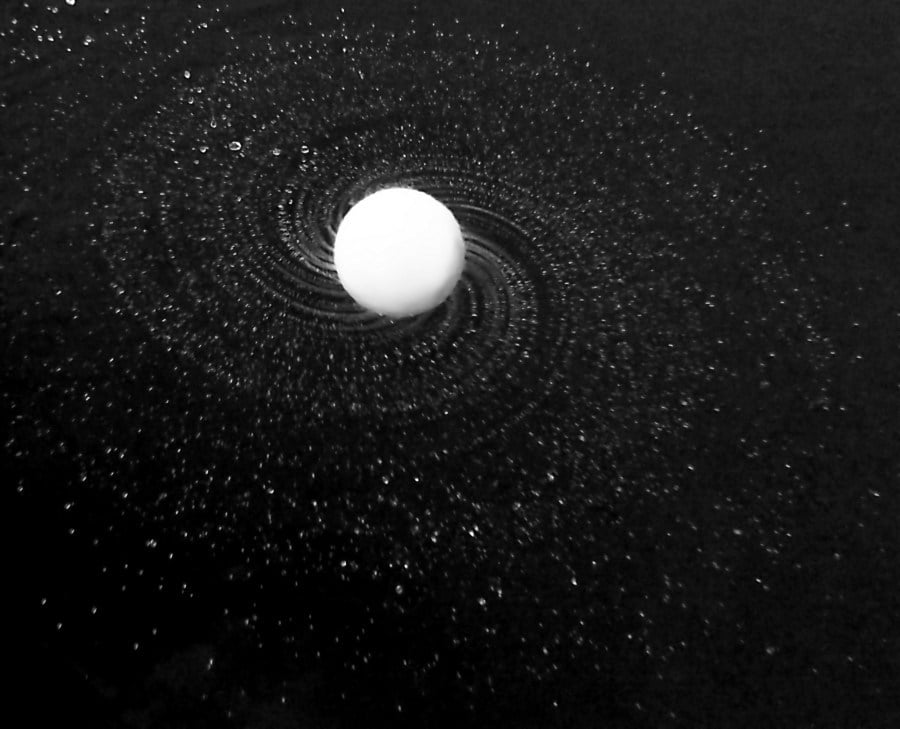
    Water flung from a spinning tennis ball takes on a shape reminiscent of a spiral galaxy. As it detaches, water leaves the surface with both the tangential velocity of the spinning ball and a radial velocity due to the centrifugal force flinging it. The continued spin of the ball makes the thin ligaments of water still attached to it spiral and stretch. Eventually, surface tension can no longer hold the water together against the centrifugal forces, and the ligaments split into a spray of droplets. (Image credit: W. Derryberry and K. Tierney)

  • Nestling Droplets

    Nestling Droplets

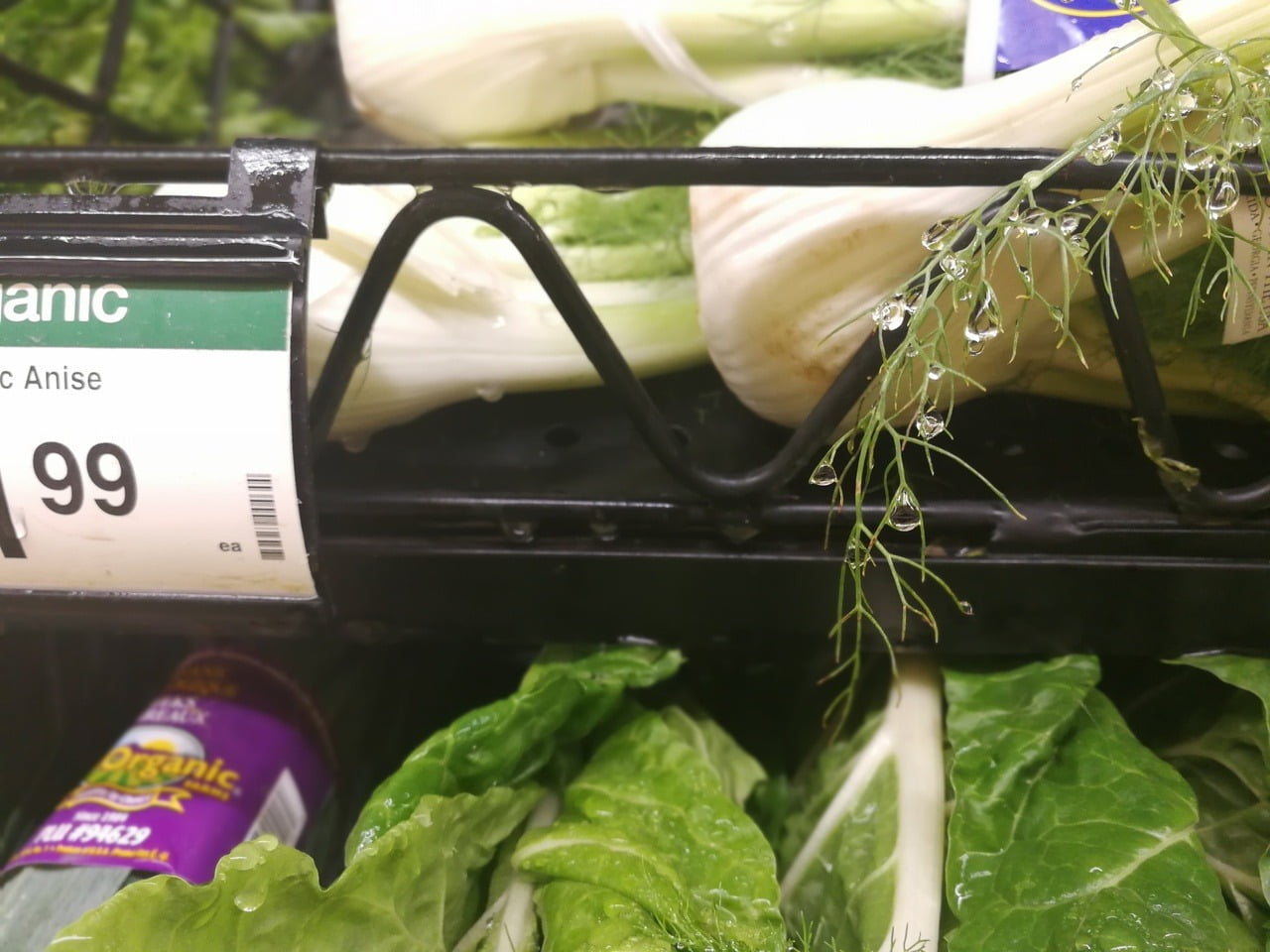
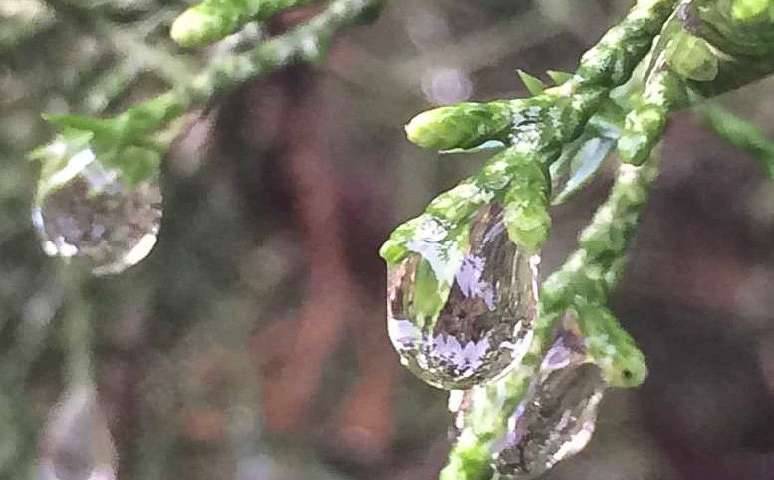
    Pay attention after a rainfall, and you may notice beads of water gathering in the corners of a spider’s web or along the leaves of a cypress tree (bottom right). Look closely and you’ll notice that the largest droplets don’t form along a straight fiber. Instead they nestle into the corners of a bent fiber (top image). Researchers recently characterized this corner mechanism and found that the angle at which the largest droplets form is about 36 degrees. This angle provides the optimal conditions for capillary action and surface tension to hold large drops in place. At smaller angles, a growing droplet’s weight pulls it down until the thin film holding the droplet near the top ruptures and the droplet falls. At larger angles, a heavy droplet will slowly detach from one side of its fiber and shift toward the other side until its weight is too great for the wetted length of fiber to hold. Then it detaches completely and falls. (Research and image credit: Z. Pan et al.; via T. Truscott)

  • Wrapping Droplets

    Wrapping Droplets

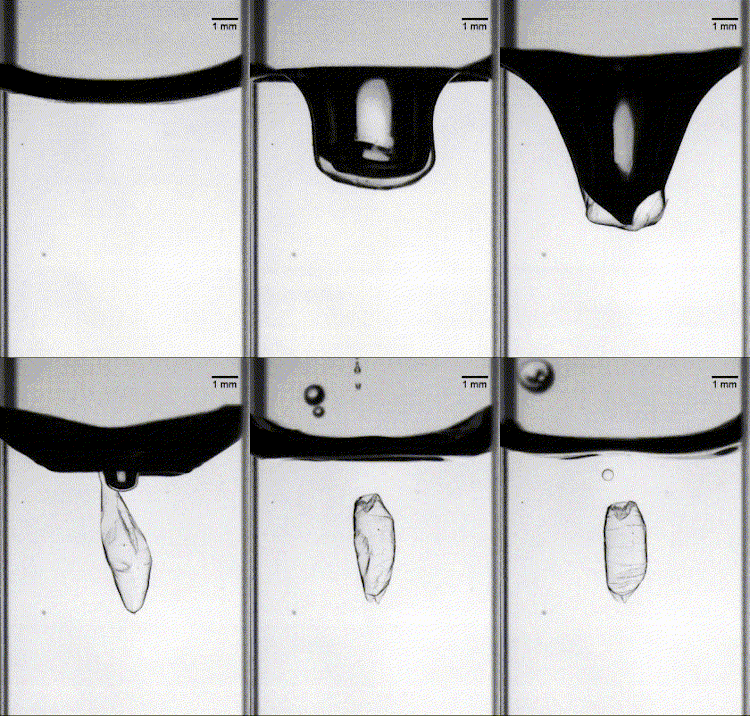
    Future efforts for targeted drug delivery may require encapsulating droplets before transporting them to their final location. One method for encapsulation is wrapping a drop in a thin, solid sheet. Previously, we saw that drops can wrap themselves with a little outside assistance, but here the drops achieve that same feat on their own, using the energy of droplet impact to wrap liquids. 

    Here’s how it works: float a thin sheet on a bath of a liquid like water, then let an oil drop fall into the bath. Its impact deforms the air-water interface and, with a sufficiently energetic impact, causes the oil droplet to pinch off. The flexible sheet wraps around the droplet, and the encapsulated droplet sinks due to gravity. The shape of the final drop depends on the sheet’s initial geometry. The researchers have successfully used circular, triangular, and cross-shaped sheets to wrap droplets. Check out the original paper or the video below for more. (Image and research credit: D. Kumar et al.; video credit: Science)

  • Water Atop Oil

    Water Atop Oil

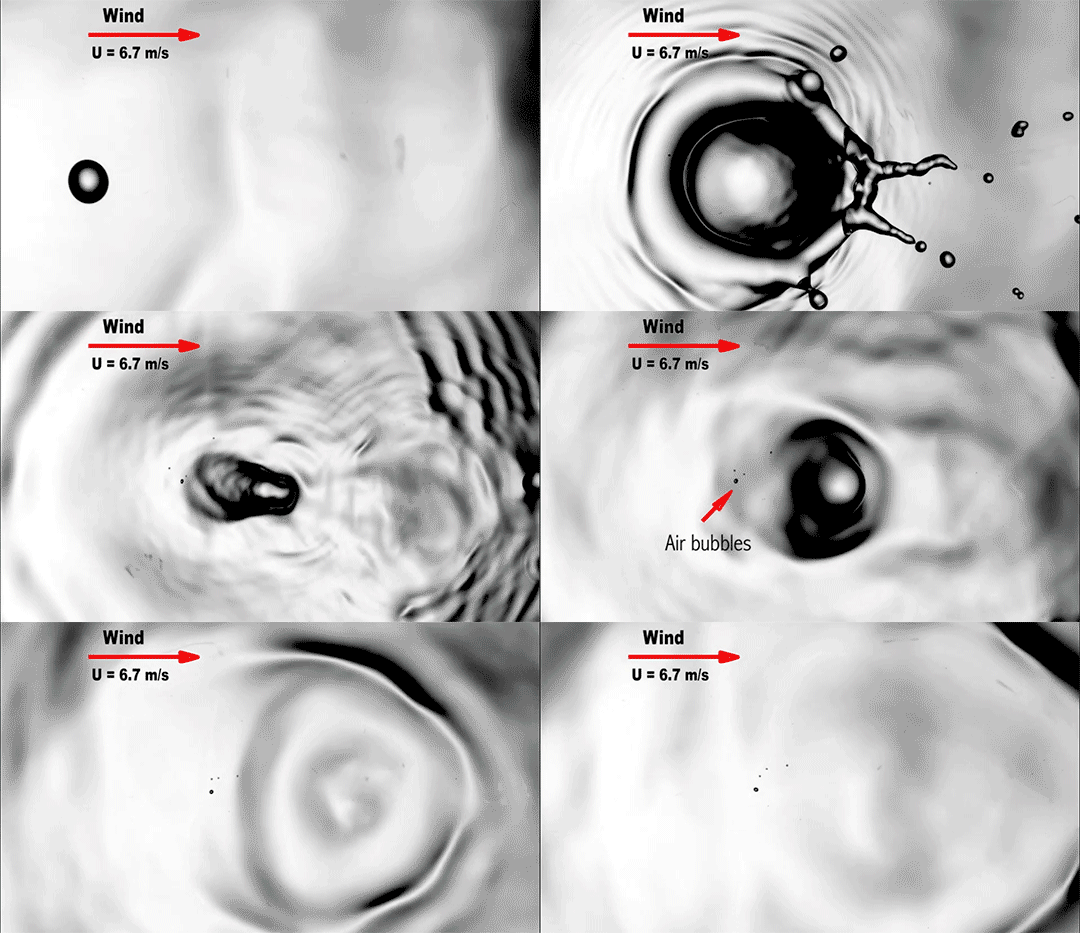
    At first glance, this image looks much like the impact of any drop on a pool of the same liquid, but that’s not what you’re seeing. This is the impact of a water droplet on a thin film of oil, and the immiscibility of those two fluids has important effects on the collision. When the water drop impacts, it spreads and forms a compound crown that rises out of the fluid. Eventually, that momentum runs out and the crown falls into the liquid.

    Water’s intermolecular forces are strong enough to pull the remains of the droplet back in on itself. As that fluid collides at the center, it gets forced up into a central jet with enough energy to eject a droplet or two at its tip. Even though this looks like a Worthington jet, it’s not. Worthington jets form after the collapse of a cavity in the impacted liquid – in other words, they form on pools, not on films. Despite the visual similarity, this central jet is formed entirely differently! (Image and research credit: Z. Che and O. Matar, source; submitted by O. Matar)

  • Featured Video Play Icon

    Jumping Droplets

    Condensation, which removes heat by changing a vapor into a liquid, is a common feature in industrial heat transfer. When droplets form on surfaces, they typically have to grow to millimeter size before gravity causes them to slide off and open up the surface to new droplet formation. Hydrophobic surfaces can shed droplets a little sooner. Droplets only 100 micrometers in size will spontaneously jump off hydrophobic surfaces due to the release of excess surface energy during droplet coalescence, but this only happens when those droplets have a small contact area with the surface. Defects in the nanoscale structure of the surface can allow water to squeeze in between posts and hold on.

    To counter this, new experiments packed copper nanowires into a dense 3D array. This permits fewer defects and helps condensing droplets leap from the surface sooner. Each droplet carries away a bit of the surface’s heat. The new method is impressively efficient at it. Researchers found the new heat exchanger could remove 100% more heat than previous hydrophobic designs. (Video credit: Science; research credit: R. Wen et al.)

  • Featured Video Play Icon

    Swimming Microdroplets

    Simple systems can sometimes have surprisingly complex behaviors. In this video, the Lutetium Project outlines a scheme for swimming microdroplets. Most of the droplets shown are just water, but they’re released into a chamber filled with a mixture of oil and surfactants. All flow through the chamber is shut off, but the droplets swim around in complicated, disordered patterns anyway. To see why, we have to zoom way in. The surfactant molecules in the oil cluster around the droplets, orienting so that their hydrophobic parts are in the oil and their hydrophilic parts point toward the water. They actually draw some of the water out of the droplets. This creates a variation in surface tension that causes Marangoni flow, making the droplets swim. Over time, the droplets shrink and slow down as the surfactants pull away more and more of their water and the variations in surface tension get smaller. (Image and video credit: The Lutetium Project; research credit: Z. Izri et al.)

  • Leaping Droplets

    Leaping Droplets

    Many fungi use coalescing water droplets to launch and spread their spores. The process is recreated in the laboratory in the animation above. Initially, there is a small spherical drop and a second, flattened drop stuck to the backside of the spore. In the animation, the large object on the right is actually both spore and droplet. The spore is spherical on one side and flattened on the other and starts out tipped up on its edge. When the spherical drop gets large enough to reach the flattened drop, they merge. This reduces the total surface area of the drop and thus releases some surface energy. It’s that surface energy that drives the spore’s jump. Even launching just a centimeter away from the host fungus is enough for a breeze to carry the spore further, allowing the fungus to reproduce.  (Image and research credit: F. Liu et al., source; submitted by Kam-Yung Soh)

  • Featured Video Play Icon

    Burning a Rocket Underwater

    In a recent video, Warped Perception filmed a model rocket engine firing underwater. Firstly, it’s no surprise that the engine would still operate underwater (after its wax waterproofing). The solid propellant inside the engine is a mixture of fuel and oxidizer, so it has all the oxygen it needs. Fluid dynamically speaking, though, this high-speed footage is just gorgeous.

    Ignition starts at about 3:22 with some cavitation as the exhaust gases start flowing. Notice how that initial bubble dimples the surface when it rises (3:48). At the same time, the expanding exhaust on the right side of the tank is forcing the water level higher on that side, triggering an overflow starting at about 3:55. At this point, the splashes start to obscure the engine somewhat, but that’s okay. Watch that sheet of liquid; it develops a thicker rim edge and starts forming ligaments around 4:10. Thanks to surface tension and the Plateau-Rayleigh instability, those ligaments start breaking into droplets (4:20). A couple seconds later, holes form in the liquid sheet, triggering a larger breakdown. By 4:45, you can see smoke-filled bubbles getting swept along by the splash, and larger holes are nucleating in that sheet.

    The second set of fireworks comes around 5:42, when the parachute ejection charge triggers. That second explosive triggers a big cavitation bubble and shock wave that utterly destroys the tank. If you look closely, you can see the cavitation bubble collapse and rebound as the pressure tries to adjust, but by that point, the tank is already falling. Really spectacular stuff!  (Video and image credit: Warped Perception)