Search results for: “water droplet”

  • Featured Video Play Icon

    The World in a Droplet

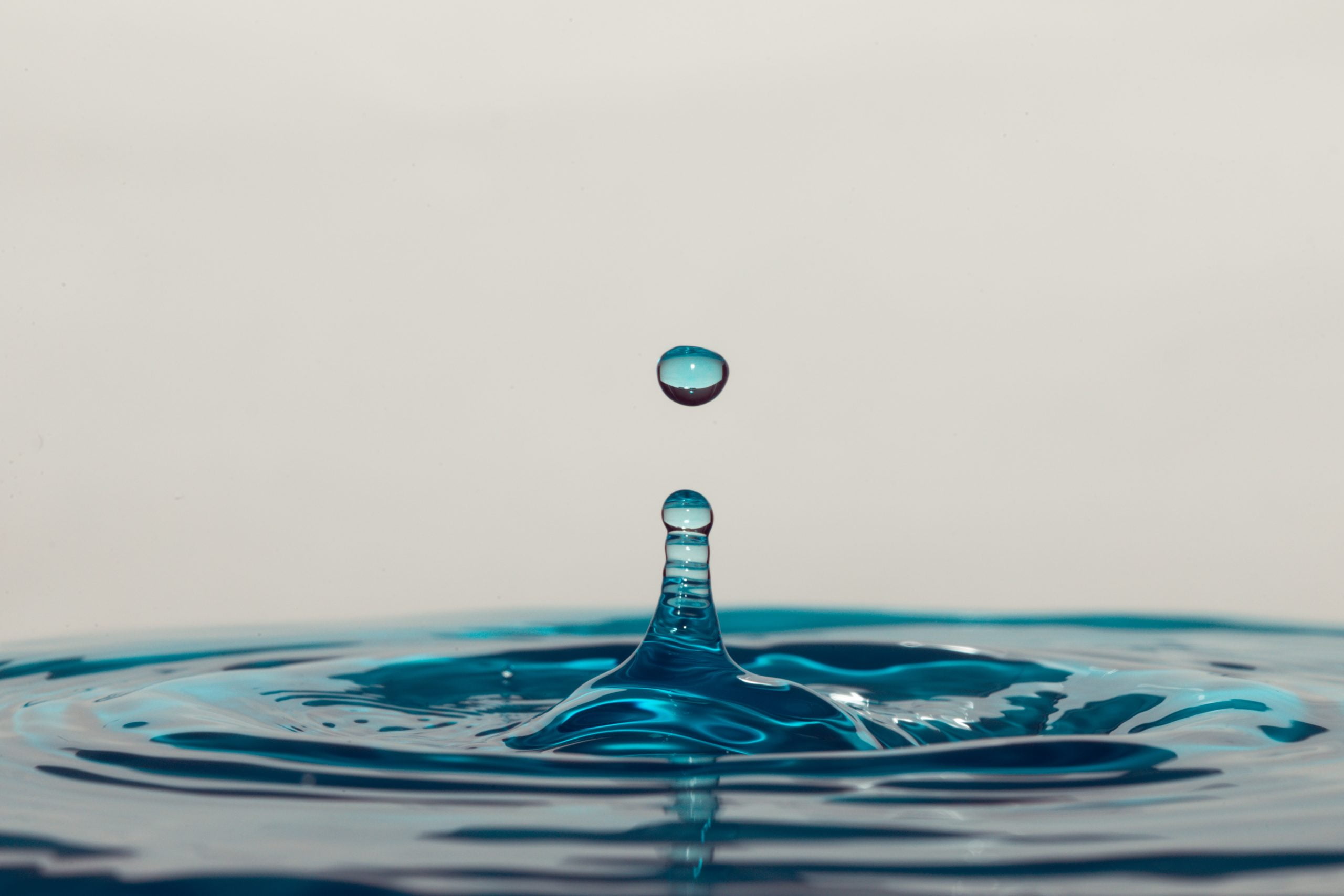
    Capturing refracted images in a droplet is a popular pastime among high-speed photographers, and in this solo Slow Mo Guy outing, we get to see that process in video. Physically, the subject is a simple drop of water, which on impact with a pool, rebounds into a Worthington jet and ejects one or more droplets from its tip. Despite hundreds of years of study, it’s still a joy to watch, especially at 12,000 frames per second.

    It’s also not the easiest image to capture, and one thing I rather enjoy about this video is how it gives you a sense of the trial and error involved in capturing just the right view. Even without having to worry about the timing issues, there is a lot of fiddling with lenses, focus, lights, and positioning — something familiar not just to photographers and videographers but to many researchers as well! (Image and video credit: The Slow Mo Guys)

  • Featured Video Play Icon

    Coalescence in Heavy Metal Droplets

    When a drop of water falls into a pool, it doesn’t always coalesce immediately. Instead, it can go through a coalescence cascade in which the drop partially coalesces, a daughter drop bounces off the surface, settles, and itself partially coalesces. We’ve seen this many times before, but today’s video shows something a little different: here the drop and pool in question are made of a gallium alloy immersed in a background of sodium hydroxide. This means that the drop has very high surface tension (and density) but does not form an oxidation layer on its surface that could inhibit coalescence. And just like the water droplet, the gallium alloy undergoes a series of partial coalescences.

    A heavy metal droplet undergoes partial coalescence with a pool of the same liquid.

    There’s one key difference, though. Did you notice that the water droplets bounce higher as the drops get smaller, but the gallium droplets do the opposite? Previous research suggested that the droplet rebound height is driven by capillary forces, but the high surface tension of both of these liquids means that capillary forces should be large for both of them. Perhaps there’s much more viscous drag in the gallium and sodium hydroxide case? (Image, video, and research credit: R. McGuan et al.)

  • Avoiding Droplet Contact

    Avoiding Droplet Contact

    Cold rain splashing on airplane wings can freeze in instants. To prevent that, researchers look for ways to minimize the time and area of contact a drop has. Hydrophobic coatings and textures can do some of the work, but they are easily damaged and don’t always work well when it comes to freezing.

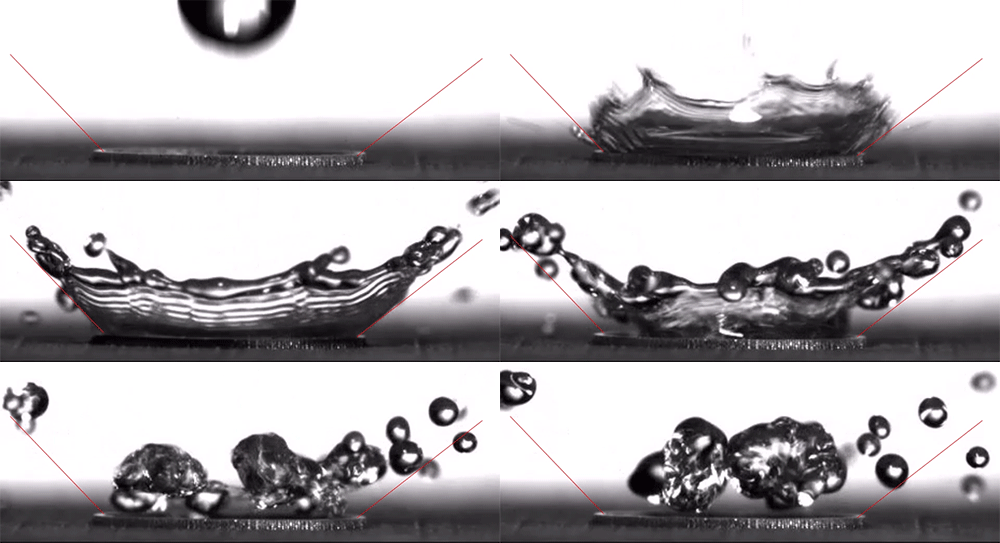
    The new technique shown here uses ring-shaped “waterbowls” to help deflect drops. As the drop impacts and spreads, the walls of the ring texture force the lamella up and off the surface. This reduces both the time and area of contact and, under the right circumstances, cuts the heat transfer between the fluid and surface in half. The technique is useful for more than just preventing freezing, though; it would also be helpful for waterproofing breathable fabrics, where shedding moisture quickly without clogging pores is key to keeping the wearer dry. (Image and research credit: H. Girard et al.; via MIT News and Gizmodo)

  • Oil-on-Water Impact

    Oil-on-Water Impact

    Although many people have studied droplet impacts over the years, there’s been remarkably little work done with oil-on-water impacts. One of the things that makes this situation different is that the oil and water are completely immiscible, which means we can see aspects of the impact process that are invisible with, say, water-on-water impacts.

    The animation above shows an underwater view of the oil droplet’s impact. The energy of the initial impact creates an expanding crater and an unstable crown splash. That crown splash contains both water and oil. After it ejects some droplets, the rim stabilizes, but we can still see small perturbations along its edge as it starts to retract. In the water, high surface tension damps out these perturbations. Not so for the oil! As the crater retracts, the small disturbances along the rim get stretched into mushroom-shaped fingers that point inward toward the impact site. Because the index of refraction is different between oil and water, we can see the fingers clearly near the end of the animation. (Image and research credit: U. Jain et al.; submitted by Utkarsh J.)

  • Polygonal Droplets

    Polygonal Droplets

    Spheres are a special shape; they provide the smallest possible surface area necessary to contain a given volume. And since surface tension tries to minimize surface energy by reducing the surface area, drops and soap bubbles are, generally, spherical. There’s subtlety here, though: namely, what if reducing the surface area doesn’t minimize the surface energy?

    That’s the issue at the heart of this study. It looks at microscale oil droplets, like the ones above, that are floating in water and stabilized by surfactants. We’d expect droplets like these to be round, and above a critical temperature, they are. But as the temperature drops, the surfactant molecules along the droplet’s interface crystallize. The drop itself is still liquid, but interface is not.

    This changes the rules of the game. There’s no way for the surfactant molecules to form a sphere when solidified; they simply can’t fit together that way. So instead defects form along the interface and the drop becomes faceted. As the temperature drops further, the energy relationship between the water, oil, and surfactants continues shifting, causing the droplet to change shape – even to increase its surface area – all to minimize the overall energy. The effect is reversible, too. Raise the temperature back up above the critical point, and the interface “thaws” so that the drop becomes round again. (Image and research credit: S. Guttman et al.; via Forbes; submitted by Kam-Yung Soh)

  • Featured Video Play Icon

    Fizzy Droplets

    Leidenfrost drops surf on a layer of their own vapor, created by the high temperature of a nearby surface relative to their boiling point. These Leidenfrost drops can self-propel and skitter and skate across a surface, but they’re not the only droplets that do this. In this video, researchers show how a drop of carbonated water on a superhydrophobic (water-repelling) surface also avoids contact. As long as the drop has carbon dioxide to expel, it will maintain a gap relative to the surface and can even surf over a ratcheted surface the way that their Leidenfrost cousins do. (Image and video credit: D. Panchanathan et al., source)

  • Jumping Droplets

    Jumping Droplets

    From butterfly wings to lotus leaves, many surfaces in nature are shaped to repel water. This typically means roughness on the scale of tens of nanometers, which helps trap air between water and the surface. Droplets can still form on these surfaces, but when they merge, the sudden excess of surface energy sends the coalesced droplet flying. With enough height, the tiny droplet can catch the wind and get carried away. It’s like a natural anti-fogging mechanism, and it’s one that engineers are keen to understand and replicate. (Image and research credit: P. Lecointre et al.)

  • Featured Video Play Icon

    The Shaky Life of a Droplet

    An evaporating drop of ouzo goes through several stages due to the interactions of oil, alcohol and water. If you turn the situation around by placing a drop of (blue-dyed) water in a mixture of alcohol and anise oil (top image), you get some similarly odd behavior. The drop of water shimmies and grows as alcohol dissolves into it, carrying the occasional oil droplet with it. Eventually, the droplet grows large enough and buoyant enough that part of it detaches and floats to the surface (middle image). If you increase the alcohol ratio in the surrounding fluid, you speed up this process, causing droplets to stream up to the surface (bottom image). (Image and video credit: O. Enriquez et al., source)

  • The Color of Droplets

    The Color of Droplets

    In nature, color comes from many sources: like the pigmentation of skin and hair, the structural iridescence of a butterfly’s wings, or the refraction of a rainbow from water droplets. Recently, scientists discovered another source of brilliant color in simple, hemispherical water droplets.

    When small droplets form on a transparent surface, they form concave shapes capable of total internal reflection. This means that two light rays entering from the same angle can follow different paths inside the droplet. After reflecting several times, the light rays exit the droplet with a phase difference and how large that phase difference is determines the color. Check out the video below for some brightly colored examples of the effect. The researchers hope the technique will eventually be suitable for creating dye-free, color-changing technologies. (Image credit: F. Frankel; video credit: MIT News; research credit: A. Goodling et al.)

  • Water Impacts

    Water Impacts

    In the clean and simplified world of the laboratory, a droplet’s impact on water is symmetric. From a central point of impact, it sends out a ring of ripples, or even a crown splash, if it has enough momentum. But the real world is rarely so simple.

    Here we see how droplets impact when the wind is blowing against them. The drops fall at an angle, creating an oblique cavity. Rings of ripples spread from the impact, but the ligaments of a splash crown form only on the leeward side. As the wind speed increases, so does the violence of the impact, eventually beginning to trap tiny pockets of air beneath the surface. Those miniature bubbles can spray droplets and aerosols into the air when they finally pop. (Image and video credit: A. Wang et al.)