Tag: hydrophobic

  • Featured Video Play Icon

    Evaporating Off Butterfly Scales

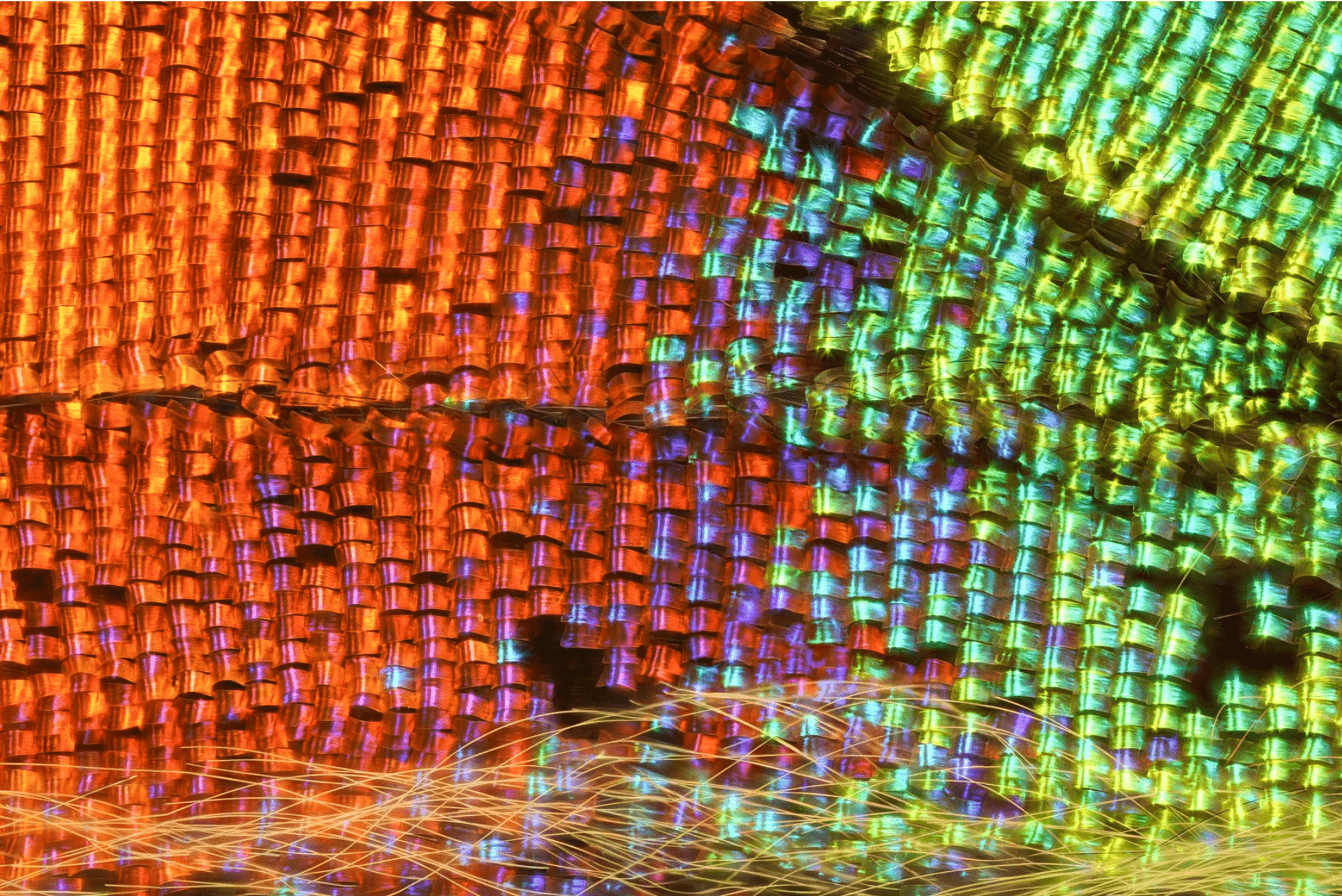
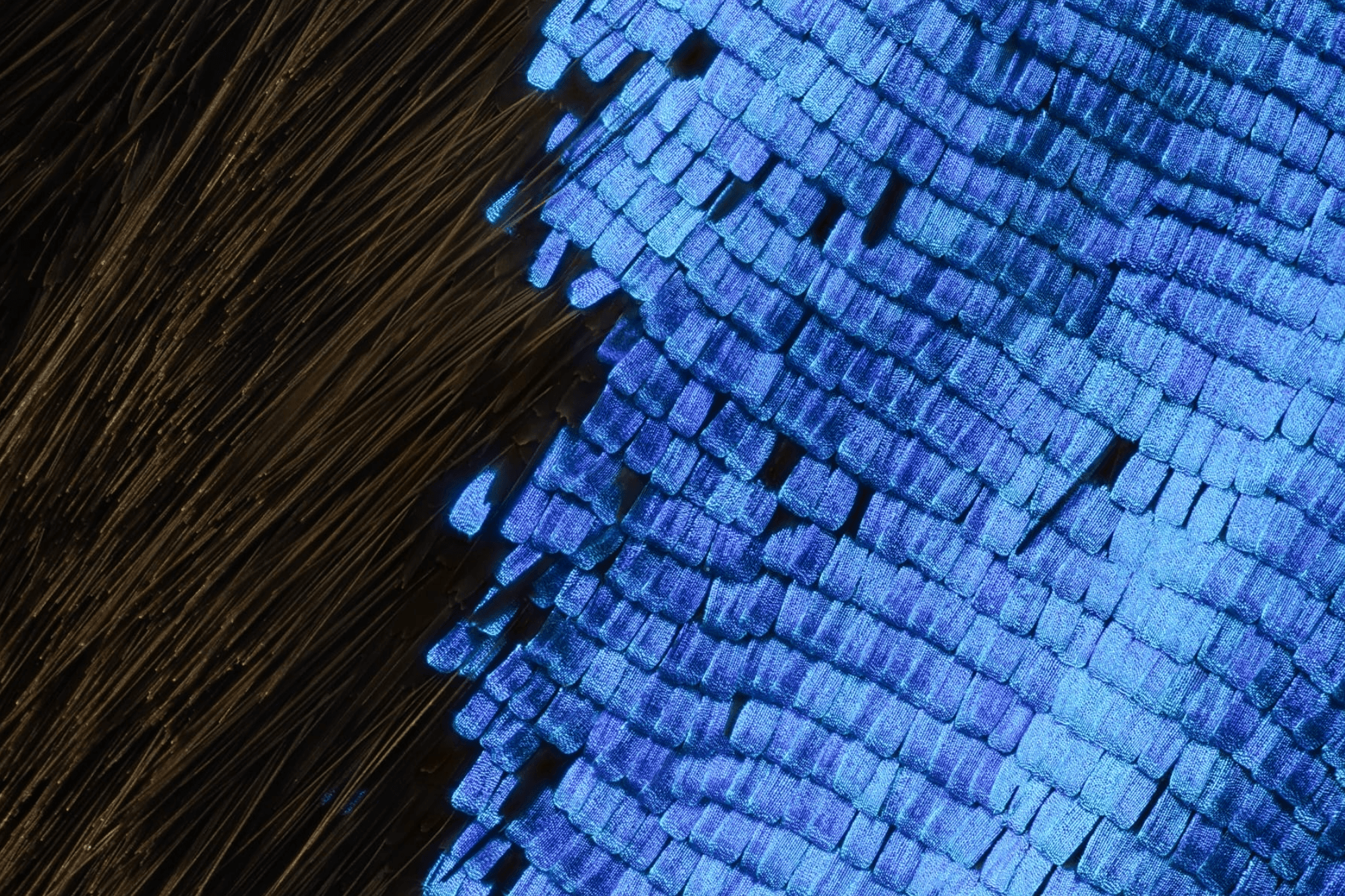
    This award-winning macro video shows scattered water droplets evaporating off a butterfly‘s wing. At first glance, it’s hard to see any motion outside of the camera’s sweep, but if you focus on one drop at a time, you’ll see them shrinking. For most of their lifetime, these tiny drops are nearly spherical; that’s due to the hydrophobic, water-shedding nature of the wing. But as the drops get smaller and less spherical, you may notice how the drop distorts the scales it adheres to. Wherever the drop touches, the wing scales are pulled up, and, when the drop is gone, the scales settle back down. This is a subtle but neat demonstration of the water’s adhesive power. (Video and image credit: J. McClellan; via Nikon Small World in Motion)

    Water droplets evaporate from the wing of a peacock butterfly.
    Water droplets evaporate from the wing of a peacock butterfly.
    Fediverse Reactions
  • Featured Video Play Icon

    How Insects Fly in the Rain

    Getting caught in the rain is annoying for us but has the potential to be deadly for smaller creatures like insects. So how do they survive a deluge? First, they don’t resist a raindrop, and second, they have the kinds of surfaces water likes to roll or bounce off. The key to this second ability is micro- and nanoscale roughness. Surfaces like butterfly wings, water strider feet, and leaf surfaces contain lots of tiny gaps where air gets caught. Water’s cohesion — its attraction to itself — is large enough that water drops won’t squeeze into these tiny spaces. Instead, like the ball it resembles, a water drop slides or bounces away. (Video and image credit: Be Smart)

    Fediverse Reactions
  • “Spines”

    “Spines”

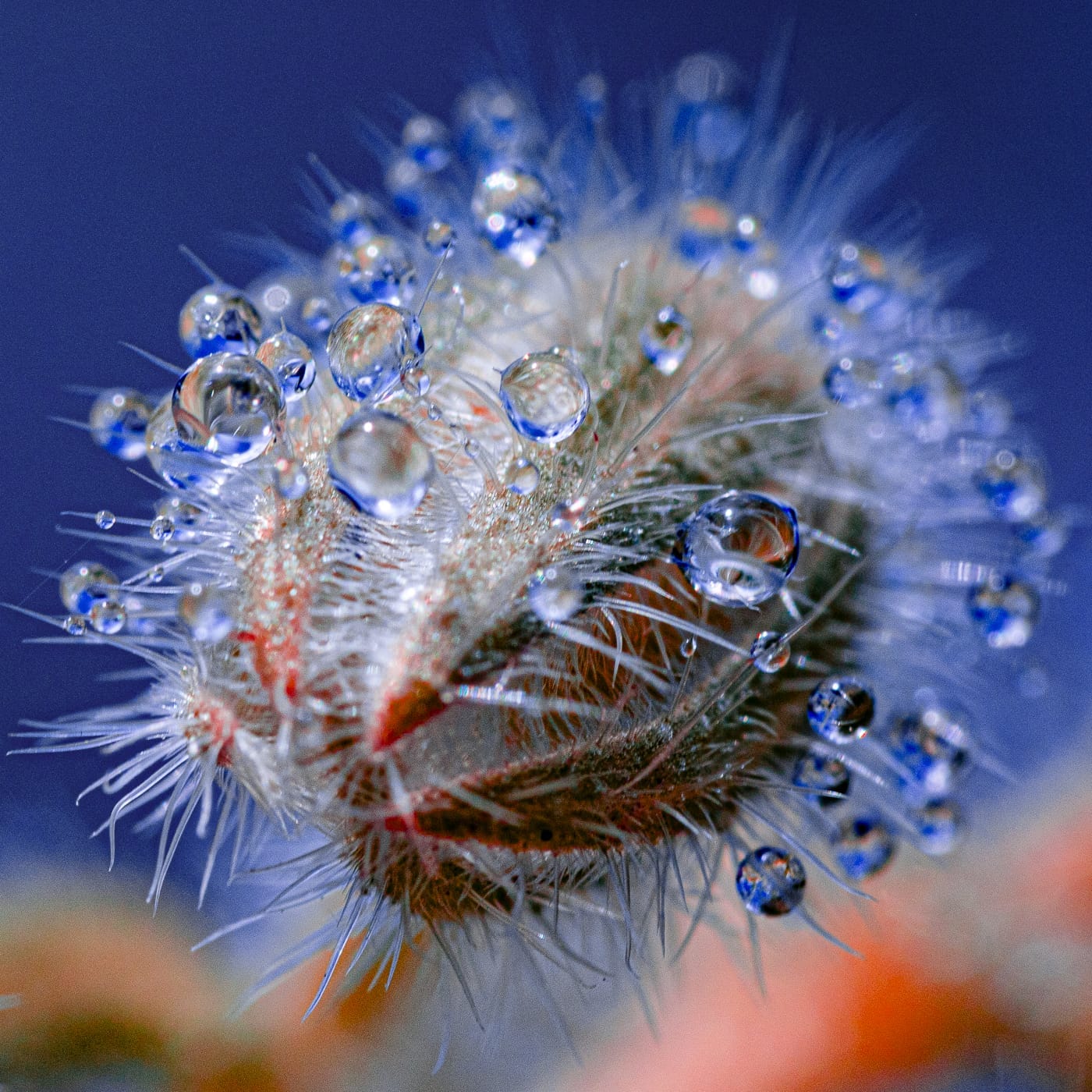
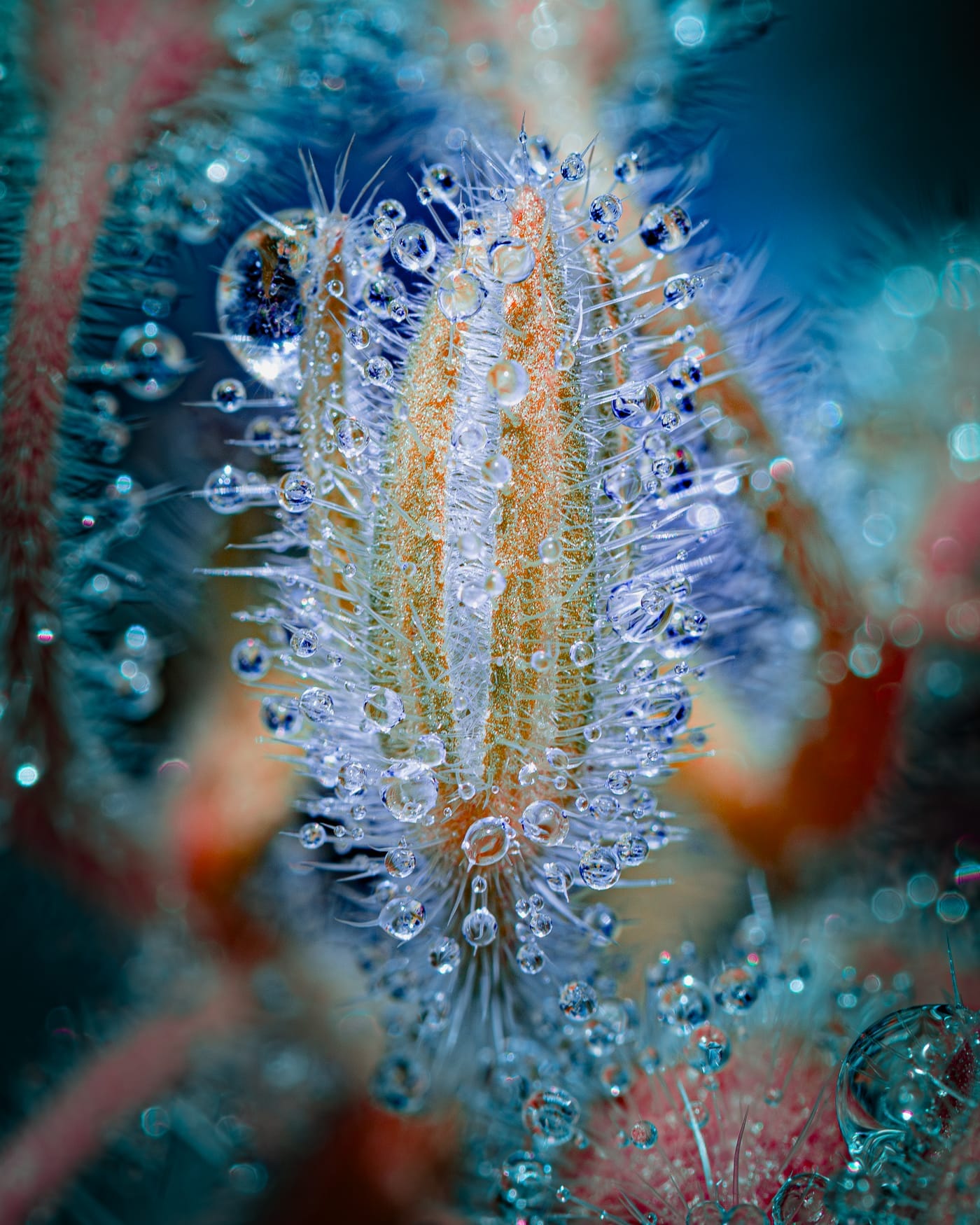
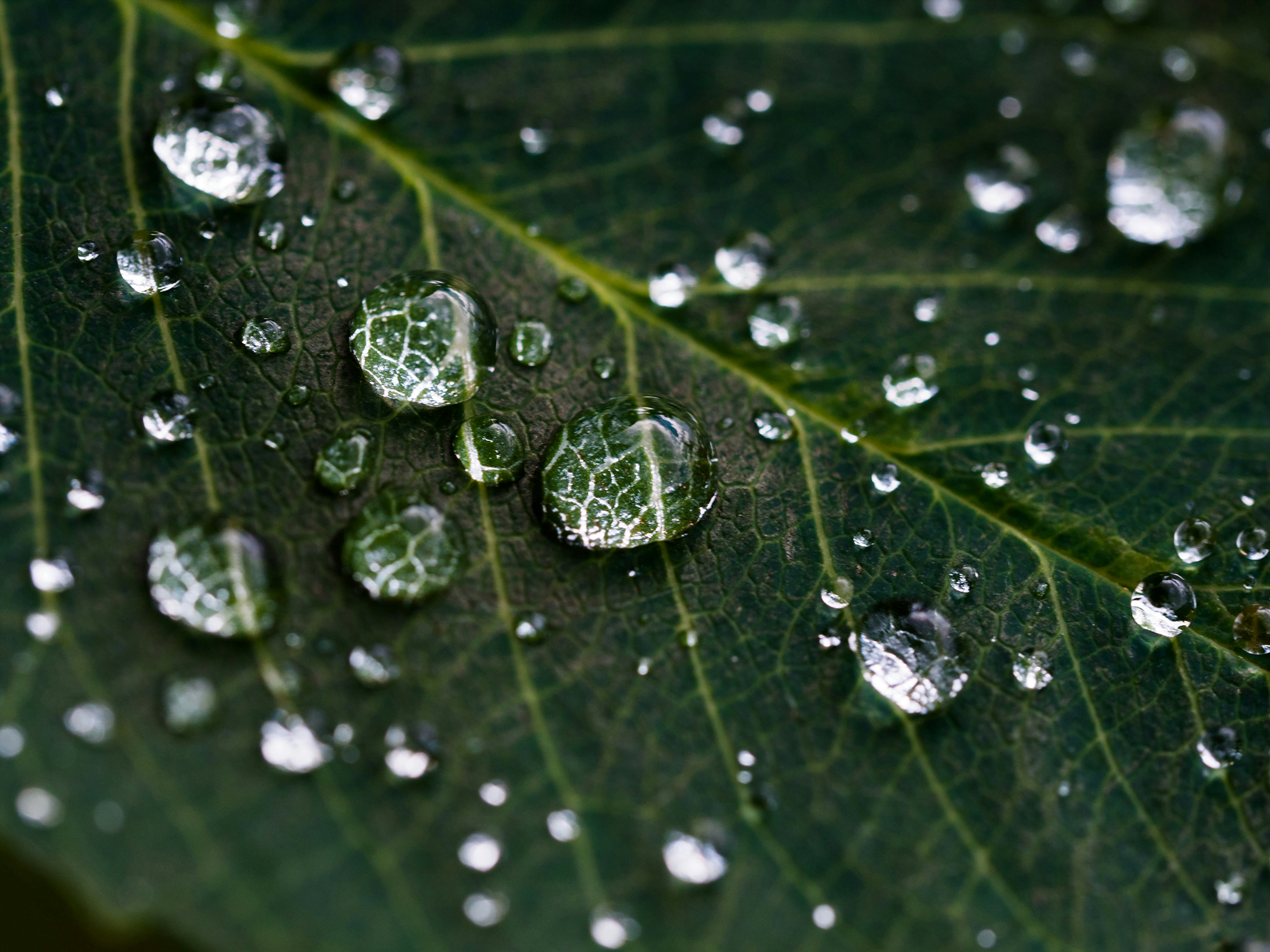
    Water droplets cling to spine-covered plant life in this series from photographer Tom Leighton. The hairs are hydrophobic — notice how spherical the drops appear. Many plants make parts of their leaves and stems hydrophobic in order to redirect water toward their roots, where it can be taken in. Others use hair-like awns to collect and draw in dew that supplements their water capture. (Image credit: T. Leighton; via Colossal)

    Fediverse Reactions
  • How Water Droplets Charge Up

    How Water Droplets Charge Up

    Rubbing a balloon on your hair can build a significant electrical charge. Water droplets have the same issue when they slide across a hydrophobic, electrically-insulated surface. A new study models why these charges build up and tests the model both experimentally and through simulation. They focused their theory on three effects that determine how much charge builds up. The first is a two-way chemical reaction that continuously creates charge at the interface, with positive charge building in the drop. Secondly, the drop’s contact angle with the surface sets how many protons can build up at the contact line, thereby affecting the electrical field they generate. And, finally, fluid motion at the rear of the drop deflects protons upward, shifting the electrical field. In particular, their model predicts that the higher contact angles of hydrophobic surfaces should increase charge build-up and faster sliding velocities should slow charge build-up, both of which agree with experiments.

    The model should help researchers understand various charging scenarios, like those found on self-cleaning surfaces, in inkjet printing, and in semiconductor manufacturing. In the last scenario, rinsing semiconductor wafers in ultrapure water can build up charges in the kilovolt range, which is enough to damage the product. (Image credit: D. Carlson; research credit: A. Ratschow et al.; via APS Physics)

  • Featured Video Play Icon

    That Drain Life

    No matter your cleaning habits, it’s possible to get some unexpected roommates. This variety is the drain fly, a species well-adapted to the moist environment of our pipes. As larvae, they slither and squirm in the biofilms that form from the hair, saliva, and food that make their way down our drains. Being fully immersed is no problem for them, since they carry their own air bubble like a mini scuba tank. In adulthood, these tiny flies are incredibly hairy, all the better to escape from water. All those little hairs trap air near the fly, making it hydrophobic so that water just slides off. It takes a serious dowsing to immerse them enough to drown. (Image and video credit: Deep Look)

  • Featured Video Play Icon

    Scuba-Diving Fly

    Mono Lake, three times saltier than the ocean, is an extreme environment by any measure. But for the alkali fly, it’s home. This extremophile insect dives into the lake, protected by a bubble sheath, to eat and lay eggs. The fly’s wings and body are covered in tiny, waxed hairs that repel water. That traps a bubble of air around the insect, allowing it to breathe. Fresh oxygen can diffuse into the bubble from the water, replenishing the supply. (Image and video credit: Deep Look)

  • Drag Is Greatest Before Submersion

    Drag Is Greatest Before Submersion

    A new study shows that partially submerged objects can experience more drag than fully submerged ones. This unexpected result comes from the excess fluid that piles up ahead of the object, as seen in the image above, where flow is moving from left to right. The experiments used centimeter-sized spheres and showed that the maximum drag on a nearly-submerged sphere could be 300-400% greater than the drag on a fully submerged sphere.

    Even more surprisingly, they found that water-repellent hydrophobic coatings — which are often suggested for drag reduction — actually increased the drag even further on partially submerged spheres. That’s because the water-repelling coating caused an even larger build-up of fluid ahead of the sphere, increasing the pressure on the front side of the sphere and creating even more drag. Spheres with a hydrophilic coating had less water build-up and thus lower drag.

    The study suggests that — at the centimeter-scale — drag physics at the air-water interface may be more complicated than we assume. (Image and research credit: R. Hunt et al.; via Physics World; submitted by Kam-Yung Soh)

  • Featured Video Play Icon

    Cleaning the Skies

    Those of us who live in urban environments have experienced the clear, pollution-free air that comes after a rainstorm. But how exactly does rain clean the air? Air pollution typically has both gaseous and particulate components to it. As a raindrop falls, it experiences collision after collision with those particles. Depending on the particle’s surface characteristics — is it hydrophilic or hydrophobic? — and its momentum during impact, it can get trapped in the raindrop, skip off, or even pass through entirely. The physics, it turns out, are identical to those of a rock falling into or skipping off a lake — even though the raindrop and particle might be 1000 times smaller! (Image and video credit: N. Speirs et al.)
  • Featured Video Play Icon

    Fire Ant Rafts

    When you run into a fire ant, you’re in for a bad day. But if you run into a colony-sized raft of fire ants, well, that’s going to be a very bad day. These insects evolved to survive Amazonian floods, and that prowess has helped them spread far from their original homes. When waters start rushing into their home, the ants set out on a rescue mission, pulling their young out. The ants lash themselves and the youngsters together with their own bodies and form a floating raft. Thanks to the hydrophobic hairs on the larvae and ants, they trap a layer of air near their bodies. This helps them breathe, even if they’re on the bottom of the raft. Learn lots more about fire ants, including how they act as fluid, over here. (Image and video credit: Deep Look)

  • Free Contact Lines

    Free Contact Lines

    How a simple drop of water sits on a surface is a strangely complicated question. The answer depends on the droplet’s size, its chemistry, the roughness of the surface, and what kind of material it’s sitting on. Vetting the mathematical models that describe these behaviors is especially difficult since droplets often get stuck, or “pinned,” along their contact line where water, air, and surface meet.

    To get around this issue, researchers sent their experiment to the International Space Station, asking astronauts to run the tests for them. Without gravity‘s influence squishing drops, the astronauts could use much larger droplets than they could on Earth. Larger drops are less likely to get pinned by a stray surface defect, so on the space station, astronauts could place droplets on a vibrating platform and observe their contact line freely moving as the drop changed shape. Under these conditions, the experiment tested many surfaces with different wetting characteristics, thereby gathering data to test models we cannot easily confirm on Earth. (Image and research credit: J. McCraney et al.; via APS Physics)