
The sun‘s surface and atmosphere are endlessly dynamic, with magnetic lines, plasma, and convection creating a constant churn. In this photo by astrophotographer Eduardo Schaberger Poupeau, a curving question-mark-like filament appears above the sun’s surface. Even with decades of high-resolution data from recent solar probes, we struggle to understand the complex physics that feed structures like these. (Image credit: E. Poupeau; via 2023 Astronomy POTY)
Search results for: “convection”

Food-Based Fluid Dynamics


The kitchen is a rich source of fluid physics. From cocktails to coffee, from crepes to tempura, food is full of physics. In fact, it’s not hard to relate almost any fluid phenomenon you can imagine to something that goes on in the kitchen. That’s why scientists managed to write a 77-page review article of culinary fluid dynamics. It’s even structured after a menu, carrying readers from the kitchen sink and cocktails all the way through a meal and the process of washing up afterward! (Image credit: top – S. Hsu, others – A. Mathijssen et al.; research credit: A. Mathijssen et al.; via APS Physics)

“Vorticity 5”

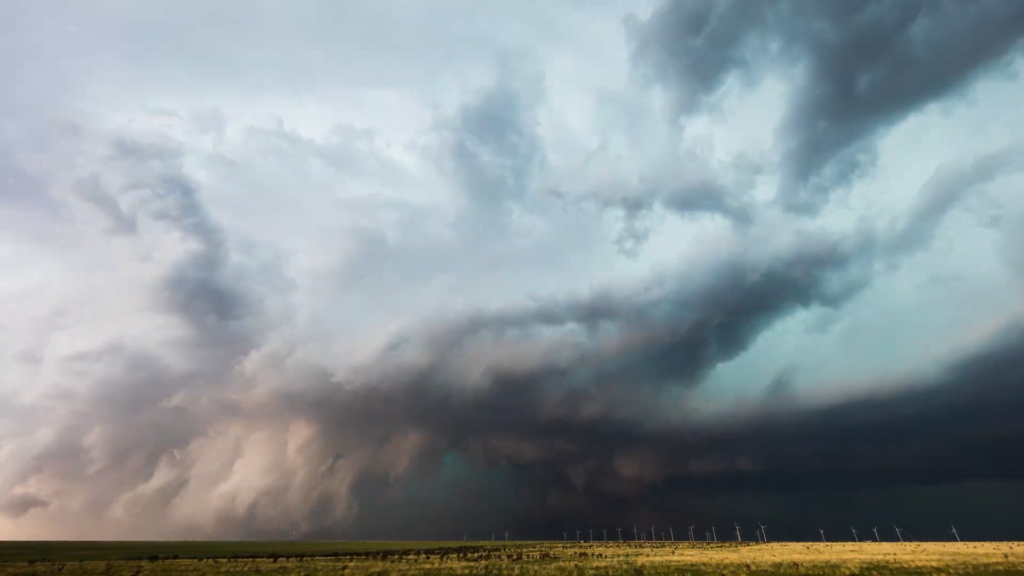
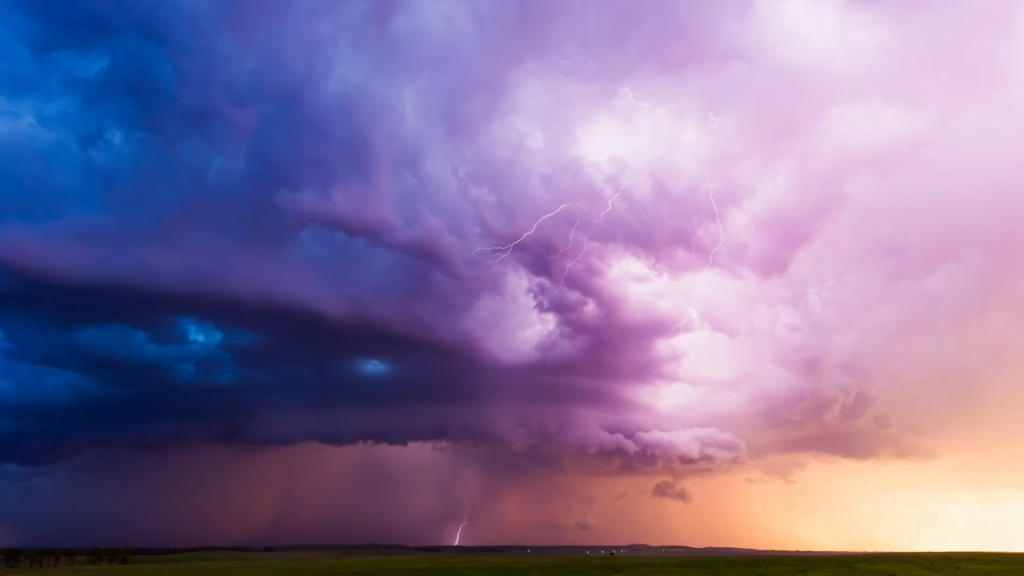
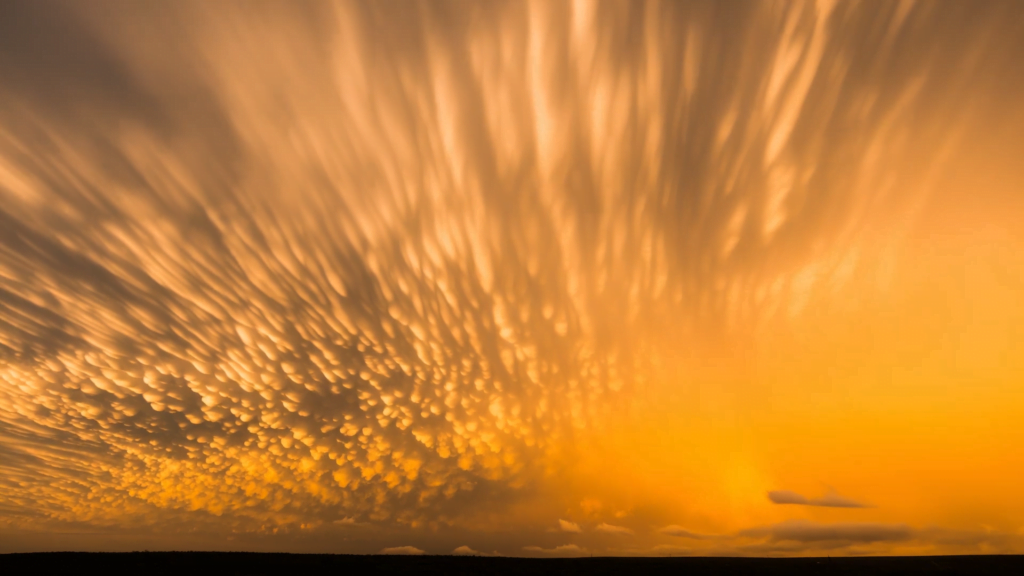

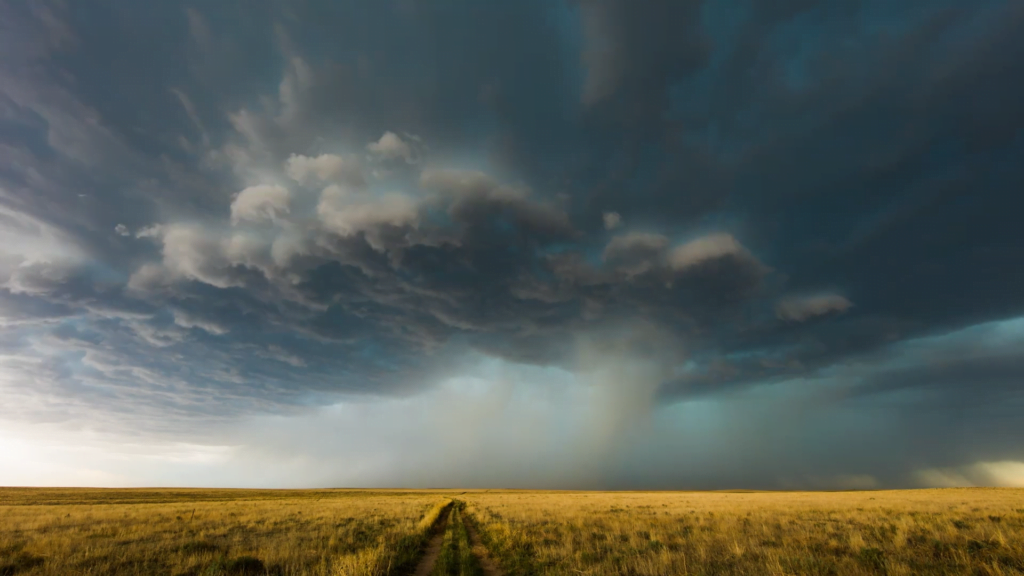


Photographer and stormchaser extraordinaire Mike Olbinski is back with the fifth volume in his “Vorticity” series. Shot over the 2022 and 2023 tornado seasons in the U.S. Central Plains, this edition has virtually everything: supercells, microbursts, lightning, tornadoes, and haboobs. There’s towering convection and churning, swirling turbulence. It’s a spectacular look at the power and grandeur of our atmosphere. (Video and image credit: M. Olbinski)
“Space Iris”


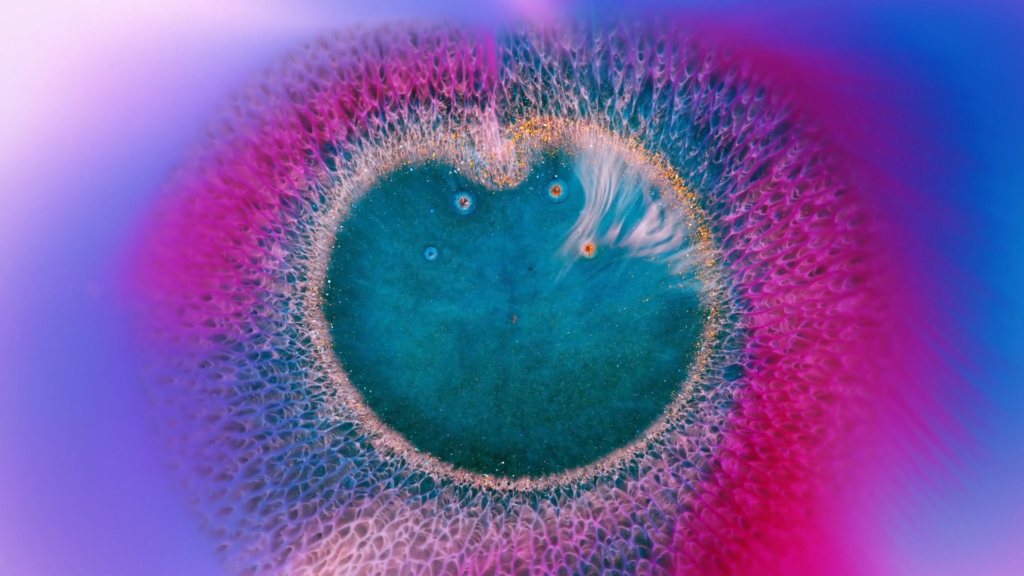

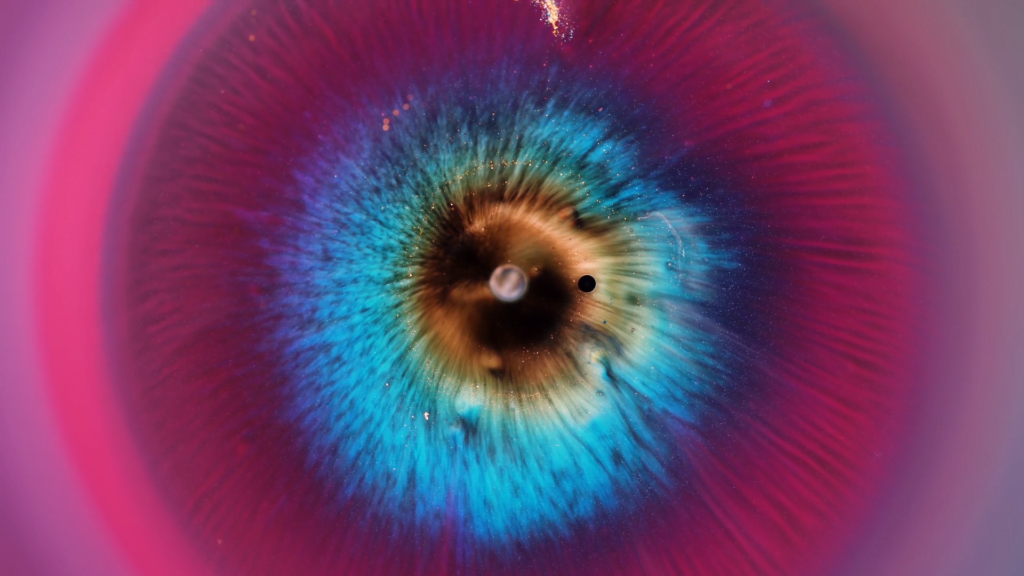
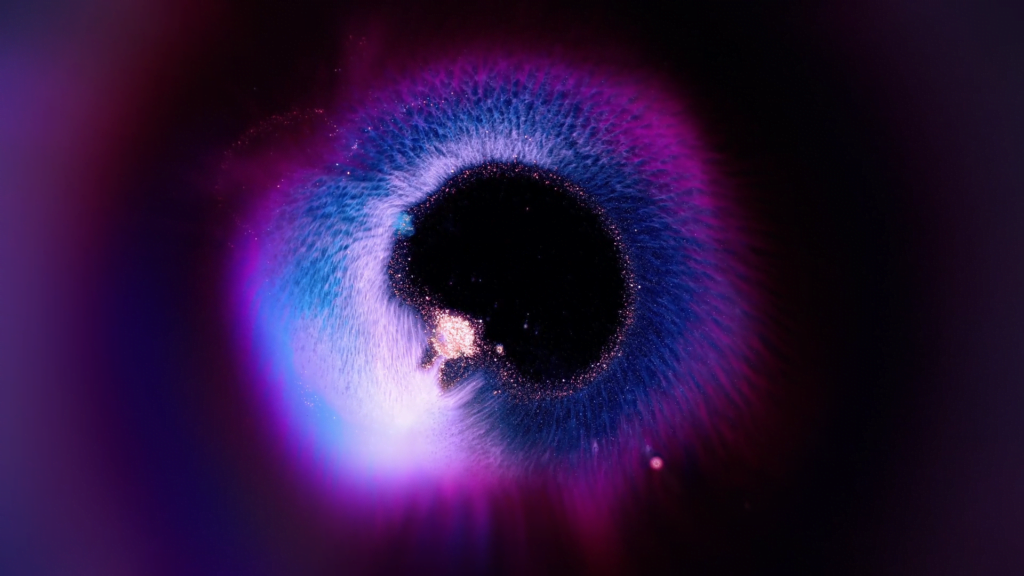



Ruslan Khasanov’s “Space Iris” explores the similarities between nebulae and eyes. Made entirely with common fluids like paint, soap, and alcohol, the film shows off the gorgeous possibilities of surface-tension- and density-driven instabilities. Marangoni flows abound! I even see some hints of solutal convection, perhaps? (Video and image credit: R. Khasanov; via Colossal)
“Níłtsą́”


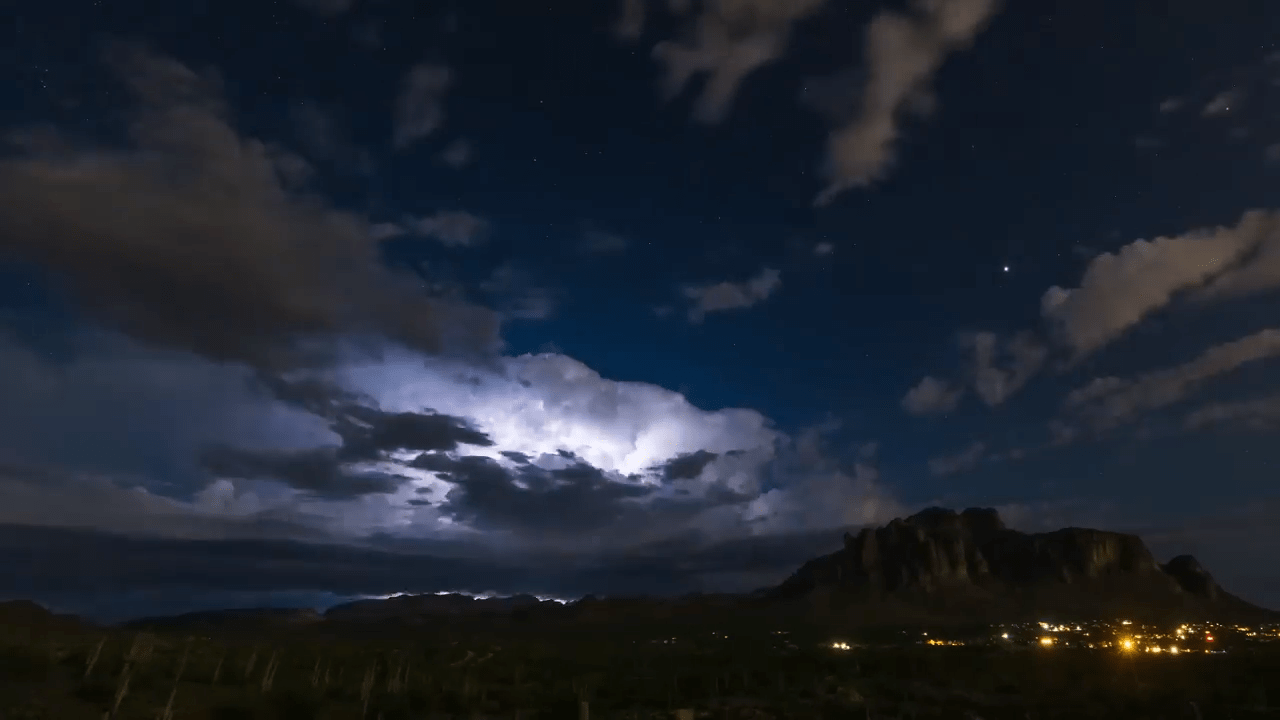
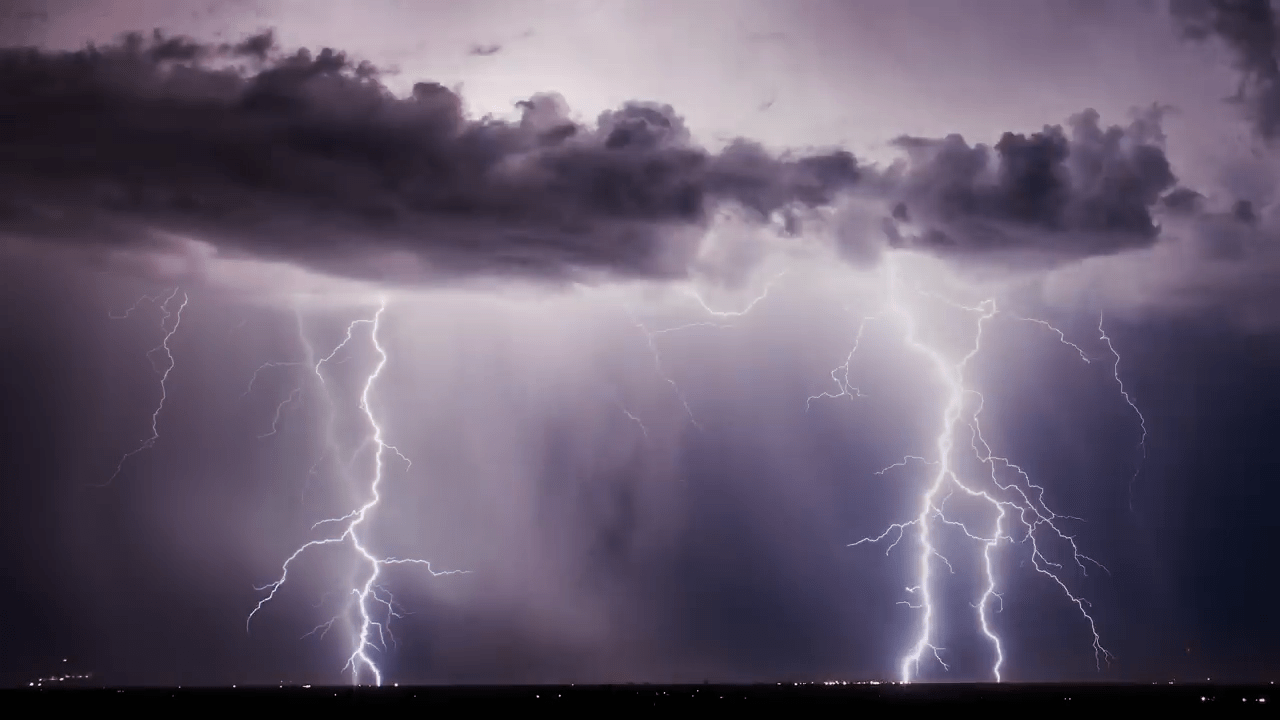
Living in the central and western United States, it’s easy to dismiss summer weather as just another storm, but the truth is that this region sees some of the most majestic and spectacular thunderstorms in the world. And no one captures that grandeur better than storm-chasing photographer Mike Olbinski. His latest film is named for the Navajo word for rain and features over 12 minutes of the best storms from 2021 and 2022. Towering turbulent clouds grow by convection, lightning splits the night sky, and microbursts pour down from above. As always, it’s a stunning depiction of the power of atmospheric fluid dynamics. (Image and video credit: M. Olbinski)
Explaining Salt Polygons
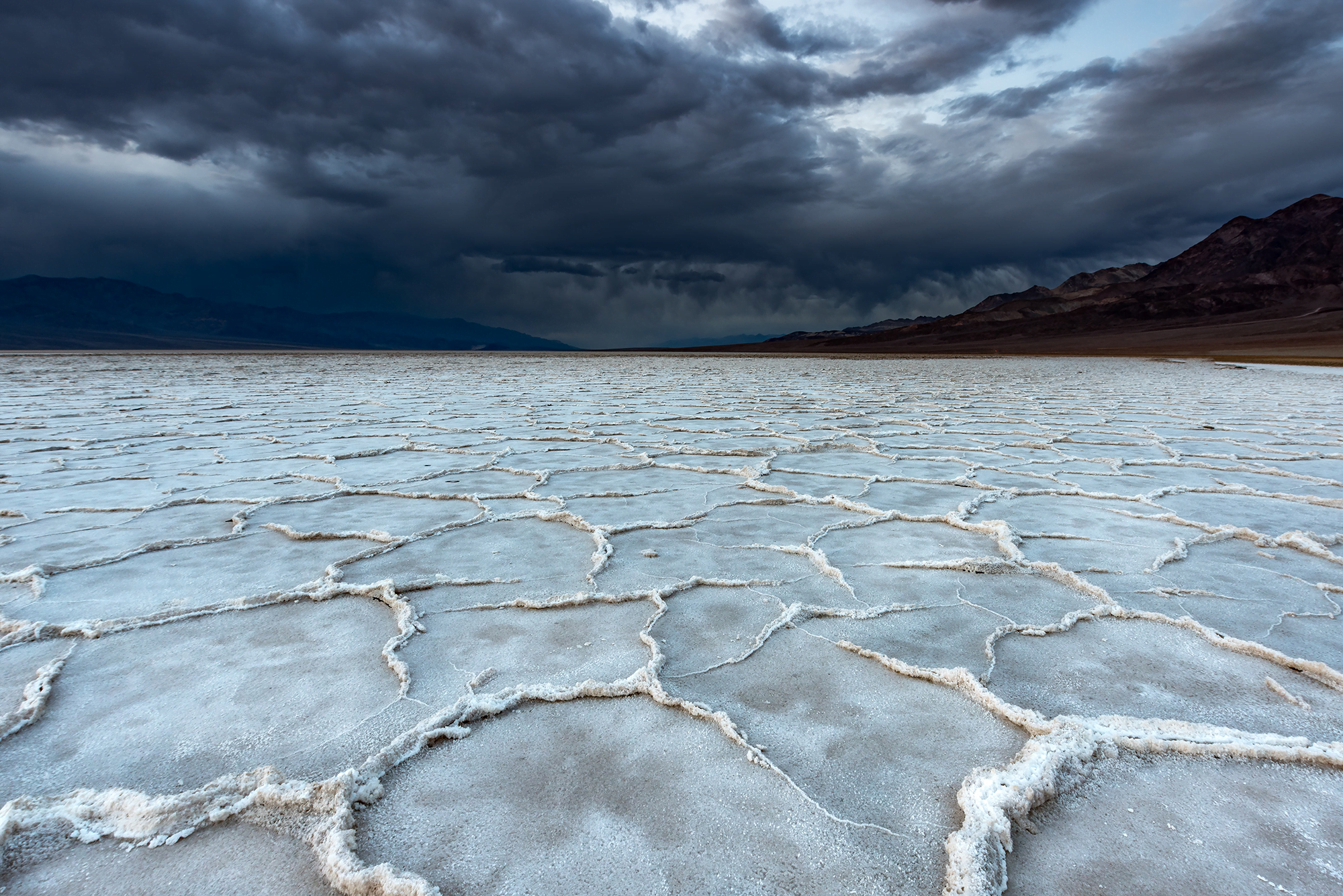
Around the world, salt playas are criss-crossed with meter-sized polygons formed by ridges of salt. The origins of these structures — and the reason for their consistency across different regions of the world — have been unclear, but a new study shows that salt polygons form due to convection happening in the soil underground.
Through a combination of numerical modeling, simulation, lab-scale experiment, and field work, the team revealed the mechanism underlying salt polygons. Areas that form polygons have much greater rates of evaporation than precipitation, and, as water evaporates, these areas draw groundwater from nearby. Salt gets carried with this groundwater.
With strong evaporation, the lake bed forms a highly-concentrated layer of salty water near the surface. Convection cells form, with some regions drawing less saline water upward, while denser, saltier water sinks in other areas. The subsurface convection lines up exactly with the surface structures. The interior regions of polygons are areas where less salty water rises, and salt instead concentrates along the edges of polygons, where saltier water sinks below the surface while evaporation draws solid salt to the surface.

This snapshot shows a numerical simulation of the subsurface convection and surface evaporation that lead to salt polygon formation. Low salinity areas are yellow, while high salinity ones are black. At the surface, blue regions have the maximum upward flow and red regions have the maximum downward flow. The dark, highly saline fingers under the surface align to the red areas on the surface, indicating areas where salty water is sinking. It’s a beautiful result that matches the size, shape, and development time observed for salt polygons in the real world. The team even excavated below salt polygons in Death Valley to confirm that the salt content below ground matched their model’s patterns. Since salt playas are a major source for dust and aerosols that affect climate, their work will be an important factor in future climate modelling. (Image credit: feature – T. Nevidoma, simulation – J. Lasser et al.; research credit: J. Lasser et al.; via APS Physics; submitted by Kam-Yung Soh)
Snowing in the Core
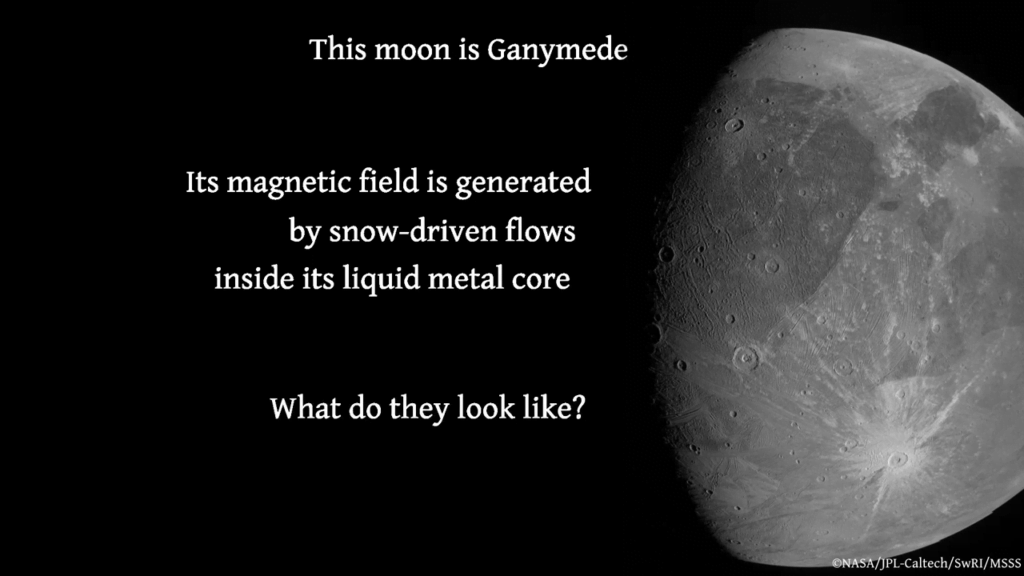
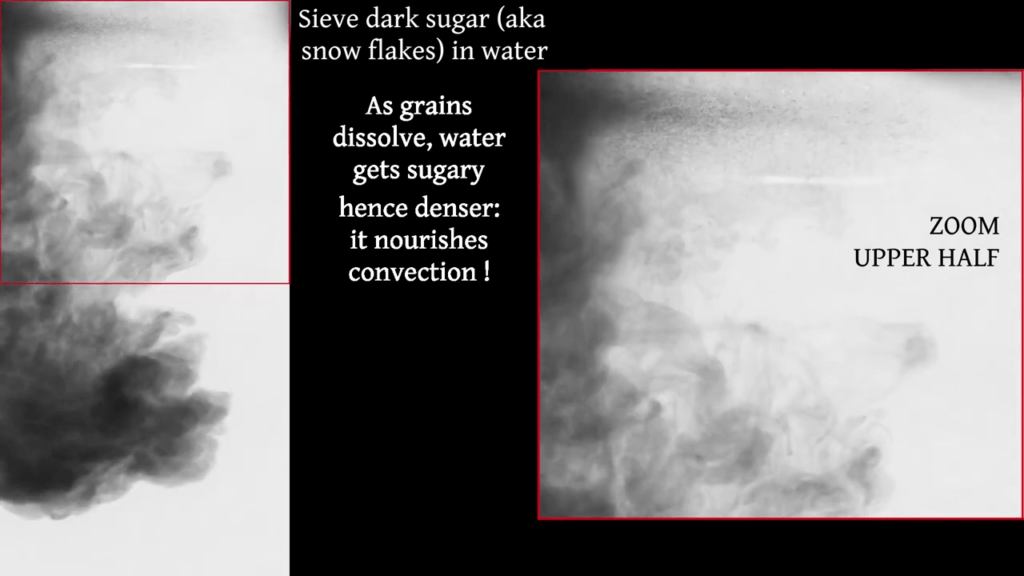
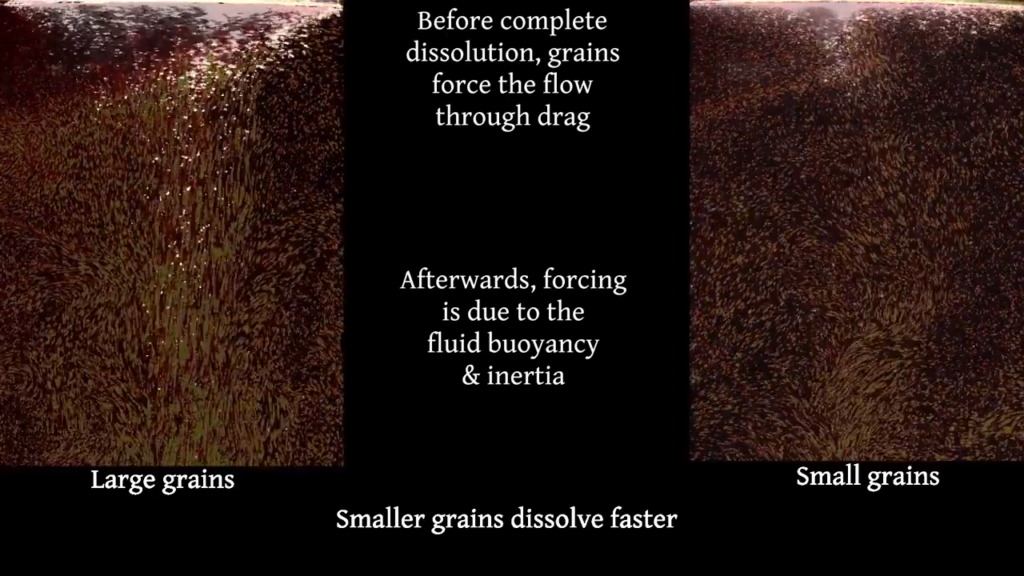


Some rocky planetary bodies, like Jupiter‘s moon Ganymede, generate magnetic fields through snow-like, solid precipitation that falls in their liquid metal cores. To study this peculiar and complex arrangement, researchers look at sugar grains falling through — and dissolving into — water. The solid sugar grains mimic the iron snowflakes that fall in Ganymede’s core. As they sink, they drag fluid with them. But the grains can also dissolve, making the fluid around them denser and prone to sinking even faster. The dense, sinking flows trigger buoyant convection inside the surrounding fluid.
As seen in the experiments, there are many factors competing here. Large grains dissolve more slowly and are able to drag more fluid with them as they fall. Small grains, on the other hand, dissolve quickly, causing more buoyancy-driven flows. Laboratory analogs like these help scientists unravel the complexities of situations we cannot observe otherwise. (Image and video credit: Q. Kriaa et al.)
Self-Propelled Droplets
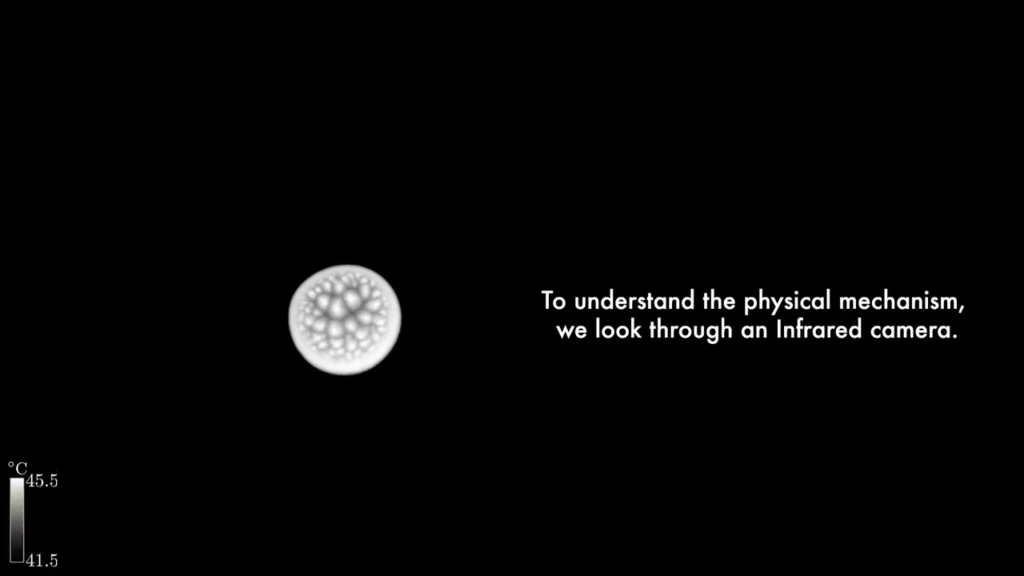

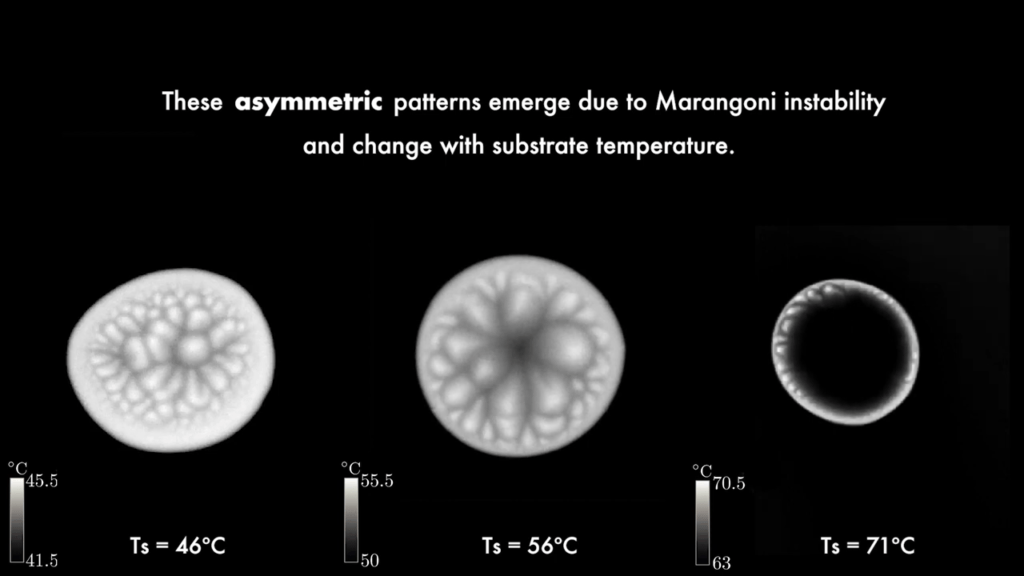


Drops of ethanol on a heated surface contract and self-propel as they evaporate. My first thought upon seeing this was of Leidenfrost drops, but the surface is not nearly hot enough for that effect. Instead, it’s significantly below ethanol’s boiling point. Looking at the drops in infrared reveals beautiful, shifting patterns of convection cells on the drop. The patterns are driven by the temperature difference along the drop; at the bottom, the drop is warmest, and at its apex, it is coldest. Those differences in temperature create differences in surface tension, which drives a surface flow that breaks the drop’s symmetry. The asymmetry, the authors suggest, is responsible for the drop’s propulsion. (Image and video credit: N. Kim et al.)
Chemical Flowers
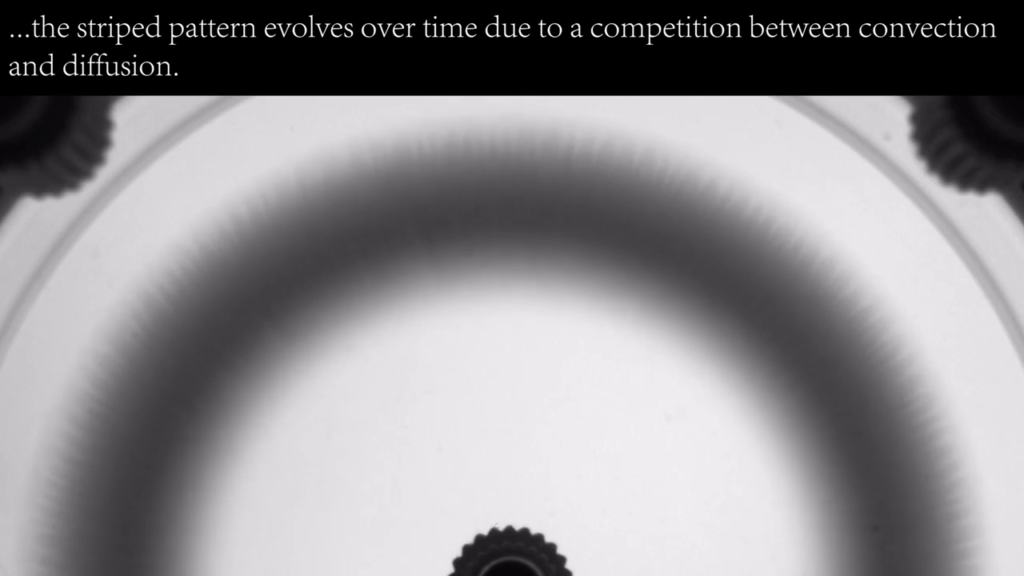
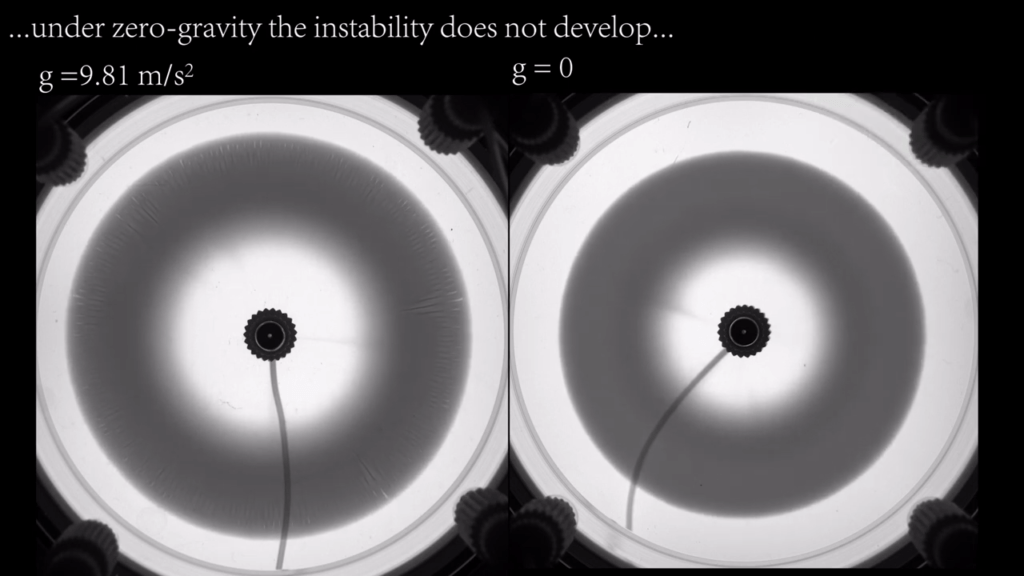
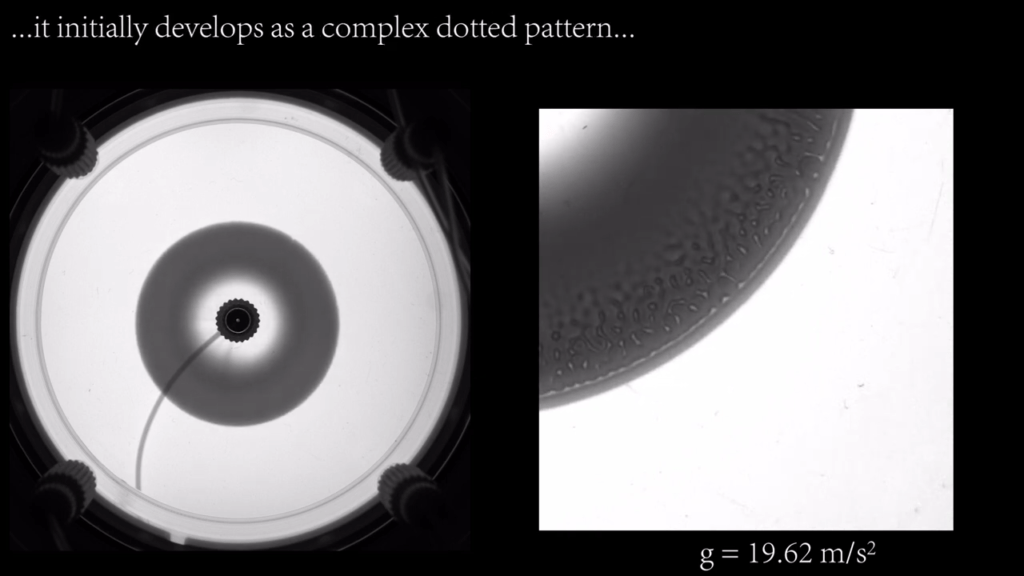


These “flowers” blossom as two injected chemicals react in the narrow space between two transparent plates. The chemical reaction produces a darker ring that develops a streaky outer edge due to competition between convection and chemical diffusion.
To show how gravity affects the instability, the researchers repeated the experiment on a parabolic flight. In microgravity conditions, no instability formed. That’s exactly what we’d expect if convection (i.e. flow due to density differences) is a major cause. No gravity = no convection. In contrast, under hypergravity conditions, the instability was initially spotty before developing streaks. (Image and video credit: Y. Stergiou et al.)
Stormy Skies
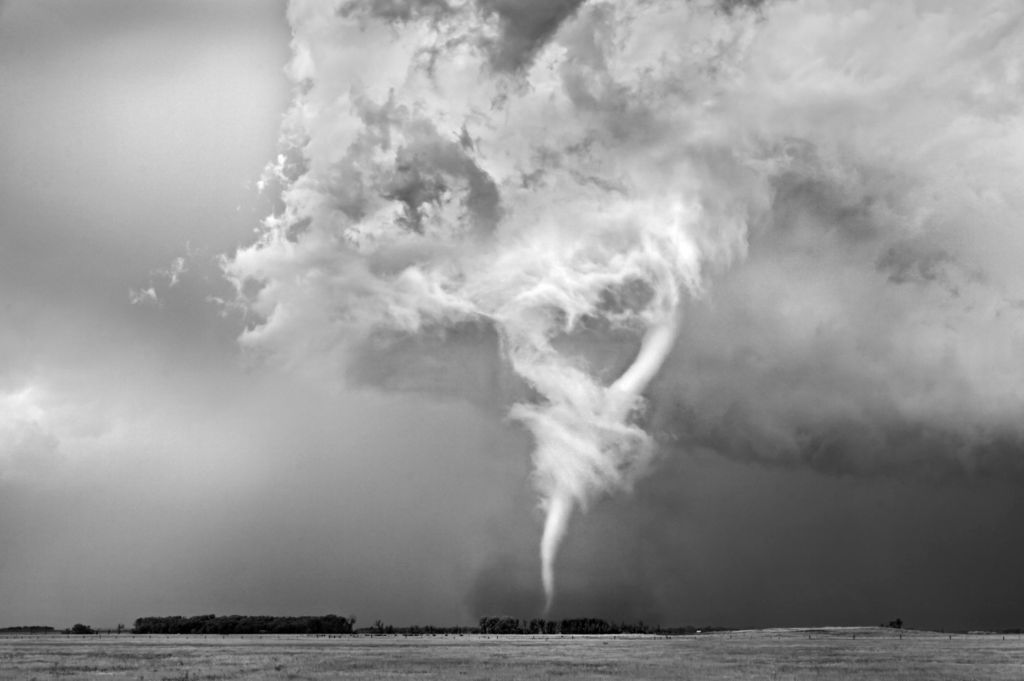


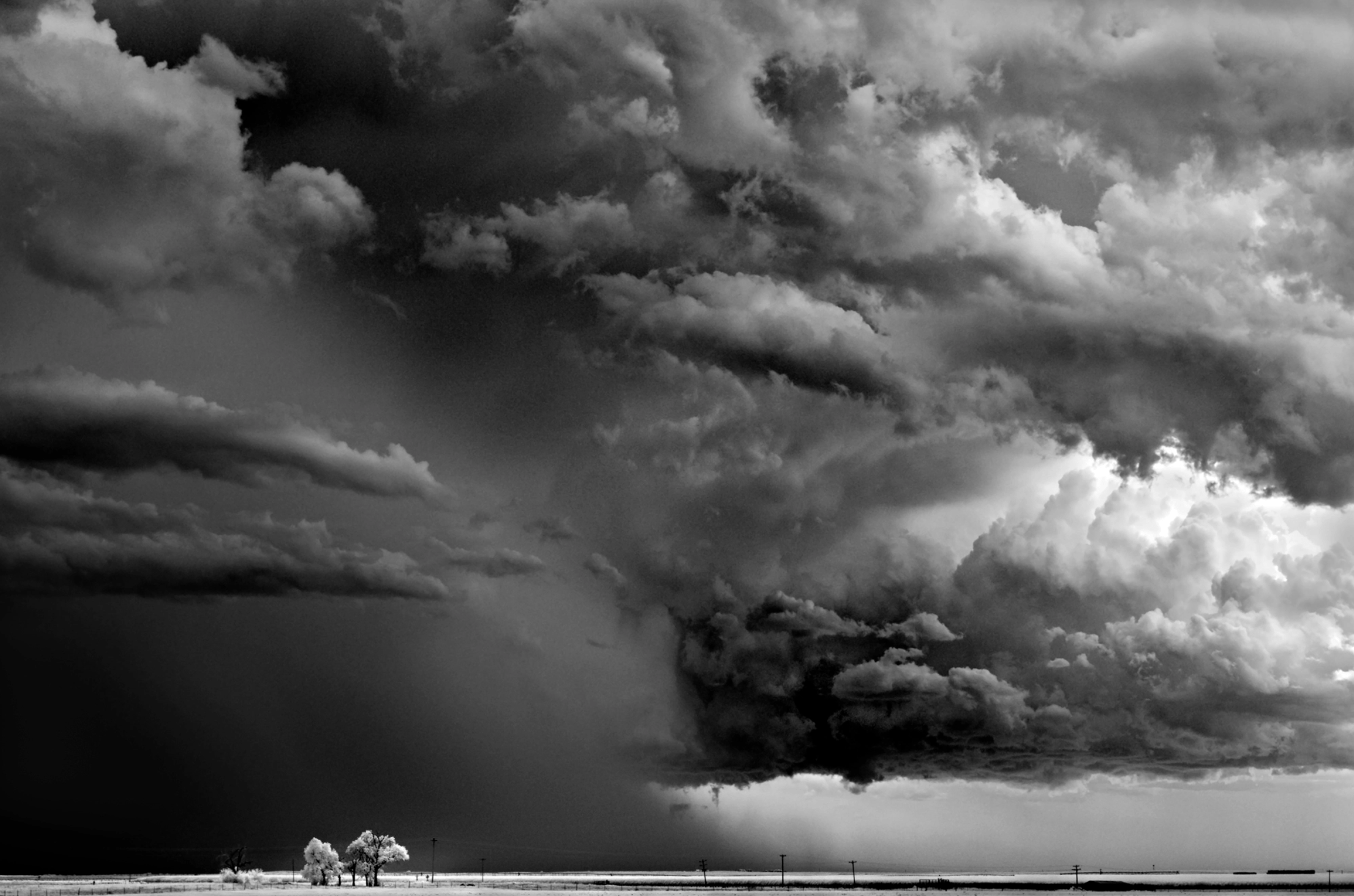
Photographer Mitch Dobrowner captures the majestic and terrifying power of storms in his black and white images. Towering turbulence, swirling vortices, and convective clouds abound. See more of his work at his website and Instagram. (Image credit: M. Dobrowner; via Colossal)