The auroras at Earth’s poles are much more than pretty lights. This video explains their formation; fluid mechanics (specifically magnetohydrodynamics) play a major role in the convective transport of heat inside the sun as well as the movement of the plasma that makes up a solar storm that interacts with Earth’s magnetic field and produces the auroras.
Search results for: “convection”

Microgravity Combustion
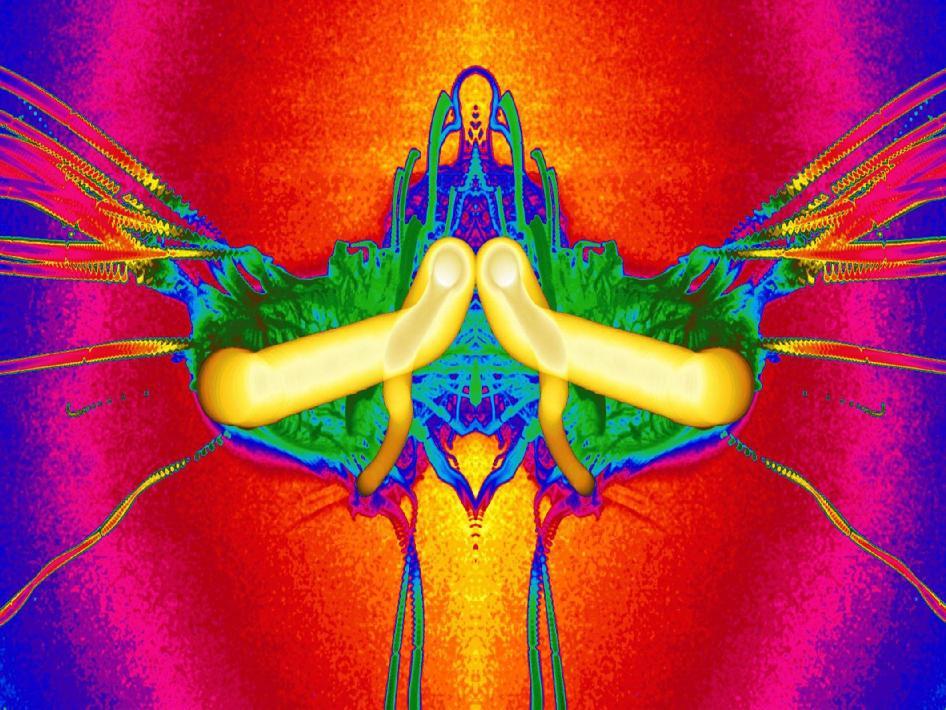
Combustion in microgravity is markedly different than that on earth, due to a lack of buoyant convection. The combustion of a droplet of heptane is shown here as a composite image. The bright yellow structure shows the path of the droplet, which gets smaller as it burns. The green structures show the initial development of soot, which eventually streams outward as long streaks. # (submitted by jshoer)

Boiling in Microgravity
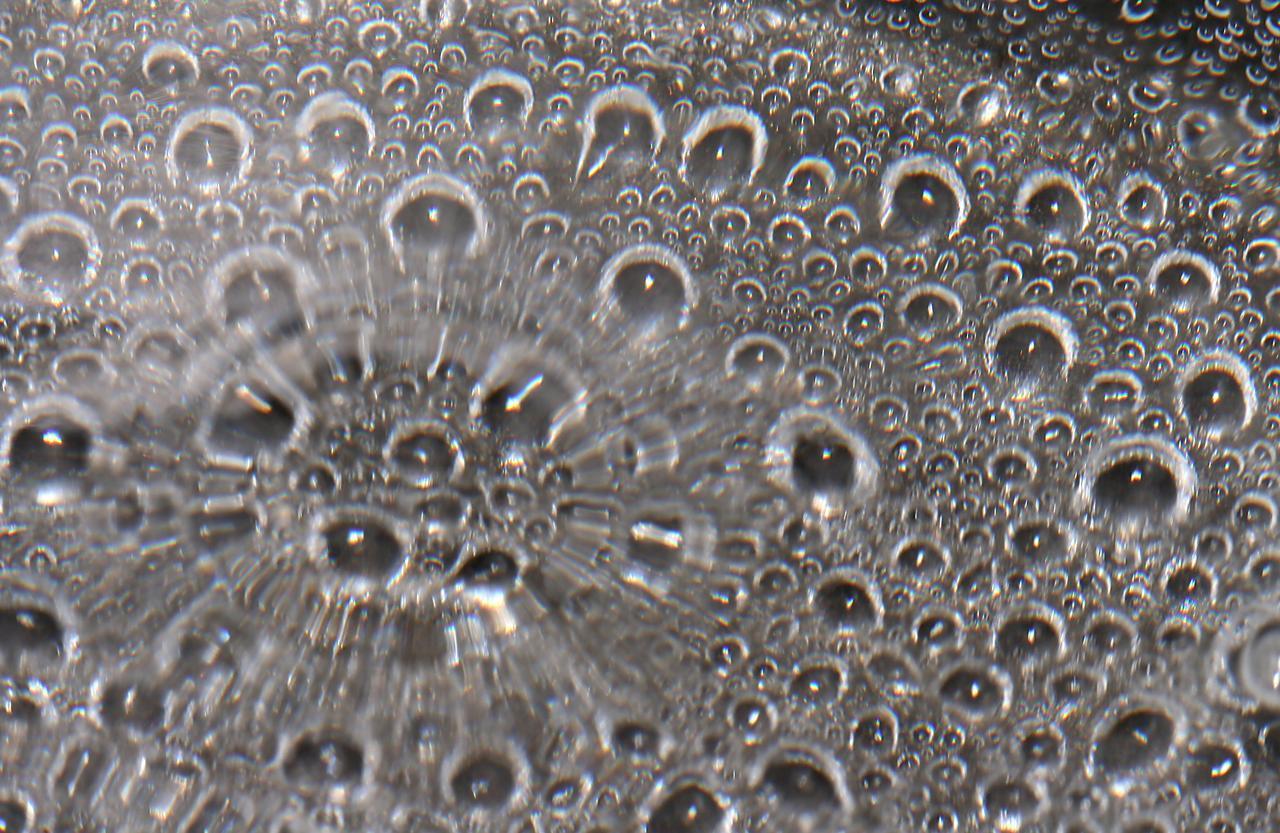
This week’s edition of the ISS research blog focuses on the Boiling Experiment Facility (BXF) and the goals of unlocking the secrets of boiling in microgravity. Without gravity to provide buoyant convection, boiling in space tends to produce one giant bubble instead of the hundreds of tiny ones we’re accustomed to seeing on our stoves. According to Dr. Tara Ruttley:
TheBoiling Experiment Facility or BXF, which launched on STS-133 in February 2010, will enable scientists to perform in-depth studies of the complexities involved in bubble formation as a result of heat transfer. For instance, what roles do surface tension and evaporation play during nucleate boiling when buoyancy and convection are not in the equation? What about the variations in the properties of the heating surface? By controlling for gravity while on the International Space Station, scientists can investigate the various elements of boiling, thus potentially driving improved cooling system designs. Improved efficiency in cooling technology can lead to positive impacts on the global economy and environment; two hot topics that have much to gain from boiling in space.

Solar Fluid Dynamics
The sun is a wild place fluid dynamically. The surface is riddled with convection cells the size of the Earth, and prominences of plasma (ionized gas) erupt from the surface following the sun’s magnetic field lines. Violent, but beautiful. #

Hotwire Anemometry
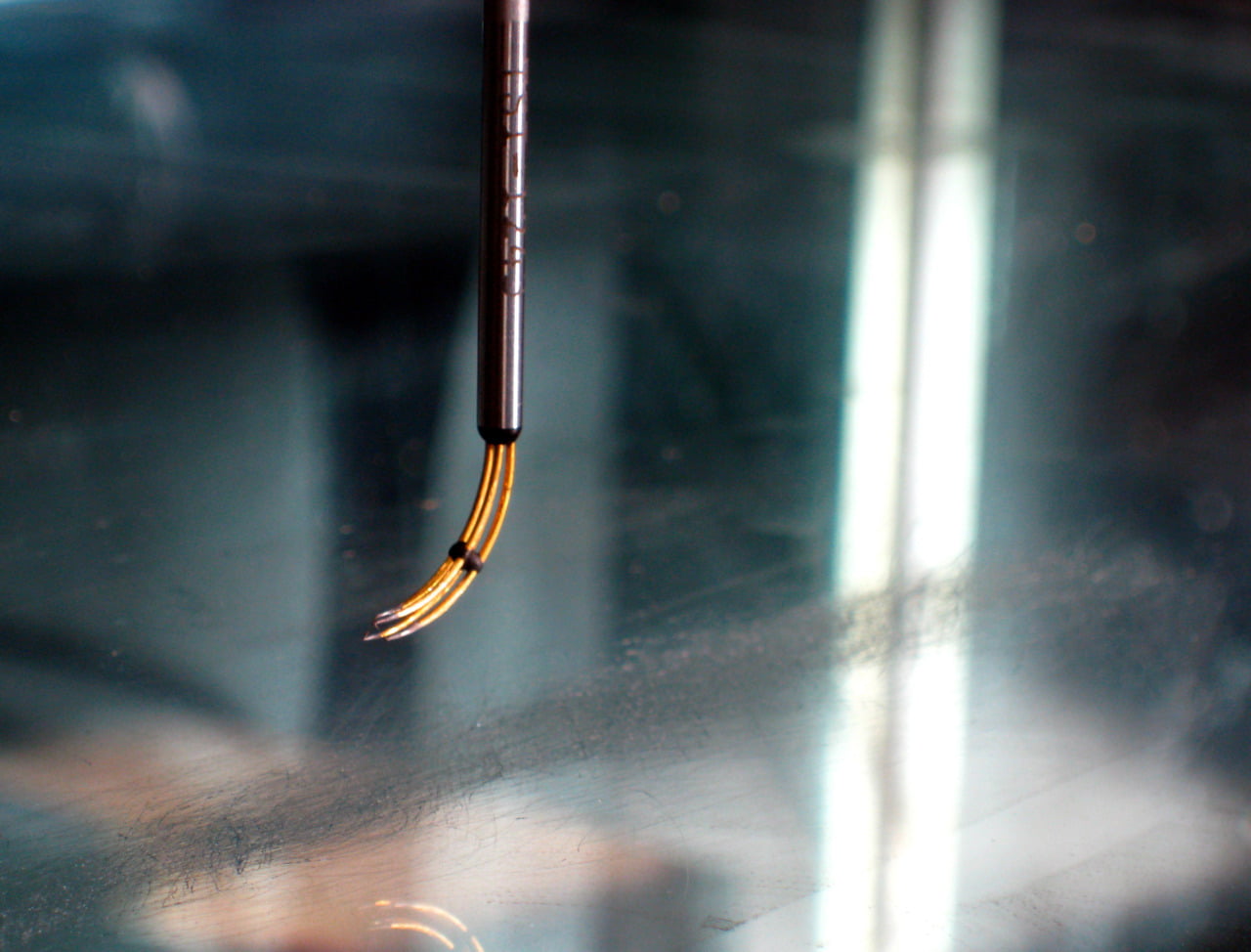
Hotwire anemometry is used in experimental fluid dynamics to measure velocities with high temporal resolution. The boundary layer crosswire probe shown here was used for turbulence research. Between the prongs, which are about the thickness of a sewing needle, are tiny wires about 3 microns in diameter. A human hair is about 80 microns in diameter. Hotwires actually measure voltage; when part of an electrical circuit, the hotwire’s temperature rises above ambient. As air flows over the wire, it cools, which causes the wire’s resistance to drop. By tracking this change in resistance, it is possible to determine the speed of the air moving over the wire.

Ferrofluid Labyrinths
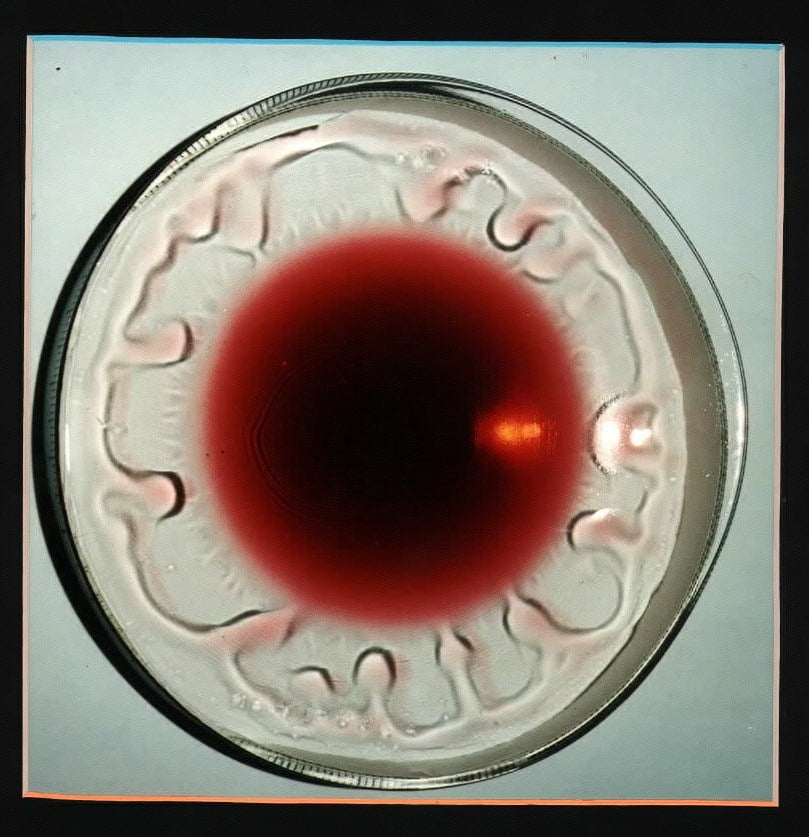
Here’s a different take on ferrofluids. Instead of spikes, we get 2D patterns reminiscent of these ones. Most likely the ferrofluid is trapped under glass as part of a Hele-Shaw cell. The results remind me some of chaotic Rayleigh-Benard convection cells, actually.

Microgravity Marangoni
Astronauts are preparing an experiment on the Marangoni effect, in which a variation in surface tension can cause mass flow, for flight aboard the International Space Station. The effect, also responsible for causing tears of wine, will benefit from study in microgravity because competing effects like gravity-induced sedimentation and buoyant convection will be negligible. Astronaut Ron Garan reports more on the upcoming experiment on the Fragile Oasis blog.

Benard Cells
When a fluid in a gravitational field is heated from below, it can develop a Rayleigh-Benard instability which causes the formation of convection cells as in the video above. The hexagonal shape of the cells is due to the boundary conditions of the fluid. It’s possible to form other shapes like spirals. The same mechanism drives the formation of granules on the photospheres of stars like our sun.

Combustion in Microgravity
‘Hot air rises.’ It’s common knowledge. But we usually forget that this is only true thanks to Earth’s gravity. On Earth, a candle flame’s distinctive pointed shape is due to hot air rising. Without gravity, there is no buoyant convection; hot air has no reason to rise (and no definition of what up is either!). This makes flames in microgravity spherical, as in the video above from a drop tower on earth. See also: astronaut explains fire in microgravity.