Levitation is an effect usually associated with electromagnetic forces, but it’s possible with sound as well. This acoustic levitation is achieved by using the pressure from sound waves to balance gravity’s effect. By manipulating the sound, it’s possible to bring separate objects together while continuing to levitate them. The behavior is demonstrated in the video above by combining solid sodium with a drop of water for what any high school chemist will tell you is a spectacular reaction. (Though, if that’s too small-scale for you, there’s also this video.) (Video credit: D. Foresti et al; via SciAm)
Search results for: “waves”

Fluids Round-up – 13 July 2013
Prepare yourselves for lots of links in today’s fluids round-up!
- Longtime FYFD favorite Mark Stock (see here, here, and here) and his collaborator James Susinno have unveiled a new interactive art piece, “Everything is Made of Atoms” that utilizes some impressive real-time fluids simulation. NVIDIA’s blog has some details on the computing.
- ScarbsF1 takes a detailed look at the F-duct used to stall an F1 car’s rear wing to reduce drag. (submitted by Vinnie)
- Just in time for summer fun, National Geographic talks about the physics of water slides.
- SpaceX’s reusable Grasshopper rocket has set a new altitude test of over 1000 ft. Check out this feat of aerodynamic control over at io9.
- Stanford engineers are using high-speed video of birds in the wild to study the mechanics of flapping flight. If you check out their video, you’ll notice how the birds rotate their wings as they flap in order to maximize lift throughout the flapping cycle. (via io9)
- Speaking of io9, they highlighted a couple of great examples of meteorological fluid dynamics recently: roll clouds and water spouts.
- New research suggests that thresher sharks may whip their tails quickly enough to produce cavitation-induced shockwaves to stun their prey. If so, they join the pistol and mantis shrimp in utilizing this technique for hunting.
- If you’re looking for some casual games, Liquid Sketch is a fun fluids puzzle game for iOS (submitted by Keri B)
- Finally, congratulations to Toronoto’s AeroVelo for capturing the AHS Sikorsky Prize with their human-powered helicopter. Check out this video from their historic flight (submitted by Chris R).
(Photo credit: AeroVelo)

Reader Question: Non-Coalescing Droplets
Reader ancientavian asks:
I’ve often noticed that, when water splashes (especially as with raindrops or other forms of spray), often it appears that small droplets of water skitter off on top of the larger surface before rejoining the main body. Is this an actual phenomenon, or an optical illusion? What causes it?
That’s a great observation, and it’s a real-world example of some of the physics we’ve talked about before. When a drop hits a pool, it rebounds in a little pillar called a Worthington jet and often ejects a smaller droplet. This droplet, thanks to its lower inertia, can bounce off the surface. If we slow things way down and look closely at that drop, we’ll see that it can even sit briefly on the surface before all the air beneath it drains away and it coalesces with the pool below. But that kind of coalescence cascade typically happens in microseconds, far too fast for the human eye.
But it is possible outside the lab to find instances where this effect lasts long enough for the eye to catch. Take a look at this video. Here Destin of Smarter Every Day captures some great footage of water droplets skittering across a pool. They last long enough to be visible to the naked eye. What’s happening here is the same as the situation we described before, except that the water surface is essentially vibrating! The impacts of all the multitude of droplets create ripples that undulate the water’s surface continuously. As a result, air gets injected beneath the droplets and they skate along above the surface for longer than they would if the water were still. (Video credit: SuperSloMoVideos)
Droplet Bounce
This high-speed video shows the remarkable resilience of a water droplet upon impact against as a solid surface. The droplet deforms into a pancake-shape, with its center depressing almost flat before rebounding upward. The rest of the drop follows, splitting into several droplets as capillary waves dance across its surface. When one satellite drop almost escapes, the main droplet just barely comes in contact with it, the coalescence enough to tip surface tension into pulling them together instead of breaking them apart. (Video credit: K. Suh/ChemistryWorldUK)
The Kelvin-Helmholtz Instability in the Lab
Though often spotted in water waves or clouds, the Kelvin-Helmholtz instability is easily demonstrated in the lab as well. Here a tank with two layers of liquid – fresh water on top and denser blue-dyed saltwater on the bottom – is used to generate the instability. When level, the two layers are stationary and stable due to their stratification. Upon tilting, the denser blue liquid sinks to the lower end of the tank while the freshwater shifts upward. When the relative velocity of these two fluids reaches a critical point, their interface becomes unstable, forming the distinctive wave crests that tumble over to mix the two layers. (Video credit: M. Stuart)
Fluids Round-up – 25 May 2013
Sometimes I come across cool links and stories about fluid dynamics that don’t quite fit into a typical FYFD post, but I’d like to start sharing those semi-regularly with round-up posts. Here’s some fun stuff I’ve seen lately:
- We’ve talked before about penguins and fluid dynamics, but this IOP talk from Helen Czerski is a great take on how they use fluids to escape predators.
- Over at FlowViz, Richard has a great video demonstrating deep versus shallow water waves side-by-side.
- io9 shows off the vibrational modes of mercury as well as explaining why birds can be good at flying or swimming but not both.
- Giant paint explosions (specifically here) may be fun to watch but the dangers are not for squeamish viewers.
- Dylan G sent us this 512K real-time fluid particle simulation that’s a fun distraction.
- xckd’s Randall Munroe answers all kinds of physics questions at his What If? blog, but occasionally there are some fluids ones. Two of my favorites consider a hypersonic steak and what happens if the glass is literally half full.
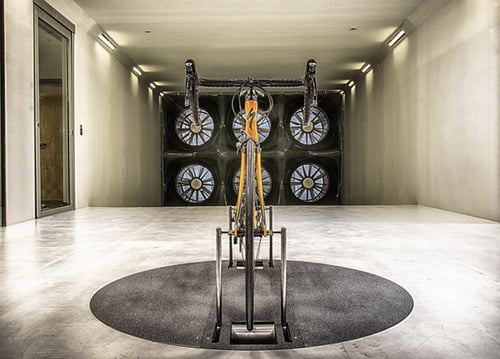
- Finally, for the cyclists and triathletes among you, the recent news that bicycle manufacturer Specialized has built its own wind tunnel has generated lots of discussion of aerodynamics in sport. Mark Cote (@MITAeroBike) and Chris Yu (@chrisyuinc) of Specialized’s aero R&D have been answering questions on Slowtwitch, Twitter, and in live chats.
And, yes, that last Specialized video chat includes an FYFD shout-out about 49 minutes in. 🙂
(Photo credit: Specialized)
Bouncing on a Pool
There’s something wonderfully serene about watching water droplets skate their way across the surface of a pool. Here the pool of water is being vibrated at a frequency just below the Faraday instability – meaning that no standing waves form on the surface. Instead, the bounce is just enough to create a thin layer of air between the droplet and the pool to prevent coalescence. With each bounce, gravity’s effect on the water tries to drain the air away, but each rebound lets more air rush in to hold the droplet up. Eventually, gravity wins and the droplets coalesce into the pool. In high-speed that process is mesmerizing, too. (Video credit: K. Welch)
Droplet Impact Visualized
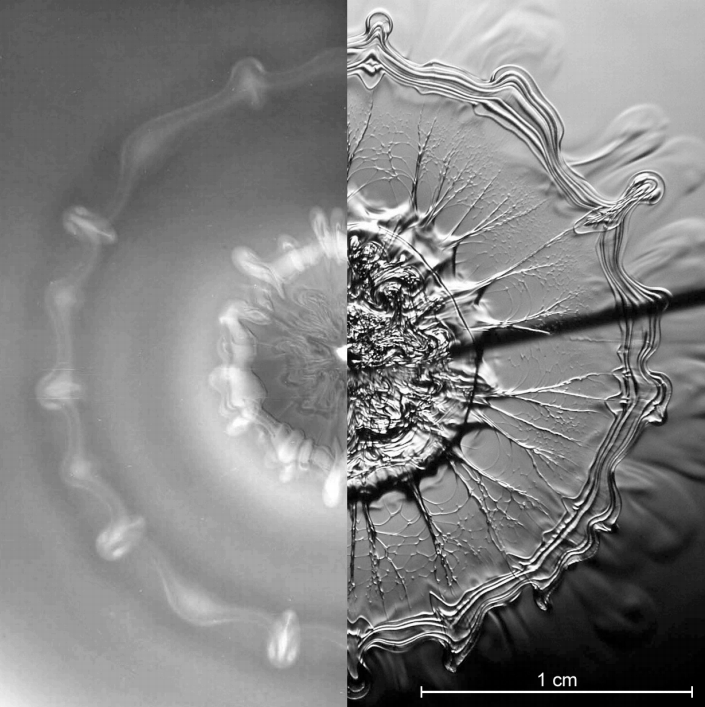
When a drop falls from a moderate height into a shallow pool, its impact creates a complicated pattern. The photo above is a composite image showing a top-down view 100 ms after such an impact. On the left side, the flow is visualized using dye whereas the right shows a schlieren photograph, in which contrast indicates variations in density. Both methods show the same general structure – an inner vortex ring generated at the edge of the impact crater and formed mostly of drop fluid and an outer vortex ring, consisting primarily of pool fluid, formed by the spreading wave. Both regions show signs of instability and breakdown. (Photo credit: A. Wilkens et al.)
Reader Question: Energy from Whirlpools?
shiftymctwizz asks:
So I just read your post about vortices, and now I’m wondering if we could build structures similar to the Corryvreckan and put turbines in them for energy production? Would it be any more efficient than hydroelectric dams? Are you the right person to ask?
I can’t give you numbers off the top of my head, but I suspect that your typical hydroelectric dam will be more reliable if not more efficient. The trouble with things like the Corryvreckan, aside from the randomness of where the vortices pop up, is that they aren’t there every single day the way, say, Niagara Falls is.
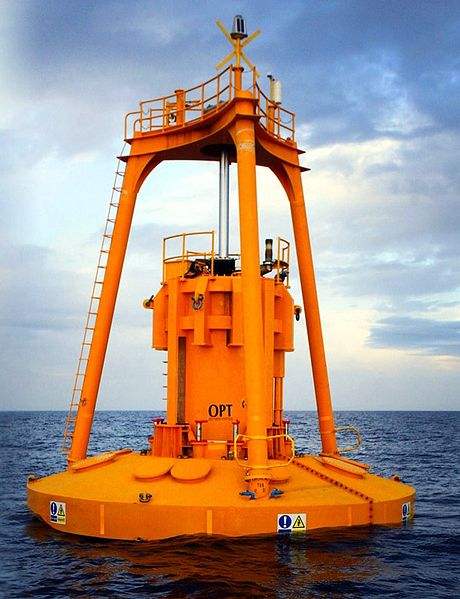
That said, there is on-going work to effectively harness ocean waves for power, with ideas like buoy generators or sea snake generators. As with most concepts one of the difficulties in implementation is determining a safe and efficient manner to transmit the electricity generated from these offshore sites (we’re generally talking miles from shore) to where it’s needed. This problem is often similarly faced by solar and wind energy producers. There are already wave farms in place around the world, though, and it’s a promising field of renewable energy. (Photo credit: Wikimedia)
SpaceShipTwo Lights It Up
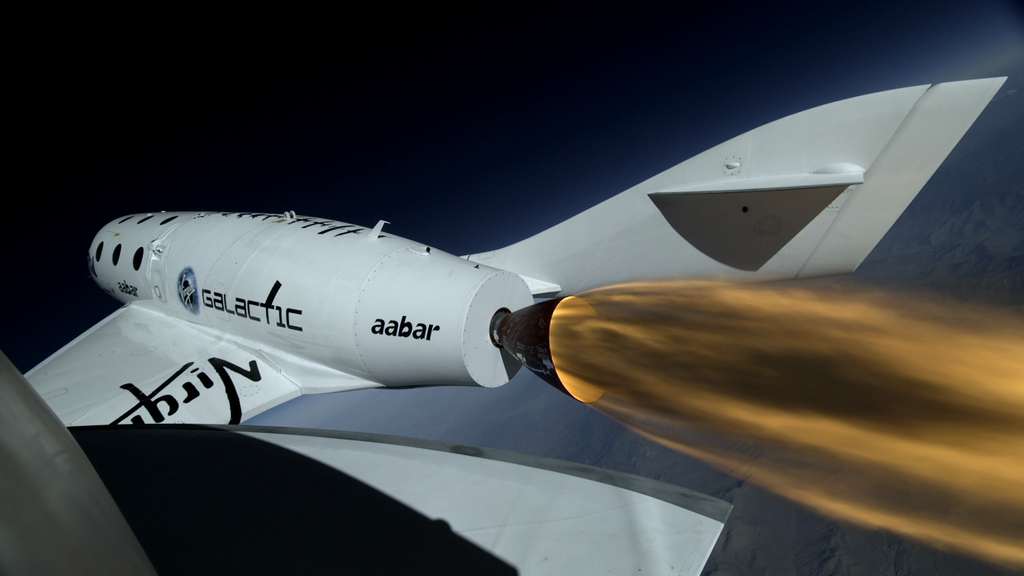
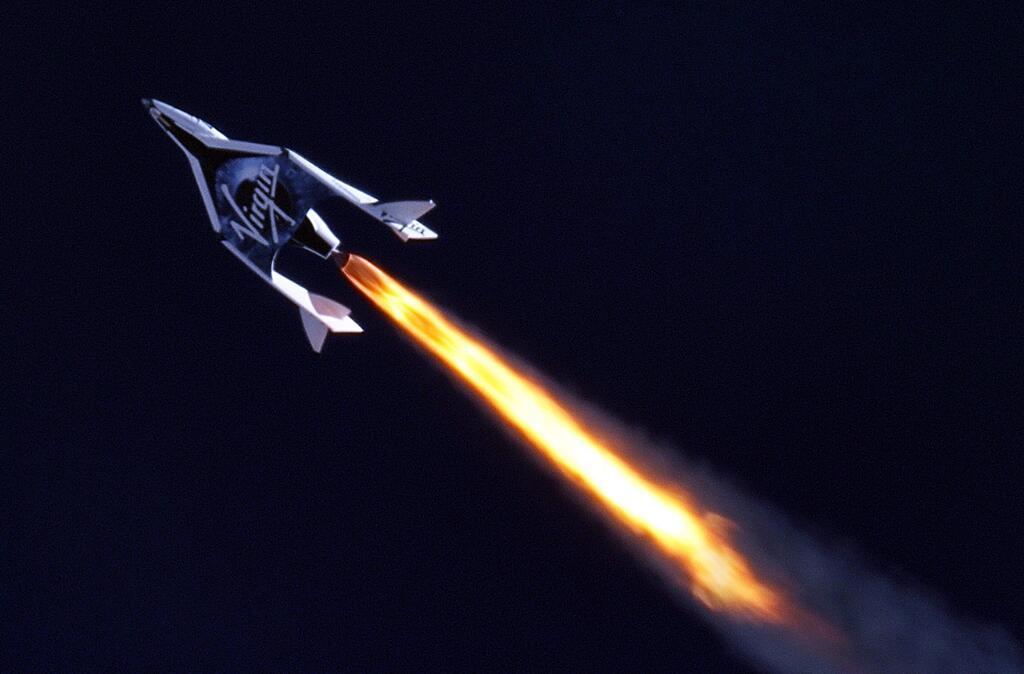
Monday morning Virgin Galactic and their partners at Scaled Composites reached a new milestone in their commercial sub-orbital spaceflight program, firing SpaceShipTwo’s main engine for the first time and accelerating to supersonic speeds. The upper image shows hints of Mach diamonds, formed by a series of shock waves and expansions, in its exhaust. This is very common for rockets since most have a fixed geometry, and, by extension, a fixed Mach number and exhaust pressure. (Photo credits: Virgin Galactic and Mars Scientific)
