Tag: shear

  • Featured Video Play Icon

    On the Mechanics of Wet Sand

    Sand is a critical component of many built environments. As most of us learn (via sand castle), adding just the right amount of water allows sand to be quite strong. But with too little water — or too much — sand is prone to collapse. For those of us outside the construction industry, we’re most likely to run into this problem on the beach while digging holes in the sand. In this Practical Engineering video, Grady explains the forces that stabilize and destabilize piled sand and where the dangers of excavation lie. (Video and image credit: Practical Engineering)

    Fediverse Reactions
  • Imitating a Cough

    Imitating a Cough

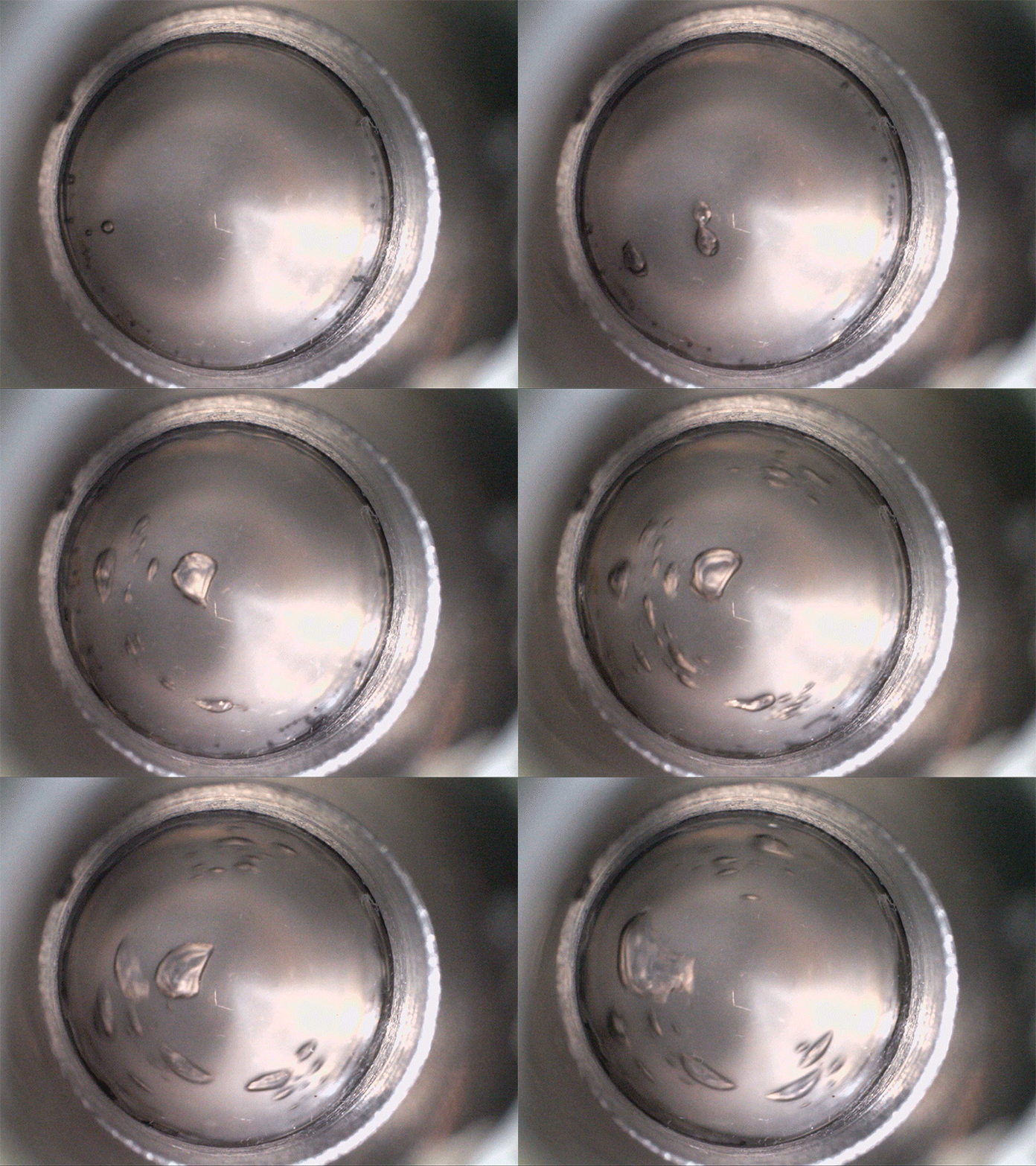
    Coughing and sneezing create violent air flows in and around our bodies. As that fast air rushes over mucus layers in our lungs, throat, and sinuses, the resulting flow breaks up the mucus into droplets. To explore the details of that process, researchers built a “cough machine” that sends a rush of air over a thin film of water mixed with glycerol. The setup allows them to observe the physics in a way that’s nearly impossible in a human cough or sneeze.

    Imitating a cough: high-speed video shows how a thin film made of water and glycerol breaks down in a strong airflow. Parts of the film inflate into hollow bags that form thinner weak spots. When the film breaks in those places, it forms rims and ligaments that break up into droplets.
    Imitating a cough: high-speed video shows how a thin film made of water and glycerol breaks down in a strong airflow. Parts of the film inflate into hollow bags that form thinner weak spots. When the film breaks in those places, it forms rims and ligaments that create a spray of droplets.

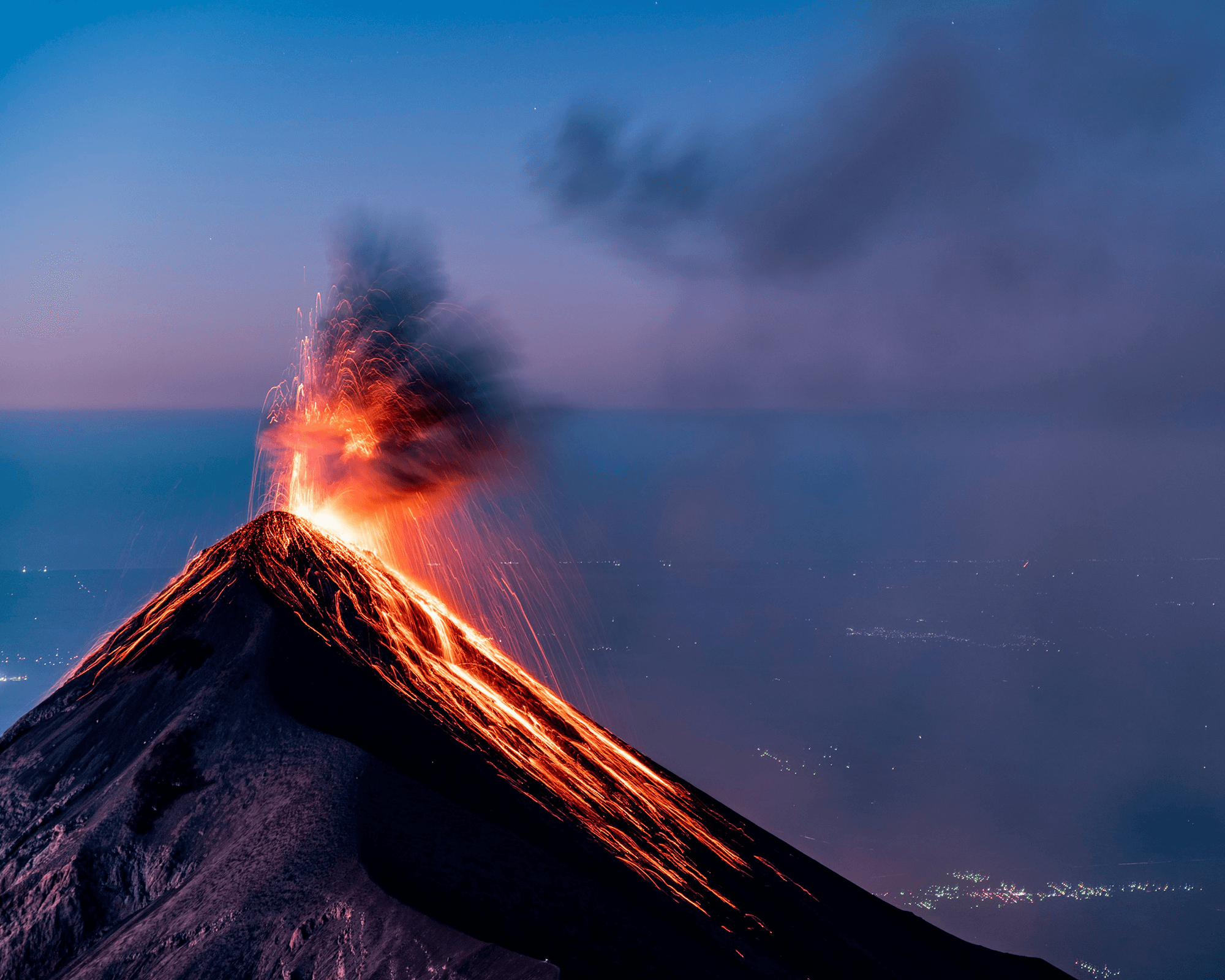
    As seen above, air flowing past shears the viscous fluid, stretching it out. The leading edge of the film destabilizes and breaks into large drops, but it’s what comes next that really gets things going. Areas of the film inflate to form hollow bags. When sections of the bag thin to about 1 micron, the film ruptures and the bags burst. This triggers a cascade of instabilities in the film’s rim that ultimately rip the film into a spray of tiny aerosol droplets. The researchers found that, despite their tiny size, these droplets collectively carry a large volume of liquid, making them all the more important for understanding transmission of respiratory illnesses. (Image credit: top – A. Piacquadio, experiment – P. Kant et al.; research credit: P. Kant et al.)

  • Scooting Droplets

    Scooting Droplets

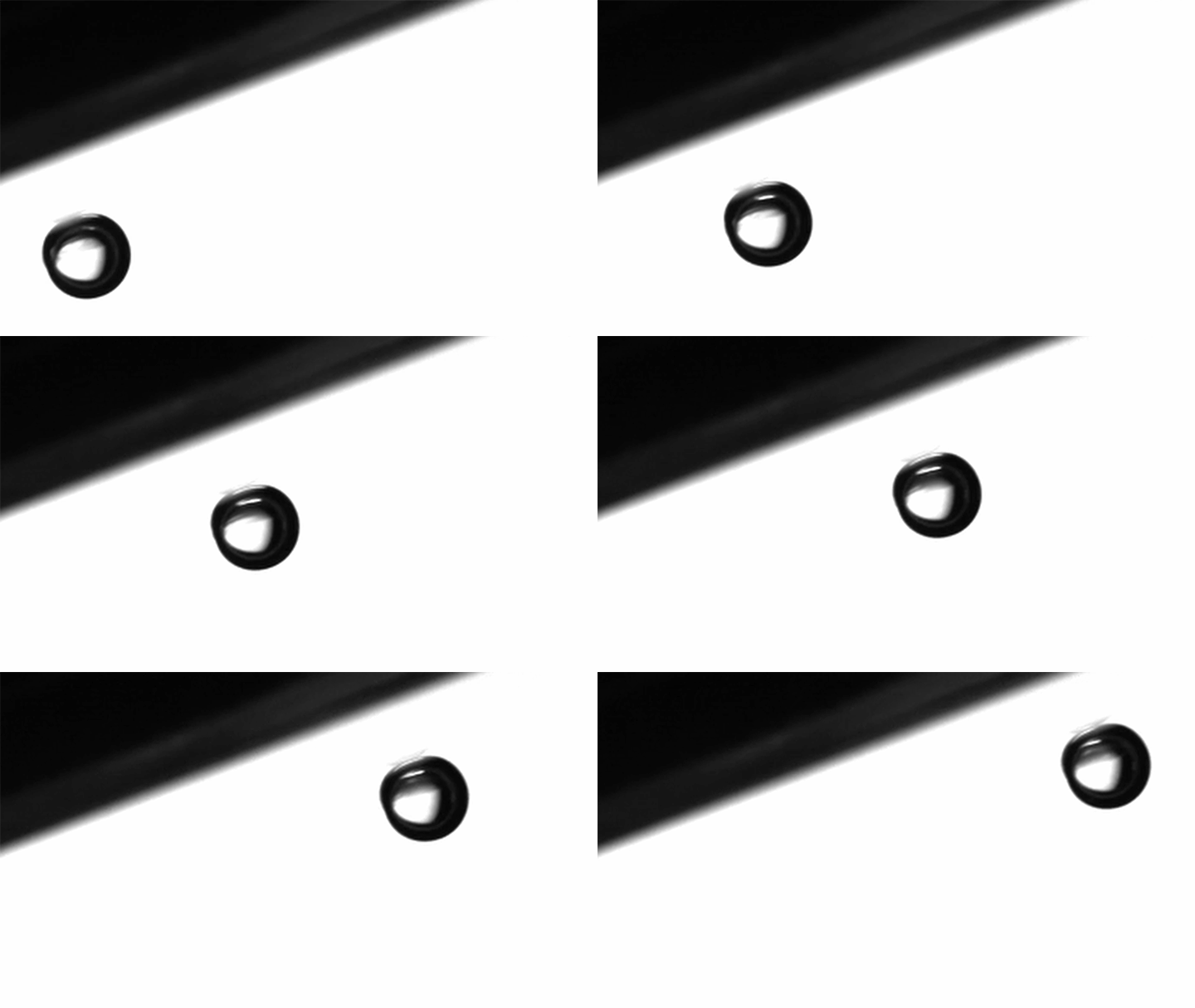
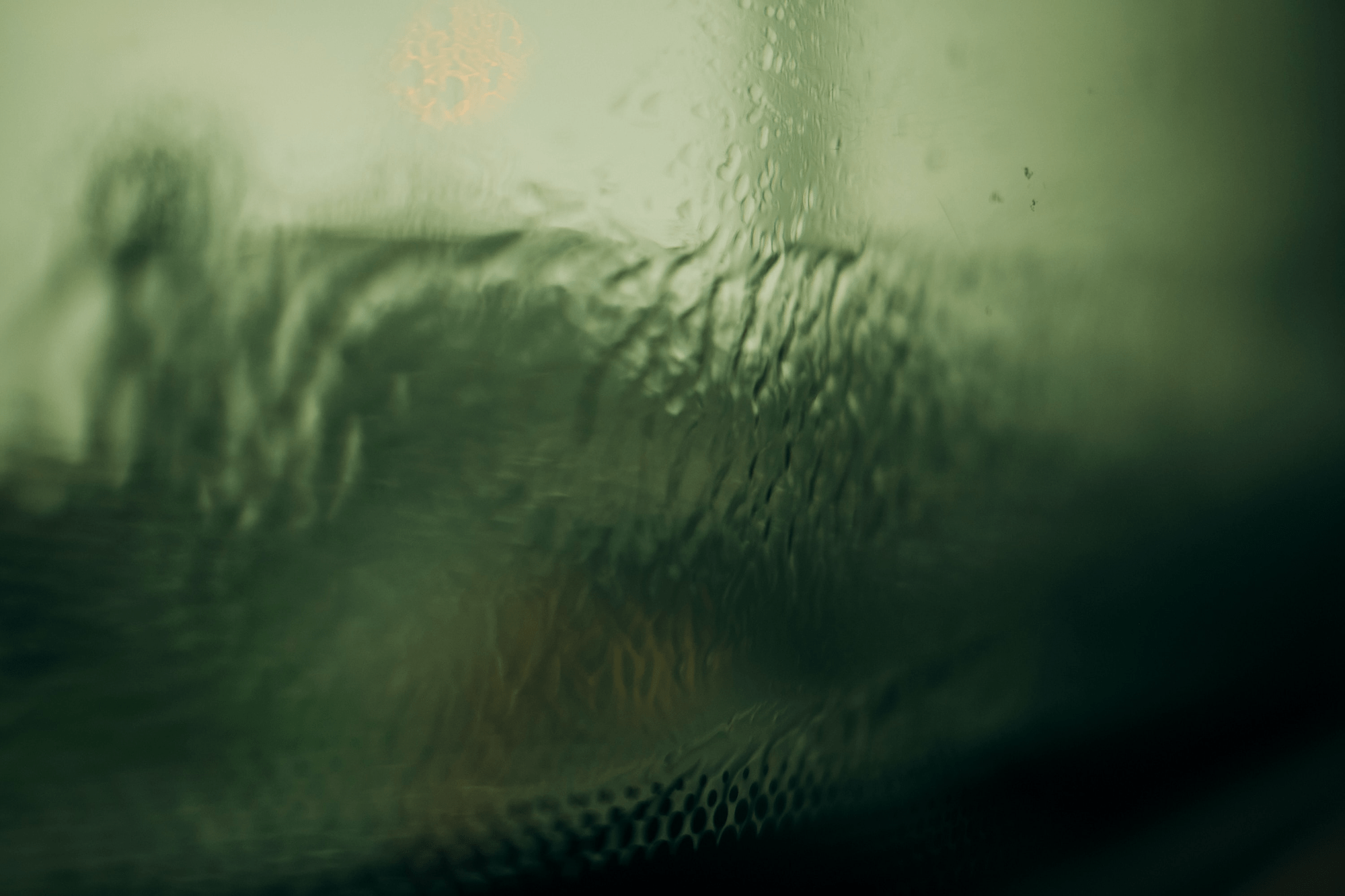
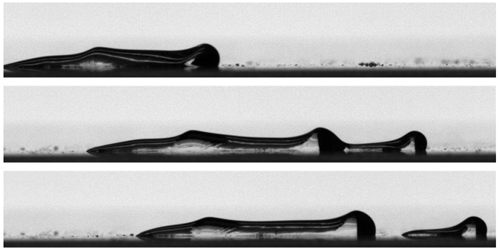
    As a child, I always loved watching rain on the windows as I rode in the car. Hemispherical droplets got stretched by the wind flowing over them. But they never stretched smoothly; instead they seemed to shiver and shake unevenly. A recent study looks at a similar situation: drops of glycerin forced to slide along a horizontal surface under the force of the wind. Like the drops on my parents’ car, the glycerin gets stretched out into an elongated oval. Surface waves develop atop the drop and move downstream. The drops, the authors observe, move a bit like a crawling caterpillar, pilling up and smoothing out as they move. (Image credit: rain – A. Alves, experiment – A. Chahine et al.; research credit: A. Chahine et al.; via APS Physics)

    This series of images shows an elongated droplet subjected to airflow moving from left to right. Waves form on the drop and move downstream in a fashion similar to a caterpillar crawling.
    This series of images shows an elongated droplet subjected to airflow moving from left to right. Waves form on the drop and move downstream in a fashion similar to a caterpillar crawling.
  • Bubble Cleaning

    Bubble Cleaning

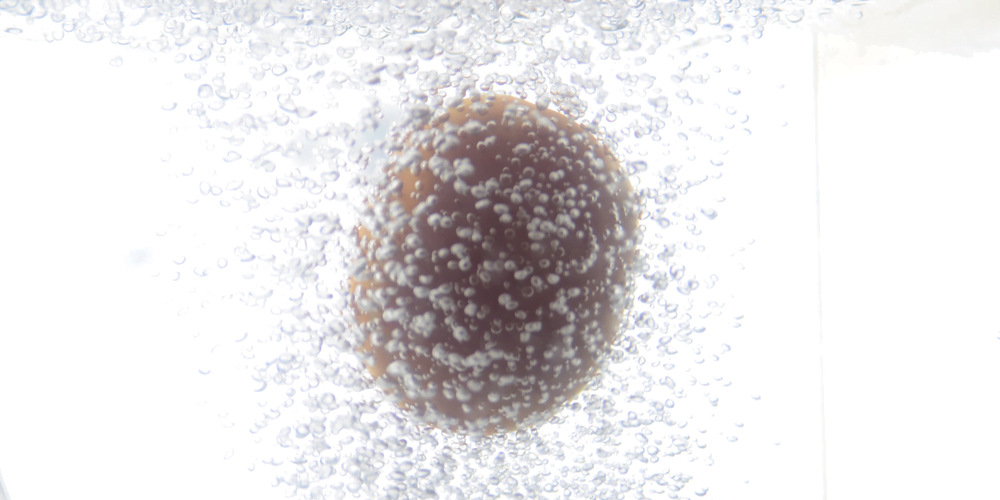
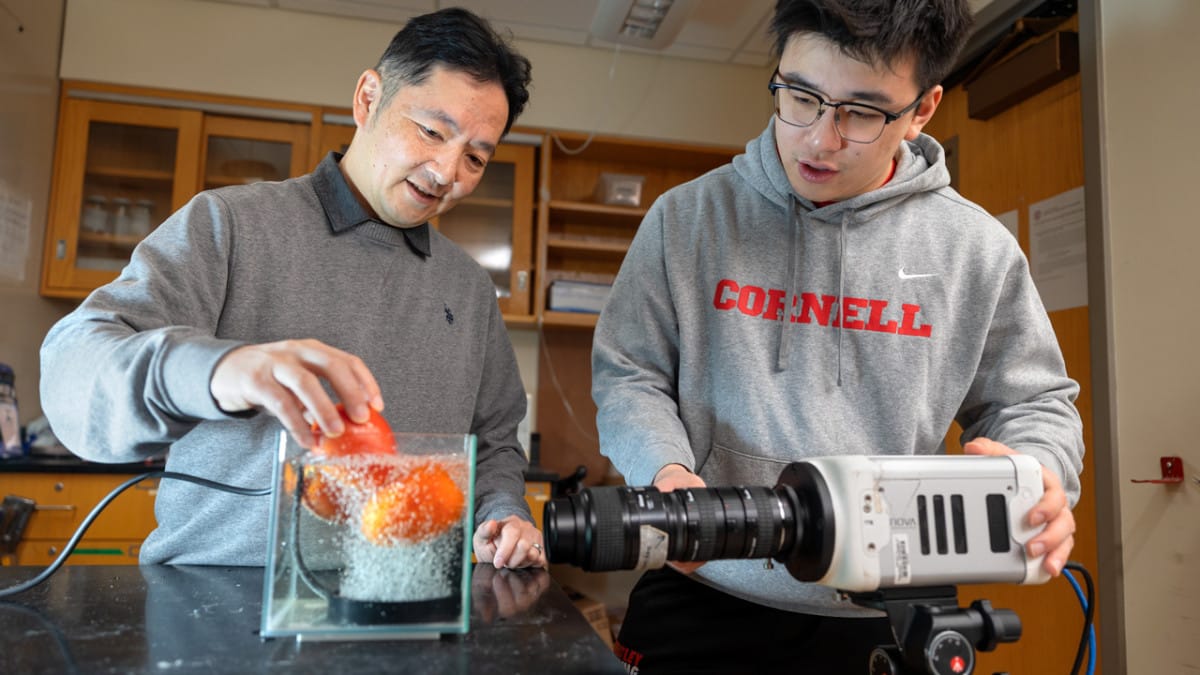
    Removing dirt and bacteria from fruits and vegetables is a delicate job; too much force can bruise the produce and hasten spoiling. That’s why fluid mechanicians want to give the job to bubbles. Placing objects in a stream of air bubbles inside a bath is a surprisingly effective method for gently cleaning surfaces. A recent study finds that 22.5 degrees is the optimal angle for sliding bubbles to scrape a surface clean.

    As the bubbles slide past the surface, they exert a shear force that scrapes away debris, just as you might use a loofah in the shower. The angle the bubble makes with the surface determines how long it’s in contact and how much force the bubble exerts. Increasing the angle makes the bubble slide faster, increasing its shear force. But above 22.5 degrees, the bubble’s buoyancy means that it spends less time pressed against the surface, which decreases its cleaning ability.

    The team hopes to use their results to build a “fruit Jacuzzi” device that will direct bubble streams to gently and effectively clean fruits and vegetables in a matter of minutes. (Image and research credit: A. Hooshanginejad et al.; via APS Physics)

  • Slab Avalanche Physics

    Slab Avalanche Physics

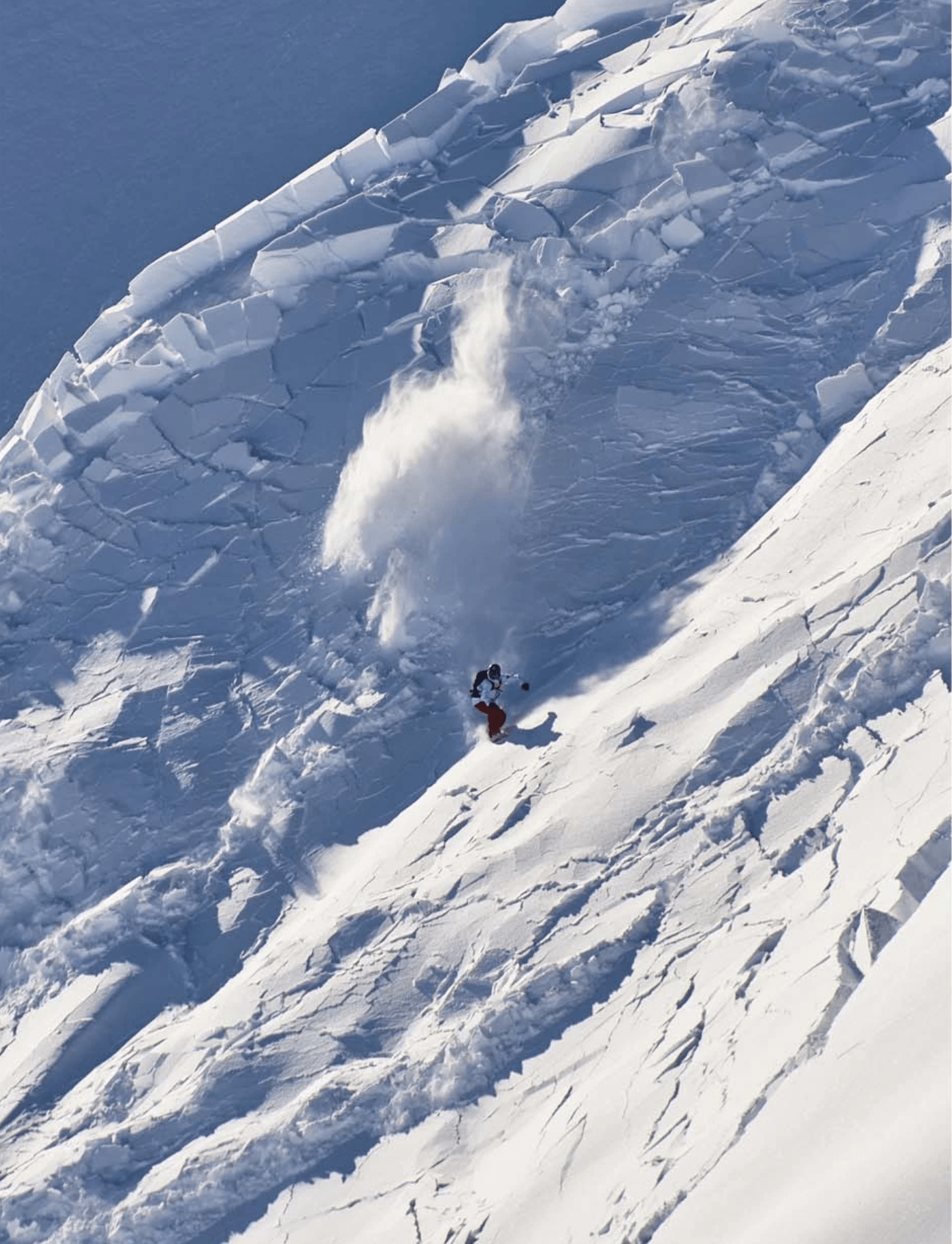
    Slab avalanches like the one shown here begin after weak, porous layers of snow get buried by fresher, more cohesive snow layers. On a steep slope, the weight of the new snow can be too great for friction to hold the slab in place, causing the upper layer to crack and slide at speeds up to 150 meters per second. Scientists had two competing theories for how slab avalanches began. One theory presumed that the weak layer of snow failed under shear; the other argued that the collapse of the lower, porous layer was at fault.

    In a new study combining large-scale numerical simulation with real-life observations, scientists came to a new conclusion: cracks began to form in the porous layer as the weight of heavier snow crushed down, but once the cracks formed, the shear mechanism took over. Cracks formed by shear could propagate along the existing cracks in the porous layer, allowing faster crack propagation than through undamaged snow. In the end, it’s the combination of the two mechanisms that triggers the avalanche. (Image credit: R. Flück; research credit: B. Trottet et al.; via Physics World)

  • Featured Video Play Icon

    Stably Jammed

    Granular materials like sand, gravel, and medications can become a rigid mass when squeezed or sheared. Even with a relatively loose packing, these materials can jam together to act like a solid if the contacts between grains no longer allow particles to shift or rotate. In this video, researchers explore how stable these jammed states are by repeatedly shearing the mixture and observing how it changes.

    Most of the videos are set up as a triptych, where all three panels show the same material. On the left, you see a simple view showing the position of each particle. In the middle, the disks are viewed through polarized filters, so that the material looks brightest where it is stressed. This view lets us see the force chains that run through the material. On the right, UV-sensitive ink on each marker glows to show any rotation particles experience.

    In the first sample, repeated shearing slowly unjams the mixture and allows it to shift and flow once more. We see this from the decreasing brightness in the middle panel. The slow fade to black means that the force chain network has disappeared entirely. In contrast, the second sample ultimately reaches an “ultra-stable” jammed state, in which further shear cycles cause no change to the network. Once again, this is easiest to observe in the middle image, where the bright force network stops changing after 2,000 cycles or so. (Image and video credit: Y. Zhao et al., research pre-print)

  • Mixing the Immiscible

    Mixing the Immiscible

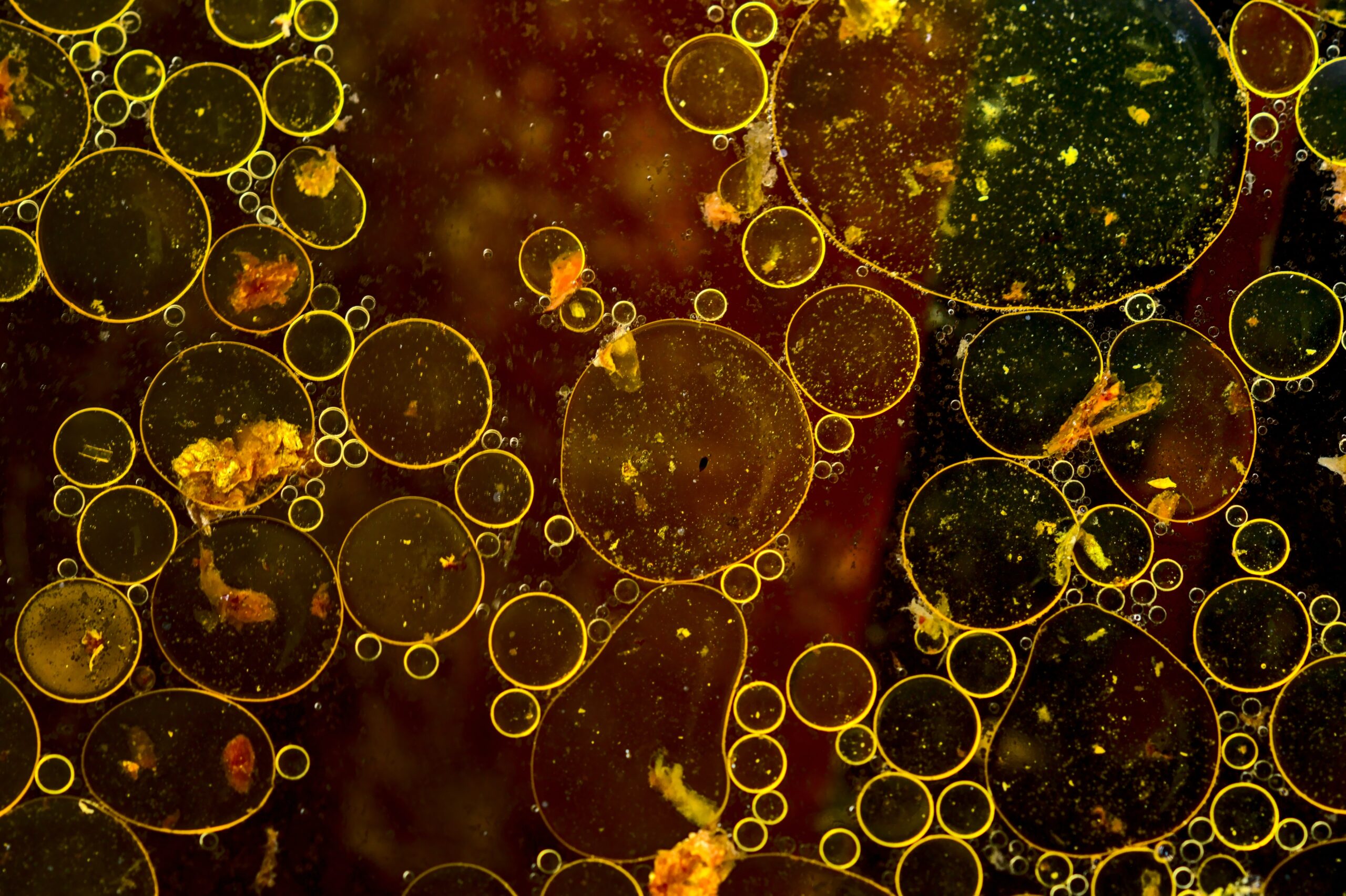
    Immiscible liquids — like oil and water — do not combine easily. Typically, with enough effort, you can create an emulsion — a mixture formed from droplets of one liquid suspended in the other — like the one above. But a team of researchers have taken mixing immiscible liquids to a new level using their Vortex Fluid Device (VFD).

    Longtime readers may remember the group from their Ig-Nobel-winning demonstration of unboiling an egg, but this time the team is used the VFD to mix and de-mix immiscible liquids. As shown in the video below, the VFD is essentially a fast-spinning tube tilted at a 45-degree angle. As it spins, the liquids inside are forced into thin films with very high shear rates — high enough that immiscible liquids like water and toluene are forced together without forming an emulsion. Essentially, the mechanical forces mixing the liquids are strong enough to overcome the chemistry that typically keeps them apart.

    Impressively, the device manages this without using harsh surfactants or catalysts that other methods rely on. As a result, the technique offers a greener method for mixing chemicals for pharmaceuticals, cosmetics, food processing, and more. (Image credit: pisauikan; research credit: M. Jellicoe et al.; video credit: Flinders University; submitted by Marc A.)

  • Featured Video Play Icon

    Protecting From Storm Surge

    The most dangerous and destructive part of a tropical cyclone isn’t the wind or rain; it’s the storm surge of water moving inland. This landward shift of ocean takes place because of a cyclone’s strong winds, which drive the water via shear. The depth storm surges reach depends on the wind speed and direction, shape of the shoreline, and many other factors, making exact predictions difficult.

    Fortunately, engineers can — with enough foresight and investment — build structures and networks to help protect developed land from storm surge flooding. (Image and video credit: Practical Engineering)

  • Sunset Swirls

    Sunset Swirls

    This gorgeous photograph of Kelvin-Helmholtz clouds was taken in late December in Slovenia by Gregor Riačevič. The wave-like shape of the Kelvin-Helmholtz instability comes from shear between two fluid layers moving at different relative speeds. Here on Earth, clouds like these are often short-lived, but we see similar structures in the atmospheres of gas giants like Jupiter and Saturn. (Image credit: G. Riačevič; submitted by Matevz D.)

  • Featured Video Play Icon

    Shear and Convection in Turbulence

    In nature, we often find turbulence mixed with convection, meaning that part of the flow is driven by temperature variation. Think thunderstorms, wildfires, or even the hot, desiccating winds of a desert. To better understand the physics of these phenomena, researchers simulated turbulence between two moving boundaries: one hot and one cold. This provides a combination of shear (from the opposing motion of the two boundaries) and convection (from the temperature-driven density differences).

    Please note that, despite the visual similarity, these simulations are not showing fire. There’s no actual combustion or chemistry here. Instead, the meandering orange streaks you see are simply warmer areas of turbulent flow, just as the blue ones are cooler areas. The shape and number of streaks are important, though, because they help researchers understand similar structures that occur in our planet’s atmosphere — and which might, under the wrong circumstances, help drive wildfires and other convective flows. (Image, research, and video credit: A. Blass et al.)