
When swimming in open waters, it pays to keep your ducks (or your goslings!) in a row. A recent study examined the waves generated behind adult water fowl and found that babies following directly behind them benefit from their wake. In the right spot behind its mother, a duckling sees 158% less wave-drag than it would when swimming solo. That’s such a large reduction that the duckling actually gets pulled along! And the advantage doesn’t just help one duckling; a properly-placed duckling passes the benefit on to its siblings as well. So any duckling that stays in line has a much easier time keeping up, but those who slip out of the ideal spot will have a much tougher time. (Image credit: D. Spohr; research credit: Z. Yuan et al.; via Science News; submitted by Kam-Yung Soh)
Search results for: “waves”

Marshland Wave Damping
Coastal marshes are a critical natural defense against flooding. The flexible plants of the marsh both slow the water’s current and help damp waves. As a result of that hydrodynamic dissipation, marshes help protect against erosion and reduce the magnitude of flooding events. But coastal managers looking to maintain or improve their marshes in order to mitigate climate-change-driven storms need to be able to predict what level of vegetation they need.
To that end, a team of researchers has built a new model to better capture the flow effects of marsh grasses. Building from an individual, flexible plant (as opposed to a rigid cylinder, as grass is often represented), the authors constructed a model able to predict wave dissipation for many marsh configurations, which should help better predict the infrastructure changes needed in different coastal regions. (Image credit: T. Marquis; research credit: X. Zhang and H. Nepf; via APS Physics)

Bullseye
The Cumbre Vieja volcano in the Canary Islands began erupting in mid-September 2021. This satellite image, captured October 1st, shows a peculiar bullseye-like cloud over the volcano. Hot water vapor and exhaust gases rose rapidly from the erupting volcano until colliding with a drier, warmer air layer at an altitude of 5.3 kilometers. The warm upper layer, known as a temperature inversion, prevented the volcanic gases from rising any further, so they instead spread horizontally. The outflow from the volcano varies and is non-uniform, and its fluctuations generated gravity waves that are visible here as the expanding rings of clouds. (Image credit: L. Dauphin; via NASA Earth Observatory)
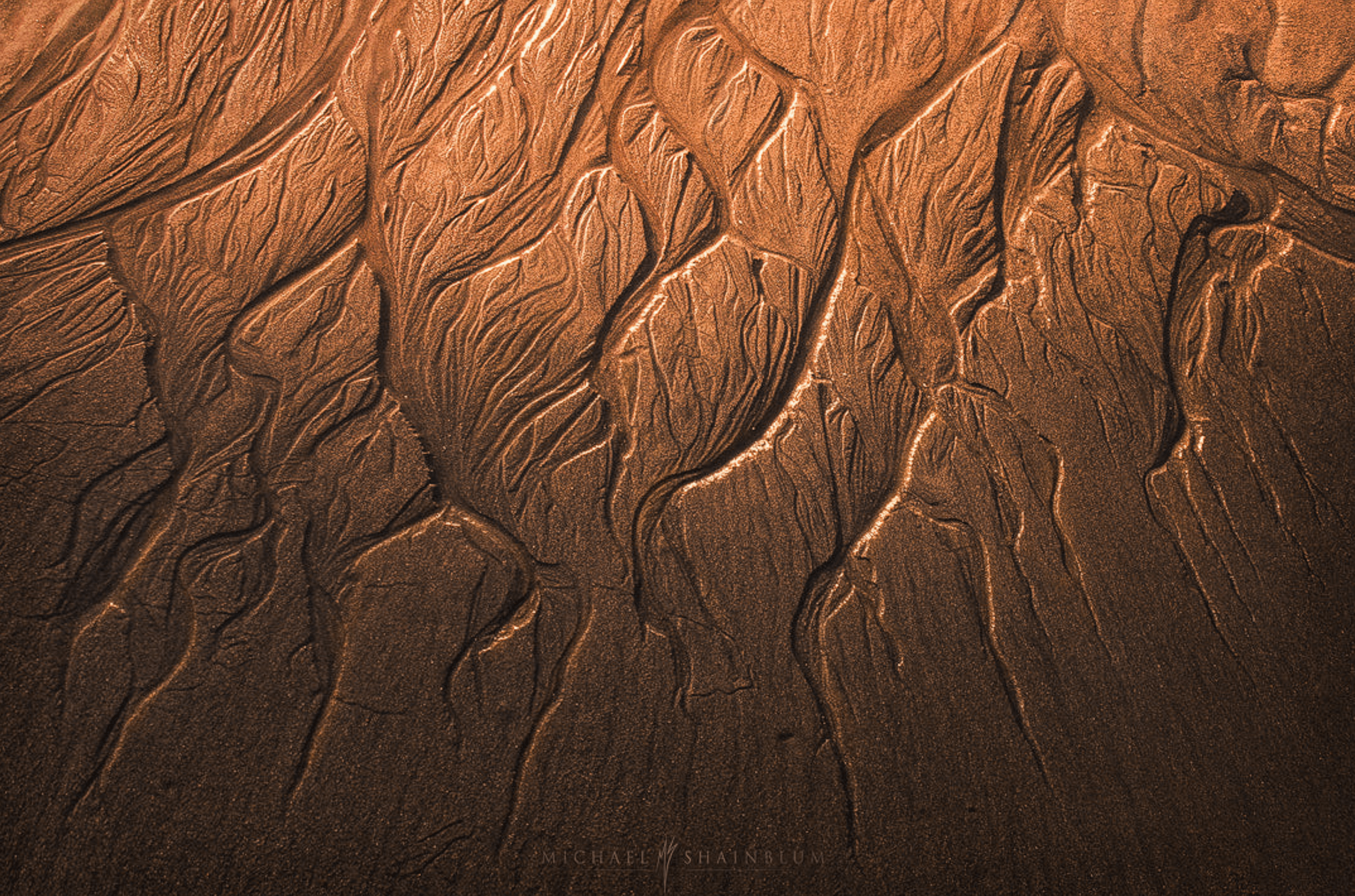
“Ruin of the Tides”
As tides and waves flow back and forth over a beach, they erode the sandy shore. Here photographer Michael Shainblum captures the streaks and rivulets left by a falling tide. These “ruins” resemble an extensive river delta viewed from above. I love the complicated branches carved by the water’s retreat. (Image credit: M. Shainblum)
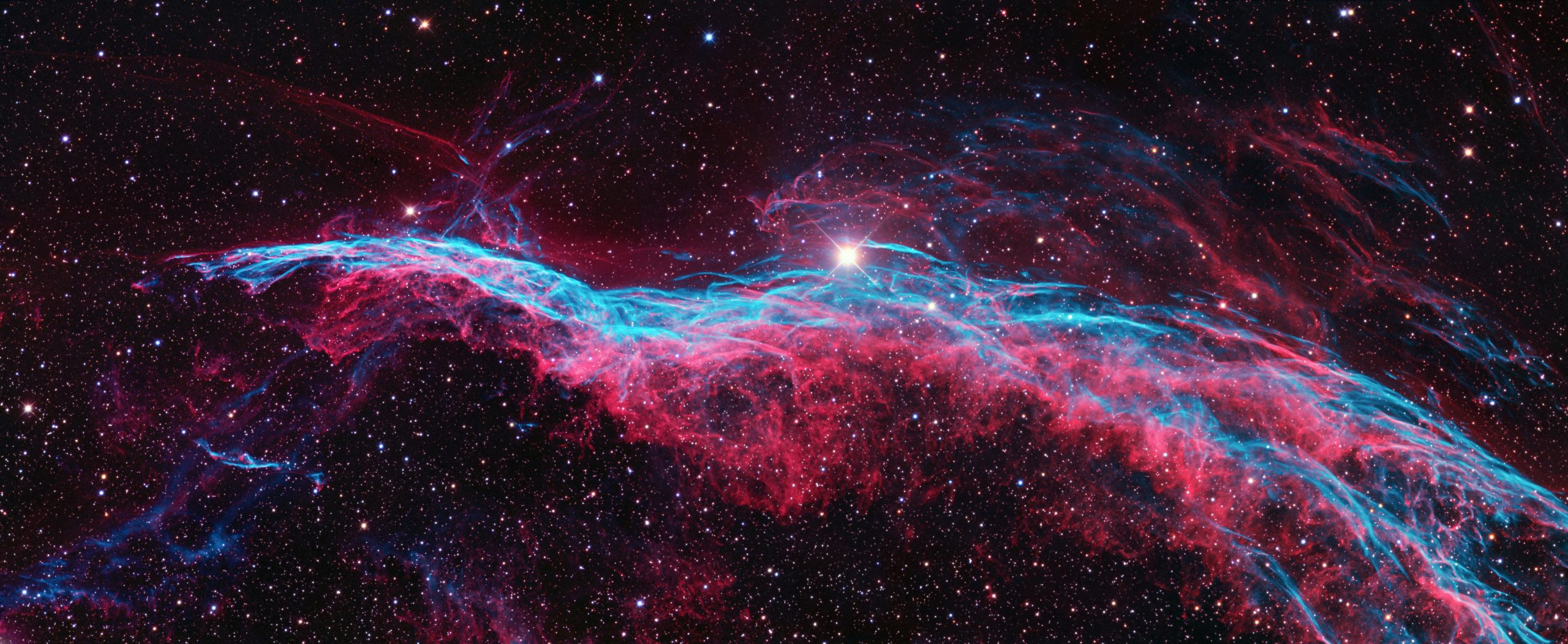
Witch’s Broom
Known by many names — including the Witch’s Broom Nebula — NGC 6960 is part of a supernova remnant visible in the constellation Cygnus. The wisp-like filaments of the nebula are shock waves moving through the cloud of dust and ionized gas. Based on observations using the Hubble Space Telescope, the nebula is expanding at around 1.5 million kilometers per hour. When the original supernova exploded thousands of years ago, astrophysicists estimate it would have been bright enough to see during daytime! (Image credit: K. Crawford)

Superfluid Instabilities


Superfluids — like Bose-Einstein condensates — are bizarre compared to fluids from our everyday experience because they have no viscosity. Without viscosity, it’s no surprise that they behave in unusual ways. Here, researchers simulated superfluids moving past one another. In each of these images, the blue fluid is moving to the left, and the red fluid is moving to the right. In a typical fluid, such motion causes ocean-wave-like curls due to the Kelvin-Helmholtz instability.
Instead, with a low relative velocity and high repulsion between atoms of the two layers, the superfluids form a tilted, finger-like interface (Image 1) that the authors refer to as a flutter-finger pattern. (Repulsion essentially sets the miscibility between the superfluids. With a high repulsion, the superfluids resist mixing.)
With a higher relative velocity (Image 2), the wavelength of the ripples becomes comparable to the thickness of the interface, and the superfluids take on a very different, zipper-like pattern. Note how the tips detach and reconnect to the neighboring finger!
With lower repulsion, the interface between the two liquids is thicker and breaks down quickly (Image 3). The authors call this a sealskin pattern. (Image credits: water – M. Blažević, simulations – H. Kokubo et al.; research credit: H. Kokubo et al.; via APS Physics)
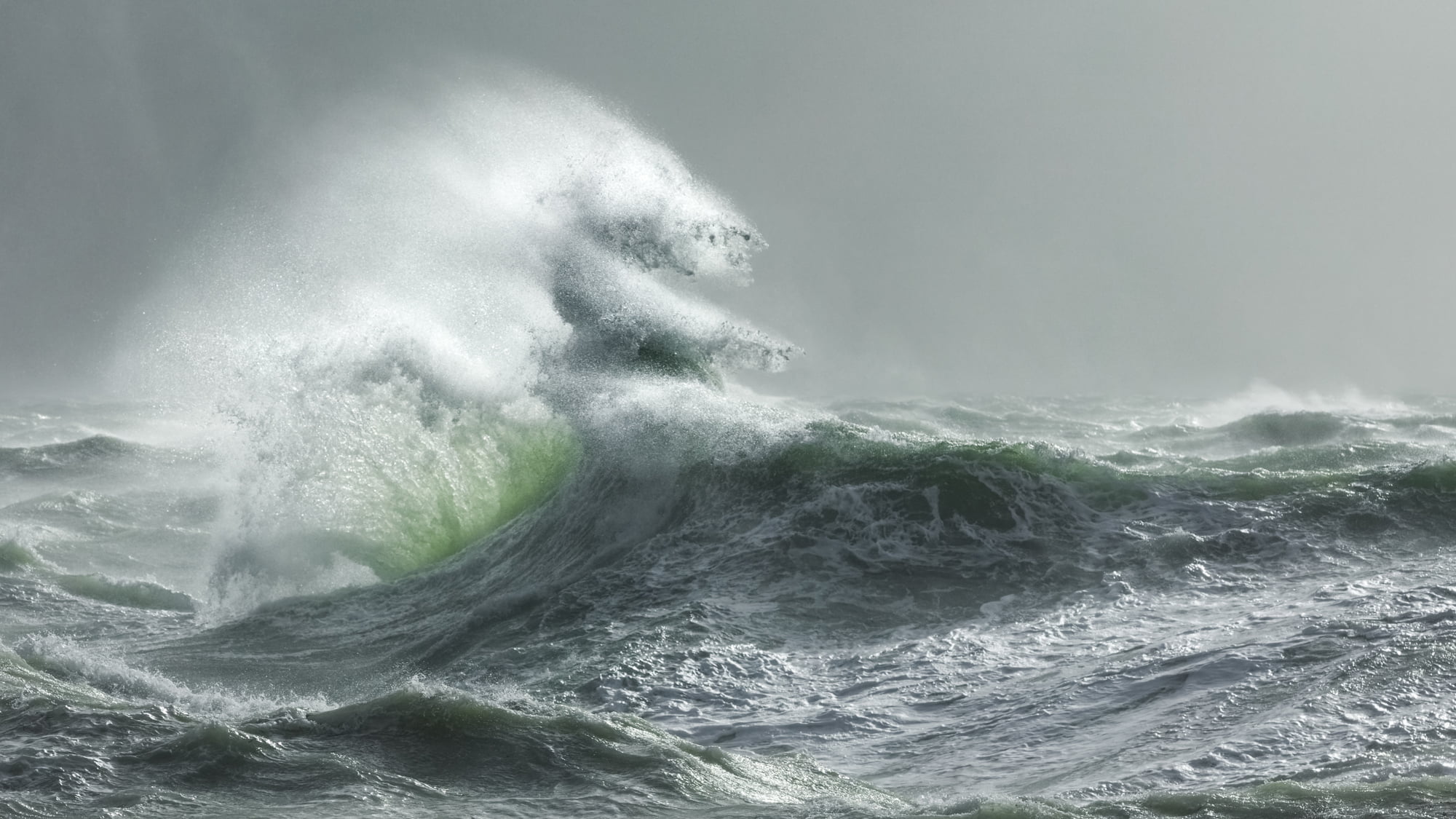
Tides and Tempests of the Coast
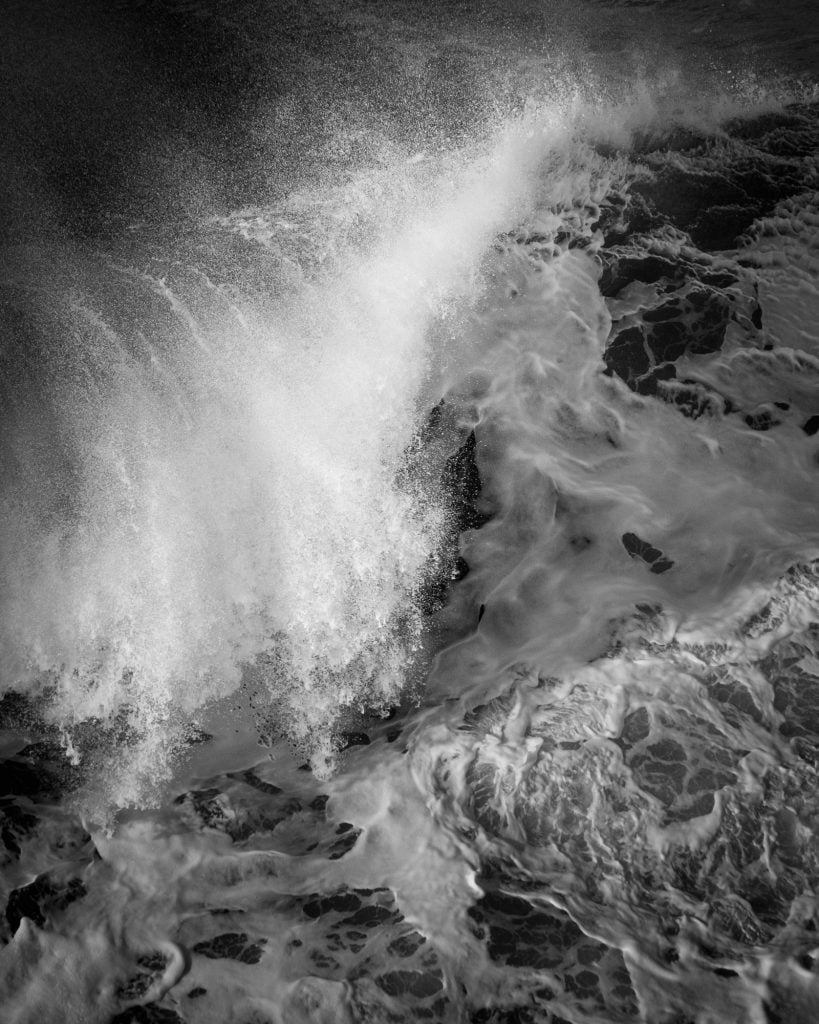
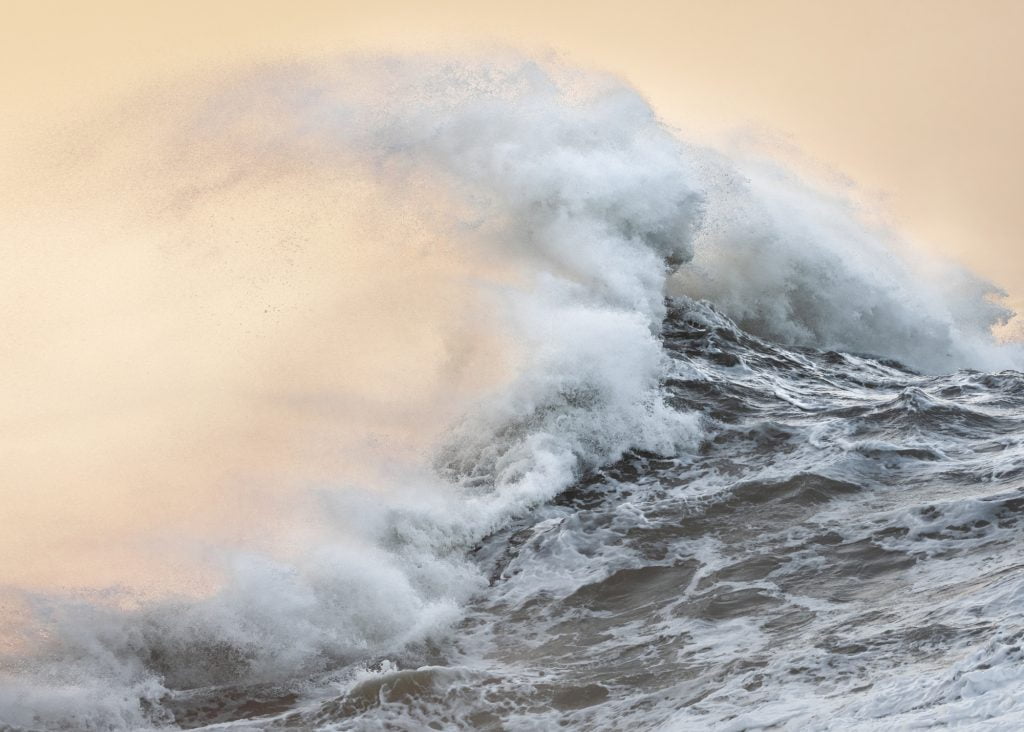
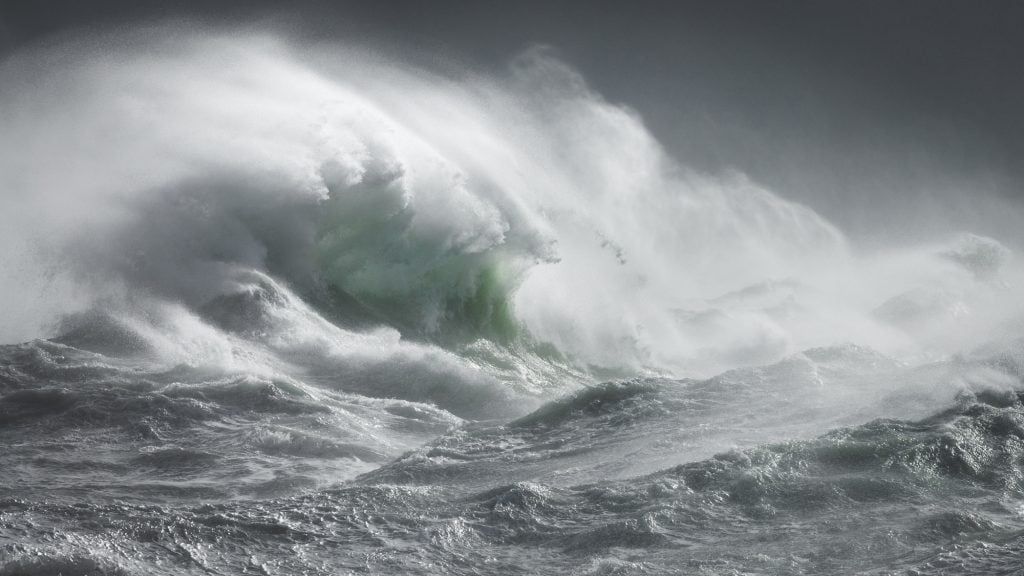
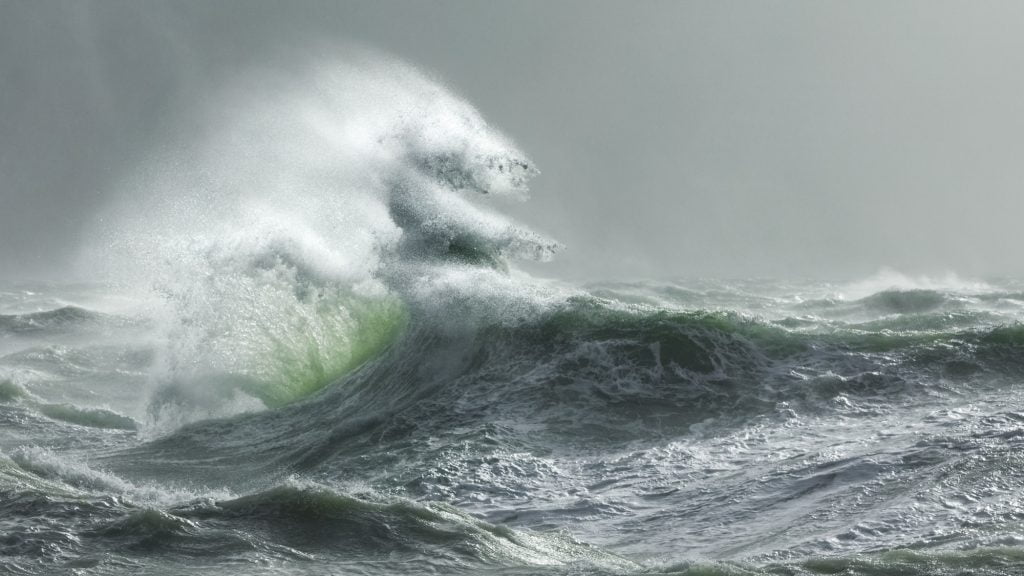
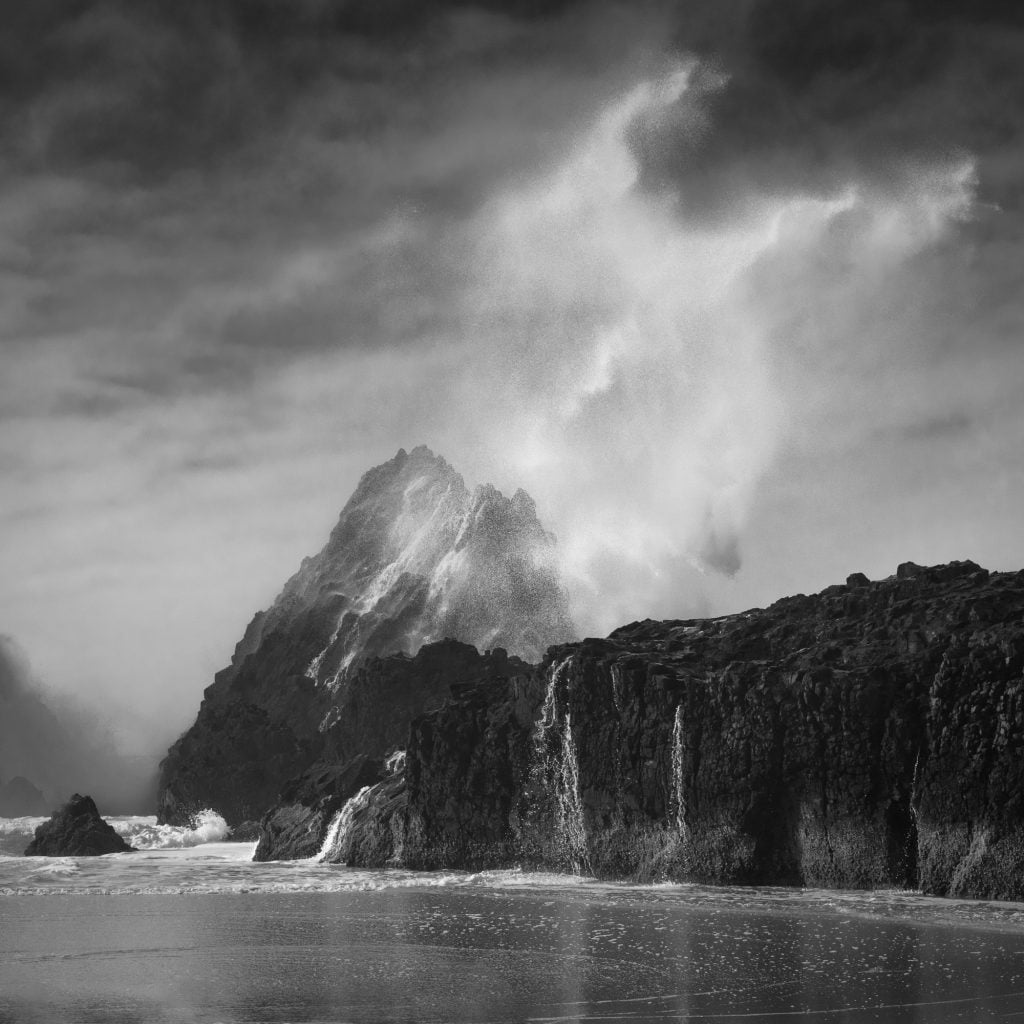
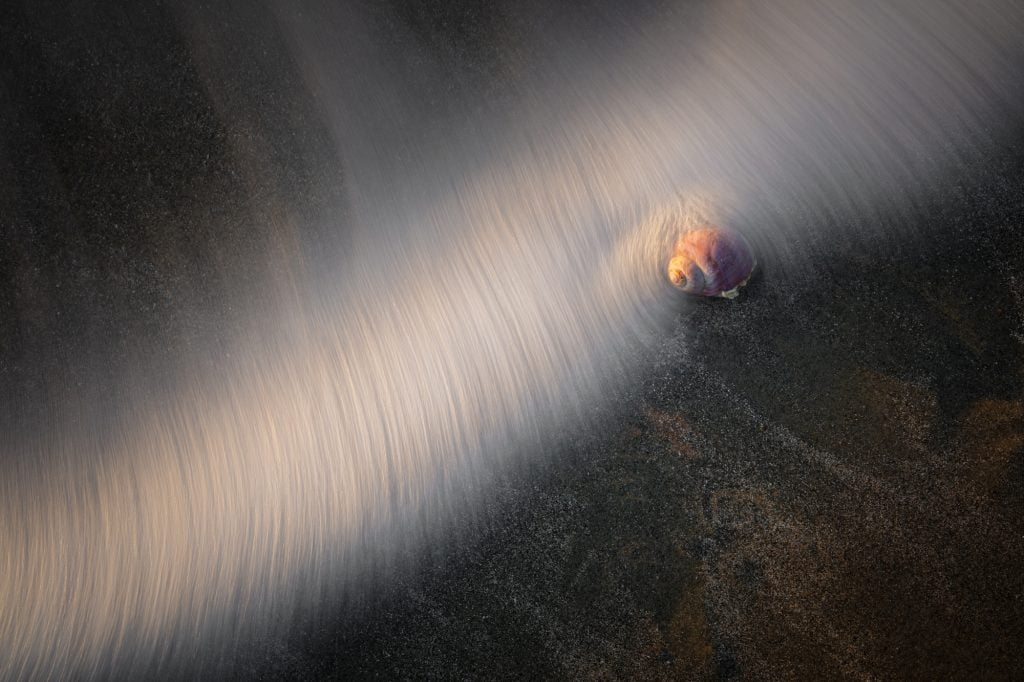
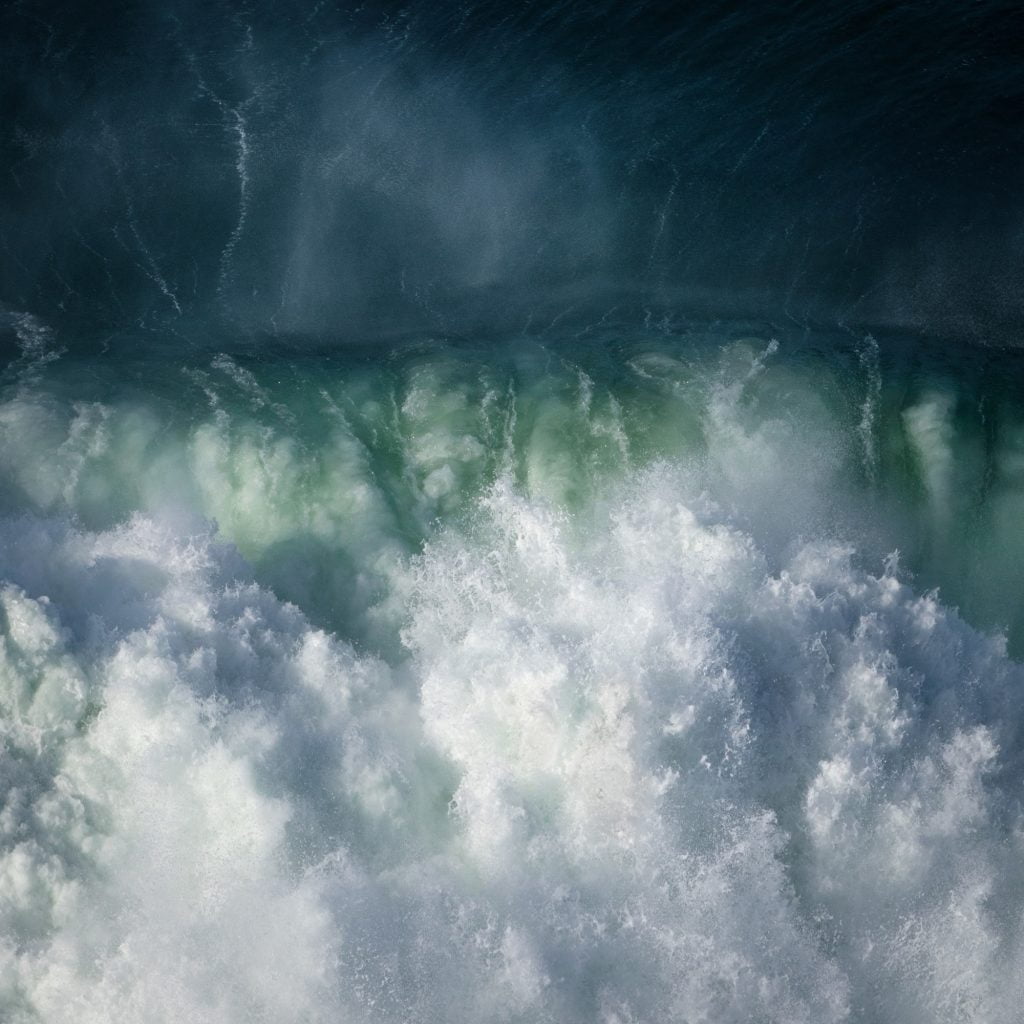
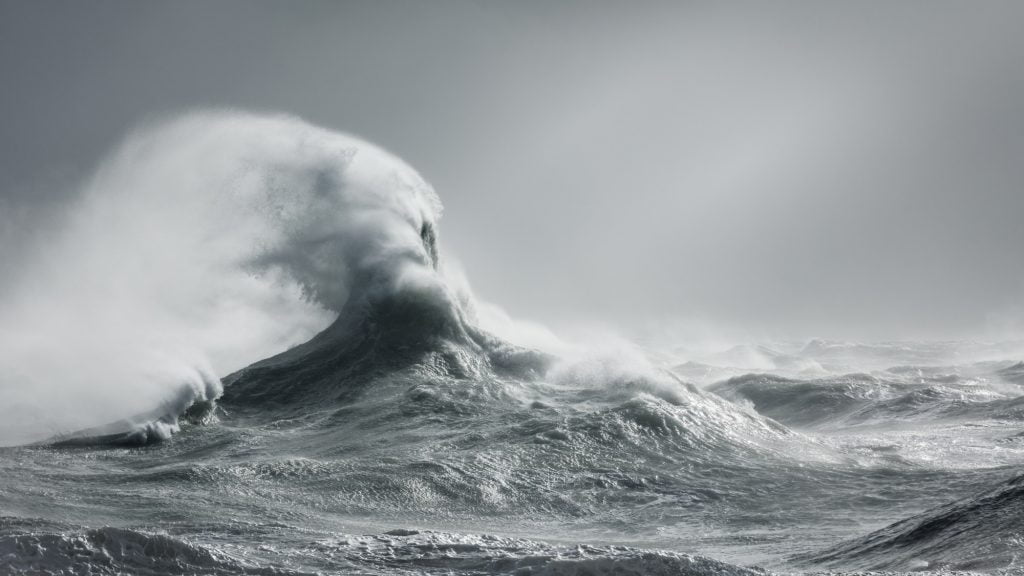
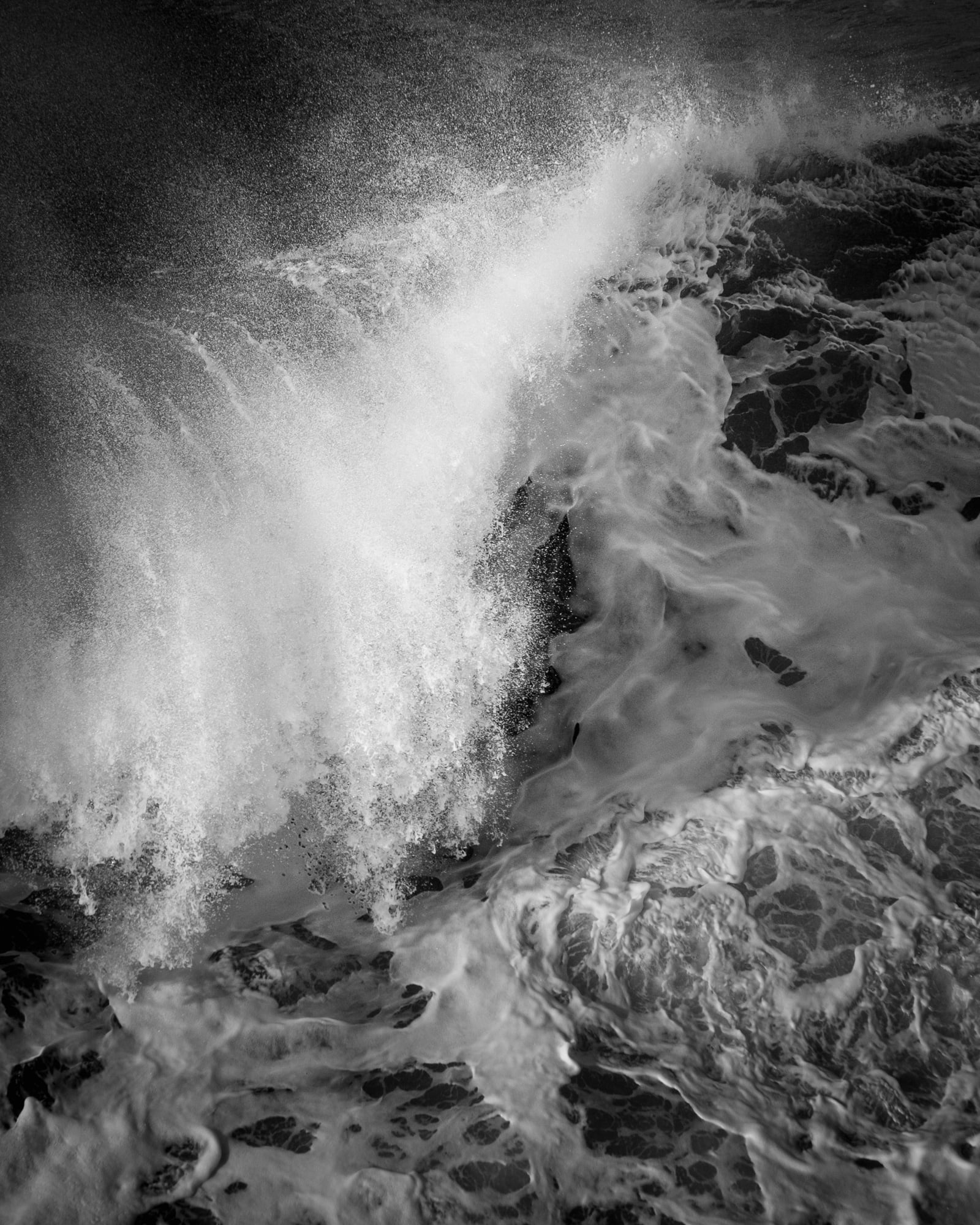
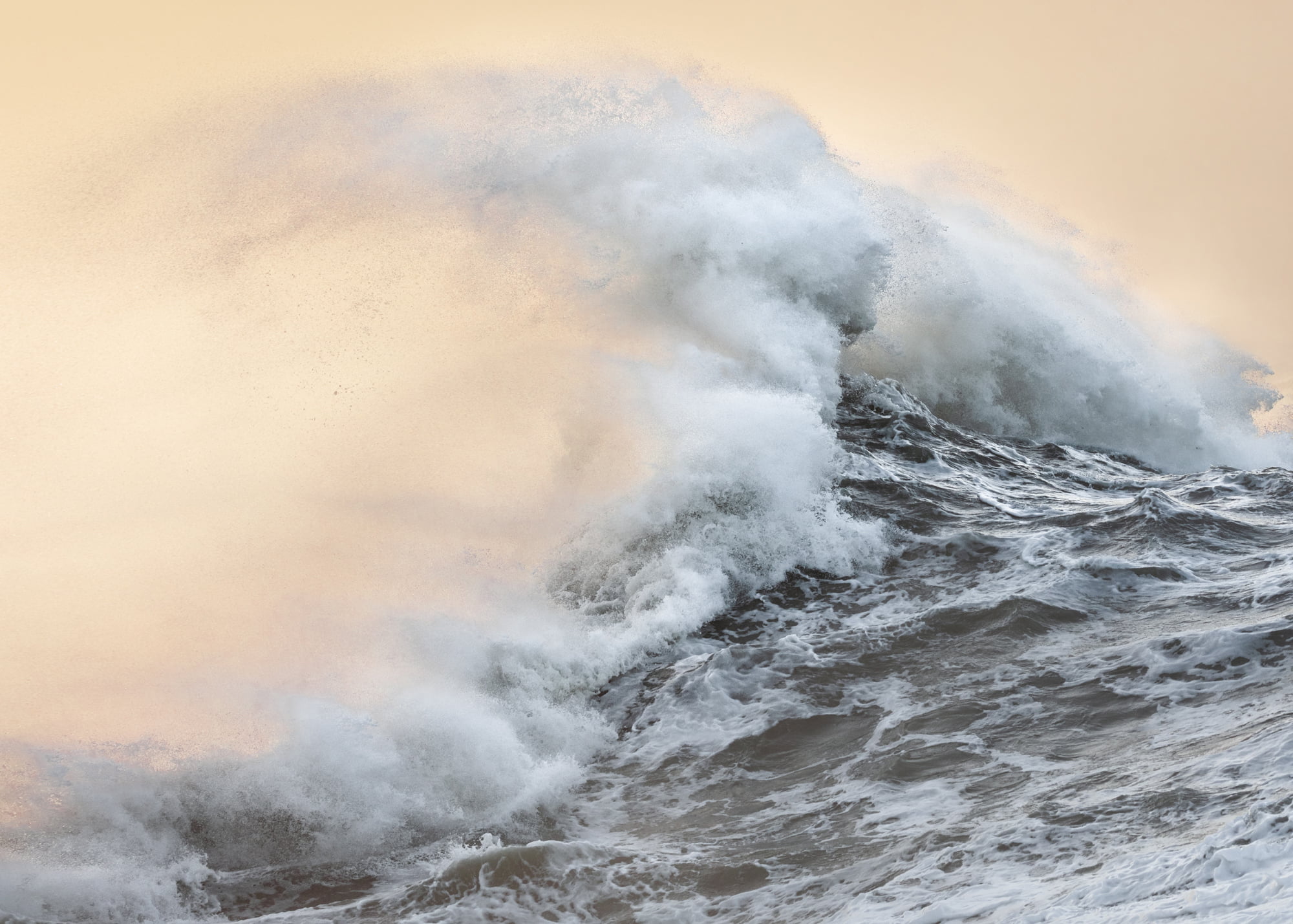

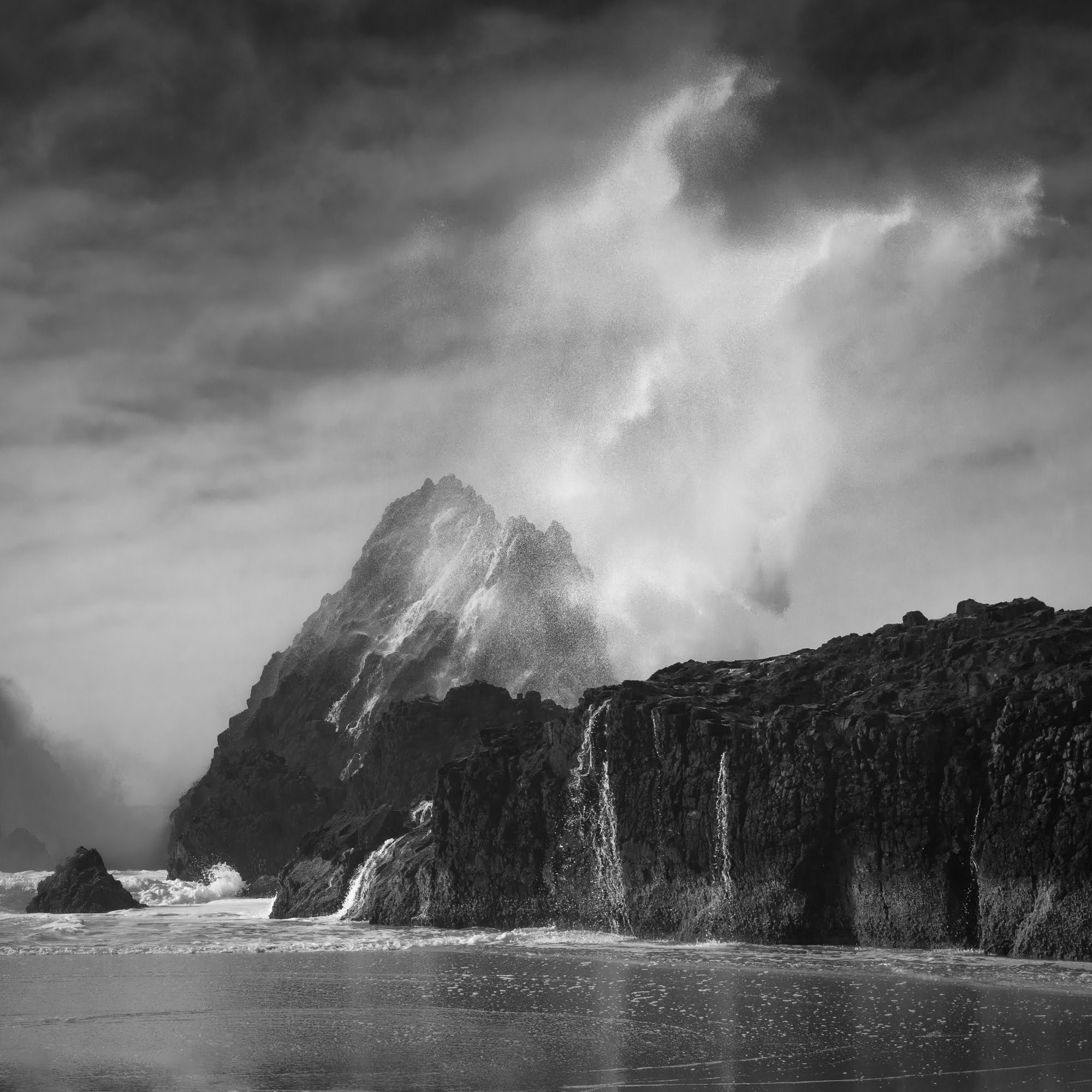

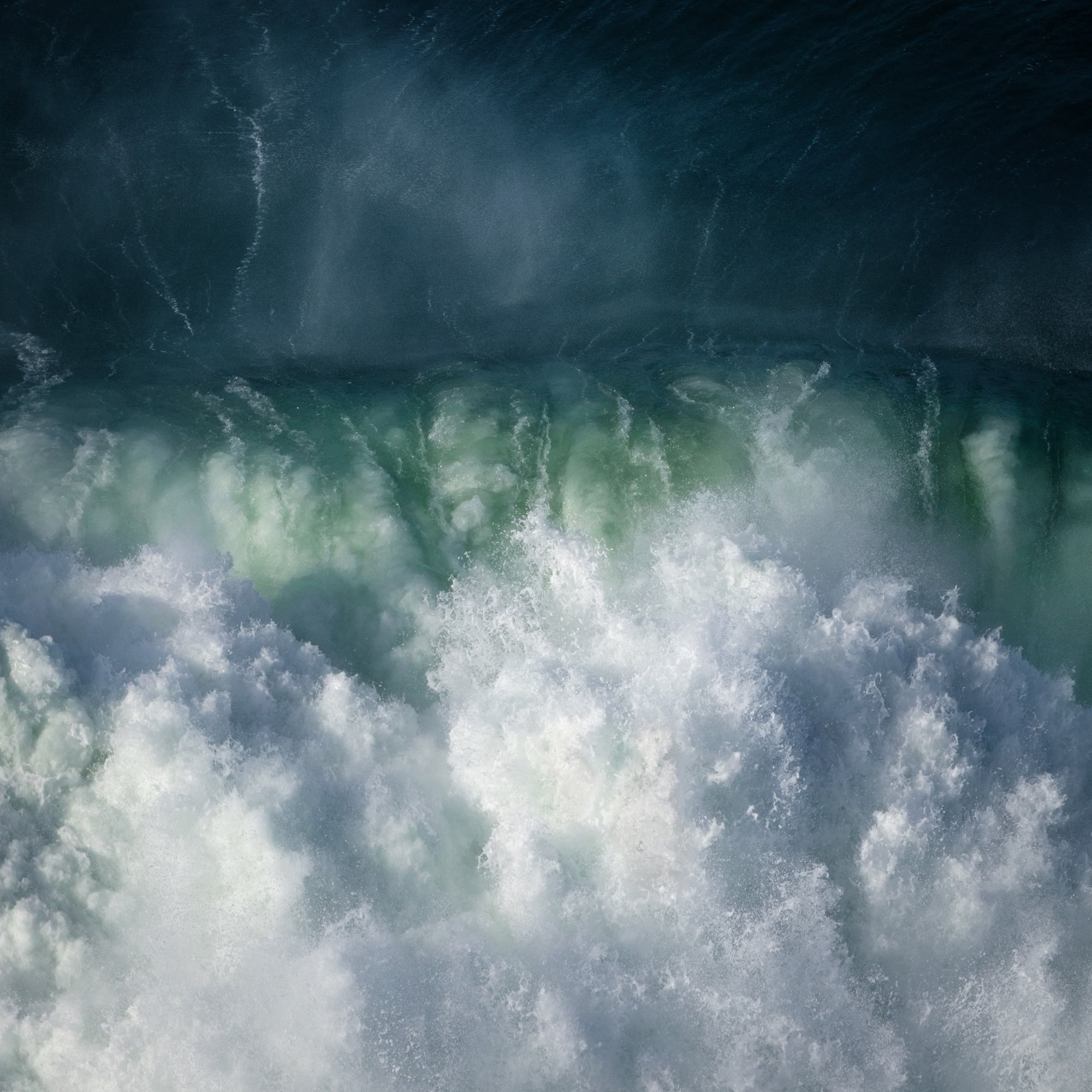
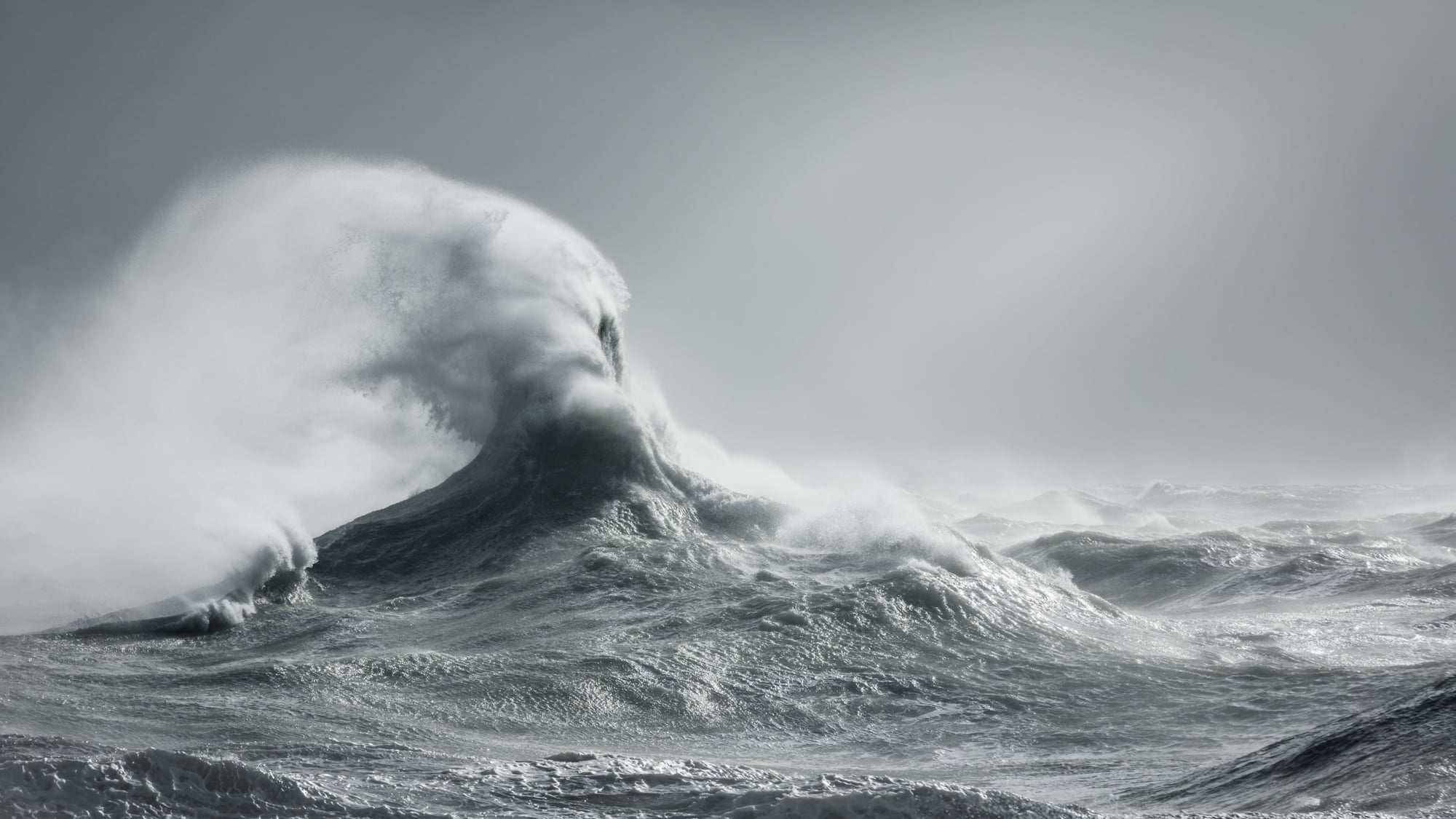
Photographer Rachael Talibart specializes in capturing the majestic and tumultuous power of the sea along England’s coast. Her most recent book “Tides and Tempests” looks incredible — full of turbulent crashing waves, skies of spray, and shorelines of surge and froth. I love how her photographs freeze the water in positions that seems surreal while underlining the sheer power of these storms. You can find more of her work on her website and Instagram. (Image credit: R. Talibart; via Colossal)

Shattering With Resonance


Resonance is a phenomenon that is both familiar and somewhat mysterious. It takes place when a system is excited near its natural frequency. In this case, we’re seeing a mechanical resonance that’s driven by sound waves near the glass’s natural frequency. Once excited, the glass vibrates by flexing side-to-side along one axis and then again in a perpendicular direction. Eventually, the amplitude of this flexing is large enough to break the glass. When the glass is filled with water, its flexing instead generates a cloud of tiny droplets in a process known as vibration-induced atomization. The inverse problem — an empty glass resonating within a pool of liquid — is also an extremely cool problem. (Image and video credit: The Slow Mo Guys)

Tokyo 2020: Surf Physics
Surfing is making its Olympic debut this year with a shortboard competition held at Shidashita Beach, with the event’s timing determined by weather and wave quality. The fluid dynamics involved in surfing could easily fill their own series of posts, so we’ll just scratch the surface here. Check out the video embedded below for a nice overview.
We sometimes think of waves as enormous walls of water moving on the ocean, but the truth is that individual water particles move very little when a wave passes. Instead waves are a method of transferring energy through the water, and surfers harness this energy while negotiating a delicate balance of forces between gravity, buoyancy, and hydrodynamics.
So how do surfers catch a wave? After all, anyone who’s been to the beach or in a wave pool knows that waves can easily pass without carrying you along with them. To ride a wave, surfers orient themselves in the direction the wave is traveling, then they paddle to bring their velocity close that of the incoming wave. Their surfboard helps by providing a large surface for the water to push, accelerating the surfer as the wave approaches. The longer and larger a surfboard is, the less speed the surfer themself has to provide. This is one reason it’s easier to catch a wave on a longboard than on a shortboard. But shortboards — like those used by competitors in the Tokyo Olympics — are far more maneuverable, allowing surfers more freedom in the moves they choose to make as they ride. (Image credit: B. Selway; video credit: TED-Ed; see also M. Grissom and Science Connected)

Devising Greener Chemistry


Not all microfluidic devices use tiny channels to pump and mix fluids. Some, like the Vortex Fluidic Device (VFD), conduct their microfluidic mixing in thin films of fluid. The VFD is essentially a tube spinning at several thousand RPM that can be tilted to various angles. Coriolis forces, shear, and Faraday instabilities in the thin fluid film create a complex microfluidic flow field that’s excellent for mixing, crystallization, and processing of injected chemicals. One rather notorious application of this device was unboiling an egg, a feat for which the researchers won an Ig Nobel Prize. But other, more practical applications abound, including a waste-free method for coating particles. (Image and research credit: T. Alharbi et al.; video credit: Flinders University; via Cosmos; submitted by Marc A.)


