Search results for: “waves”

  • Droplets From Jets

    Droplets From Jets

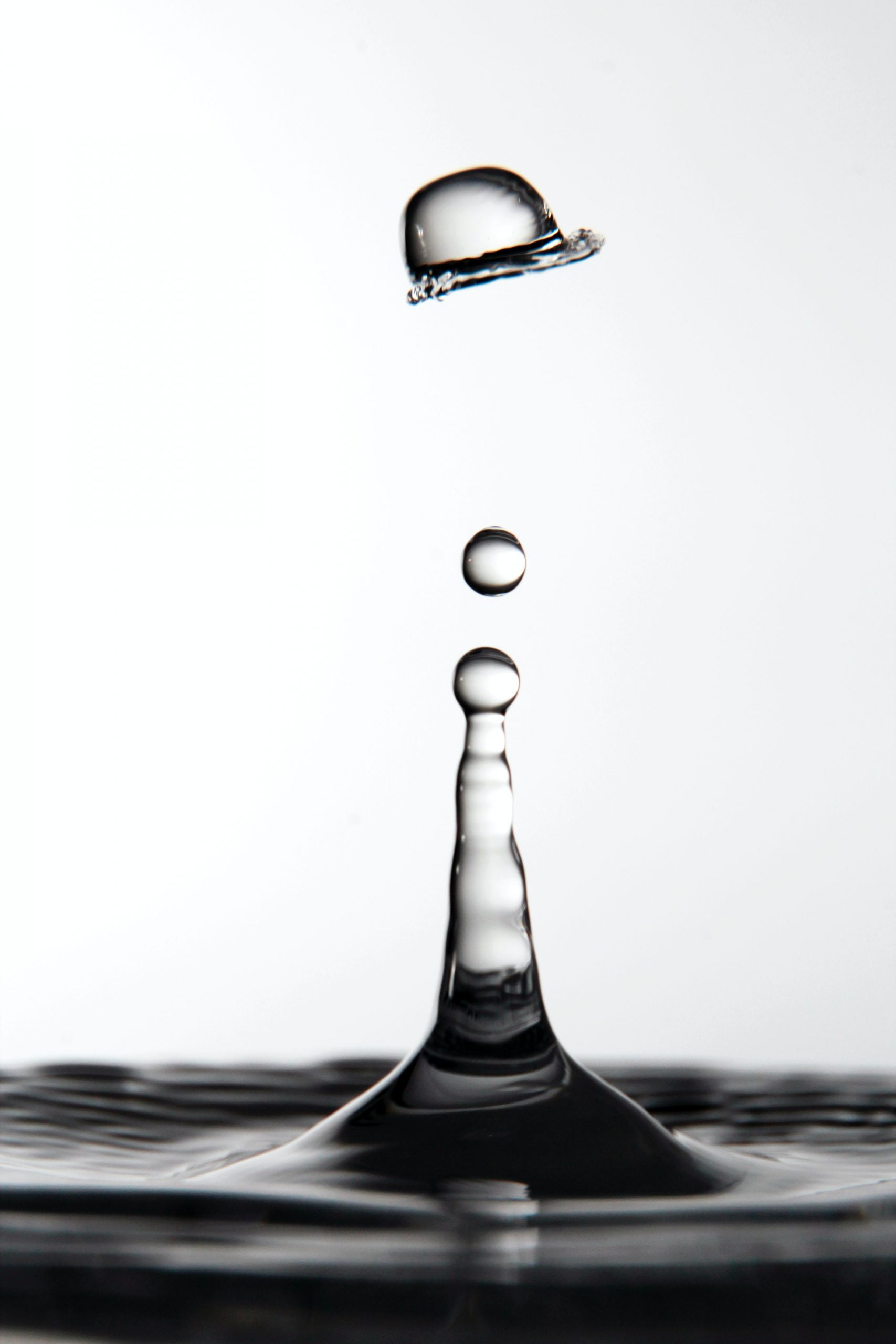
    On the ocean, countless crashing waves are creating bubbles. When they burst, those bubbles generate jets and droplets that spray into the sky, carrying sea salt, dust, and biological material into the atmosphere. Researchers know these droplets and their evaporation are important for understanding environmental processes, but figuring out how to capture that importance in models continues to be a challenge.

    In a new study, researchers concentrated on a simplified problem: the bursting of a single bubble in pure water. By studying a wide range of conditions, the team found that jets from these bubbles could eject as many as 14 droplets apiece. And though existing models have mostly ignored all but the first droplet, their work showed that all of the droplets should be accounted for in any evaporation models. (Image credit: C. Couto; research credit: A. Berny et al.)

  • Featured Video Play Icon

    The Explosive Vaporization Derby

    When pressurized, liquids can be superheated to temperatures well above their normal boiling point. When the pressure is released, the liquid will start boiling, sometimes explosively. In this video, researchers explore that dynamic by “racing” a series of liquids against one another. Each racer has been heated to a different temperature beyond the expected boiling point.

    The clear winner is the liquid with the highest overheat; as explained in the latter part of the video, beyond a critical overheat temperature, vaporization waves in the fluid enhance the boiling, helping vaporization take place faster. (Video and image credit: K. Jing et al.)

  • Artificial Microswimmers

    Artificial Microswimmers

    Tiny organisms swim through a world much more viscous than ours. To do so, they swim asymmetrically, often using wave-like motions of tiny, hair-like cilia along their bodies. Mimicking this behavior in artificial swimmers is tough; how would you actuate so many micro-appendages? A new study offers a different method: inducing cilia-like waves using magnetic fields.

    The researchers’ microswimmers are actually arrays of ferromagnetic particles. The Cheerios effect helps draw the particles together, while magnetic repulsion pushes them apart. Together, these forces help the particles assemble into crystal-like arrays.

    To make the particles swim, the researchers shift the magnetic field. All of the outer particles of the array behave like individual cilia. As the magnetic field moves, the cilia-particles move in waves, much like their natural counterparts. Using this technique, the researchers were able to demonstrate both rotational and straight-line (translational) swimming. (Image, research, and submission credit: Y. Collard et al.)

  • Featured Video Play Icon

    Branching Light with Soap Bubbles

    By shining laser light through soap bubbles, researchers have demonstrated branching flow in light for the first time. This branching occurs when waves travel through a disordered medium where the typical size of the disordered regions is larger than the wave’s length. Previously, scientists had seen evidence of this phenomenon in electrons, sound waves, and even ocean waves.

    Soap bubbles serve as an excellent platform for branching in light because their exceptionally thin film varies in thickness thanks to the interplay of buoyancy, Marangoni effects, and evaporation. It’s also comparable to — but still slightly larger than — the wavelength of light. The experiment is far from simple, though. Lining the laser up with the soap bubble is tough, especially when your bubble is likely to pop! (Video credit: Nature; research credit: A. Patsyk et al.; submitted by Kam-Yung Soh)

  • Shake It!

    Shake It!

    Vibrate a pool of water, and you’ll get Faraday waves, ripple-like excitations that form their own distinctive pattern compared to the driving vibration. But you don’t have to vibrate a pure liquid to see Faraday waves. A recent study observed them in vibrated earthworms!

    Odd as this may sound, the results make sense. When anesthetized (as they were in the experiments), earthworms are essentially a liquid wrapped in an elastic membrane, which is not so different from a droplet held together by surface tension.

    But why vibrate earthworms in the first place? It turns out earthworms are a good model organism for studies of vertebrate neural systems, so observing how vibrations propagate through them can provide insight into how our own nervous systems transmit information. (Image, research, and submission credit: I. Maksymov and A. Pototsky)

  • Featured Video Play Icon

    Traffic Flow and Phantom Jams

    We’ve all experienced the frustration of traffic jams that seem to come from nowhere — standstills that occur with no accident, construction, or obstacle in sight. Traffic shares a lot of similarities with fluid flows, including its waves and instabilities.

    These disturbances propagate and grow when traffic surpasses a critical density. Once that happens, any small speed adjustment made by a lead driver gets amplified by the larger and larger braking of each driver downstream. Effectively, this creates a wave of slower speed and higher density that travels downstream through the traffic.

    Each driver brakes more than the last largely because they can’t tell what the conditions upstream of them are. But that lack of knowledge may be less of an issue for driverless cars, which have the potential to communicate with cars and traffic sensors ahead of them. With enough automated vehicles on the highway, phantom traffic jams may become a thing of the past. (Video and image credit: TED-Ed)

  • Featured Video Play Icon

    Mimicking Supernovas

    The Hubble archives are full of incredible swirls of cosmic gas and dust, many of which were born in supernovas. Predicting the forms these massive explosions will generate is extremely difficult, thanks in large part to the complicated fluid dynamics generated by their blast waves. But new lab-scale experiments may help shed light on those underlying processes.

    Researchers mimic supernovas in the lab by launching blast waves through an interface between a dense gas (shown in white) and a lighter one (which appears black). As the blast wave passes, it drives the dense fluid into the lighter one, triggering a series of instabilities. Notice how any initial perturbations in the interface quickly grow into mushroom-like spikes that rapidly become turbulent. This behavior is exactly what’s seen in supernovas (and in inertial confinement fusion)! (Video credit: Georgia Tech; research credit: B. Musci et al.; submitted by D. Ranjan)

  • Bioluminescence at the Beach

    Bioluminescence at the Beach

    A bioluminescent phytoplankton bloom is causing a stir among California beachgoers. During the daytime, aggregations of Lingulodinium polyedra appear reddish-brown in color (think the classic ‘red tide’). But at night the phytoplankton bioluminesce, specifically when they’re disturbed by a change in shear force. This is why the brightest glows are visible in crashing waves or around the boards of surfers.

    Beautiful as it appears, blooms like these are deadly to marine life. The excess numbers of phytoplankton strip water of oxygen, causing mass die-offs among fish. Even residents several miles inland of the beaches are reporting the unpleasant smell that results. (Image credits: AP; video credit: Scripps Institute of Oceanography; via Gizmodo)

  • Unifying Sediment Transport Theory

    Unifying Sediment Transport Theory

    On windy days, streaks of snowflakes snake in the air above a mountaintop snowfield. And when snorkeling in the surf, you can watch the inbound waves sculpt underwater ripples in the sand. Both are examples of sediment transport, and scientists have struggled to understand why the physics of these grains seems to differ between air and water. We observe certain behaviors, like saltation, in air and very different behaviors for grains underwater.

    One of the key differences is how much erosion occurs for a given amount of shear. In air, the relationship is linear; double the shear stress and you double the sediment transport rate. But in water, the relationship is nonlinear, meaning a small change in the shear stress can have a much larger effect on the rate of transport.

    A new study suggests that these differences are really only skin deep. Through detailed simulations, the researchers showed that what really matters is the energy dissipation caused by collisions between grains. Whether the medium is air or water, there are two important regions in the flow: the bed region where particles experience little movement, and the overlying region where grains are energized and lifted by the flow. In this framework, the researchers found no difference in how energy is dissipated, regardless of the medium.

    So why do measured sediment transport rates vary between air and water? The authors concluded that the relationship between shear and transport rate is, indeed, nonlinear. It’s just that the wind here on Earth is too weak to reach that nonlinearity. (Image credit: snow – wisconsinpictures, sand – J. Chavez; research credit: T. Pähtz and O. Durán; via APS Physics; submitted by Kam-Yung Soh)

  • Featured Video Play Icon

    Singing in the MRI

    We rarely consider just how complex the process is when we speak or sing. Sound waves produced in our larynx are shifted and amplified by the geometry of our throats, mouths, sinus cavities, tongues, and lips. This video provides a glimpse of that hidden complexity through a trained vocalist singing inside an MRI machine. He sings the same aria in four distinctly different vocal styles, and it’s incredible to watch all the changes his tongue, lips, and soft palette go through to produce those different sounds. (Image and video credit: T. Ross; via Flow Vis)