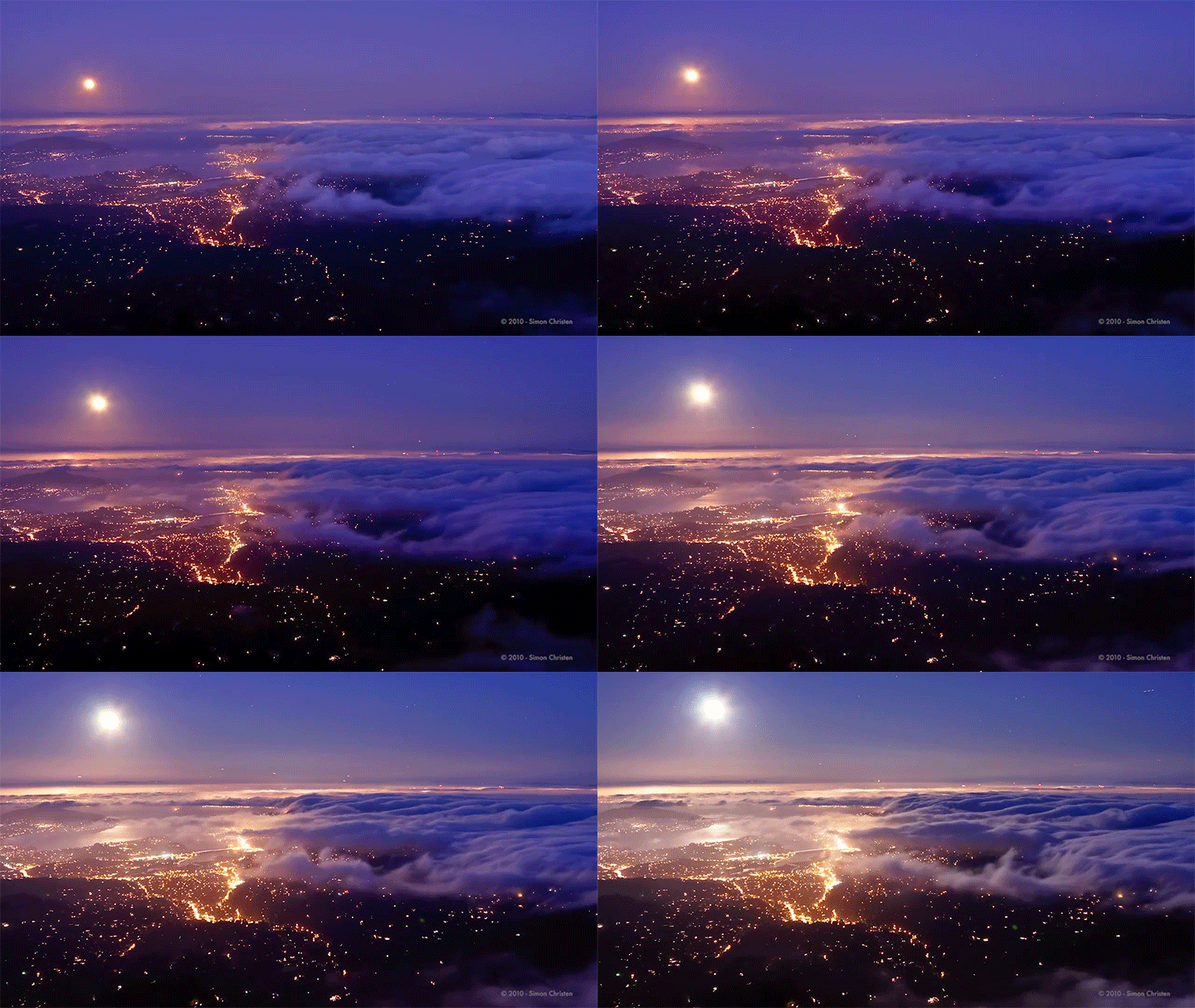
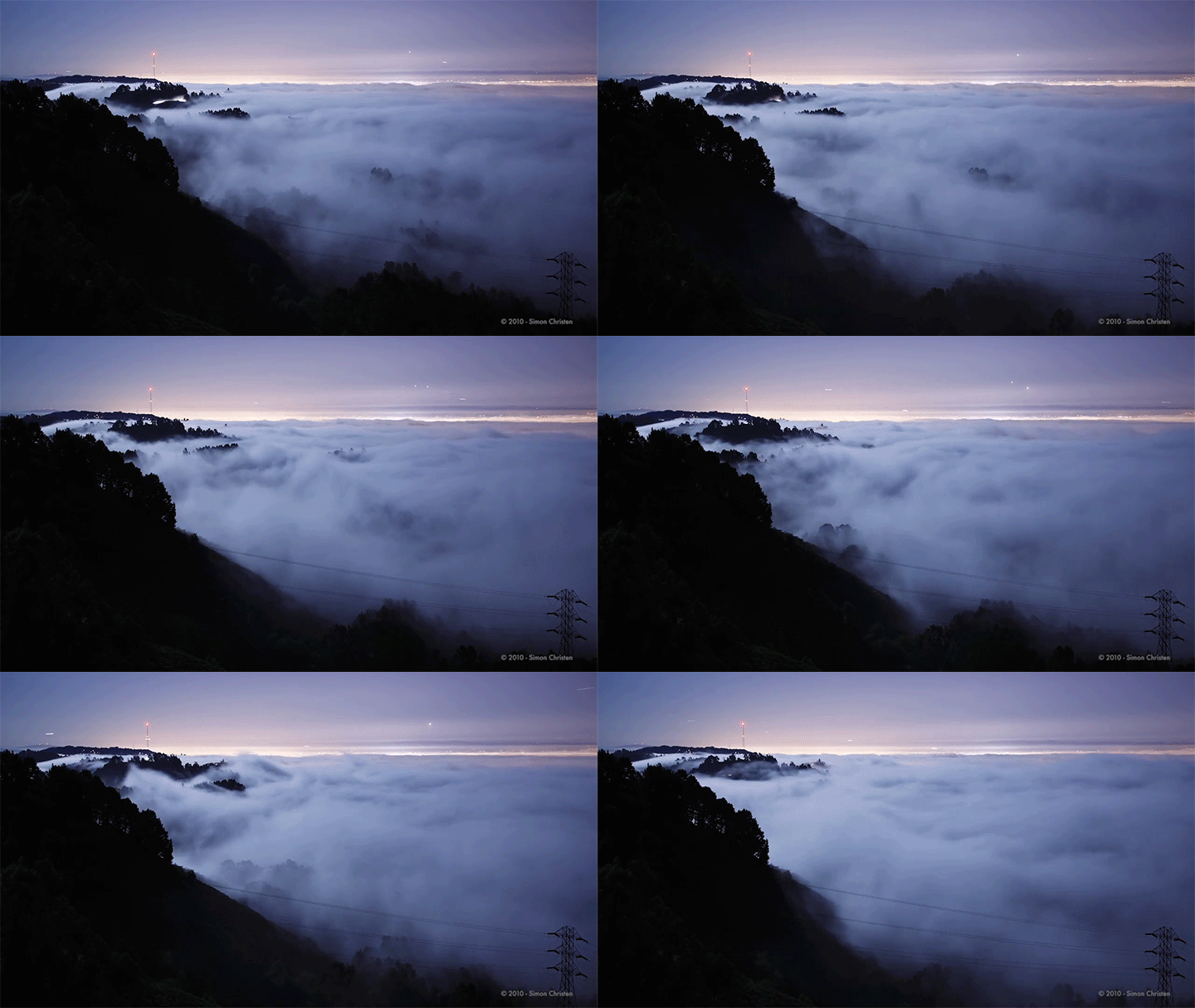
San Francisco’s picturesque fogs form “The Unseen Sea” in Simon Christen’s timelapse. Viewed at the right speed, the motion of clouds becomes remarkably ocean-like, with standing waves and surges against the hillside like waves crashing on a beach. Clouds in air don’t have the same surface tension effects as water waves in air, but, for the most part, the physics of their motion is the same, which is why they look so alike. (Image and video credit: S. Christen)
In the days before motorized propulsion, sailors would sometimes find themselves slowed nearly to a stop by what they called ‘dead water‘. As discovered in laboratory experiments over a century ago by Vagn Walfrid Ekman, the dead water phenomenon occurs where a layer of fresh water exists over saltier water. The ship’s motion generates internal waves in the salty layer, which in turn causes substantial additional drag on the boat. In a related phenomenon, named for Ekman, the internal waves generated by a boat’s initial acceleration cause its speed to fluctuate.
While these phenomena have little effect on today’s shipping, they can be relevant for swimmers in areas like harbors and fjords where fresh water meets the sea. And their effects were undoubtedly substantial for much of history. There is even speculation that dead water might have caused the defeat of Mark Antony and Cleopatra’s superior navy at the hands of Octavian’s smaller ships in the Battle of Actium. (Image credit: M. Blum; research credit: J. Fourdrinoy et al.; via Hakai Magazine; submitted by Kam-Yung Soh)
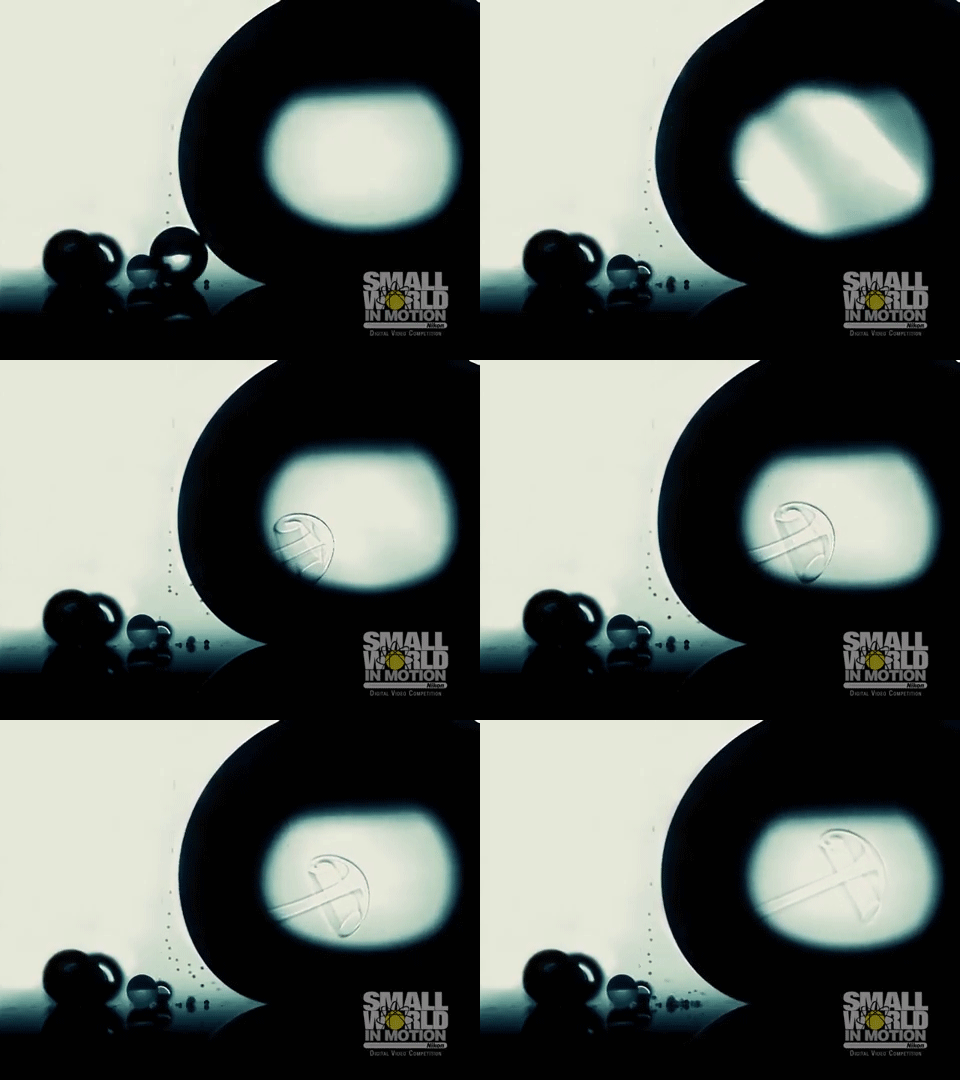
This year’s Nikon Small World in Motion competition was won by fluid dynamics! The first place video shows droplets on a superhydrophobic surface coalescing. The droplets are a mixture of water and ethanol. Their initial merger creates a ripple of waves that’s followed by a ghostly vortex ring that jets into the interior. Previous research on coalescence during impact shows jets driven by surface tension but the jet here doesn’t appear to be confined to the surface. (Image and video credit: K. Rabbi and X. Yan; via Nature; submitted by Kam-Yung Soh)
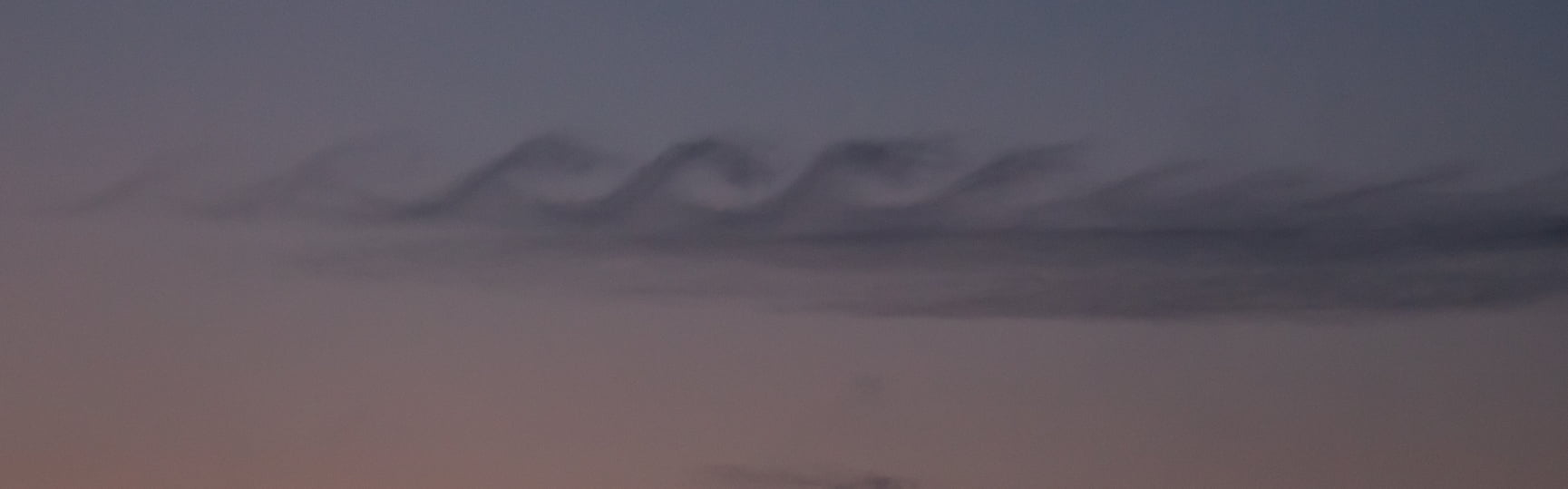
Like breaking waves at the beach, these wavy clouds curl but only for a moment. The photo was captured near sunset on a late August evening in Arlington, MA. This short-lived cloud shape forms due to the Kelvin-Helmholtz instability, which is driven by shear forces between two layers of air moving at different speeds. The situation is a common one in the atmosphere, where air layers at altitude move in different directions and at different speeds. Most of the time we cannot see the curls that form between these air layers because of air’s transparency. But occasionally the mismatch happens right at a cloud layer and the condensation of the cloud gets pulled into these distinctive curls. (Image credit: B. Bray; submitted by Mark S.)
Our understanding of Earth’s interior is based mostly on observations of seismic waves, which travel differently through our rocky crust and the molten core. Scientists similarly use seismic waves in stars to determine their interiors. But the pressure and temperature conditions in stars are far beyond anything we have here on Earth, which makes predicting how waves will travel in such exotic material difficult.
To better understand these extreme temperatures and pressures, scientists are using Lawrence Livermore’s National Ignition Facility (NIF) to mimic conditions similar to the outer envelope of a white dwarf star, like the one shown in the center of the image above. NIF’s laser array – shown as the blue lines in the artist’s conception above – can generate spherical shock waves that, as they converge on a solid sample, create pressures as high as 450 Mbar, more than 400 million times sea level atmospheric pressure here on Earth. Although the shock wave takes only 9 ns to travel across the sample, it’s enough to give researchers a glimpse into star-like conditions. (Image credit: NASA/ESA/C. O’Dell/D. Thompson, Lawrence Livermore National Laboratory; via Physics Today)
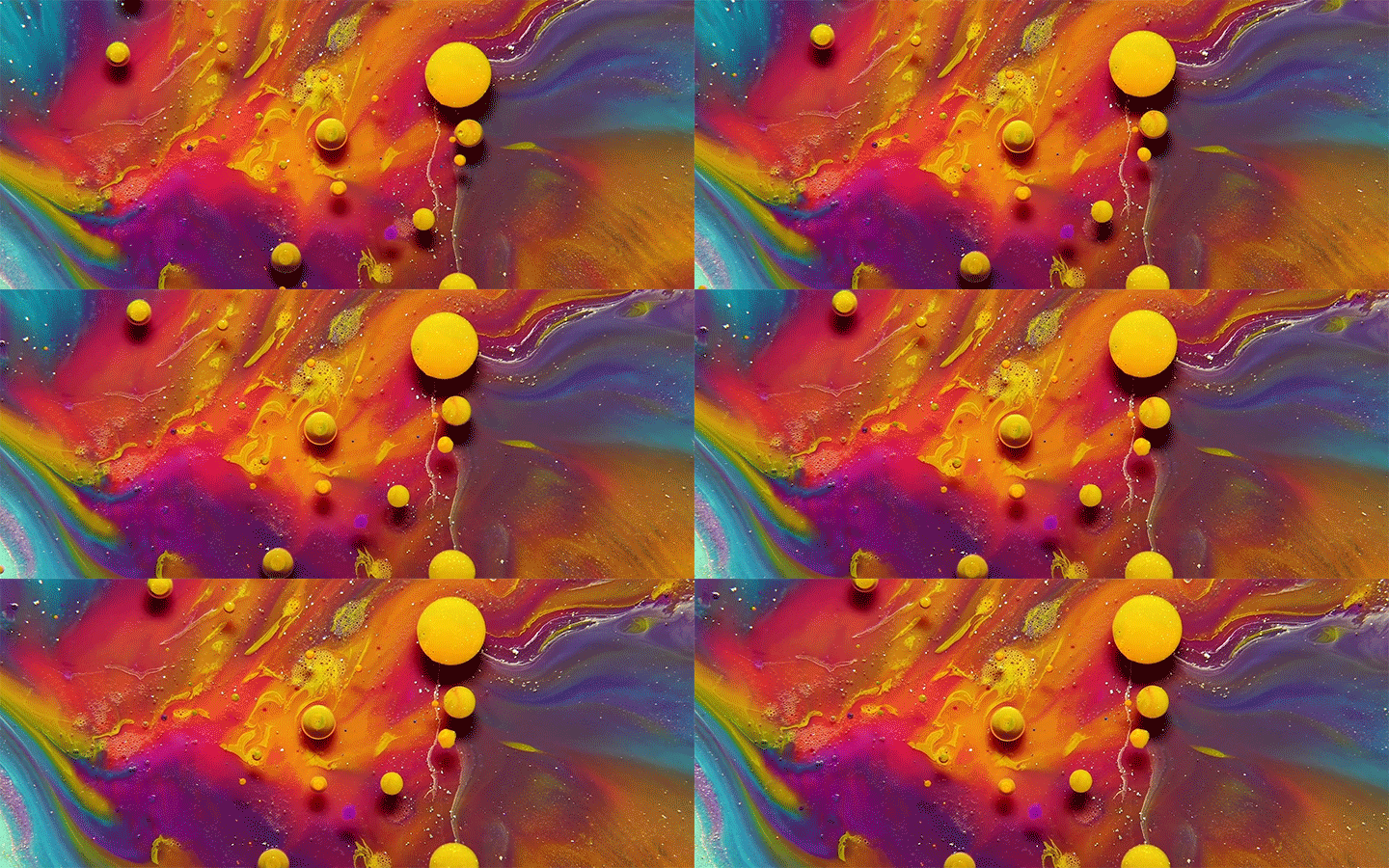
Paint, soap, bleach, oil, and oat milk combine to create the gorgeous colorscapes of Thomas Blanchard’s short film “Colors”. Watch as droplets burst and waves of color flow past. It’s a lovely break from whatever you’re dealing with at the moment, and at less than 3 minutes long, you can spare the time! (Image and video credit: T. Blanchard)
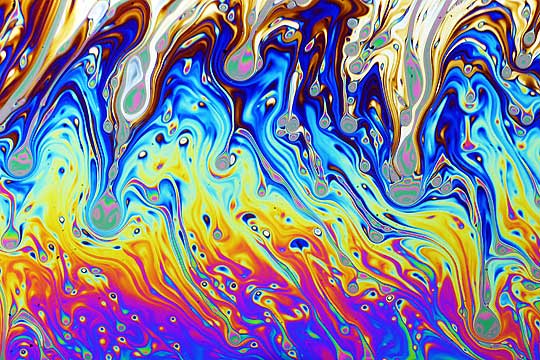
Macro images of a soap film burst with color. Because the color comes from interference between light waves bouncing off the inner and outer surfaces of the soap film, the colors we see correspond directly to the thickness of the soap film. So the patterns we see reflect actual flows and variations inside the soap film. It’s not unusual for the patterning on a soap film to become increasingly complicated as the film drains and ages. Eventually black spots — areas too thin for interference to show visible colors — will appear and grow, and the film will pop.
If you’re interested in trying out some soap film photography for yourself, Professor Andrew Davidhazy has a nice description on his website of the set-up he used for this photo. (Image credit: A. Davidhazy; via Flow Vis)
On the ocean, countless crashing waves are creating bubbles. When they burst, those bubbles generate jets and droplets that spray into the sky, carrying sea salt, dust, and biological material into the atmosphere. Researchers know these droplets and their evaporation are important for understanding environmental processes, but figuring out how to capture that importance in models continues to be a challenge.
In a new study, researchers concentrated on a simplified problem: the bursting of a single bubble in pure water. By studying a wide range of conditions, the team found that jets from these bubbles could eject as many as 14 droplets apiece. And though existing models have mostly ignored all but the first droplet, their work showed that all of the droplets should be accounted for in any evaporation models. (Image credit: C. Couto; research credit: A. Berny et al.)
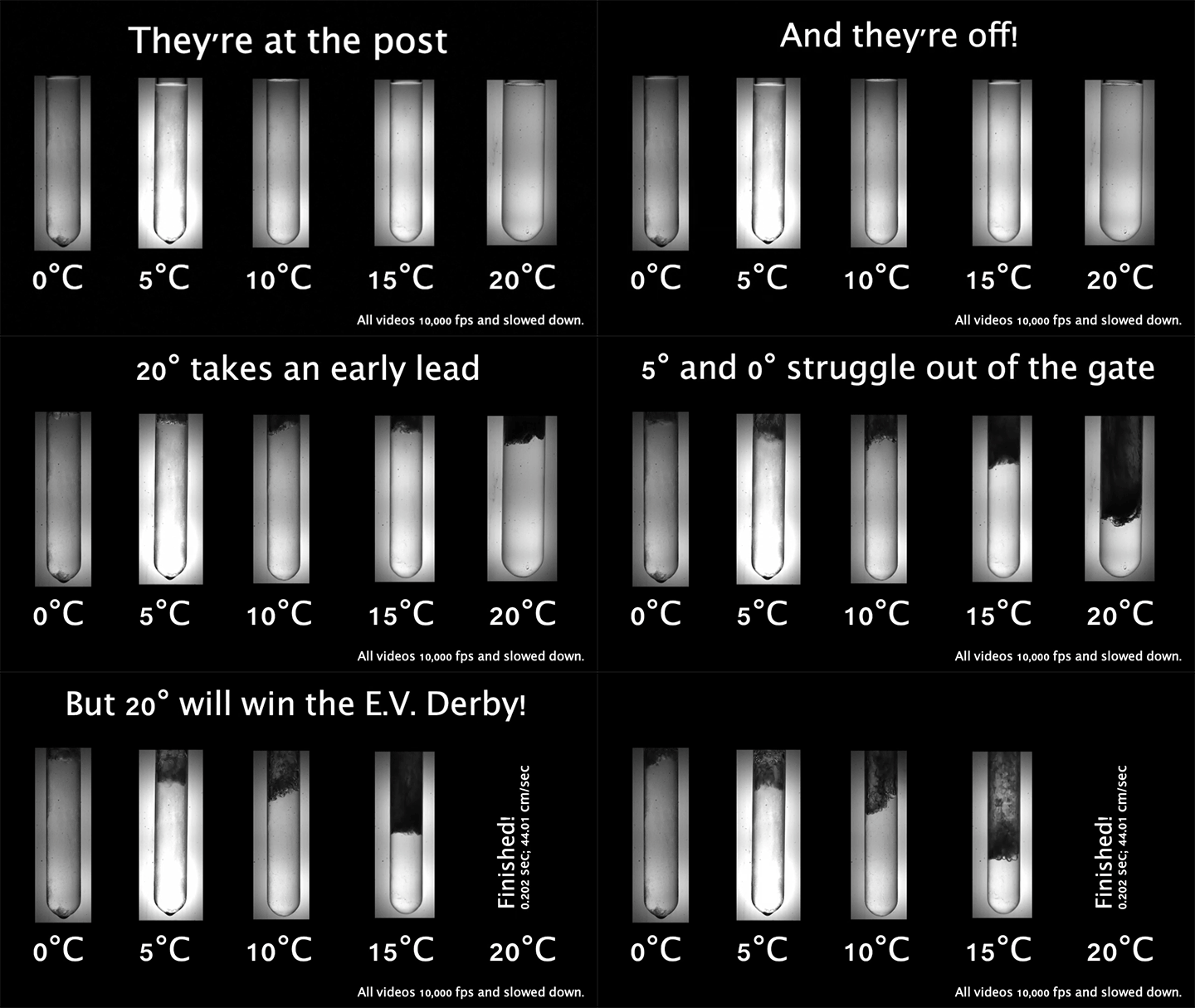
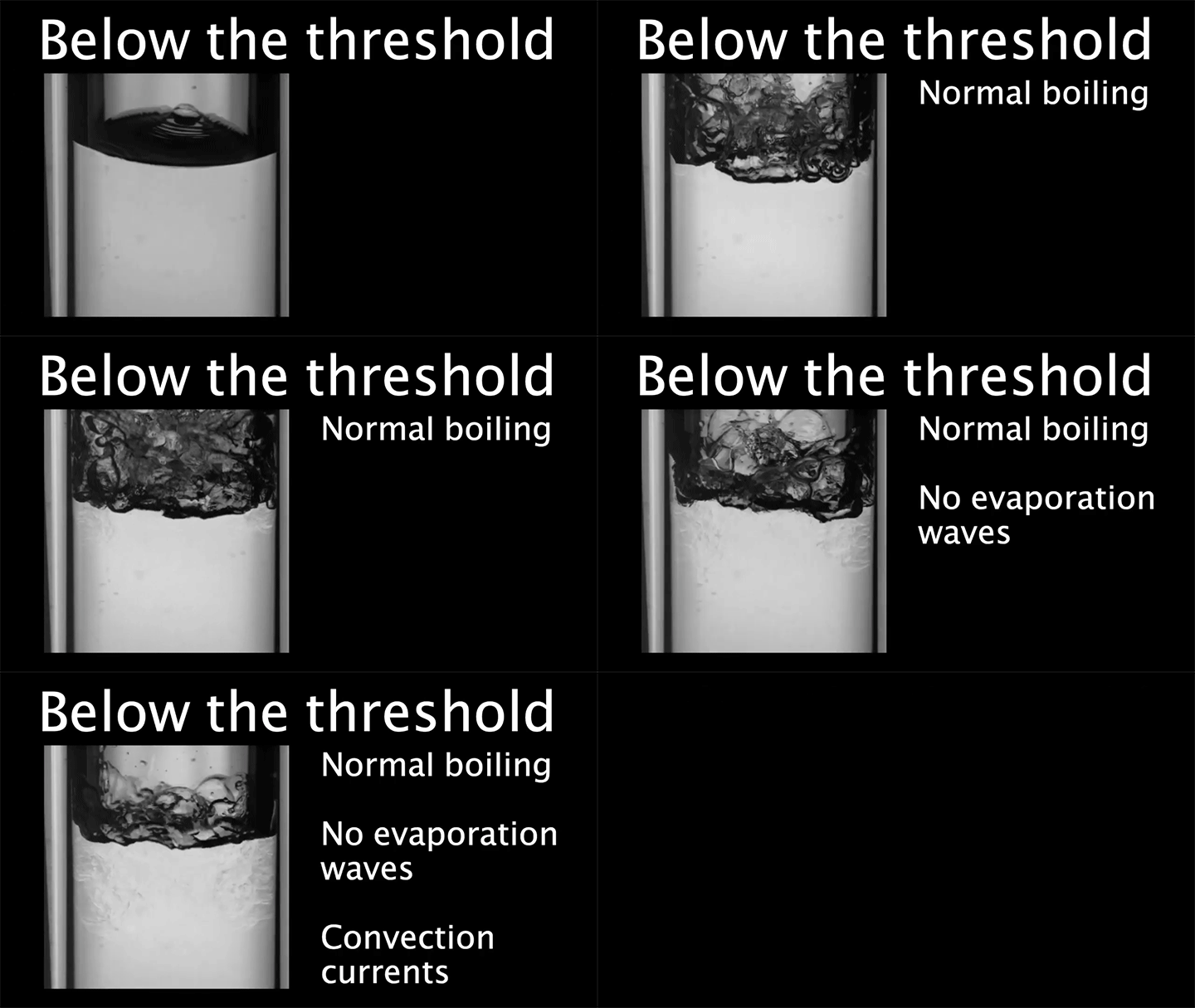
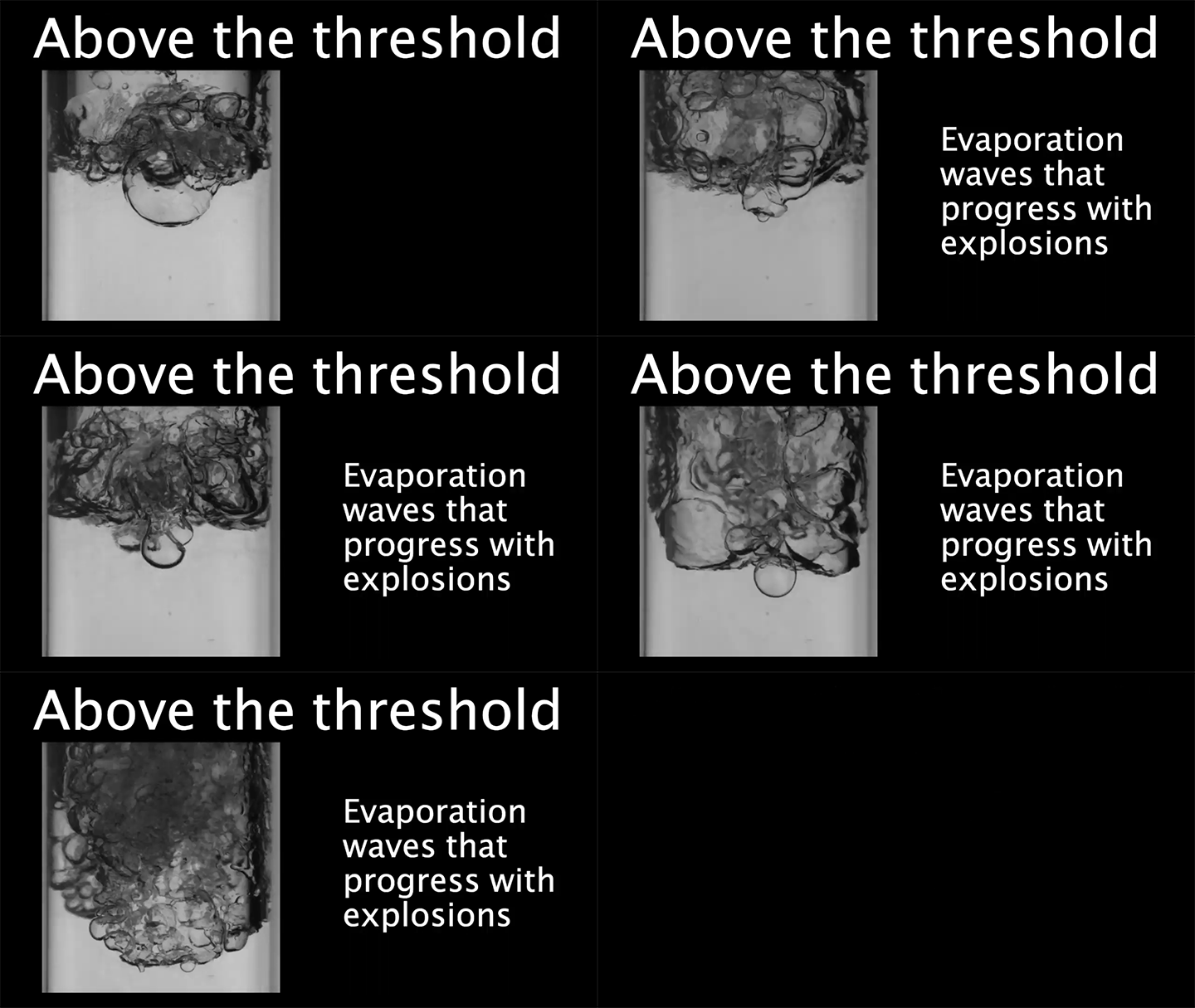
When pressurized, liquids can be superheated to temperatures well above their normal boiling point. When the pressure is released, the liquid will start boiling, sometimes explosively. In this video, researchers explore that dynamic by “racing” a series of liquids against one another. Each racer has been heated to a different temperature beyond the expected boiling point.
The clear winner is the liquid with the highest overheat; as explained in the latter part of the video, beyond a critical overheat temperature, vaporization waves in the fluid enhance the boiling, helping vaporization take place faster. (Video and image credit: K. Jing et al.)
Tiny organisms swim through a world much more viscous than ours. To do so, they swim asymmetrically, often using wave-like motions of tiny, hair-like cilia along their bodies. Mimicking this behavior in artificial swimmers is tough; how would you actuate so many micro-appendages? A new study offers a different method: inducing cilia-like waves using magnetic fields.
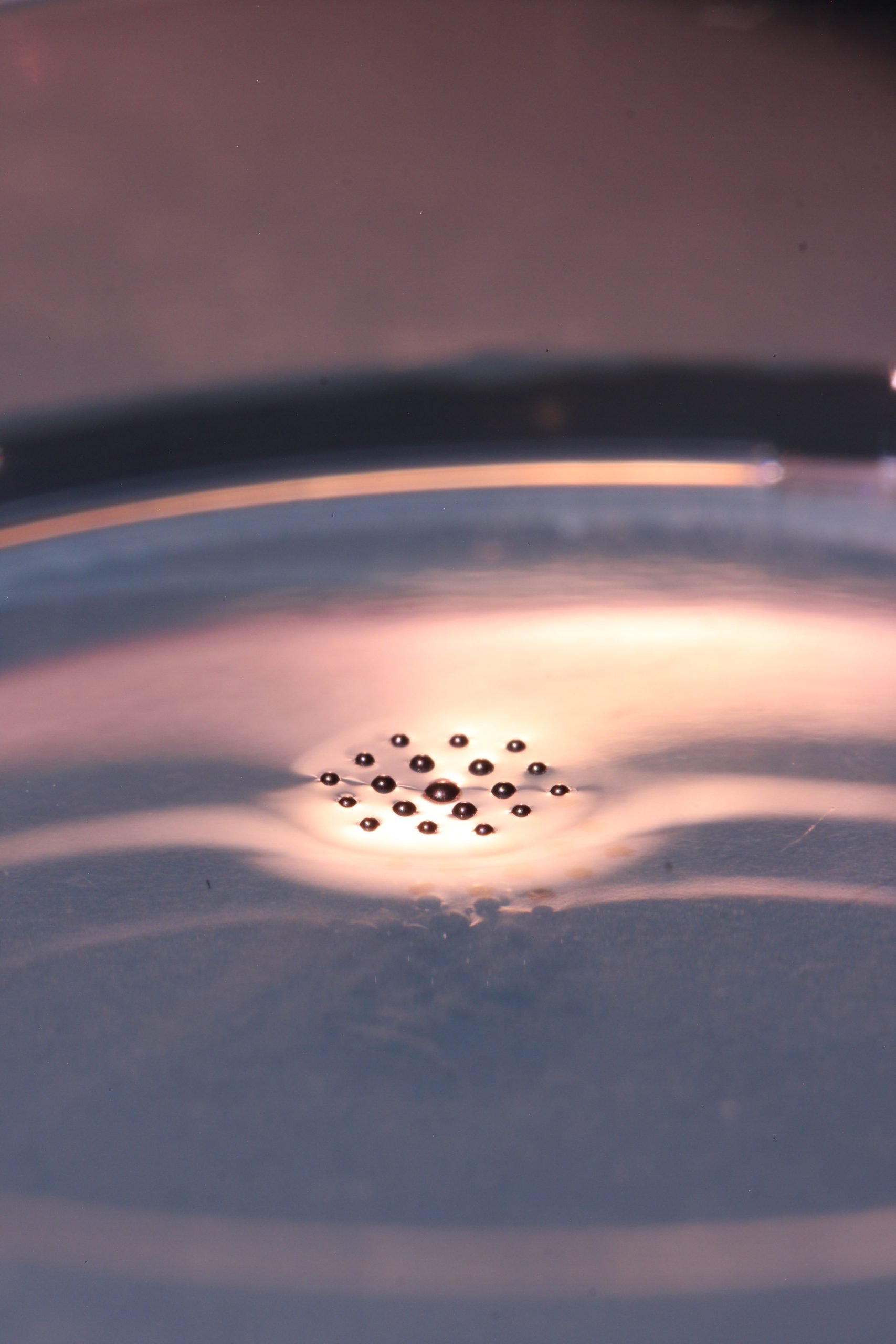
The researchers’ microswimmers are actually arrays of ferromagnetic particles. The Cheerios effect helps draw the particles together, while magnetic repulsion pushes them apart. Together, these forces help the particles assemble into crystal-like arrays.
To make the particles swim, the researchers shift the magnetic field. All of the outer particles of the array behave like individual cilia. As the magnetic field moves, the cilia-particles move in waves, much like their natural counterparts. Using this technique, the researchers were able to demonstrate both rotational and straight-line (translational) swimming. (Image, research, and submission credit: Y. Collard et al.)