
From butterfly wings to lotus leaves, many surfaces in nature are shaped to repel water. This typically means roughness on the scale of tens of nanometers, which helps trap air between water and the surface. Droplets can still form on these surfaces, but when they merge, the sudden excess of surface energy sends the coalesced droplet flying. With enough height, the tiny droplet can catch the wind and get carried away. It’s like a natural anti-fogging mechanism, and it’s one that engineers are keen to understand and replicate. (Image and research credit: P. Lecointre et al.)
Search results for: “droplet”

The Shaky Life of a Droplet


An evaporating drop of ouzo goes through several stages due to the interactions of oil, alcohol and water. If you turn the situation around by placing a drop of (blue-dyed) water in a mixture of alcohol and anise oil (top image), you get some similarly odd behavior. The drop of water shimmies and grows as alcohol dissolves into it, carrying the occasional oil droplet with it. Eventually, the droplet grows large enough and buoyant enough that part of it detaches and floats to the surface (middle image). If you increase the alcohol ratio in the surrounding fluid, you speed up this process, causing droplets to stream up to the surface (bottom image). (Image and video credit: O. Enriquez et al., source)

The Color of Droplets
In nature, color comes from many sources: like the pigmentation of skin and hair, the structural iridescence of a butterfly’s wings, or the refraction of a rainbow from water droplets. Recently, scientists discovered another source of brilliant color in simple, hemispherical water droplets.
When small droplets form on a transparent surface, they form concave shapes capable of total internal reflection. This means that two light rays entering from the same angle can follow different paths inside the droplet. After reflecting several times, the light rays exit the droplet with a phase difference and how large that phase difference is determines the color. Check out the video below for some brightly colored examples of the effect. The researchers hope the technique will eventually be suitable for creating dye-free, color-changing technologies. (Image credit: F. Frankel; video credit: MIT News; research credit: A. Goodling et al.)
Moving Droplets
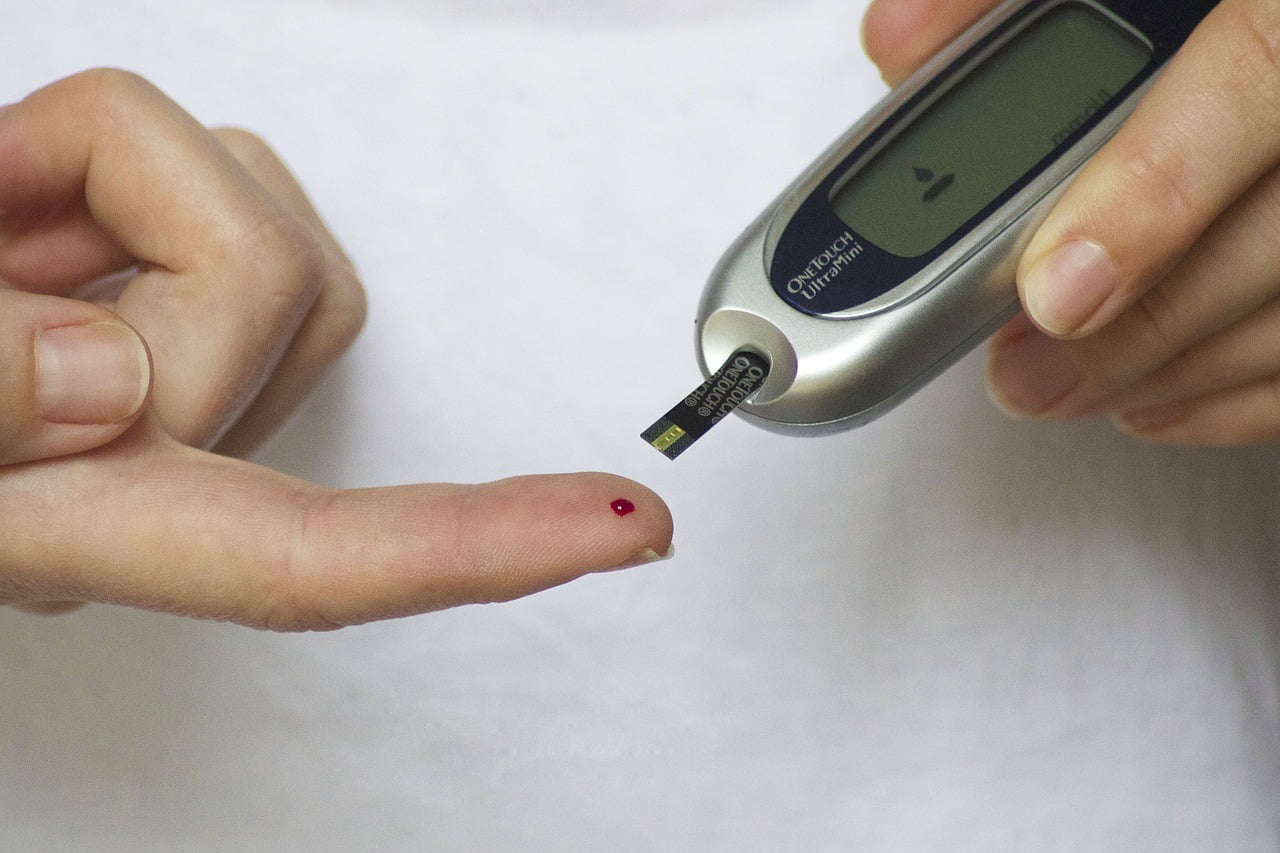
Microfluidic devices – such as those used by individuals with diabetes to monitor their blood glucose levels – are all about transport. Typically, these devices use some kind of externally applied force, like a temperature gradient or electrical field, to force liquids through the device’s narrow channels. But a new study describes a way to move droplets without an external force.
The researchers built their devices using two slips of glass, coated with an oil-attracting, water-repellent mixture. They attached the glass slips with a narrow spacer at one end, leaving the other end free. This made a narrow, but slightly flexible gap. When the scientists placed an oil drop inside the closed end, it spread on the glass, pulling the two sides closer to one another. Water drops, on the other hand, tried to force the walls apart, in an effort to minimize contact. Both sets of drops, interestingly, moved toward the open end of the device.
The researchers found that the shapes assumed by the droplets create an internal pressure gradient, which, in both cases, slowly moves the drops. They call this method bendotaxis, a type of self-propulsion driven by the drops’ ability to bend the material they’re touching. It’s not a fast way to transport fluids – the drops moved only a few micrometers per second – but it may be useful for applications like drug deliveries where the liquid needs to be administered slowly over a longer period. (Image credit: TesaPhotography; research credit: A. Bradley et al.; via APS Physics; submitted by Kam-Yung Soh)

What Drives Droplets

There’s been a lot of interest recently in what goes on inside droplets made up of more than one fluid as they evaporate. This can be entertaining with liquids like whiskey or ouzo, but it has practical applications in ink-jet printing and manufacturing as well. And a new experiment suggests that we’ve been fundamentally wrong about what drives the flow inside these drops.
As these drops evaporate, a donut-shaped recirculating vortex forms inside them, as seem in the cutaway views above. Conventional wisdom says that vortex is driven by surface tension. Evaporation of components like alcohol is more efficient at the edges of the drop, and as the alcohol evaporates, it creates a higher surface tension at the drop’s edge than at its peak. Marangoni forces then pull fluid down toward the edges, creating the vortex. That explanation is consistent with observations of a sessile drop sitting on top of a surface (left side of images).
But those observations are also consistent with another explanation: evaporating ethanol makes the local density higher, so alcohol-rich parts of the drop rise toward the peak while alcohol-poor regions sink. This difference in density would also create a flow pattern consistent with observations. So which is the real driver, surface tension or gravity?
To find out, researchers flipped the drop upside-down (right side of images). When hanging, the preferred flow direction due to surface tension doesn’t change; flow should still go from the deepest point on the drop toward the edge. But gravity is swapped; alcohol-rich areas should be found near the edge and attachment points of the drop because buoyancy drives them there. And that is exactly what’s observed. The flow direction inside the hanging droplet is consistent with the direction prescribed by buoyancy-driven flow, thereby upending conventional wisdom. It turns out that gravity, not surface tension, is the major driver of internal flow in these multi-component droplets! (Image and research credit: A. Edwards et al.; via APS Physics; submitted by Kam-Yung Soh)

Growing Droplets
The moisture in clouds eventually condenses into droplets that grow into raindrops and fall. Some steps in this process are well understood, but others are not. In particular, scientists have struggled with the problem of how droplets grow from about 30 microns to 80 microns, where they’re big enough to start falling and merging.
Laboratory experiments and numerical simulations (below) have shown that turbulence can help drive small water drops together. When droplets are tiny and light, they simply follow the air flow. But when they’re a little heavier, turbulent eddies (seen in orange below) act like miniature centrifuges, flinging larger water droplets (shown in cyan below) out into clusters, where they’re more likely to collide with one another.
Although this effect has been seen in experiments and simulation, it’s been difficult to capture in clouds themselves. But a new set of test flights (above) confirms that this mechanism is present in the wild as well! (Image credit: UCAR/NCAR Earth Observing Laboratory, P. Ireland et al., source; research credits: M. Larsen et al., P. Ireland et al.; via APS Physics; submitted by Kam-Yung Soh)

A Burst of Microdroplets
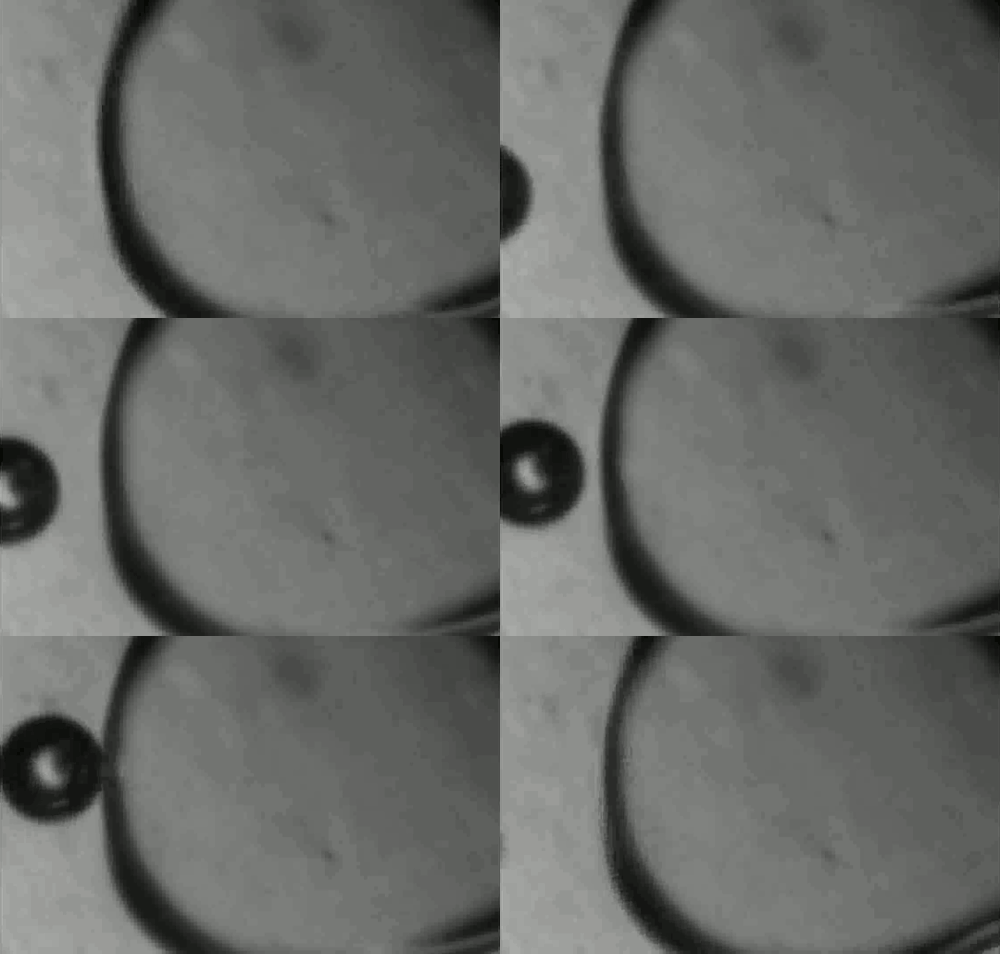
If you hold a bubbly beverage like champagne or soda near your face, you’ll feel a light mist of tiny, nearly invisible droplets.These droplets form when bubbles reach the surface and pop, generating a tiny jet that ejects an even tinier droplet, as shown in the animation above. This process is remarkably common; its occurrence in the ocean results in billions of tons of sea salt entering our atmosphere each year. Since these tiny microdroplets stay aloft for far longer than their larger brethren, understanding how they form and just how small they can be is vital for understanding their impact on climate, pathogen spreading, and other topics. A new study suggests that the minimum size for an ejected droplet is just 1% of the size of the bubble that births it. (Image and research credit: C. F. Brasz et al., source)

Manipulating Droplets Remotely


Using acoustic levitation and an array of carefully-placed speakers, researchers can manipulate droplets without touching them. This lets scientists study the physics of droplet coalescence (top) without interference from solid surfaces, but it also provides opportunities for mixing two different substances in the final droplet.
On the bottom left, we see a droplet formed from the coalescence of a dyed droplet (visible as gray) and an undyed droplet. The swirling and mixing in the levitating droplet is fairly slow. By contrast, the droplet on the right is vibrated by manipulating the sound waves holding it aloft. This mixes the droplet quite efficiently, allowing it to reach a uniform state more than six times faster than the other droplet. (Image and research credit: A. Watanabe et al., source)
Spinning Droplet Galaxies
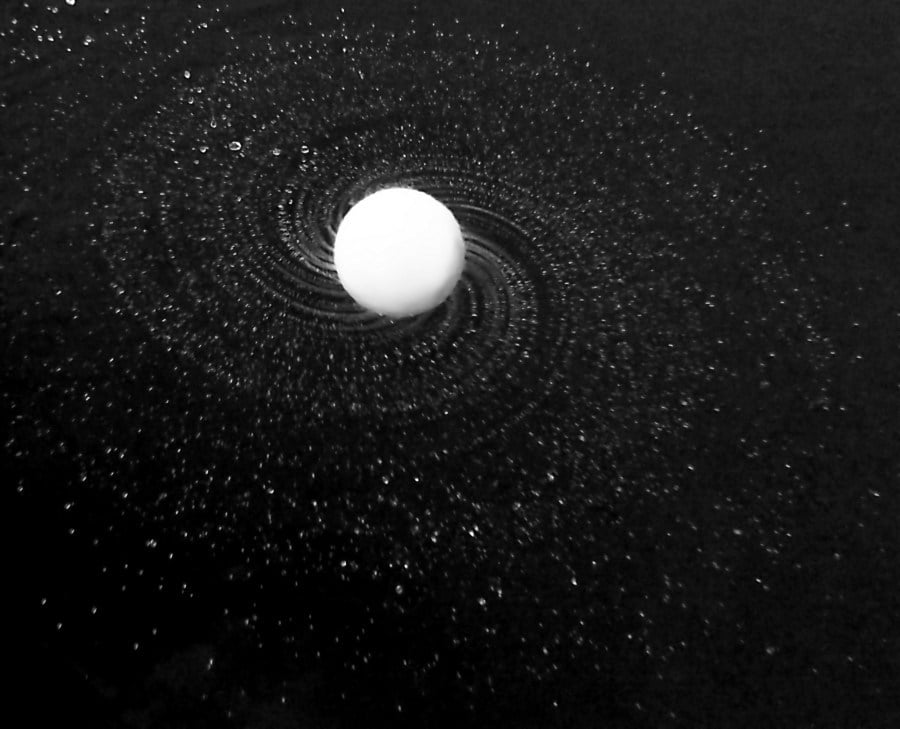
Water flung from a spinning tennis ball takes on a shape reminiscent of a spiral galaxy. As it detaches, water leaves the surface with both the tangential velocity of the spinning ball and a radial velocity due to the centrifugal force flinging it. The continued spin of the ball makes the thin ligaments of water still attached to it spiral and stretch. Eventually, surface tension can no longer hold the water together against the centrifugal forces, and the ligaments split into a spray of droplets. (Image credit: W. Derryberry and K. Tierney)

Giving Droplets a Kick


Giving droplets a kick by accelerating the surface they sit on creates elaborate shapes as the drops respond. As the surface accelerates upward, the droplet flattens into a pancake. When the plate slows down, the droplet continues rising, stretching into a cone as its rim flies upward and its lower surface adheres to the surface. The rim retracts with a constant acceleration while the drop detaches with a constant velocity. That velocity depends on how well it adheres to the surface. The interplay between those two variables determines how conical or cylindrical the drop appears. See more in the full video below. (Image and video credit: P. Chantelot et al.)