Year: 2020

  • The Structure of the Blue Whirl

    The Structure of the Blue Whirl

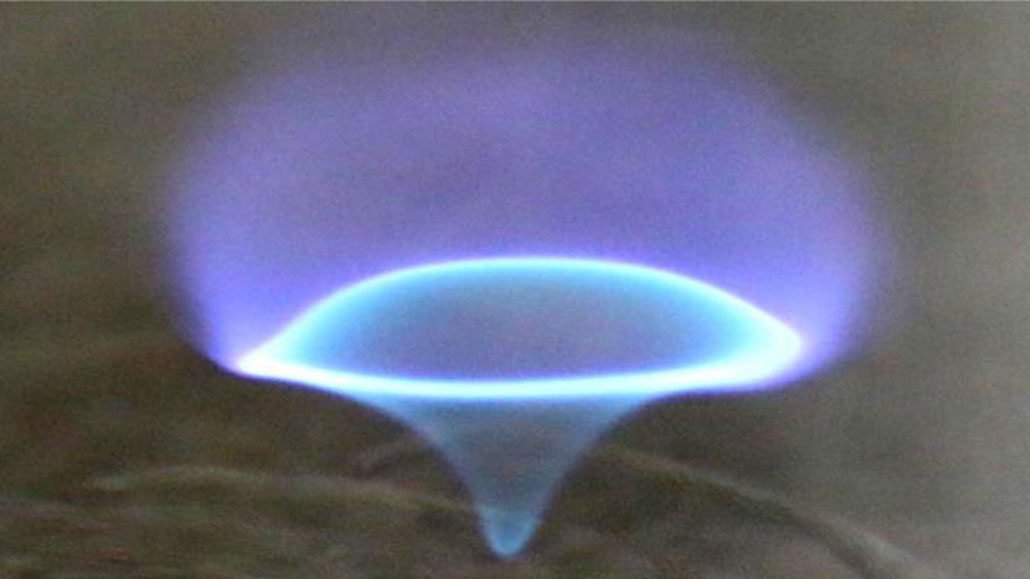
    Several years ago, researchers discovered a new type of flame, the blue whirl. Now computational simulations have helped them untangle the complex structure of this clean-burning flame. Their work shows that the blue whirl is made up of three types of flames, which meet to form a fourth.

    The conical base of the whirl is a fuel-rich flame in which the fuel and oxygen are initially well-mixed. Above that is a diffusion flame, where the fuel and oxygen are initially separate and the flame’s ability to burn is limited by how readily the two mix. Along the sides of the blue whirl is a third flame type, visible only as a faint wisp. Like the first flame, this one is premixed, but it contains much less fuel than oxygen. Finally, those three flames meet in the bright blue ring of the whirl, where the ratio of fuel and oxygen is just right to burn the fuel completely. (Image and research credit: J. Chung et al.; via Science News; submitted by Kam-Yung Soh)

  • Featured Video Play Icon

    The Greedy Cup in Your Washing Machine

    A Pythagorean, or “greedy” cup, is one that automatically drains itself once filled to a certain level. In other words, it’s a self-starting siphon – one that triggers only at certain fill level. And chances are you have an example of this mechanism close at hand: inside your washing machine’s soap tray. That’s why the tray has such a clearly marked maximum fill line; if you were to put more soap than that in the tray, it would automatically drain! (Image and video credit: S. Mould)

  • Wrinkles on Bubble Collapse

    Wrinkles on Bubble Collapse

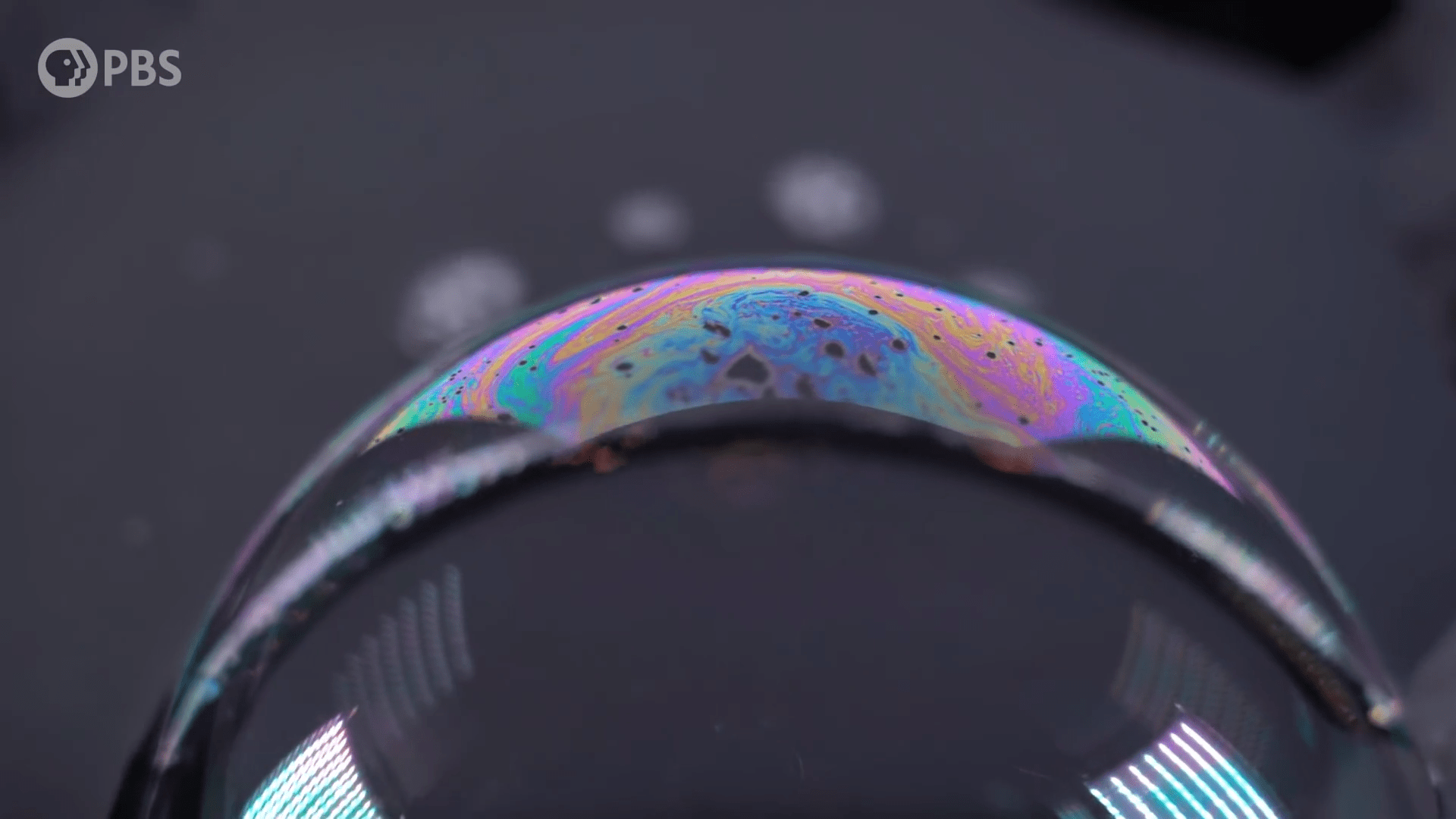
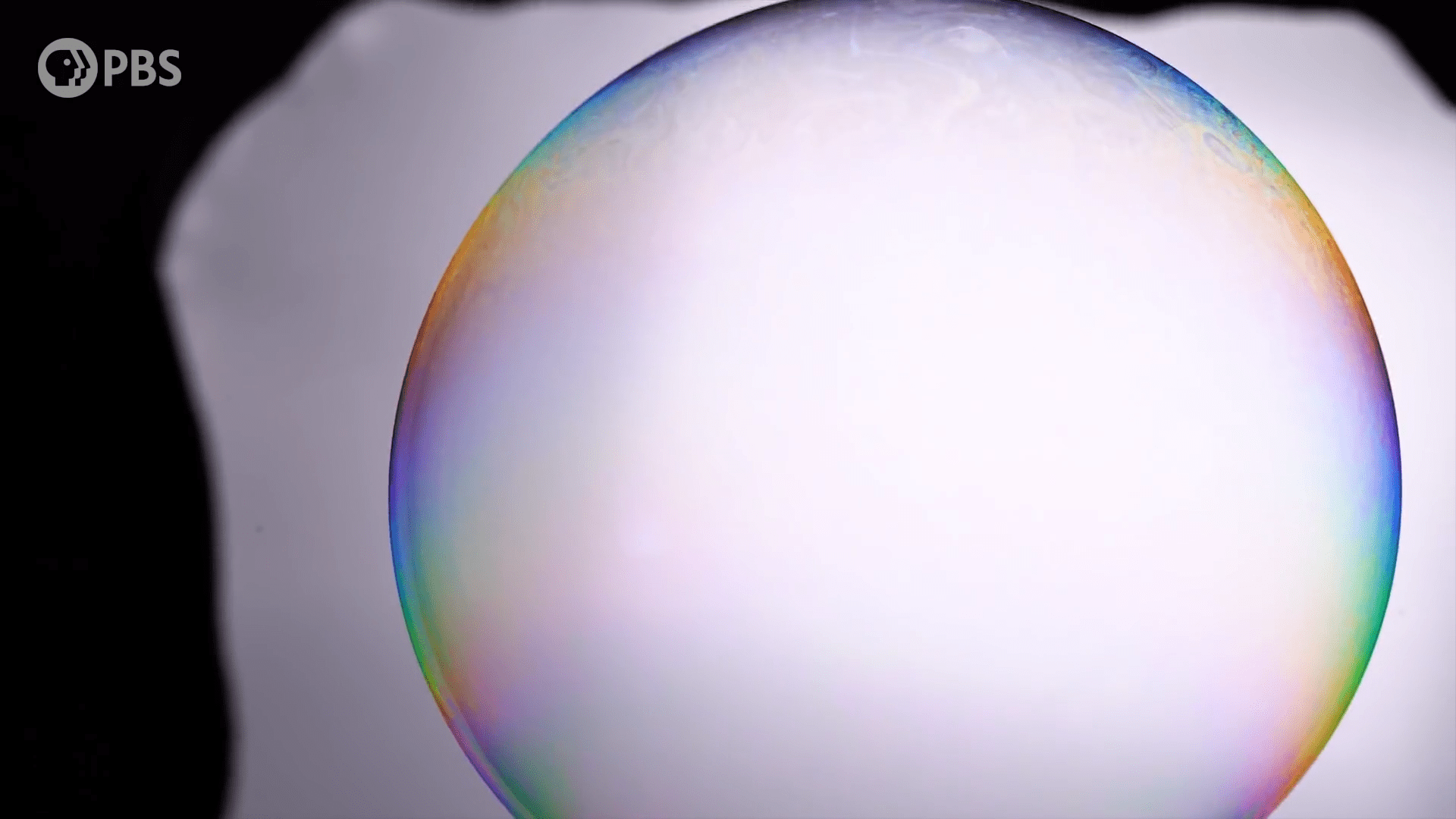
    A viscous bubble wrinkles when it collapses, and scientists long assumed this behavior was caused by gravity. But a new experiment shows that the buckling is, instead, driven by surface tension.

    To test gravity’s influence on bubble collapse, the researchers popped bubbles in three orientations: the (normal) upright orientation (Images 1 and 2), upside-down (Image 3), and sideways (Image 4). In all cases, the bubble’s thin film wrinkled as it collapsed, indicating that gravity had little influence on the process. Instead the authors concluded that surface-tension-driven collapse causes the dynamic buckling of the film. (Image and research credit: A. Oratis et al.; submitted by Zander B.)

  • Curls Past the Canaries

    Curls Past the Canaries

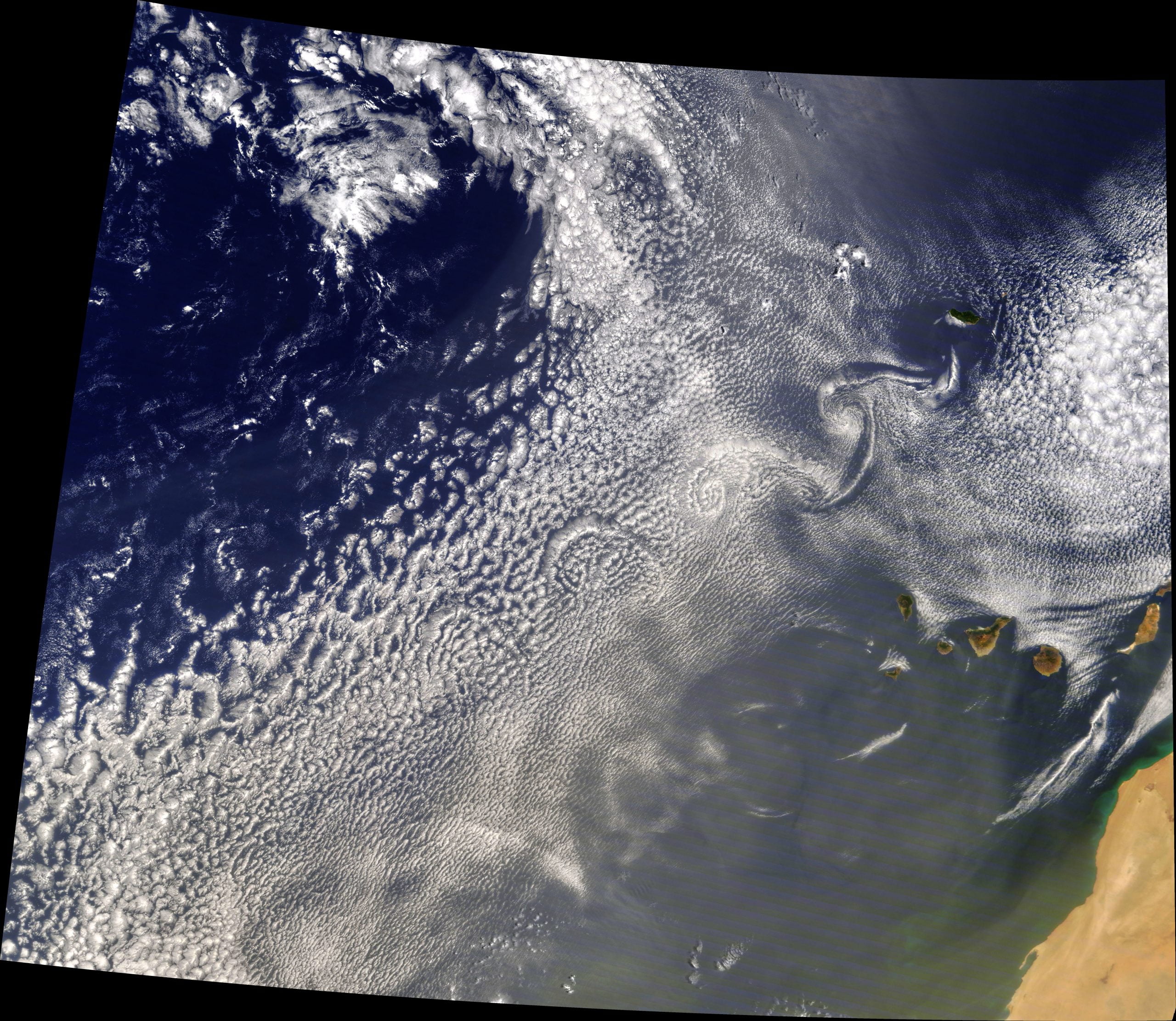
    When winds flow past a solitary peak, like an island in the ocean, they’re disrupted into a series of counter-rotating curls. That’s what we see here stretching to the southwest of Madeira Island. The official name for this flow is a von Karman vortex street, and it can be found anywhere from a soap film to a starship. (Image credit: J. Stevens; via NASA Earth Observatory)

  • Featured Video Play Icon

    Precipitation

    Chemistry and fluid dynamics often go hand-in-hand. Here chemical reactions produce visible precipitates as one chemical drops into the other. The shapes that form are distinctly fluid dynamical, with vortex rings, plumes, and instabilities all appearing.

    In many applications, chemical reactions and fluid dynamics are tied inextricably to one another because the rate of chemical reaction depends on local concentrations driven by fluid dynamics, and the fluid motion is itself influenced by those concentration gradients. This is why reacting flows, like those found in combustion, are among the hardest topics in fluids. (Image and video credit: Beauty of Science)

  • The Undisturbed Waters of Lake Kivu

    The Undisturbed Waters of Lake Kivu

    Deep in Africa lies one of the world’s strangest lakes. Lake Kivu, over 450 meters in depth, is so stratified that its layers never mix. The upper portion of Lake Kivu consists of less-dense fresh water, which sits upon deeper layers of saltier water full of dissolved carbon dioxide and methane pumped into the lake by volcanic activity.

    The lake’s lack of convection means that this deep water simply stays put for thousands of years as it collects gases that remain dissolved only thanks to the immense pressure of the water above. Should that deep water be disturbed — by an earthquake, climate changes, or simply oversaturation — the resulting eruption of carbon dioxide could be deadly for the millions of people living nearby. A similar eruption at smaller Lake Nyos in 1986 asphyxiated about 1,800 people.

    Fortunately, Lake Kivu is well-monitored, so such an upwelling should not catch observers off-guard. Learn more about Lake Kivu’s oddities over at Knowable. (Image and research credit: D. Bouffard and A. Wüest, via Knowable Magazine; submitted by Kam-Yung Soh)

  • Featured Video Play Icon

    Streamlining Circa 1936

    This 1936 promotional film by Chevrolet explains the concept of streamlining objects to reduce their drag. And it actually does a pretty nice job of it, including some wind tunnel footage and table-top demonstrations. It’s also an amazing snapshot of the era, both in terms of engineering and the vision they had for the future. Just check out that City of the Future and its torpedo cars! (Video and image credit: Chevrolet; submitted by Larry S.)

  • Featured Video Play Icon

    The Colors of a Thin Film

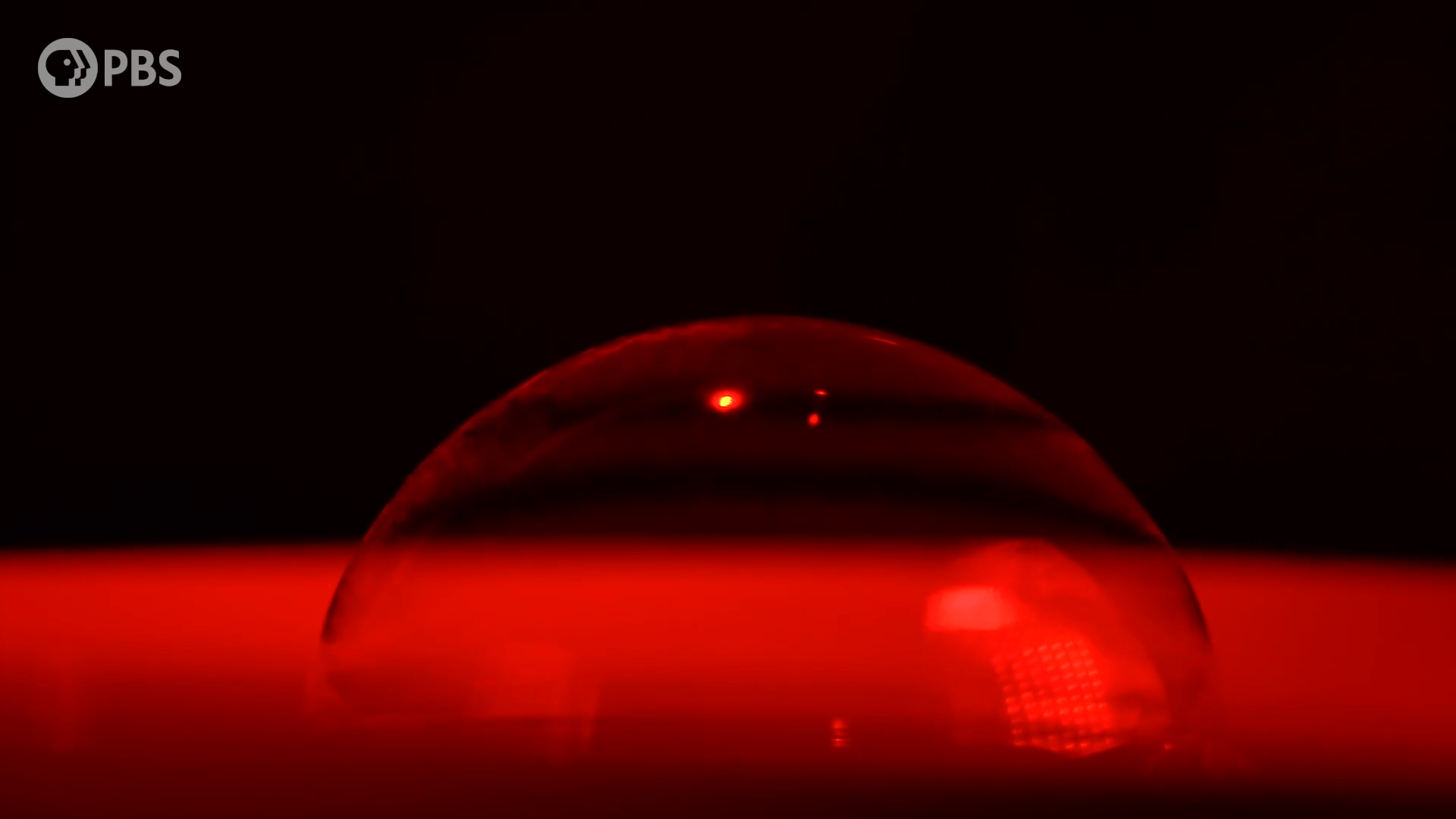
    Soap bubbles and other thin films are colorful thanks to wave interference across their tiny thickness, but you may have noticed that only some colors appear. Others, like red, seem to be missing. In this video, Dianna digs into the details of wave interference and color theory to explain why we don’t see pure colors in a bubble.

    As she points out near the end of the video, the way to make a red bubble is to shine purely red light on the bubble, but even then, you’ll see stripes on it related to the light’s wavelength. Scientists actually use this property to measure the thickness of tiny air gaps between a droplet and a surface. (Image and video credit: Physics Girl)

  • Jets Beneath Leidenfrost Drops

    Jets Beneath Leidenfrost Drops

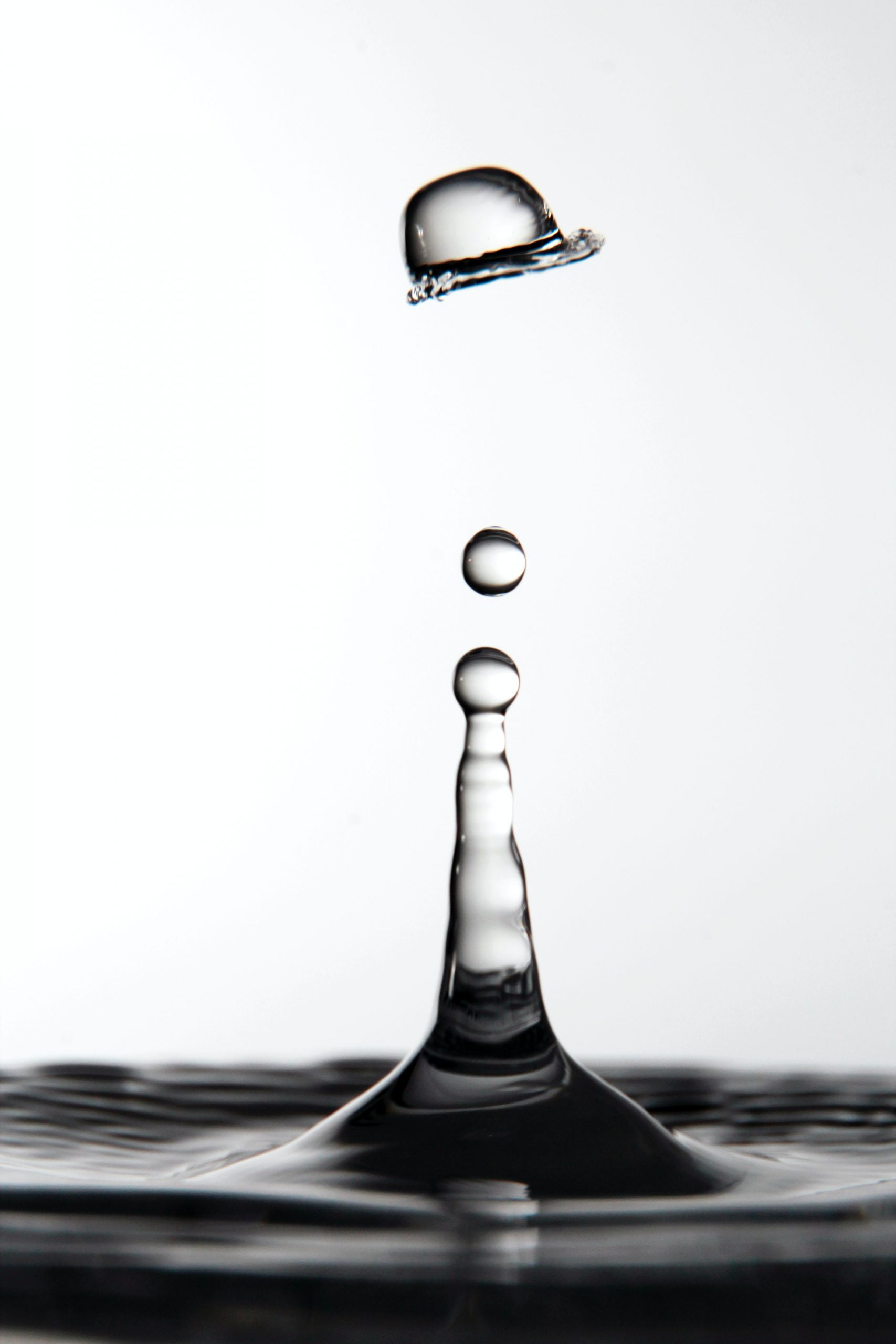
    When a droplet impacts, it’s not unusual for converging ripples to form an upward jet, like the one seen here. But under the right circumstances, jets can form downward, too. This study looks at the ultrafast jets that can form beneath an impacting Leidenfrost drop.

    These Leidenfrost drops are striking a surface much hotter than their boiling point, so a large vapor cavity forms quickly beneath them. Using x-ray imaging, the researchers were able to capture the dynamics of this cavity’s formation and collapse (Image 2). The field of view in the animation shows only a portion of the drop’s cavity, so Image 3 may help you orient relative to the drop at large.

    Initially, we see the center of the droplet hitting the surface, followed by the fast growth of a vapor cavity. Rippling capillary waves converge on top of the cavity, creating a pinch-off. From there, a bubble rises up while a fast jet shoots downward. (Image credit: water jet – A. Min, others – S. Lee et al.; research credit: S. Lee et al.)

  • Featured Video Play Icon

    “Monsoon 6”

    The stunning power and beauty of our atmosphere comes to life in Mike Olbinski’s latest short film, “Monsoon 6”. Over the years, I’ve probably watched dozens of Olbinski’s videos, yet he still captures sequences that make me exclaim aloud as I watch. In this one, some of my favorites are the microburst at 2:17 and the development of mammatus clouds at 3:20. How mammatus clouds form is still very much an area of active research; I don’t know if Olbinski’s footage sheds light on their formation, but it is supremely awesome to watch! (Image and video credit: M. Olbinski)