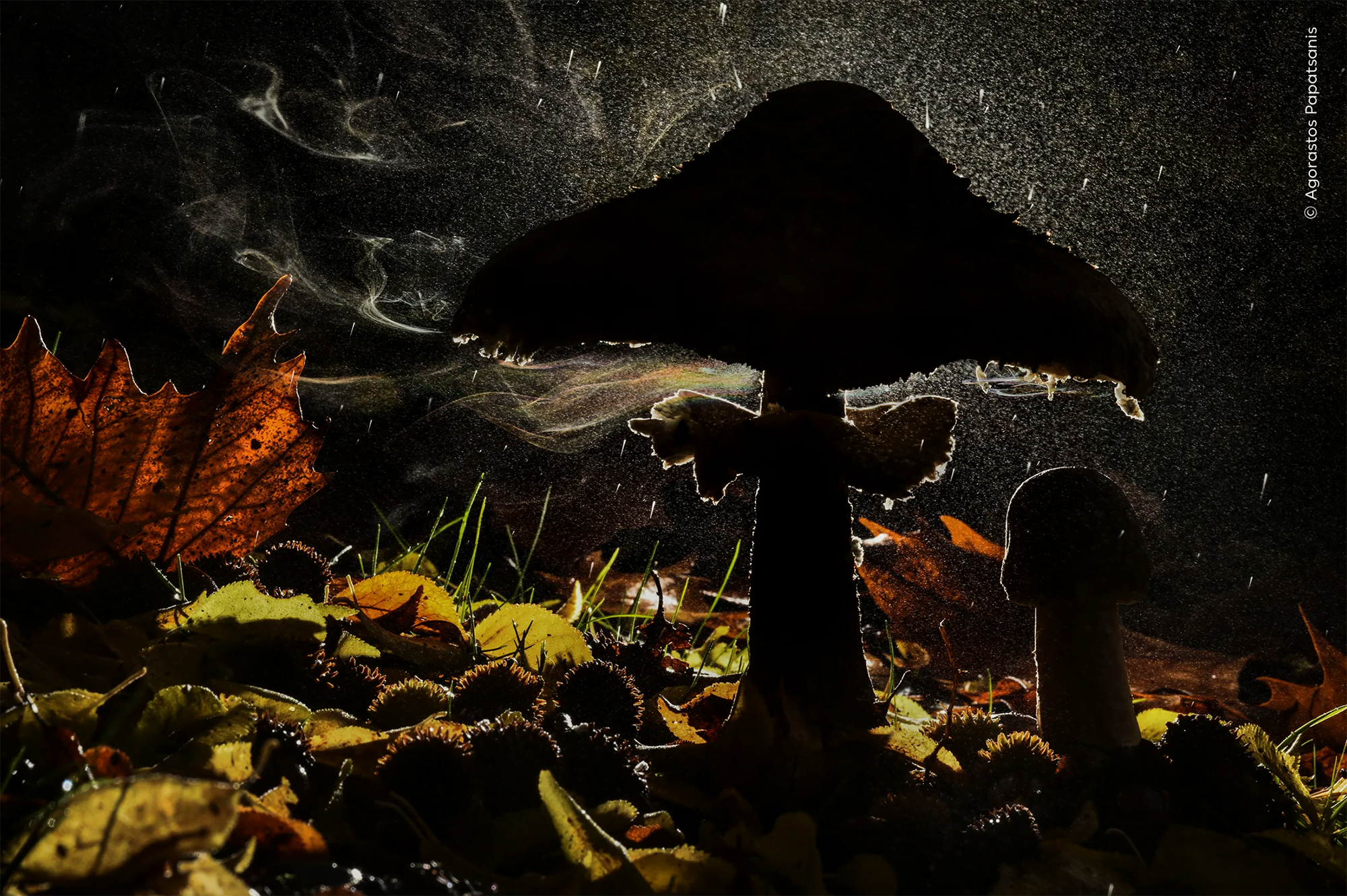
On a rainy autumn day, Agorastos Papatsanis headed to the forest in search of fungi. There he captured this fairytale-like scene with falling rain and drifting spores. Near the forest floor, any breeze is slight, so mushrooms use their own humidity to move air and spread their spores. As water evaporates from the mushroom’s cap, it cools the air nearby, causing it to spread outward. Since that water vapor is lighter than air, it rises, too, carrying the mushroom’s spores along with it. (Image credit: A. Papatsanis; via Wildlife PotY)
Tag: fluids as art

“Colors of Glacial Rivers”


As glaciers flow, they grind down rock, creating fine sediment that dyes waterways a milky color. In Jan Erik Waider’s aerial film, we get a bird’s eye view of the result, watching pockets of sediment move downstream in pulsating waves and swirls. Along the coast, ocean waves pass over the internal ones, creating a mesmerizing crisscrossed wavescape. You can also compare Waider’s aerial footage to Roman De Giuli’s tabletop-scale films and be amazed by their similarities. (Image and video credit: J. Waider; via Colossal)

The Crashing Waves of French Polynesia


Surfer and photographer Tim McKenna lives in the village of Teahupo’o on Tahiti’s southeastern coast. The area’s shallow coral reef system creates some of the world’s biggest barreling waves, which attract surfers from around the world. McKenna captures the majestic power of these surges in these black-and-white photographs; you can find more of his work on his website and Instagram. (Image credit: T. McKenna; via Colossal)
“Microscopic World”


So many natural processes take place right in front of us, but they’re too small and too fast to see. Here, the Beauty of Science team puts some of those processes — crystallizing solids, nucleating bubbles, and more — front and center. The shapes and colors draw you in, inviting you to engage with science we see daily but rarely appreciate. (Video and image credit: Beauty of Science)
“Ink In The Water. Mix One.”


In this ASMR video, black ink diffuses in water. When the video starts, the ink is so diffuse that it’s not apparent the video is playing backward. It’s only as specific structures — things like Rayleigh-Taylor instabilities, plumes, and jets — coalesce from the background that we recognize the time reversal. Though it’s probably unintentional, this makes for a neat, subtle commentary on the nature of isotropic turbulence. (Video and image credit: Wryfield Lab)
“Starlit”


In “Starlit,” filmmaker Roman de Giuli leverages paint, ink, water, and oil to create astronomical views. Colorful droplets spin past like neon exoplanets. Shards of glitter form comets. Satellite droplets become moons about their larger sibling. (Video and image credit: R. de Giuli)

Beneath the Surf
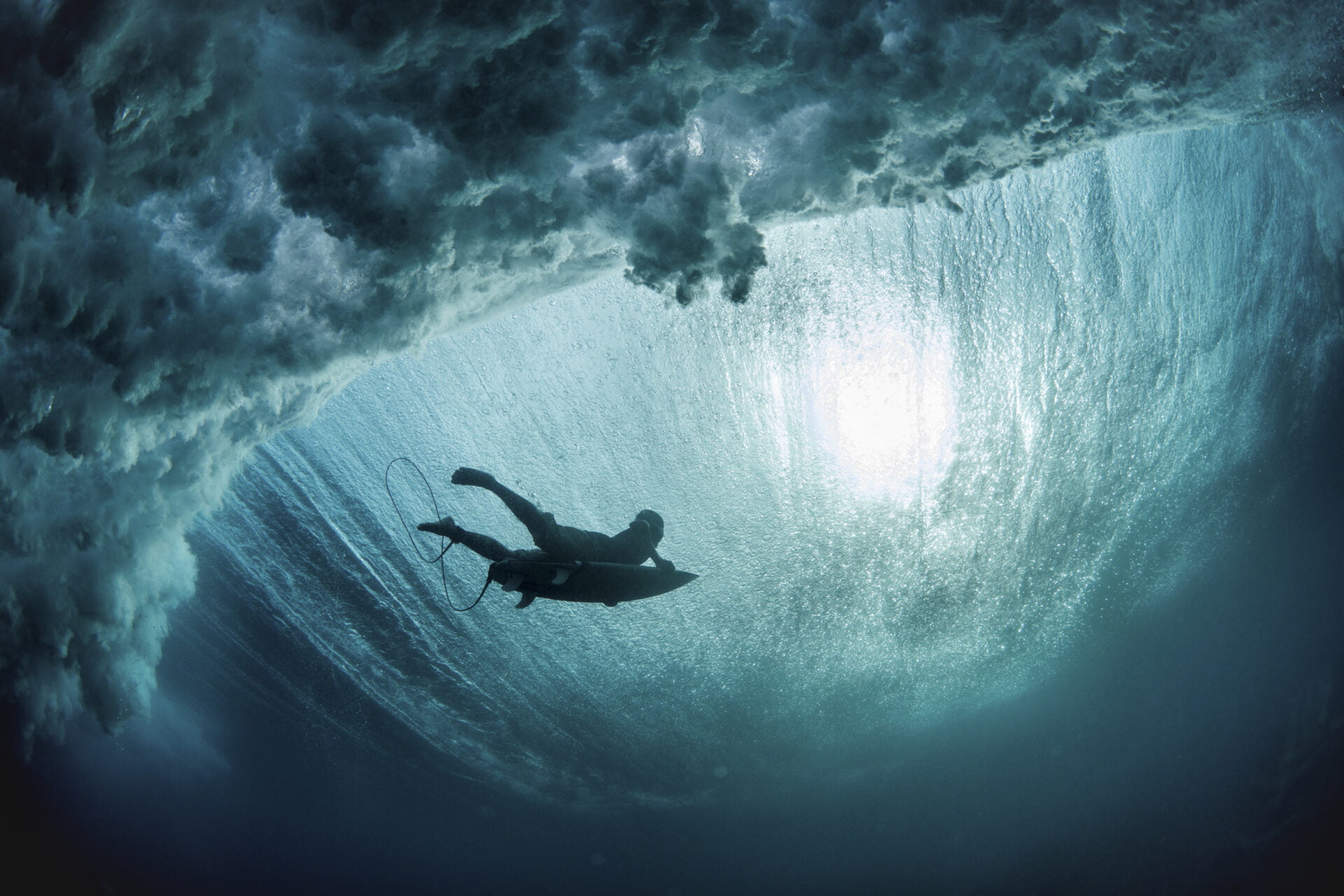
A surfer duck-dives beneath a passing wave in this image from photographer John Barton. I always love seeing big waves from this underwater perspective. The turbulent surf looks like storm clouds, and sometimes you see features that are invisible from the surface. Barton’s shot captures the dichotomy of serenity and chaos in the breaking surf. (Image credit: J. Barton/OPOTY; via Colossal)
“Black”


In “Black,” filmmaker Susi Sie combines her visuals of shifting ferrofluids with the music and soundscape of Clemens Haas to create an ominous, almost claustrophobic vibe. With fast cuts and shallow focus, the sharpened points of the normal-field instability appear as flashes of brightness in the dark. At times, the liquid’s surface looks almost like a speaker cone, which is appropriate since ferrofluids are frequently used in speakers to provide cooling and enhance performance. (Video and image credit: Susi Sie)

The Solar Corona in Detail
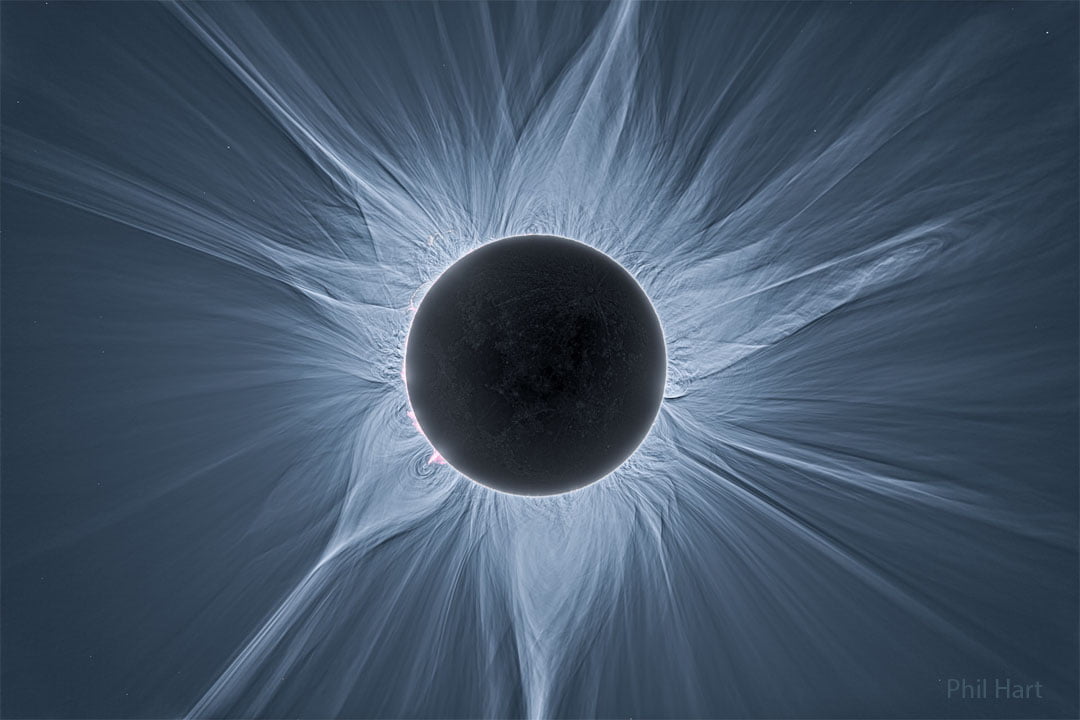
The sun’s corona — its outer atmosphere — is usually impossible to see, since it’s far outshone by the rest of the sun. But during a total solar eclipse, the moon blocks out all but the vibrant, wispy corona. Getting a detailed image of the corona is tough; it’s constantly shifting. For this image, engineer Phil Hart used 5 main cameras, 4 refractors, 2 laptops, and plenty of digital image processing to capture some incredible details of the plasma and hot gases dancing along the sun’s magnetic field lines. You can learn about the awesome effort behind this image — and see more awesome photos from the eclipse — at his site. (Image credit: P. Hart; via APOD)