Tag: flow visualization

  • Melting Permafrost Stains Alaskan Rivers Orange

    Melting Permafrost Stains Alaskan Rivers Orange

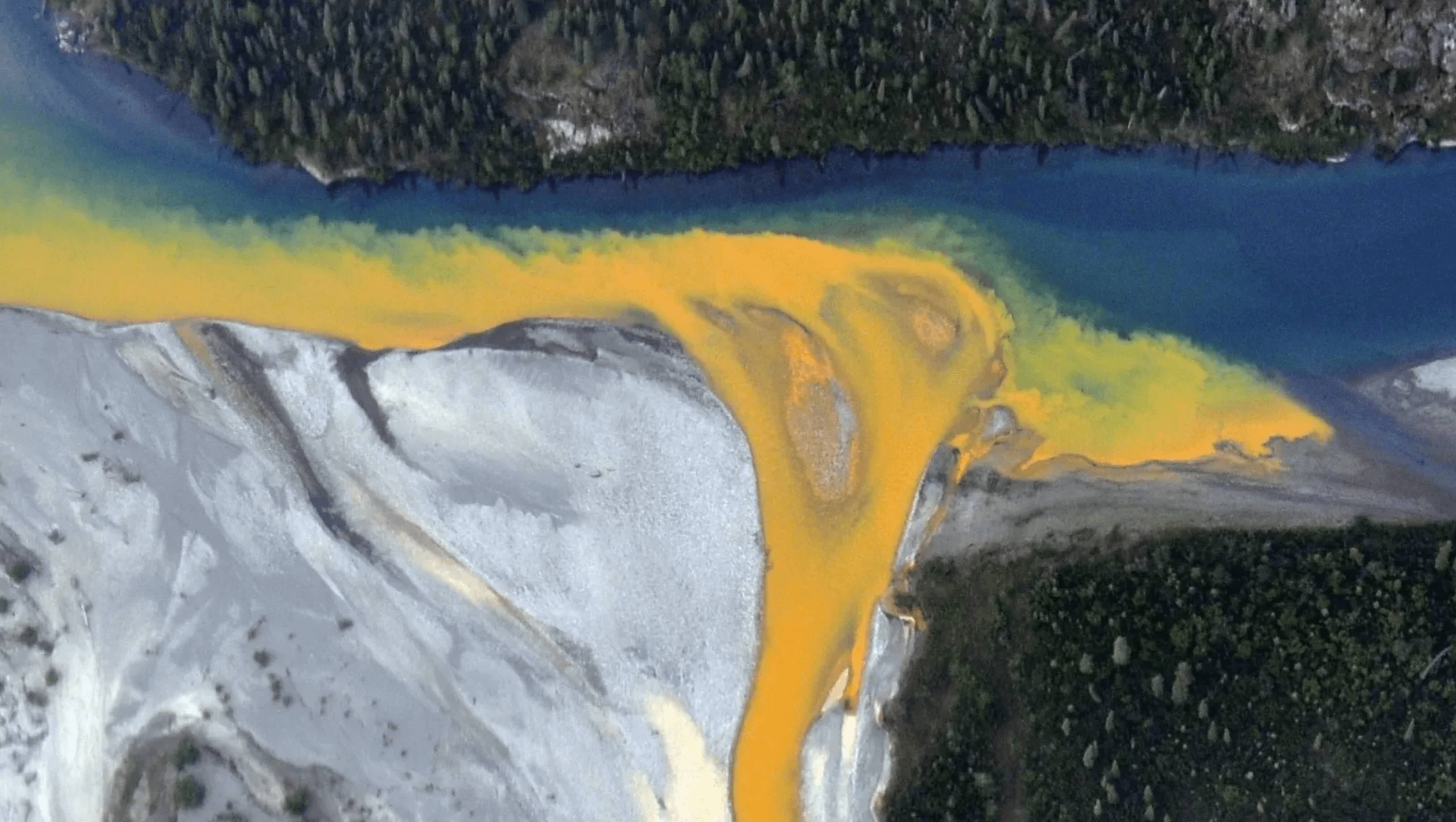
    The swiftly melting permafrost of the Arctic is releasing toxic metals like zinc, cadmium, and iron into Alaskan waterways. The contaminant levels are so high that it’s staining many rivers orange — a feature that can be seen from space. A new study identified at least 75 affected rivers in the Brooks mountain range.

    In addition to staining the rivers, these metals make the water acidic, with some waterways reaching a pH as low as 2.3, similar to the acidity of vinegar. The combination is deadly to aquatic life in the rivers, and the acidity, unfortunately, will accelerate the dissolution of rocks that can release even more metals into the water. (Image credit: K. Hill/National Park Service; research credit: J. O’Donnell et al.; via LiveScience; submitted by Emily R.)
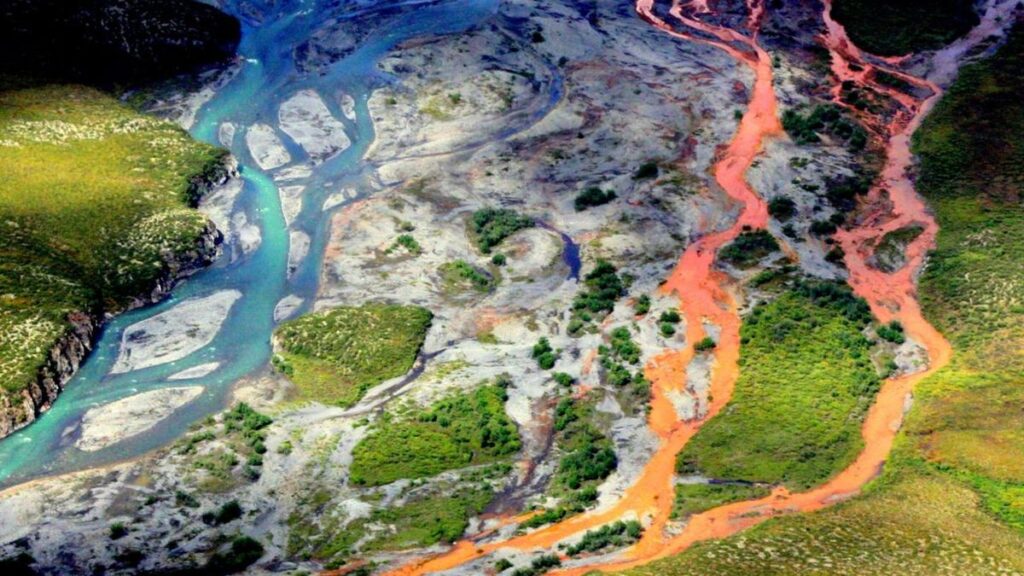
    A contaminated portion of the Kutuk River runs orange alongside an uncontaminated portion of the same waterway.
    A contaminated portion of the Kutuk River runs orange alongside an uncontaminated portion of the same waterway.
  • A Comet’s Tail

    A Comet’s Tail

    A comet‘s tail changes from day-to-day depending on how much material the comet is losing and how strong the solar wind it’s facing is. This image sequence shows Comet 12P/Pons-Brooks over nine days in 2024 from March 6th (top) through March 14th (bottom). The variations in the comet’s appearance are striking; some days show nearly no tail while others have long plumes with swirls of turbulence. It’s a reminder that, even if they appear unchanging in the moment you see one, a comet is in constant flux. (Image credit: Shengyu Li & Shaining; via APOD)

  • Featured Video Play Icon

    Exciting a Flame in a Trough

    A viewer sent Steve Mould his accidental discovery of this odd flame behavior. In these 3D-printed troughs, a flame lit in lighter fluid will rocket around the track repeatedly as it burns the local supply of gaseous lighter fluid. As Steve shows in his video, this system is an excitable medium and the trick works for a whole array of 3D-printed shapes. Check out the full video above. (Video and image credit: S. Mould)

  • Wind Sculptures

    Wind Sculptures

    Vibrantly colored fabrics move in the breeze in artist Thomas Jackson’s outdoor installations. During the golden hours, he captures that movement in photographs like these. Jackson uses tulle, silk, and other everyday objects in his projects, and when finished, he takes a “leave no trace” approach, removing all materials and recycling them into new projects. Find more work on his website and Instagram. (Image credit: T. Jackson; via Colossal)

  • Featured Video Play Icon

    Etna’s Blowing Rings

    Mount Etna has long been known for its smoke rings, but thanks to the opening of a new vent on the volcano’s southeast crater, it’s now making more rings than ever. Etna’s smoke rings are, more precisely, vortex rings — produced in the same way dolphins, swimmers, and whales make vortex rings: a sudden push of air through a roughly circular opening. It’s likely that Etna and other volcanoes make far more rings than those we see; we’re limited to noticing only the ones that entrain smoke and condensation to make them visible. (Video and image credit: The Straits Times; via Colossal)

  • Millennium Falcon’s Glide

    Millennium Falcon’s Glide

    In what seems to be a tradition now, a group at MIT imagined how the Millennium Falcon would perform if it lost its engines during atmospheric flight. Their hypothetical scenario took place in the Battle of Endor, with the Falcon flying at an altitude of 2 kilometers.* Could Han Solo and Chewbecca safely glide the craft down?

    Using computational fluid dynamics, the group found the Millennium Falcon has a glide ratio of only 1.8, meaning it travels forward 1.8 kilometers in the time it takes to lose one kilometer of altitude. Its namesake bird, on the other hand, has a glide ratio of 10. The Corellian freighter might not be the best glider out there, but the team estimated that it could safely manage its 3.6 kilometer glide down. (Image credit: S. Costa et al.; see also X-Wing Re-entry and AT-AT Flow)

    *I’m definitely overthinking this, but now I’m really wondering what atmospheric characteristics they used for Endor. And what’s Endor’s gravity like?

  • Evolving Fingers

    Evolving Fingers

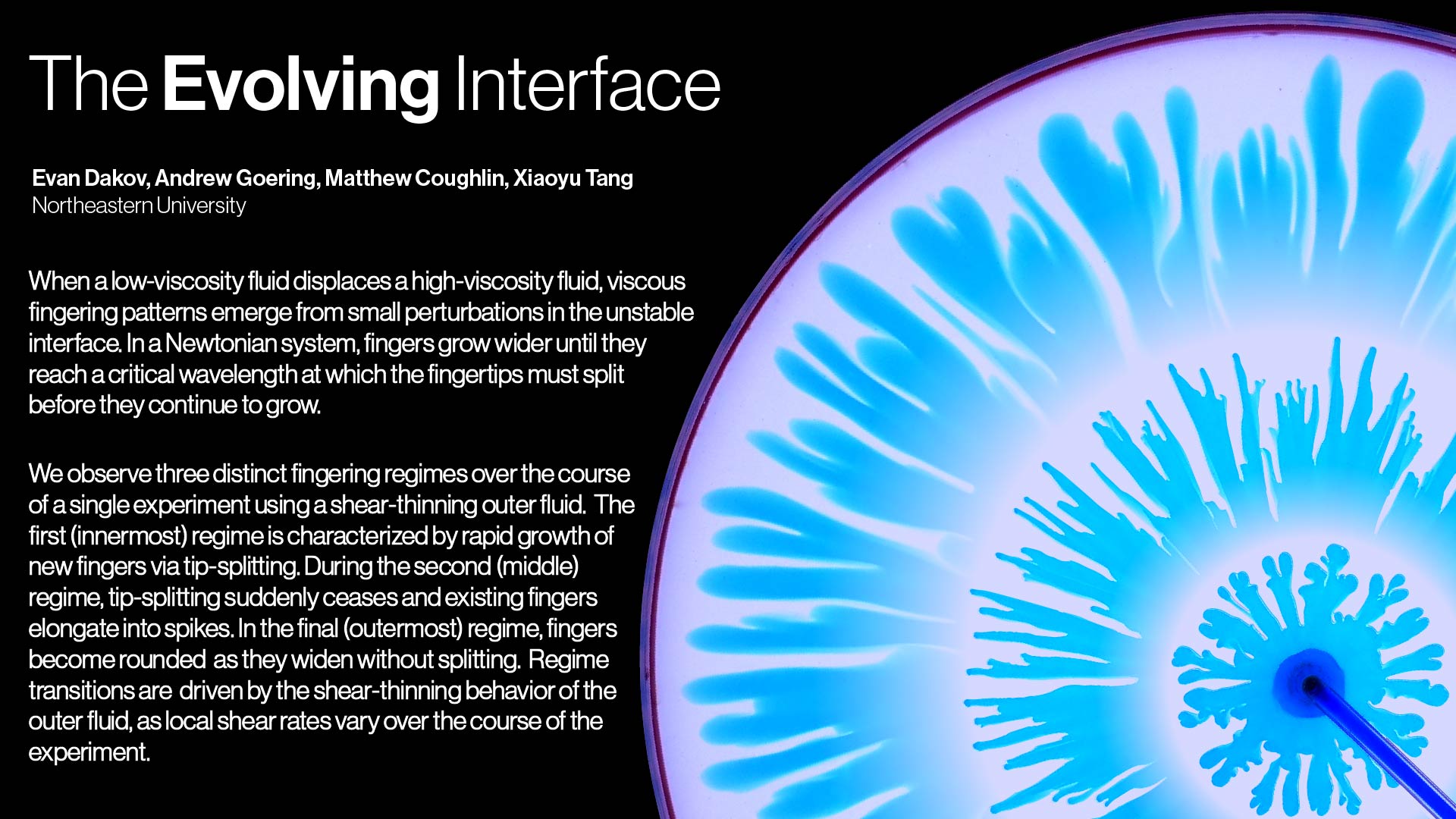
    If you sandwich a viscous fluid between two plates and inject a less viscous fluid, you’ll get viscous fingers that spread and split as they grow. This research poster depicts that situation with a slight twist: the viscous fluid (transparent in the image) is shear-thinning. That means its viscosity drops when it’s deformed. In this situation, the fingers formed by the injected (blue) fluid start out the way we’d expect: splitting as they grow (inner portion of the composite image). But then, the tip-splitting stops and the fingers instead elongate into spikes (middle ring). Eventually, as the outer fluid’s viscosity drops further, the fingers round out and spread without splitting (outer arc of the image). (Image credit: E. Dakov et al.; via GoSM)

  • Featured Video Play Icon

    Visualizing Wingtip Vortices

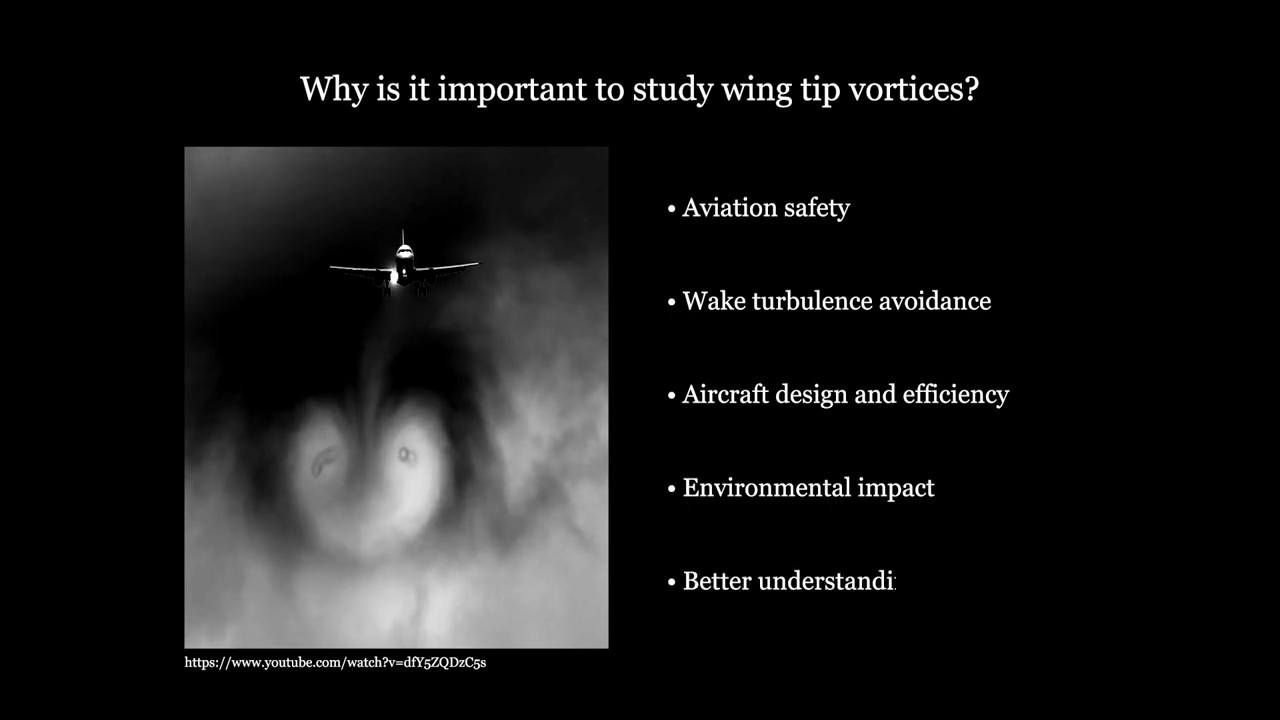
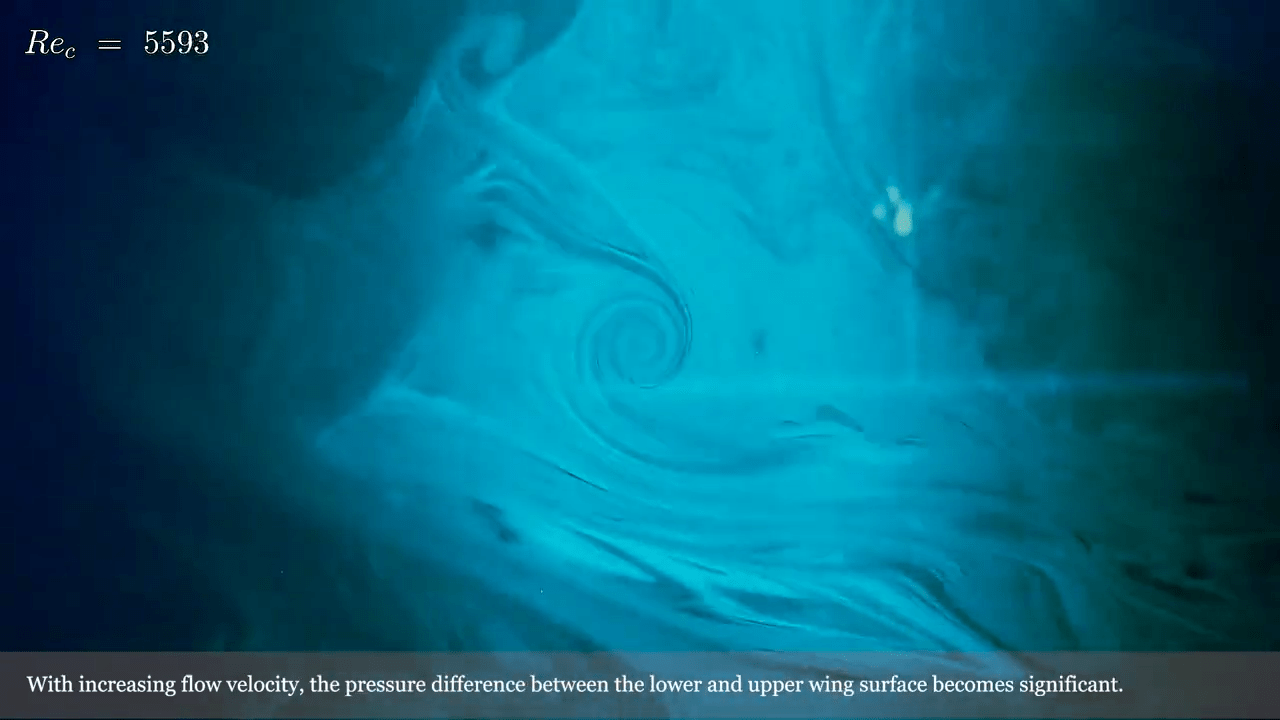
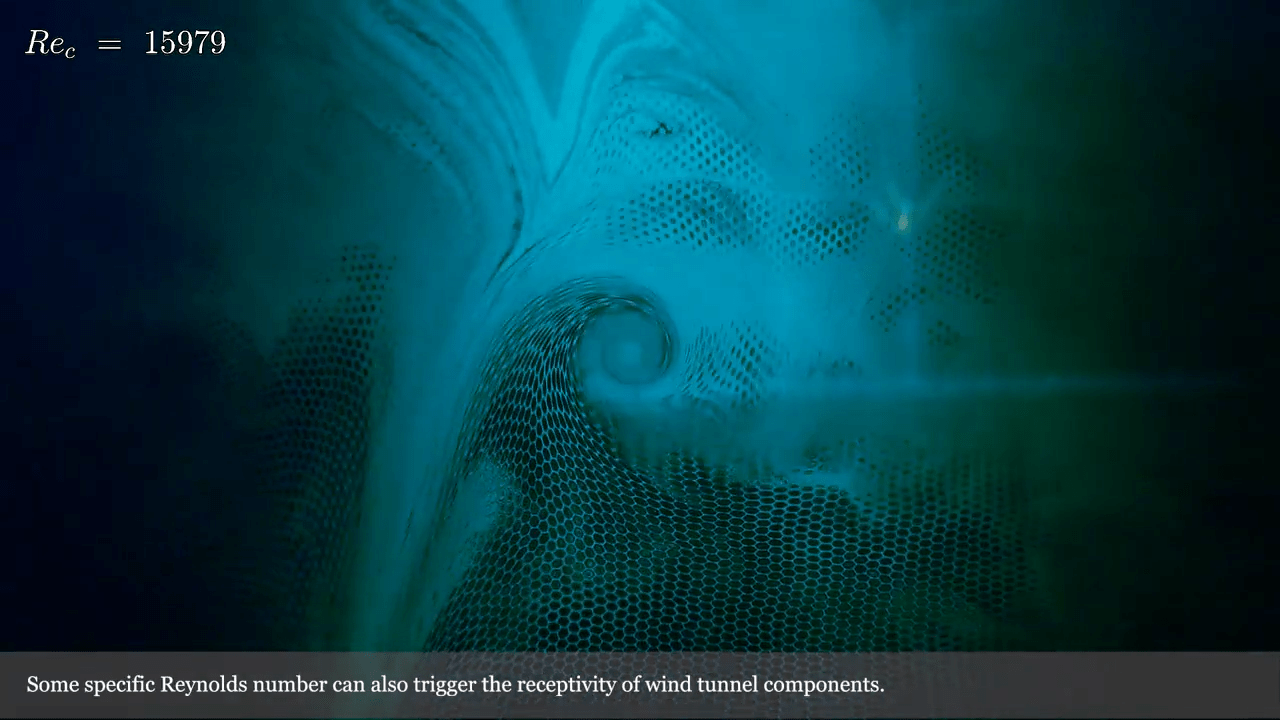
    At the ends of an airplane‘s wings, the pressure difference between air on top of the wing and air below it creates a swirling vortex that extends behind the aircraft. In this video, researchers recreate this wingtip vortex in a wind tunnel, visualized with laser-illuminated smoke. The team shows the progression from no vortex to a strong, coherent vortex as the flow in the tunnel speeds up. Along the way, there are interesting asides, like the speed where the honeycomb used to smooth the upstream flow is suddenly visibly imprinted on the smoke! (Video and image credit: M. Couliou et al.)

  • Featured Video Play Icon

    Stomp It Out

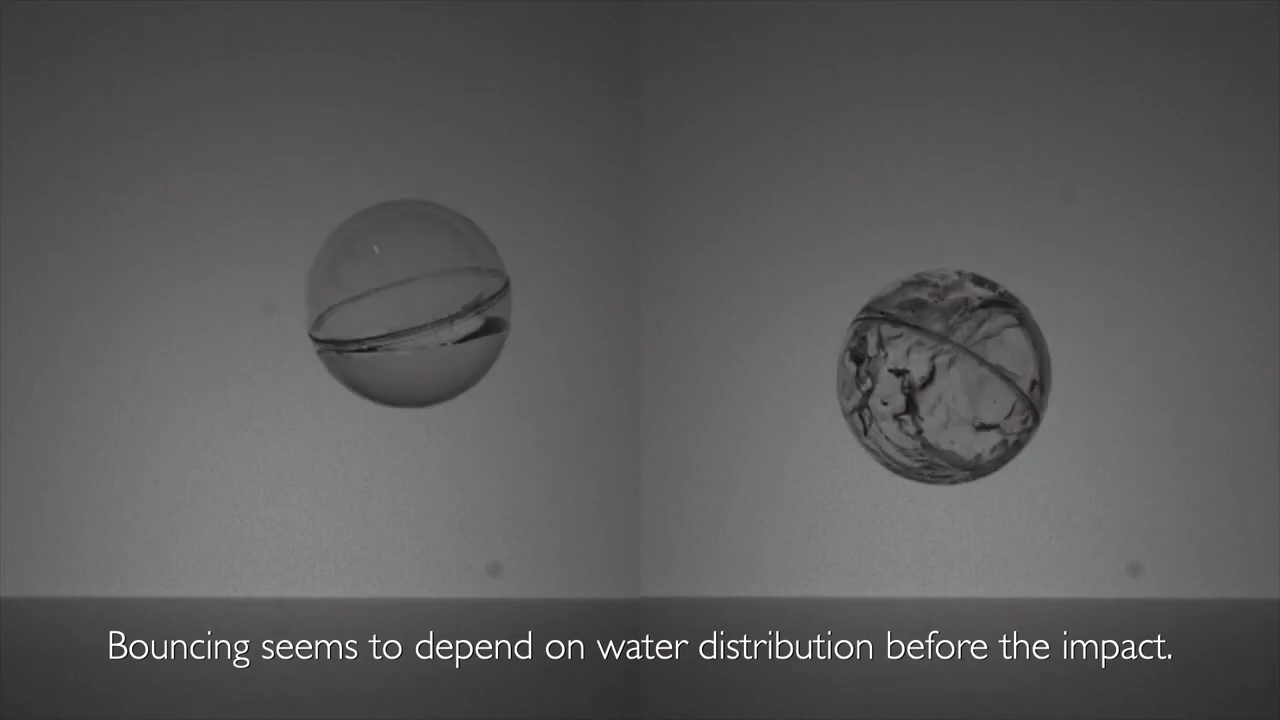
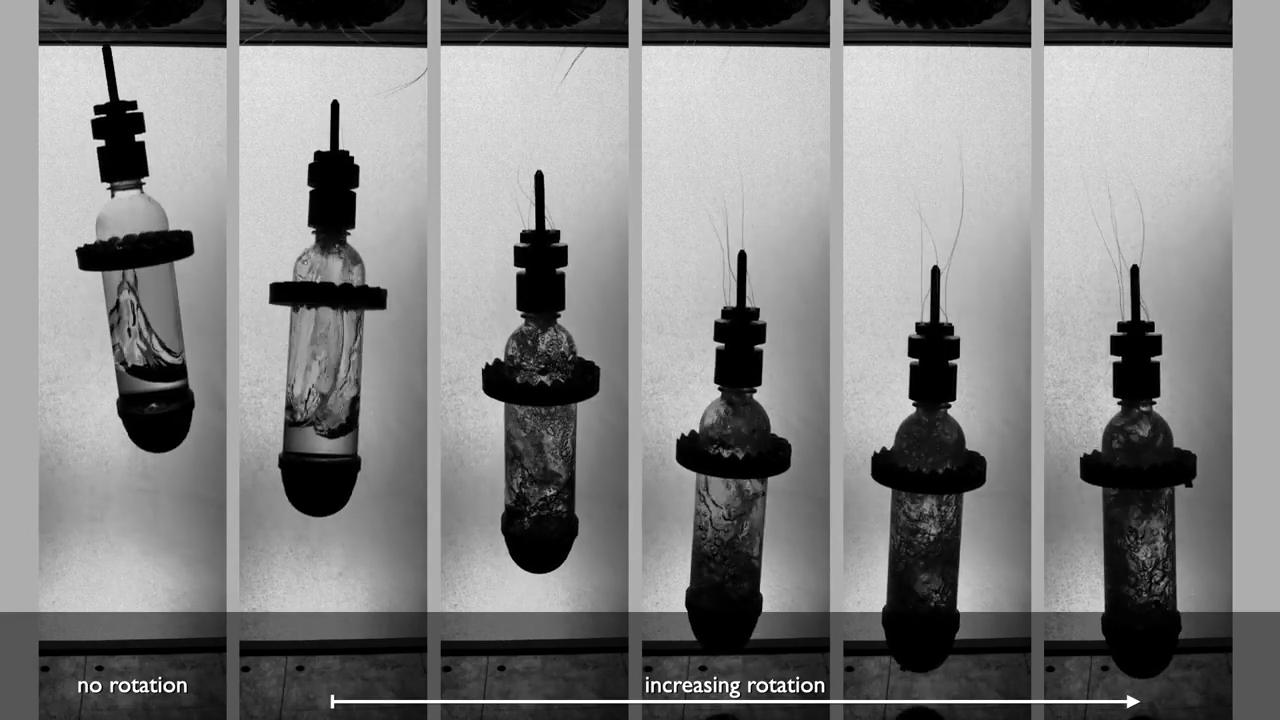
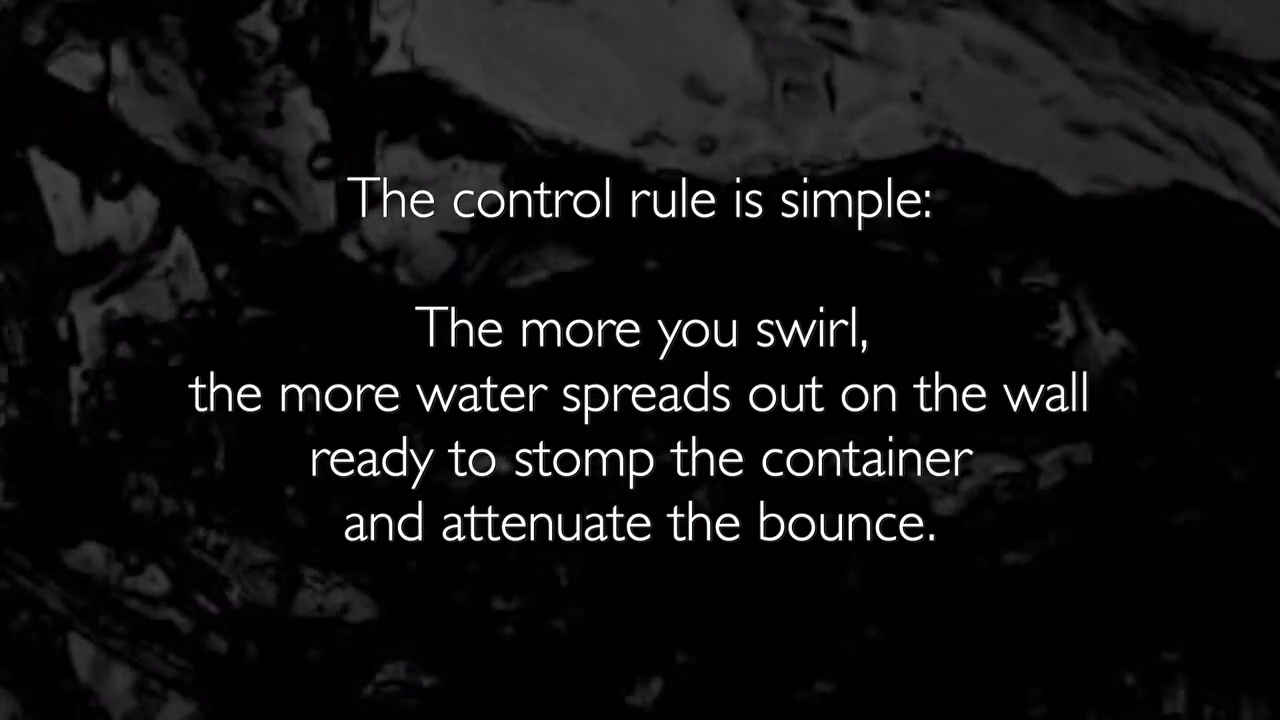
    Drop a ball that’s partially filled with water and it may or may not bounce. Why the difference? It all comes down to where the water is before impact. The more distributed the water is along the walls, the less likely a container will bounce. Researchers found they could control the bounce by spinning the bottles before they dropped. Centrifugal force flings the water all over the walls of the spinning bottle, and, when impact happens, the water concentrates into a central jet. For the spinning bottles, that jet is wide, messy, and swirling; it breaks up quickly, expending energy that could otherwise go into a bounce. In effect, the spinning bottle’s jet forms quickly enough to “stomp” the rebound. (Video and image credit: A. Martinez et al.; research credit: K. Andrade et al.)

  • Lasers and Soap Films

    Lasers and Soap Films

    Soap films are a great system for visualizing fluid flows. Researchers use them to look at flags, fish schooling and drafting, and even wind turbines. In this work, researchers explore the soap film’s reaction to lasers. When surfactant concentrations in the soap film are low, laser pulses create shock waves (above) in the film that resemble those seen in aerodynamics. The laser raises the temperature at its point of impact, lowering the local surface tension. That temperature difference triggers a Marangoni flow that draws the heated fluid outward. The low surfactant concentration gives the soap film relatively high elasticity, and that allows the shock waves to form.

    In contrast, a soap film with a high concentration of surfactants has relatively little elasticity. In these films (below), the laser creates a mark that stays visible on the flowing soap film. This “engraving” technique could be used to visualize flow in the soap film without using tracer particles. (Image and research credit: Y. Zhao and H. Xu)

    When surfactant concentrations are high, a laser pulse "engraves" spots onto a flowing soap film. Shown in terms of interference (left) and Schlieren (right) imaging.
    When surfactant concentrations are high, a laser pulse “engraves” spots onto a flowing soap film. Shown in terms of interference (left) and Schlieren (right) imaging.