Back in May 2020, the Edenville Dam in Michigan failed dramatically, releasing flood waters that destroyed a downstream dam and caused millions of dollars of damage. In this Practical Engineering video, Grady deconstructs the accident, based on an interim report from the forensic team charged with investigating the failure. Along the way, he explains common causes of dam failures, what made the Edenville failure unusual, and how engineers build modern earthen dams to avoid this older design’s flaws. (Image and video credit: Practical Engineering)
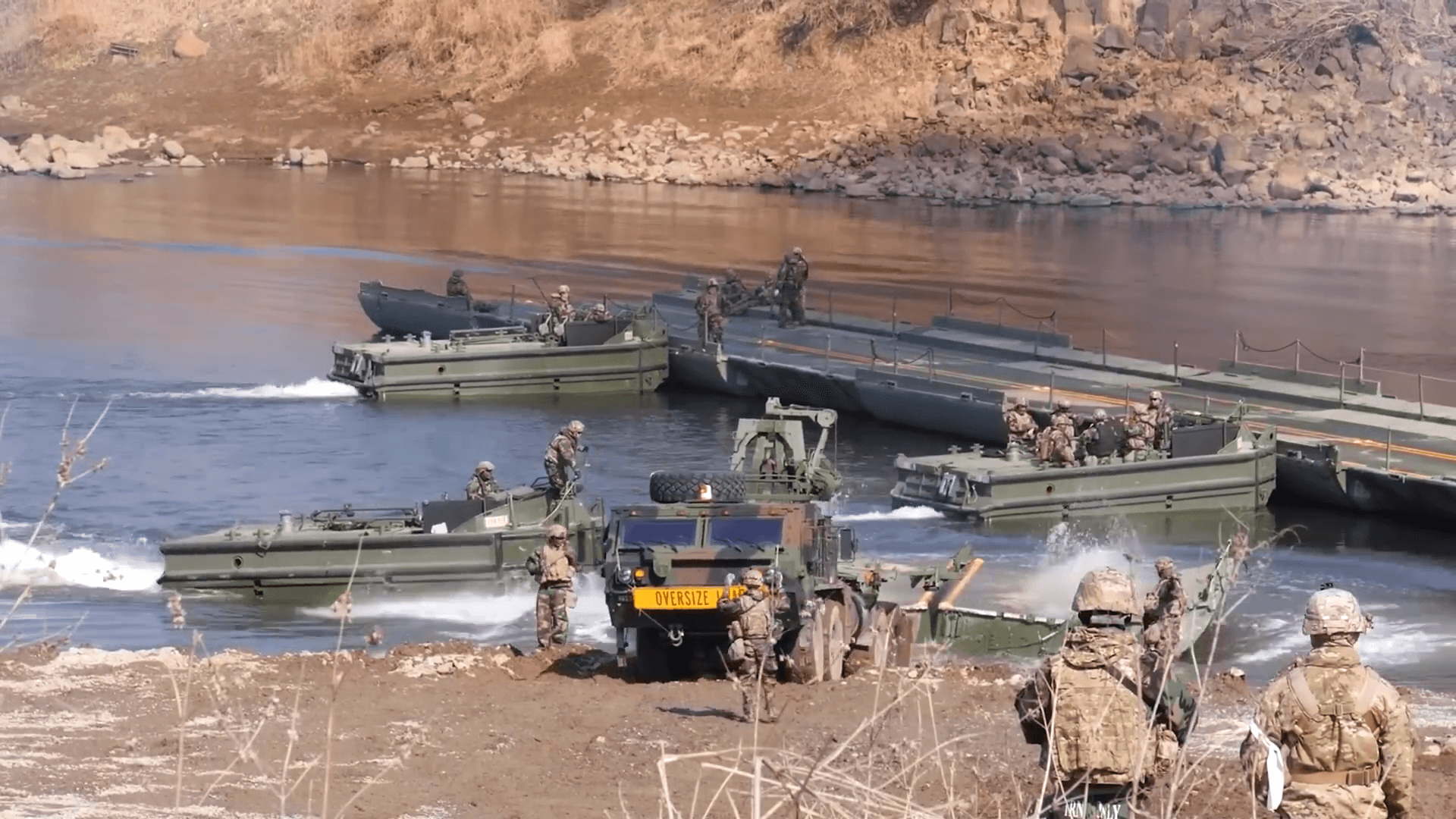
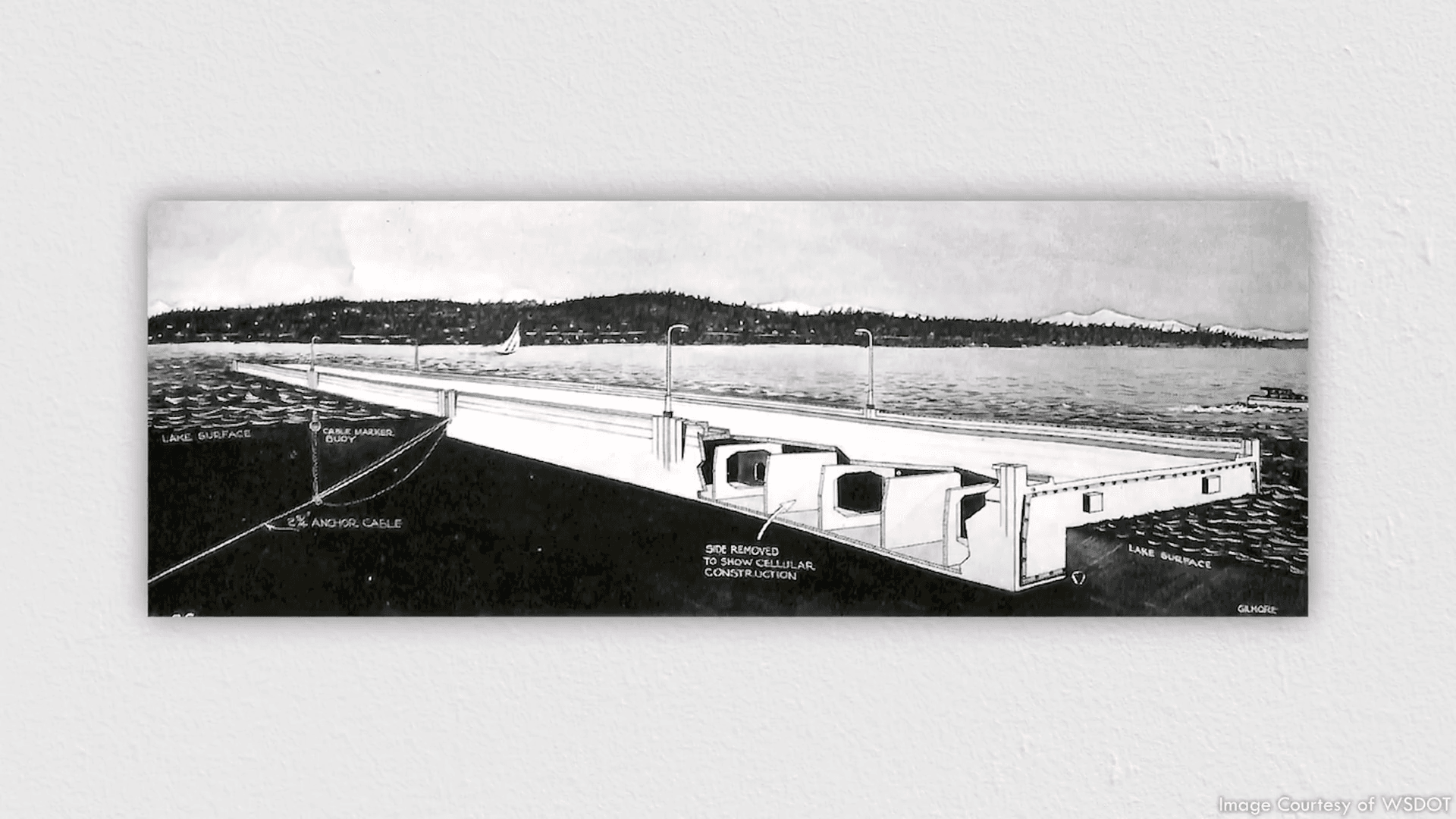
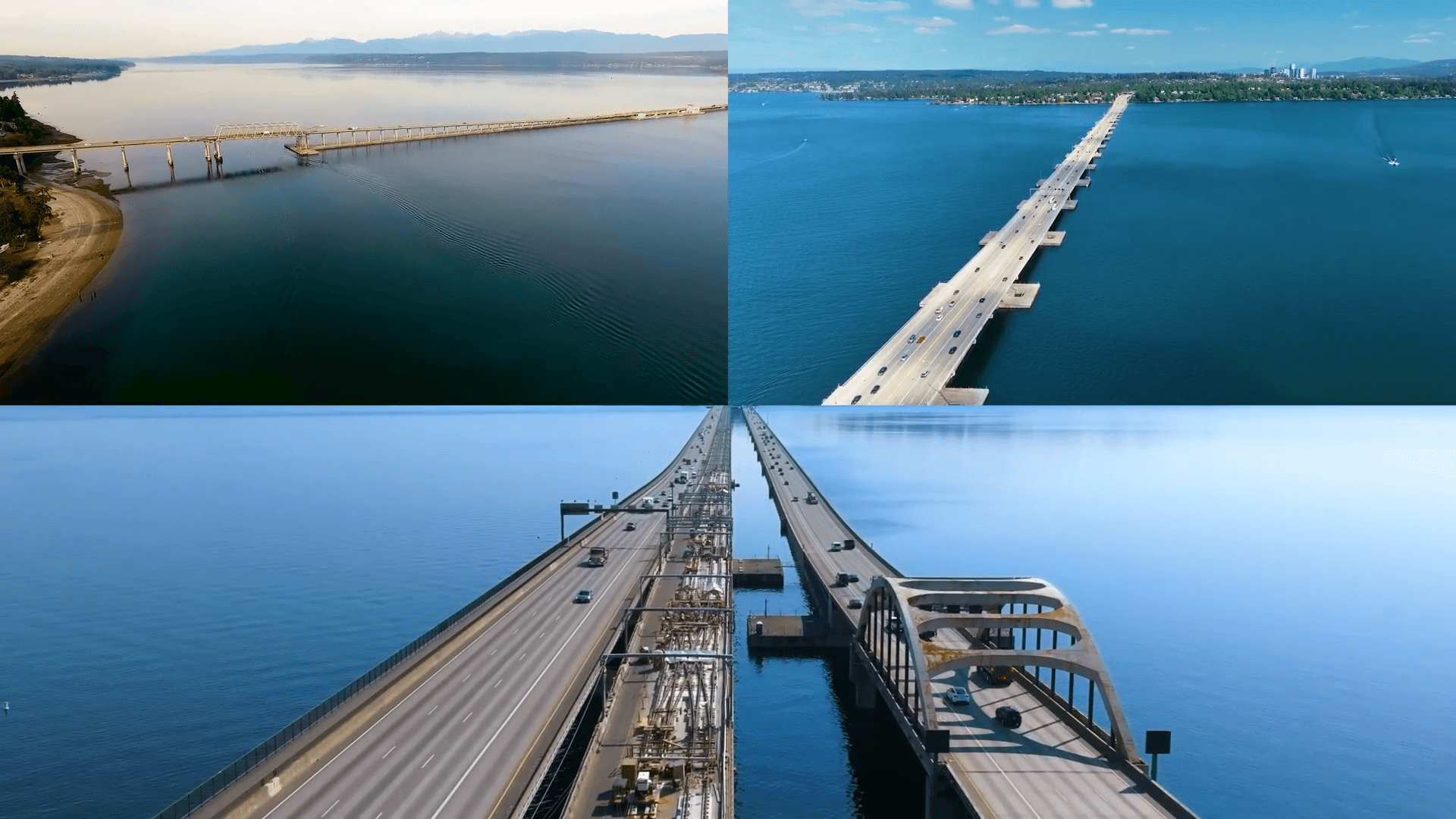
For most of history, floating bridges have been temporary structures, often used by militaries crossing water, but over the course of the twentieth century, engineers learned to build more permanent floating bridges. These structures require very particular conditions–calm waters, minimal ice, and so on–but they can be great options for crossing lakes where the traditional anchoring options for a bridge just don’t exist. In this Practical Engineering video, Grady discusses some of the challenges and innovations of these unusual bridges. (Video and image credit: Practical Engineering)
The loud noises of construction are not just an issue for humans. Sound and pressure waves from underwater construction are a problem for water-dwellers, too. So engineers use bubble curtains around a construction site to help reduce the amount of sound that escapes. Water and air transmit sound very differently; in acoustic terms, they have very different impedance. You’ve probably experienced this yourself if you’ve ever compared the sounds of a swimming pool above and below the surface. Because some of a sound’s intensity gets lost in the water –> air –> water transition, a bubble curtain can halve the sound pressure transmitted from equipment. (Video and image credit: Practical Engineering)
Although they’re iconic, arch dams like the Hoover Dam are relatively unusual. In this Practical Engineering video, Grady looks at the forces a dam needs to withstand and where and why an arch dam is useful. It’s a good reminder that even water that (for the most part) isn’t moving is still a challenge to deal with. (Video and image credit: Practical Engineering)
In our industrialized society, pollutants are, to an extent, unavoidable. Even with technologies to drastically reduce the amount of pollutants leaving a factory or plant, some will still get released. It’s up to engineers to make sure that those released spread out enough that their overall concentration does not pose a risk to public health. In this Practical Engineering video, Grady explains some of the physics and engineering considerations that go into this task.
As he demonstrates, taller smokestacks speed up the buoyant exhaust plume (to an extent), which exposes the plume to higher winds, greater turbulence, and, thus, quicker dispersal. But atmospheric conditions and even nearby buildings all affect how a plume spreads. (Image and video credit: Practical Engineering)
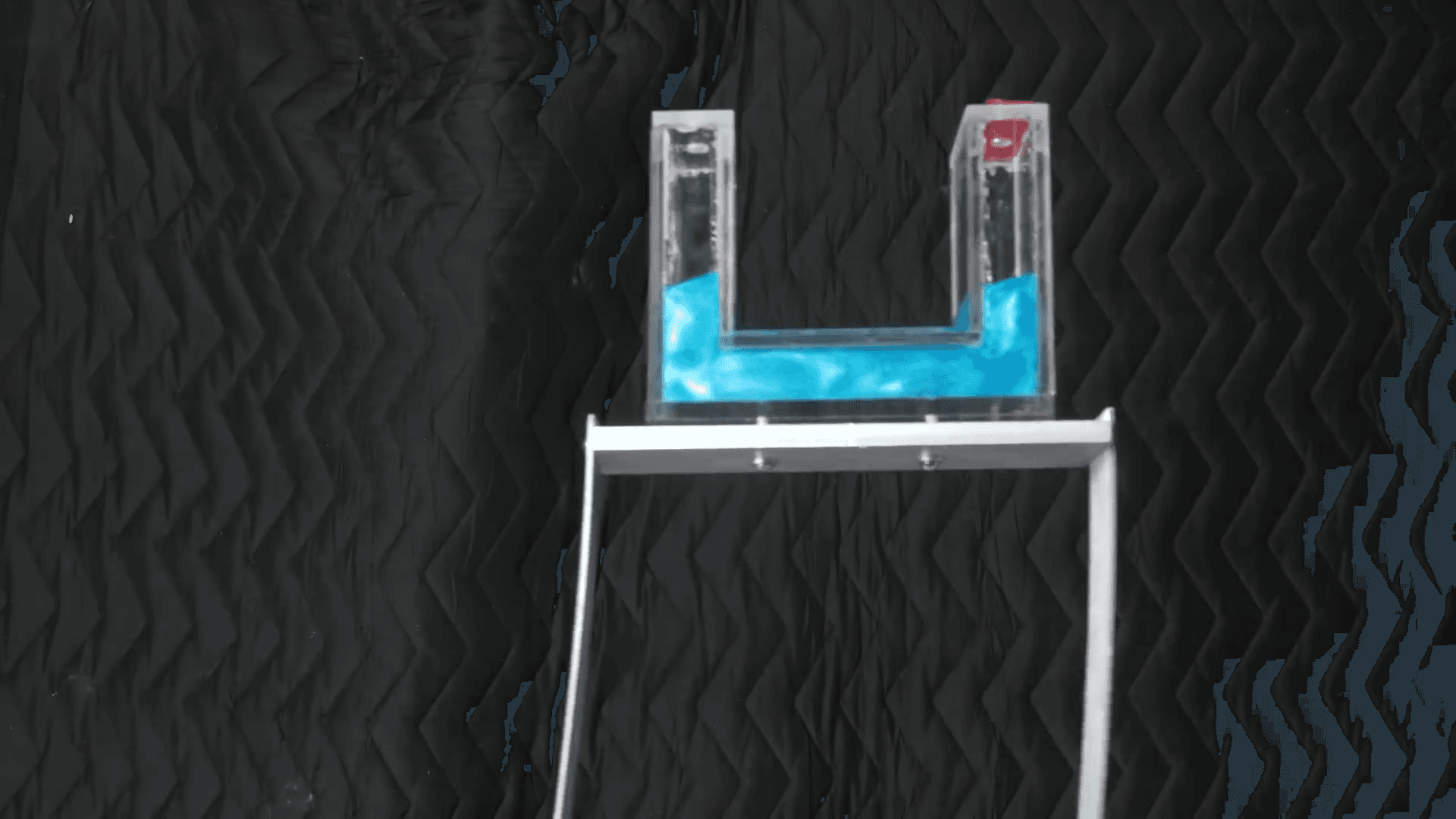
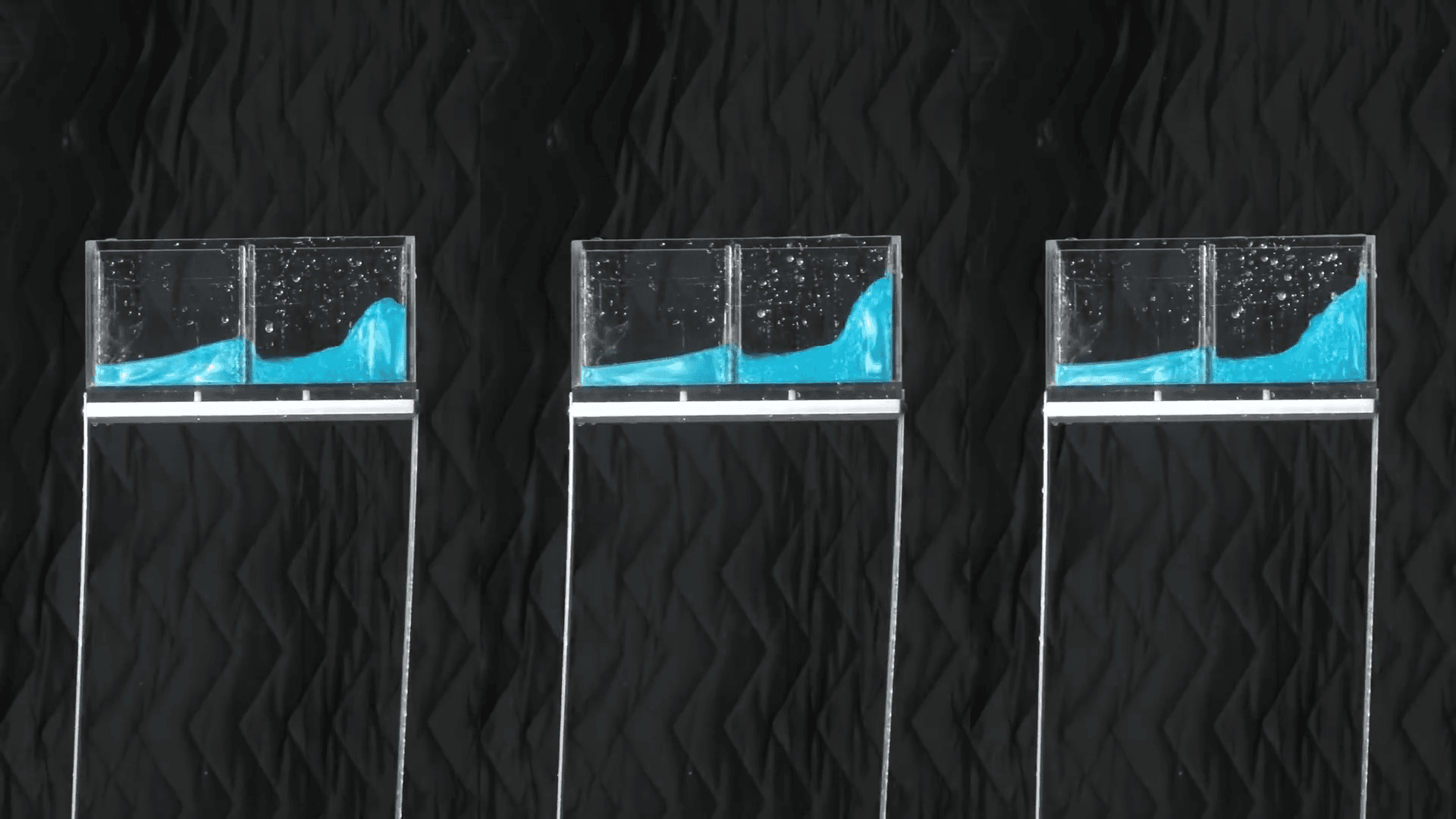
Wind forces on a skyscraper can set it swaying, so engineers design dampers to stop the motion and keep users comfortable. Some buildings use suspended solid mass dampers to counter a building’s motion, but others take a liquid approach. Whether by shifting water through specially shaped chambers or by sloshing it back and forth in a tank, a tuned liquid damper system can quickly bring a building back to rest. In this Practical Engineering video, Grady discusses the challenges of designing these systems and demonstrates how they work with a cool tabletop version. As a reminder, sloshing also helps in water-bottle flipping and stopping a bouncing ball. (Video and image credit: Practical Engineering)
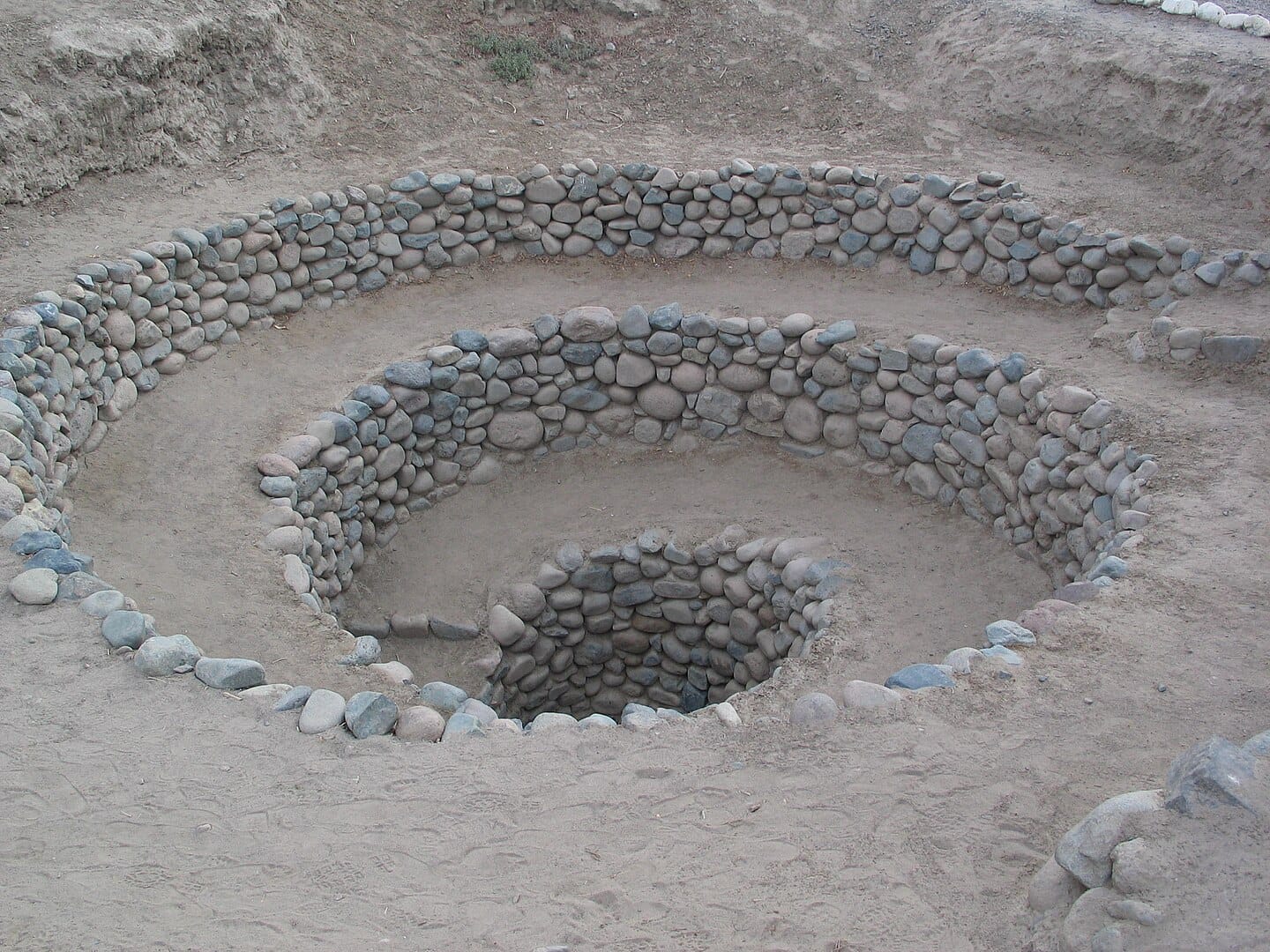
The arid Nazca region of Peru is dotted with spiral-shaped indentations, part of an irrigation system that helped indigenous civilizations thrive here before European contact. Although the region’s rainfall varies year-to-year, it never amounts to much. So pre-Columbian Nazcans turned instead to underground aquifers to gather and transport water.
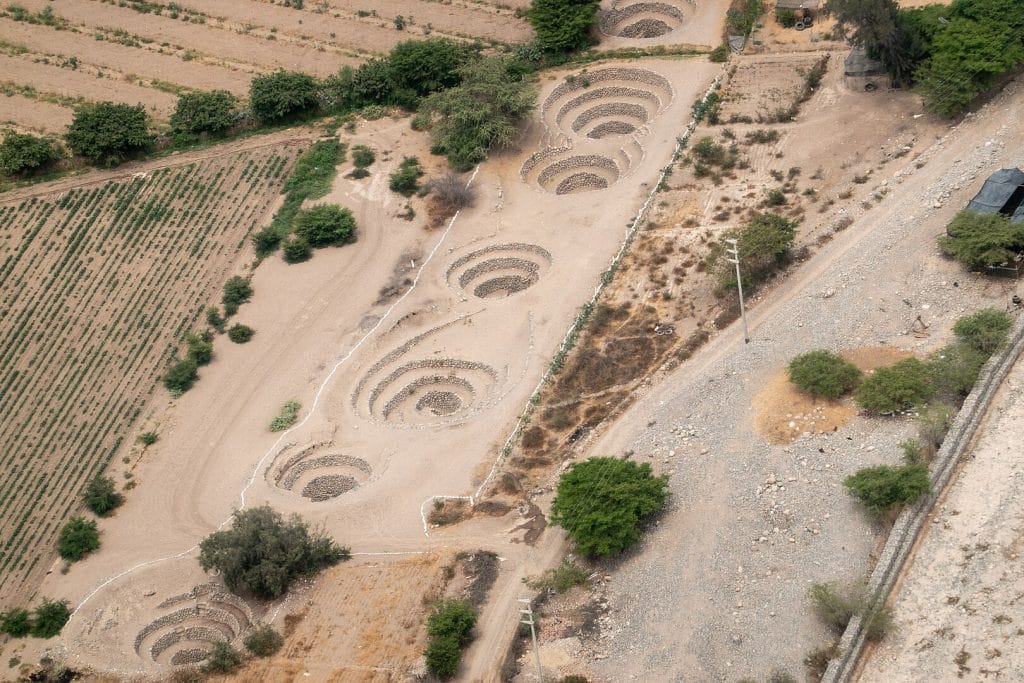
An aerial view of several puquois chimneys near Nazca, Peru.
Aquifers in the region slope downward, following the local geology. Puquios builders began by digging a preliminary well in the highlands, tunneling down until they reached the aquifer. Then they built a horizontal tunnel underground, sloping gently downward, toward the location where water was needed. Along that roughly horizontal tunnel, they built additional chimneys, the spiraling mouths of which are seen above. These chimneys are thought to serve multiple purposes. They provide maintenance access to the aqueduct tunnel, and their shape may help funnel wind underground to oxygenate the water and help keep it flowing. Eventually, the underground tunnel would exit into an open trench and a reservoir, providing year-round water for irrigation and personal use.
Although the puquios cannot themselves be dated through usual archaeological means, the current consensus is that they originate from around 500 C.E., with subsequent modifications by both indigenous and colonial inhabitants. Impressively, several dozen puquios are still providing water today. (Image credits: Ab5602/Wikimedia, PsamatheM/Wikimedia, and R. Lasaponara et al.; research credit: R. Lasaponara et al.; via Eleanor K.)
As regions are stressed by severe drought, communities considering how to stretch their water supply increasingly turn to the option of reclaiming wastewater. As Grady explains in this video, that idea faces both technological and psychological challenges. But neither, it turns out, is insurmountable. (Video and image credit: Practical Engineering)
Begun in 1238, Alhambra Palace in Grenada, Spain is a monument to Islamic architecture and clever engineering. Despite sitting far above the city, the Alhambra was fed by the river, diverted from upstream along a canal. Within the palace itself, this water was used for heated flooring, steam rooms, baths, and even a fountain that told the time. This Primal Space video breaks down how engineers pressurized the water lines, moved water into and around the palace, and how wonders like the palace’s fountains worked. As impressive as the engineering is, though, it’s worth remembering that the Alhambra’s engineers were not creating new technologies: multiple older civilizations also used aqueducts, water wheels, and siphons to similar effect. (Video and image credit: Primal Space)
Dams are critical pieces of infrastructure, but, as Grady shows in this Practical Engineering video, they are destined to be temporary. The reason is that they naturally fill with sediment over time. Rivers carry a combination of water and sediment; the latter is critical to healthy shorelines and stable ecology. But while sediment gets carried along by a fast-flowing river, slower flow rates allow sediment to fall out of suspension, as demonstrated in Grady’s tabletop flume. As his river transitions to a deeper, slower-flowing reservoir, sand falls out of the flow, building up colorful strata. The sand and water even create dynamic feedback loops, as seen with the dunes that form in his timelapse and march toward the dam.
Any long-term plan for a dam has to deal with this inevitable build-up of sediment, and, unfortunately, it’s not a simple or cheap problem to address, as discussed in the video. (Video and image credit: Practical Engineering)