Tag: bubbles

  • Carbonation in Microgravity

    Carbonation in Microgravity

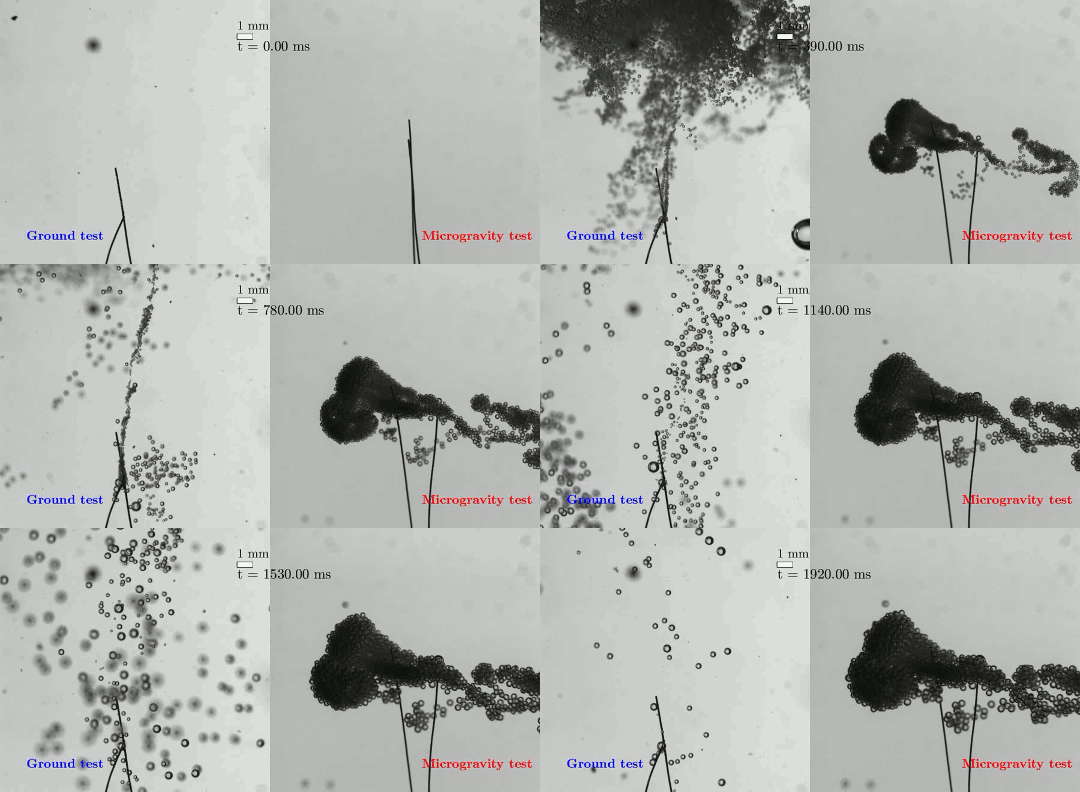
    Bubbly beverages are popular among humans, but there’s surprising complexity underlying their seemingly simply carbonation, as explored in a new Physics Today article. Most drinks get their bubbles from carbon dioxide, which at higher than atmospheric pressures, can stay dissolved inside water and other liquids. When that pressure gets released, any carbon-dioxide-filled gas cavity in the liquid adopts the allowable saturation concentration for the ambient pressure, which sets up a concentration gradient of carbon dioxide  between the liquid and the bubble. That causes carbon dioxide gas to diffuse into the bubbles, making them grow. 

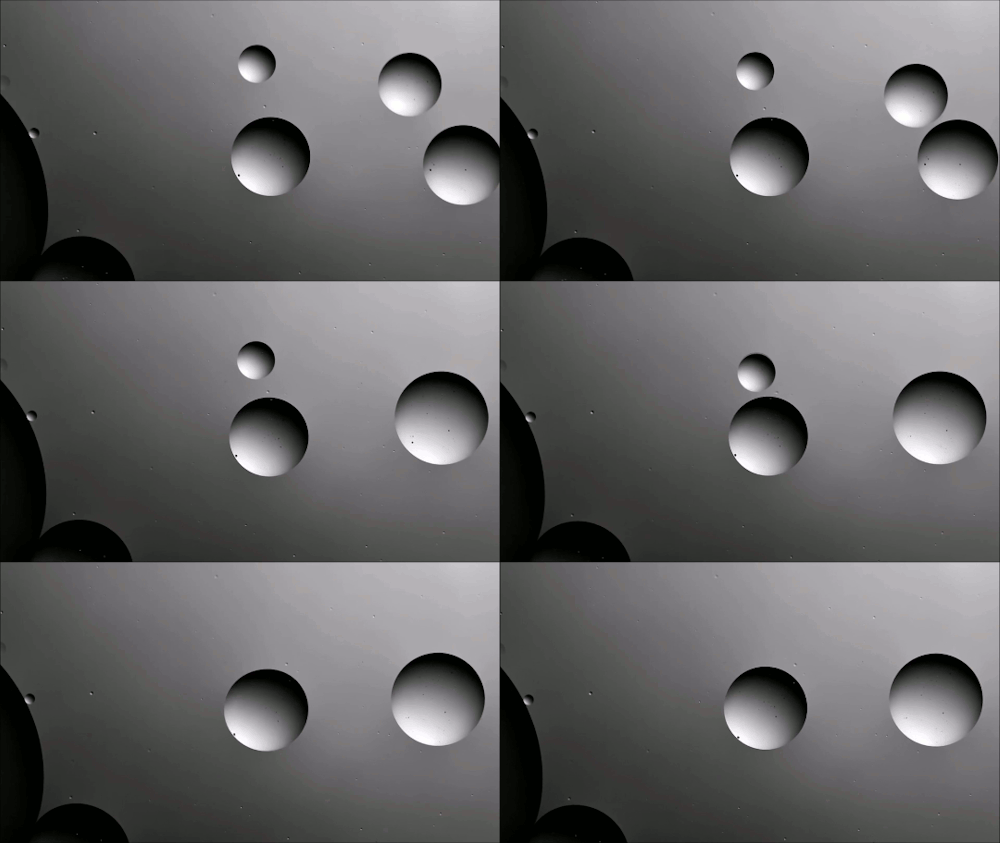
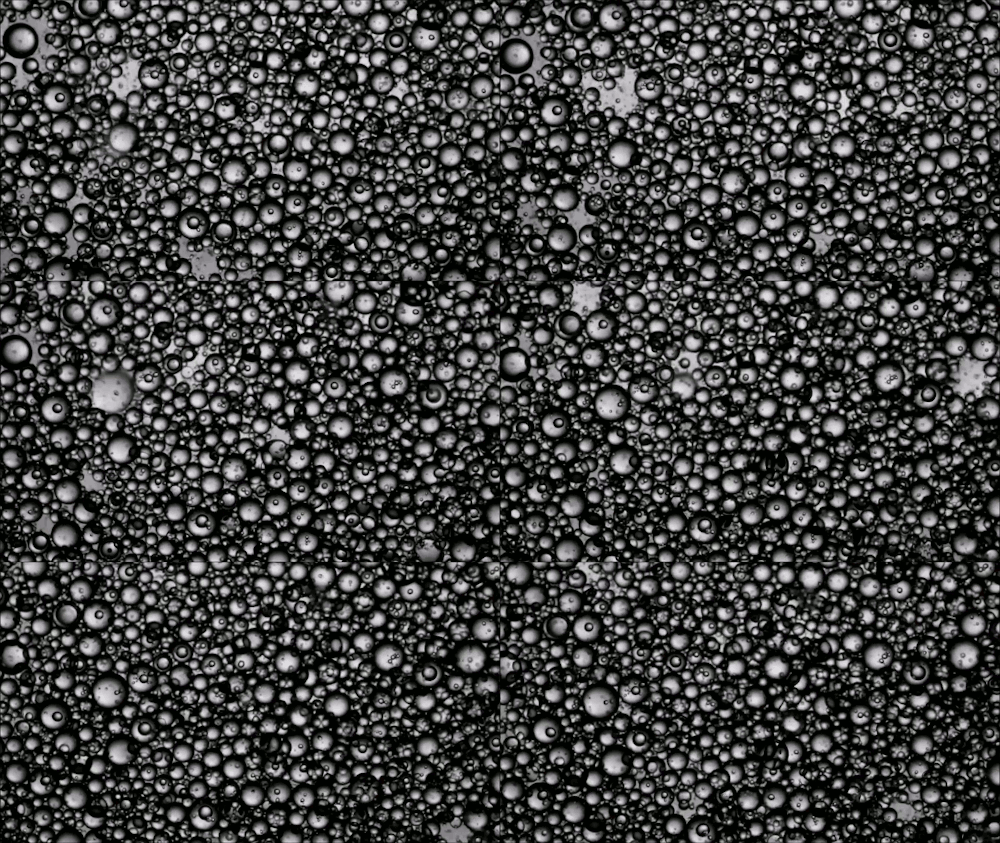
    Here on Earth, those growing bubbles are buoyant, and they form rising plumes of bubbles. They continue gathering carbon dioxide as they rise, making them grow ever larger (lower left). In microgravity, on the other hand, the bubbles congregate where they form and continue growing through diffusion (lower right). This is one reason carbonated beverages are unpopular in space – instead of rising to the surface and escaping, all the carbon dioxide in a drink gets consumed, leaving astronauts with no way to expel it aside from burping!

    For lots more fascinating facts about bubbly drinks – including how they relate to geology! – check out the full Physics Today article. (Image credits: beer – rawpixel; bubbles – P. Vega-Martínez et al.; see also: R. Zenit and J. Rodríguez-Rodríguez)

  • Featured Video Play Icon

    “Float”

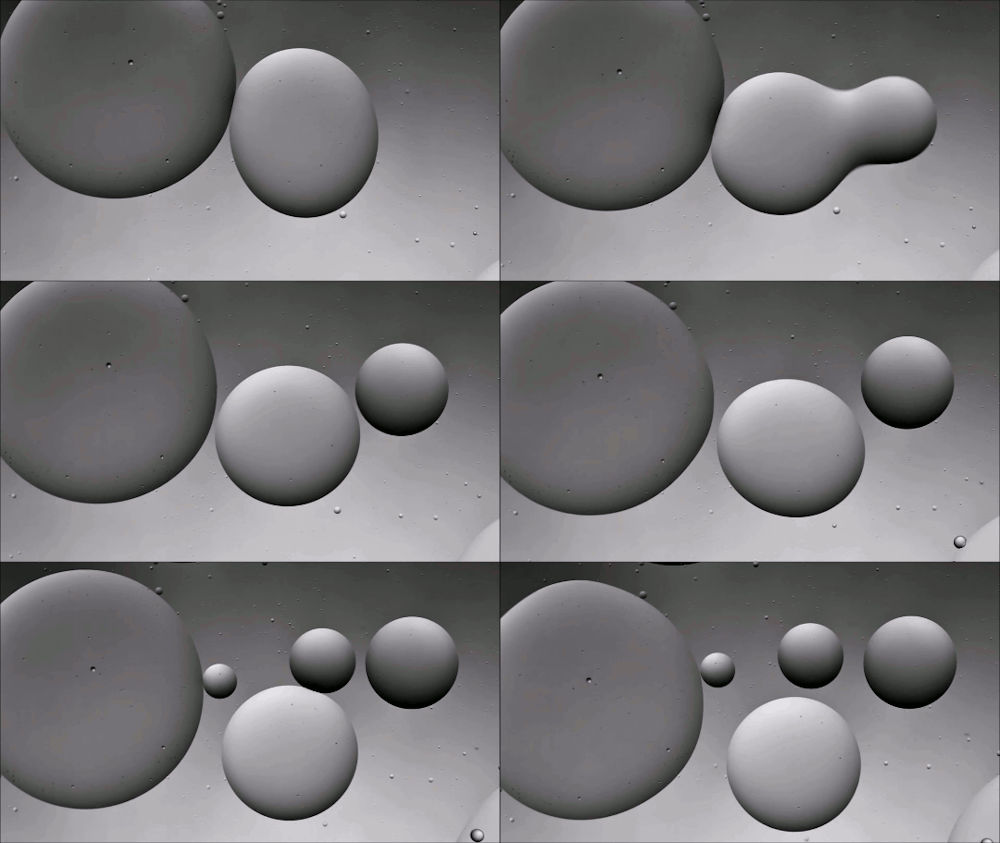
    In “Float” artist Susi Sie uses water and oil to create a whimsical landscape of bubbles and droplets. Coalescence is a major player in the action, though Sie uses some clever time manipulations to make her bubbles and droplets multiply as well. Watching coalescence in reverse feels like seeing mitosis happen before your eyes. (Video and image credit: S. Sie)

  • Bubbling

    Bubbling

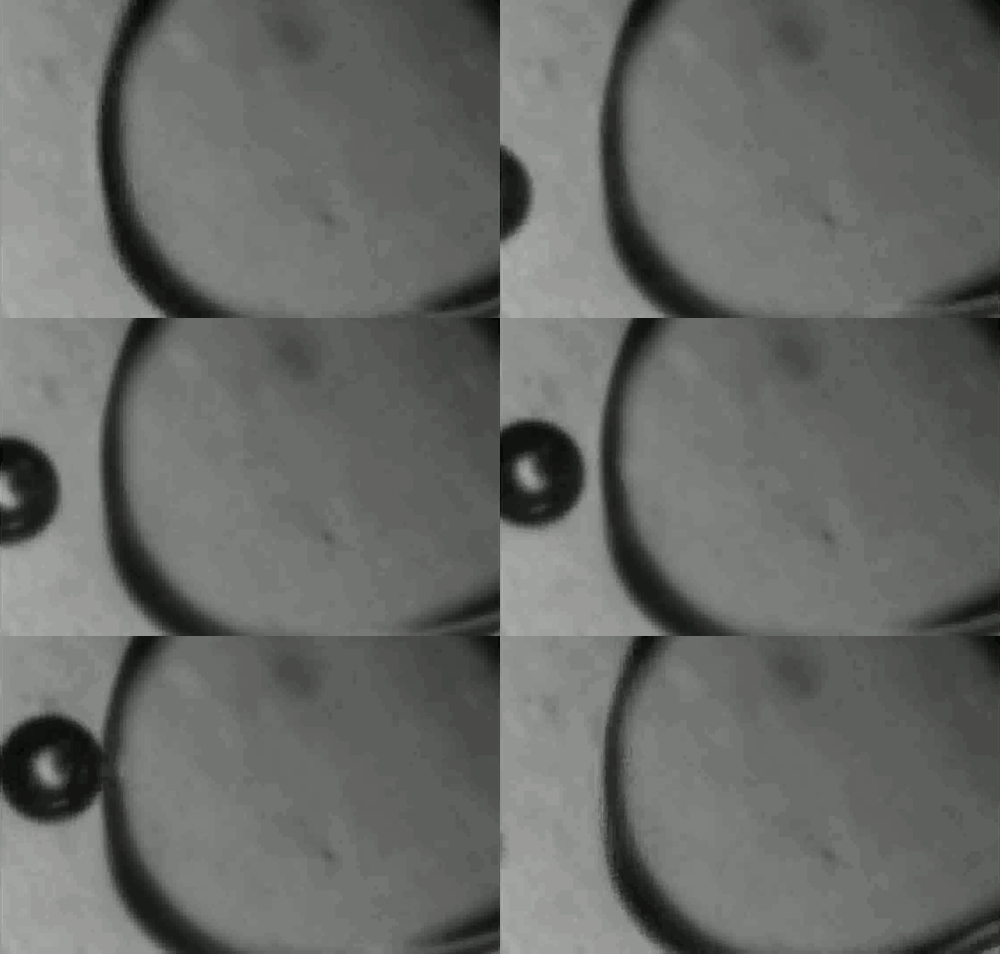
    Many chemical reactions produce gases as a stream of bubbles out of a solution. Here we see the electrolysis of an aqueous sodium hydroxide solution (NaOH), which produces hydrogen gas on the cathode (left) and oxygen gas on the anode (right). In timelapse, the gas bubbles nucleate on the electrode, slowly growing larger. Once the the bubbles are large enough to detach, though, they rise so quickly they look like they disappear! The large buoyant forces on them drive that brief journey to the surface. By contrast, the smaller bubbles rise slowly, held back by their lesser buoyancy and the viscous drag they experience. (Video and image credit: Beauty of Science)

  • Featured Video Play Icon

    Bioinspiration, Underwater Sniffing, and Mixing Toothpaste

    In this month’s FYFD/JFM video, we explore some intersections between the animal kingdom and our own lives. Learn about designing better buildings with inspiration from termites; see the fascinating superpower of the star-nosed mole; and learn what goes into products like the toothpaste you (hopefully) use daily. All this and more in the latest video! Missed one of our previous ones? Good news: we’ve got you covered. (Image and video credit: N. Sharp and T. Crawford)

  • Levitating with Sound

    Levitating with Sound

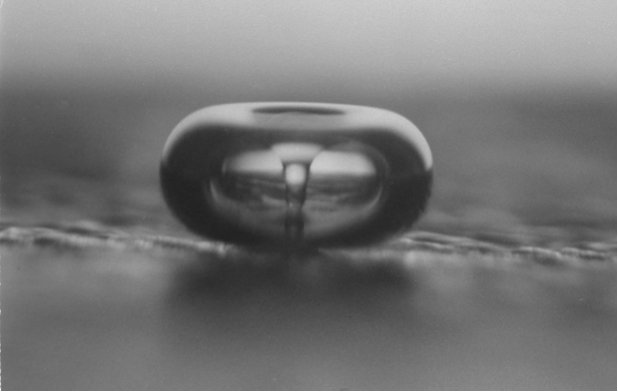
    Sound can manipulate fluids in fascinating ways, from levitation to vibration. Here researchers use sound to levitate and manipulate droplets and turn them into bubbles. Increasing the acoustic pressure on the levitating droplet flattens it, then slowly causes the drop to buckle. When the buckled film encloses a critical volume, the sound waves resonate inside it. That causes a big jump in acoustic pressure, which makes the drop snap closed into a bubble. (Image and research credit: D. Zang et al.; via Science News; submitted by Kam-Yung Soh)

  • Foam and Flow

    Foam and Flow

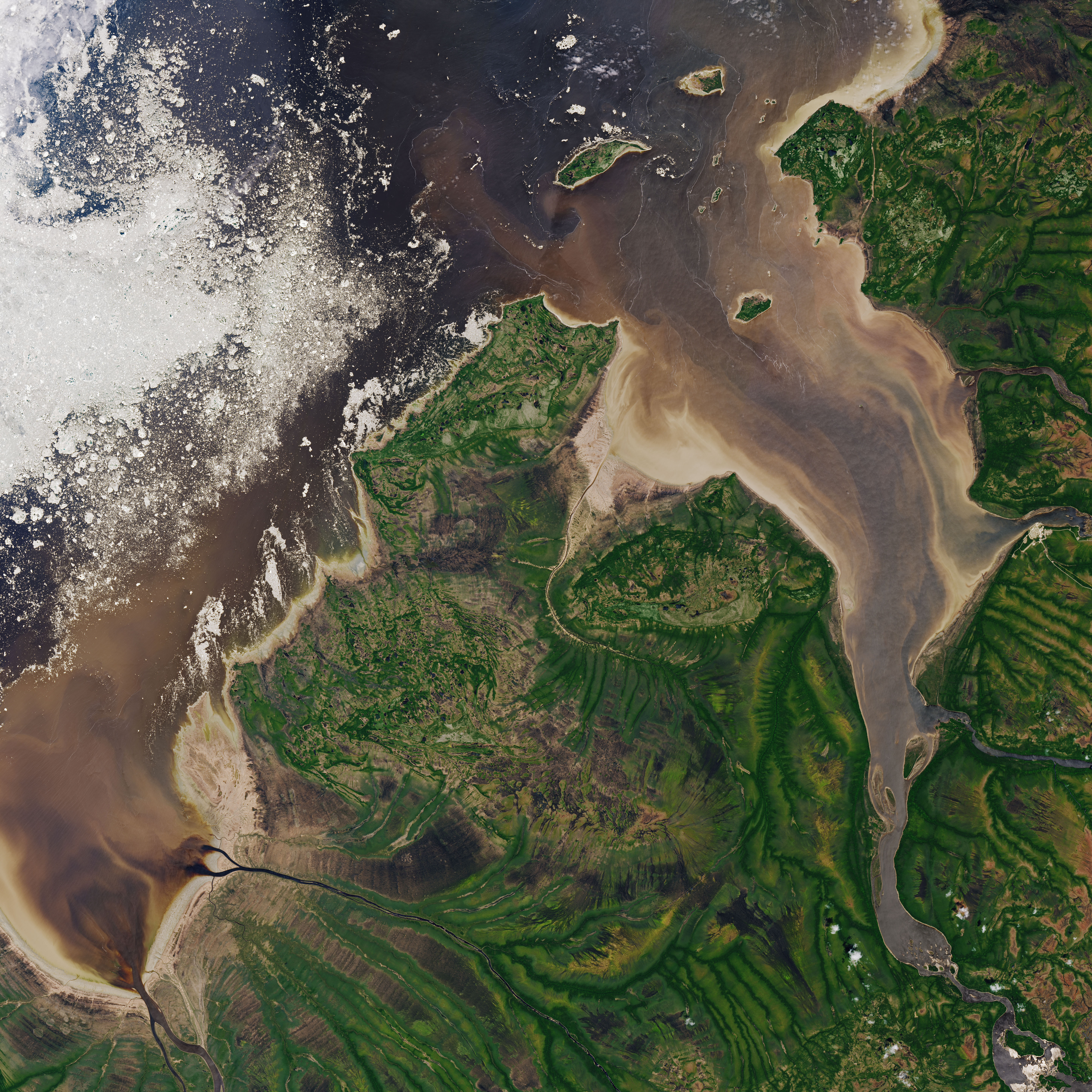
    Fluid dynamics often play out on a scale that’s difficult to appreciate from our earthbound perspective, but fortunately, we have tools to aid us. This natural-color satellite image shows Rupert Bay in Quebec, where fresh water stained with sediments and organic matter (right) flows into the saltier water of James Bay (left). White filaments at the edges of these mixing regions are likely foam floating atop the water. The turbulence caused at the intersection of the two bodies of water whips up organic films to form bubbles. The white on the far left of the image is ice chunks still floating in James Bay when the image was taken in early June. Click through to admire the high-resolution version. (Image credit: U.S. Geological Survey; via NASA Earth Observatory)

  • Heating from Cavitation

    Heating from Cavitation

    When cavitation bubbles collapse, they can produce temperatures well over 2,000 Kelvin. Since cavitation near a surface can be so destructive, researchers have long wondered whether the high temperatures inside the bubble can be transmitted to nearby surfaces. A new set of numerical simulations provides some insight into that process. The researchers found that collapsing cavitation bubbles raised nearby wall temperatures in two ways: bubbles that were further away sent shock waves that heated the material, and nearby bubbles could contact the surface itself as they collapsed.

    Heat transfer requires time, however; this is part of why quickly dunking your hand in liquid nitrogen and pulling it out likely won’t damage you. (Still, we don’t recommend it.) The cavitation bubbles could only transmit these high temperatures for less than 1 microsecond, which means that most materials won’t actually heat up to their melting temperature. The researchers did conclude, however, that softer materials exposed to frequent bubble collapses could show localized melting under the barrage. (Image credit: L. Krum; research credit: S. Beig et al.)

  • The Sound of Bubbles

    The Sound of Bubbles

    When you enjoy the sound of a babbling stream on a hike, what you’re actually hearing is bubbling. Air bubbles caught in the water resonate at a frequency that depends on their size. In fact, you can use a hydrophone – basically an underwater microphone – to listen to these bubbles and learn about them. Researchers recently did exactly that with glasses of sparkling wine. By listening to the bubbles and applying a simple physical model, the researchers could characterize differences in two brands of sparkling wine, including just how bubbly they were and what size their typical bubbles are. They hope eventually to develop acoustic techniques that can monitor quality control for sparkling wines and other carbonated beverages. (Image credit: J. Kääriäinen; research credit: K. Spratt et al.; submitted by Kam-Yung Soh)

  • A Burst of Microdroplets

    A Burst of Microdroplets

    If you hold a bubbly beverage like champagne or soda near your face, you’ll feel a light mist of tiny, nearly invisible droplets.These droplets form when bubbles reach the surface and pop, generating a tiny jet that ejects an even tinier droplet, as shown in the animation above. This process is remarkably common; its occurrence in the ocean results in billions of tons of sea salt entering our atmosphere each year. Since these tiny microdroplets stay aloft for far longer than their larger brethren, understanding how they form and just how small they can be is vital for understanding their impact on climate, pathogen spreading, and other topics. A new study suggests that the minimum size for an ejected droplet is just 1% of the size of the bubble that births it. (Image and research credit: C. F. Brasz et al., source)

  • Using Embolisms to Fight Cancer

    Using Embolisms to Fight Cancer

    Blocking blood vessels by creating embolisms is, under most circumstances, very bad. But researchers are exploring ways to fight cancer by intentionally and strategically creating these blockages. In gas embolotherapy, researchers inject fluid droplets, which can carry chemotherapy drugs, into the bloodstream. Once they circulate into a cancerous tumor, they use ultrasound to vaporize the droplet and create a gas bubble. Those bubbles lodge inside the capillaries of the tumor, starving it of fresh blood and trapping the chemotherapy drugs inside. It’s a one-two punch to the cancer. Without blood flow, the cancer cells die, and, since the cancer-killing drugs get mostly trapped inside the tumor, patients may require lower dosages and endure fewer side effects. The technique is currently in animal testing, but hopefully it will be a valuable therapy for human patients in the future. (Image credit: Chemical & Engineering News; research credit: Y. Feng et al.; via AIP)