Tag: bubbles

  • Sniffing Underwater

    Sniffing Underwater

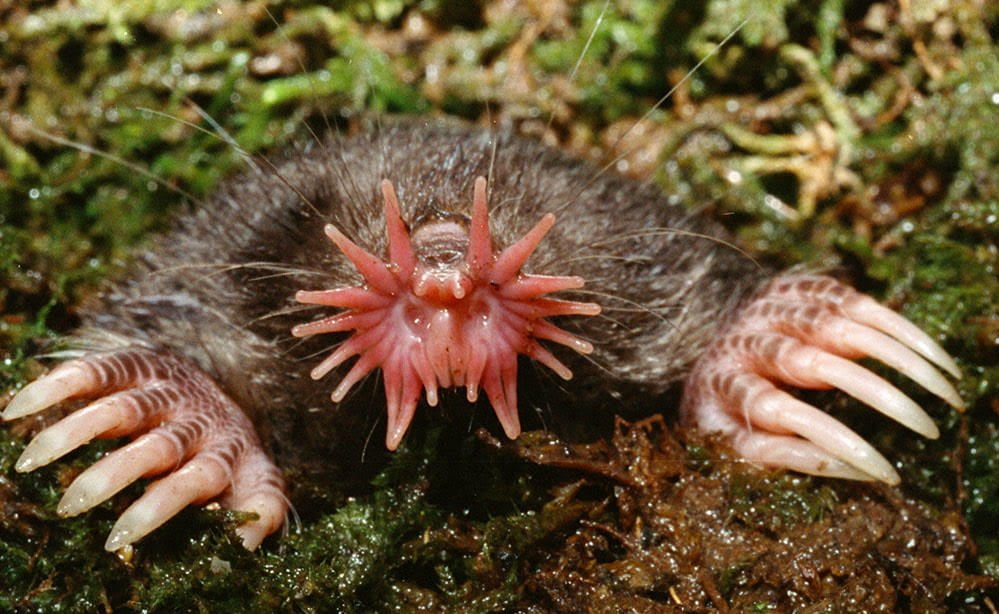
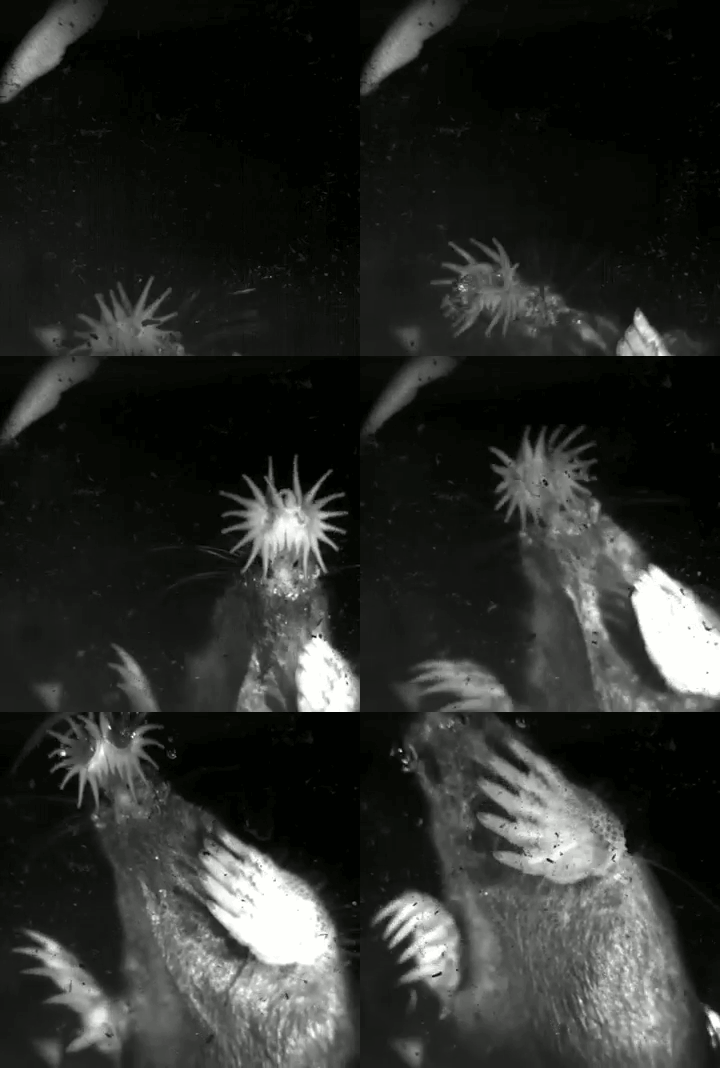
    You’d be forgiven for thinking that the star-nosed mole looks funny. Its distinctive star-shaped nose is a highly-sensitive organ, but the mole doesn’t just use it for finding its way through the underground tunnels it lives in. These moles can actually sniff underwater. By exhaling a bubble and then re-inspiring it, the moles collect scent particles that they can use to locate food. In experiments, both star-nosed moles and water shrews could use this technique to successfully follow a scent trail, demonstrating exploring and pausing behaviors similar to terrestrial sniffing as they did. To learn more about this impressive mammal, listen to the latest episode of Science Friday, where research Ken Catania describes his work with them. (Image credits: K. Catania; via Science Friday)

  • Reducing Drag with Bubbles

    Reducing Drag with Bubbles

    Large ships experience a great deal of drag due to friction between their hull and the water. One method shipbuilders are considering to combat this drag is the use of bubbles, which have been found to reduce drag by up to 40%. The physical mechanism behind this drag reduction is not yet understood, but a recent study suggests that bubble size and bubble coalescence play an important role.

    Researchers introduced surfactants into bubbly boundary layers and found that the reductions in drag evaporated as soon as the surfactants spread. Adding only 6 parts per million of the surfactant decreased average bubble size from 1 mm to 0.1 mm and helped prevent the bubbles from growing via coalescence. The implications are that bubble-induced drag reduction could be extremely sensitive to water conditions. (Image credit: G. Kiss; research credit: R. Verschoof et al.)

  • Spreading Bubbles Help Nature’s Scuba Divers

    Spreading Bubbles Help Nature’s Scuba Divers

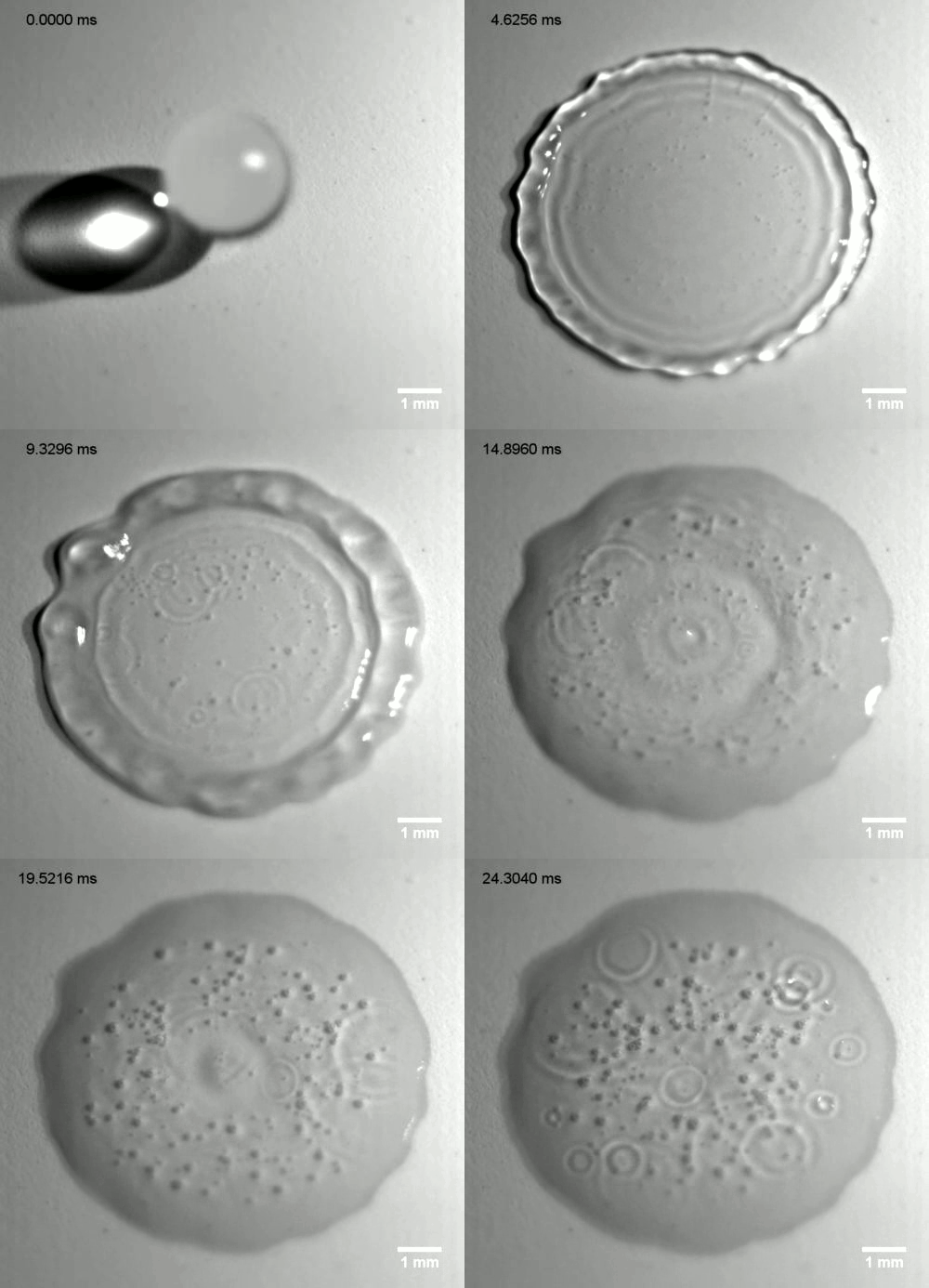
    How liquid droplets spread on solid surfaces is pretty well understood, but researchers have looked less at the related problem of how a gas spreads. In a recent paper, scientists have examined the spreading dynamics of bubbles impacting an immersed solid. As the bubble contacts the surface, it quickly squeezes out water trapped between the bubble and the gas layer trapped at the solid surface. The bubble squishes as surface tension tries to flatten the liquid-gas interface. Buoyancy also helps flatten the bubble. The spreading is remarkably fast, taking only about 10 milliseconds. That’s good news for the many insects who use trapped air bubbles like these to breathe underwater. Check out the video below to learn about some of these natural scuba divers.  (Image credit: H. de Maleprade et al., source; video credit: Deep Look)

  • Acrylic and Oil

    Acrylic and Oil

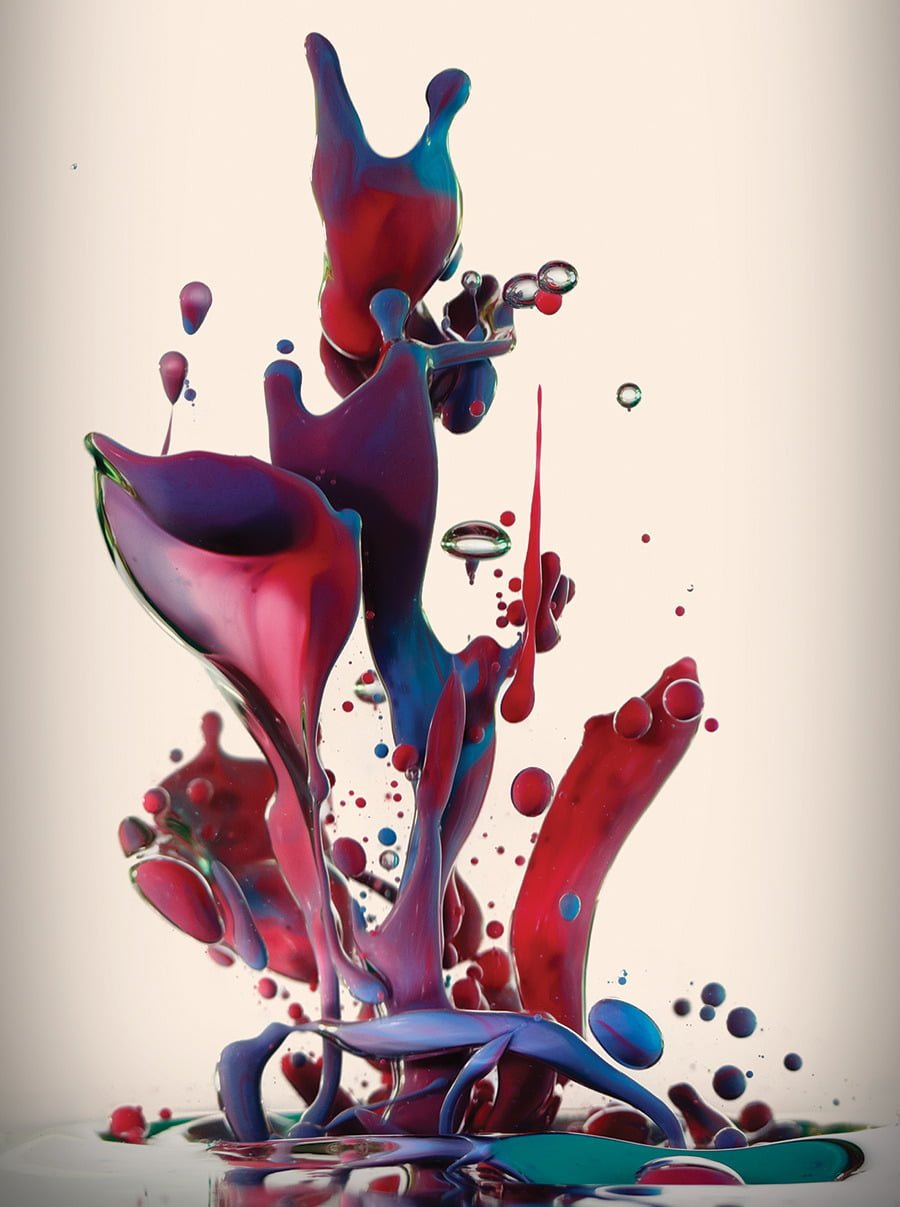
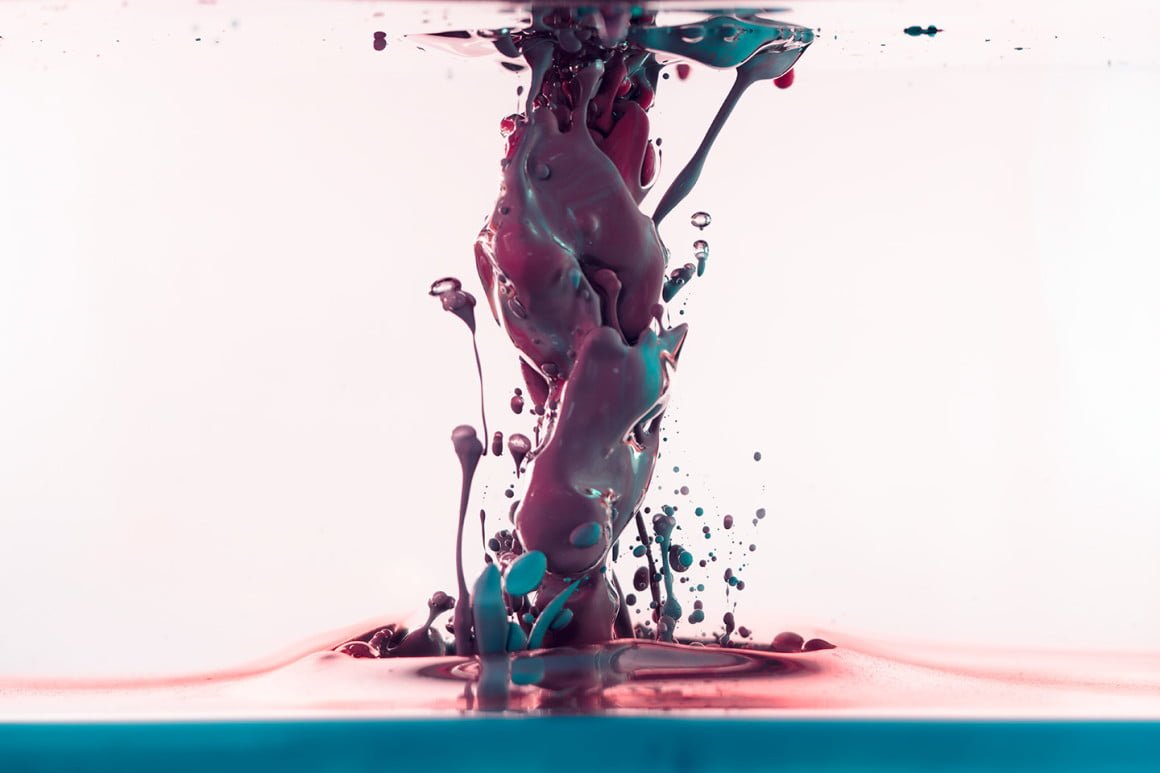
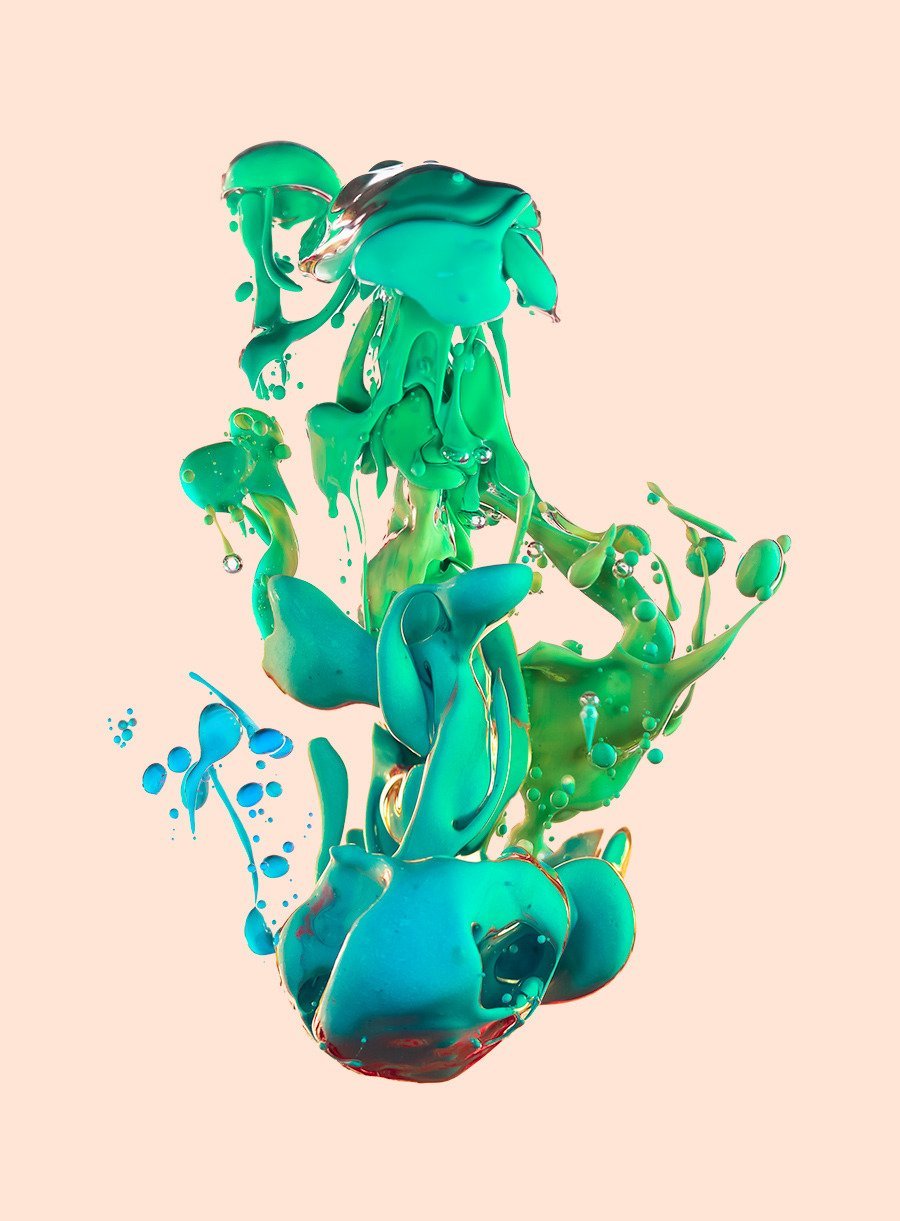
    Photographer Alberto Seveso is well-known for ink in water art, some of which FYFD has featured previously (1, 2, 3). More recently, he’s been experimenting with alternative methods, dropping fluids like acrylic paint into sunflower oil. The effect is quite different but no less beautiful. Because the paint and oil are immiscible, the boundaries between the two fluids are much more clearly defined and highlighted in an iridescent sheen. Instead of appearing like billowing waves of silk, the paint forms abstract and alien shapes driven by gravity, inertia, and density differences. For many more great examples, check out Seveso’s website. (Photo credit: A. Seveso)

  • How Rainfall Can Spread Pathogens

    How Rainfall Can Spread Pathogens

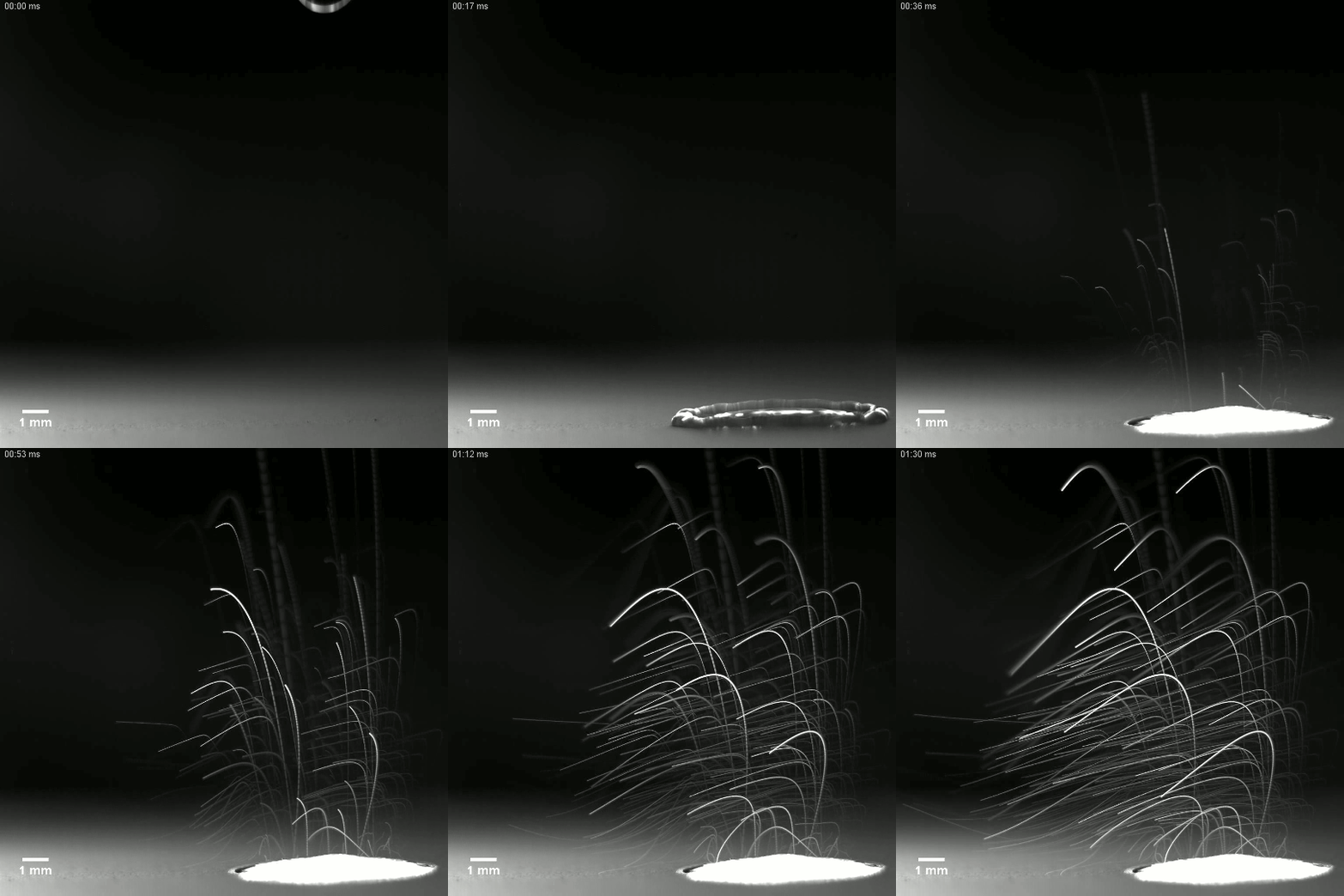
    Rainfall may provide a mechanism for soil bacteria to spread. A new study examines how raindrops hitting infected soil can eject bacteria into the air. When drops fall at the rate of a light rainfall, they form tiny bubbles after impact (upper left). Those microbubbles rise to the top of the water and burst, sending extremely tiny droplets – or aerosols – spraying up into the air (upper right). Soil bacteria can hitch a ride on these aerosols, staying alive for up to an hour while the wind transports them to fresh, new soil. The researchers found that the most aerosols were produced when soil temperature was about 86 degrees Fahrenheit (30 degrees Celsius) – the temperature of tropical soils. Depending on the conditions, a single raindrop could aerosolize anything from zero to several thousands of soil bacteria. (Image and research credit: Y. Joung et al.; video credit: MIT News)

  • Titan’s Bubbly Islands

    Titan’s Bubbly Islands

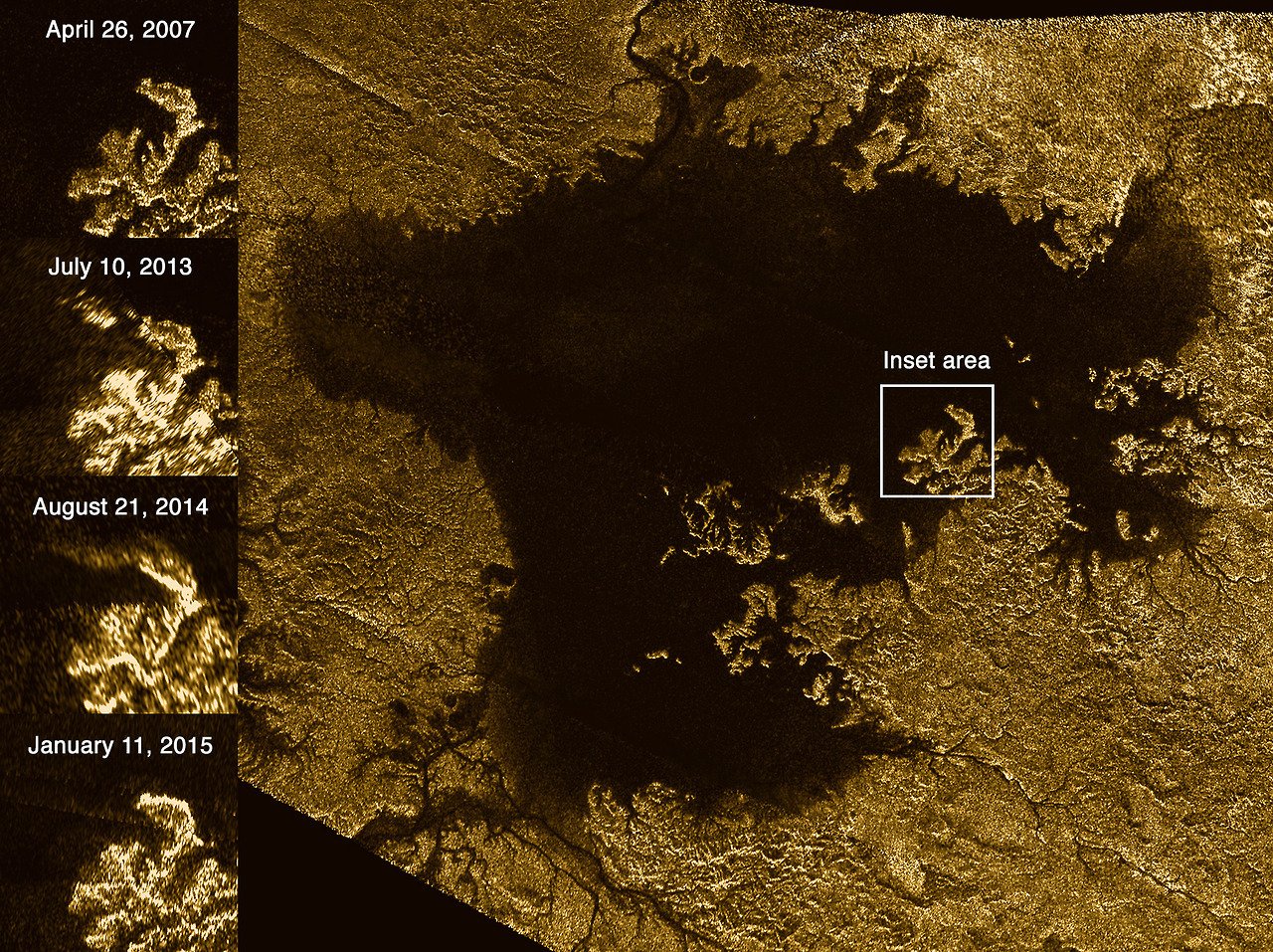
    Titan, Saturn’s largest moon, is a fascinating world with remarkable similarities to our own. It is the only other world we know of with stable bodies of liquid at its surface. Unlike Earth, frigid Titan’s lakes and seas are filled with methane and ethane. Radar data from the Cassini mission has shown oddly changing shorelines on Titan, above, with islands that seem to magically appear and disappear over time.

    Researchers at NASA’s Jet Propulsion Laboratory now think these islands may, in fact, be bubbles. As Titan’s lakes cool, they’re better able to absorb nitrogen gas, but when temperatures warm up, that gas comes out of solution and floats to the surface, much like the bubbles of carbon dioxide in a soda. If this hypothesis holds up, there are some interesting implications for Titan’s atmosphere. Here on Earth, bubbles popping in the ocean are a major source of aerosol particles. It’s possible migrating rafts of bubbles could behave similarly on Titan. (Photo credit: NASA/JPL-Caltech/ASI/Cornell; submitted by jpshoer)

    I’m excited to announce I will be visiting JPL later this month (March 30th), where I have the honor of giving a Women’s History Month talk. If there are any JPLers who are FYFD fans, I hope to see you there. Be sure to RSVP to the ACW luncheon by the March 24th deadline.

  • Featured Video Play Icon

    Four Seasons

    The team behind Beauty of Science decided to explore the four seasons in this video combining macro footage of crystal growth, chemical reactions, and fluid dynamics. It’s always a fun game with videos like this to try and guess exactly what makes the mesmerizing patterns we see. Are those blue streaming waves in Spring caused by alcohol shifting the surface tension in a mixture? Are the dots of color welling up in Autumn a lighter fluid bursting up from underneath a denser one? As fun as the visuals are, though, what really made this video stand out for me was its excellent use of “The Blue Danube” to tie everything together. Check it out and don’t forget the audio! (Video credit: Beauty of Science; via Gizmodo)

  • Featured Video Play Icon

    Living Fluid Dynamics

    This short film for the 2016 Gallery of Fluid Motion features Montana State University students experiencing fluid dynamics in the classroom and in their daily lives. As in her previous film (which we deconstructed), Shanon Reckinger aims to illustrate some of our everyday interactions with fluids. This time identifying individual phenomena is left as an exercise for the viewer, but there are hints hidden in the classroom scenes. How many can you catch? I’ve labeled some of the ones I noticed in the tags. (Video credit: S. Reckinger et al.)

  • Daily Fluids, Part 2

    Daily Fluids, Part 2

    We play with fluid dynamics all the time, though we don’t always think of it as such. Here are a few ways it shows up in the ways we play:

    Aerodynamics
    This is the study of air moving past an object.  Whether you’re throwing a paper plane, flying a kite, or riding a bike, aerodynamics has an impact on what you’re doing.

    Lift
    Skipping a rock won’t work unless its impact generates some lift, but we see lift in lots of other places, too, from birds and planes to racecars and sailboats.

    Magnus Effect
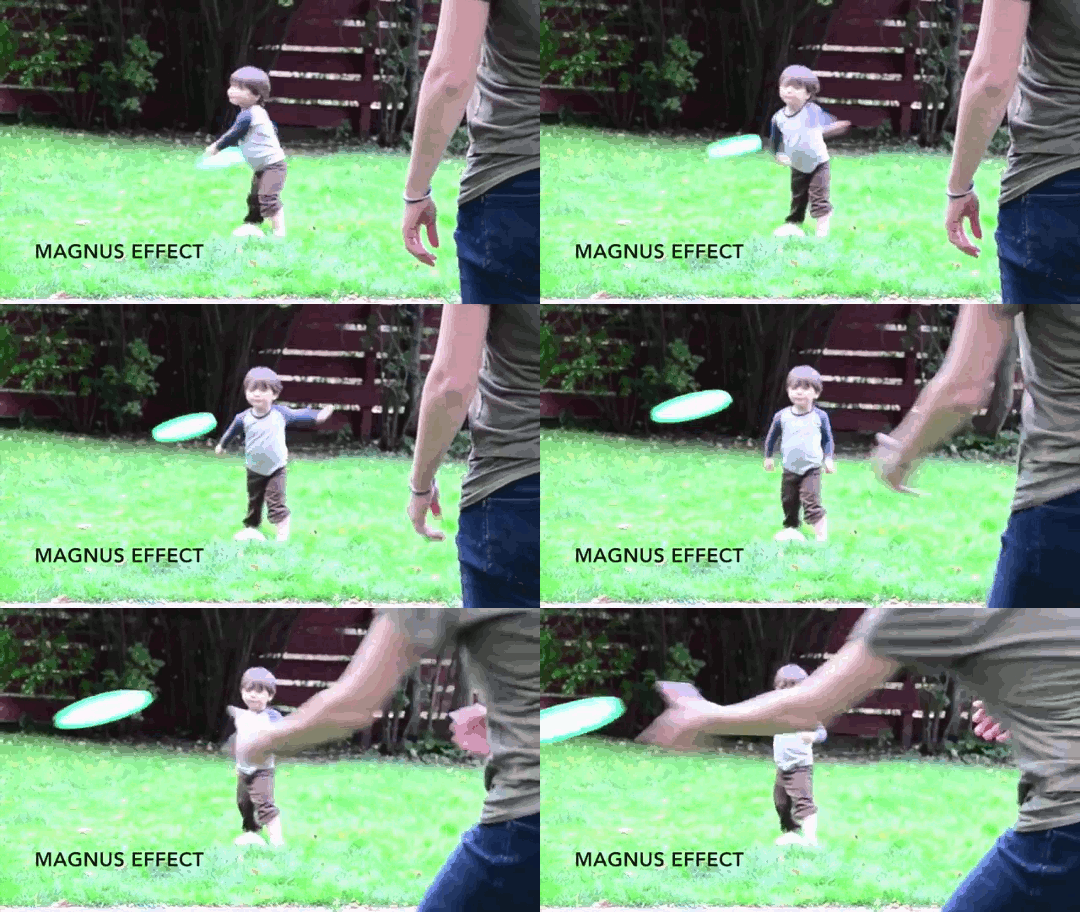
    The Magnus effect relates to lift forces on a spinning object. It can affect the way a frisbee flies, but we see it a lot in ball-related sports, too. The flight of golf balls, volleyballs, baseballs, and soccer balls can all be significantly impacted by the Magnus effect. Check out these videos for a primer on the Magnus effect and the reverse Magnus effect.

    Bubbles
    Everybody loves playing with bubbles. But they may have more of a impact than you realize, whether it’s in making the foam on your latte, enhancing the aroma of your champagne, or making your joints pop.

    Tune in all week for more examples of fluid dynamics in daily life. (Image credit: S. Reckinger et al., source)

  • Microscale Rockets

    Microscale Rockets

    Shown above are a trio of microscale rockets, each about 10 microns in length. These tiny rockets are roughly cylindrical in shape, with a narrower diameter at the front than the back. Like their space-faring brethren, these microrockets are chemically propelled. They draw in fuel from their surroundings, which reacts with the catalysts coating the interior of the microrocket to produce gases. Those gases bubble out the back end of the microrocket, creating thrust capable of propelling the rockets more than 1000 body lengths/second. Researchers have already demonstrated that these tiny rockets can haul cargo along with them. Scientists hope one day to use these self-propelled microrockets to help deliver drugs or isolate cancer cells. (Image credit: J. Li et al., source)