
When birds come in for a landing, they pitch back and heave their wings as they come to a stop in a perching maneuver. Some birds, researchers noticed, partially fold their wings during the move, creating what’s known as a swept wing. Curious as to the effect of this sweep, the team recreated the wing motion of a perching bird using two flat plates — one rectangular and one swept — and measured the flow around them during the maneuver. They found that the swept wing had greater lift, thanks to a spanwise flow inherent to swept wings that helped stabilize the leading-edge vortex. (Image credit: D. George; research credit: D. Adhikari et al.; via APS Physics)
Search results for: “vortex”
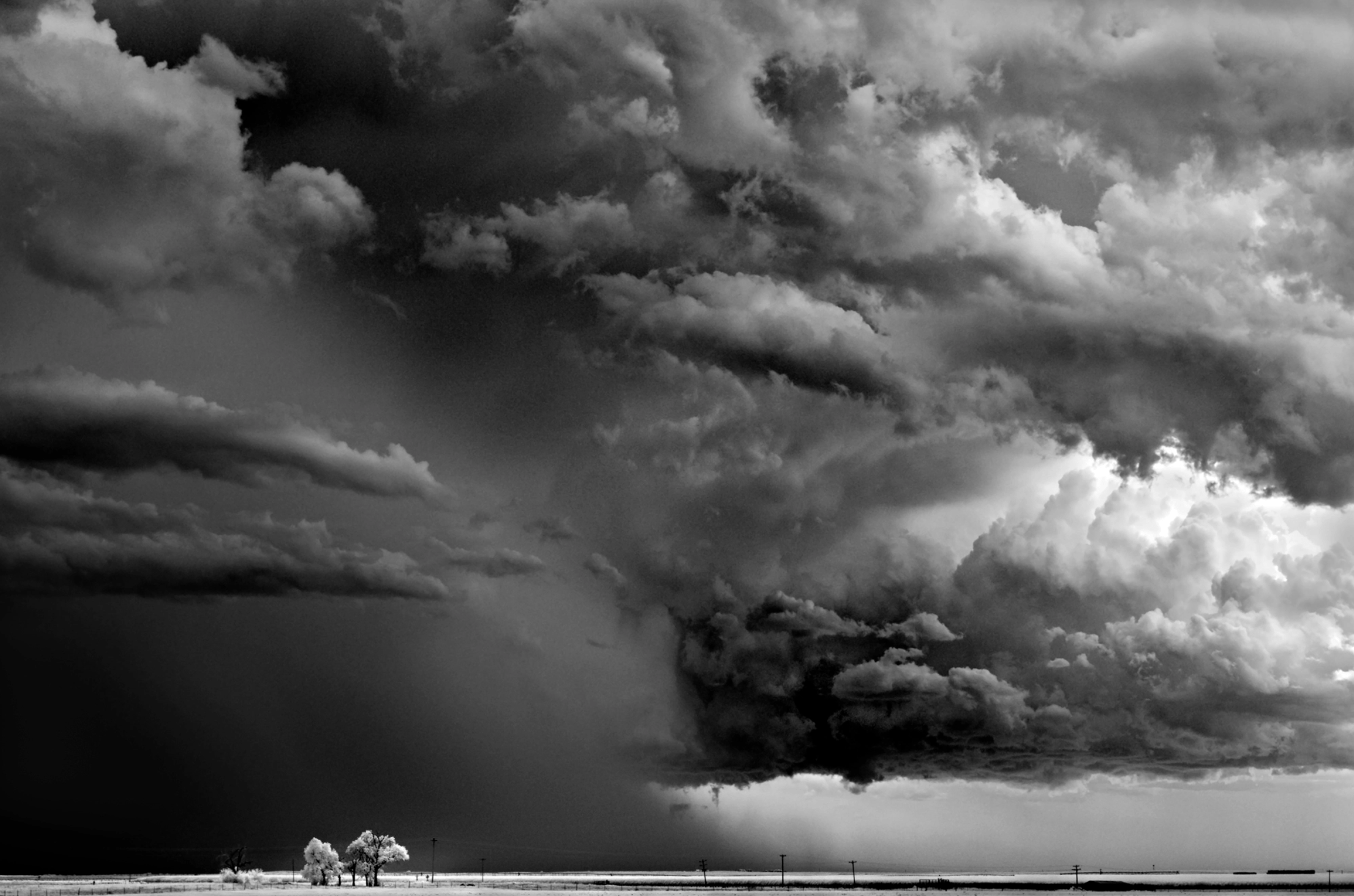
Stormy Skies
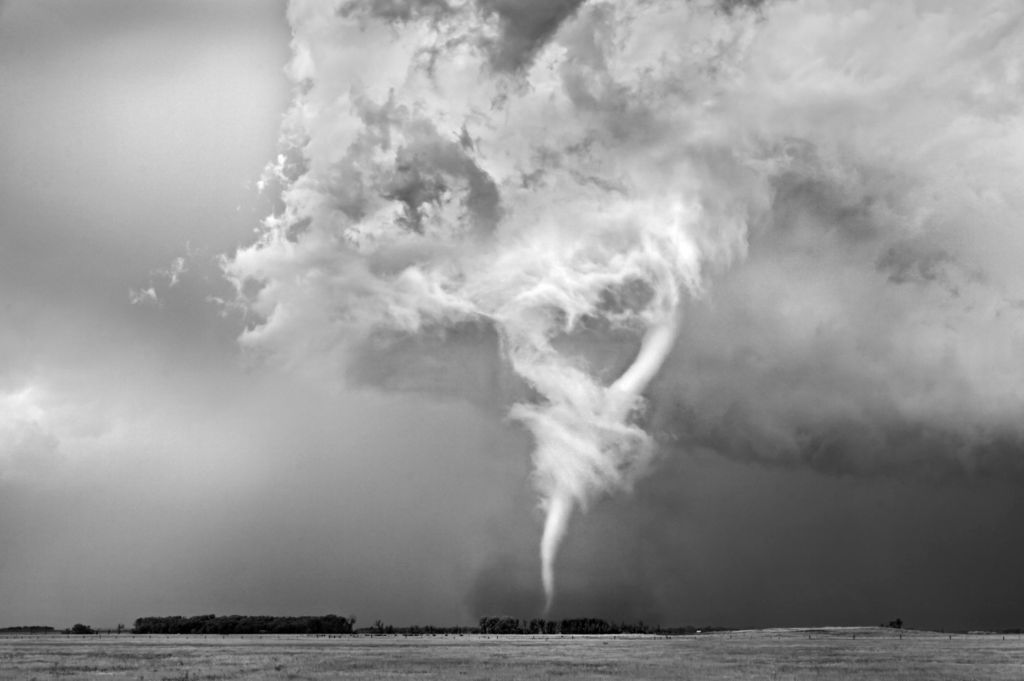


Photographer Mitch Dobrowner captures the majestic and terrifying power of storms in his black and white images. Towering turbulence, swirling vortices, and convective clouds abound. See more of his work at his website and Instagram. (Image credit: M. Dobrowner; via Colossal)
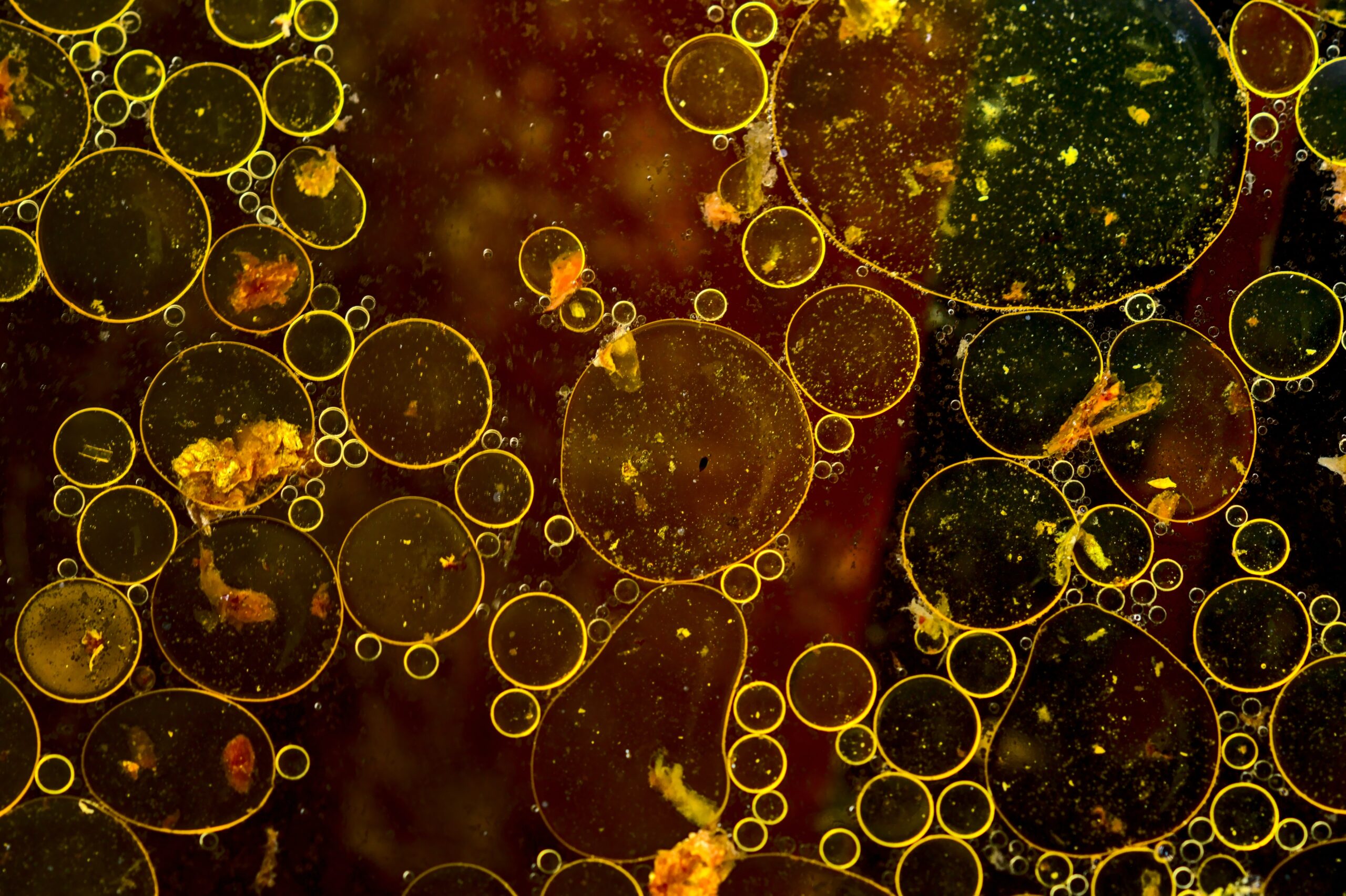
Mixing the Immiscible
Immiscible liquids — like oil and water — do not combine easily. Typically, with enough effort, you can create an emulsion — a mixture formed from droplets of one liquid suspended in the other — like the one above. But a team of researchers have taken mixing immiscible liquids to a new level using their Vortex Fluid Device (VFD).
Longtime readers may remember the group from their Ig-Nobel-winning demonstration of unboiling an egg, but this time the team is used the VFD to mix and de-mix immiscible liquids. As shown in the video below, the VFD is essentially a fast-spinning tube tilted at a 45-degree angle. As it spins, the liquids inside are forced into thin films with very high shear rates — high enough that immiscible liquids like water and toluene are forced together without forming an emulsion. Essentially, the mechanical forces mixing the liquids are strong enough to overcome the chemistry that typically keeps them apart.
Impressively, the device manages this without using harsh surfactants or catalysts that other methods rely on. As a result, the technique offers a greener method for mixing chemicals for pharmaceuticals, cosmetics, food processing, and more. (Image credit: pisauikan; research credit: M. Jellicoe et al.; video credit: Flinders University; submitted by Marc A.)
Spinning Tops
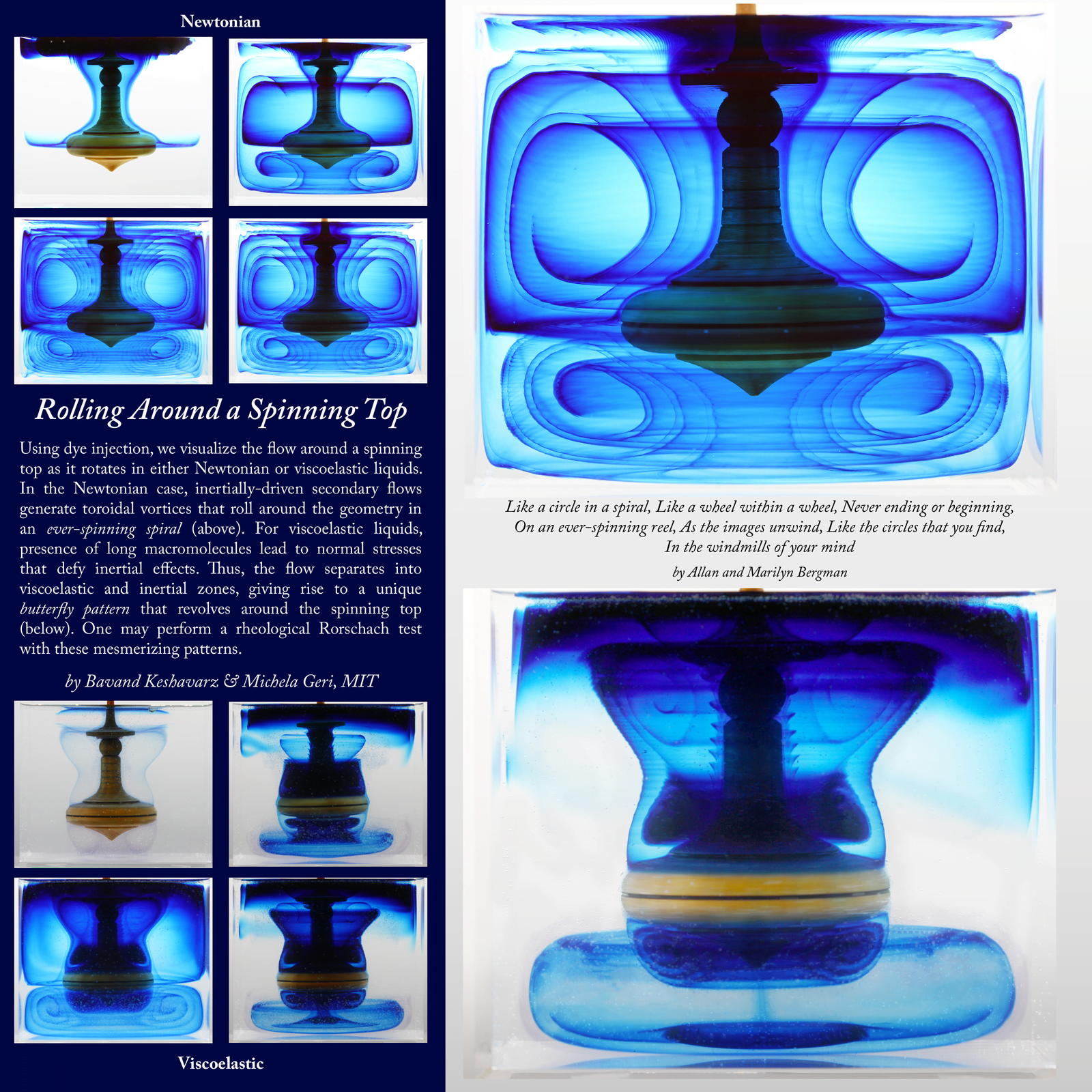
What does the flow look like around a spinning top? Here, researchers used dye to visualize what happens in a Newtonian fluid (like air or water) as well as a viscoelastic fluid. The Newtonian fluid (upper images) divides into two circulating zones, one below the top and one above. They both take the shape of a toroidal, or donut-shaped, vortex, visible here in cross-section.
The long molecules of the viscoelastic fluid lend it elasticity to resist stretching. The result is a very different flow field. Beneath the top, there’s still a toroidal vortex, though it appears tighter. But around the upper part of the top, there’s a butterfly-like region of recirculation! (Image credit: B. Keshavarz and M. Geri)
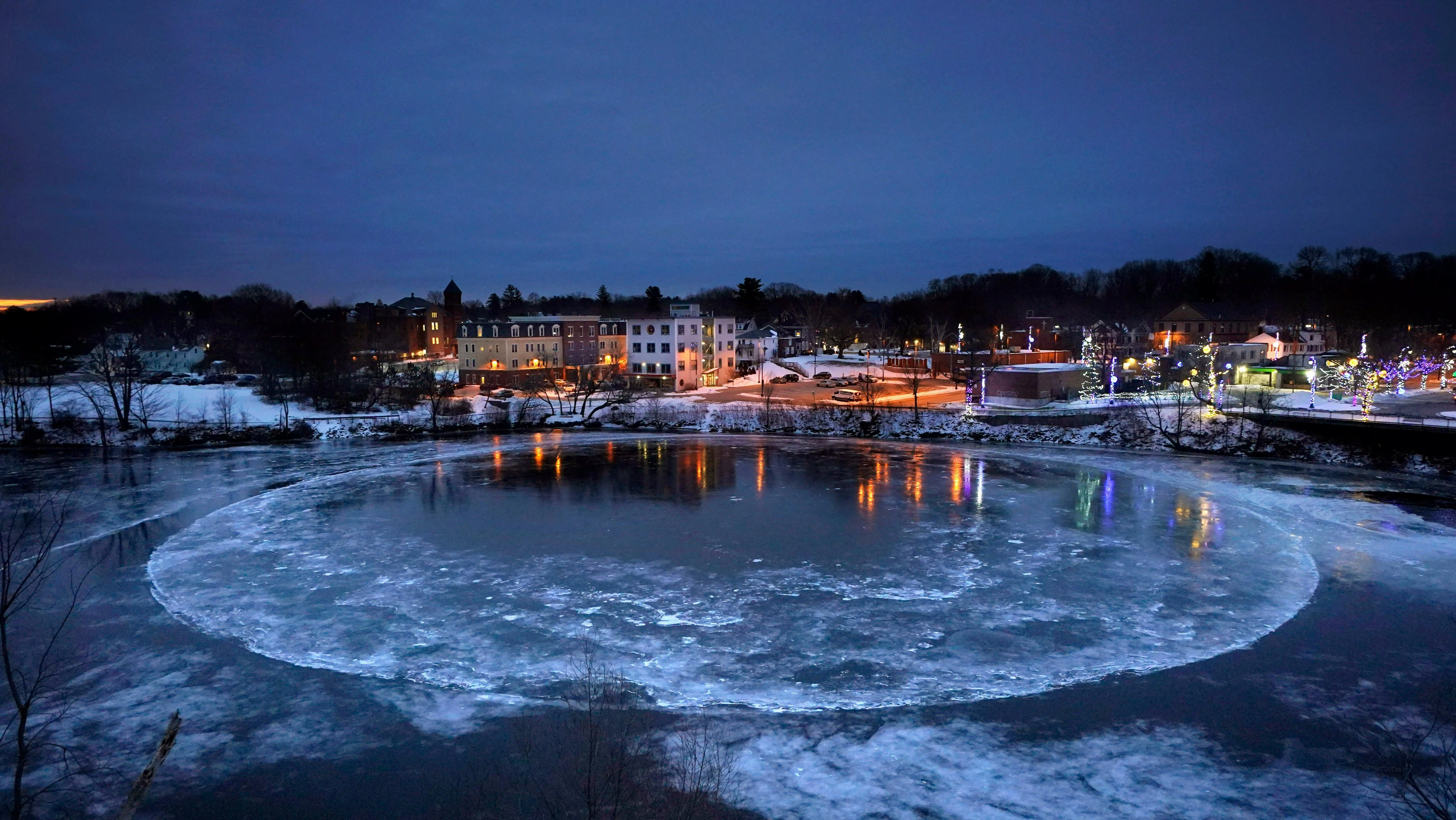
The Return of the Ice Disk
Maine’s giant, spinning ice disk is taking shape again. In 2019, it reached about 91 meters across, rotating slowly in the Presumpscot River. How exactly these features form is still a matter of debate, but scientists have worked out a few relevant mechanisms. The spinning of the disk seems to depend on a vortex that forms beneath the ice as melting water sinks. (One of water’s peculiarities is that it’s densest around 4 degrees Celsius, so newly melted water is actually denser than ice. Otherwise ice wouldn’t float!) The plume of sinking water sets up a vortex that drags the ice disk with it as it spins in the river beneath. (Image credit: R. Bukaty/AP; via Gizmodo)

Swirls in the Wake
Rocky islands make excellent atmospheric swirls, as seen here around Guadalupe Island. Winds blowing in from the ocean get forced up and around the island’s topography, resulting in vortices that shed alternately from either side of the island. The pattern they form is known as a von Karman vortex street and is easily seen in satellite imagery, thanks to the swirls that can persist for tens of kilometers downstream. Personally, I never get tired of this one! (Image credit: NASA/GSFC/JPL; video credit: NOAA/CIRA; via Dakota Smith; submitted by @SellaTheChemist)

A Colorful Fire Tornado


This one definitely belongs in the do-not-try-this-yourself category, but this Slow Mo Guys video of a colorful fire tornado is pretty spectacular. Using an array of different fuels and a ring of box fans, Gav sets up a vortex of flame that transitions smoothly from red all the way to blue. As he points out in the video, the translucency of the vortex is so good that you can see how the two sides of the vortex rotate! (Video credit: The Slow Mo Guys)
The Bubbly Escape
Sometimes experiments don’t work as planned and, instead of answers, they lead to more questions. In this video, we see an experiment looking at an air bubble trapped beneath a cone. It’s the same situation you get by holding a mug upside-down in a sink full of water but with inclined walls. As the cone moves downward, it squeezes the trapped air bubble. A film of air gets pushed along the walls of the cone, eventually forming finger-like bubbles that wrap around the edge of the cone and get entrained into the vortex ring outside the cone.
Clearly, there is some kind of instability that drives the air bubble to form these fingers rather than spreading uniformly. But the big question is which one? Is this a density-driven Rayleigh-Taylor instability caused by air getting pushed into water? Or is it a Saffman-Taylor instability causes by the less viscous air forcing its way into the more viscous water? What do you think? (Image and submission credit: U. Jain)


Devising Greener Chemistry


Not all microfluidic devices use tiny channels to pump and mix fluids. Some, like the Vortex Fluidic Device (VFD), conduct their microfluidic mixing in thin films of fluid. The VFD is essentially a tube spinning at several thousand RPM that can be tilted to various angles. Coriolis forces, shear, and Faraday instabilities in the thin fluid film create a complex microfluidic flow field that’s excellent for mixing, crystallization, and processing of injected chemicals. One rather notorious application of this device was unboiling an egg, a feat for which the researchers won an Ig Nobel Prize. But other, more practical applications abound, including a waste-free method for coating particles. (Image and research credit: T. Alharbi et al.; video credit: Flinders University; via Cosmos; submitted by Marc A.)

Space Hurricanes
Researchers have observed their first “space hurricane” – a 1,000-km-wide vortex of plasma – in Earth’s upper atmosphere. Like conventional hurricanes, this storm featured precipitation (of electrons rather than rain), a calm eye at its center, and several spiral arms. Based on the group’s model, interactions between the solar wind and Earth’s magnetic fields drive the storm. Interestingly, the storm they observed occurred during a period of low solar and geomagnetic activity, which suggests that such space hurricanes could be frequent, both on Earth and in the upper atmospheres of other planets. (Image credit: Q. Zhang; research credit: Q. Zhang et al.; via Physics World)


