Tag: fire tornado

  • Burning Oil Spills With Fire Whirls

    Burning Oil Spills With Fire Whirls

    Though they are relatively infrequent, large marine oil spills, like 2010’s Deepwater Horizon, are devastating and incredibly difficult to clean up. In many locations, the “best” option for responding to such disasters is burning off the oil before it can absorb enough water to sink. But these floating fires leave behind unburned oil and produce soot. To enhance the burn, researchers are looking at the possibility of triggering large-scale fire whirls.

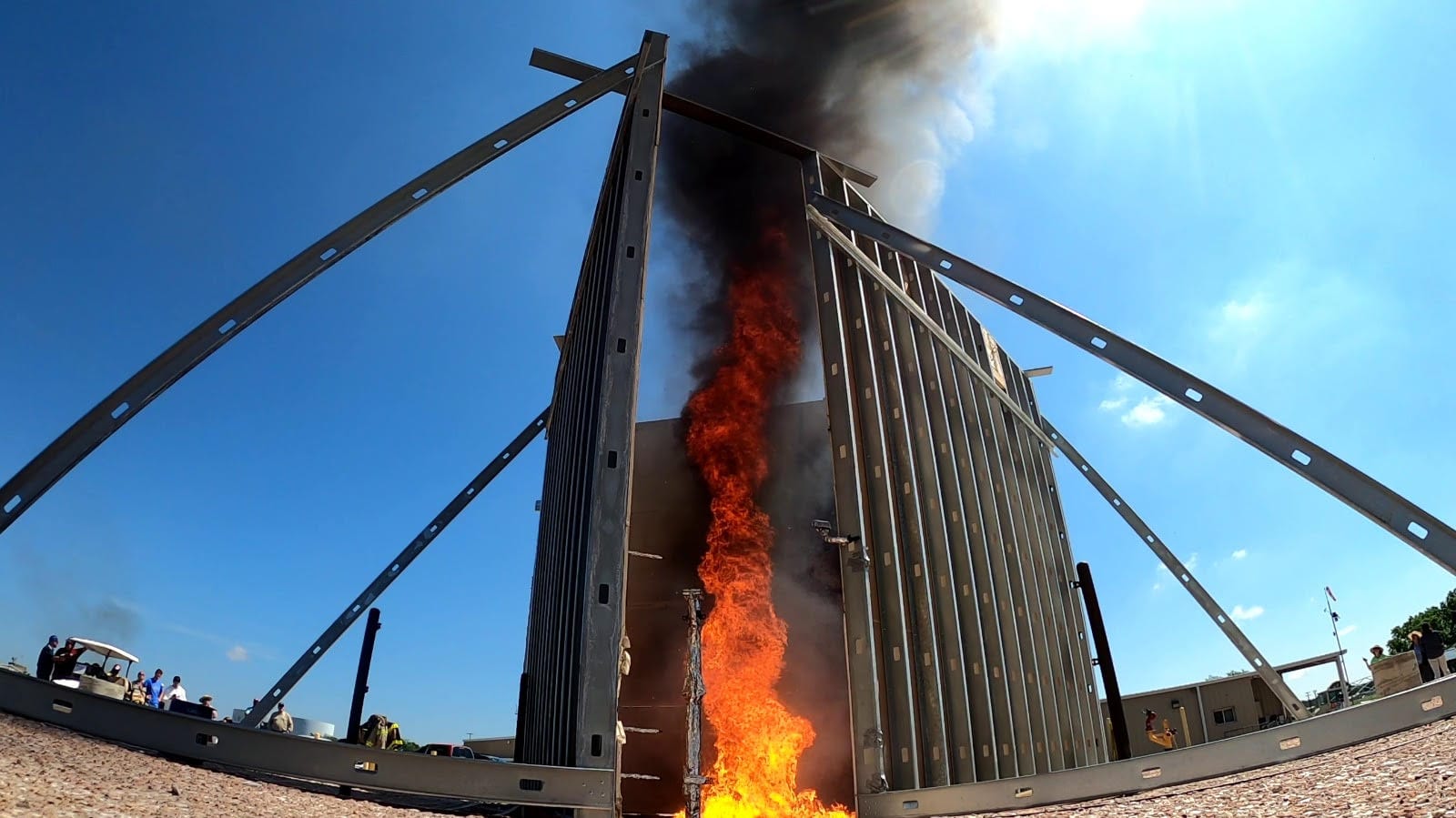
    Often seen in wildfires, these fire vortices are intense and localized. Researchers made a more than 5-meter tall version in these experiments by arranging three walls that spun up the in-flowing air. The fire whirl sat above a pool of water topped in a layer of oil that served as the whirl’s fuel.

    Within the whirl, the fire’s burn rate was 40% higher than a typical pool fire, and soot production was 40% lower–showing that fire whirls can burn cleaner. But the whirls are more finicky to start and maintain. It’s not yet clear whether such intense whirls are possible in the chaotic conditions on the ocean. (Research and image credit: W. Cui et al.; via Eos)
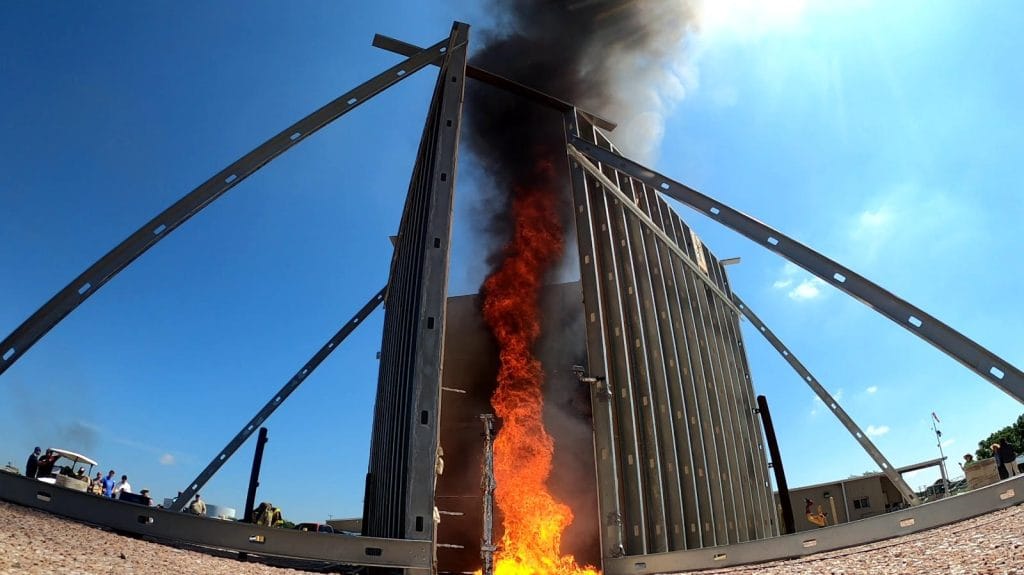

    View of a large-scale fire whirl experiment built around an oil spill on a pool.
    Fediverse Reactions
  • Featured Video Play Icon

    A Colorful Fire Tornado

    This one definitely belongs in the do-not-try-this-yourself category, but this Slow Mo Guys video of a colorful fire tornado is pretty spectacular. Using an array of different fuels and a ring of box fans, Gav sets up a vortex of flame that transitions smoothly from red all the way to blue. As he points out in the video, the translucency of the vortex is so good that you can see how the two sides of the vortex rotate! (Video credit: The Slow Mo Guys)

  • Featured Video Play Icon

    Fire Tornado in a Bubble

    File this one under awesome tricks you shouldn’t try at home. Here bubble artist Dustin Skye demonstrates his handheld inverted fire tornado. First, he blows a large encapsulating bubble, then blows butane and smoke into a smaller secondary bubble. When he breaks the wall between the two, the mixture swirls into the larger bubble. Then, by breaking a narrow hole into the remaining bubble, Skye forms a swirling tornado. He’s using conservation of angular momentum here to concentrate the vorticity he created by blowing into the original butane bubble. As the big bubble shrinks, the vorticity inside gets pulled inward and speeds up – like when a spinning ice skater pulls his arms in. That’s how you get the tornado. And from there, it’s just a matter of lighting the exiting butane and air mixture. (Video credit: D. Skye; via Gizmodo)

  • Featured Video Play Icon

    From Firenado to Water Spout

    Just a few years ago, fire tornadoes were almost fabled because they were so rarely captured on video. Now, with worsening wildfire seasons and cell phone cameras everywhere, there are new videos all the time. This video captures a fire tornado that sets off a water spout as it reaches the river (~1:15 in).

    Neither the fire tornado or the water spout is truly tornadic; instead they are more like dust devils. They are driven by the rising heat of the fire. As cooler, ambient air flows inward to replace the rising air, it brings with it any vorticity it had. And, like an ice skater, the incoming air spins faster as it moves inward. This sets up both the fire tornado and the water spout’s vortices.

    Although this is the first example I’ve seen video of, fire tornadoes have been known to create water spouts before. Lava flowing into the ocean can create whole trains of them. (Video credit: C. & A. Mackie; via Jean H.)

  • Featured Video Play Icon

    The Blue Whirl

    We wrote earlier this year about the discovery of a new type of fire whirl – the blue whirl – but now the authors have published video of the blue whirl in action! The blue whirl was discovered while investigating the use of fire whirls to more efficiently burn off oil spilled atop water. A tightly spinning yellow fire whirl produces less soot than a non-vortex burn; the blue whirl is even more efficient, producing little to no soot at all. Much remains to be learned about this new type of fire vortex, but in the meantime, enjoy some high-speed video of the blue whirl, particularly from 1:50 onward. (Video credit: M. Gollner et al.)

  • The Blue Whirl

    The Blue Whirl

    Researchers studying the use of fire whirls to burn off oil spills have discovered a new type of fire whirl – the blue whirl. Their results are currently reported in a pre-print paper on arXiv and await peer-review. In their experiment, the scientists ignited a puddle of fuel floating atop water. Compared to a typical flame, they observed that a tightly-spinning fire whirl burns hotter and produces less soot by burning more of the fuel. To the researchers’ surprise, their lab-scale yellow fire whirl evolved into a compact, bright blue whirl. The blue whirl has a laminar flame and makes little to no noise. Its bright blue color indicates even more efficient combustion than the yellow fire whirl. The lack of yellow color means the whirl is burning without producing any soot, a by-product of incomplete combustion. The authors hope a better understanding of blue whirls will lead to better methods for responding to oil spills. (Image credit: H. Xiao et al.)

  • Fire Tornadoes in Action

    Fire Tornadoes in Action

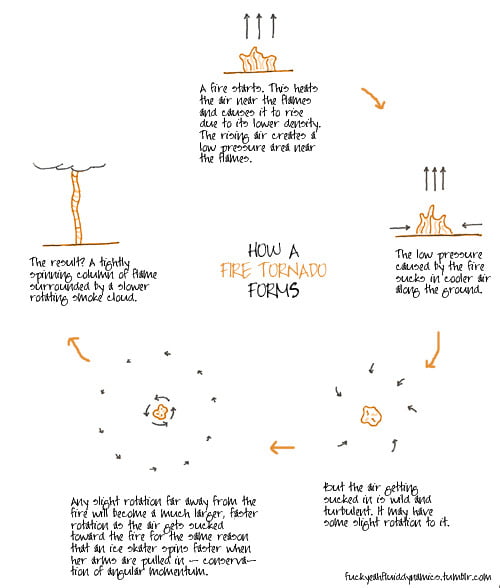
    Commonly called fire tornadoes, these terrifying vortices often occur in large wildfires and have more in common with dust devils or waterspouts than true tornadoes. They form when warm, buoyant air rises due to the fire’s heat. This creates low pressure over the fire source and draws in fresh, cooler air from the surroundings. If there is any small vorticity or rotational motion to that surrounding air, its spin will be amplified as it gets drawn in. This is akin to an ice skater spinning faster when she pulls her arms in – it’s a result of conservation of angular momentum. That intensification of the air’s rotation is what forms the vortex, which we see here due to the flames it draws upward. This footage was captured yesterday by crews fighting fires in Missouri.  (Image credit: Southern Platte Fire Protection District/WCPO 9, source)

    Special thanks to FYFD’s Patreon supporters who help support the website!

  • Featured Video Play Icon

    Fire Tornado

    Fire tornadoes, despite their name, are more like dust devils than your typical tornado. In nature, they’ll often form in wildfires, but here the Slow Mo Guys simulate one for the high-speed cameras using a ring of box fans set up to provide rotational flow, or vorticity, around a kerosene fire. As the fire burns, the warm air over the flame moves upward due to buoyancy. This creates a low-pressure area around the fire that draws in the spinning air from further out. Like an ice skater who pulls her arms in when spinning, the rotating air spins faster as it moves in toward the fire, resulting in a swirling turbulent vortex of flame. Hopefully it goes without saying, but, seriously, don’t try this at home. (Video credit: Slow Mo Guys; submitted by Chris S.)

  • Fire Tornadoes

    Fire tornadoes, despite their name, are more closely related to dust devils or waterspouts than to true tornadoes. Though rarely documented, they are relatively common, especially in wildfires. The heat of the fire creates an updraft of warm, rising air that leaves behind a low-pressure region. Air from outside is drawn toward this low-pressure area, gets heated, and rises. As the outside air gets pulled in, any vorticity or rotation it had gets intensified via conservation of angular momentum–the same way a spinning ice skater speeds up when she pulls her arms in. The result is the tightly-spinning vortex at the heart of a fire tornado. (Video credit: C. Fleur; via NatGeo)

  • Featured Video Play Icon

    Australian Fire Tornado

    The fire tornado is one of nature’s most impressive and terrifying examples of fluid dynamics. Although they are relatively common phenomena, it’s rare to get such a clear glimpse of them since they usually occur in the midst of giant wildfires. The fire tornado is driven by a combination of updraft from the fire and rotation from the surrounding flow. Take a look at how they form:

    There are artificial fire tornadoes as well, including homemade ones. That said, please do not try this at home without full safety measures and extreme caution. In general, watching YouTube videos is a much safer way to enjoy this phenomenon. (Video credit: C. Tangey; h/t to Flow Visualization)