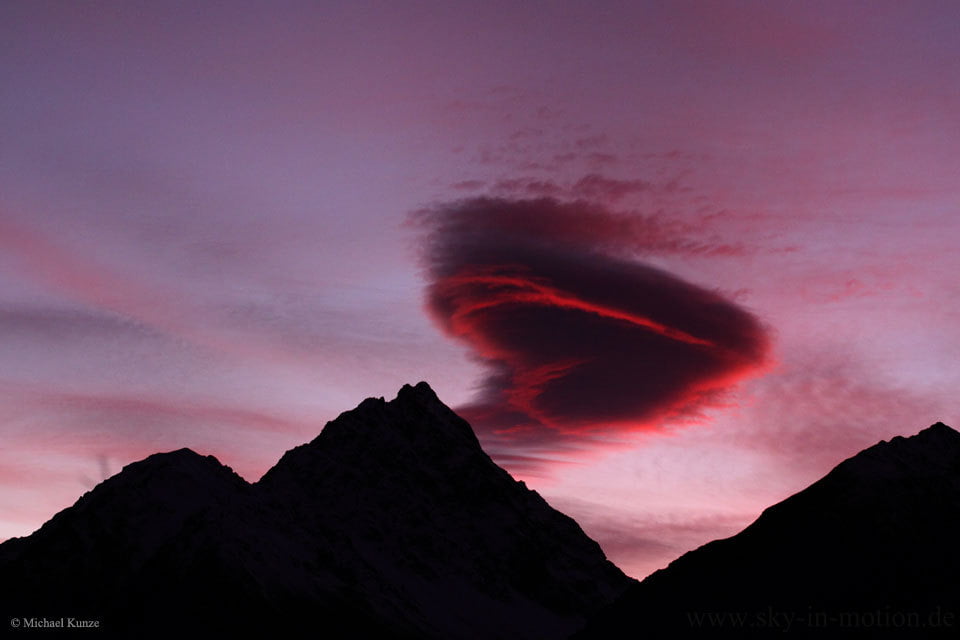
This heart-shaped atmospheric apparition is a lenticular cloud captured over the mountains of New Zealand. As you can see in the companion video, the cloud itself remains stationary over the mountain. This is a key feature of lenticular clouds, which form when air flowing over/around an obstacle drops below the dew point. This causes moisture in the air to condense for a time before it descends and warms once more. Thus, even though air is continuously flowing past, what we see is a stationary, lens-shaped cloud. Happy Valentine’s Day from FYFD! (Image credit: M. Kunze, video; via APOD)
Search results for: “art”

Microgravity Can Change Vision

In recent years, astronauts have reported their vision changing as a result of long-duration spaceflight. Pre- and post-flight studies of astronauts’ eyes showed flattening along the backside of the eyeball, and scientists hypothesized that the redistribution of body fluids that occurs in microgravity could be reshaping astronauts’ eyes by increasing the intracranial pressure in their skulls.
A new study tested this hypothesis with the first-ever measurements of intracranial pressure during microgravity flights and during extended microgravity simulation (a.k.a. bedrest with one’s head pointed downward). The authors found that humans here on Earth experience substantial changes in intracranial pressure depending on our posture – while upright we experience much lower intracranial pressure than we do when we’re lying flat. In both microgravity flights and simulation, patients had intracranial pressures that were higher than earthbound upright values but lower than what is experienced when lying flat on Earth.
Since we humans on Earth spend about 2/3rds of our time upright and 1/3rd prone, our bodies are accustomed to regular variations in intracranial pressure. In space, astronauts don’t receive that regular unloading of intracranial pressure we have when we’re upright. So now researchers suggest that it is the lack of daily variation in intracranial pressure that is the culprit behind astronauts’ vision changes – not the absolute value of the pressure itself. (Image credit: NASA; N. Alperin et al.; research credit: J. Lawley et al.)

Unboiling an Egg
Cooking is something we think of as a one-way process. You add heat to food, it changes forms, and there’s undoing that. But that process is less one-directional than we thought, at least in some cases. Take boiling an egg. When you add heat to egg whites, it breaks down bonds between the folded proteins and lets those proteins build more bonds with other sections of proteins, eventually solidifying into a seemingly unbreakable mess. You can’t break those bonds by adding or removing thermal energy, but you can shake the proteins apart and refold them into their original shapes.
Researchers accomplish this by putting the boiled egg whites in a solution of water and urea and spinning them. When they spin the fluid mixture, the fluid near the wall spins faster than the fluid in the center of the vial, which creates shear stress. That shear stress helps untangle the proteins and reform them into their original shape–thereby unboiling the egg white. Now you definitely don’t want to eat the results – urea is, of course, a component of urine – but it does demonstrate that fluid dynamics can be used to reverse chemical processes we thought were irreversible. And that surprising discovery nabbed the researchers an Ig Nobel Prize in 2015. (Video credit: TedEd/E. Nelson; research credit: T. Yuan et al.)

Soft Robots


A research group at MIT has created a new class of fast-acting, soft robots from hydrogels. The robots are activated by pumping water in or out of hollow, interlocking chambers; depending on the configuration, this can curl or stretch parts of the robot. The hydrogel bots can move quickly enough to catch and release a live fish without harming it. (Which is a feat of speed I can’t even manage.) Because hydrogels are polymer gels consisting primarily of water, the robots could be especially helpful in biomedical applications, where their components may be less likely to be rejected by the body. For more, see MIT News or the original paper. (Image credit: H. Yuk/MIT News, source; research credit: H. Yuk et al.)
Jupiter’s Little Red Spot
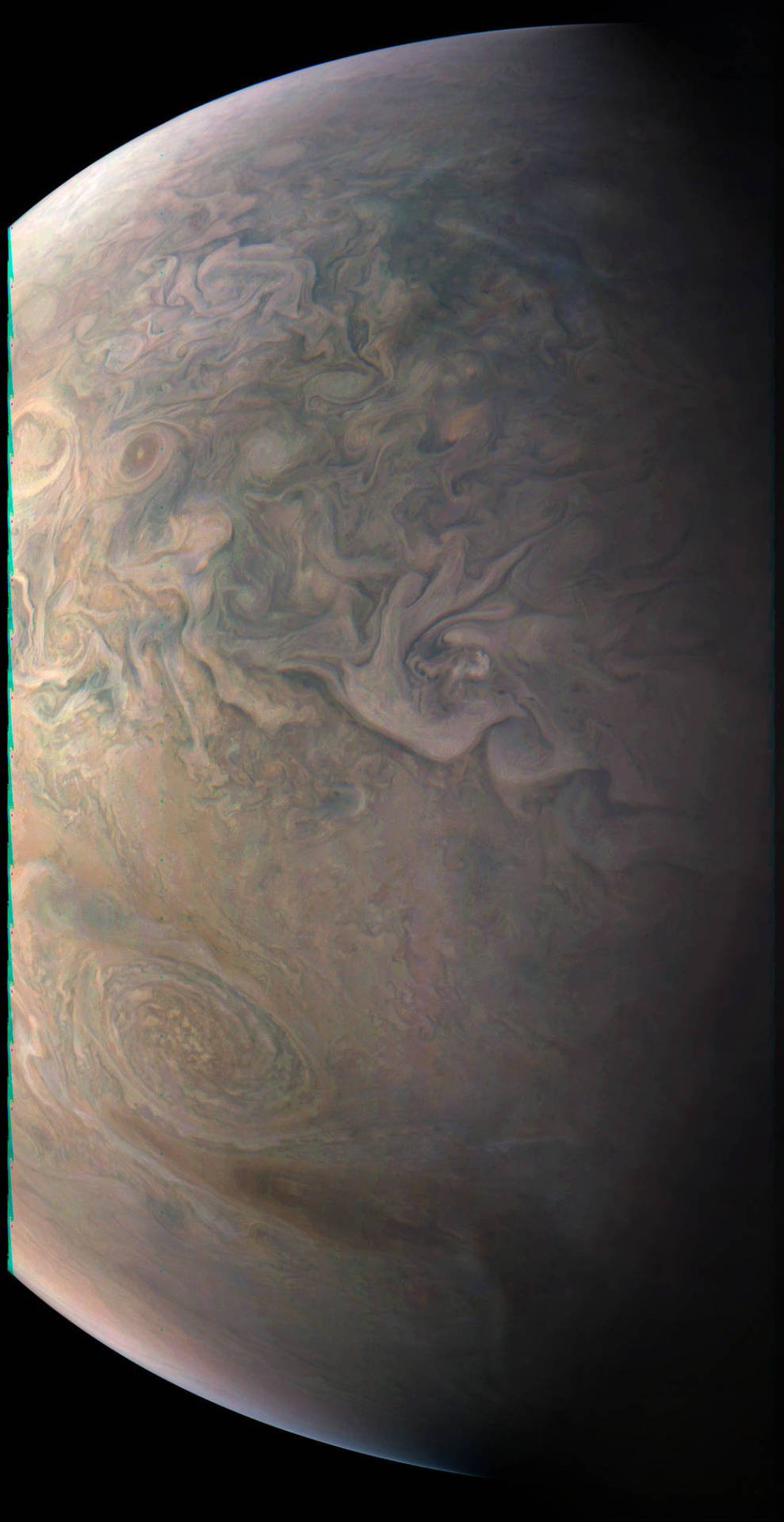
The Juno mission has been revealing angles of Jupiter we’ve never seen before. This photo shows Jupiter’s northern temperate latitudes and NN-LRS-1, a.k.a. the Little Red Spot (lower left), the third largest anticyclone on Jupiter. The Little Red Spot is a storm roughly the size of the Earth and was first observed in 1993. As an anticyclone, it has large-scale rotation around a core of high pressure and rotates in a clockwise direction since it is in the northern hemisphere. Jupiter’s anticyclones seem to be powered by merging with other storms; in 1998, the Little Red Spot merged with three other storms that had existed for decades. (Image credit: NASA/JPL-Caltech/SwRI/MSSS/Gerald Eichstaedt/John Rogers; via Bad Astronomy)
Freezing Bubbles
Soap bubbles are wonderfully ephemeral, their surfaces constantly in motion as air currents, surface tension variations, and temperature differences make them dance. In this video, though, photographer Paweł Załuska focuses on freezing soap bubbles. Watching the growth of ice crystals across the bubbles’ thin surface is mesmerizing. Snowflake-like crystals can nucleate anywhere on the film and, as in the sequence at 0:48, those crystals can float around on the bubble’s surface like snowflakes drifting on a breeze until enough of the film solidifies to bring the bubble to a halt and, then, a collapse. (Video credit: P. Załuska/ZALUSKart; via Gizmodo)
Accidental Painting

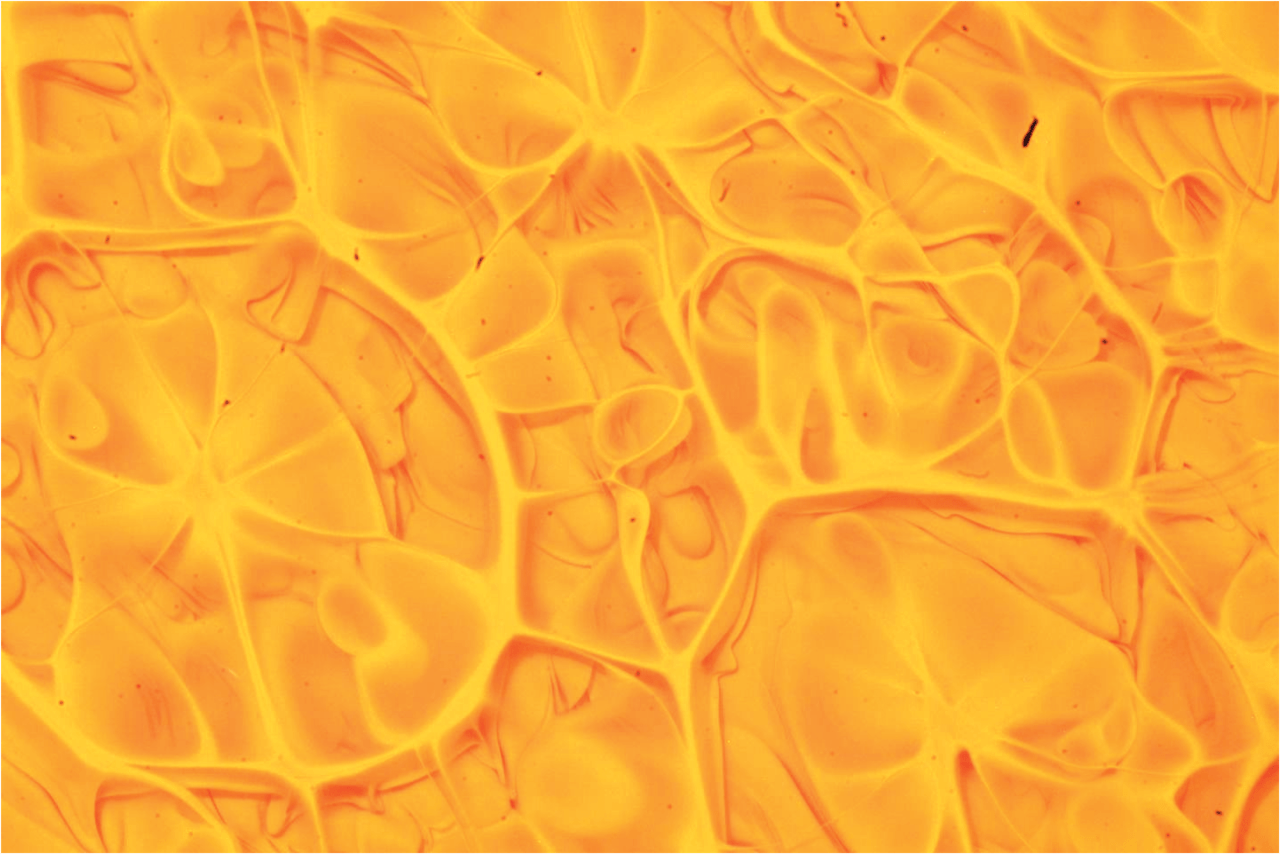
Some paintings of Mexican artist David Alfaro Siqueiros feature patchy, spotted areas of contrasting color formed by what Siqueiros described as “accidental painting”. Many modern artists use this technique as well. By pouring thin layers of two different colors atop one other, Siqueiros was able to generate seemingly spontaneous patterns like those shown above. In fact, what Siqueiros was using was a density-driven fluid instability! These patterns will only appear when a denser paint is poured atop a lighter one. They’re the result of a Rayleigh-Taylor instability – the same behavior that makes beautiful swirls of cream in coffee and the finger-like protrusions seen in supernovae.
Although a density difference is necessary to generate accidental painting, other factors like the paint layer’s thickness and viscosity affect the final pattern. For those who are mathematically-inclined, this paper has a linear stability analysis that shows how density difference, viscosity, and other factors affect the cell sizes in the pattern. (Image and research credits: S. Zetina et al.; GIF source)
As the Dust Blows In
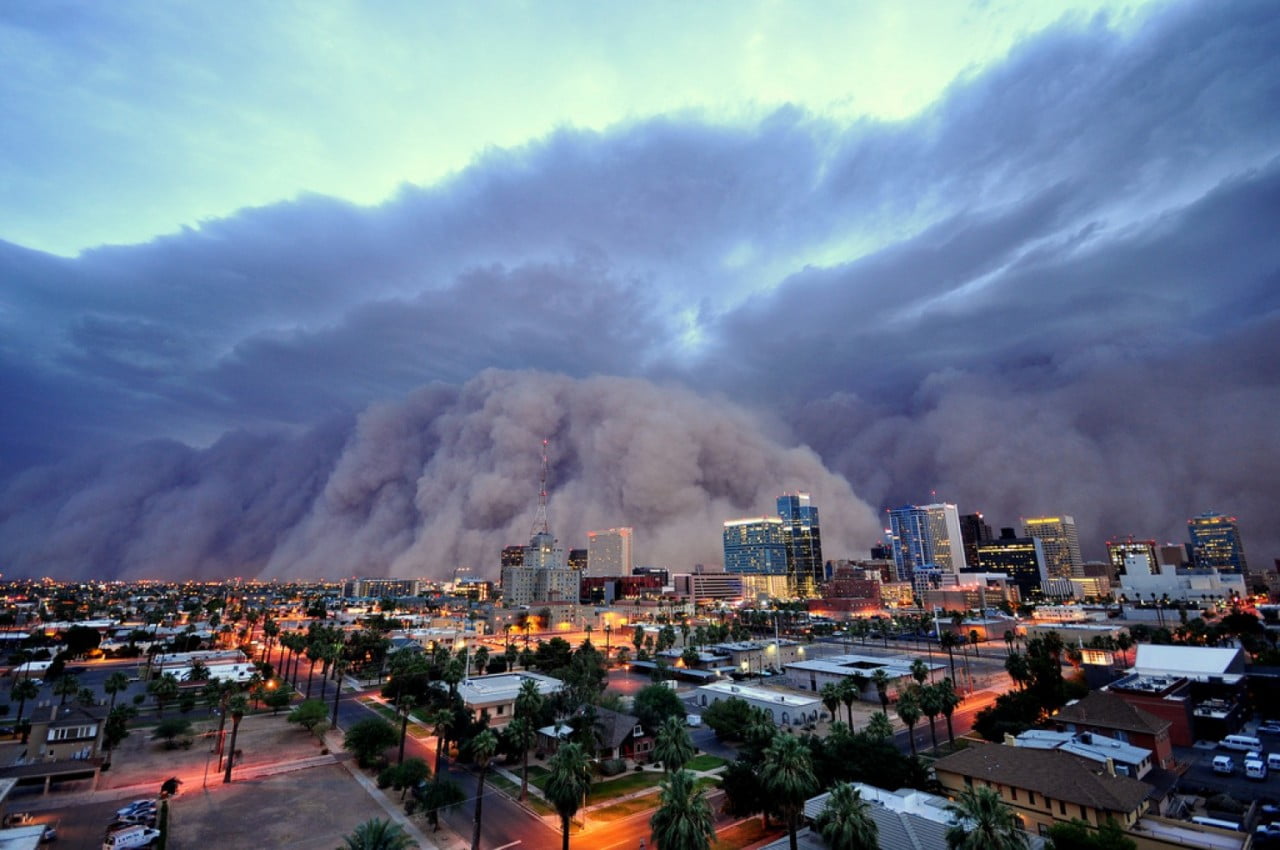
This towering cloud of dust is known as a haboob, and while it appears apocalyptic, it is a relatively common occurrence in parts of the world, including the U.S. southwest and the Middle East. Haboobs often form when a collapsing thunderstorm releases a downburst of cold air. That wind picks up loose dust along the ground and creates a wall of sediment that may be as much as 100 kilometers wide and several kilometers tall. Inside the haboob, winds can reach speeds as high as 100 kph and visibility can be reduced to nearly zero. Because of this, the storms can be quite dangerous, especially to anyone who attempts to drive during one. (Image credit: D. Bryant)
Wrapping Up
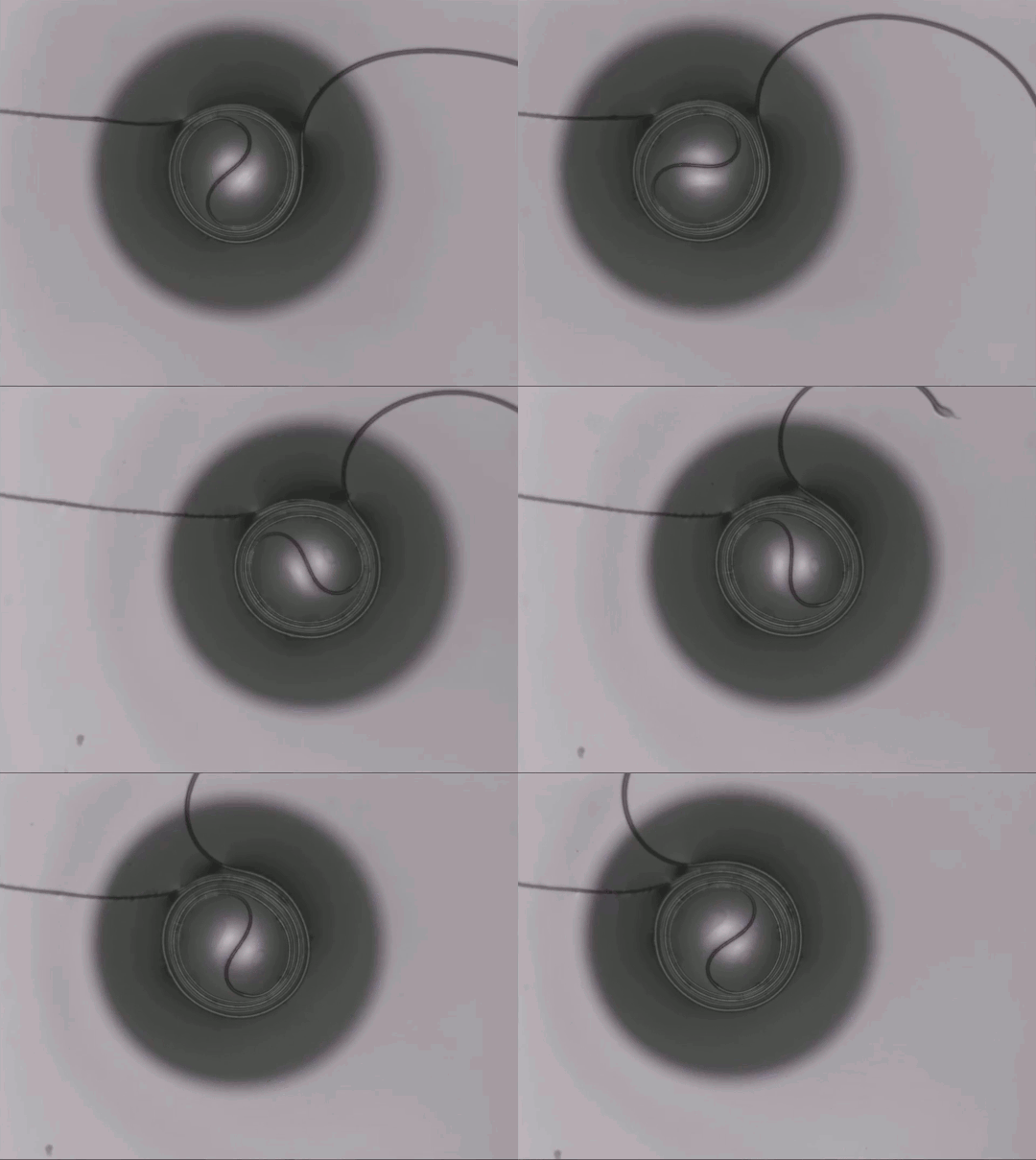
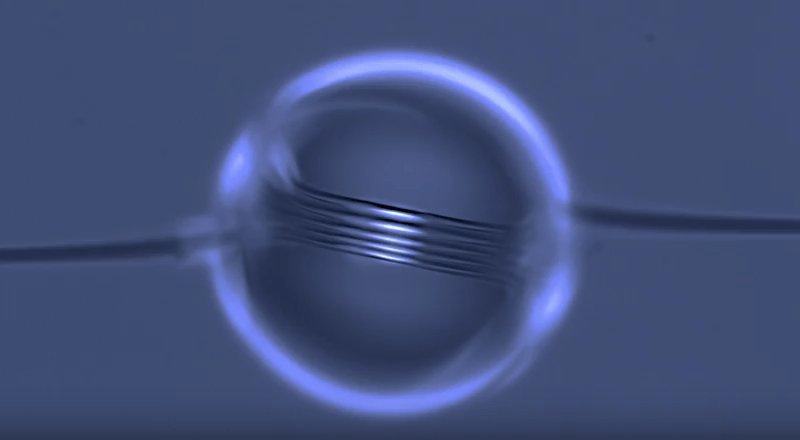
It’s often at the intersection of topics that we can learn something new and fascinating. The latest video from The Lutetium Project shows examples of this at the intersection of solid mechanics and fluid dynamics with a look at elastocapillarity. Breaking that word down, that’s where elasticity – that stretchy quality associated with solids – meets capillarity – the surface-tension-dominated behavior of a fluid. In particular, they explore some of the mind-boggling and surprising interactions that happen between drops, bubbles, and thin flexible fibers smaller than the width of a human hair. Check out the full video below. (Images credit: K. Dalnoki-Veress et al.; video credit: The Lutetium Project)

Vibrated to Bits
Sound and vibration can be powerful tools for controlling liquids. In this animation, a water/glycerin drop violently bursts into a cloud of droplets when it is vibrated vertically 1000 times per second by a piezoelectric actuator. This vibration shakes the drop with accelerations of 150 g. Initially, the amplitude is small enough to simply create ripples around the drop’s circumference. As it increases, the drop deforms more at the edges and starts to eject droplets there. When the vibration hits a critical amplitude, the entire drop explodes into droplets. The technique is called vibration-induced droplet bursting, and its near-instantaneous ability to atomize drops makes it a candidate for applications like spray cooling microprocessors or spray coating a solid surface. (Video credit: B. Vukasinovic, source)