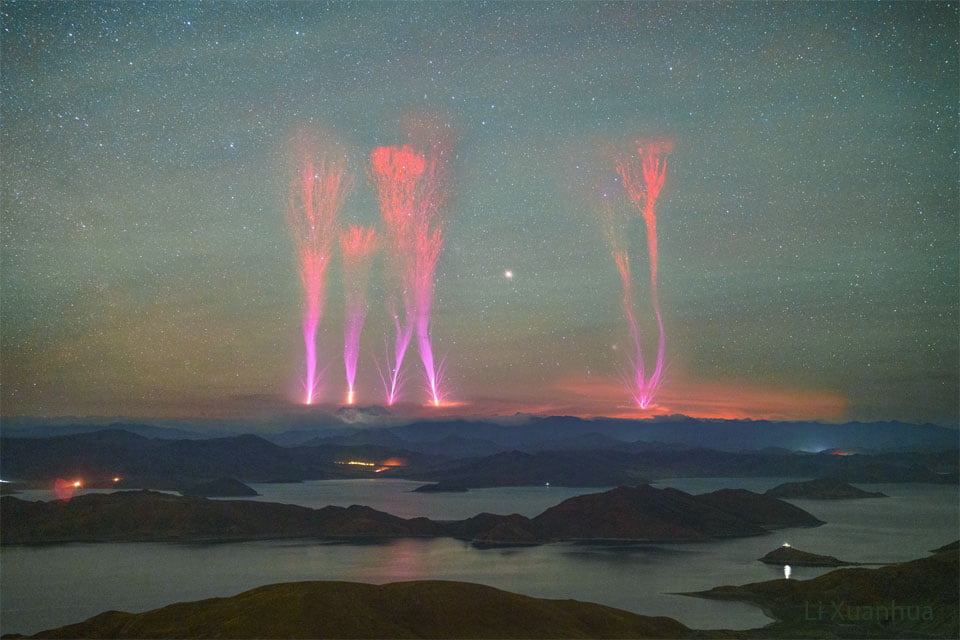
Stormy skies feature much more than the forked cloud-to-ground lightning we’re used to seeing. This composite image shows a rare and recently-recognized type of lightning known as a gigantic jets. This type of lightning travels from the top of thunderclouds, around 16 km in altitude, up to the ionosphere at about 90 km. Their bottoms look a bit like blue jets, while their upper reaches look like red sprites, two other types of unusual lightning. The mechanism behind gigantic jets is a topic of ongoing research, but your best chance at seeing them is watching a distant thunderstorm from a clear vantage. (Image credit: Li X.; via APOD)
Tag: physics

Curved Rocks Hit Harder
Intuition suggests that a flat rock will hit the water with greater force than a spherical one, and experiments uphold that. But a flat rock, interestingly, doesn’t produce the greatest impact force. Instead, it’s a slightly curved rock that experiences peak impact forces. Researchers found this happens because of the thin layer of air that coats the front of the impacting object. For flat faces, this layer is relatively thick and provides a cushioning effect that reduces the peak force and spreads out the impact. In contrast, a slightly curved convex surface traps a thinner air layer, and that lack of cushioning maximizes the impact force. (Image credit: J. Wixom; research credit: J. Belden et al.; via APS Physics)

“Plants That Explode”


We often think of plants as passive and stationary, but the truth is that some plants move faster than we can even see. In this “True Facts” video, Ze Frank takes a look at a whole host of fast-moving plants, including horsetail plant spores that walk and jump, trebuchet-like bunchberry dogwood, vortex-ring-shooting moss, and moisture-driven self-digging seeds. These plants all use clever mechanisms that leverage water to spread the plant’s reproductive material at little to no energy cost to the plant itself. (Video and image credit: Z. Frank)
“Black”


In “Black,” filmmaker Susi Sie combines her visuals of shifting ferrofluids with the music and soundscape of Clemens Haas to create an ominous, almost claustrophobic vibe. With fast cuts and shallow focus, the sharpened points of the normal-field instability appear as flashes of brightness in the dark. At times, the liquid’s surface looks almost like a speaker cone, which is appropriate since ferrofluids are frequently used in speakers to provide cooling and enhance performance. (Video and image credit: Susi Sie)

Resolution Effects on Ocean Circulation
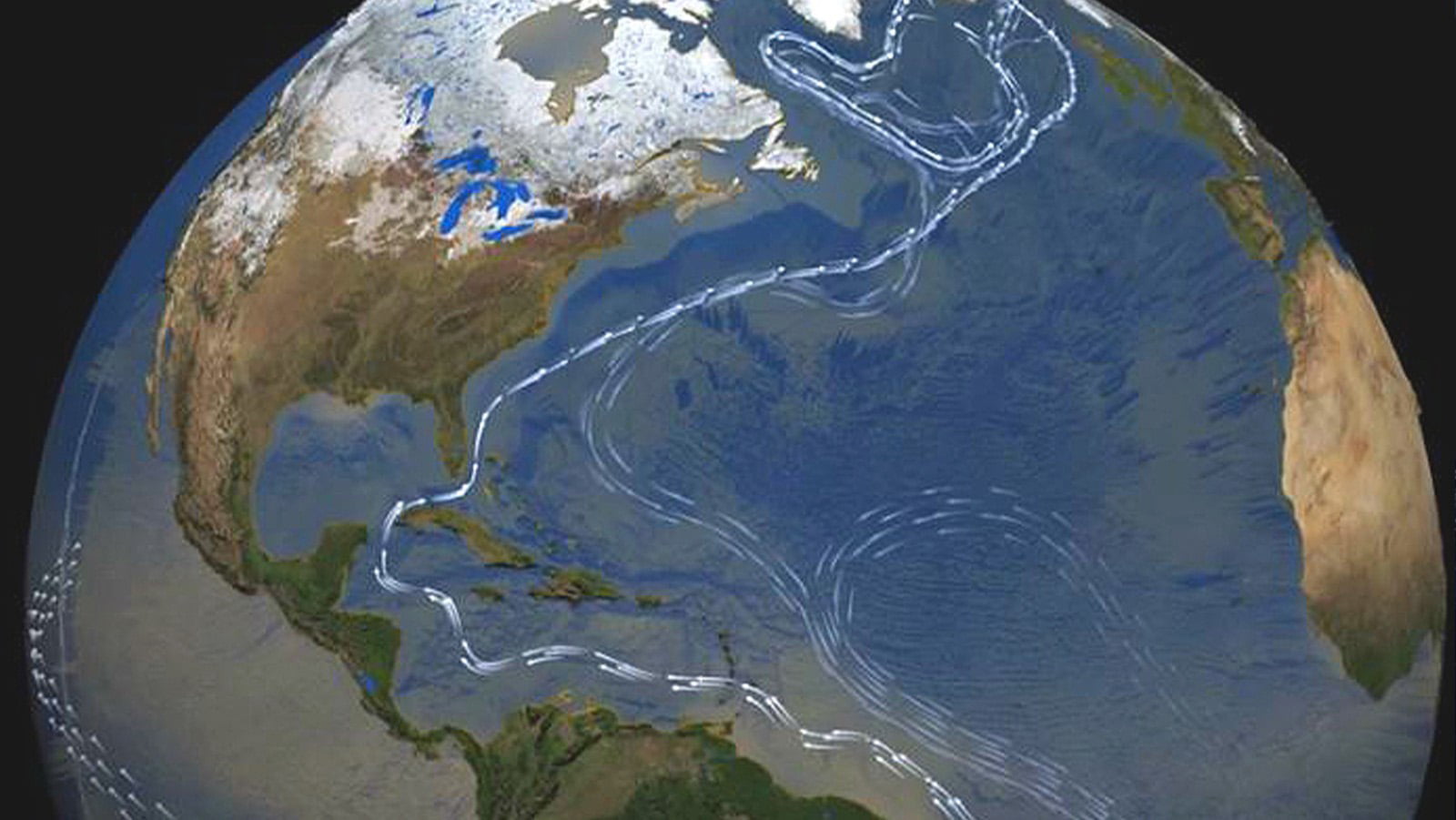
The Gulf Stream current carries warm, salty water from the Gulf of Mexico northeastward. In the North Atlantic, this water cools and sinks and drifts southwestward, emerging centuries later in the Southern Ocean. Known as the Atlantic Meridional Overturning Circulation (AMOC), this circulation is critical, among other things, to Europe’s temperate climate. Since 1995, scientists have been warning that human-driven climate change is weakening the AMOC and may cause it to shut down entirely — which would have catastrophic consequences for our society.

Comparison of ocean current speeds in the low-resolution (left) and high-resolution (right) simulations. A recent study re-examined the AMOC using both low- and high-resolution numerical simulations, combined with direct observations. Both simulations covered 1950 – 2100 and found the AMOC’s strength has declined since 1950. But the high-resolution simulation found significant regional variations in the AMOC’s behavior. Some regions saw localized strengthening, while other areas showed abrupt collapse. These sensitive shifts underscore the importance of driving toward higher resolutions in our next-generation climate models, if we want to better understand — and perhaps predict — what lies ahead as our climate changes. (Image credit: illustration – Atlantic Oceanographic and Meteorological Laboratory, simulations – R. Gou et al.; research credit: R. Gou et al.; via APS Physics)

Trapped in a Taylor Column
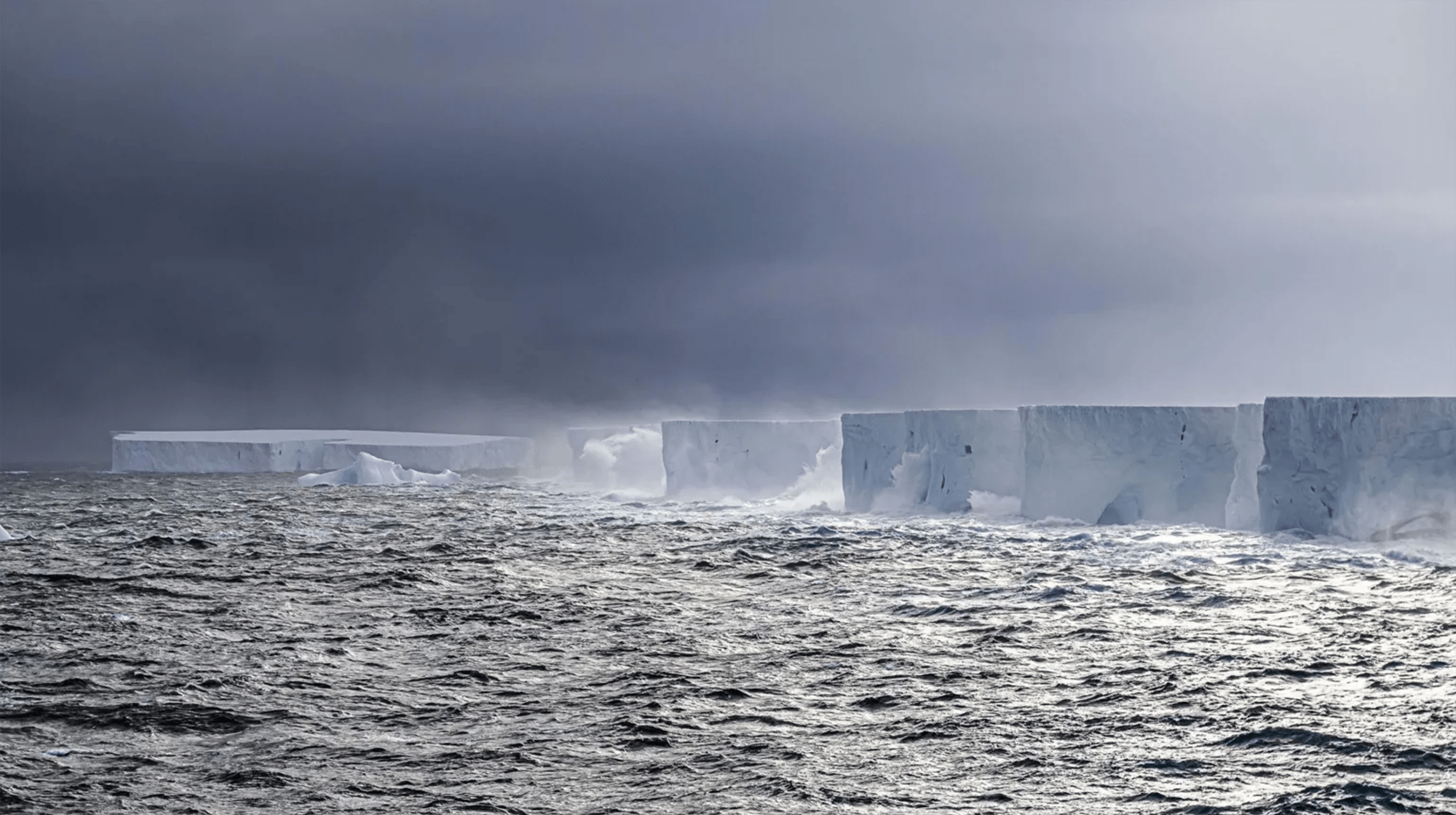
The world’s largest iceberg, A23a, is stuck. It’s not beached; there are a thousand meters or more of water beneath it. But thanks to a quirk of the Earth’s rotation, combined with underwater topology, A23a is stuck in place, spinning slowly for the foreseeable future. A23a is trapped in what’s known as a Taylor column, a rotating column of fluid that forms above submerged objects in a rotating flow. You can see the same dynamics in a simple tabletop tank.

Pirie Bank sticks up from the seafloor, which sets up a stationary column of rotating water that iceberg A23a is now stuck in. When a tank (or planet) is rotating steadily, there’s little variation in flow with depth. With an obstacle at the deepest layer — in this case, an underwater rise known as the Pirie Bank — water cannot pass through that lowest layer. And that deflection extends to all the layers above. The water above Pirie Bank just stays there, as if the entire column is an independent object. Caught inside this region, A23a will remain imprisoned there. How long will that last? There’s no way to know for sure, but a scientific buoy in another nearby Taylor column has been hanging out there for 4 years and counting. (Image credit: A23a – D. Fox/BAS, diagram – IBSCO/NASA; via BBC News; submitted by Anne R.)

How a Storm Can Ruin Your Tea
Last November, a windstorm, known as Storm Ciarán in the U.K., blew through Europe with wind speeds as high as 130 kilometers per hour. All that wind came with a significant drop in atmospheric pressure. Researchers found that the pressure drop was large enough to lower the boiling point of water more than full 2 degrees Celsius. That difference probably wouldn’t register for anyone waiting for their kettle to boil, but it could decidedly affect the final cup of tea. Tea flavor is quite sensitive to the temperature of the boiling water used to brew it, as it affects how well the tannins get extracted. According to the researchers, Ciarán’s conditions potentially ruined millions of cups of breakfast tea in the greater London area. (Image credit: E. Akyurt; research credit: G. Harrison et al.; via Gizmodo)

The Solar Corona in Detail
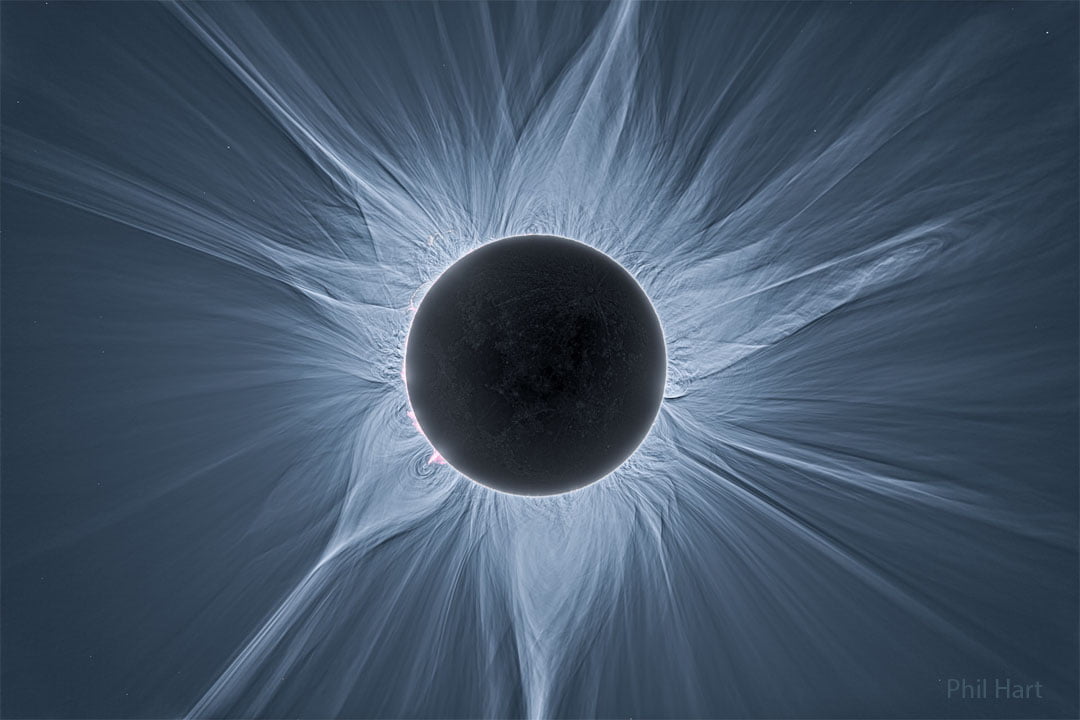
The sun’s corona — its outer atmosphere — is usually impossible to see, since it’s far outshone by the rest of the sun. But during a total solar eclipse, the moon blocks out all but the vibrant, wispy corona. Getting a detailed image of the corona is tough; it’s constantly shifting. For this image, engineer Phil Hart used 5 main cameras, 4 refractors, 2 laptops, and plenty of digital image processing to capture some incredible details of the plasma and hot gases dancing along the sun’s magnetic field lines. You can learn about the awesome effort behind this image — and see more awesome photos from the eclipse — at his site. (Image credit: P. Hart; via APOD)
“Aquakosmos – Ch. 2”


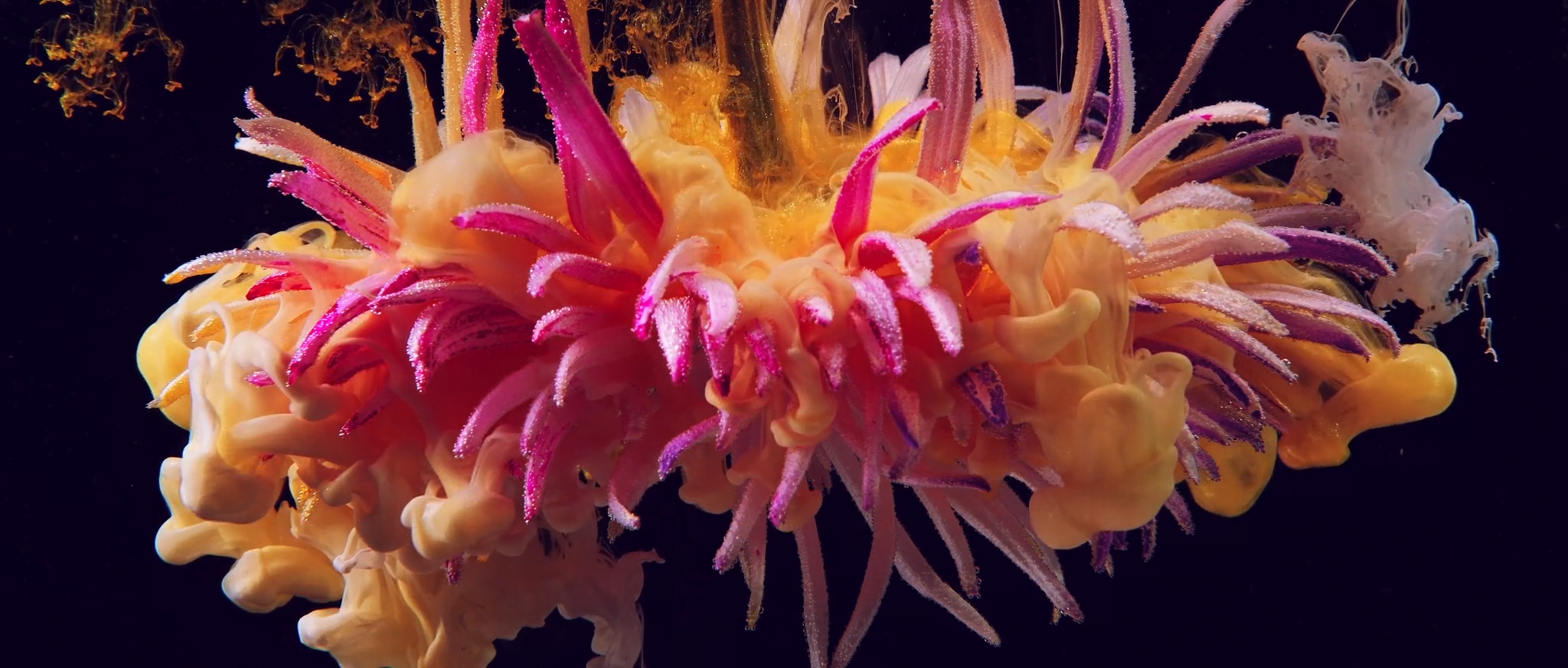
Colored inks bulge and billow around flowers in filmmaker Christopher Dormoy’s “Aquakosmos – Ch. 2”. Because ink is denser than the surrounding water, it sinks, forming mushroom-like shapes as the Rayleigh-Taylor instability takes over. One of the fun things about this particular video is that we see the Rayleigh-Taylor instability at many different sizes, depending on the size and speed of different falling dyes. (Video and image credit: C. Dormoy)

Waves Lap on Titan’s Shores
Titan, one of Saturn’s moons, is the only other planetary body known to have liquid lakes, rivers, and seas at its surface. Whether those bodies — made up of hydrocarbons rather than water, like here on Earth — have waves is a matter of ongoing debate. What data we have from visiting spacecraft is inconclusive. So a group of researchers decided to look for the effects of wave action instead.
Beginning with a model of flooded areas similar to Titan’s, the team simulated a coastline’s erosion assuming three different situations: 1) no coastal erosion, 2) erosion from waves, and 3) uniform erosion through dissolution. Each set of conditions resulted in a very different final coastline. But, of the three, the wave-eroded coast was most similar to those seen on Titan. That’s a good indicator that, even if our spacecraft couldn’t see waves on Titan, they’re likely there. (Image credit: ESA; research credit: R. Palermo et al.; via Gizmodo)