Tag: parachutes

  • Kirigami Parachutes

    Kirigami Parachutes

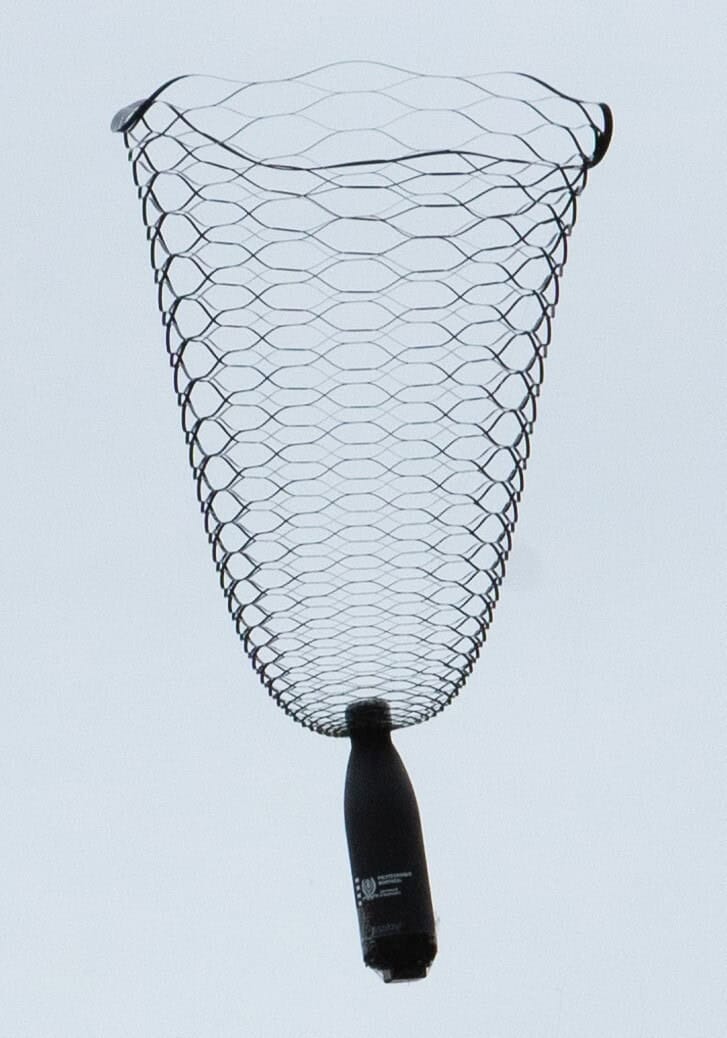
    In kirigami, careful cuts to a flat surface can morph it into a more complicated shape. Researchers have been exploring how to use this in combination with flow; now they’ve created a new form of parachute. Like a dandelion seed, this parachute is porous, with a complex but stable wake structure. This allows the parachute to drop directly over its target, unlike conventional parachutes, which require a glide angle to avoid canopy-collapsing turbulence.

    When dropping conventional parachutes, users either have to tolerate random landings far off target or invest in complicated active control systems that guide the parachute. Kirigami parachutes, in contrast, offer a potentially simple and robust option for accurately delivering, for example, humanitarian aid. (Image and research credit: D. Lamoureux et al.; via Physics World)

    Fediverse Reactions
  • Featured Video Play Icon

    Kirigami Parachutes

    To fly stably, parachutes need to deform and allow some air to pass through their canopy. In this video, researchers investigate kirigimi parachutes, inspired by a form of paper art that uses cuts to create three-dimensional shapes. After laser-cutting, these disks are dropped — or placed in a wind tunnel — to observe how they “fly” at different speeds. Sometimes they flutter or bend; other shapes elongate in the flow. (Video and image credit: D. Lamoureux et al.; via GoSM)

  • Dandelion Flight, Continued

    Dandelion Flight, Continued

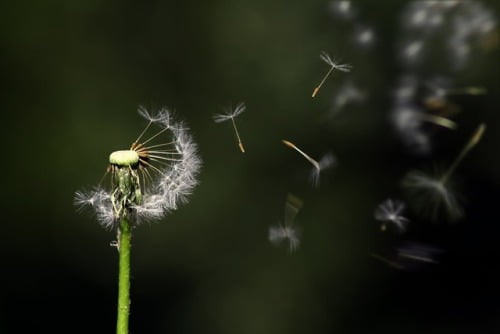
    Not long ago, we learned for the first time that dandelion seeds fly thanks to a stable separated vortex ring that sits behind their bristly pappus. Building on that work, researchers have now published a mathematical analysis of flow around a simplified dandelion pappus. Despite their simplifications, the model captures the flow observed in the previous experiments (bottom image: experiments on left; model on right). 

    The model also allowed researchers to test various features – like the number of filaments in the pappus – and see how they affected the flow. Interestingly, they found that dandelion flight was most stable with about 100 filaments, which is right around the number of a typical pappus! (Image credits: dandelion – Pixabay, figure – P. Ledda et al.; research credit: P. Ledda et al.; via APS Physics; submitted by Kam-Yung Soh and Marc A.)

  • Featured Video Play Icon

    Martian Bees, Canopies, and Dandelion Seeds

    The latest FYFD/JFM video is out! May brings us a look at the incredible flight of dandelion seeds, numerical simulations that reveal the flow above forest canopies, and a look at bee-inspired flapping wing robots being developed for exploring Mars! Learn about all this in the video below, and, if you’ve missed other videos in the series, you can catch up here. (Image and video credit: N. Sharp and T. Crawford)