Tag: fluids as art

  • Spinning Tops

    Spinning Tops

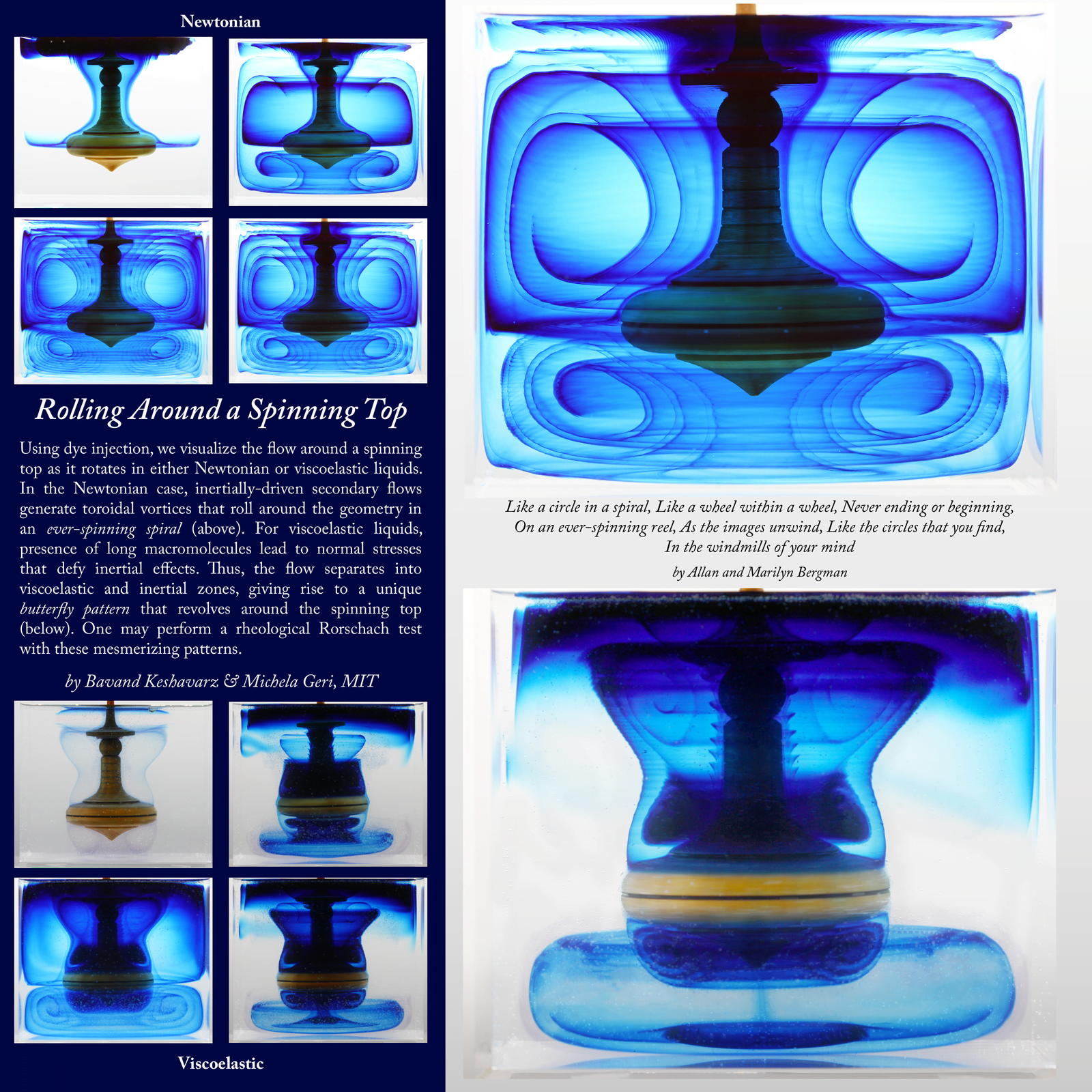
    What does the flow look like around a spinning top? Here, researchers used dye to visualize what happens in a Newtonian fluid (like air or water) as well as a viscoelastic fluid. The Newtonian fluid (upper images) divides into two circulating zones, one below the top and one above. They both take the shape of a toroidal, or donut-shaped, vortex, visible here in cross-section.

    The long molecules of the viscoelastic fluid lend it elasticity to resist stretching. The result is a very different flow field. Beneath the top, there’s still a toroidal vortex, though it appears tighter. But around the upper part of the top, there’s a butterfly-like region of recirculation! (Image credit: B. Keshavarz and M. Geri)

  • Featured Video Play Icon

    Fagradalsfjall Volcano

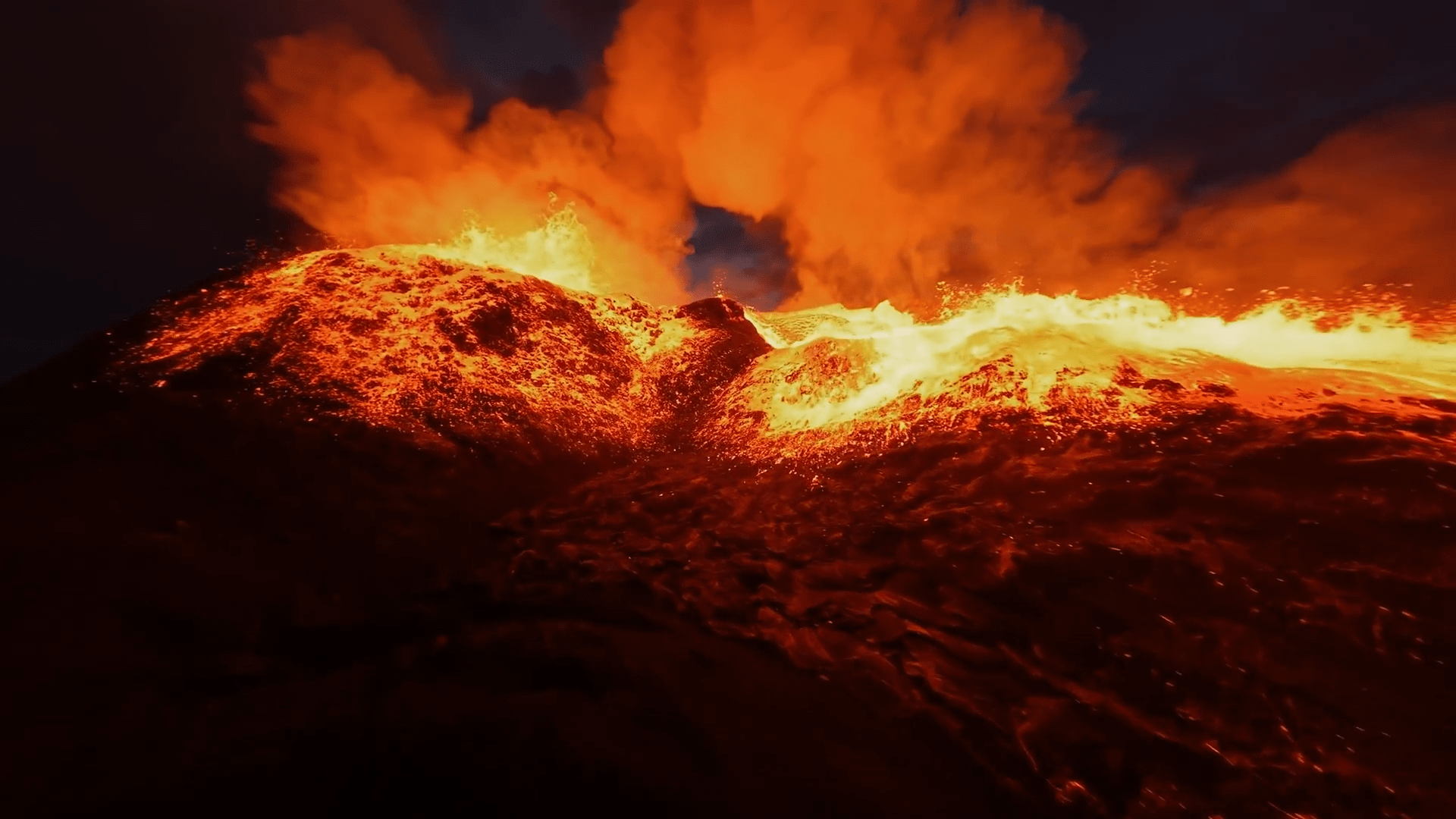
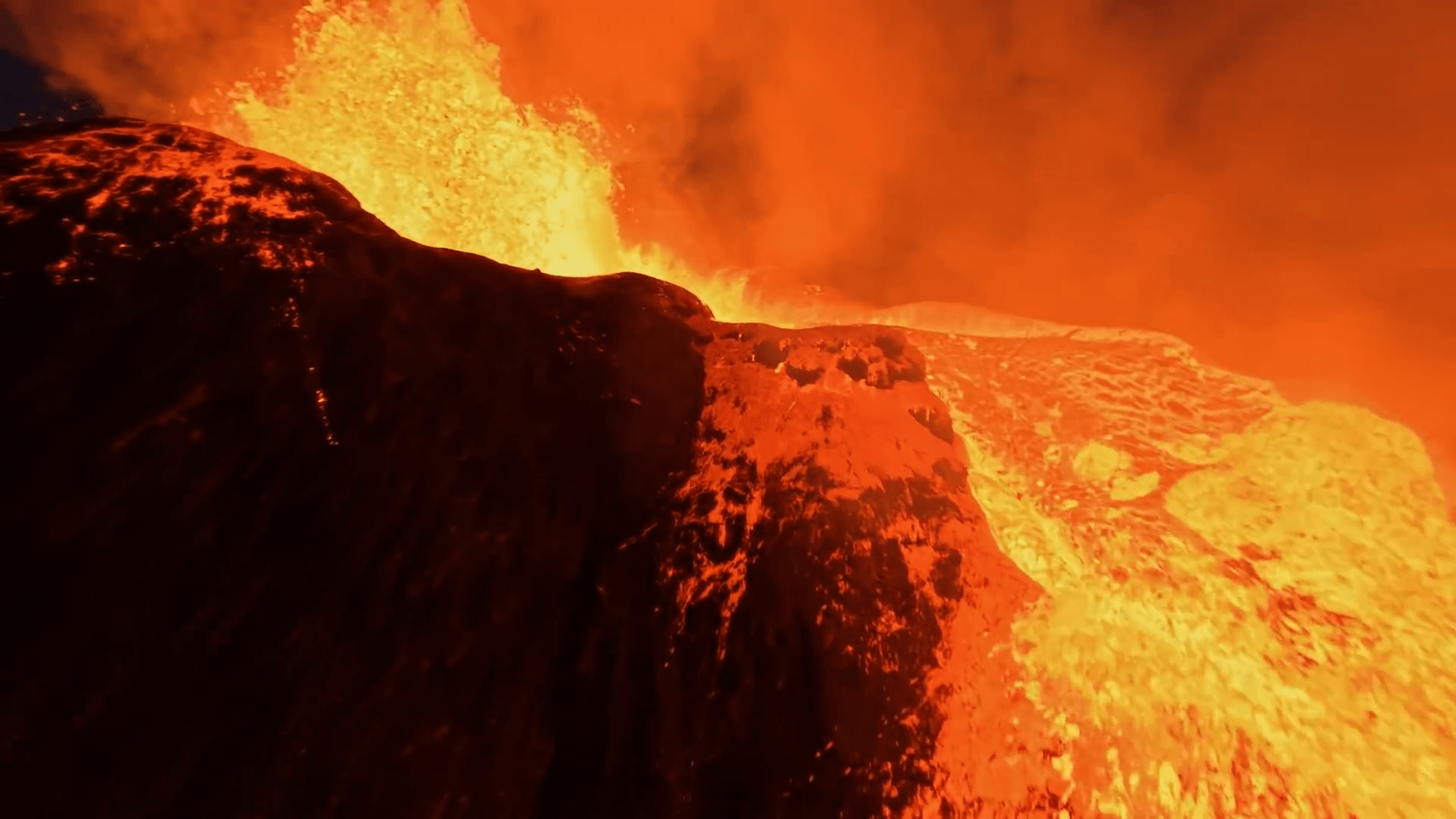
    We’ve seen a lot of drone photography from volcanic eruptions in the last few years, but this footage from Iceland Aerials seems even more daredevil than usual. In this video, you can cruise over fountains of lava and watch as it cascades downhill. The perspective on some of these shots is absolutely unreal; it almost seems like it would have to be CGI. (Video credit: Iceland Aerials; via Colossal)

  • “Oil Paintings”

    “Oil Paintings”

    To capture his images of auroras, nebulas, and comets, photographer Juha Tanhua points his camera lens downward, not upward. Despite their astrophysical appearance, Tanhua’s “oil paintings” are actually parking lot oil spills. The stars are roughened bits of asphalt, and the colors come from thin film interference in a layer of oil (similar to the way colors appear in soap bubbles). It’s amazing how much beauty he captures in examples of urban pollution. (Image credit: J. Tanhua; via Colossal)

  • Featured Video Play Icon

    “Heaven”

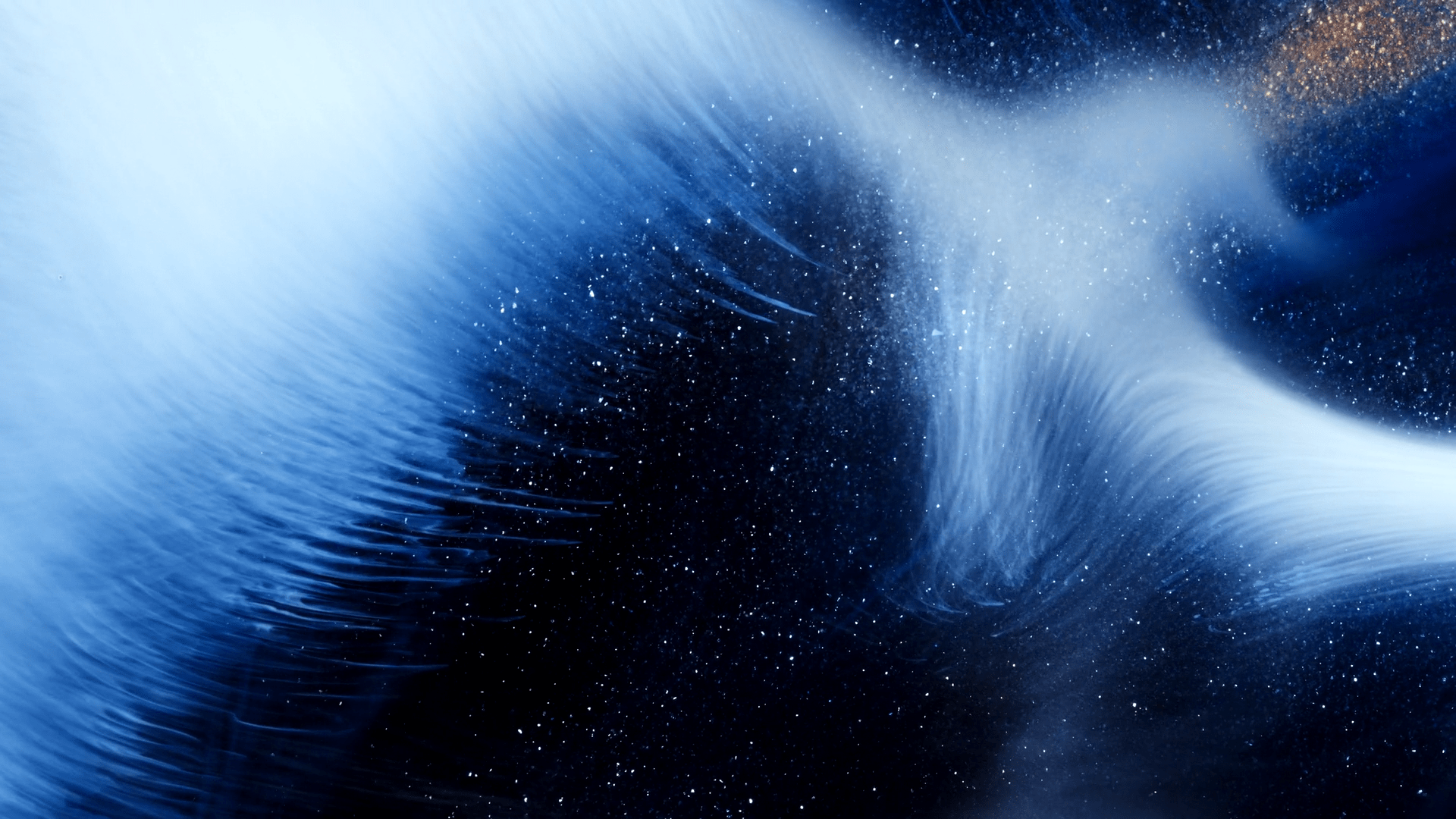
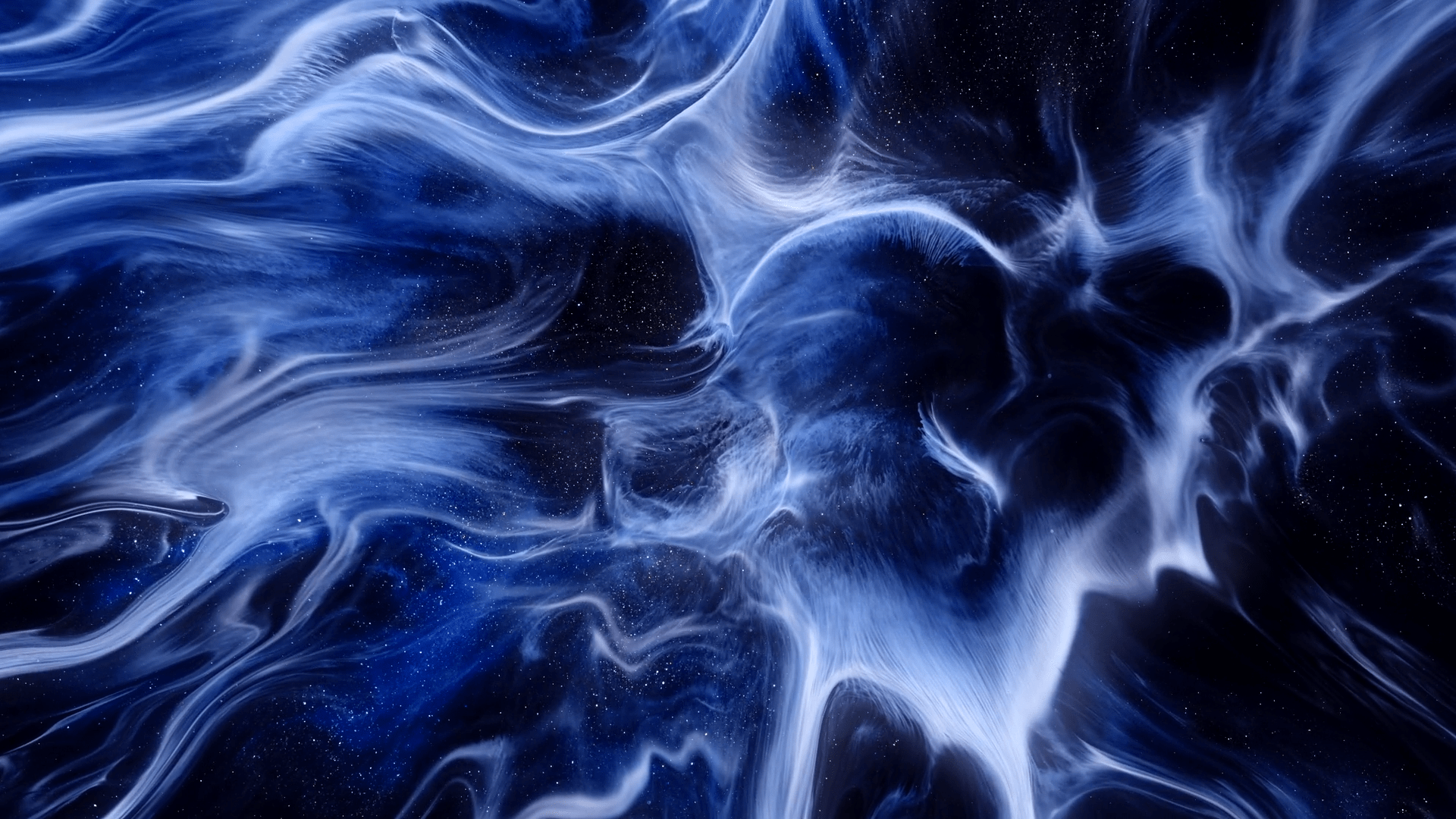
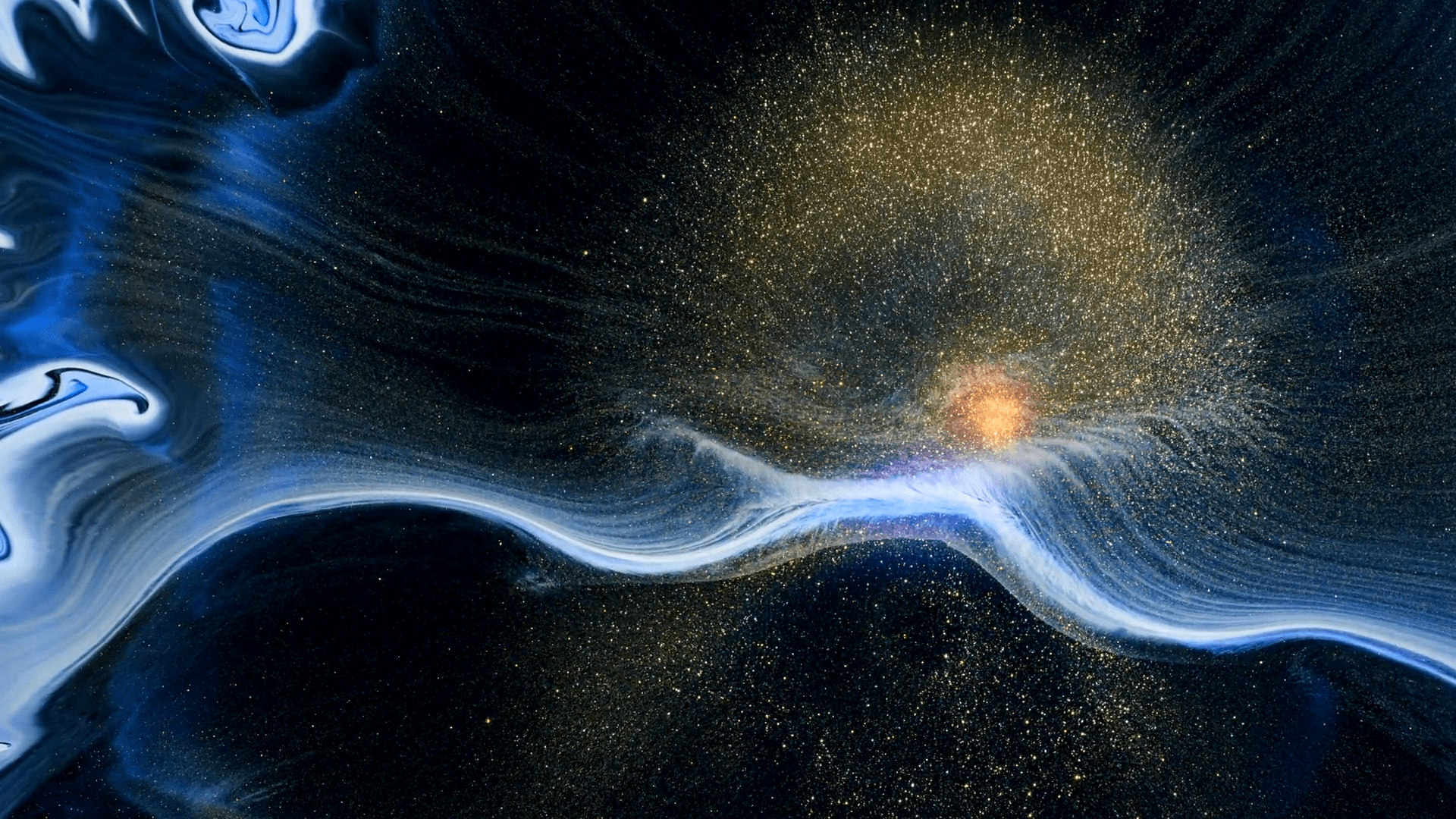
    Wispy white cirrus clouds cover dark skies glittering with stars in Roman De Giuli’s “Heaven”. Or so it appears. In reality, these skyscapes are made with watercolors, ink, and acrylic paint. The vistas are gorgeous regardless of whether they’re driven by turbulent convection (as in the atmosphere) or the Marangoni effect (as in this video)! (Video and image credit: R. De Giuli)

  • Portraits of Flight

    Portraits of Flight

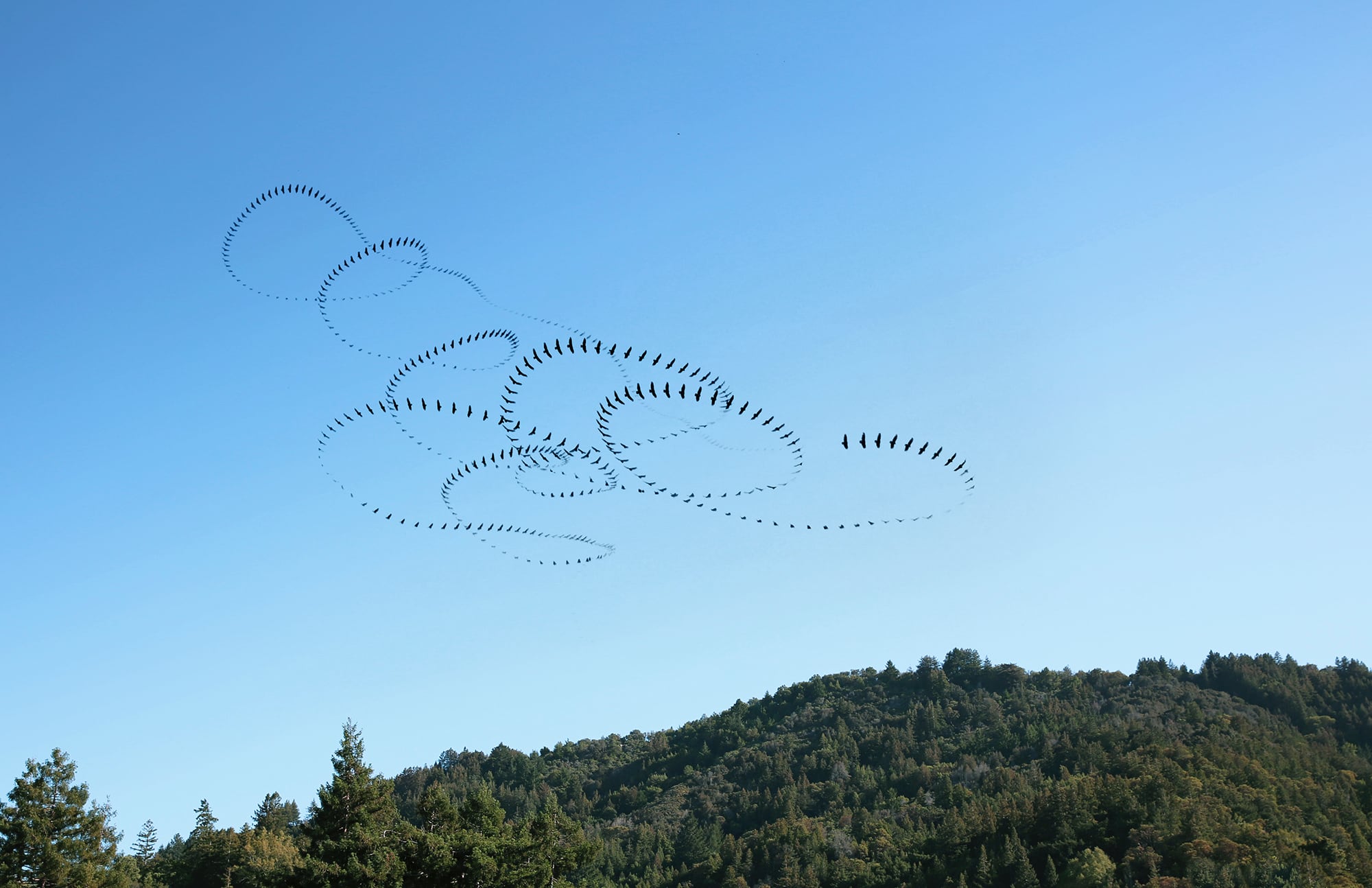
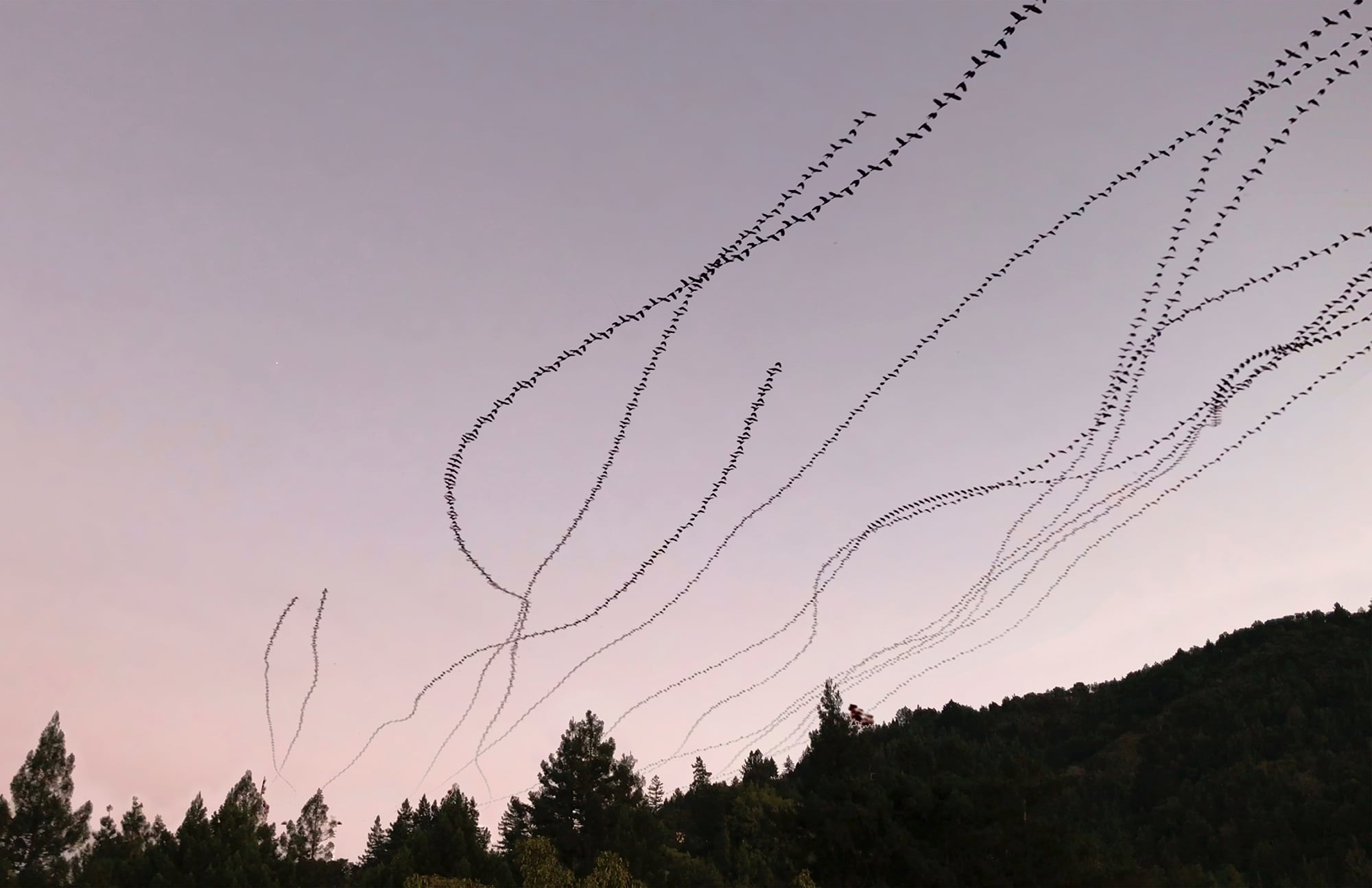
    During lockdown, photographer Doris Mitsch turned her eyes to the sky and began capturing these mesmerizing composite images of animals in flight. Vultures, crows, starlings, gulls, and bats all feature in her series. Some images, like “Lockdown Vulture (Signature)”, feature a single bird’s movement over a minute. Others show entire flocks over extended periods.

    I love how the images capture a sense of speed. Given equal timing between images, the lines with more space between each snapshot of a bird indicate a faster speed. It’s a bit like having particle image velociometry frames stacked atop one another! (Image credit: D. Mitsch; via Colossal)
  • “Delusion”

    “Delusion”

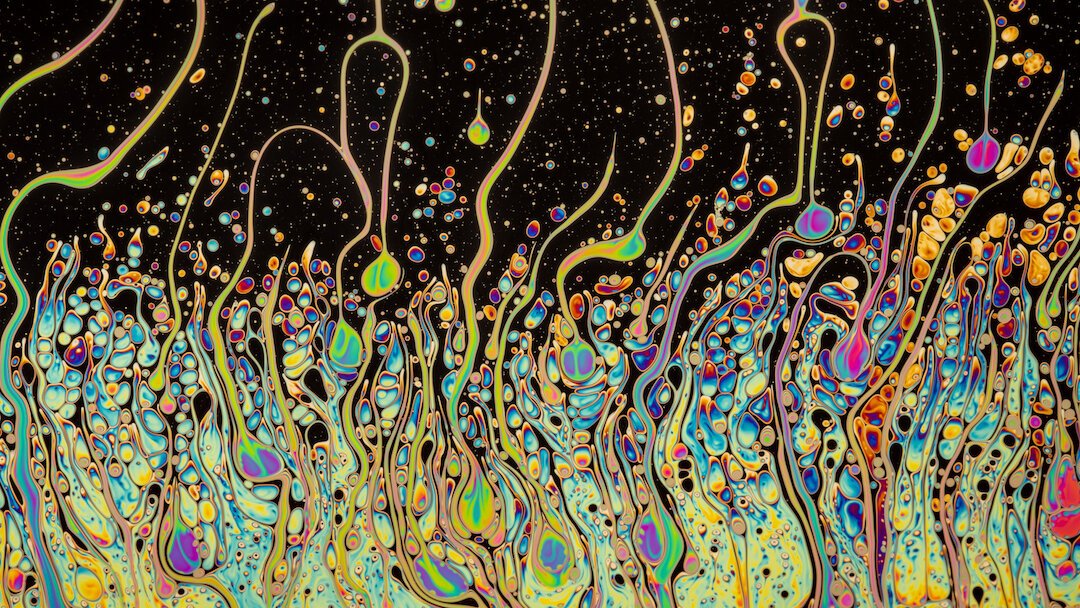
    Soap films are ephemeral and ever-changing. The shifting concentration of surfactants along the surface of the film, combined with thermally-driven convection, keeps the fluid in motion. The shifting colors reflect subtle changes in the soap film’s thickness. Over time, gravity drains fluid from the top of the film, thinning it to the point that it appears black. This photo from Bruno Militelli captures all of that detail in a striking and fascinating image that earned him 2nd place in the Manmade category of the Close-Up Photographer of the Year awards. You can find more winners of the competition here, and more of Militelli’s work on his website and Instagram. (Image credit: B. Militelli)

  • Lava Landscapes

    Lava Landscapes

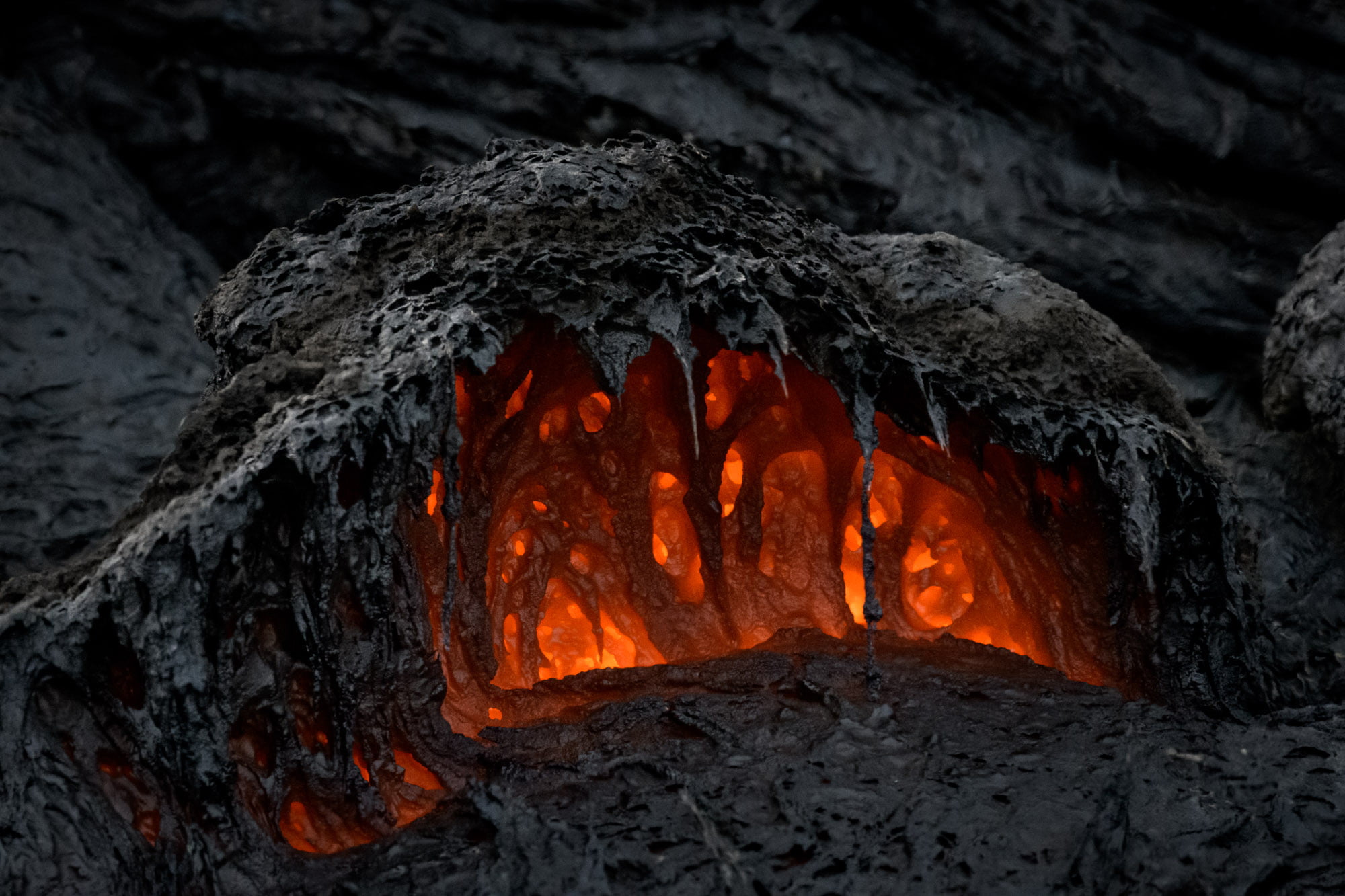
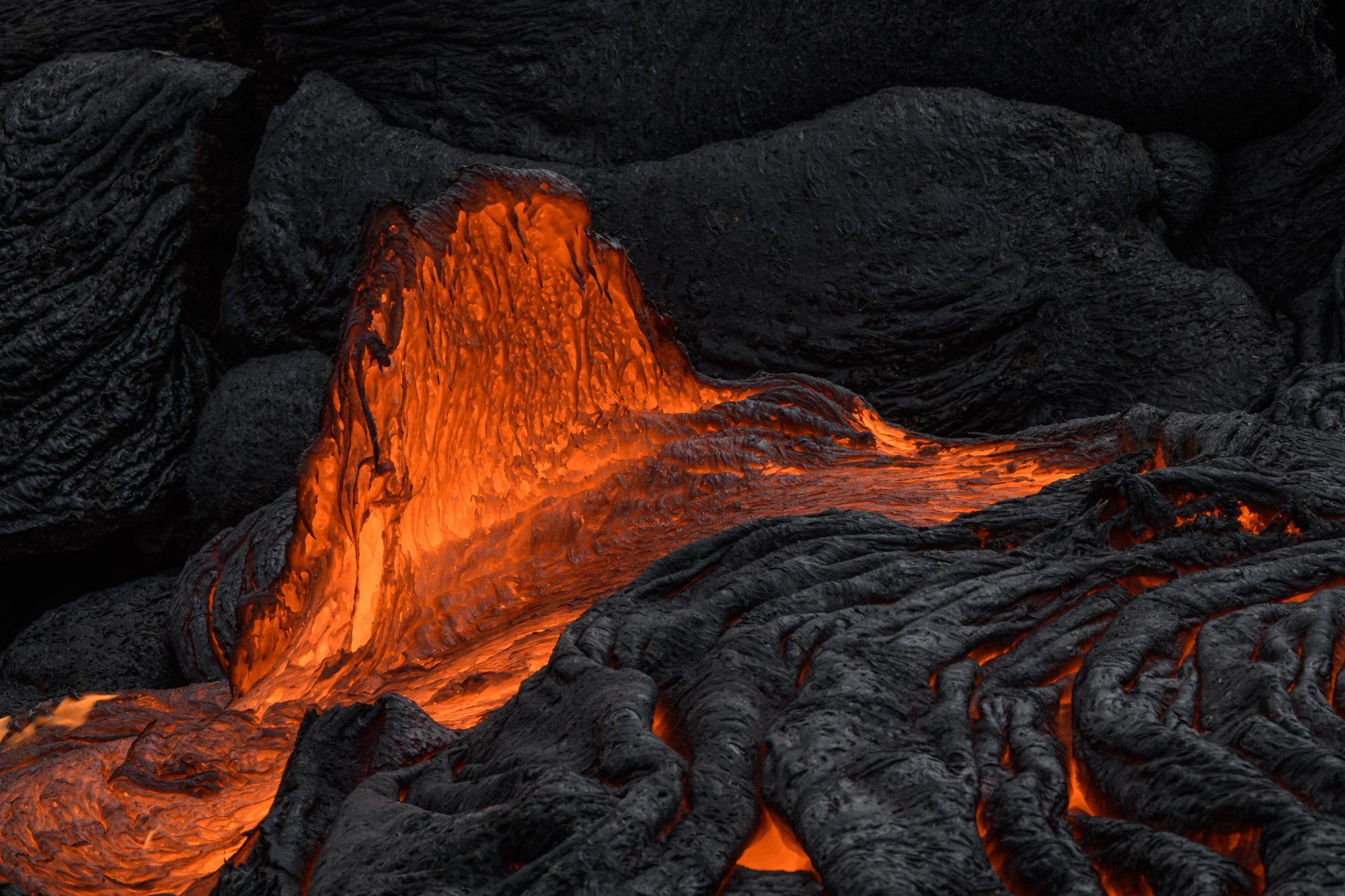
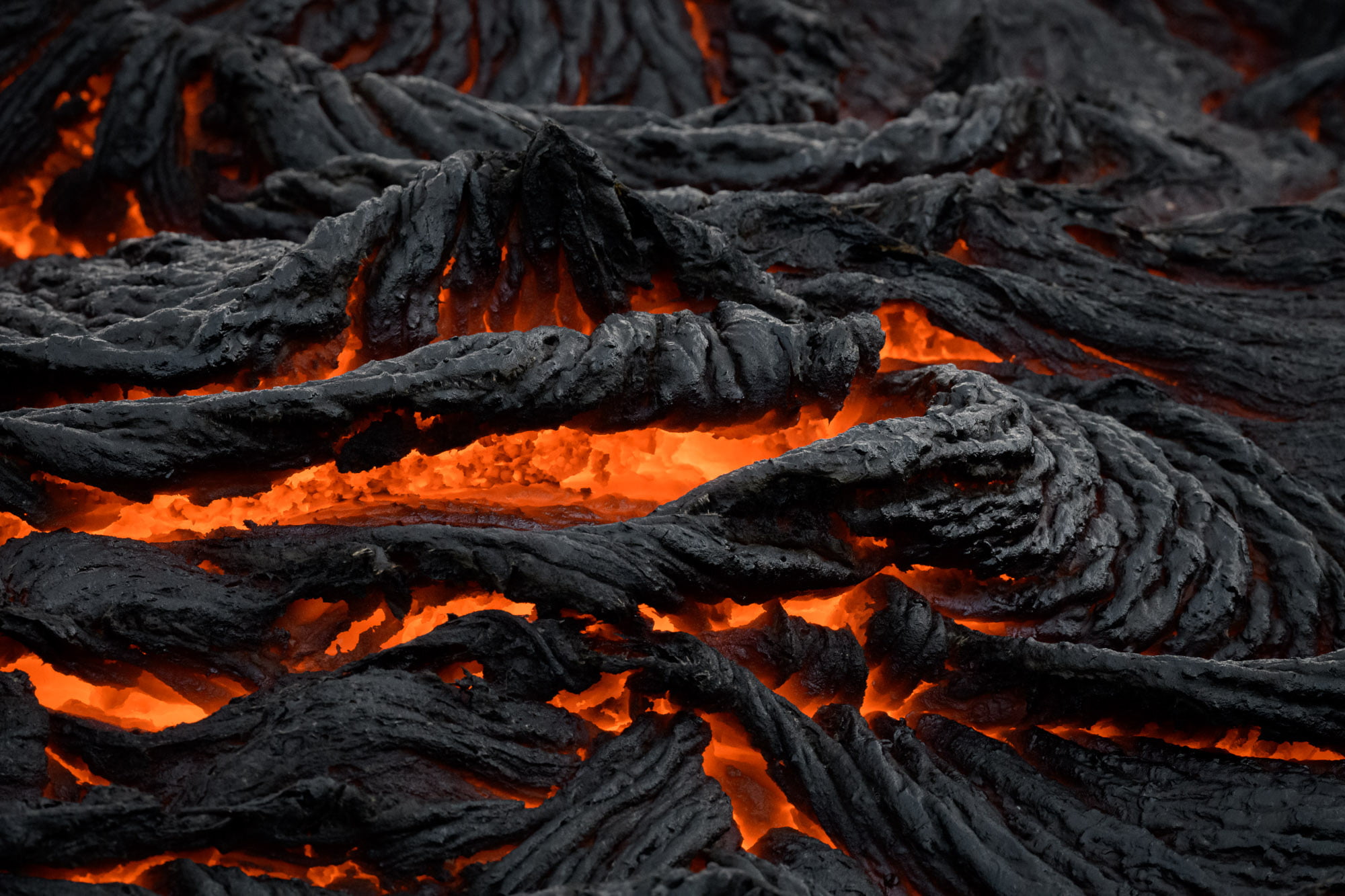
    Lava flows are, by definition, transient. In his LAVA series, photographer Jan Erik Waider explores the changing vistas and textures of Iceland’s Fagradalsfjall volcano eruption. Using a telephoto lens, he captures incredible details of the charred, cooling outer crust of the lava and the glowing molten interior. Only minutes later, fresh lava tore through, destroying these natural sculptures. You can find prints of his images on his website. (Image credit: J. Waider; via Colossal)

  • Luminous Fruits

    Luminous Fruits

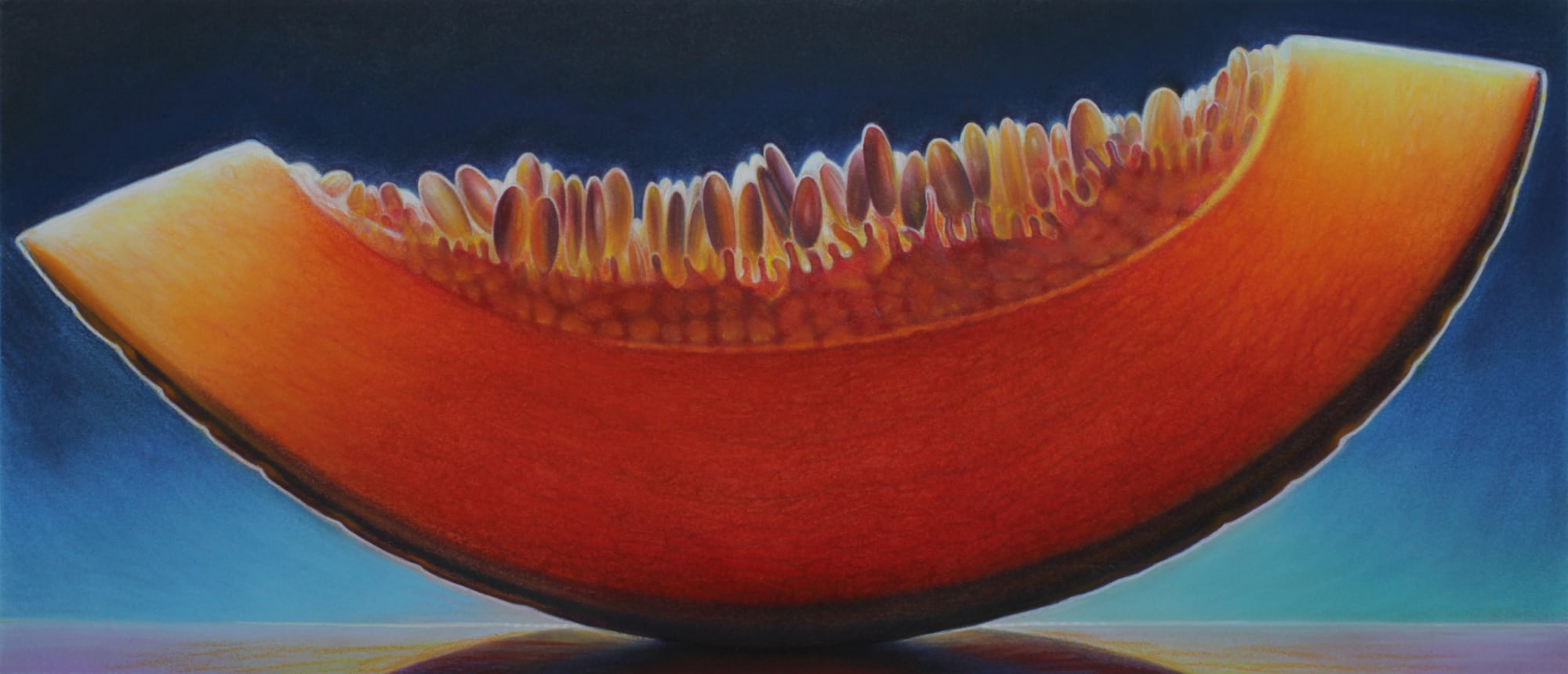
    Light shines through citrus and melon in this photographic photorealistic series of paintings from artist Dennis Wojtkiewicz. The strong illumination reveals the underlying structure of pith, pulp, and juice. The deformable pockets of fluid in the peel of citrus fruits are the source of some incredible microjets. When the peel bends, it compresses these tiny fluid-filled pockets, creating incredibly high pressures that eventually drive a burst of oil at g-forces comparable to those felt by a bullet fired from a gun. Learn more about citrus jets here and see more of Wojtkiewicz’s work and purchase prints here on his site. (Image credit: D. Wojtkiewicz; via Colossal)

    ETA: Thanks to A.J. for pointing out that Wojtkiewicz is, in fact, a painter (and not a photographer), making his work all the more astounding! We regret the error.

  • Featured Video Play Icon

    Acrylic Paint Fractals

    Here’s a simple fluids experiment you can try at home using acrylic paints, ink, isopropyl alcohol and a few other ingredients. When dropped onto diluted acrylic paint, a mixture of black ink and alcohol spreads in a fractal fingering pattern. The radial (outward) flow is driven by the alcohol’s evaporation, which increases the local surface tension and draws fluid outward. The shape and density of the fingers depends, at least in part, on the viscosity of the underlying paint layer; more viscous paint layers grow smaller and denser fractal patterns. (Image and video credit: S. Chan et al.)

  • Featured Video Play Icon

    “Halo”

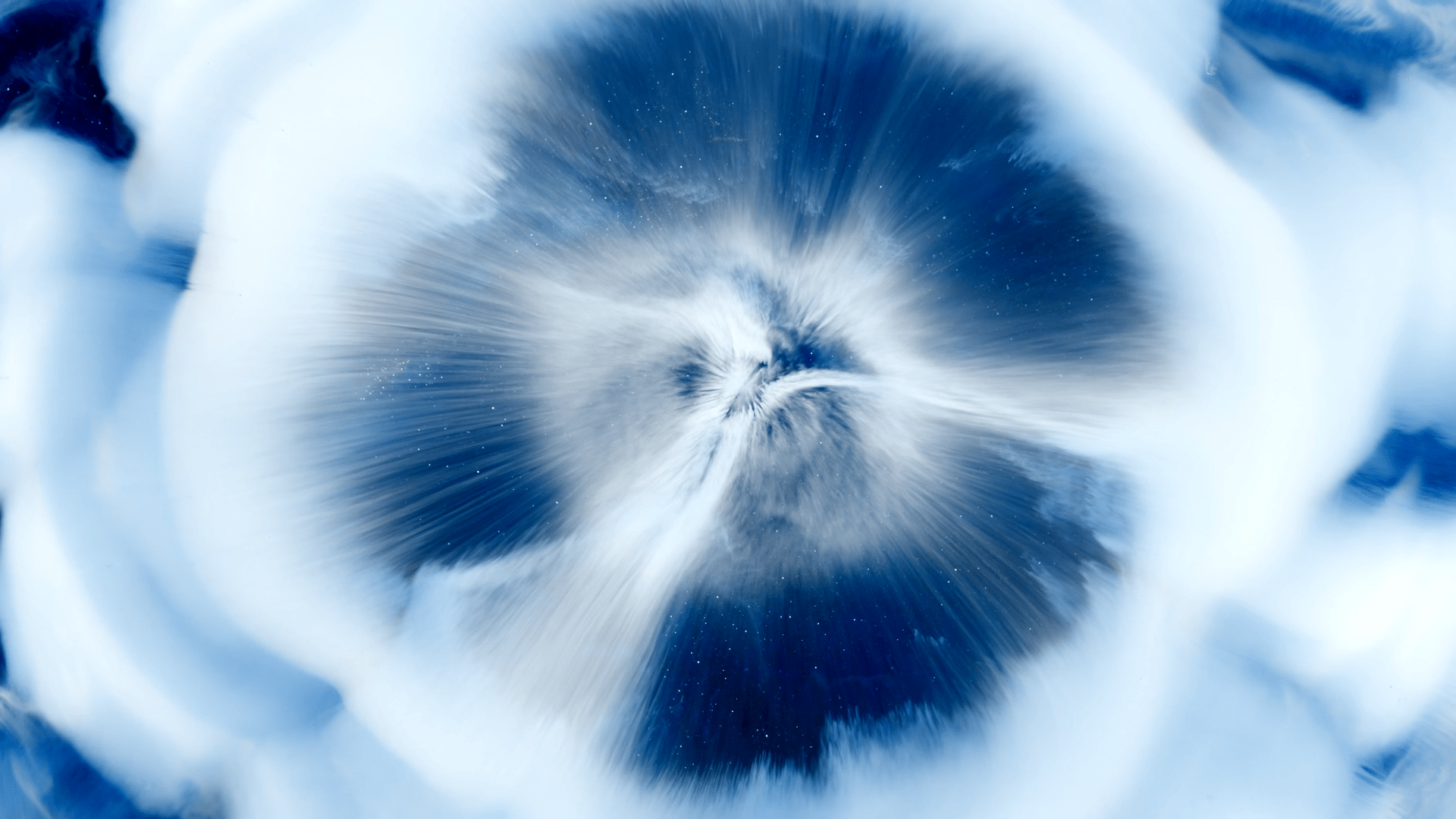
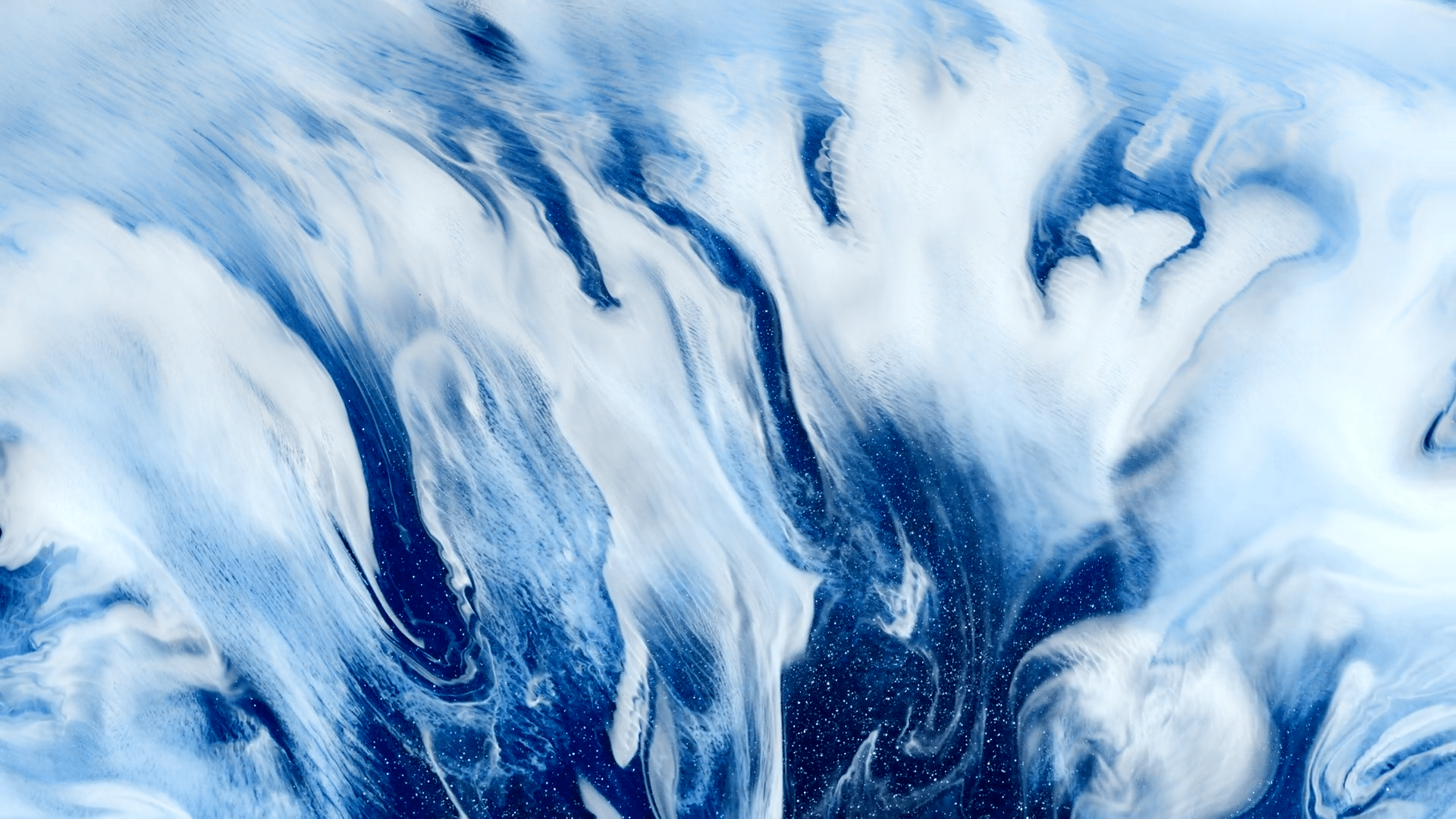
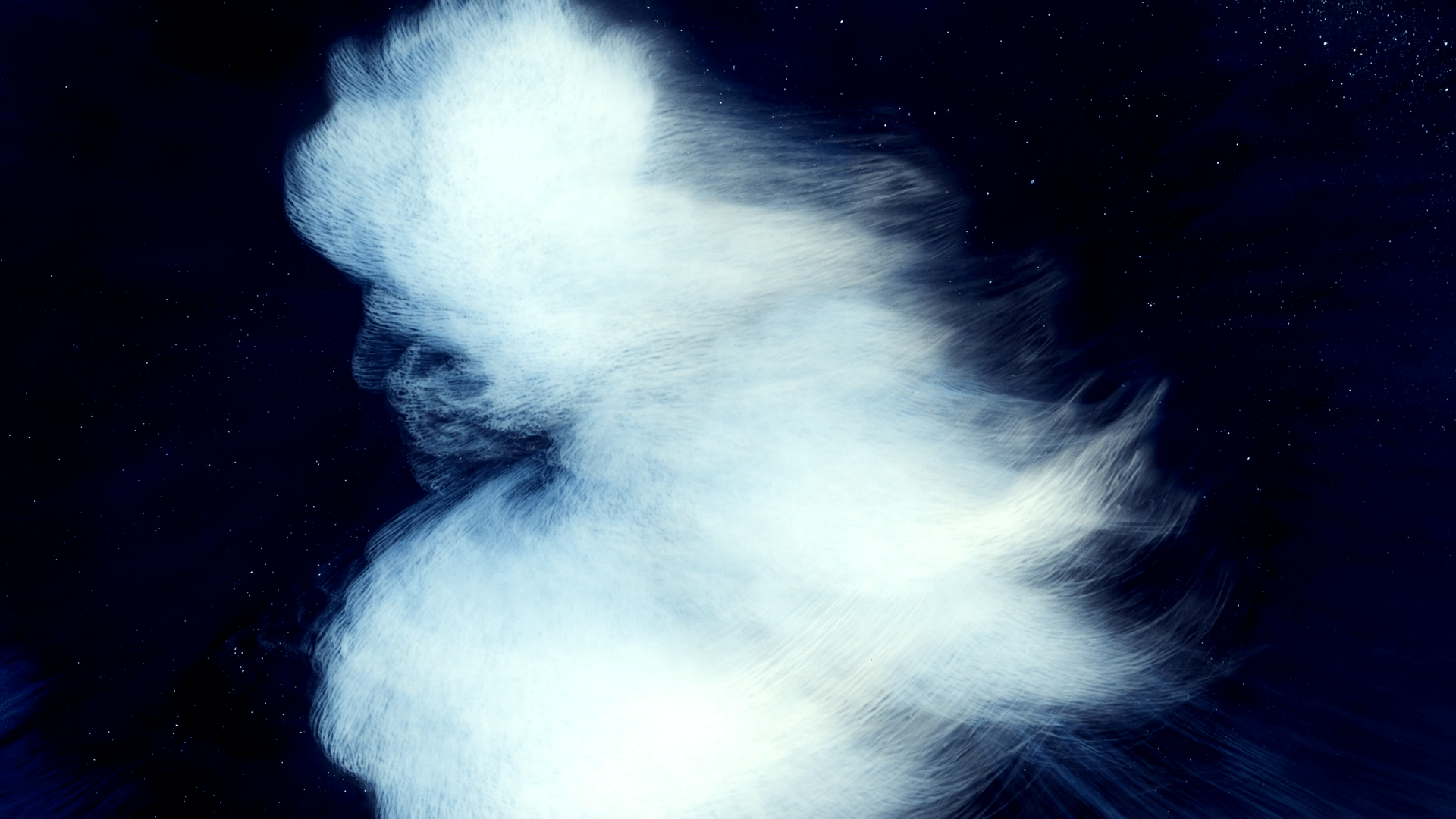
    Fluids create mesmerizing practical effects in this new experimental film from the Julia Set Lab. I love how the visuals mess with your sense of scale. Some of the sequences look like they could be a solar firestorm or disintegrating sea ice, though in reality the camera’s field of view is probably smaller than your palm. The filmmakers provide no information on the fluids they use, but I spy some hints of partially miscible ingredients, some chemical reactions, and plenty of Marangoni action. (Video and submission credit: S. Bocci/Julia Set Lab)