As red ants scout their way to food, the terrain can sometimes get in the way. Here a leading scout has made their body into a bridge that their fellows can use to cross the watery gap. Take a close look at the water’s surface and you’ll see that the meniscus curves up to meet the rocks. That’s a clue that this image is really very small! For water on Earth, that curvature only occurs at lengths below a couple of millimeters, where surface tension has the power to overcome gravity’s efforts to flatten the surface. The ants’ bridge is only possible because the red ant is small enough and light enough for surface tension to support it. Learn more about the amazing interactions of ants and water in some of my previous posts. (Image credit: Chin Leong Teo; via Colossal)
Tag: fluids as art

“ColorLover”
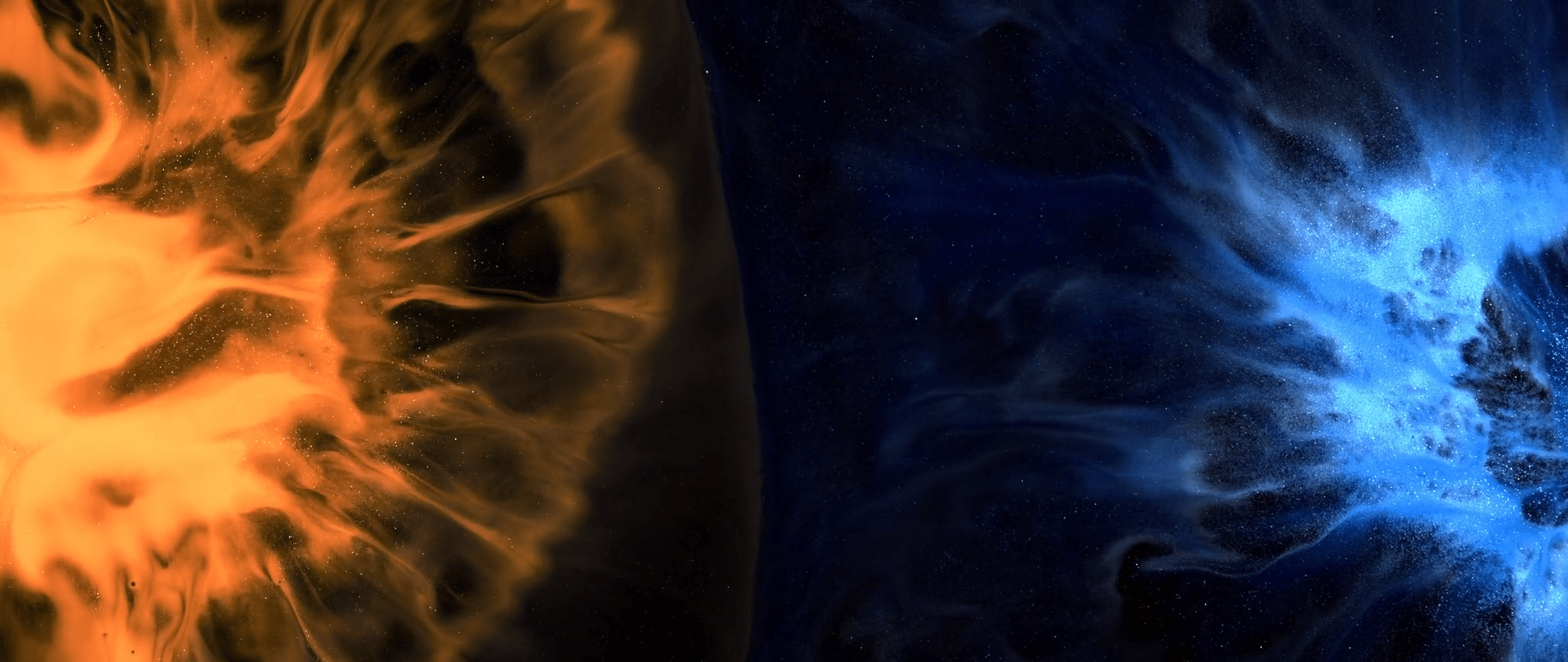
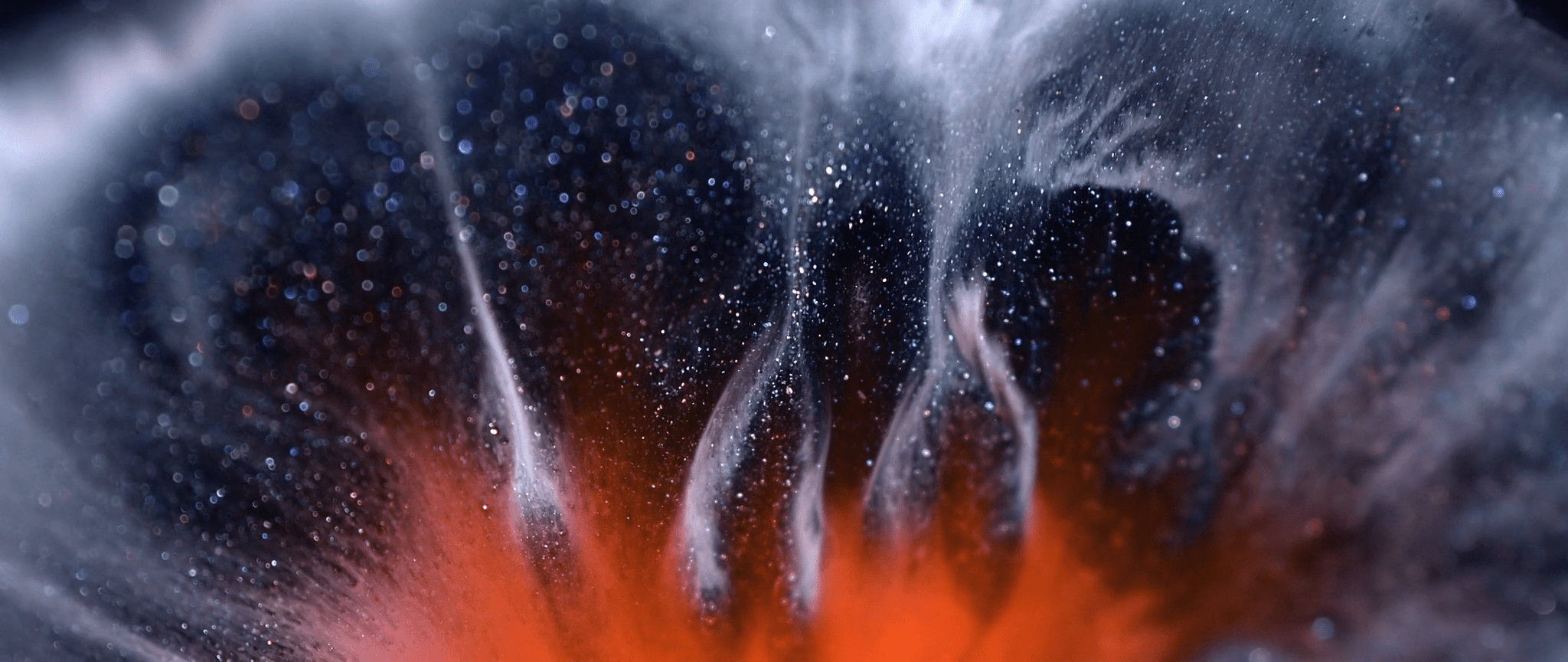
“ColorLover,” a short film by artist Rus Khasanov, is a delightful liquid rainbow. The video’s ingredients seem to be ink, paint, oil, and a bit of superhydrophobic coating primed to reveal a heart. I love that latter touch; it’s a cool way to use regular materials in a way that some might assume involved digital effects! (Video credit: R. Khasanov)

“Reverent”
Today, enjoy this moody black-and-white short film of storm timelapses. Photographer Mike Olbinski is a master of this subject. I never tire of watching his towering convective supercell thunderstorms or his picturesque microbursts. The lightning-lit clouds in the latter half of the film are particularly spectacular (assuming you do not have sensitivities to flashing lights). And there are a few haboobs and a tornado in there for good measure, too. (Image and video credit: M. Olbinski)

“Belletrix”
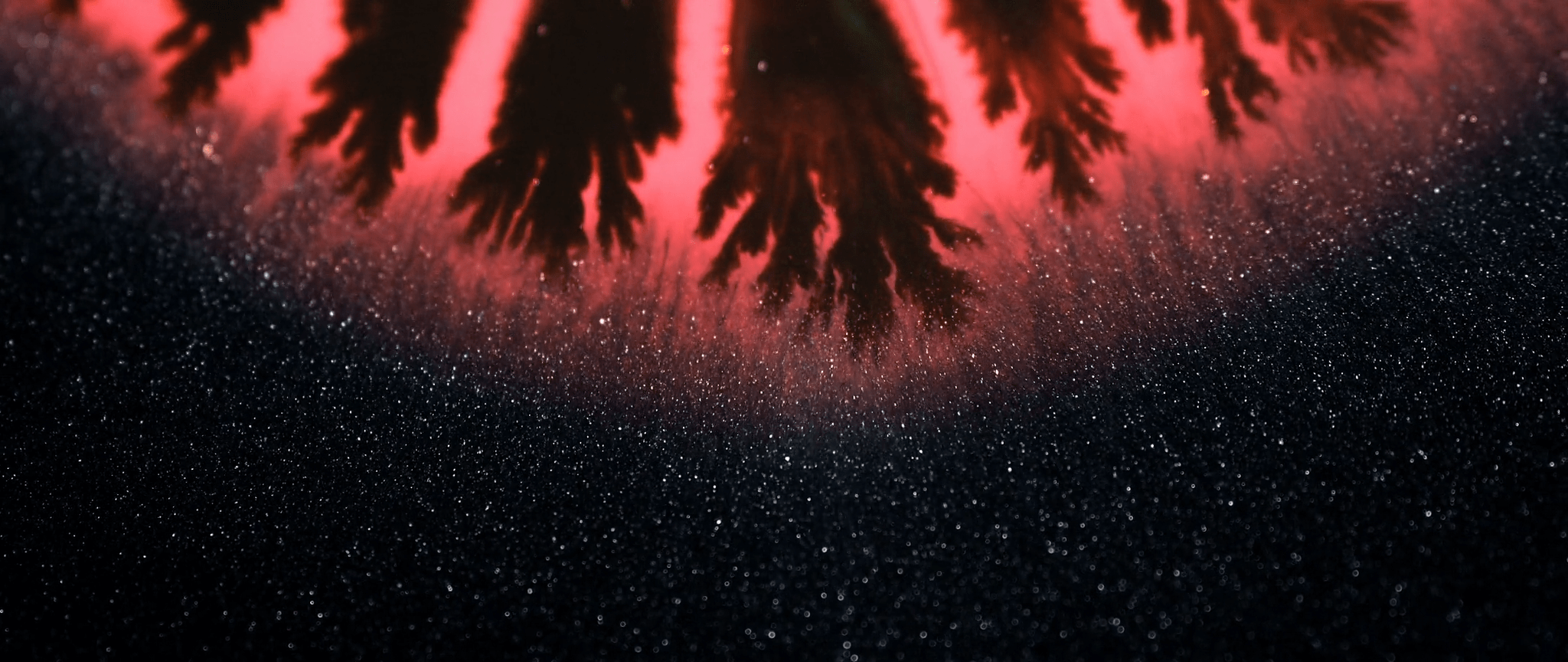
Icy crystals burst forth against a dark background in Thomas Blanchard’s short film “Belletrix.” The process is one of chemical crystallization. Blanchard supersaturates a chemical in a dish of hot water, then cools the fluid, which then spontaneously crystallizes when disturbed. Depending on the solution’s temperature, the crystals vary from feather-like to radial stars, each reflecting, expanding, and overlapping to cover the full surface. (Image and video credit: T. Blanchard)

Watery Salt Flats
Unusually high rainfall in Bolivia’s Salar de Uyuni turned the world’s largest salt flat into a shallow salt lake. These natural-color satellite images show the area in late January 2022. If you zoom in on the full resolution image, there are incredible detailed swirls in the water. It’s like peering at an abstract or Impressionist painting. The many colors are attributable to several sources, including volcanic sediments, runoff, and a variety of microbes and algae thriving in the mineral-filled waters. (Image credit: L. Dauphin; via NASA Earth Observatory)

Spinning Tops
What does the flow look like around a spinning top? Here, researchers used dye to visualize what happens in a Newtonian fluid (like air or water) as well as a viscoelastic fluid. The Newtonian fluid (upper images) divides into two circulating zones, one below the top and one above. They both take the shape of a toroidal, or donut-shaped, vortex, visible here in cross-section.
The long molecules of the viscoelastic fluid lend it elasticity to resist stretching. The result is a very different flow field. Beneath the top, there’s still a toroidal vortex, though it appears tighter. But around the upper part of the top, there’s a butterfly-like region of recirculation! (Image credit: B. Keshavarz and M. Geri)
Fagradalsfjall Volcano
We’ve seen a lot of drone photography from volcanic eruptions in the last few years, but this footage from Iceland Aerials seems even more daredevil than usual. In this video, you can cruise over fountains of lava and watch as it cascades downhill. The perspective on some of these shots is absolutely unreal; it almost seems like it would have to be CGI. (Video credit: Iceland Aerials; via Colossal)

“Oil Paintings”
To capture his images of auroras, nebulas, and comets, photographer Juha Tanhua points his camera lens downward, not upward. Despite their astrophysical appearance, Tanhua’s “oil paintings” are actually parking lot oil spills. The stars are roughened bits of asphalt, and the colors come from thin film interference in a layer of oil (similar to the way colors appear in soap bubbles). It’s amazing how much beauty he captures in examples of urban pollution. (Image credit: J. Tanhua; via Colossal)

“Heaven”
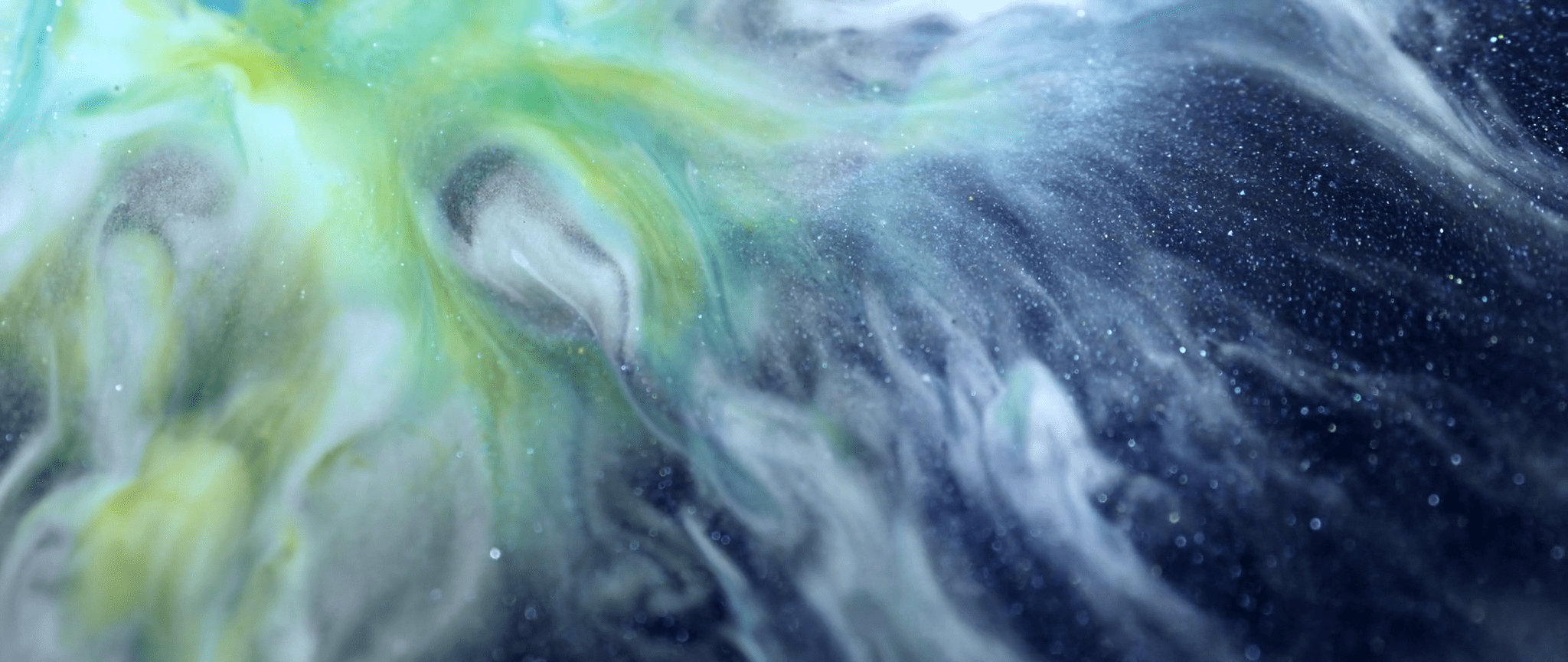
Wispy white cirrus clouds cover dark skies glittering with stars in Roman De Giuli’s “Heaven”. Or so it appears. In reality, these skyscapes are made with watercolors, ink, and acrylic paint. The vistas are gorgeous regardless of whether they’re driven by turbulent convection (as in the atmosphere) or the Marangoni effect (as in this video)! (Video and image credit: R. De Giuli)

Portraits of Flight
During lockdown, photographer Doris Mitsch turned her eyes to the sky and began capturing these mesmerizing composite images of animals in flight. Vultures, crows, starlings, gulls, and bats all feature in her series. Some images, like “Lockdown Vulture (Signature)”, feature a single bird’s movement over a minute. Others show entire flocks over extended periods.
I love how the images capture a sense of speed. Given equal timing between images, the lines with more space between each snapshot of a bird indicate a faster speed. It’s a bit like having particle image velociometry frames stacked atop one another! (Image credit: D. Mitsch; via Colossal)