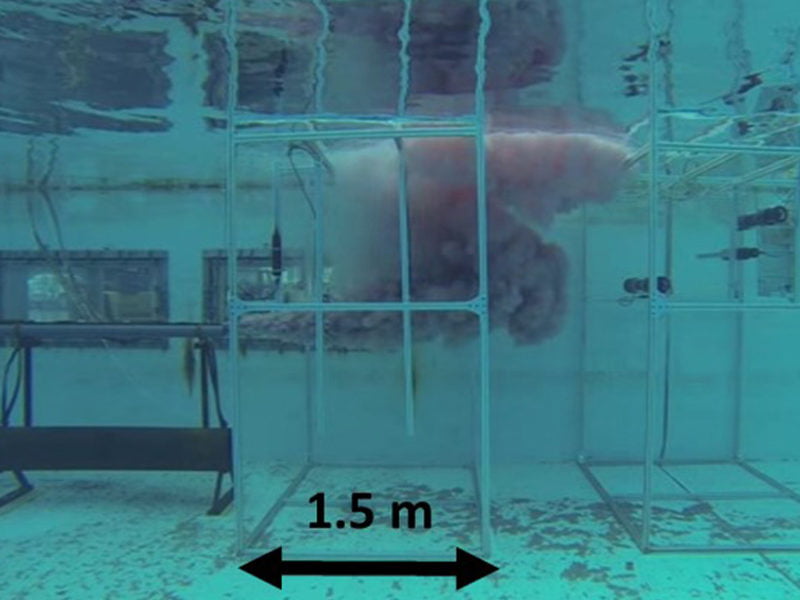
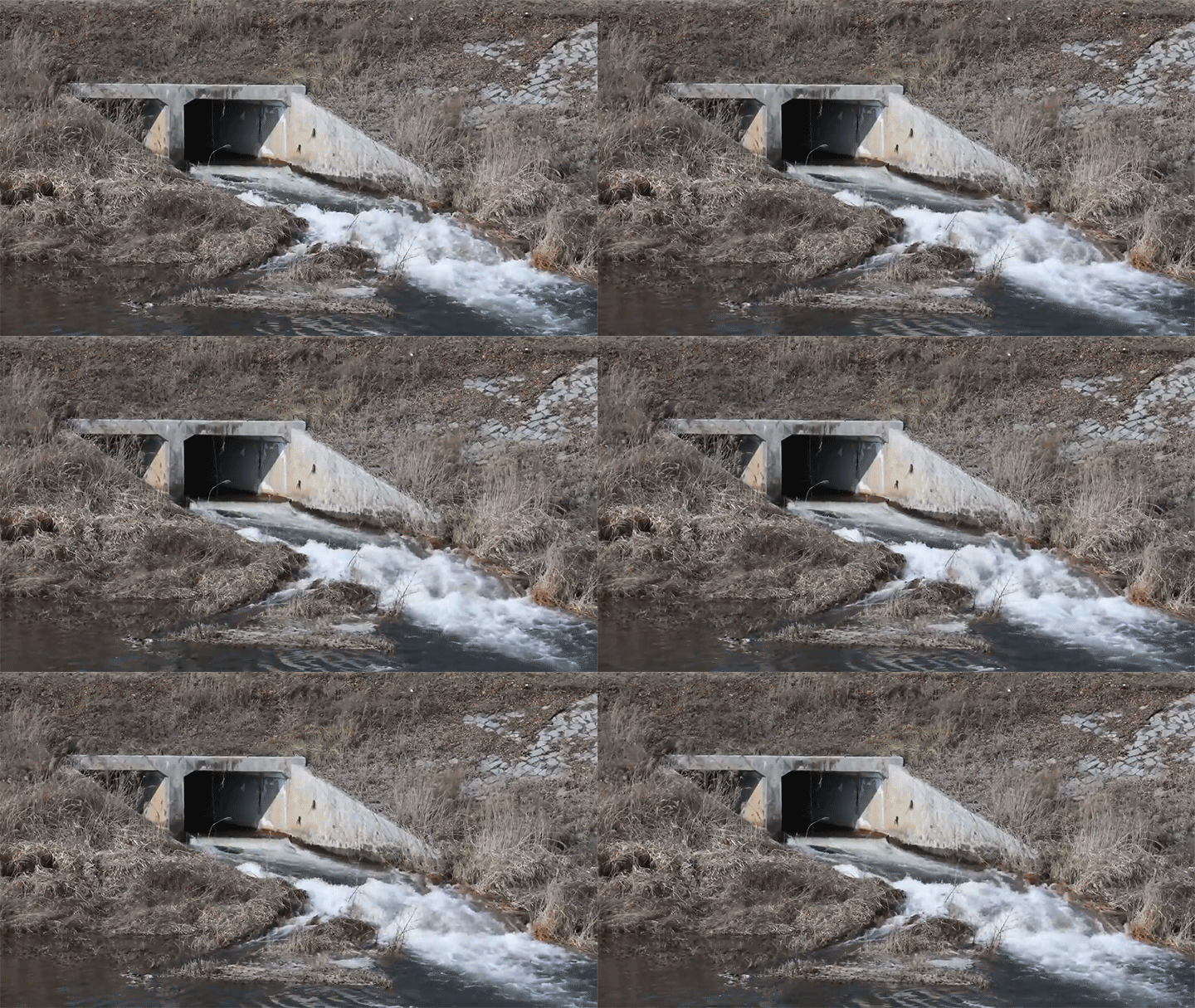
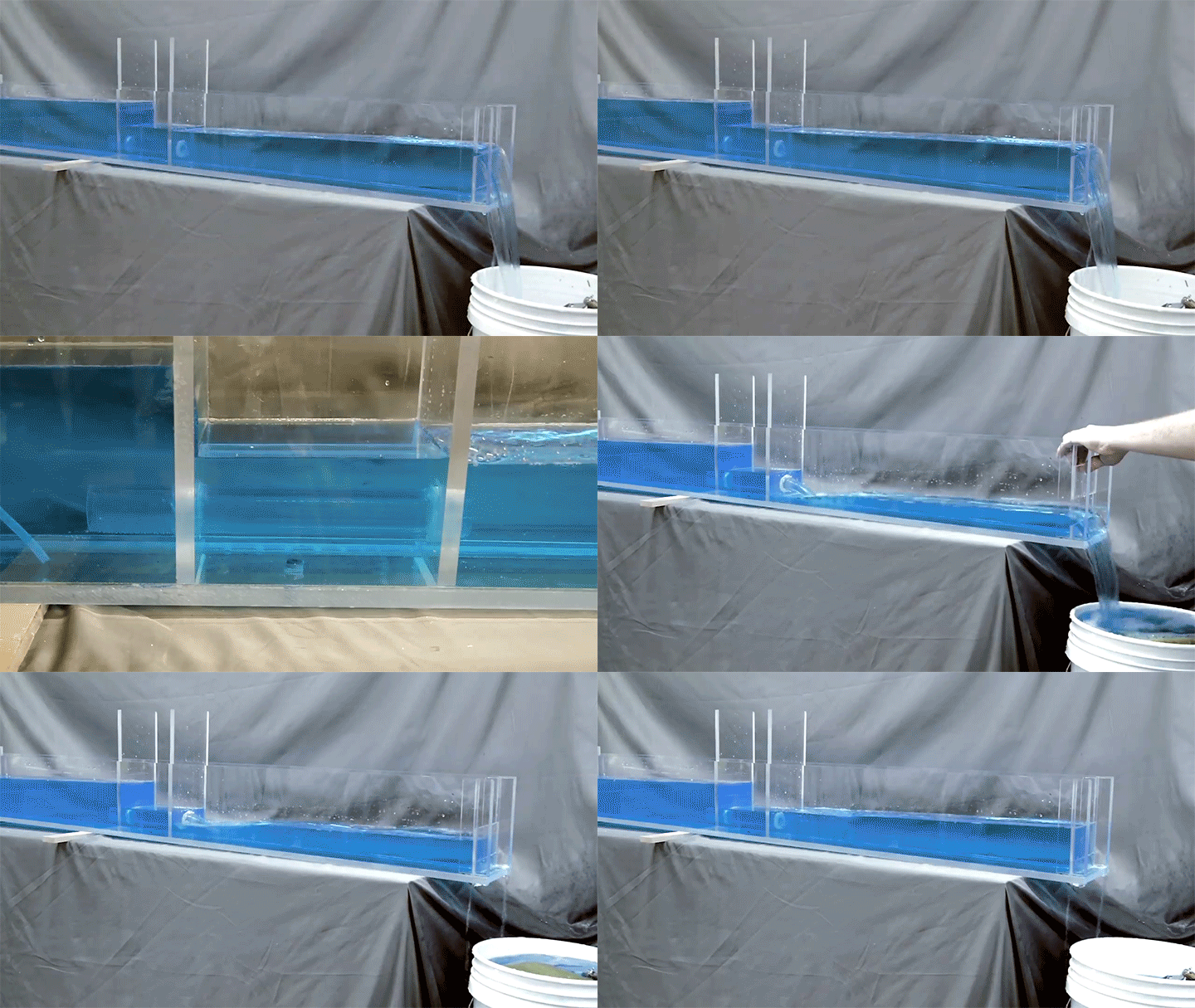
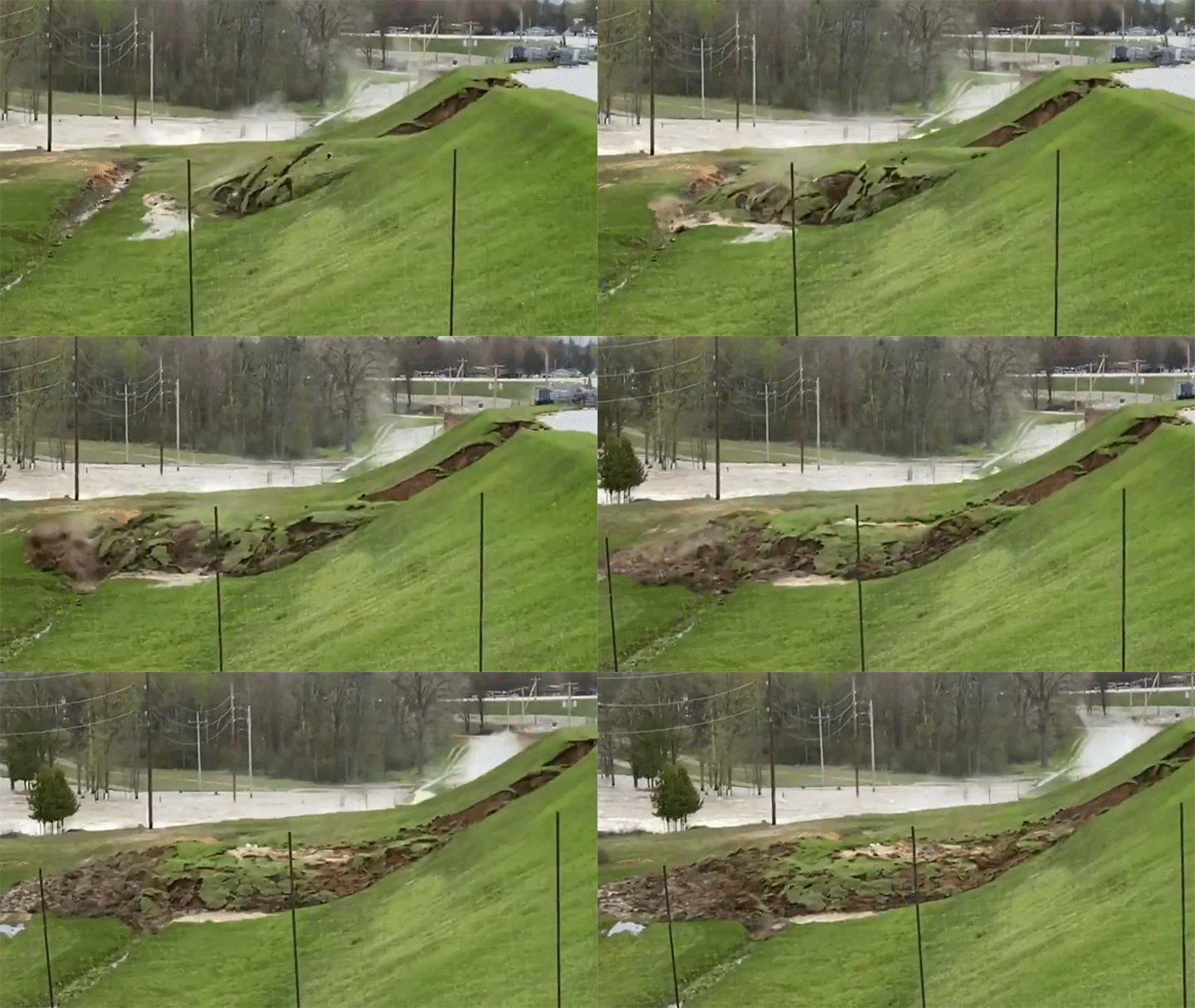
In the decade since the Deepwater Horizons oil spill, scientists have been working hard to understand the intricacies of how liquid and gaseous hydrocarbons behave underwater. The high pressures, low temperatures, and varying density of the surrounding ocean water all complicate the situation.
Released hydrocarbons form a plume made up of oil drops and gas bubbles of many sizes. Large drops and bubbles rise relatively quickly due to their buoyancy, so they remain confined to a relatively small area around the leak. Smaller drops are slower to rise and can instead get picked up by ocean currents, allowing them to spread. The smallest micro-droplets of oil hardly rise at all; instead they remained trapped in the water column, where currents can move them tens to hundreds of kilometers from their point of release. (Image and research credit: M. Boufadel et al.; via AGU Eos; submitted by Kam-Yung Soh)
This 1936 promotional film by Chevrolet explains the concept of streamlining objects to reduce their drag. And it actually does a pretty nice job of it, including some wind tunnel footage and table-top demonstrations. It’s also an amazing snapshot of the era, both in terms of engineering and the vision they had for the future. Just check out that City of the Future and its torpedo cars! (Video and image credit: Chevrolet; submitted by Larry S.)
Mosquitoes, bats, and even eels use non-visual means to sense their environments. For mosquitoes, part of their obstacle avoidance comes from the exquisite sensitivity of their antennae, which are able to sense subtle changes in the air flow around them as they approach a wall or the ground. Researchers used this same technique to help a quadcopter avoid crashing by adding air pressure sensors that respond to the changes in the copter’s wake as it approaches the ground. (Image and research credit: T. Nakata et al.; via Science)
The Dutch have been exceptional water engineers for centuries, a necessity in a country where more than a quarter of its territory lies below sea level. After a devastating flood in the early 1950s, the country embarked on a decades’ long endeavor to build the massive Delta Works that now protect a large portion of the population from oceanic storm surges that would otherwise flood the countryside.
As part of their efforts to instill resiliency both along the coast and upstream, the Netherlands has shifted dykes, created floodplain habitats, and built water storage into new buildings. With communities around the world at greater flood risk than ever as our climate changes, the Netherlands serves as a shining example of what’s possible with proper planning and investment. (Video and image credit: TED-Ed)
For thousands of years, boats have been a critical component of trade, efficiently enabling transport of goods over large distances. But water’s self-leveling creates challenges when moving up and downstream through rivers and canals. To get around this, engineers use locks, which act as a sort of gravity-driven elevator to lift and lower boats to the appropriate water level. In this video from Practical Engineering, we learn about the basic physics behind locks as well as some of the methods engineers use to limit water loss through the lock. (Image and video credit: Practical Engineering)
Manmade infrastructure often interferes with natural waterways, which is one reason civil engineers turn to culverts, those pipes and concrete tunnels you often see beneath roadways. As simple as they may seem, there’s a lot of engineering that has to go into these artificial waterways to keep flows from backing up and flooding roads. In this video from Practical Engineering, you’ll learn about some of those factors and see through demos just how they impact the flow. (Image and video credit: Practical Engineering)
Academia, like every part of our society, has a race problem. Today, I’m joining in the effort to change that by taking a break from business as usual and examining the issues facing my Black colleagues and what I can do to change them. I encourage you to do the same, and if you stick around, I’ll give you some ways to help!
The Current State of Affairs
Physics and engineering struggle across the board with diversity. According to a 2020 report from the American Physical Society (APS, home to my professional society, the Division of Fluid Dynamics, or DFD), my society’s membership is currently about 14% female. That’s actually an improvement over 3 years ago, when we were all of 11% female. APS doesn’t even publish unit-level statistics on racial and ethnic minorities, though they do report statistics for minorities across physics as a whole.
As someone without an academic institution, I’m somewhat limited in my capacity to change the culture there. I have no say in hiring or tenure decisions. (If you are at a university, here are some resources that may help you create change.)
But my work does play an important role in increasing visibility for minorities in physics in engineering, including African Americans. To that end, I pledge to redouble my efforts to feature the voices and work of Black fluid dynamicists.
I also want to support organizations that help Black physicists and engineers like the National Society of Black Physicists, the National Society of Black Engineers, and African American Women in Physics. And this is where you can help! For the next month, I will donate all of my proceeds from the sales of FYFD merchandise to these organizations. Moreover, I will personally match those proceeds with my own donation (up to $500). So if you’ve been thinking about grabbing a t-shirt or some stickers to share your love of fluid dynamics, now’s a great time!
It’s important to recognize that #ShutDownSTEM is about more than one day. It’s about making a sustained commitment to eliminate anti-Black racism in STEM and academia. To that end, I include here some useful resources, both on general anti-racism efforts and on academic ones in particular. I hope you’ll join me in making our field more diverse and inclusive.
Meet Some Black Physicists, Engineers, and Fluid Dynamicists
This list is in no way comprehensive, but I want to highlight some of the amazing Black folks who have and are working in these fields. Have recommendations for more? Let me know in the comments or on Twitter.
Last week Michigan’s Edenville Dam failed, triggering catastrophic flooding. While the exact causes of dam’s failure are not yet clear, this video of the collapse provides some interesting hints.
As the video begins, we see water that’s already trickled down the slope, potentially a sign that the top of the dam has already degraded. Then a noticeable bulge forms near the bottom of the earthwork slope, followed quickly by a landslide. Water doesn’t pour out immediately, though. That delay suggests that only part of the dam’s thickest section failed in the landslide. During the delay, the remaining interior of the dam is failing from the sudden lack of support. Then, the floodwaters come pouring out.
From the sequence of events, it seems likely that the dam was suffering from soil liquefaction prior to the collapse. With high water levels behind the dam, pressure can drive water into the soil beneath the dam, reducing its strength. You can see this effect in action in this video and this one. For more on the Edenville dam specifically, check out the great analysis over at AGU from Dave Petley (1, 2).
Sadly, failures like these are quite avoidable, provided dams are properly maintained. Climate change is drastically altering precipitation patterns across the world, and without updating and reworking our infrastructure to account for that, we’ll see more failures like this in the future. (Video and image credit: L. Coleman/MLive; via Earther; see also D. Petley 1, 2)
For many engineering students, their first exposure to fluid dynamics comes in a heat transfer class. The typical focus in these classes is not on the underlying physics but on learning to use empirical formulas and correlations that are used in engineering heat exchangers, computer fans, and other applications.
As part of this, students are presented with an extremely simplified view of classical flows like flow over a flat wall, known as a flat-plate boundary layer. Students are told that there are two main features of this and other flows: a laminar region where flow is smooth and orderly, and a turbulent region where flow is chaotic and better at mixing. The transition between these two, according to the undergraduate picture, takes place at a particular point that can be calculated as part of the correlation.
The problem with this picture is that it grossly oversimplifies the actual physics, and for students who may not take dedicated, graduate-level fluid dynamics courses, leaves future engineers with a false understanding that may impact their designs. The truth of transition is far more complicated and nuanced. Transition from laminar to turbulent flow rarely takes place at a single, predictable point; instead it takes place over an extended region and where it begins depends on factors like geometry, vibration, and the level of turbulence already present in the flow.
In an effort to bring undergraduate heat transfer correlations more in line with actual physics — as well as with real, experimental data — a new study revamps the mathematical models. Personally, I applaud any effort to add some nuance to the introduction of this important topic. (Image and research credit: J. Lienhard; via phys.org)
Hydrogen is a promising alternative to carbon-based fuels, but it comes with its own special challenges. Hydrogen gas is extremely flammable, including under circumstances that would normally quench flames, as shown in this recent study.
What you see above are water condensation patterns left behind after the passage of hydrogen flames through a narrow gap between two glass plates. With other fuels, the narrow confinement and low fuel ratio used in these experiments would keep the flames from spreading. But because hydrogen is so light, it diffuses much faster than other fuels, allowing it to spread in these fractal patterns despite its confinement. Engineers will have to account for hydrogen’s easy spread when designing containment strategies. (Image and research credit: F. Veiga-López et al.; via APS Physics)