Tag: engineering

  • Featured Video Play Icon

    Drinking Coffee in Space

    You probably don’t give much thought to the forces involved in drinking here on Earth. That’s because gravity’s effects dominate over everything else. Our cups are designed to hold a liquid until we use gravity to pour it into our mouths. But that technique doesn’t work in microgravity. There other forces govern how liquids flow: specifically surface tension and capillary action.

    Both of these forces are the result of intermolecular attractions. In the case of surface tension, it’s the attraction that the molecules of a liquid feel for one another that keeps them in a cohesive bunch. Capillary action is similar, but it’s an attraction between the liquid molecules and those of the solid they’re wetting. When you combine them both, you get the ability for liquids to climb up a narrow gap and pull more liquid up behind them. That’s the key science behind every version of the “space cup” developed by astronaut Don Pettit and his collaborators. 

    To hear more about the development and engineering of the cup (and exactly why it makes drinking coffee so much more enjoyable in space than it would be otherwise) check out the full video. And, in case you’re wondering, there’s a special microgravity champagne flute, too! (Image and video credit: It’s Okay to Be Smart)

  • Featured Video Play Icon

    Weirs

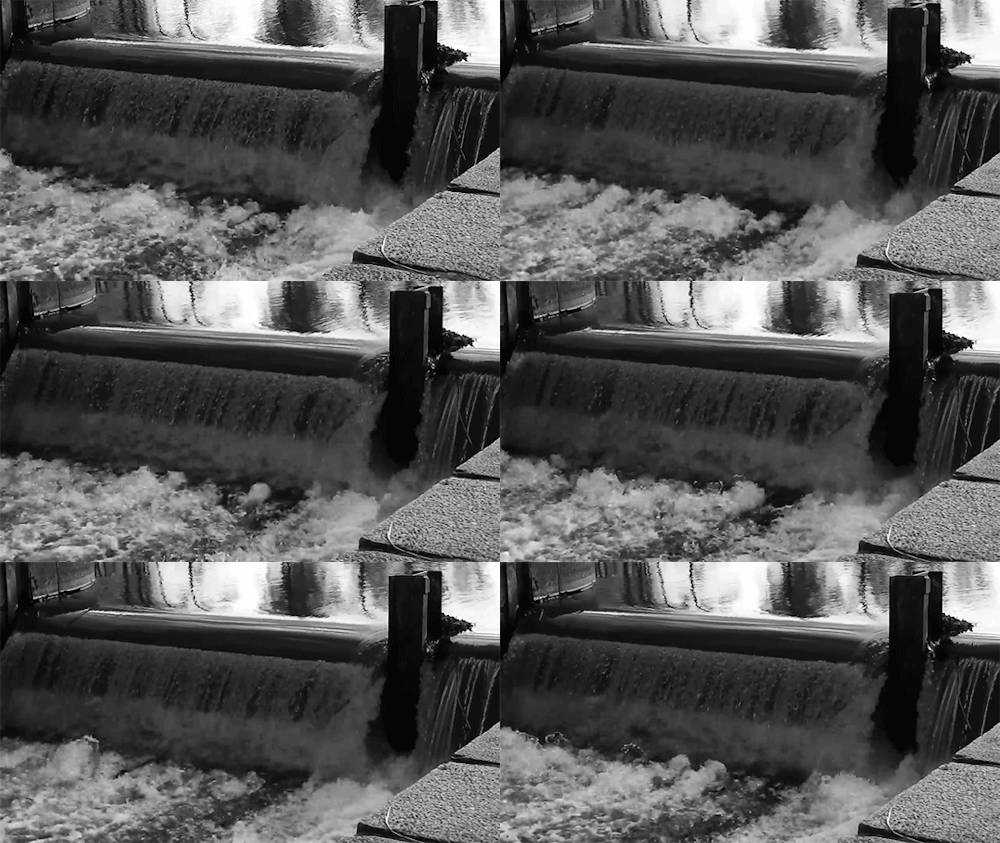
    Hydraulic engineers use weirs, like the one shown below, to control upstream flow conditions. Weirs can come in many forms, but they essentially look like a small dam with water flowing over the top. They’re used to control both the flow rate and the upstream water level. As Grady from Practical Engineering explains, there are a few characteristics hydraulic engineers can vary to help adapt to changing water conditions. Check out the full video above to learn more about these important engineering features you’ve likely seen but never learned about. (Video and image credit: Practical Engineering)

  • Featured Video Play Icon

    How Water Towers Work

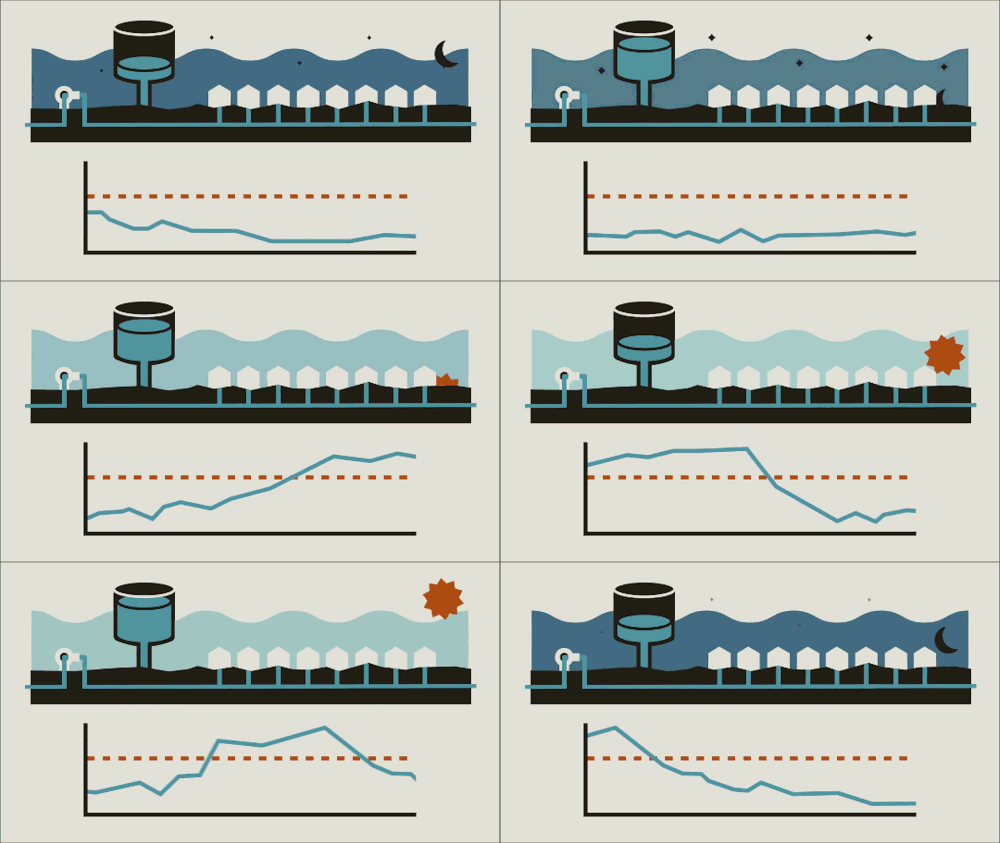
    You may have noticed a water tower rising up over your town, but you may not have given much thought to how it works. Practical Engineering has a nice video overview of this important piece of infrastructure, which municipalities use to store and pressurize water in public distribution systems.

    During off-peak hours, pumps fill the water tower, which creates potential energy (and therefore, water pressure) that depends on the height of the water level. If you’ve ever lost power, you can appreciate how the water tower ensures that your faucet still runs. Without power, there are no pumps to pressurize the water line. But with the hydrostatic pressure of water in the tower, your water will still run like normal. For many people who live outside of municipal water zones, that’s not the case. A loss of power means an immediate loss of water also since the pumps that work their wells go offline. (Video and image credit: Practical Engineering)

  • Featured Video Play Icon

    The Tacoma Narrows Bridge

    One of the most dramatic and famous engineering failures of the twentieth century is also one of the most complicated: the collapse of the Tacoma Narrows Bridge. This early suspension bridge earned the name “Galloping Gurtie” from construction workers while it was still being built because its flexibility made it prone to moving up and down under even relatively light winds. That vertical motion was due to vortex-induced vibration. As the wind blew, it shed vortices off the downstream side of the bridge. These vortices alternated, coming off the top and then bottom of the bridge deck. The resulting forces made the bridge shift up and down.

    That wasn’t the bridge’s ultimate downfall, though. Shortly before it collapsed, the bridge stopped flexing up and down and instead twisted back and forth. This was a clear sign that the bridge had moved into aeroelastic flutter. In this situation, you get a feedback loop between the bridge’s aerodynamics and its structural dynamics. When the wind twists the bridge deck to a positive angle of attack, it will try to continue forcing the bridge to twist that direction. The internal forces of the bridge will try to twist it back, but when that happens, it can overshoot and end up at a negative angle of attack. At that point, the wind tries to push it further that direction and internal forces twist it back, overshooting the other way. This back-and-forth can create a dangerous feedback loop where the twisting of the bridge keeps getting worse and worse. In fact, that’s exactly what happened – right up until the bridge collapsed rather than twisting any more. (Video and image credit: Practical Engineering)

  • Heating from Cavitation

    Heating from Cavitation

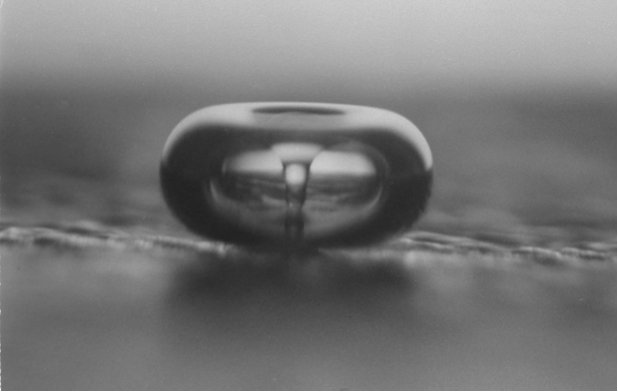
    When cavitation bubbles collapse, they can produce temperatures well over 2,000 Kelvin. Since cavitation near a surface can be so destructive, researchers have long wondered whether the high temperatures inside the bubble can be transmitted to nearby surfaces. A new set of numerical simulations provides some insight into that process. The researchers found that collapsing cavitation bubbles raised nearby wall temperatures in two ways: bubbles that were further away sent shock waves that heated the material, and nearby bubbles could contact the surface itself as they collapsed.

    Heat transfer requires time, however; this is part of why quickly dunking your hand in liquid nitrogen and pulling it out likely won’t damage you. (Still, we don’t recommend it.) The cavitation bubbles could only transmit these high temperatures for less than 1 microsecond, which means that most materials won’t actually heat up to their melting temperature. The researchers did conclude, however, that softer materials exposed to frequent bubble collapses could show localized melting under the barrage. (Image credit: L. Krum; research credit: S. Beig et al.)

  • Flying Backwards

    Flying Backwards

    Spend a summer afternoon floating in a kayak and chances are you’ll see some impressive aerial acrobatics from dragonflies. One of the dragonfly’s superpowers is its ability to fly backwards, which helps it evade predators and take-off from almost any orientation. To do this, the dragonfly rotates its body so that it is nearly vertical, thereby changing the direction it generates lift. In engineering terms, this is “force-vectoring,” similar to the techniques used by helicopters and vertical-take-off jets. 

    Scientists found that backwards-flying dragonflies could generate forces two to three times their body weight, in part due to the strong leading-edge vortices (bottom image) formed on the forewings. They also found that the hind wings are timed so that their lift is enhanced by catching the trailing vortex of the first pair of wings. Engineers hope to use what they’re learning from insect flight to build more capable flying robots. (Image and research credit: A. Bode-Oke et al., source; via Science)

  • Collecting Fog

    Collecting Fog

    In some parts of the world, fog is a major source of freshwater, but collecting it is a challenge. Most systems use a wire mesh to capture and collect droplets, but the process is highly inefficient, pulling only 1-3% of droplets from the fog. Researchers found that this is due largely to aerodynamic effects. The presence of the wire deflects droplets around it (bottom left). To solve this, engineers introduced an electric charge into the fog. The subsequent electric field actually pulls droplets to the wires (bottom right). When applied to a mesh (top), the efficiency of fog capture improves dramatically. 

    The technique can also be used to capture water vapor that would otherwise escape from the cooling towers of power plants. The MIT researchers who developed the technique will conduct a full-scale test at the university’s power plant this fall. They hope the technique will recapture millions of gallons of water that would otherwise drift away from the plant. (Image credits: MIT News, source; image and research credits: M. Damak and K. Varanasi, source)

  • PyeongChang 2018: Bobsleigh

    PyeongChang 2018: Bobsleigh

    In bobsleigh, two- and four-person teams compete across four runs down an ice track. The shortest cumulative time wins, and since typical runs are separated by hundredths of a second, teams look for any advantage that helps them shave time. The size, weight, and components of a sled are restricted by federation rules; for example, teams cannot use vortex generators to improve their aerodynamics. Instead bobsledders work with companies like BMW, McLaren, and Ferrari to engineer their sleds. Both computational fluid dynamics and wind tunnel tests with the actual team in the sled are used to make each sled as aerodynamic as possible. (Image credit: IOC, Gillette World Sports, source)

  • PyeongChang 2018: Speedskating

    PyeongChang 2018: Speedskating

    Four years ago in Sochi, Under Armour’s suits for the U.S. speedskating team took a lot of flak after the team failed to medal. The company defended the physics and engineering of their suits, and an internal audit of the speedskating program ultimately placed blame on flaws in their training regimen, unfamiliarity with the new suits, and overconfidence.

    This time around Under Armour has taken a more hands-on approach with the team, helping with training regimens in addition to providing suits. Under Armour spent hundreds of hours testing the suits in Specialized’s wind tunnel, including testing many fabrics before settling on the slightly rough H1 fabric used in patches on the skater’s arms and legs. Like the previous suit’s dimpled design, the roughness of the fabric promotes turbulent flow near it. Because turbulent flow follows curved contours better than laminar flow does, air stays attached to the athlete for longer, thereby reducing their drag. The suit is also designed with asymmetric seams that help the athlete stay low and comfortable in the sport’s frequent left turns.

    U.S. speedskaters have been competing in a version of the suits since last winter, ensuring that athletes are familiar with the equipment this time around. Whether the new suits and training program will pay off remains to be seen. After their disastrous experience in Sochi, both the team and the company are shy about setting expectations. (Image credits: D. Maloney/Wired; US Speedskating)

  • Featured Video Play Icon

    The Drinking Bird

    At first glance, the drinking bird is a simple desk toy, but the physics and engineering behind the device is clever enough to have challenged many great minds. In this video, Bill Hammack dissects the drinking bird, revealing the heat engine beneath the felt and feathers. The bird’s drinking is driven by thermodynamics and the relative pressures of fluids in its head and body. When the beak is wetted, fluid wicks up the felted head and slowly evaporates, thereby cooling the vapor inside the head. Some of that vapor condenses, lowering the vapor pressure in the head and allowing liquid to rise from the body. When enough fluid reaches the head, the bird tips forward. This allows vapor to rise up the liquid column into the head, equalizing the pressure between the two ends. The bird sits up with a freshly wetted head and starts the cycle over. Check out the full video for more detail, including a look at what other methods can drive the bird, including bourbon and light bulbs. (Video and image credit: B. Hammack; via J. Ouellette)