Tag: oil spill

  • Burning Oil Spills With Fire Whirls

    Burning Oil Spills With Fire Whirls

    Though they are relatively infrequent, large marine oil spills, like 2010’s Deepwater Horizon, are devastating and incredibly difficult to clean up. In many locations, the “best” option for responding to such disasters is burning off the oil before it can absorb enough water to sink. But these floating fires leave behind unburned oil and produce soot. To enhance the burn, researchers are looking at the possibility of triggering large-scale fire whirls.

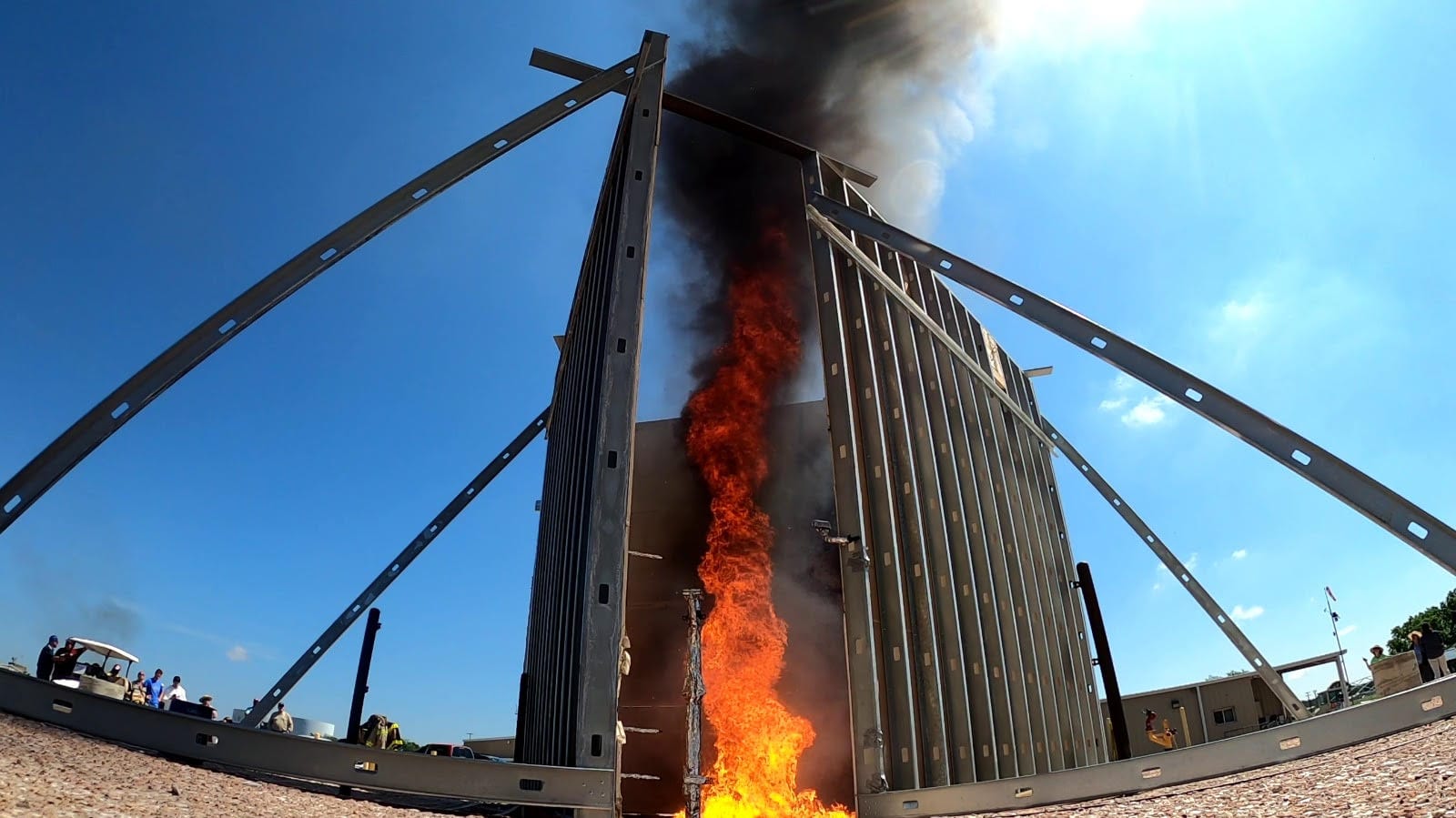
    Often seen in wildfires, these fire vortices are intense and localized. Researchers made a more than 5-meter tall version in these experiments by arranging three walls that spun up the in-flowing air. The fire whirl sat above a pool of water topped in a layer of oil that served as the whirl’s fuel.

    Within the whirl, the fire’s burn rate was 40% higher than a typical pool fire, and soot production was 40% lower–showing that fire whirls can burn cleaner. But the whirls are more finicky to start and maintain. It’s not yet clear whether such intense whirls are possible in the chaotic conditions on the ocean. (Research and image credit: W. Cui et al.; via Eos)
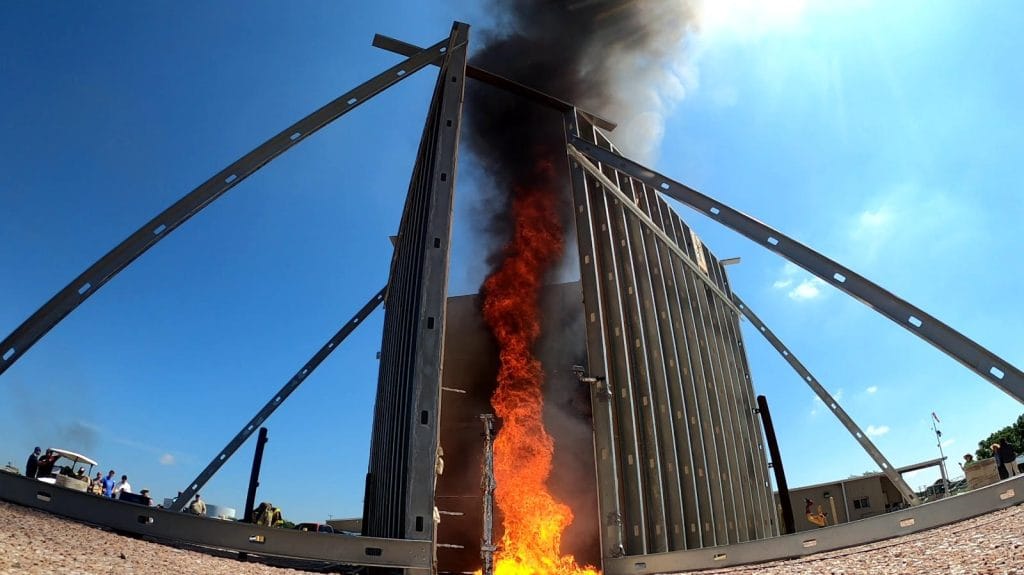

    View of a large-scale fire whirl experiment built around an oil spill on a pool.
    Fediverse Reactions
  • Filtering by Sea Sponge

    Filtering by Sea Sponge

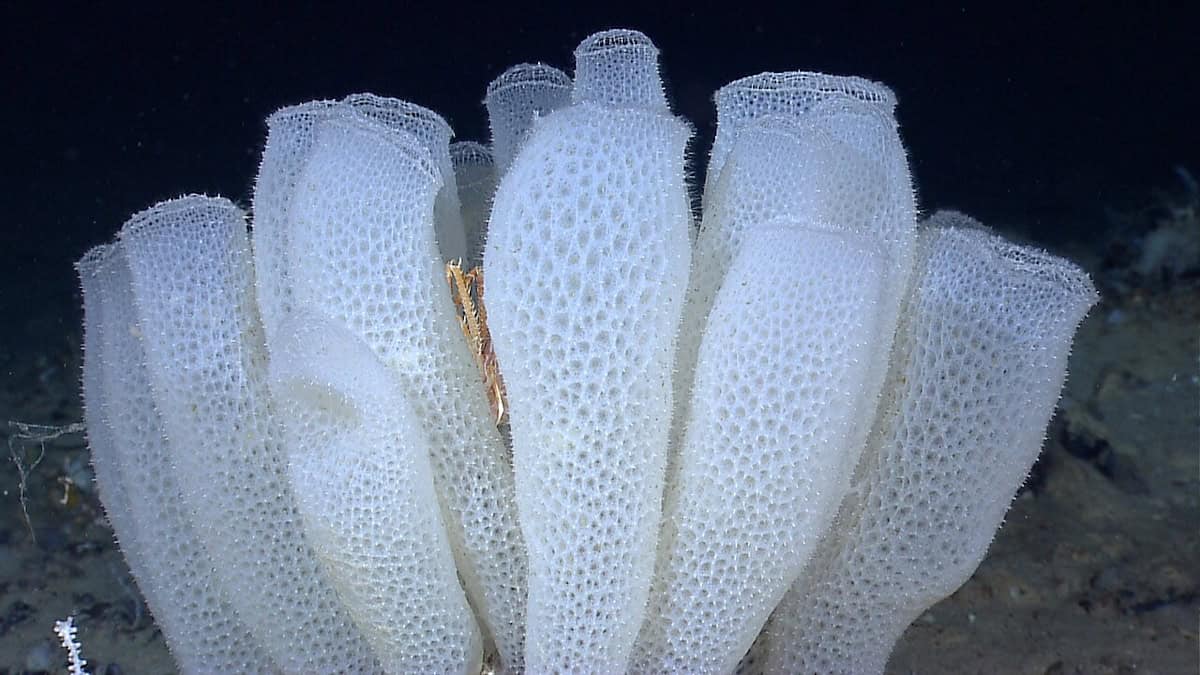
    Gathering oil after a spill is fiendishly difficult. Deploying booms to corral and soak up oil at the water surface only catches a fraction of the spill. A recent study instead turns to nature to inspire its oil filter. The team was inspired by the Venus’ flower basket, a type of deep-sea sponge with a multi-scale structure that excels at pulling nutrients out of complex flow fields. The outer surface of the sponge has helical ridges that break up the turbulence of any incoming flow, helping the sponge stay anchored by reducing the force needed to resist the flow. Beneath the ridges, the sponge’s skeleton has a smaller, checkered pattern that further breaks up the flow as it enters into the sponge’s hollow body. Within this cavity, the flow is slower and swirling, giving plenty of time for nutrients in the water to collide with the nutrient-gathering flagellum lining the sponge.

    By mimicking this three-level structure, the team built a capable oil-capturing device that can filter even emulsified oil from the water. They swapped the flagellum with a (replaceable) oil-adsorbing material and found that their filter captured more than 97% of oil across a range of flow conditions. (Image credit: NOAA; research credit: Y. Yu et al.; via Physics World)

    Fediverse Reactions
  • Weathering Spilled Oil

    Weathering Spilled Oil

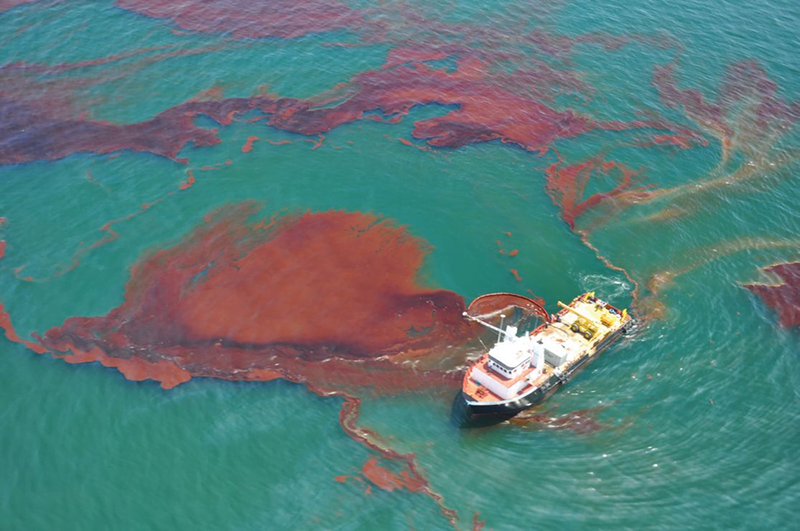
    As long as we continue to extract and transport oil, marine oil spills will continue to be a problem. Recent work shows that spilled oil weathers differently depending on both sunlight and water temperature. When exposed to sunlight, crude oil undergoes chemical reactions that can change its makeup. Researchers studied the mechanical properties of crude oil samples kept at different temperatures in both sunlight and the dark.

    They discovered that sunlight-exposed crude oil kept at a high temperature had twice the viscosity of a sample kept in the dark at the same temperature. In contrast, the high-temperature sunlit sample’s viscosity was 8 times lower than a sunlit sample kept at a lower temperature. That’s quite a large difference, and it implies that tropical oil spills may behave quite differently than Arctic ones. Cold-water spills will entrain and dissolve less than warm-water ones, so there may be more surface oil to collect at high-latitude spills. The differences in viscosity may also necessitate different spill mitigation techniques. (Image credit: NOAA; research credit: D. Freeman et al.; via APS Physics)

  • “Oil Paintings”

    “Oil Paintings”

    To capture his images of auroras, nebulas, and comets, photographer Juha Tanhua points his camera lens downward, not upward. Despite their astrophysical appearance, Tanhua’s “oil paintings” are actually parking lot oil spills. The stars are roughened bits of asphalt, and the colors come from thin film interference in a layer of oil (similar to the way colors appear in soap bubbles). It’s amazing how much beauty he captures in examples of urban pollution. (Image credit: J. Tanhua; via Colossal)

  • Oil in Water

    Oil in Water

    In the decade since the Deepwater Horizons oil spill, scientists have been working hard to understand the intricacies of how liquid and gaseous hydrocarbons behave underwater. The high pressures, low temperatures, and varying density of the surrounding ocean water all complicate the situation.

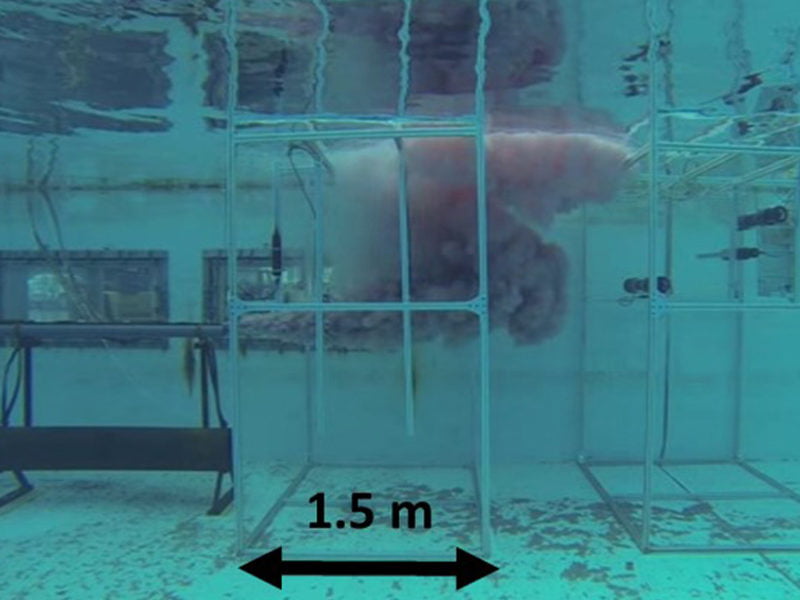
    Released hydrocarbons form a plume made up of oil drops and gas bubbles of many sizes. Large drops and bubbles rise relatively quickly due to their buoyancy, so they remain confined to a relatively small area around the leak. Smaller drops are slower to rise and can instead get picked up by ocean currents, allowing them to spread. The smallest micro-droplets of oil hardly rise at all; instead they remained trapped in the water column, where currents can move them tens to hundreds of kilometers from their point of release. (Image and research credit: M. Boufadel et al.; via AGU Eos; submitted by Kam-Yung Soh)

  • Oil Drops and Filter Feeders

    Oil Drops and Filter Feeders

    Natural oils provide critical nutrients to filter feeders like zooplankton and barnacles. These creatures capture oil droplets on bristle-like appendages such as cilia and setae. But this droplet-catching turns into a disadvantage during petroleum spills, when capturing and ingesting oil can be lethal. A recent study looks at the fluid dynamics of oil droplet capture for these tiny creatures.

    The authors found that filter feeders capture a range of droplets regardless of size and oil viscosity. But not all droplets stay attached long enough to get consumed, and the larger a droplet is, the lower the flow velocity necessary to detach it from the animal. That suggests a method of limiting uptake of spilled petroleum into the marine food chain: use surfactants to break up the oil into droplets large enough that they’ll detach from filter feeders before getting eaten. (Image credit: D. Pelusi; research credit: F. Letendre et al.; submitted by Christopher C.)

  • Featured Video Play Icon

    Tornadoes, Fire, and Ice

    It’s time for another look at breaking fluid dynamics research with the latest FYFD/JFM video! This time around, we tackle some geophysical fluid dynamics, like listening to the sounds newborn tornadoes make below the range of human hearing; studying how melting ice affects burning oil spills; and how salt sinking from sea ice affects the ocean circulation. Check out the full video below for much more! If you’ve missed any of the previous videos in the series, you can check them out here. (Image and video credit: T. Crawford and N. Sharp)

  • Featured Video Play Icon

    Bees, Squid, and Oil Plumes

    It’s time for another JFM/FYFD collab video! April’s video brings us a taste of spring with research on how bees carry pollen, squid-inspired robotics, and understanding the physics of underwater plumes like the one that occurred in the Deepwater Horizons spill eight years ago. Check it all out in the video below. (Image and video credit: T. Crawford and N. Sharp)

  • Featured Video Play Icon

    The Blue Whirl

    We wrote earlier this year about the discovery of a new type of fire whirl – the blue whirl – but now the authors have published video of the blue whirl in action! The blue whirl was discovered while investigating the use of fire whirls to more efficiently burn off oil spilled atop water. A tightly spinning yellow fire whirl produces less soot than a non-vortex burn; the blue whirl is even more efficient, producing little to no soot at all. Much remains to be learned about this new type of fire vortex, but in the meantime, enjoy some high-speed video of the blue whirl, particularly from 1:50 onward. (Video credit: M. Gollner et al.)

  • The Blue Whirl

    The Blue Whirl

    Researchers studying the use of fire whirls to burn off oil spills have discovered a new type of fire whirl – the blue whirl. Their results are currently reported in a pre-print paper on arXiv and await peer-review. In their experiment, the scientists ignited a puddle of fuel floating atop water. Compared to a typical flame, they observed that a tightly-spinning fire whirl burns hotter and produces less soot by burning more of the fuel. To the researchers’ surprise, their lab-scale yellow fire whirl evolved into a compact, bright blue whirl. The blue whirl has a laminar flame and makes little to no noise. Its bright blue color indicates even more efficient combustion than the yellow fire whirl. The lack of yellow color means the whirl is burning without producing any soot, a by-product of incomplete combustion. The authors hope a better understanding of blue whirls will lead to better methods for responding to oil spills. (Image credit: H. Xiao et al.)