
There is no grander scale for the observation of fluid dynamics than that of the astronomical. Here Hubble astronomers discuss the formation of the Veil Nebula, a supernova remnant formed some 5,000-10,000 years ago. Wisps of gas and plasma remain, creating stunning astronomical landscapes that are the result of shock waves, turbulence, diffusion, and other processes familiar to us here on Earth. (Video credit: ESA/Hubble)
Tag: diffusion

Chronoscapes

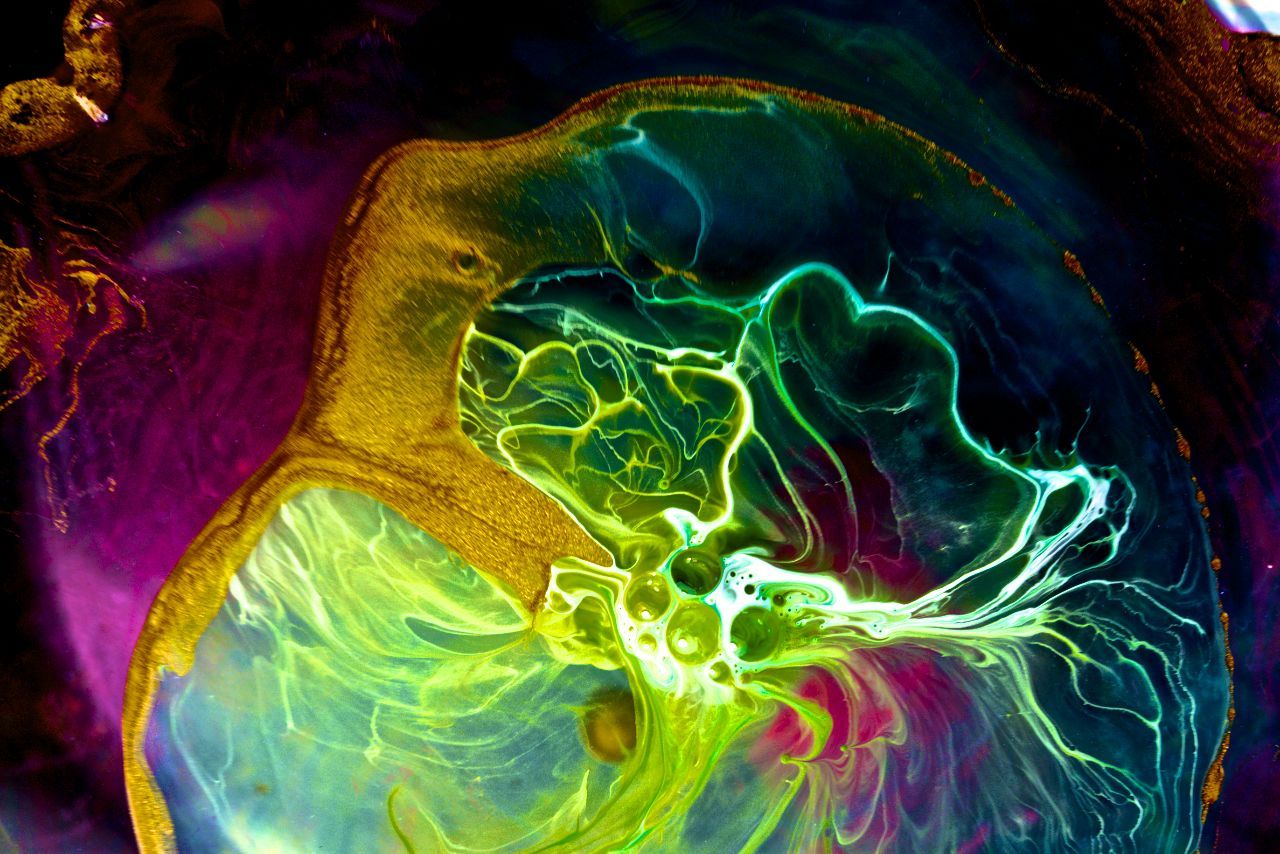
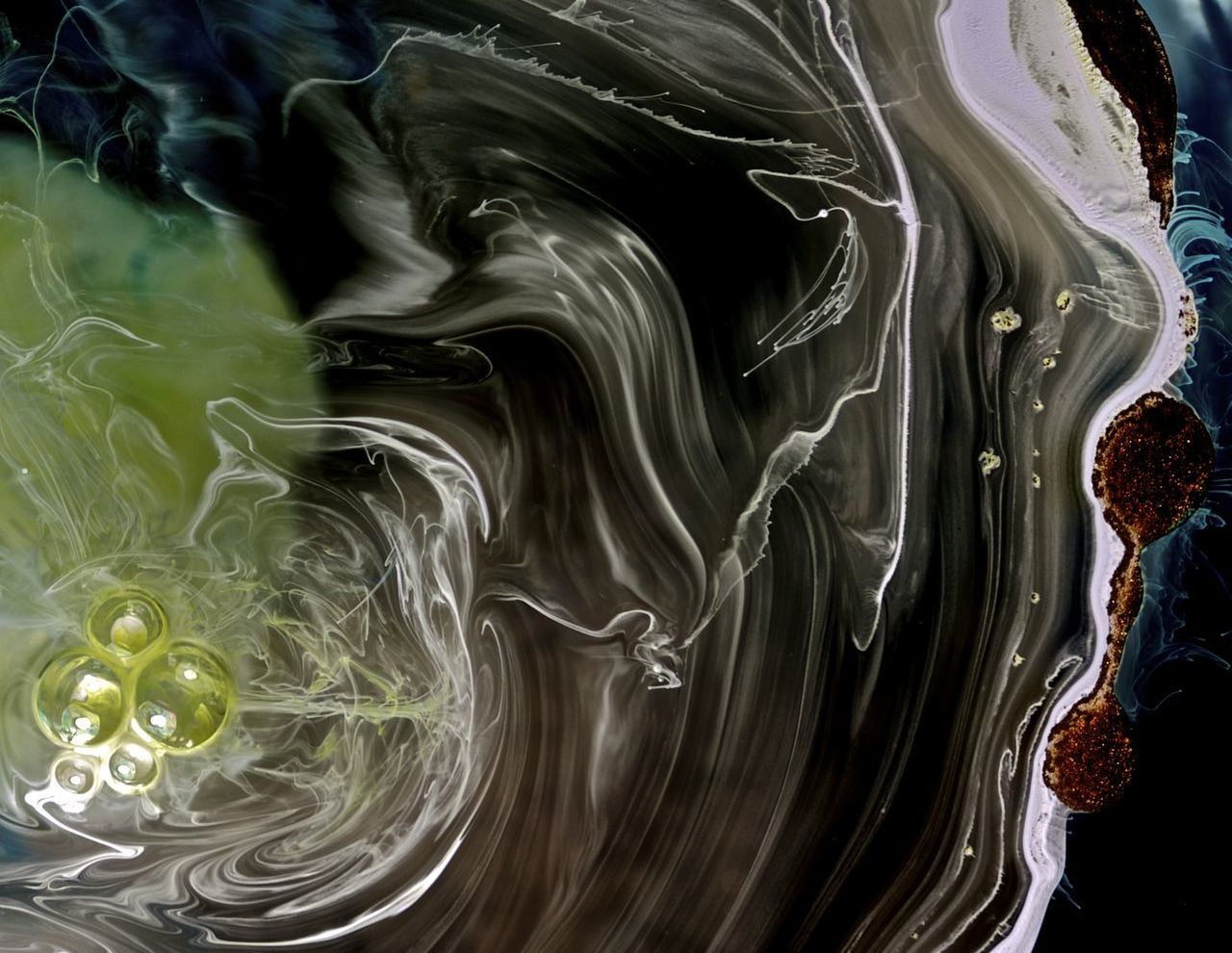
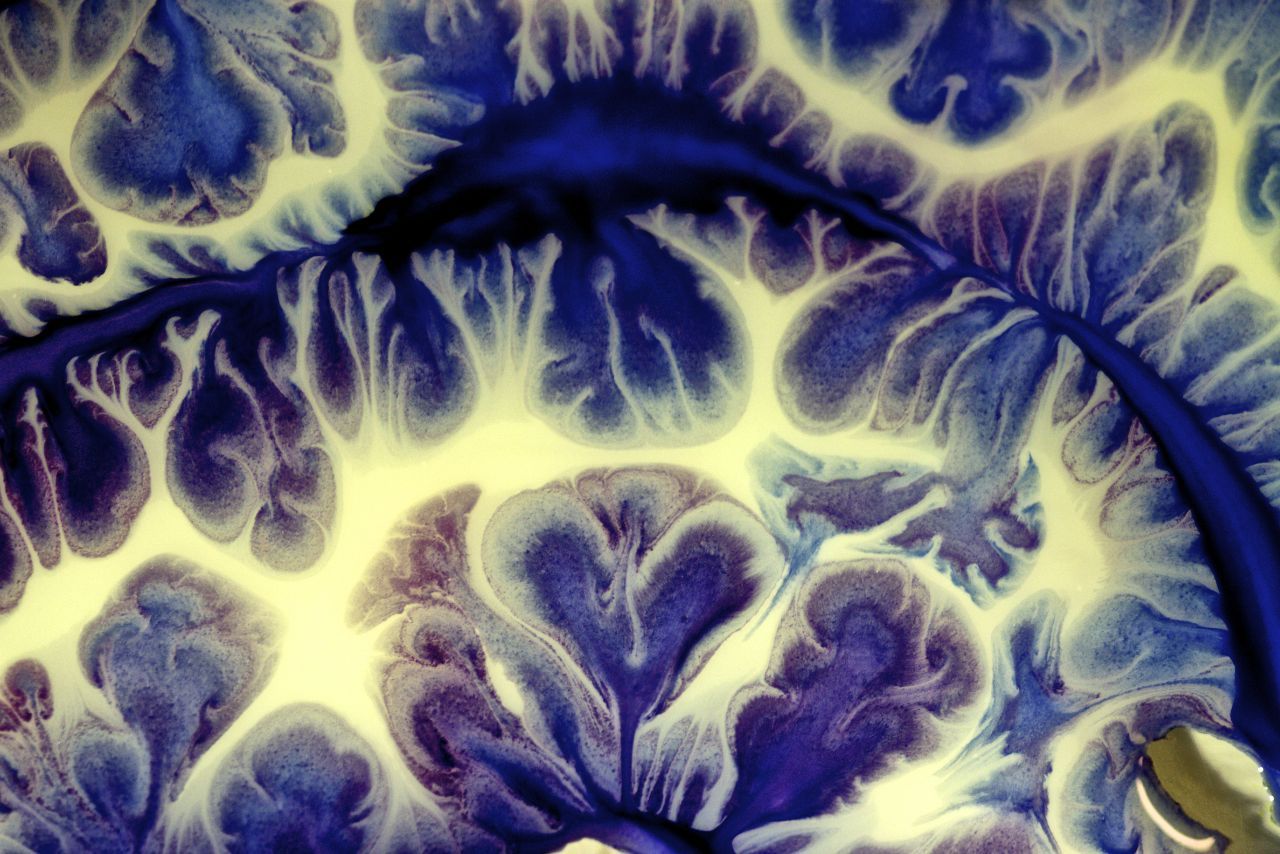
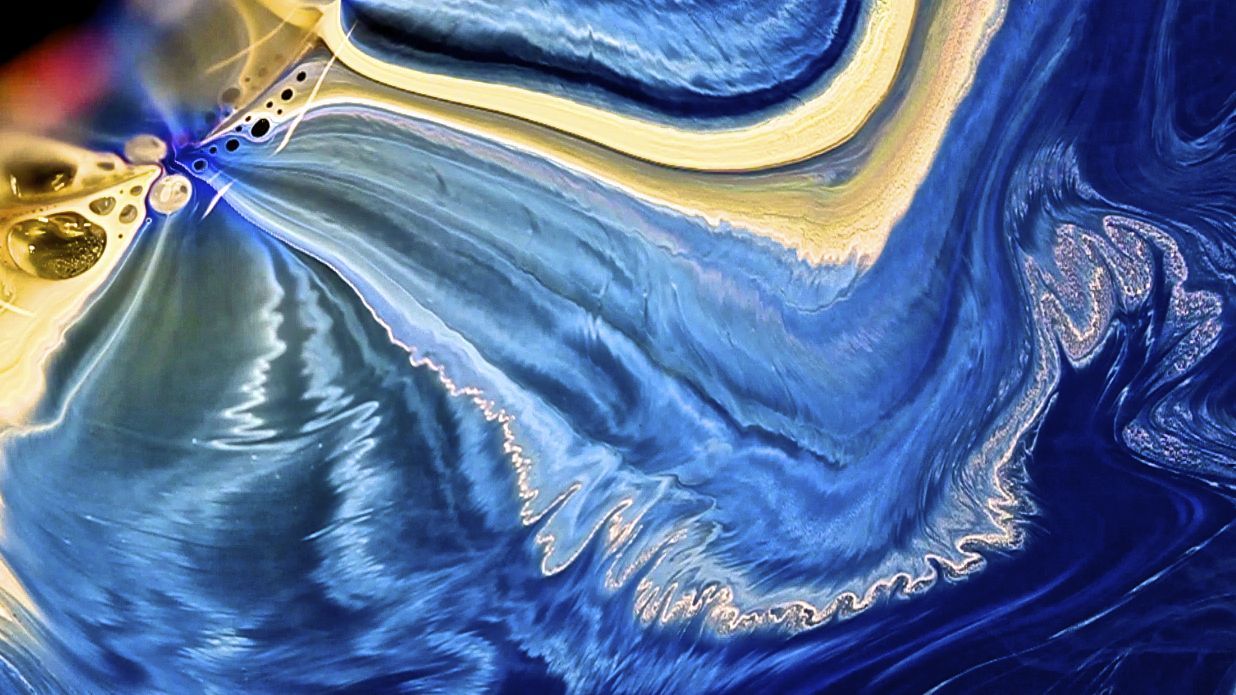
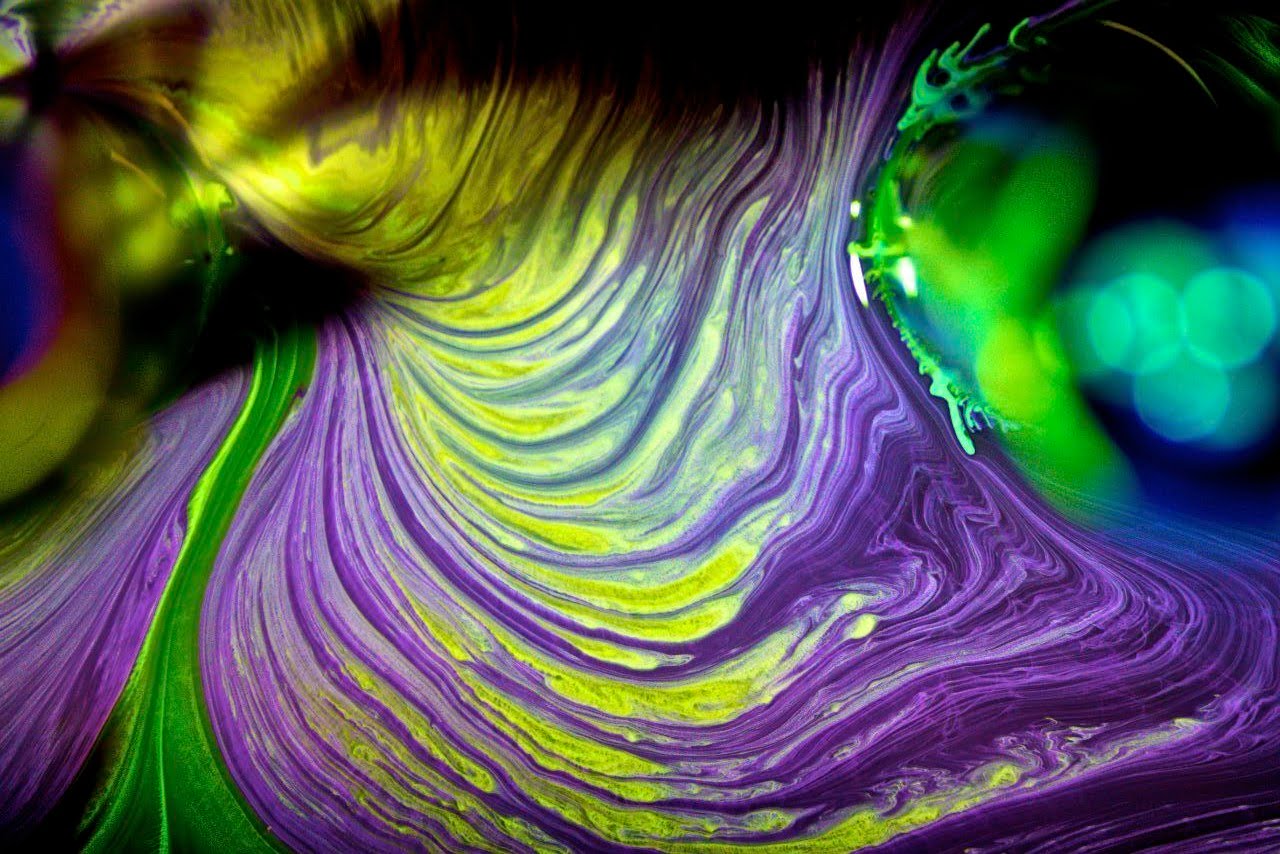
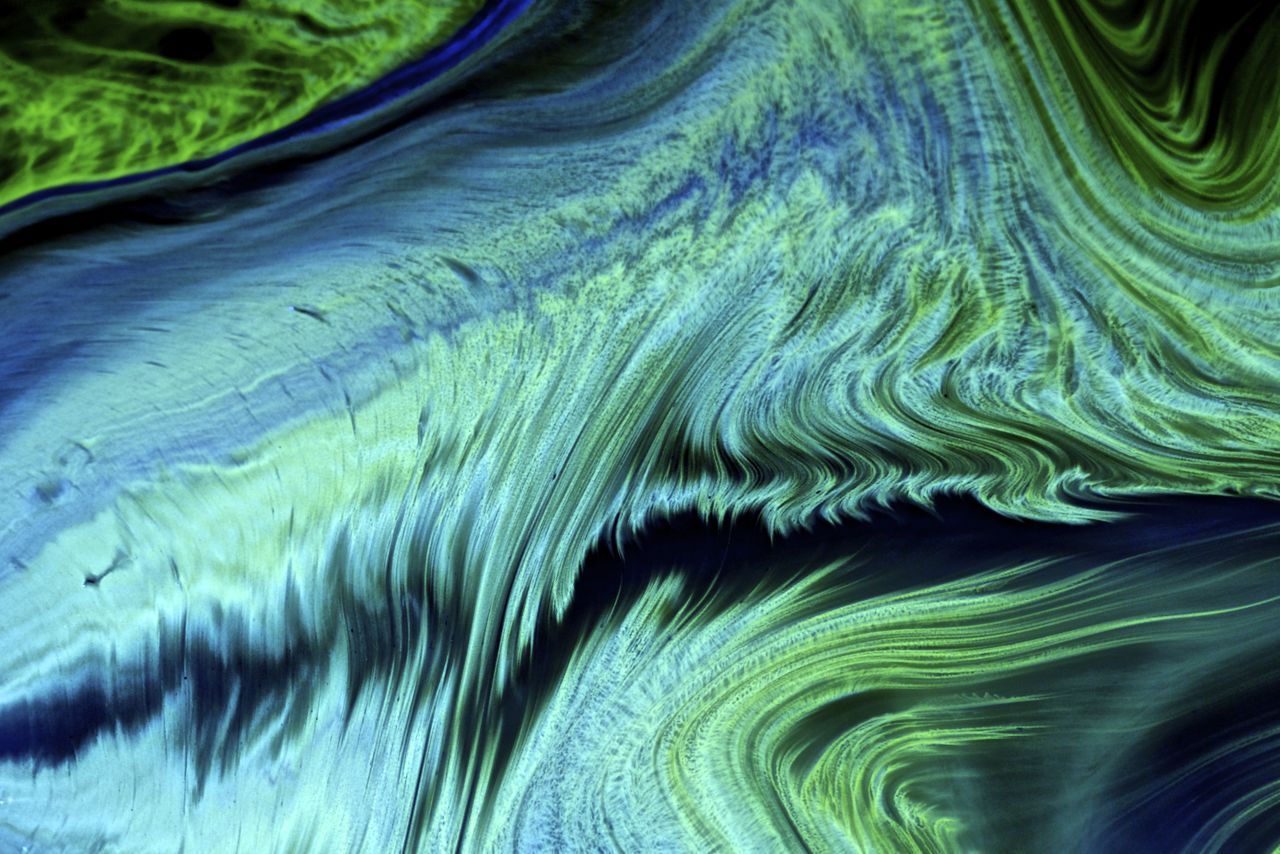
Exeter University artist-in-residence Pery Burge uses ink, water, soap films, and other fluids to create her spectacular “artistic flow visualization”. Looking closely, one sees the influence of bubbles, vortices, diffusion, and many fluid instabilities, all combined to create psychedelic and dream-like landscapes. For more on her work and additional galleries, see her website Chronoscapes. (Photo credit: Pery Burge)

Fractal Fluids
Part of the beauty of numerical simulation is its ability to explore the physics of a situation that would difficult or impossible to create experimentally. Here the Rayleigh-Taylor instability–which occurs when a heavier fluid sits atop a lighter fluid–is simulated in two-dimensions. Viscosity and diffusion are set extremely low in the simulation; this is why we see intricate fractal-like structures at many scales rather than the simulation quickly fading into gray. (The low diffusion is also what causes the numerical instabilities in the last couple seconds of video.) The final result is both physics and art. (Video credit: Mark Stock)
Turing Patterns
Turing patterns form as a result of a particular kind of chemical reaction: a reaction-diffusion system. It consists of an activator chemical capable of making more of itself, and an inhibitor chemical which slows the production of the activator as well as a mechanism for diffusing the chemicals. Although Turing’s original work was theoretical in nature, scientists have since proven that Turing patterns do occur in nature, both in petri dishes and in the markings of animals. Here artist Jonathan McCabe explores multi-scale Turing patterns in a fluid-like environment. (Video credit: Jonathan McCabe and Jason Forrest; submitted by Stuart R)
Paper Marbling
[original media no longer available]
Suminagashi, the Japanese art of “floating ink”, is one of many methods historically used for paper marbling. In it, a shallow layer of water or other viscous fluid serve as a medium for drops of ink that diffuse across the fluid surface and are manipulated with straws, brushes, or other tools. Once a design is complete, an absorbent surface like paper or fabric is carefully placed on top to preserve the art. Among other applications, the technique has historically been used for calligraphy and book bindings.
“Compressed” Outtakes
Bubbles, viscosity, diffusion, capillary action, and ferrofluids all feature in the artistic experiments of Kim Pimmel. Be sure to check out his previous film featured here. (Video credit: Kim Pimmel)
Science Off the Sphere: Liquid Lenses
Astronaut Don Pettit delivers more “Science Off The Sphere” in his latest video. Here he demonstrates diffusion and convection in a two-dimensional water film in microgravity. He notes that the viscous damping in the water is relatively low and that, left undisturbed, mixing in the film will continue for 5-10 minutes before coming to rest, which tells us that the Reynolds numbers of the flow are reasonably large. The structures formed are also intriguing; he notes that drops mix with mushroom-like shapes that are reminiscent of Rayleigh-Taylor instabilities and cross-sectional views of vortex rings. It would be interesting to compare experiments from the International Space Station with earthbound simulations of two-dimensional mixing and turbulence, given that the latter behaves so differently in 2D.

Surf’s Up
Diffusion of ink in water + Lego minifigs = an awesome example of fluid mechanics as art. (Photo credit: Alberto Seveso; via io9; thanks to Jennifer for the link!)
Molecular Diffusion
This video explains molecular diffusion with demonstrations in gases and liquids. Molecular diffusion is an important process in all fluids and will occur in laminar, turbulent, or quiescent fluids. Diffusion occurs more quickly in heated fluids because molecules move more energetically at higher temperatures. (via robertlovespi)
Microgravity Water Films
In this video astronaut Don Pettit demonstrates some interesting laminar flow effects using a water film in microgravity. By using a film, fluid motion is essentially confined to two dimensions. This is important because it prohibits the development of turbulence, which is a purely three-dimensional phenomenon. Doing the experiment in microgravity allows Pettit to leave the experiment for a long period of time without buoyant effects or similar disturbances. When he first stirs the film, the tracer particles show some signs of what looks like turbulent mixing, but soon the film rotates uniformly with streaks of gray caused by different concentrations of tracer particles. Pettit notes that he allowed the film to rotate overnight and it eventually all turned milky white. This is the effect of molecular diffusion of the tracer particles; without turbulence, the only way for mixing to occur is through the random motion of molecules. See more of Pettit’s Saturday Morning Science videos for additional microgravity fluid mechanics.
