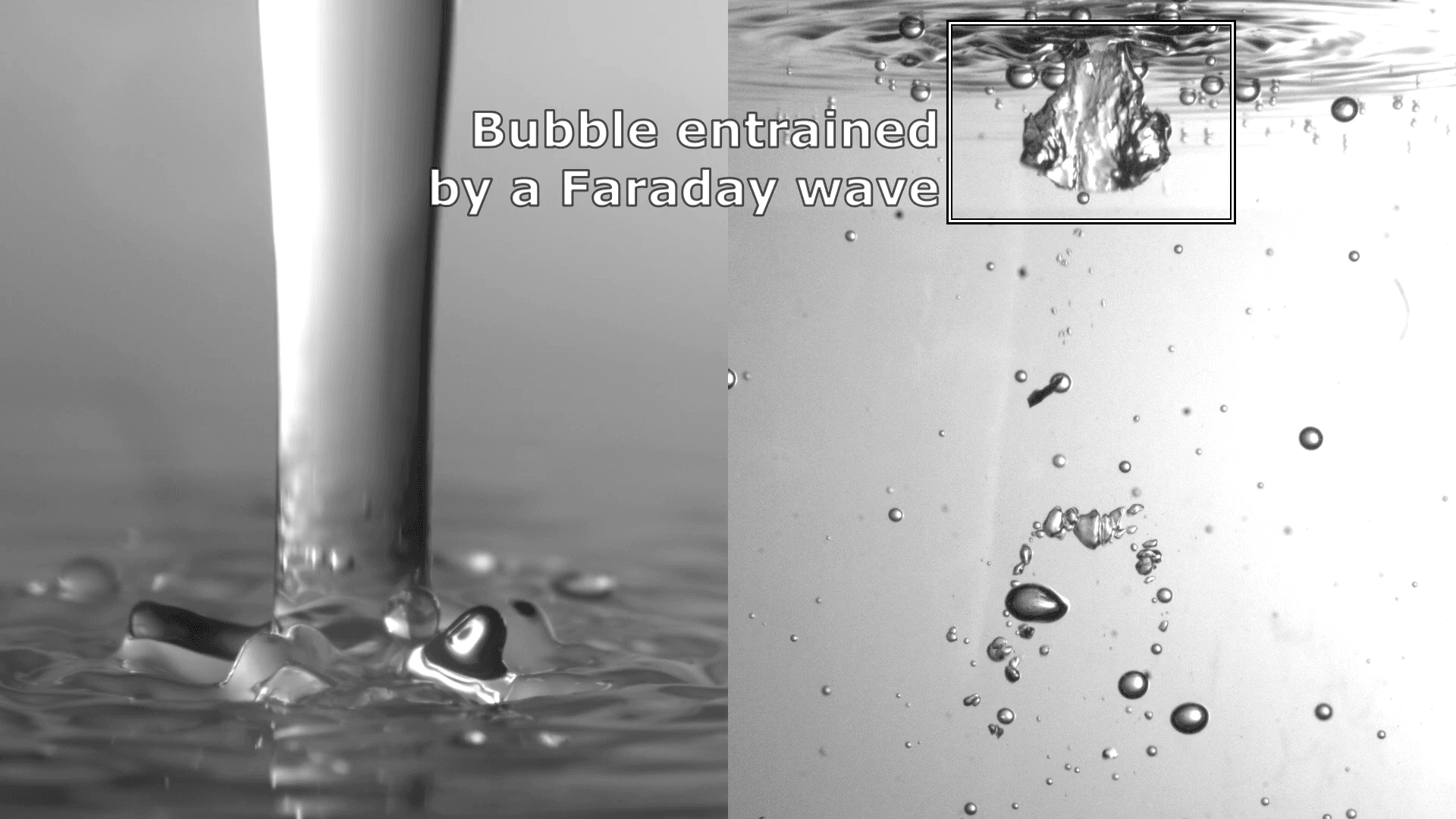
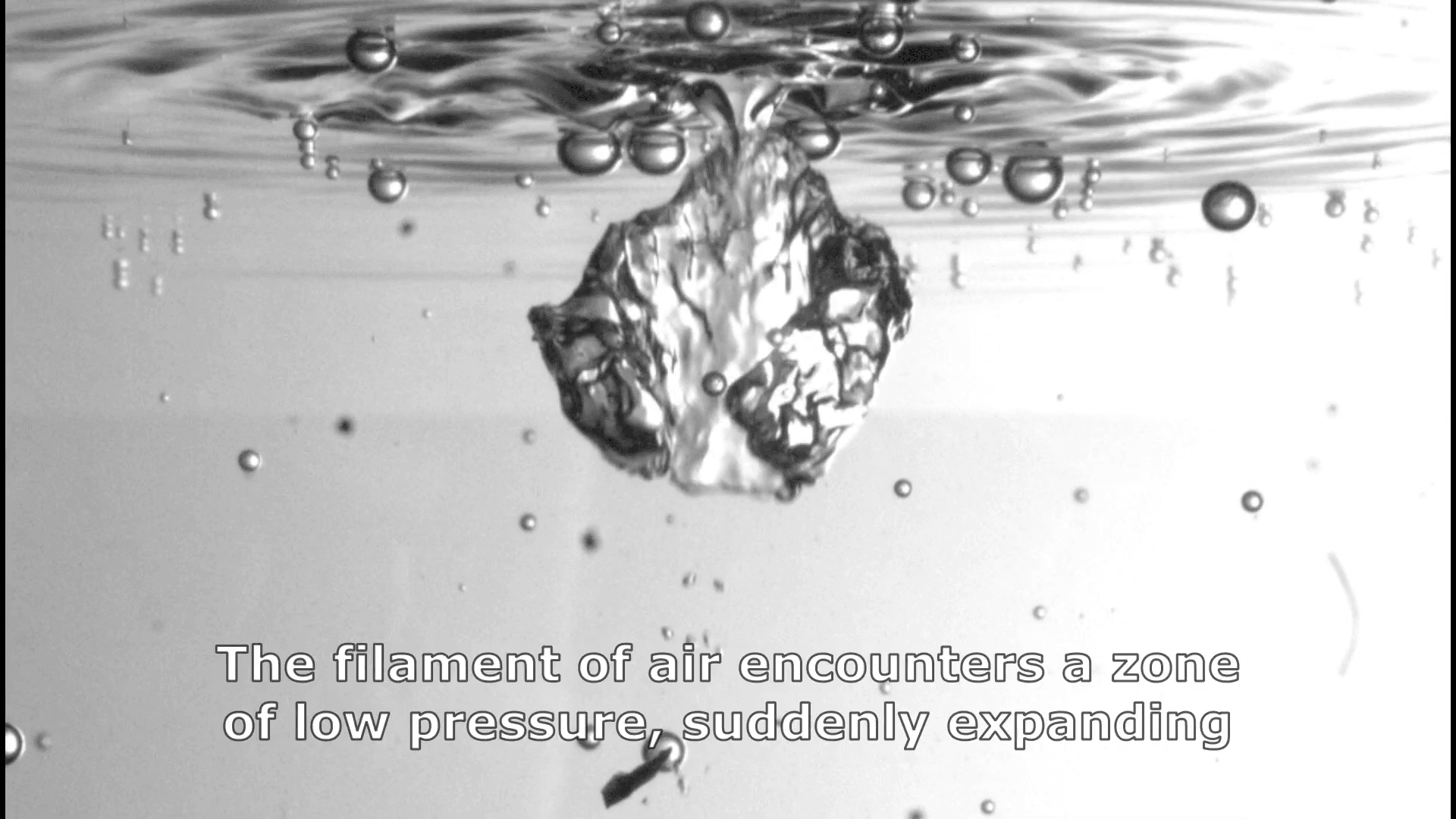
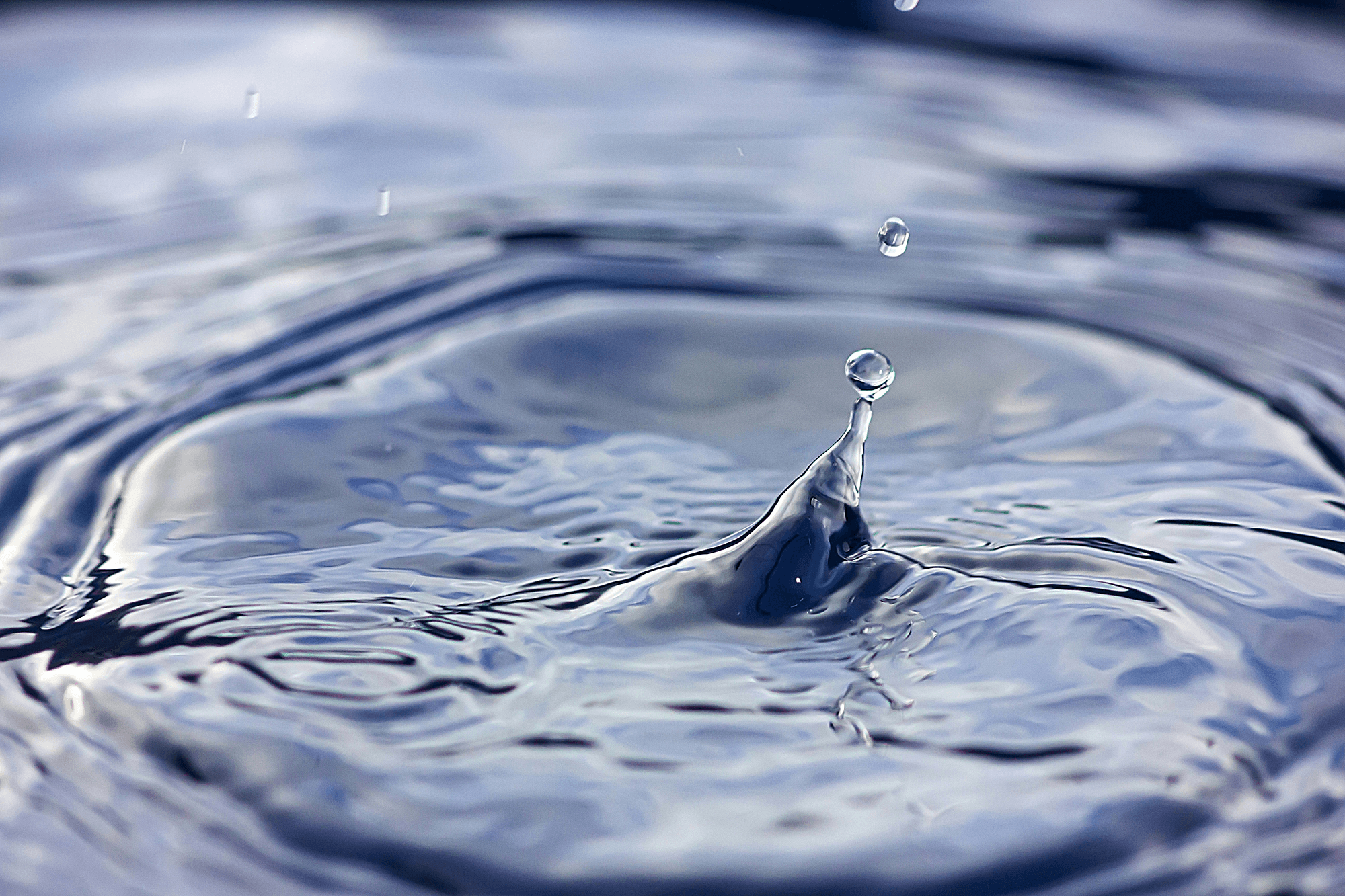
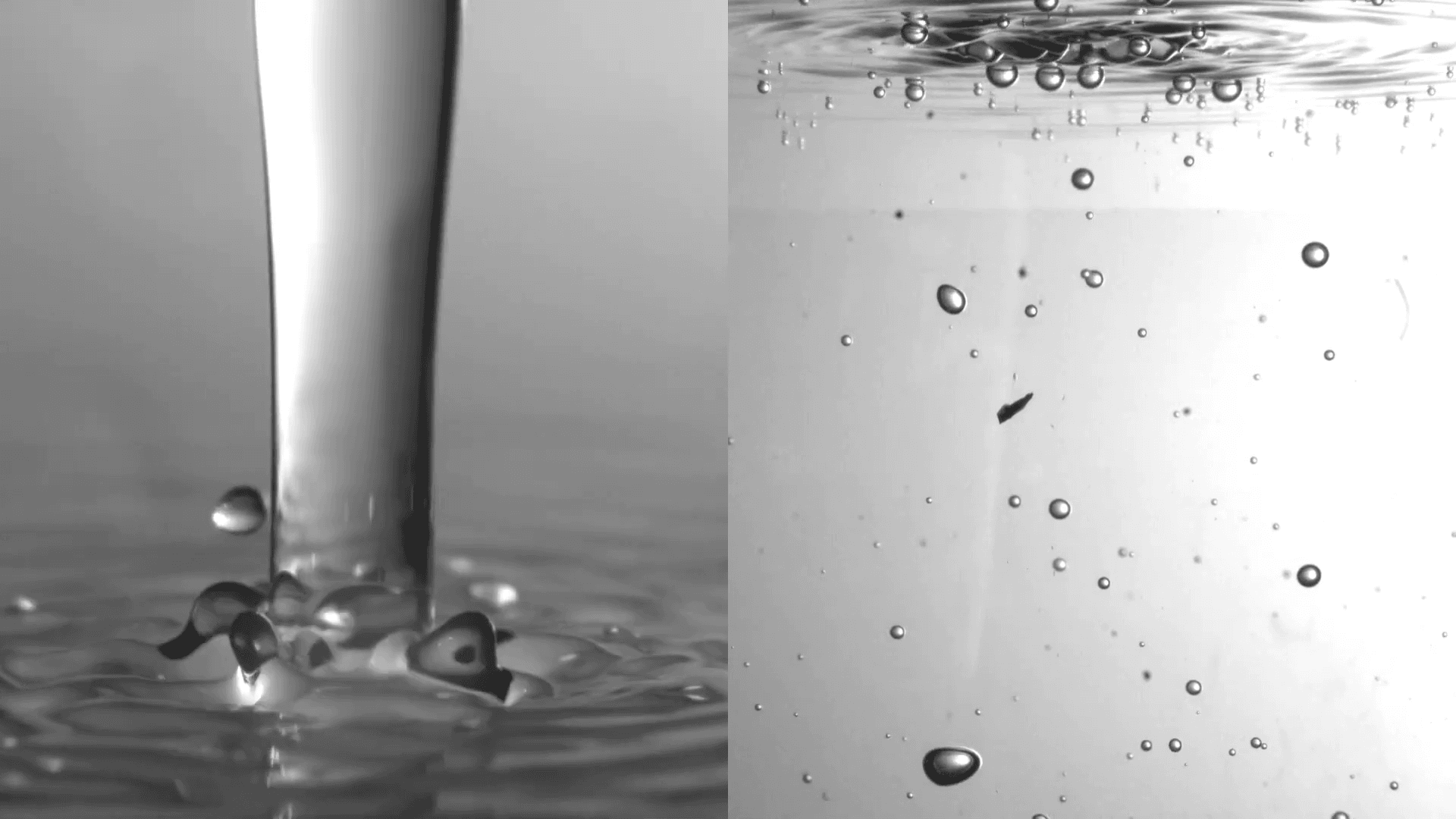
Every time I fill a glass at my refrigerator, I watch how the falling jet creates a cloud of bubbles. The bubbles form when the impacting water jet pulls air in with it, though, as this video shows, the exact origins can vary. Here, researchers take a closer, slowed-down look at the situation; they connect disturbances in the jet and waves at its base to the entrained bubbles that form. (Video and image credit: S. Relph and K. Kiger)
Tag: bubbles

Protecting Wildlife from Underwater Construction
The loud noises of construction are not just an issue for humans. Sound and pressure waves from underwater construction are a problem for water-dwellers, too. So engineers use bubble curtains around a construction site to help reduce the amount of sound that escapes. Water and air transmit sound very differently; in acoustic terms, they have very different impedance. You’ve probably experienced this yourself if you’ve ever compared the sounds of a swimming pool above and below the surface. Because some of a sound’s intensity gets lost in the water –> air –> water transition, a bubble curtain can halve the sound pressure transmitted from equipment. (Video and image credit: Practical Engineering)

Oil-Slicked Bubble Bursts
When bubbles at the surface of the ocean pop, they can send up a spray of tiny droplets that carry salt, biomass, microplastics, and other contaminants into the atmosphere. Teratons of such materials enter the atmosphere from the ocean each year. To better understand how contaminants can cross from the ocean to the atmosphere, researchers studied what happens when a oil-coated water bubble pops.
The team looked at bubbles about 2 millimeters across, coated in varying amounts of oil, and observed their demise via high-speed video. When the bubble pops, capillary waves ripple down into its crater-like cavity and meet at the bottom. That collision creates a rebounding Worthington jet, like the one above, which can eject droplets from its tip.
The team found that the oil layer’s thickness affected the capillary waves and changed the width of the resulting jet. They were able to build a mathematical model that predicts how wide a jet will be, though a prediction of the jet’s velocity is still a work-in-progress. (Image credit: Р. Морозов; research credit: Z. Yang et al.; via APS)

Galloping Bubbles
A buoyant bubble rises until it’s stopped by a wall. What happens, this video asks, if that wall vibrates up and down? If the vibration is large enough, the bubble loses its symmetry and starts to gallop along the wall. Using numerical simulations, the team determined the flow around the bubble. They also demonstrate several possible applications for this behavior: sorting bubbles by size, traversing mazes, and cleaning a surface. (Video and image credit: J. Guan et al.)

How CO2 Gets Into the Ocean
Our oceans absorb large amounts of atmospheric carbon dioxide. Liquid water is quite good at dissolving carbon dioxide gas, which is why we have seltzer, beer, sodas, and other carbonated drinks. The larger the surface area between the atmosphere and the ocean, the more quickly carbon dioxide gets dissolved. So breaking waves — which trap lots of bubbles — are a major factor in this carbon exchange.
This video shows off numerical simulations exploring how breaking waves and bubbly turbulence affect carbon getting into the ocean. The visualizations are gorgeous, and you can follow the problem from the large-scale (breaking waves) all the way down to the smallest scales (bubbles coalescing). (Video and image credit: S. Pirozzoli et al.)

Trapped in Ice
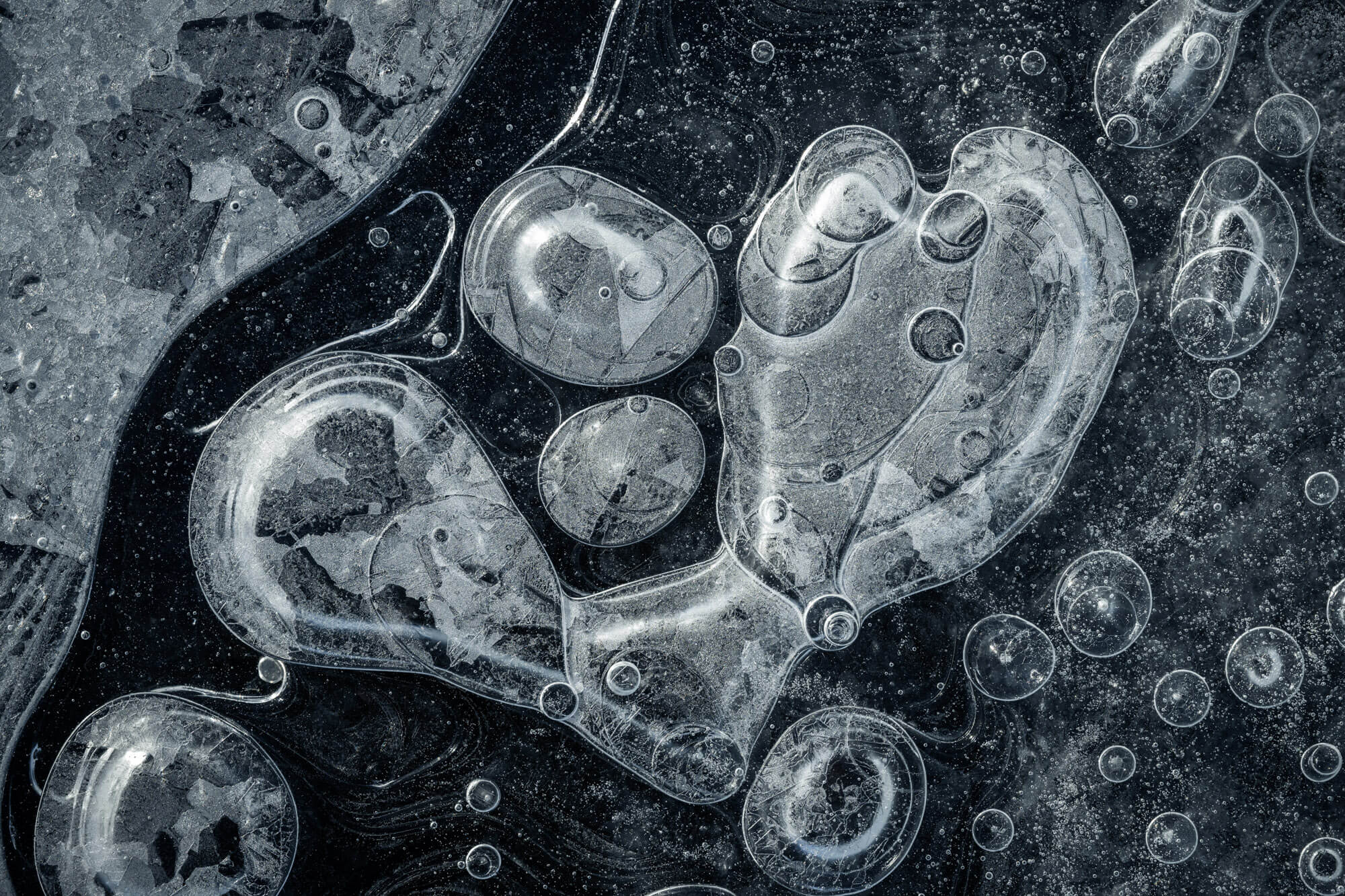
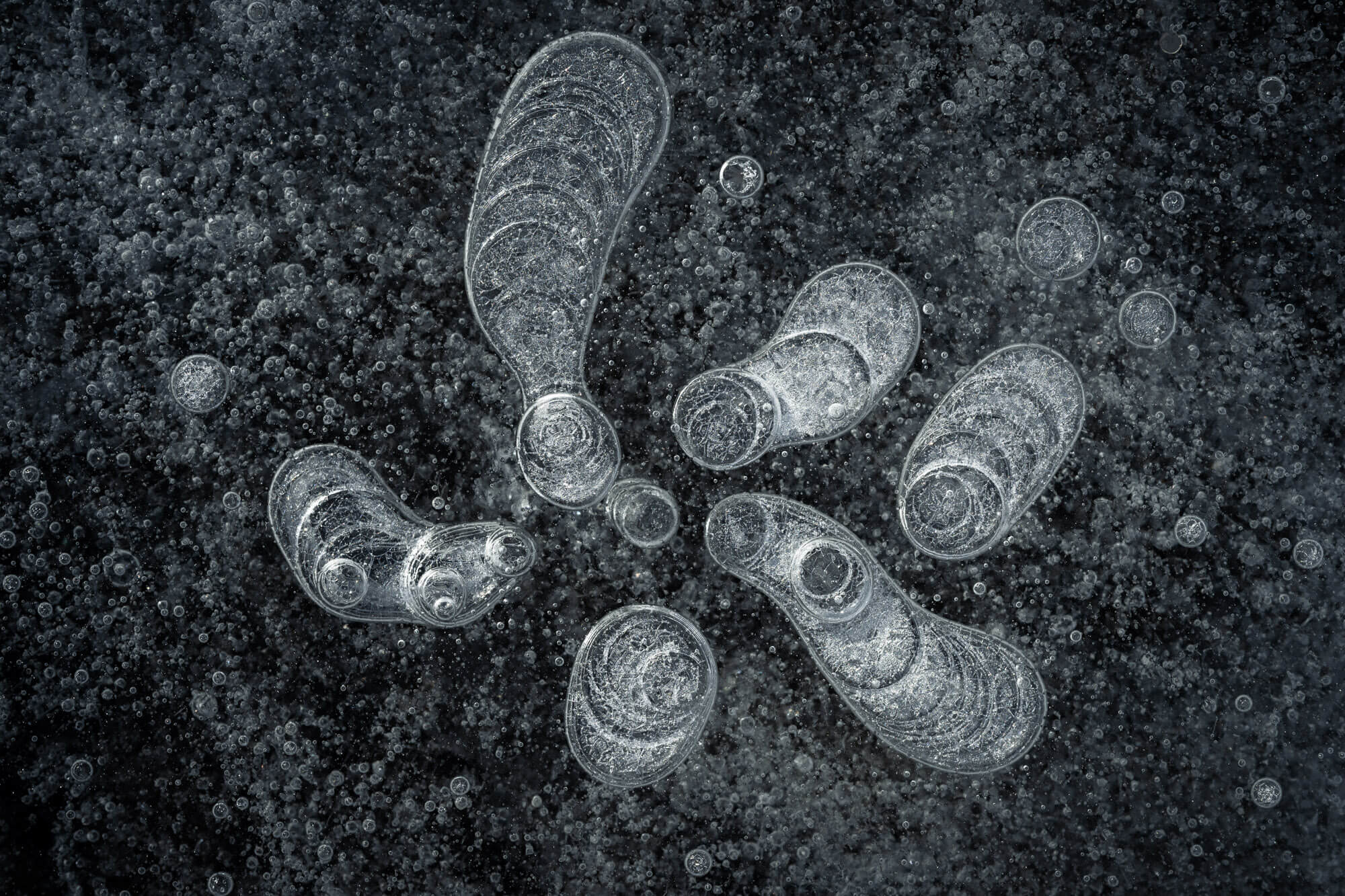
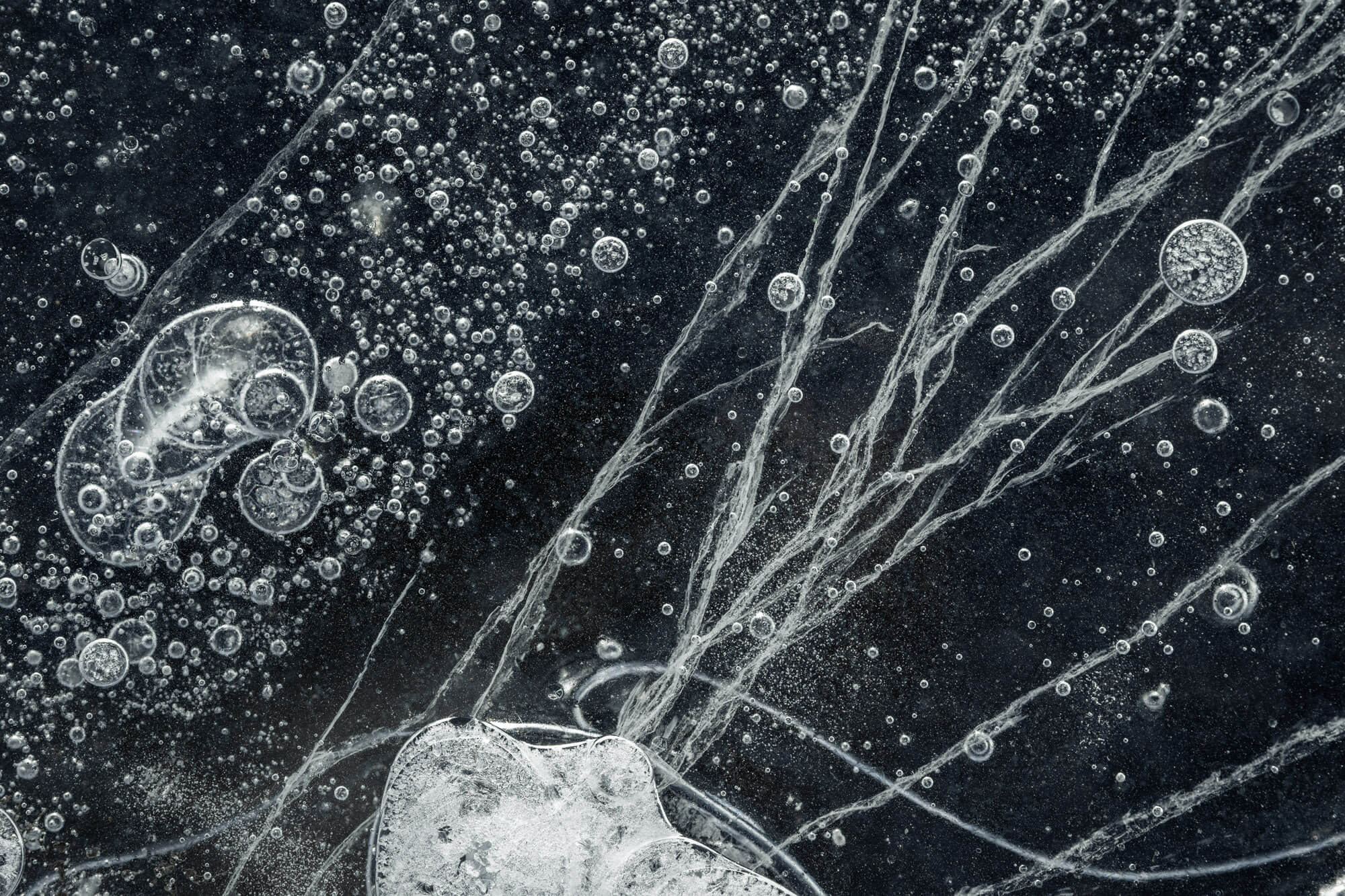
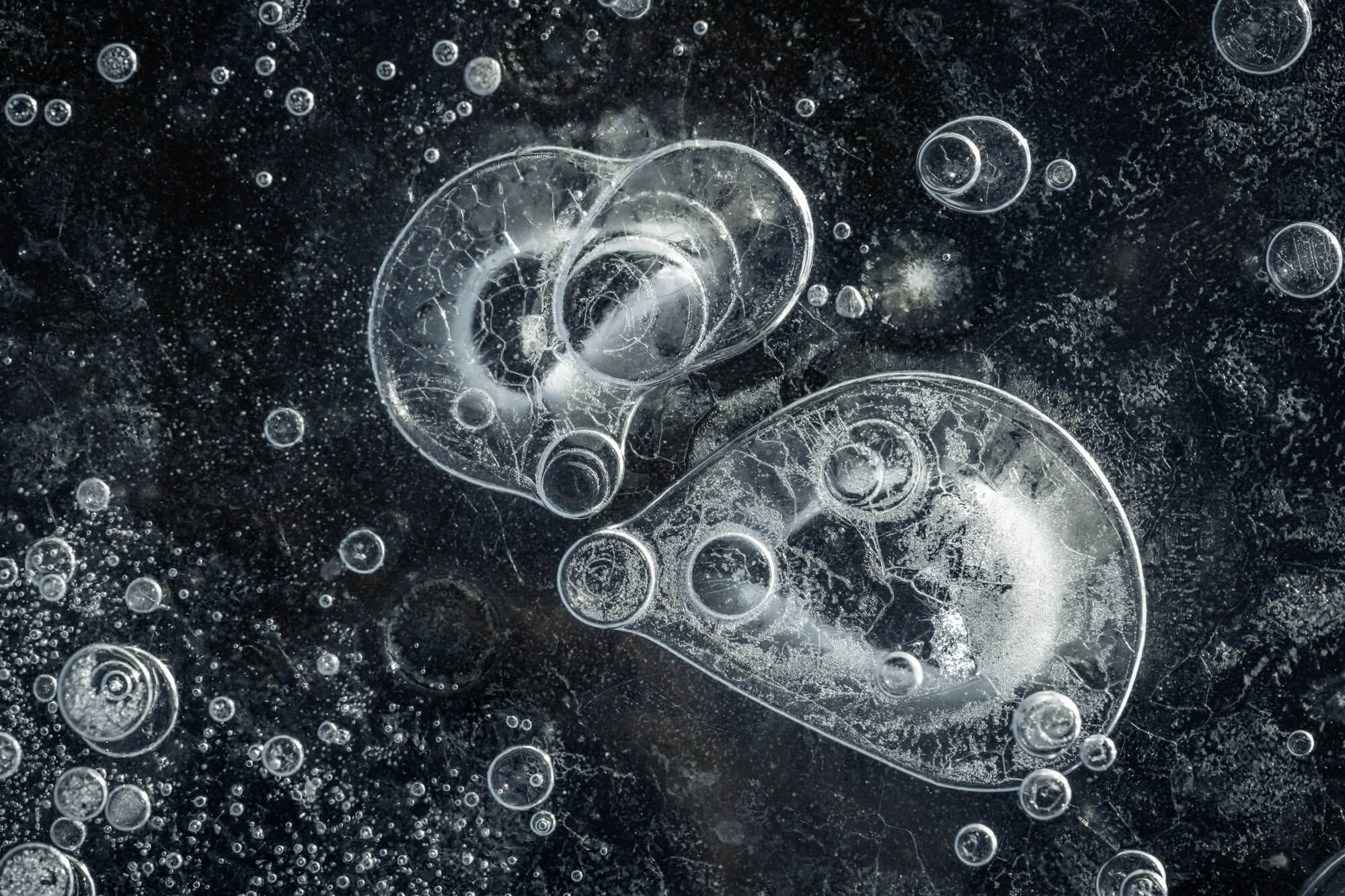
On lake bottoms, decaying matter produces methane and other gases that get caught as bubbles when the water freezes. In liquid form, water is excellent at dissolving gases, but they come out of solution when the molecules freeze. In the arctic, these bubbles form wild, layered patterns like these captured by photographer Jan Erik Waider in a lake on the edge of Iceland’s Skaftafellsjökull glacier. Unlike the bubbles that form in our fridges’ icemakers, these bubbles are large enough that they take on complicated shapes. I especially love the ones that leave a visible trail of where the bubble shifted during the freezing process. (Image credit: J. Waider; via Colossal)

Blocking Bubbles
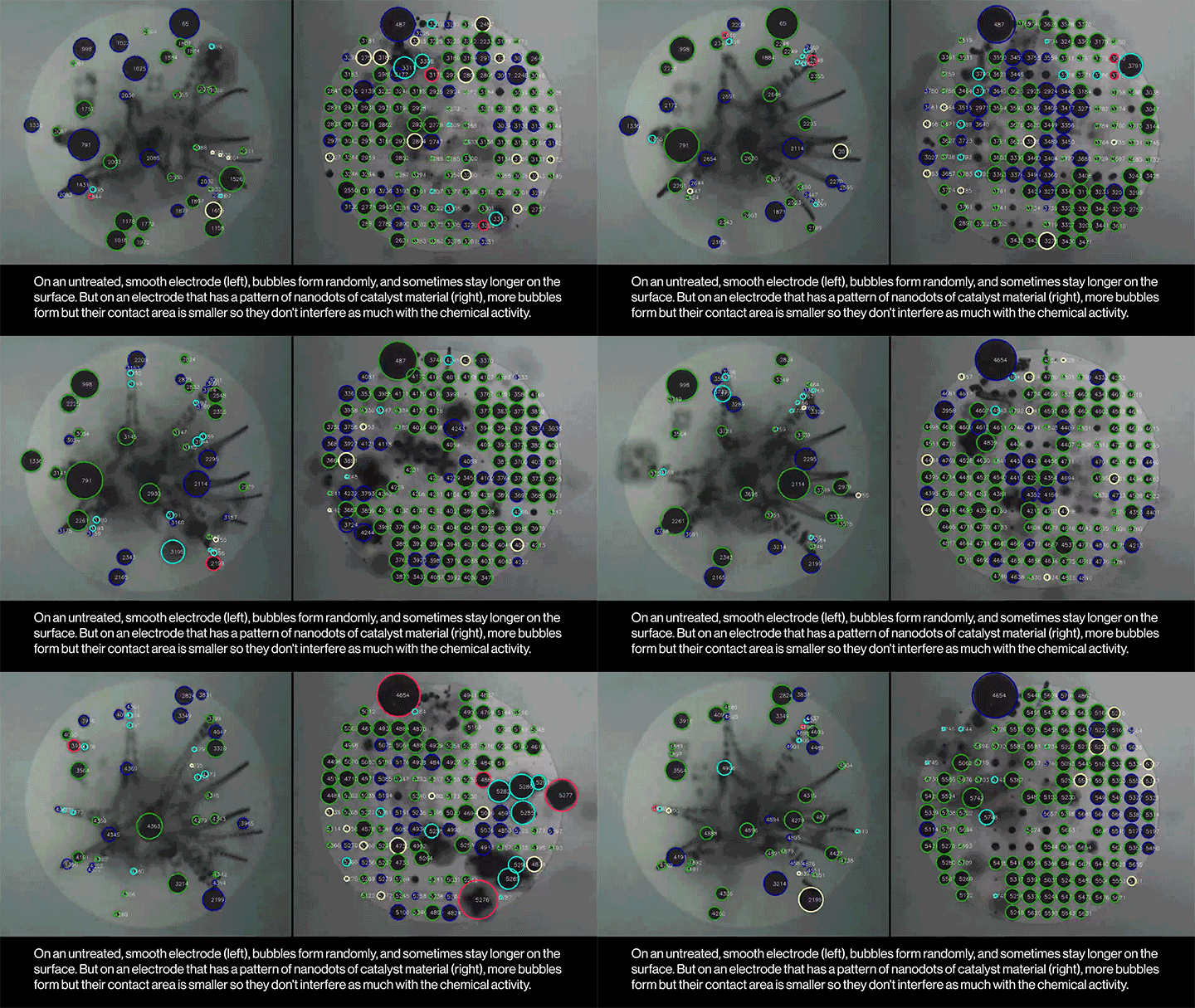
Many industrial processes, including those producing aluminum and “green” hydrogen, use electrodes to speed up chemical reactions. Unfortunately, bubbles that form on the electrode reduce its efficiency anywhere from 10 to 25 percent by blocking parts of the electrode. The assumption has been that any area shadowed by bubbles is blocked, but a recent study shows that’s not the case. Instead, it’s only the electrode area in direct contact with the bubble that’s blocked.
To show this, researchers looked at a smooth electrode where bubbles formed randomly (left) and a nanotextured one with many spots where bubbles could form (right). In the animation above, bubble shadows are highlighted with circles. There are clearly more bubbles on the nanotextured electrode, but it actually performs better than the smooth electrode because the bubble contact area is smaller. (Image and research credit: J. Lake et al.; via MIT News)

“Microscopic World”
So many natural processes take place right in front of us, but they’re too small and too fast to see. Here, the Beauty of Science team puts some of those processes — crystallizing solids, nucleating bubbles, and more — front and center. The shapes and colors draw you in, inviting you to engage with science we see daily but rarely appreciate. (Video and image credit: Beauty of Science)

“Through the Bubbles”
Many seabirds catch their prey through plunge diving, where they fly to a particular height, then fold their wings, and dive into the ocean. In busy waters, bubbles from all this diving can help obscure the birds from hapless fish. Some birds even use bubbles to escape from their own predators; some penguin species, for example, release trapped air from beneath their feathers as they surface, creating a flurry of bubbles that reduce the drag they have to overcome as they make their exit from the water. The fast exit and bubbly wake help them escape prowling seals. (Image credit: H. Spiers; via BWPA)

Bubblegum Sculptures
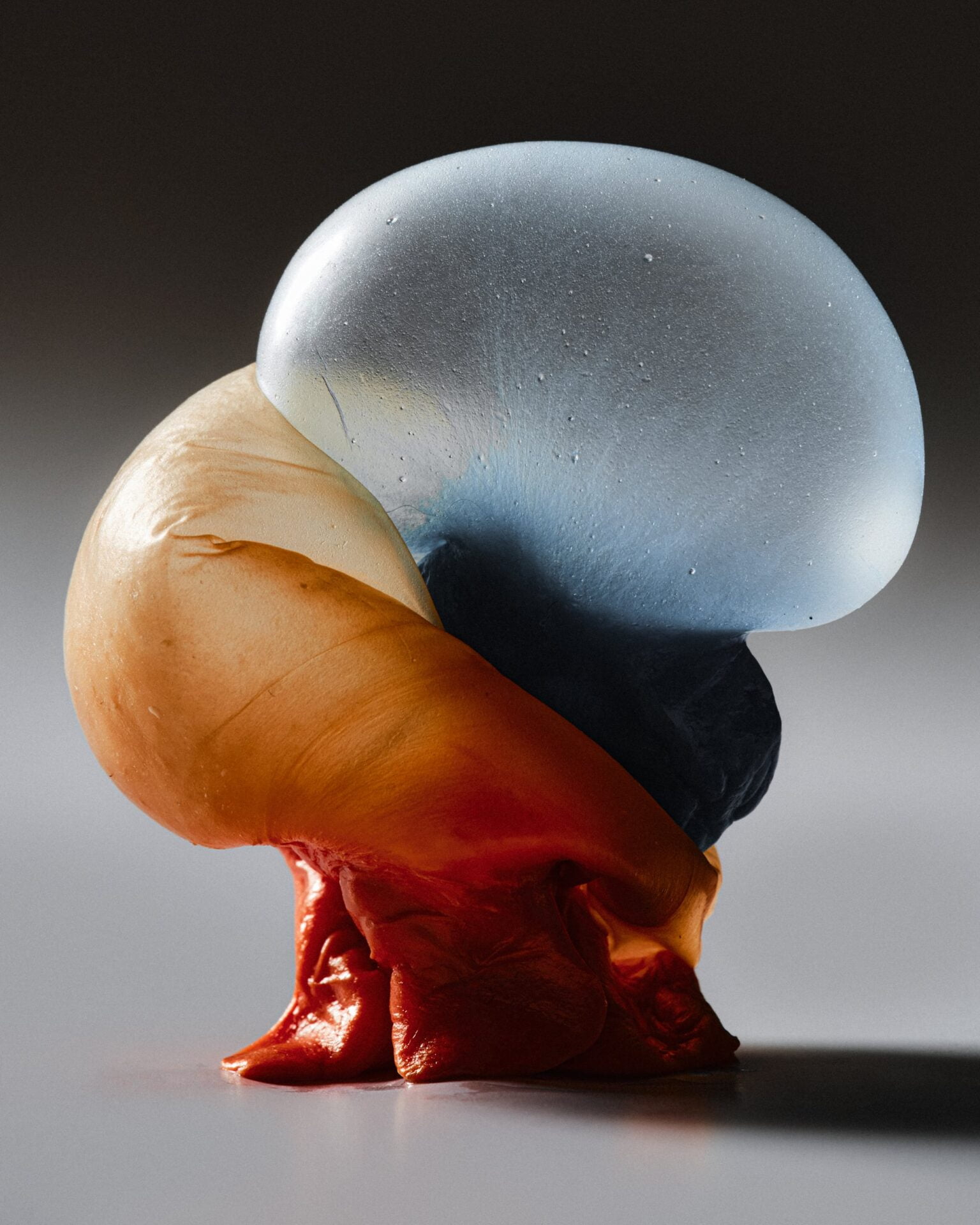
Like soap bubbles, bubbles blown in gum are ephemeral, lasting only seconds. Their break-up mechanism is quite different, though. Where surface tension rips a bubble apart once it is pierced, bubblegum instead deflates and wrinkles around a hole that does not grow, thanks to the elasticity of the gum. This photographic series by Suzanne Saroff features a rainbow of gum sculptures, all frozen in the moments of their disintegration. (Image credit: S. Saroff; via Colossal)