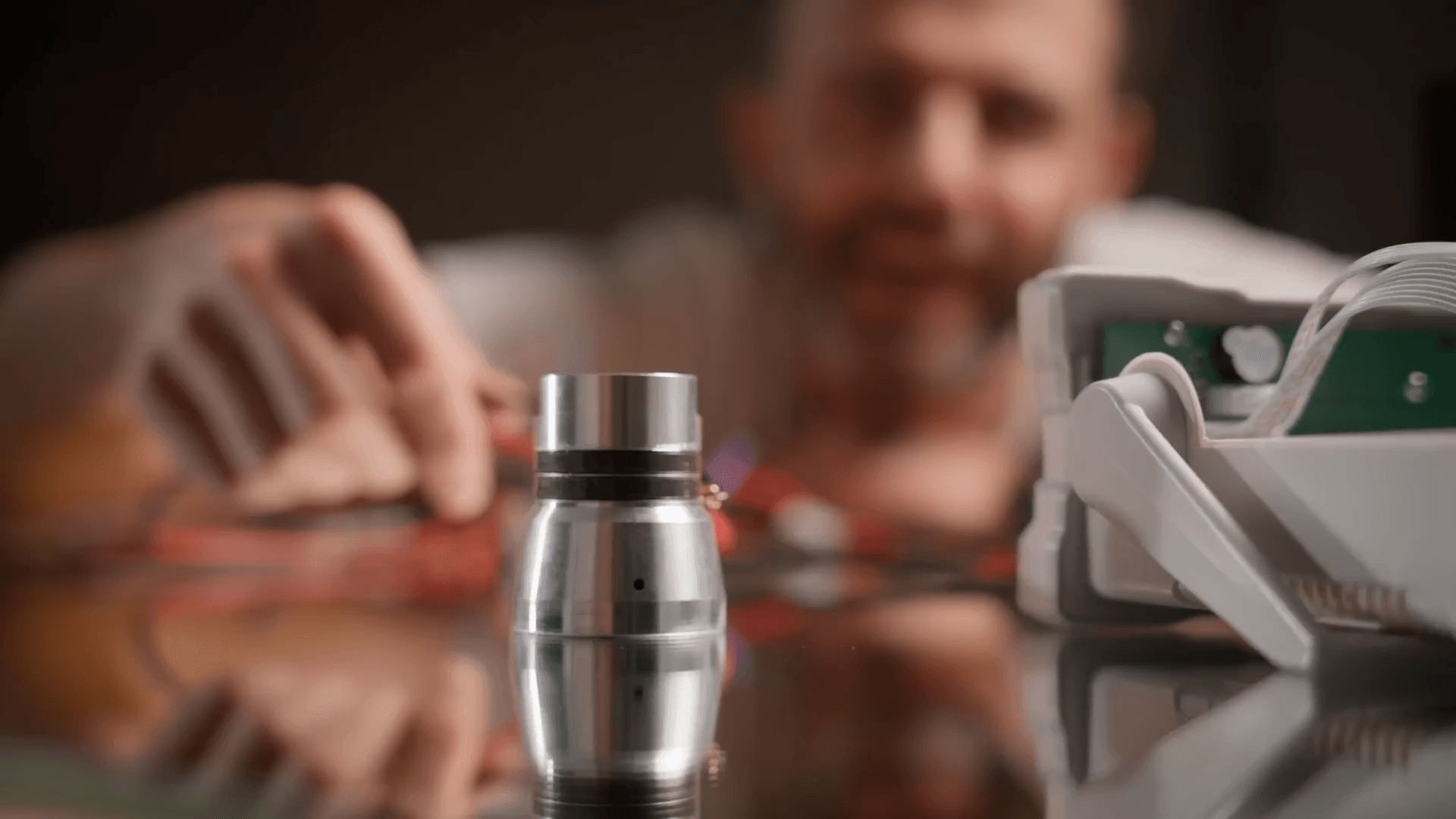
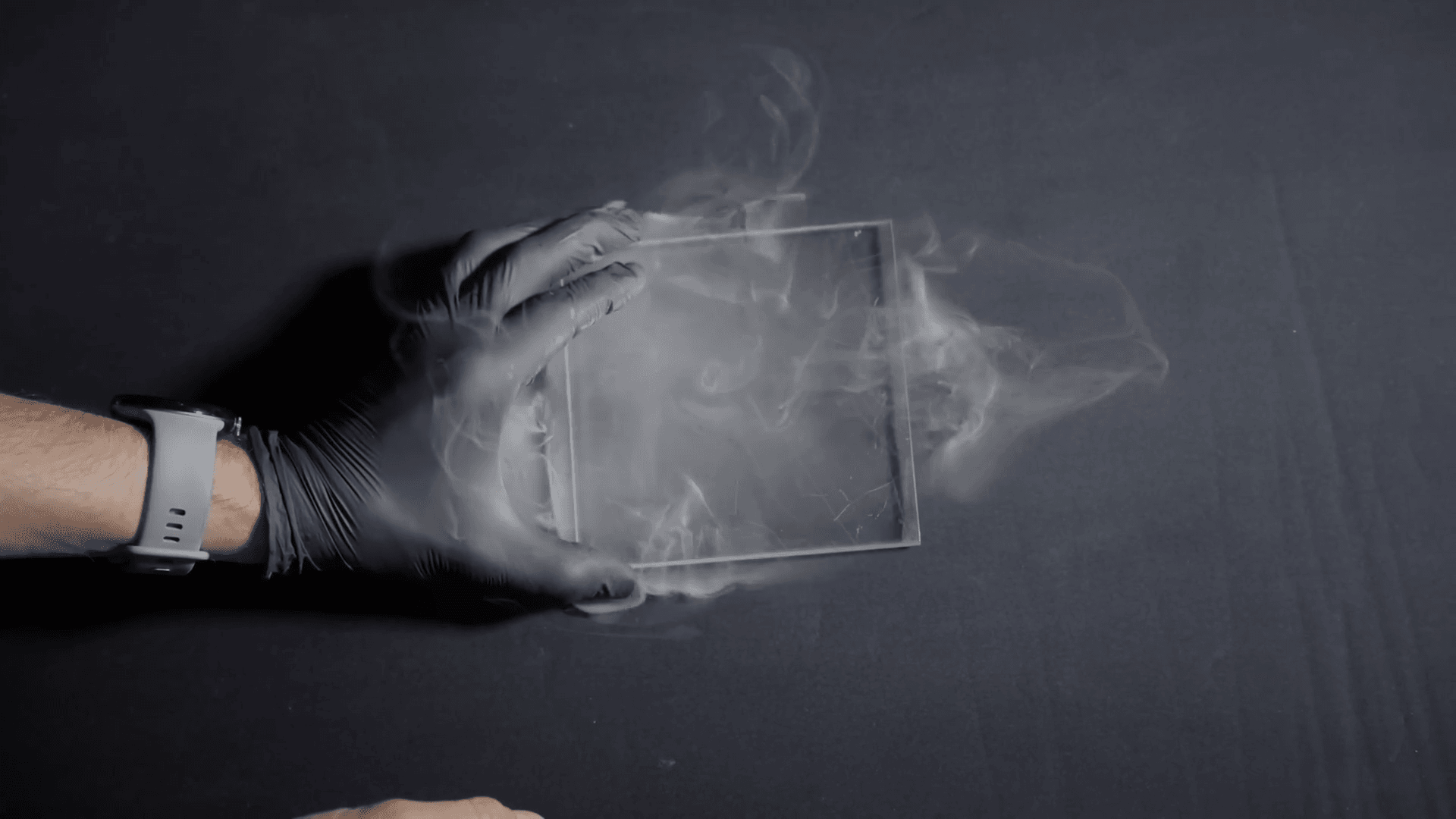
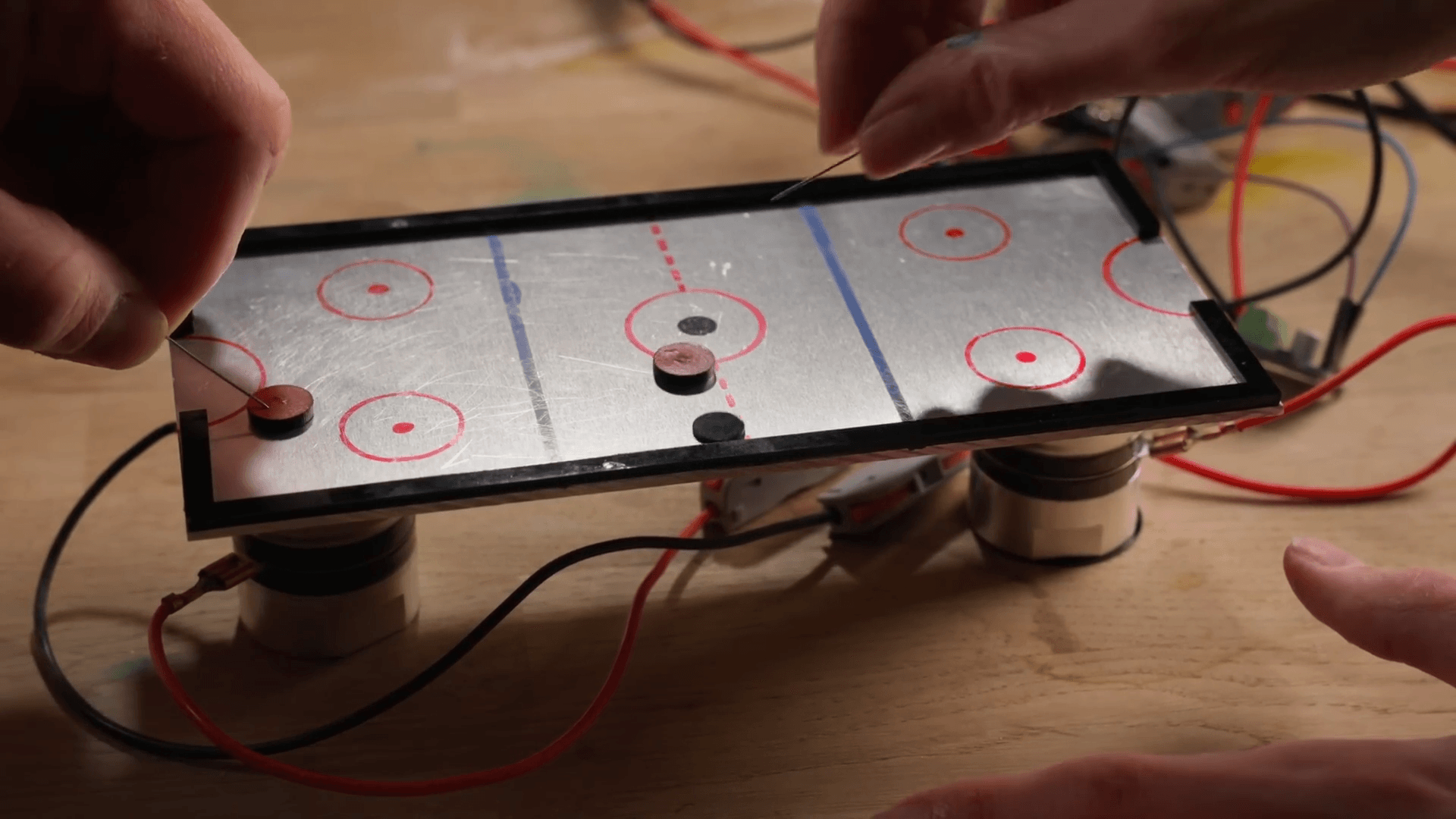
We’ve seen a few different kinds of levitation here over the years, including via acoustic waves, aerodynamics, and Leidenfrost effect. Here, Steve Mould describes something a bit different: a levitation squeeze film driven by ultrasonic transducers. Like a vibrating droplet, the thing keeping surfaces apart here is a thin, lubricating layer of air. The vibration of the ultrasonic transducer squeezes and replenishes the air layer quickly enough that it can keep transducers aloft. Steve even manages to create a miniature airless “air hockey” table with it! (Video and image credit: S. Mould)
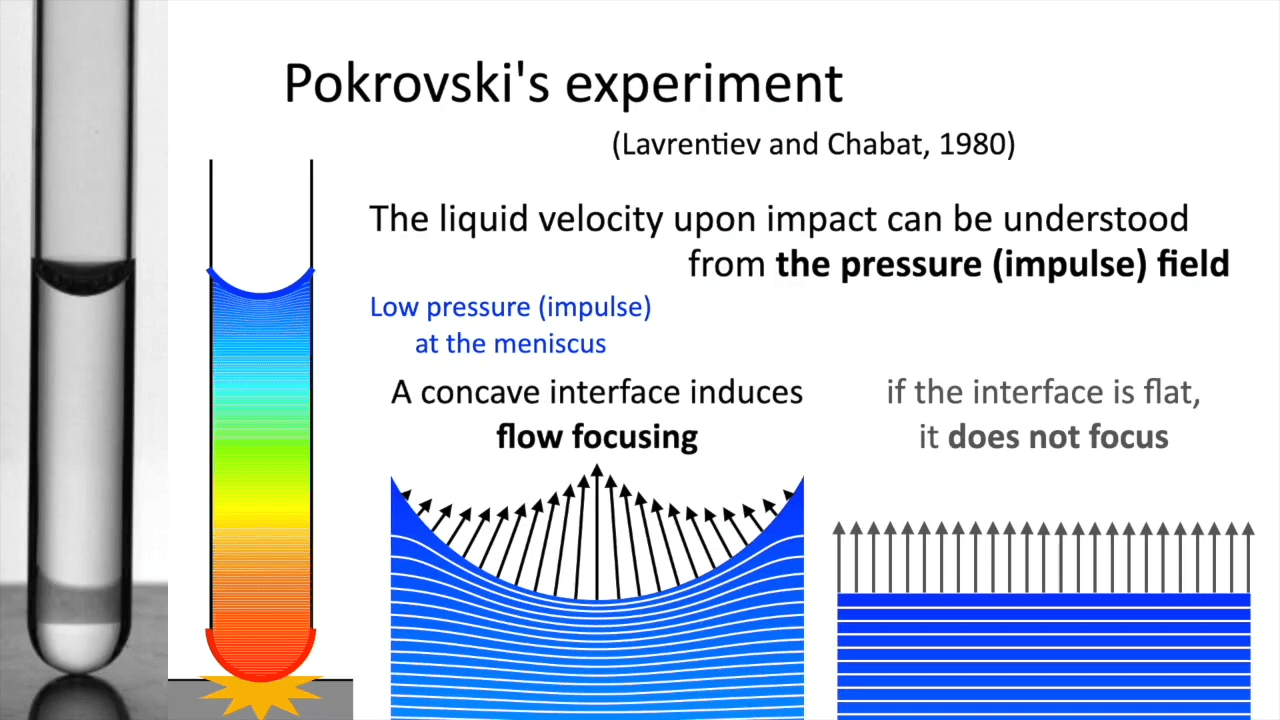
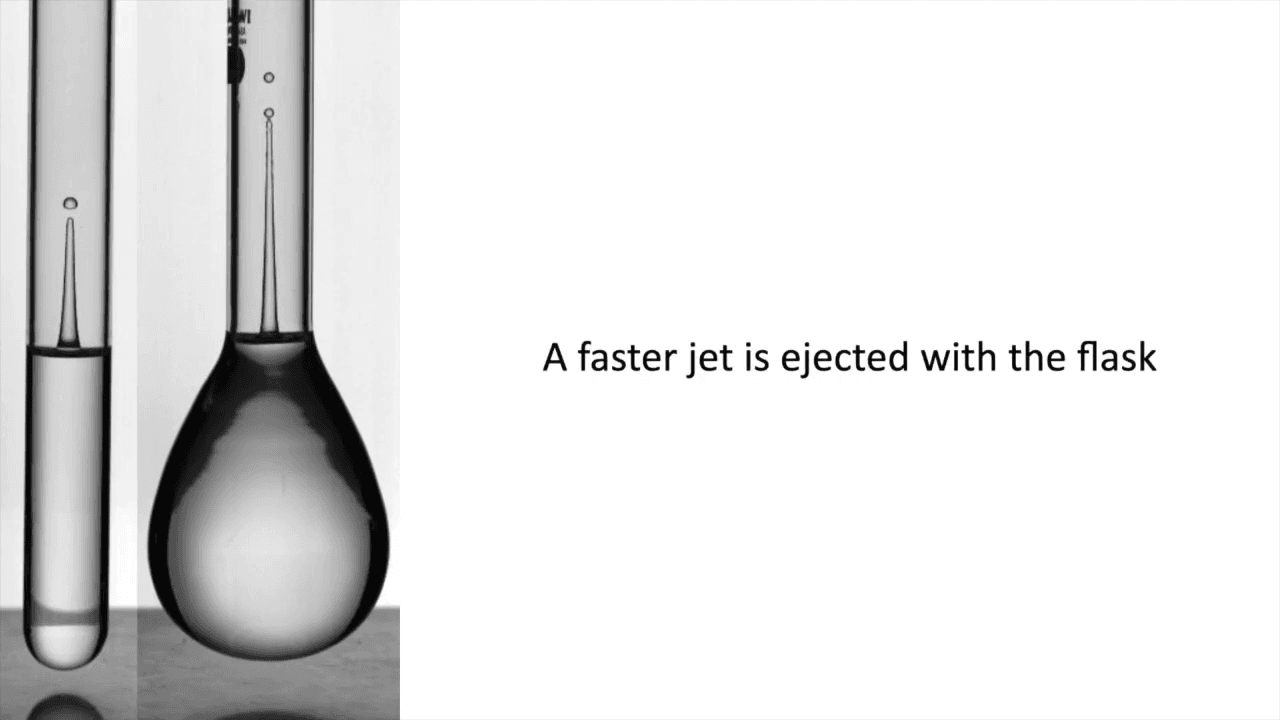
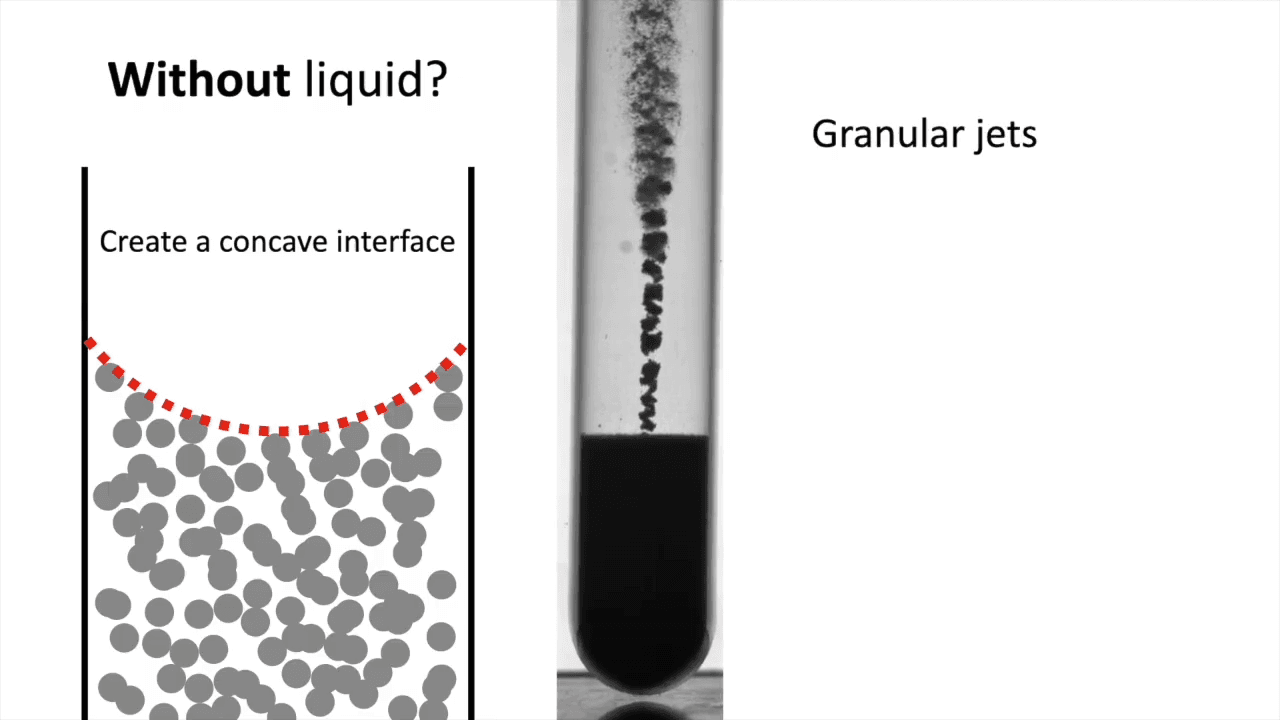
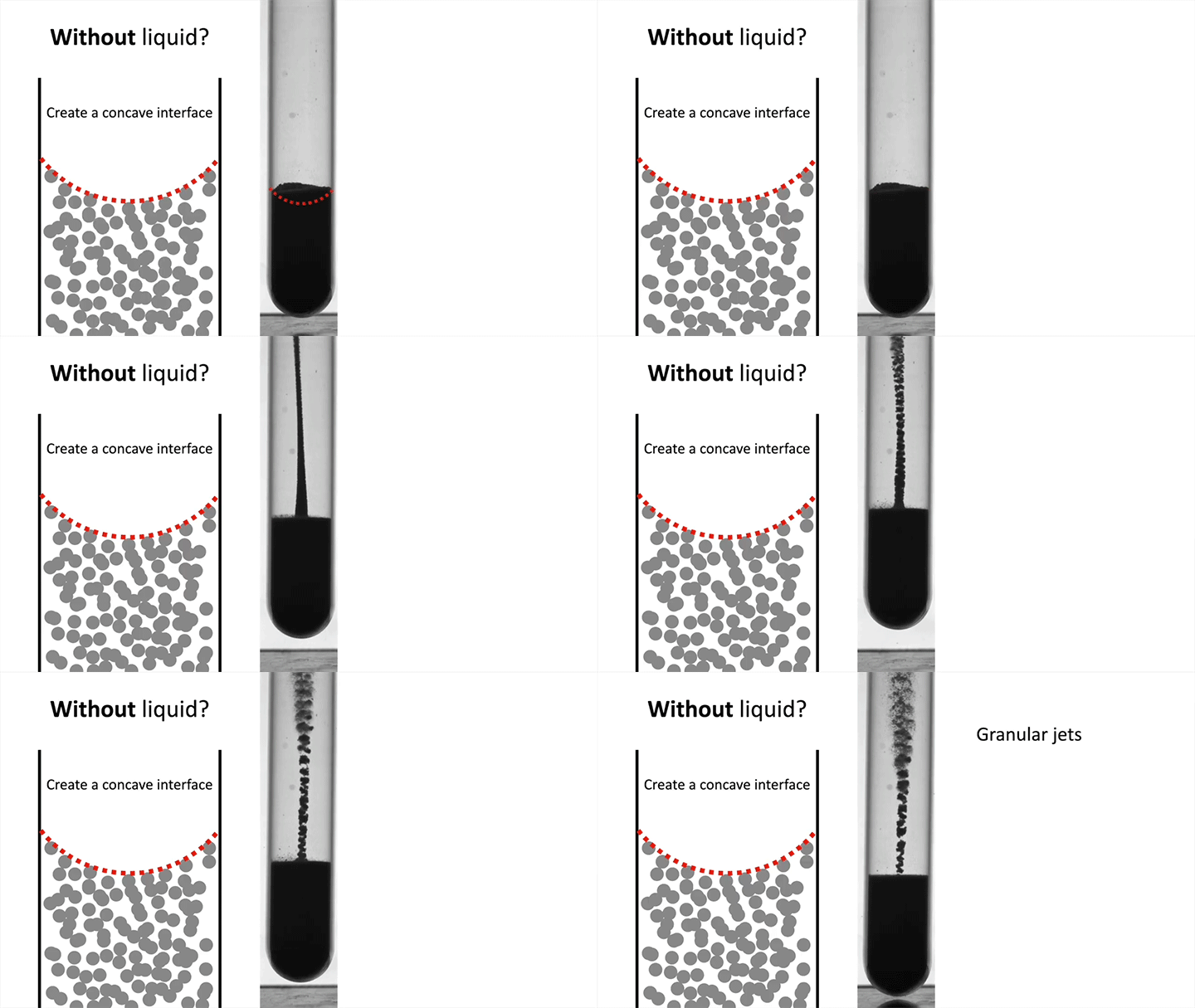
When a test tube of liquid hits a surface, the curvature of the meniscus focuses the rebounding fluid into a jet. In this video, researchers show some of the many variations they’ve explored on these experiments–from changing the depth of the fluid and the shape of the container, to changing the working fluid to honey or to dry grains. It’s a nice introduction to a fascinating phenomenon! (Video and image credit: H. Watanabe et al.; research credit: H. Watanabe et al. and K. Kobayashi et al.)
Animation showing how granular jets form in a test tube impact.
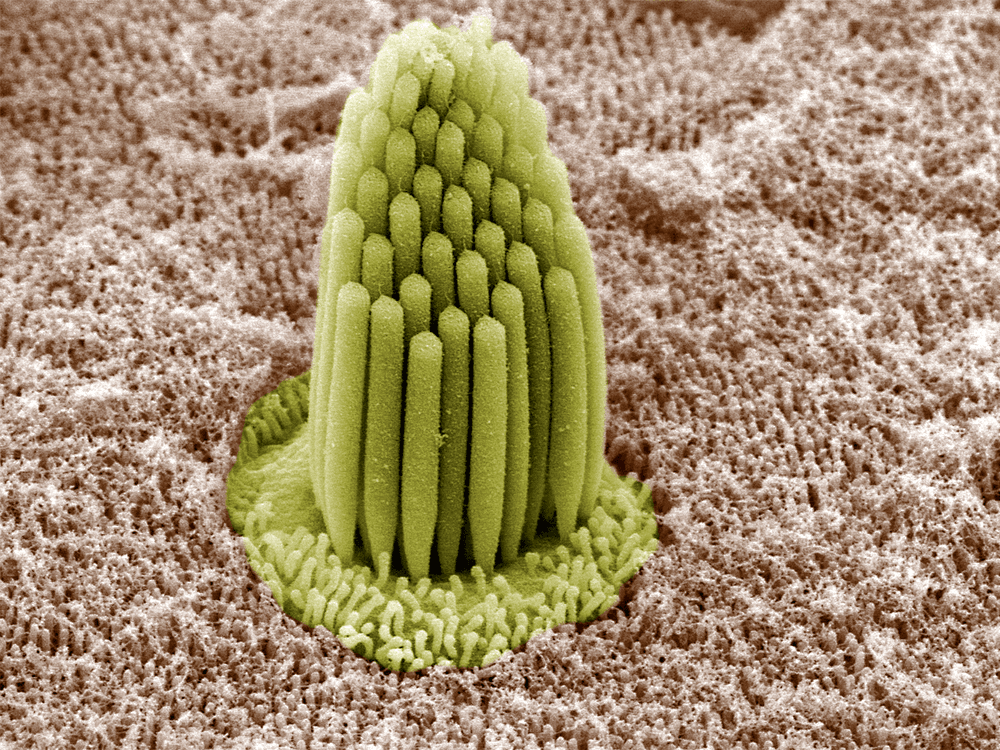
Our ears, like those of many other animals, convert mechanical signals to electrical ones, through a Rube-Goldberg-esque series of transformations. External sound waves make their way down the soft tube of the ear canal, which funnels them to a thin-walled cone, the eardrum, that’s about half as large as a dime. Here, the vibrating air pushes against the cone’s membrane, and those vibrations travel onward through a linked trio of small bones that amplify the vibration’s amplitude.
The last of these bones presses against an even smaller, oval-shaped membrane. As the bone moves, it shakes the membrane, sending waves through the liquid on its other side. Those waves travel down the spirals of the tiny, pea-sized cochlea, named for a snail shell’s shape. As the waves move through the liquid, they bend bundles of hair-like strands back and forth, like tall grass waving in a breeze. The bending triggers a chemical that binds to nerves at the base of the bundles, sending an electrical signal through the nerve and into the brain.
But the hair-like bundles, known as stereocilia, are also able to amplify incoming vibrations. In this case, the bundles in the outer portion of the cochlea expend energy to bend more than the incoming vibrations naturally make them move. This bending amplifies the fluid motion that gets transmitted to stereocilia further down the line; it’s those bundles that will make the final conversion to an electrical signal the brain receives. (Image credit: B. Kachar; research credit: Y. Thipmaungprom et al.; via APS)
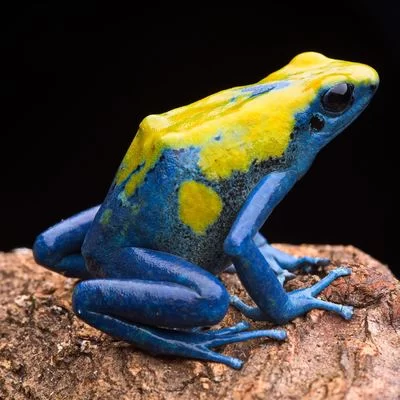
Scanning electron microscope view of the stereocilia “hair bundles” inside a frog’s inner ear.
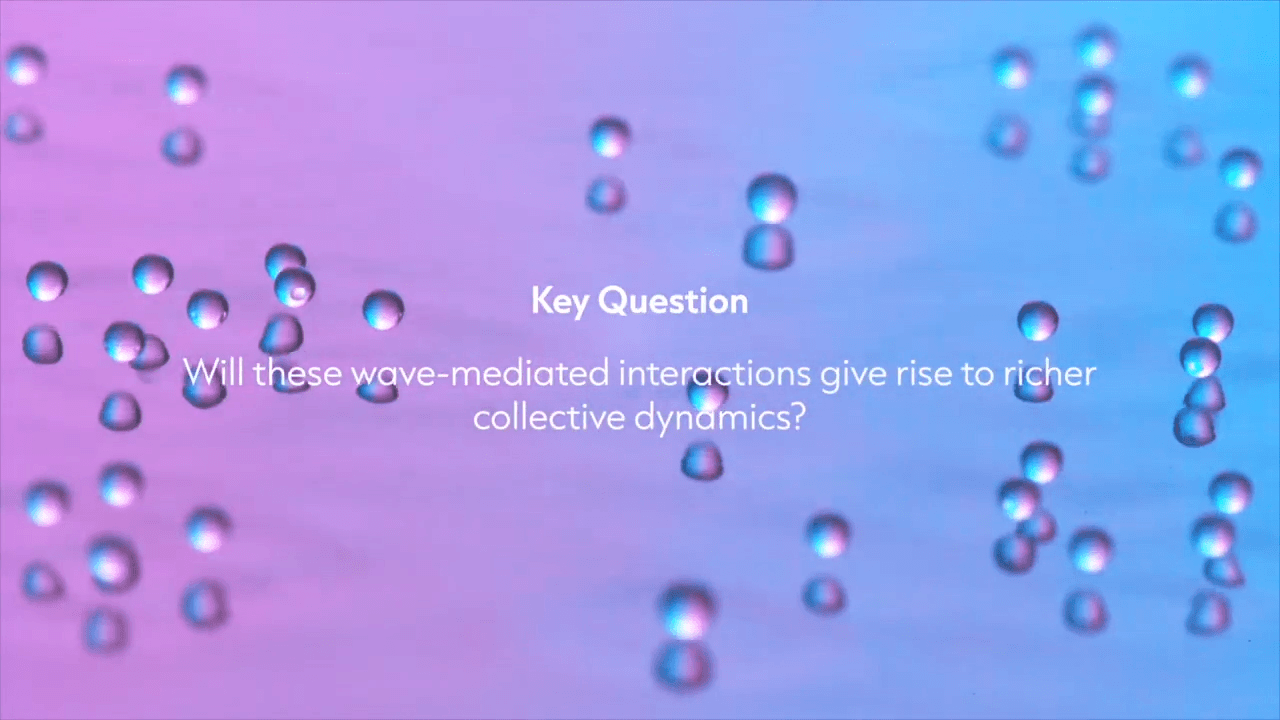
On a vibrating fluid, droplets can bounce and interact in complex ways. Here, researchers demonstrate some of the peculiar dynamics of these wave-guided droplets, showing how they can do things like pair up in waltzes. To keep the droplets from coalescing with one another, they perform their experiments in a pressurized chamber; the higher air pressure makes it harder for the air film between droplets to drain during a collision, making the droplets unable to coalesce. Under these conditions, the authors show that the droplet-wave system has quantum-like statistics. (Video and image credit: J. Clampett et al.)
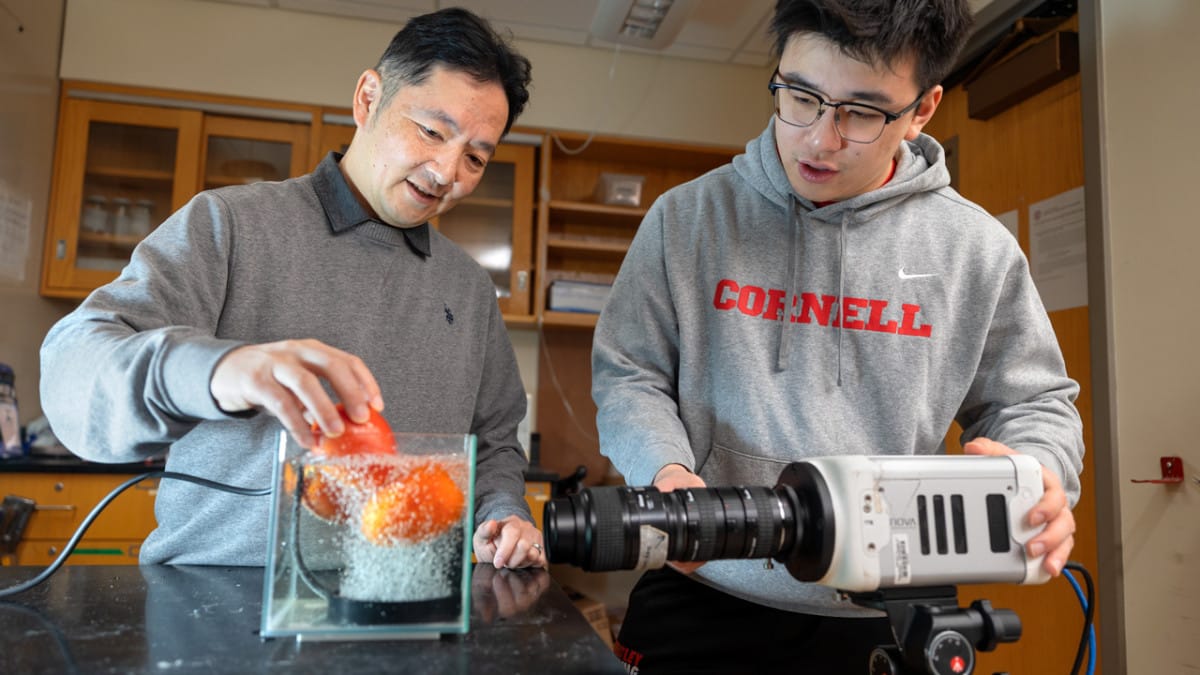
Cleaning produce helps fruits and vegetables last longer and reduces the chances for foodborne illness. But it can be a difficult feat with soft, delicate foods like tomatoes, berries, or greens. Current methods often combine ultrasonic cleaning and chemicals like chlorine. Instead, researchers are looking to boost the cleaning power of bubbles themselves by giving them an acoustic pick-me-up.
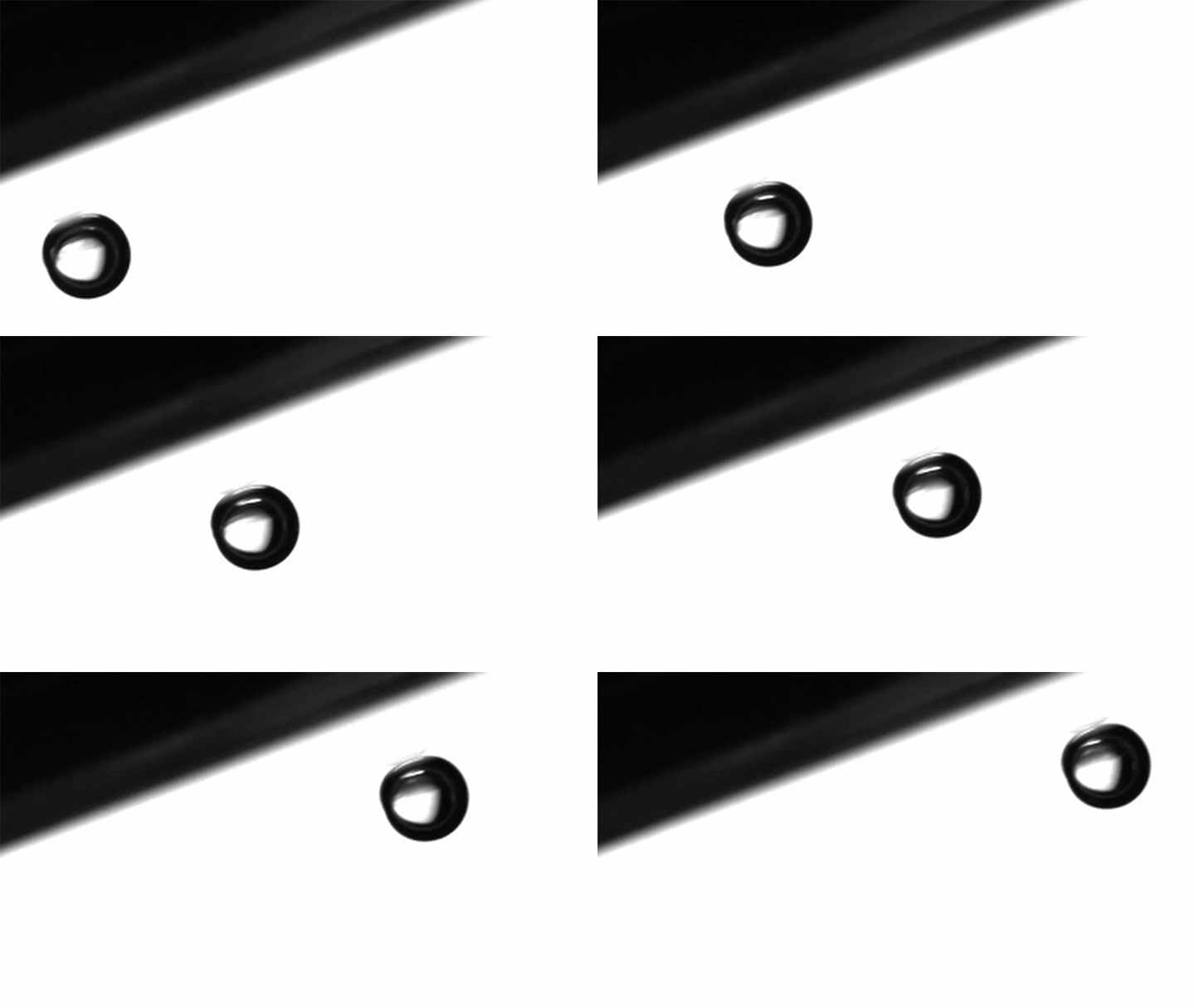
Stop-and-go. A bubble slides along an inclined surface in a pronounced stop-and-go motion when vibrated near its frequency for translational resonance.
The team combined a bubble-filled bath with sound at low (sub-cavitation) frequencies. They found that driving sound waves at the right frequency could vibrate the bubbles in a way that made them slide in a stop-and-go motion along inclined surfaces. This swaying significantly boosted their cleaning power; getting surfaces 90% cleaner than non-resonating bubbles did. (Image credit: S. Hok/Cornell University; video and research credit: Y. Lin et al.; via Gizmodo)
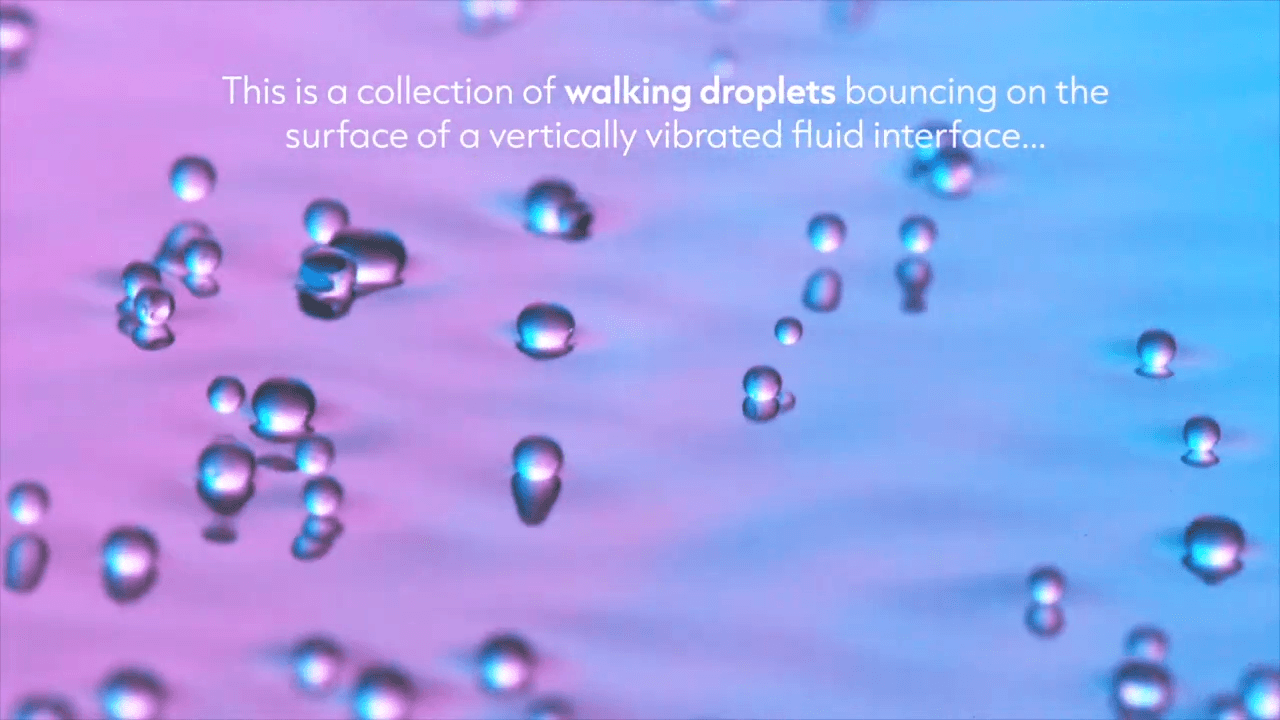
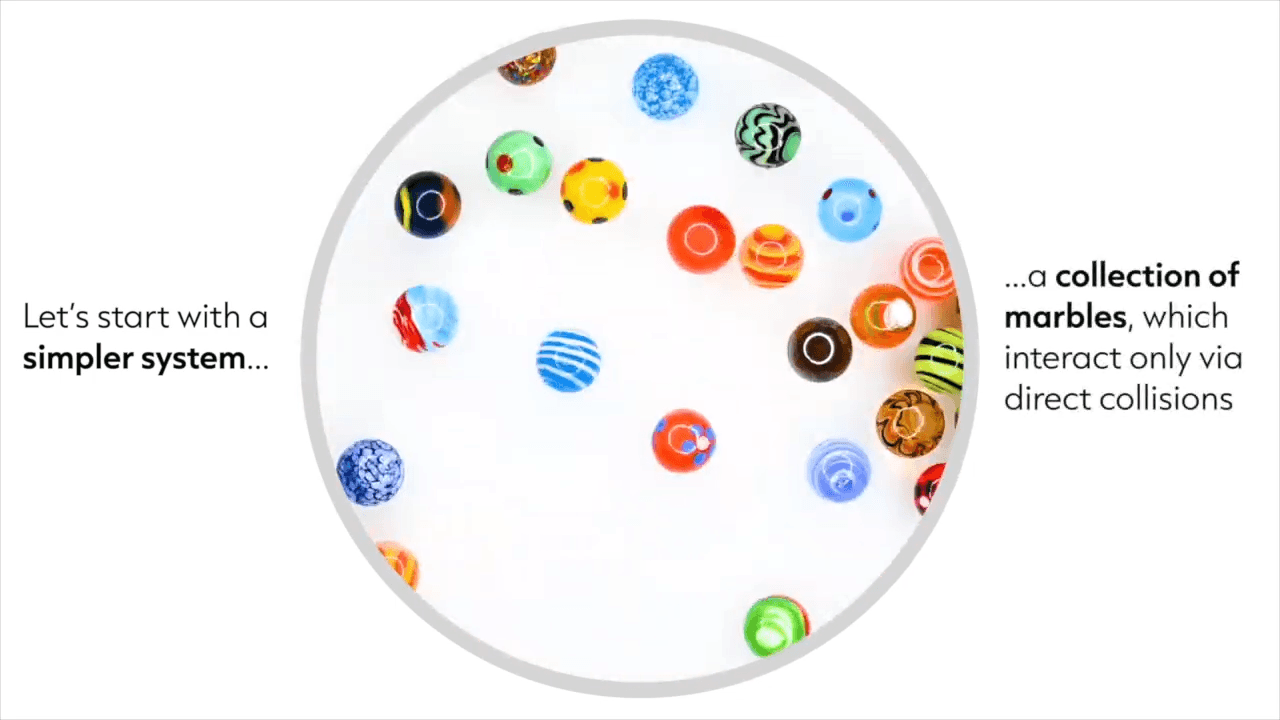
Over the last 15 years or so, researchers have been exploring pilot-wave theory–originally proposed by De Broglie in the 1920s as a way to understand quantum mechanics–using hydrodynamic quantum analogs. In these experiments, researchers vibrate pools of silicone oil, which allows oil drops to bounce–and in some conditions, walk–indefinitely on the pool. By mixing in obstacles that mimic classic quantum mechanical experiments, they reproduce effects like the double-slit experiment in a macroscopic system.
In this video and the accompanying papers, a team recreates the Kapitsa-Dirac effect where a standing electromagnetic wave diffracts electrons. Here, the standing wave is instead a Faraday wave in the surface of the pool. Yet the droplets, too, diffract in a manner resembling the quantum version. (Video credit: B. Primkulov et al.; research credit: B. Primkulov et al. 1, 2)
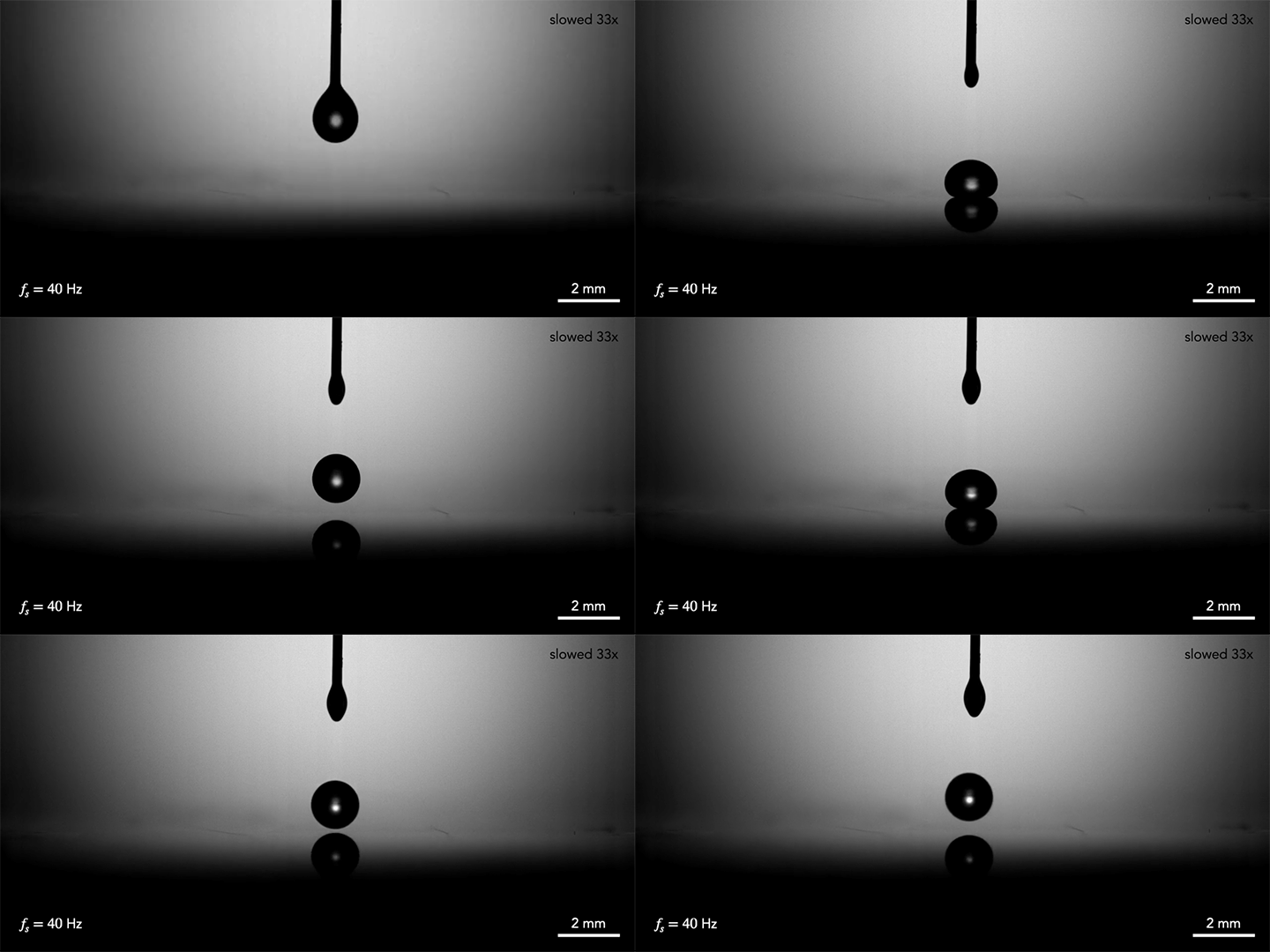
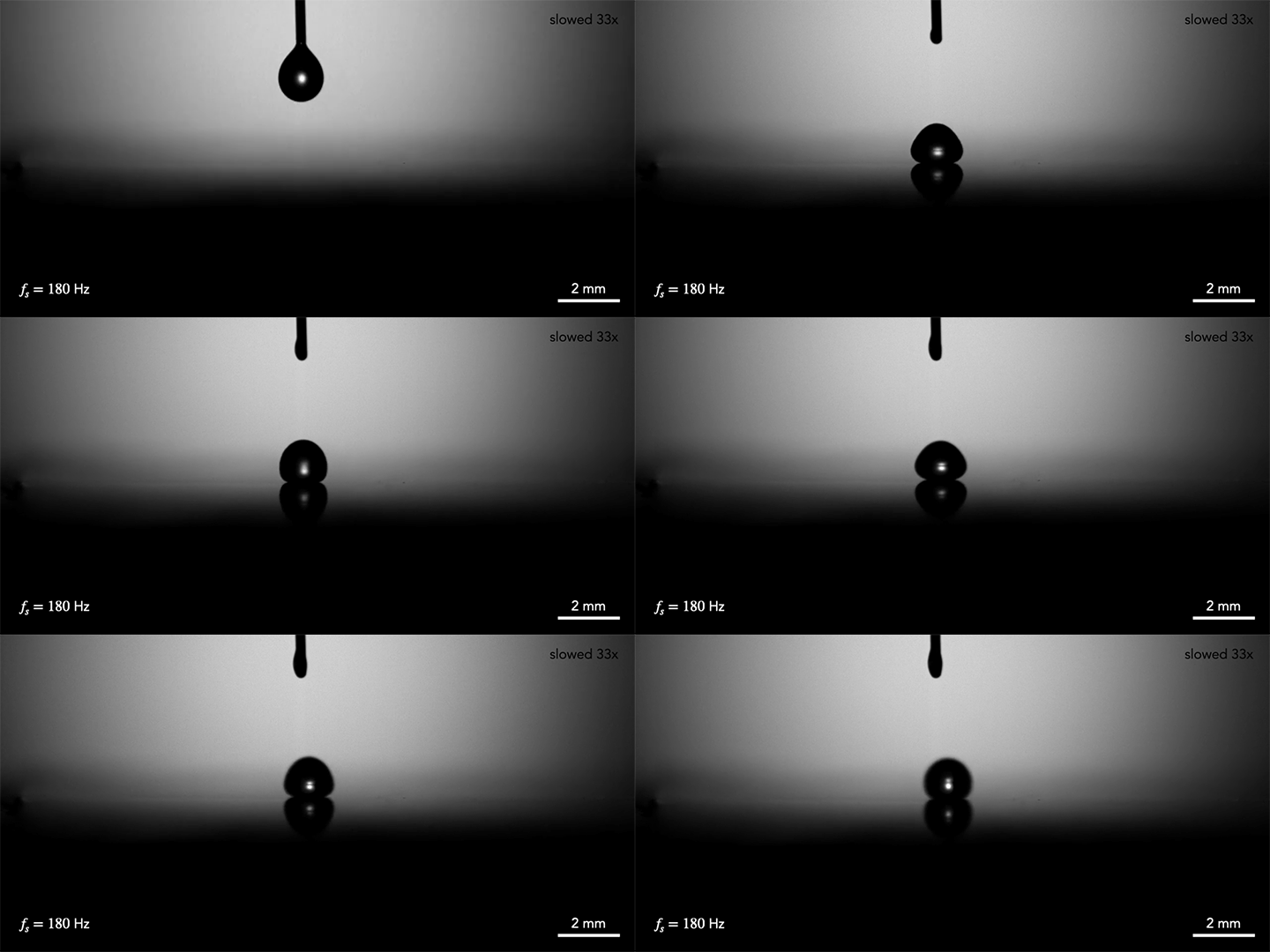
On the surface of a gently vibrating liquid, a droplet can bounce indefinitely without coalescing, kept aloft by an air film too small to see. As long as the droplet lifts off before the air layer drains out from under it, the droplet won’t contact the water below. Now scientists have shown that this is possible with a solid surface, too.
Using an atomically smooth mica plate, researchers were able to bounce a droplet indefinitely without wetting the surface. At higher vibration rates (below), the droplet essentially hovers in place, bouncing so quickly that we simply see its shape vibrating in response to the surface. (Image and research credit: L. Molefe et al.; via APS)
When an object like a sphere enters the water, it drags air into the water behind it, creating a cavity. Depending on the sphere’s impact speed, the cavity might close first under the water, forming a deep seal, or at the surface with a surface seal. But, as this video points out, water often isn’t still. Here, they explore how the sphere’s entry changes when there are ripples on the water surface. (Video and image credit: M. Ibrahim et al.; via GFM)
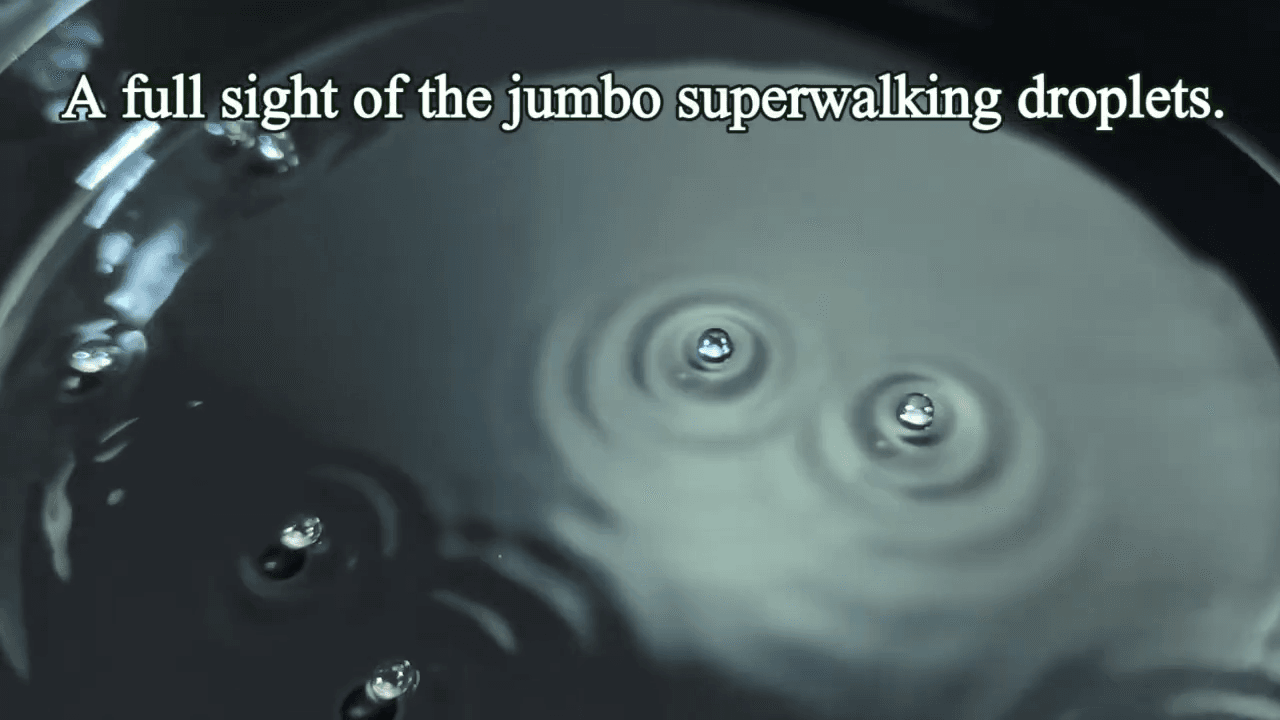
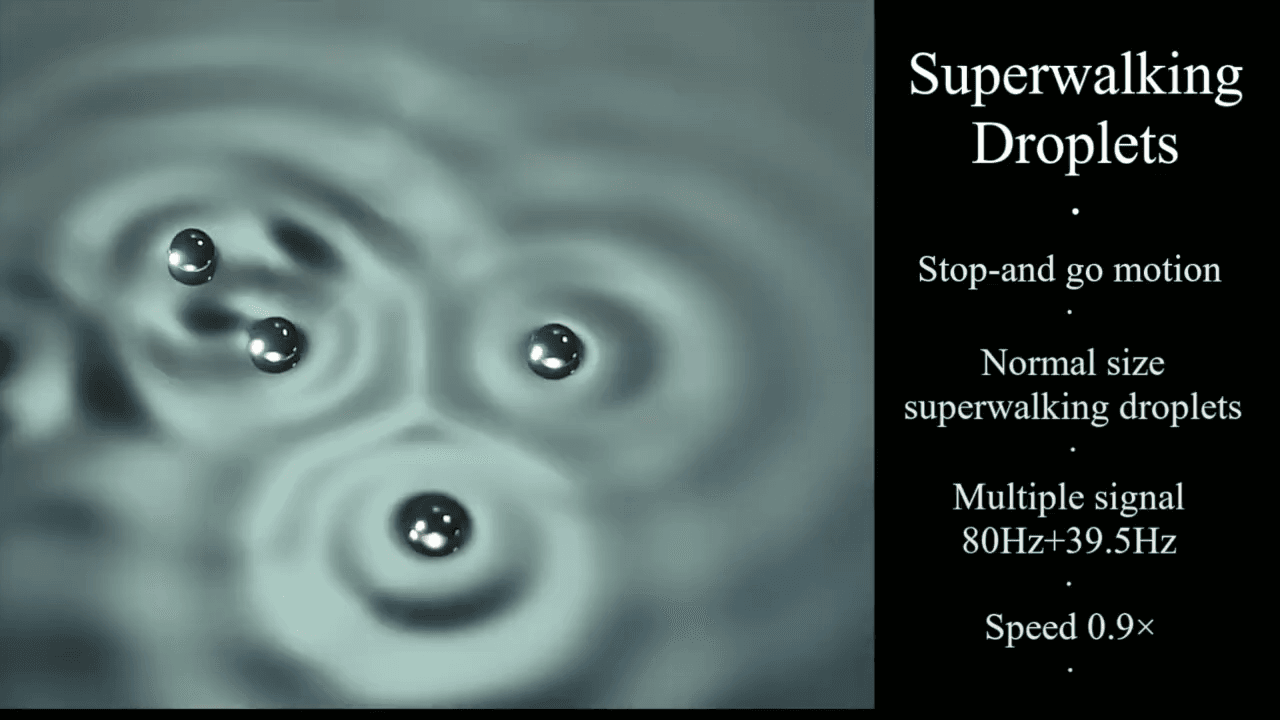
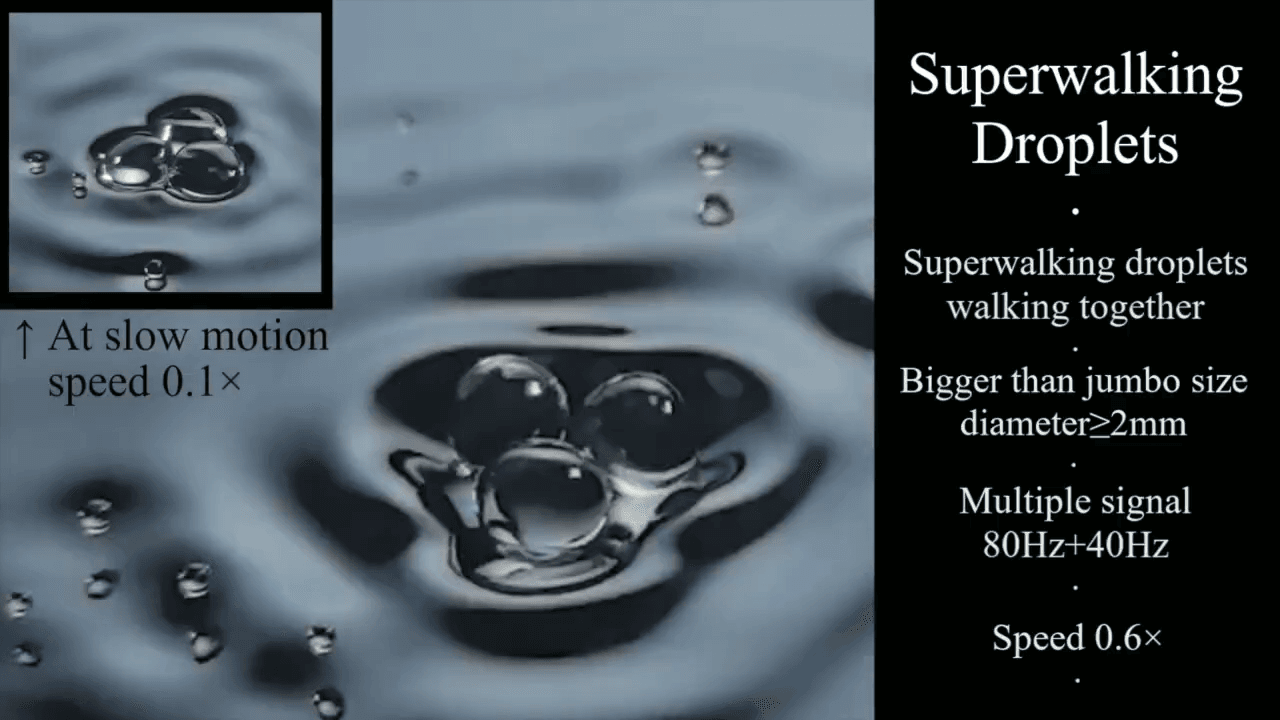
When placed on a vibrating oil bath, droplets have many wild behaviors, some of which mirror quantum mechanics. Even big droplets — bigger than 2 millimeters in diameter — can get in on the fun. This video shows several of these “jumbo superwalkers” in action, both singly and in groups. (Video and image credit: Y. Li and R. Valani; via GFM)
Inside musical instruments gapes an emptiness that, to the eye of photographer Charles Brooks, resembles the vast architecture of music halls and cathedrals. In his series “Architecture in Music,” Brooks takes us into these empty spaces, revealing where the resonance at the heart of the instrument’s sound lies. In a stringed instrument like a violin, the vibration of the strings makes a relatively quiet sound on its own; it’s only in making the violin’s entire hollow body vibrate that resonance amplifies the strings. Similarly, wind instruments rely on air resonating within them to produce their sound. (Image credit: C. Brooks; via Colossal)