Tag: bubbles

  • How Large Particles Get in Sea Spray

    How Large Particles Get in Sea Spray

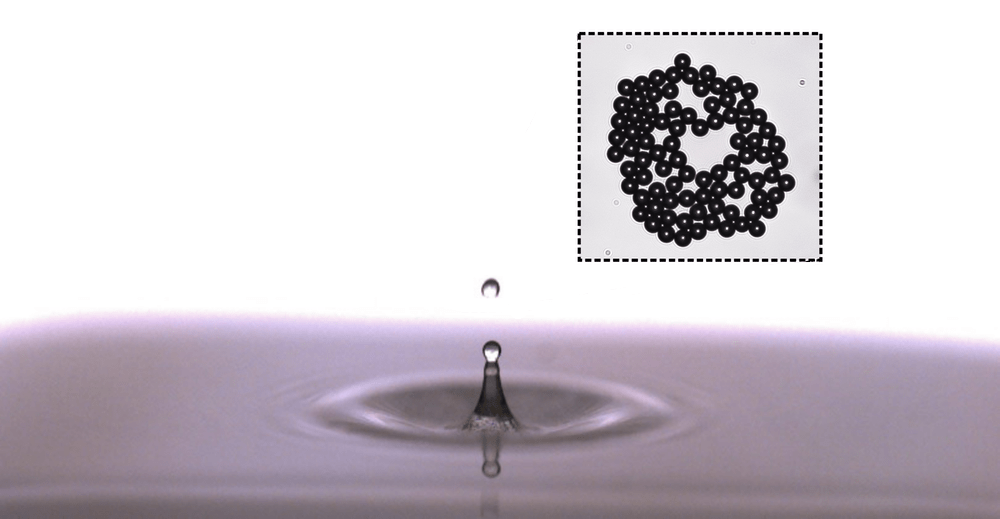
    When bubbles burst at the ocean’s surface, they eject droplets that can carry high concentrations of contaminants like pollutants, viruses, and microplastics. Previous theories posited that only particles smaller than the microlayer surrounding the bubble could make their way into these drops, but new work shows otherwise.

    As bubbles rise to the surface, they carry particles on their surface, collecting them to a concentration that’s even higher than the surrounding seawater. But which particles make it into the air depend on the details of what happens when the bubble pops. Previously, researchers assumed that the thin microlayer of fluid surrounding the bubble was uniform, but that turns out not to be the case. As the bubble pops, some regions of the microlayer stretch and thin, while others grow thicker. The thicker the microlayer, the larger the particles it can pull along. In their single-bubble experiments, the researchers found that 15- and 30-micrometer plastic beads — representing oceanic microplastics — appeared in high concentrations in ejected droplets.

    This animated simulation shows how fluid along the edge of a bubble makes its way into ejected droplets. Green particles indicate fluid from the left half of the bubble; blue shows fluid from the right side.
    This animated simulation shows how fluid along the edge of a bubble makes its way into ejected droplets. Green particles indicate fluid from the left half of the bubble; blue shows fluid from the right side.

    Environmental scientists are keen to understand these mechanisms because they link our oceans and atmosphere, potentially affecting rainfall, pollution spread, and epidemiology. (Image, video, and research credit: L. Dubitsky et al.; via APS Physics)

  • A Bubble’s Path

    A Bubble’s Path

    Centuries ago, Leonardo da Vinci noticed something peculiar about bubbles rising through water. Small bubbles followed a straight path, but slightly larger ones swung back and forth or corkscrewed upward. The mechanism behind this behavior has been a matter of debate ever since, but the authors of a recent study believe they’ve nailed down the answer.

    The forces determining a bubble’s path are remarkably complex, which is why it’s taken so long to figure this out. Viscosity acts as a source of drag on the rising bubble, acting across a thin boundary region surrounding the bubble. That boundary isn’t constant, though; the bubble’s shape changes as the flow pushes on it, and the changing shape of the bubble pushes on the flow, in turn. Capturing those subtle interactions numerically and comparing them to careful experiments was necessary to unravel the mystery.

    The team found that bubbles above a critical radius (0.926 millimeters) begin to tilt. That tilt causes a change in the bubble’s shape, which increases the flow along one side. This kicks off the wobbling motion, which carries on because of the continuing changes in the bubble’s shape and the flow around it. (Image credit: A. Grey; research credit: M. Herrada and J. Eggers; via Vice; submitted by @lediva)

  • Frozen in Ice

    Frozen in Ice

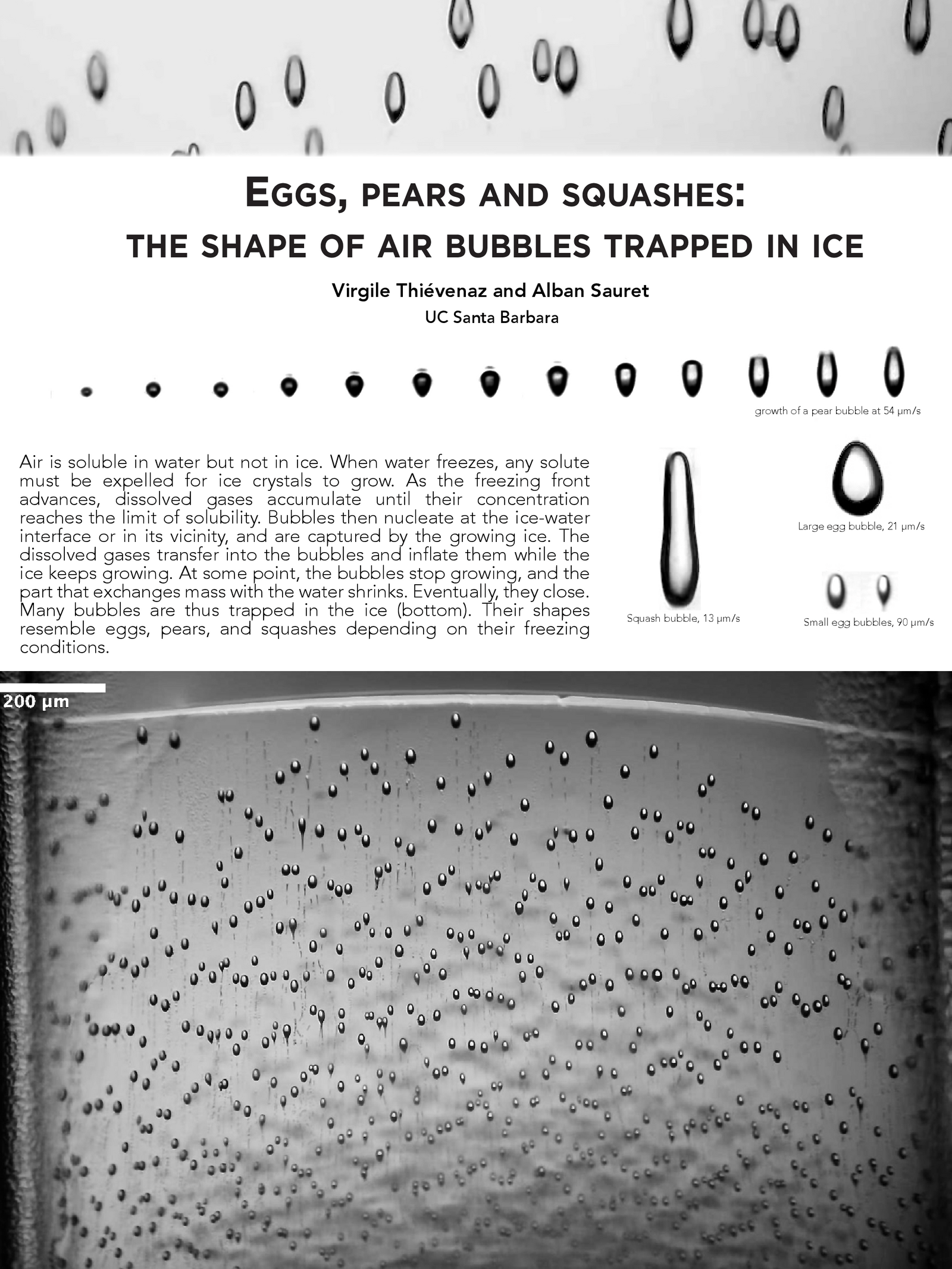
    Air can dissolve in water, but not in ice. So as water freezes, any dissolved gases have to get squeezed out in order for the ice crystals to grow. Once the concentration of gases is high enough, a bubble nucleates and gets captured by the growing ice around it. The shape of the final bubble depends on its freezing conditions. As seen here, bubbles take on all kinds of shapes, ranging from egg-like to a long and skinny squash-like shape. (Image credit: V. Thiévenaz and A. Sauret)

  • Featured Video Play Icon

    Draining a Bottle

    Turn a bottle upside-down to empty it, and you’ll hear a loud glug-glug-glug as the liquid in the bottle empties and air rushes in. In this video, researchers aim a high-speed camera at the very first bubble that forms during the process. Once the bubble reaches the wider area of the bottle, it tends to pinch off in the bottle’s neck. That creates a narrow jet that pierces the bubble and flies all the way to the other side, leaving a column of liquid inside the rising bubble. Increasing the fluid’s viscosity has remarkably little effect, at least until the liquid is extremely viscous. (Image and video credit: H. Mayer et al.)

  • “Bubbles Experience”

    “Bubbles Experience”

    Acrylic paint, oil, water, and air combine to create ephemeral sculptures in Alberto Seveso’s “Bubbles Experience” series. I love the mixture of shapes he achieves, from large, seemingly-laminar columns to a mist of bubbles, each trailing a painted tail. They’re like tiny, liquid comets. See more from this series here and find more examples of his work in his online portfolio. (Image credit: A. Seveso)

  • Ascending Through Bubbles

    Ascending Through Bubbles

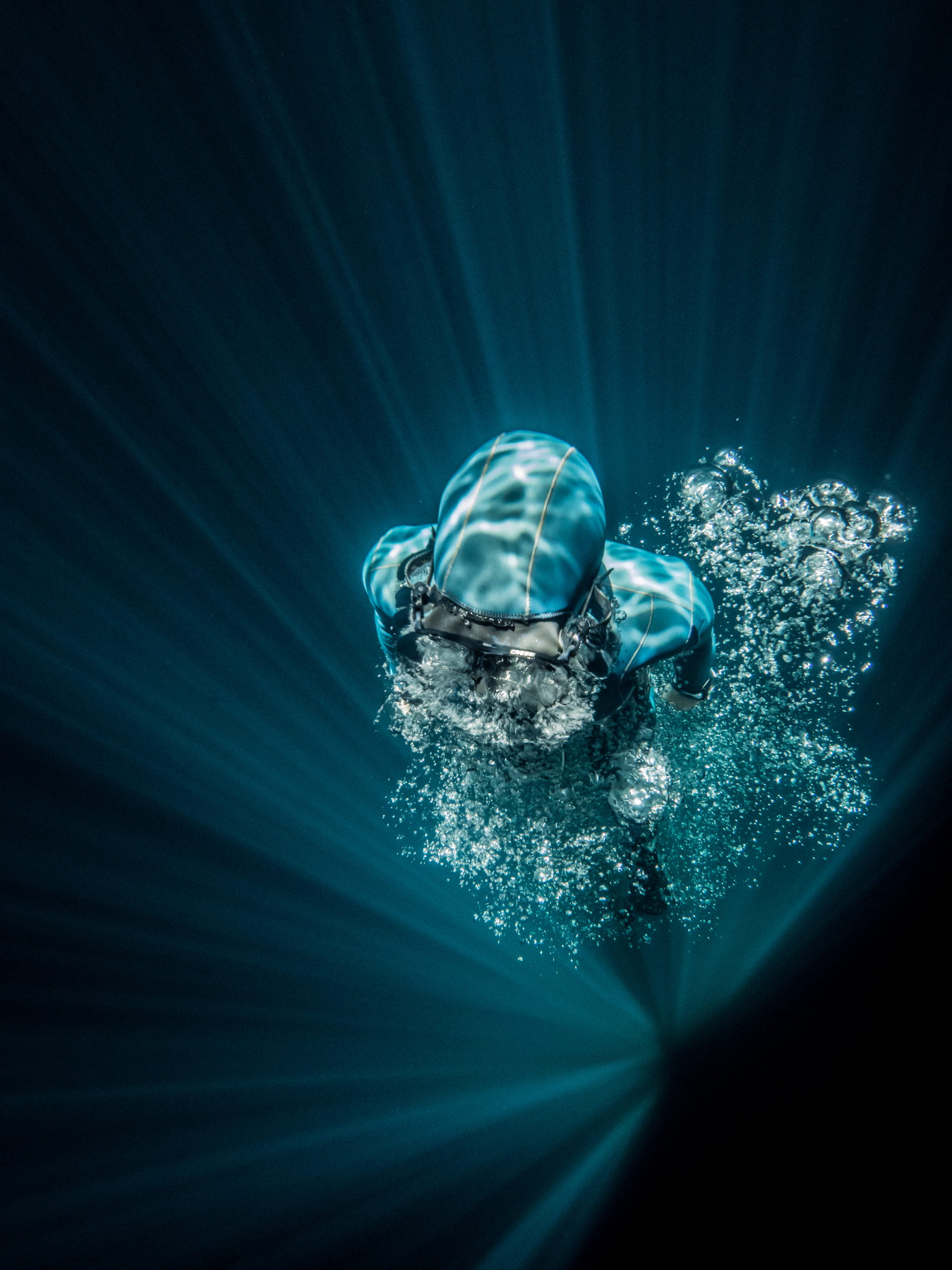
    Photographer Lucie Pollet caught this image of her freediving friend ascending through a plume of bubbles and sunlight. I love the otherworldliness of the image, like the diver is an astronaut in the dark of space. The illumination of the bubbles is spectacular, too, and reminds me of the way penguins use supercavitation to help escape predators. (Image credit: L. Pollet; via Oceanographic Magazine)

  • Anoles Revisited

    Anoles Revisited

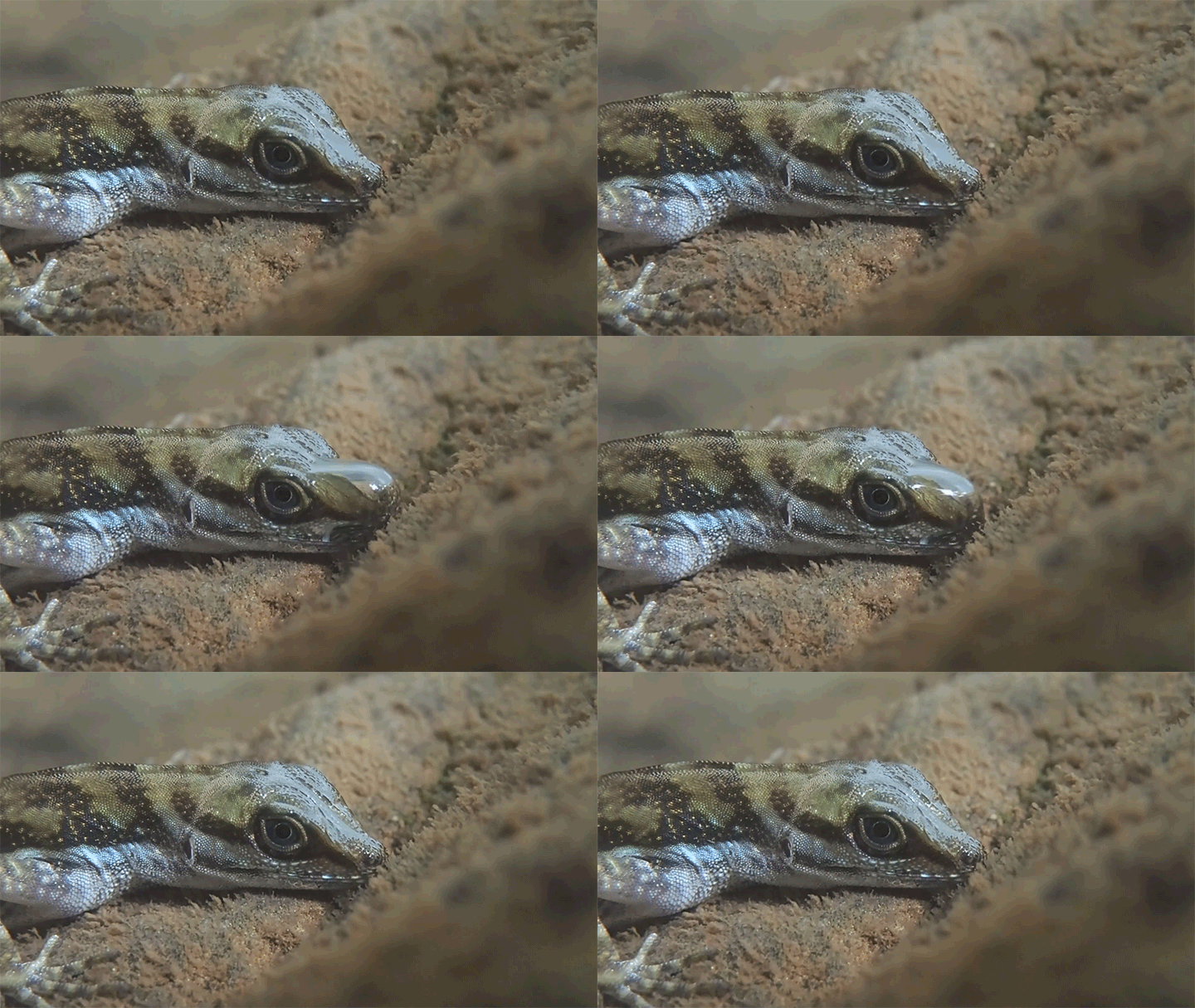
    Longtime readers may recall seeing this little bubble-crowned anole previously. This species dives underwater to escape predators and will breathe and rebreathe a bubble of air for as much as 18 minutes before resurfacing. At the time of my original post, I speculated that the reptile’s hydrophobic skin might provide a large enough bubble surface area to provide some diffusion of fresh oxygen from the surrounding water.

    Since then, there’s been at least one study of this anole rebreathing process. Researchers found that many anole species share this behavior, but aquatic species use it more regularly. They noted that the plastron — that flat, silvery bubble that’s spread over the lizard’s skin — helps hold the bigger, exhaled bubble in place and might facilitate a little of the diffusion I speculated about but the results are unclear on that last point. The authors note that it’s unlikely that the anoles could support their full metabolism through rebreathing and diffusion but that the plastron may yet support some rejuvenation of oxygen, which would help prolong anoles’ dives. (Image and research credit: C. Boccia et al.)

  • Featured Video Play Icon

    “Titan”

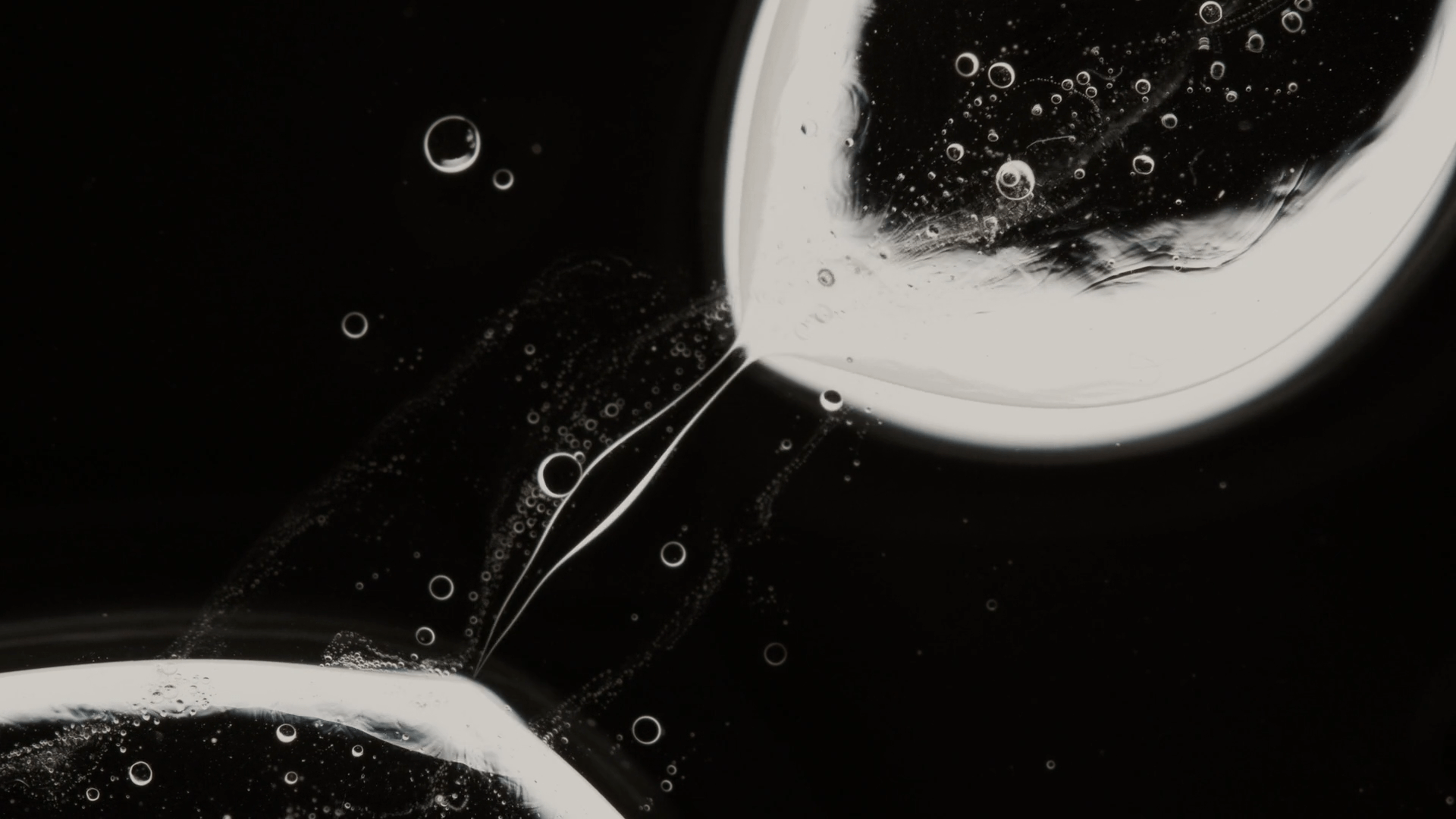
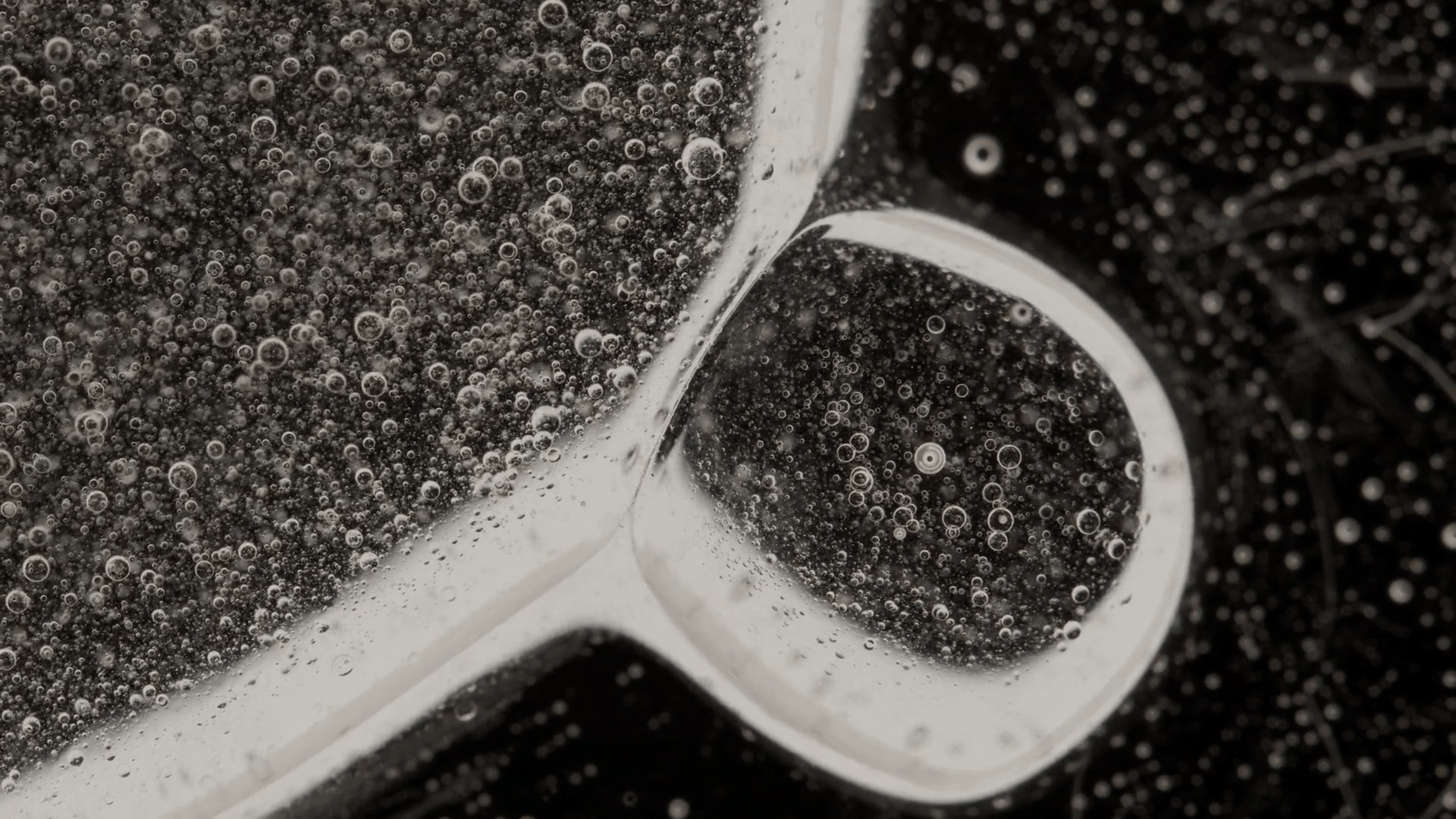
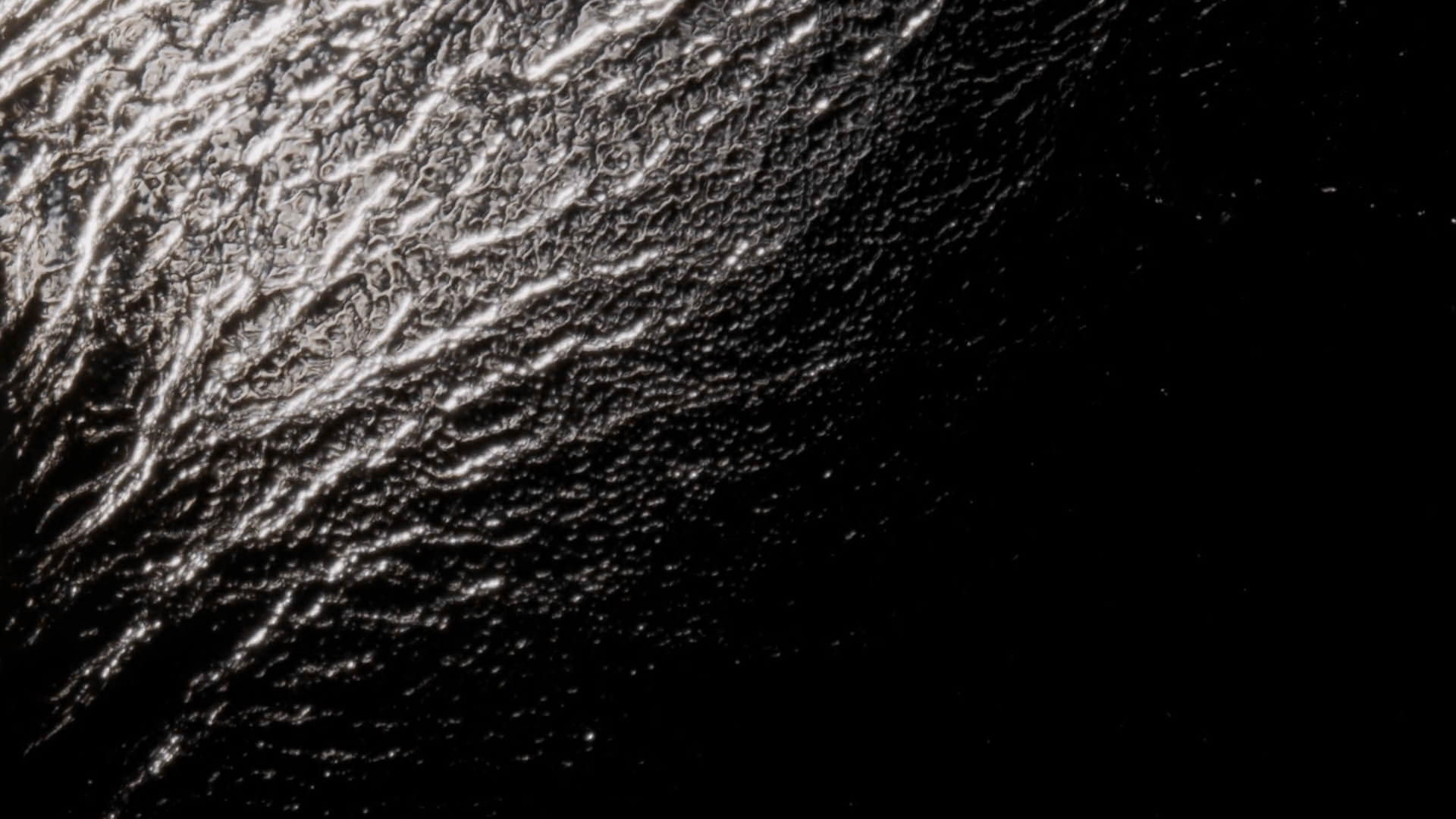
    Saturn’s moon Titan is a fascinating foil to our planet. It’s the only other body in our solar system with liquid bodies — lakes and seas — on its surface. But where Earth’s oceans are filled with water, Titan’s frigid lakes are liquid hydrocarbons. This video, “Titan,” is a short film inspired by the moon’s seas and is made up of various liquids and chemical reactions filmed under magnification. Sit back and enjoy the flow! (Image and video credit: S. Bocci/Julia Set Lab)

  • Aligning by Bubble Array

    Aligning by Bubble Array

    Assembling structures from small components is often difficult. Techniques like optical tweezers are limited to very small objects, and magnetic techniques only work with certain materials. Here, researchers use acoustical forces on bubbles to move and align centimeter-sized objects.

    When a single bubble oscillates in an ultrasonic field, its changing size creates pressure variations around it. When an acoustic wave scatters off one bubble and impacts another, it sets up a small attractive force between the bubbles, known as the secondary Bjerknes force. For individual bubble pairs, this force is extremely small and unable to affect much. But using arrays of bubbles — one array on a fixed object and another on a floating object — researchers amplified the attraction and showed that the resulting forces could manipulate and align their components. (Image credit: top – J. Thomas, others – R. Goyal et al.; research credit: R. Goyal et al.; via APS Physics)
  • Bubbles in Turbulence

    Bubbles in Turbulence

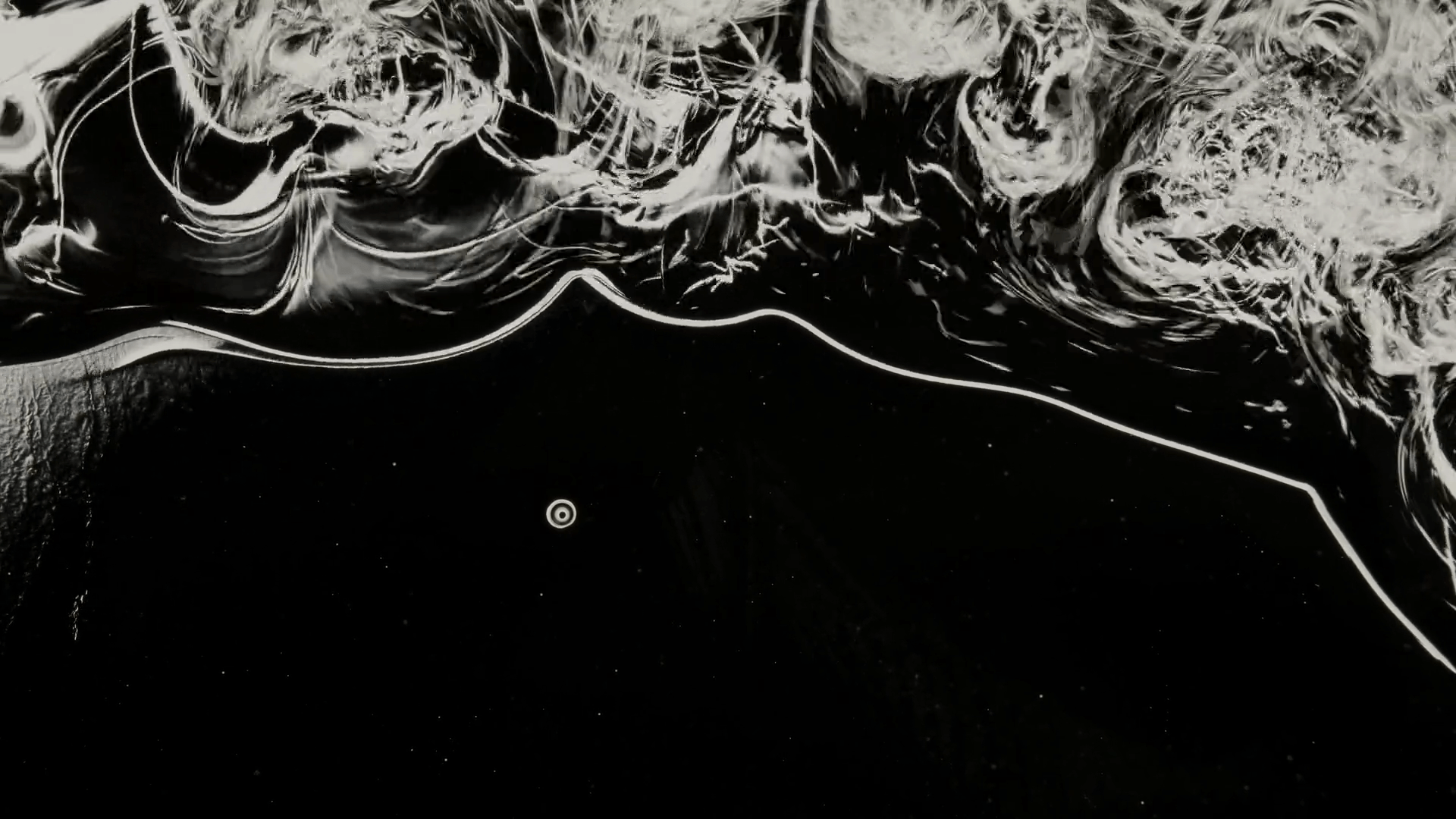
    In nature and industry, swarms of bubbles* often encounter turbulence in their surrounding fluid. To study this situation, researchers used numerical simulation to observe bubbles across a range of density, viscosity, and surface tension values relative to their surroundings. They found that density differences between the two fluids made negligible changes to the way bubbles broke or coalesced.

    In contrast, viscosity played a much larger role. More viscous bubbles were less likely to deform and break, thanks to their increased rigidity. When looking at small deformations along the bubble interface, both density and viscosity had noticeable effects. With increasing bubble density, they observed more dimples on the interface; increasing the viscosity had the opposite effect, making the bubbles smoother. (Image credit: Z. Borojevic; research credit: F. Mangani et al.)

    *We usually think of bubbles as air or another gas contained within a liquid. But this study’s authors use the term “bubble” more broadly to mean any coherent bits of fluid in a different surrounding fluid. Colloquially, this means their results apply to both bubbles and drops.