Tag: biology

  • Seashore Hunting

    Seashore Hunting

    Watch sea gulls, plovers, and other birds hunt in the tidal zone, and you may notice them stepping over and over in the same spot. This is part of bird’s hunting strategy. Each footfall compresses the wet sand and drives water out. Mechanically, this is the same thing that happens when a human walks on wet sand; you’ll see the sand go from a glossy appearance to a matte one as the local water level falls. Once the weight is removed, the water will seep back and the sand appears glossy again.

    Illustration of a gull's hunting process. Compressing the sand by stepping on it drives water out of the area. Once the bird's foot is removed, water floods back, diluting the sand, and making it easier for the bird to reach its prey without digging.
    Illustration of a gull’s hunting process. Compressing the sand by stepping on it drives water out of the area. Once the bird’s foot is removed, water floods back, diluting the sand, and making it easier for the bird to reach its prey without digging.

    For the birds, the flood of returning water loosens and dilutes the sand. That makes prey easier to expose and reach without the additional effort of digging. (Image credits: bird – C. Davis, illustration – P. Fischer; via Physics Today)

  • Featured Video Play Icon

    Simulating Schools

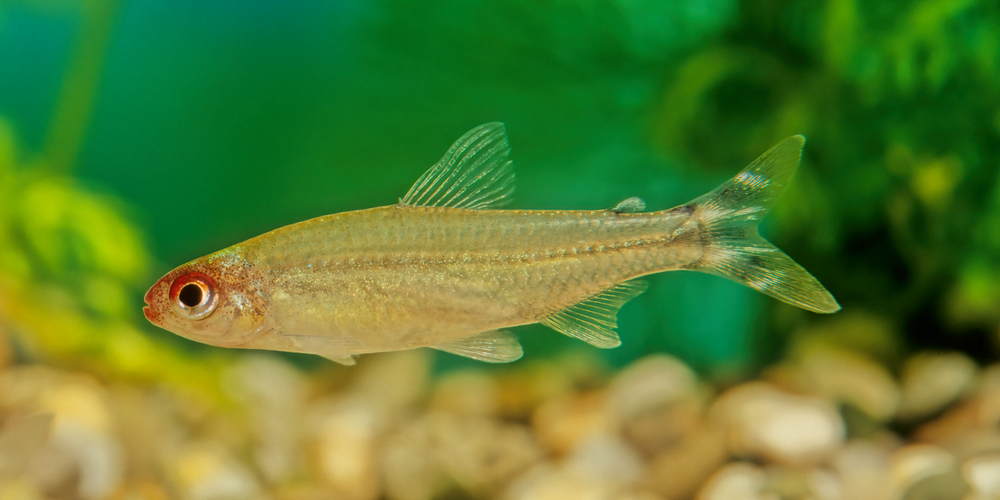
    In nature, fish school for many reasons: protection from predators, increased sensing, and hydrodynamic advantages. To capture this complex behavior, researchers are building their own digital fish, governed by known rules. Here, scientists give each fish social rules — based on vision range and preferred distance from a neighbor — and hydrodynamic rules — based on a fish’s wake. With the rules in place, they can then observe the schooling behaviors of their digital fish. Like their real counterparts, these schools show different flocking based on apparent “moods”. (Image and video credit: J. Zhou et al.)

  • Why Moths Are Slow Fliers

    Why Moths Are Slow Fliers

    Hawkmoths and other insects are slow fliers compared to birds, even ones that can hover. To understand why these insects top out at 5 m/s, researchers simulated their flight from hovering to forward flight at 4 m/s. They analyzed real hawkmoths flying in wind tunnels to build their simulated insects, then studied their digital moths with computational fluid dynamics.

    During hovering flight, they found that hawkmoths generate equal amounts of lift with their upstroke and downstroke. As the moth transitions into forward flight, though, its wing orientation shifts to reduce drag, and the upstroke stops being so helpful. Instead, the upstroke generates a downward lift that the downstroke has to counter in addition to the insect’s weight. At higher forward speeds, this trend gets even worse.

    The final verdict? Hawkmoths don’t have the flexibility to twist their wings on the upstroke the way birds do to avoid that large downward lift. Since they can’t mitigate that negative lift, the insects have a slower top speed overall. (Image and research credit: S. Lionetti et al.; via APS Physics; submitted by Kam-Yung Soh)

  • Fluid Flow For Digestive Health

    Fluid Flow For Digestive Health

    During digestion, our intestines use two different patterns of muscle contraction to move food through our bodies. Scientists have long wondered why we have this added complexity. Using numerical simulations of the fluid flow created by these contractions, researchers have uncovered the answer.

    Our intestines use peristalsis, a forward-with-occasional-backward flow pattern, as the main driver. The strength of the muscle contractions determines how fast the average flow speed is. When the speed is slow, our bodies have more time to absorb nutrients, but that also allows more time for bacteria to flourish on those same nutrients. The other flow pattern, segmentation, creates a weaker flow overall but with much more mixing, which again enhances nutrient uptake.

    Switching between the two patterns, the researchers found, gives the body the best of both. Segmentation can enhance mixing and provide good nutrient uptake, then peristalsis can move the contents along quickly enough that bacteria don’t have time to grow before getting flushed out. (Image credit: Kindel Media; research credit: A. Codutti et al.; via APS Physics)

  • Featured Video Play Icon

    “Reconfiguring It Out”

    Leaves flutter and bend in the breeze, changing their shape in response to the flow. Here, researchers investigate this behavior using flexible disks pulled through water. The more flexible the disk and the faster the flow, the more cup-like the disk’s final shape. Adding tracer particles to the water allows them to visualize the flow behind the disk. Every disk leaves a donut-shaped vortex ring spinning in its wake, but the more reconfigured the disk, the narrower the vortex. This, ultimately, reduces drag on the disk. That’s why trees in heavy winds streamline their branches and leaves; that flexibility lowers the drag the tree’s roots have to anchor against. (Image and video credit: M. Baskaran et al.)

  • Sound Makes Stickier Bandages

    Sound Makes Stickier Bandages

    Keeping wounds safe and clean is hard when bandages are so prone to coming off. A team of researchers may have found a solution, though, using ultrasound to enhance adhesion. For their technique, they applied a layer of adhesive primer to the skin and covered it with a hydrogel bandage. Then they used an ultrasound transducer to generate cavitation bubbles in the primer. As the bubbles grew and collapsed, the primer and hydrogel pulled toward the tissue, creating adhesive bonds up to 100 times greater than without ultrasound. The extra adhesion had staying power, too, with between two and ten times more fatigue resistance than the bandage and adhesive alone. The researchers hope their technique will aid tissue repair, wound management, and attaching wearable electronics. (Image and research credit: Z. Ma et al.; via Physics World)

  • Featured Video Play Icon

    Moths and Beetles in Flight

    Watching insects take flight in high-speed video is always mesmerizing. So often their wings look too small and fragile to lift their bulbous bodies, but they manage the feat easily. I especially like to watch how much their wings flex during each up- and downstroke. So often we think that stiffer wings — like those on airplanes — are better for flight, yet nature demonstrates at so many sizes that flexibility is better, especially in flapping flight. A flexible wing can maximize lift in the downstroke and curl to minimize drag on the upstroke. Even wings that fold away, as many beetle wings do, can do the job of lifting an insect once shaken out. (Image and video credit: Ant Lab)

  • Featured Video Play Icon

    Fire Ant Rafts

    When you run into a fire ant, you’re in for a bad day. But if you run into a colony-sized raft of fire ants, well, that’s going to be a very bad day. These insects evolved to survive Amazonian floods, and that prowess has helped them spread far from their original homes. When waters start rushing into their home, the ants set out on a rescue mission, pulling their young out. The ants lash themselves and the youngsters together with their own bodies and form a floating raft. Thanks to the hydrophobic hairs on the larvae and ants, they trap a layer of air near their bodies. This helps them breathe, even if they’re on the bottom of the raft. Learn lots more about fire ants, including how they act as fluid, over here. (Image and video credit: Deep Look)

  • Featured Video Play Icon

    Pistol Shrimp Snaps

    Gram for gram, few animals can match the power of a pistol shrimp’s snap. When its claw closes, the shrimp ejects a jet of water so fast that the water pressure drops below the vapor pressure, causing a cavitation bubble. Like other cavitation bubbles, this one is short-lived, growing and collapsing (and sending out shock waves!) in less than a millisecond. That’s enough to knock any predator or prey for a loop. (Image and video credit: Ant Lab)

  • Rising Through Turbulence

    Rising Through Turbulence

    Plankton — microscopic creatures with often limited swimming abilities — can face daily journeys of hundreds of vertical meters in the ocean. That’s a daunting prospect for any tiny swimmer. A new mathematical model suggests that plankton can have an easier time of it, though, by riding turbulent currents.

    The researchers modeled an individual planktar (singular of plankton) capable of sensing nearby velocity gradients and rotating its body to control its swimming direction. With this simple set of controls, their simulated planktar was able to “surf” turbulent currents, covering vertical distances at twice its normal swimming speed despite its curvy path.

    Currently, there’s no direct experimental evidence that plankton do this, but it does seem to make sense of experimenters’ observations. With the model’s results to guide them, experimentalists are looking for microswimmers actively orienting themselves based on turbulence. (Image credit: top – B. de Kort, illustration – R. Monthiller et al.; research credit: R. Monthiller et al.; via APS Physics)