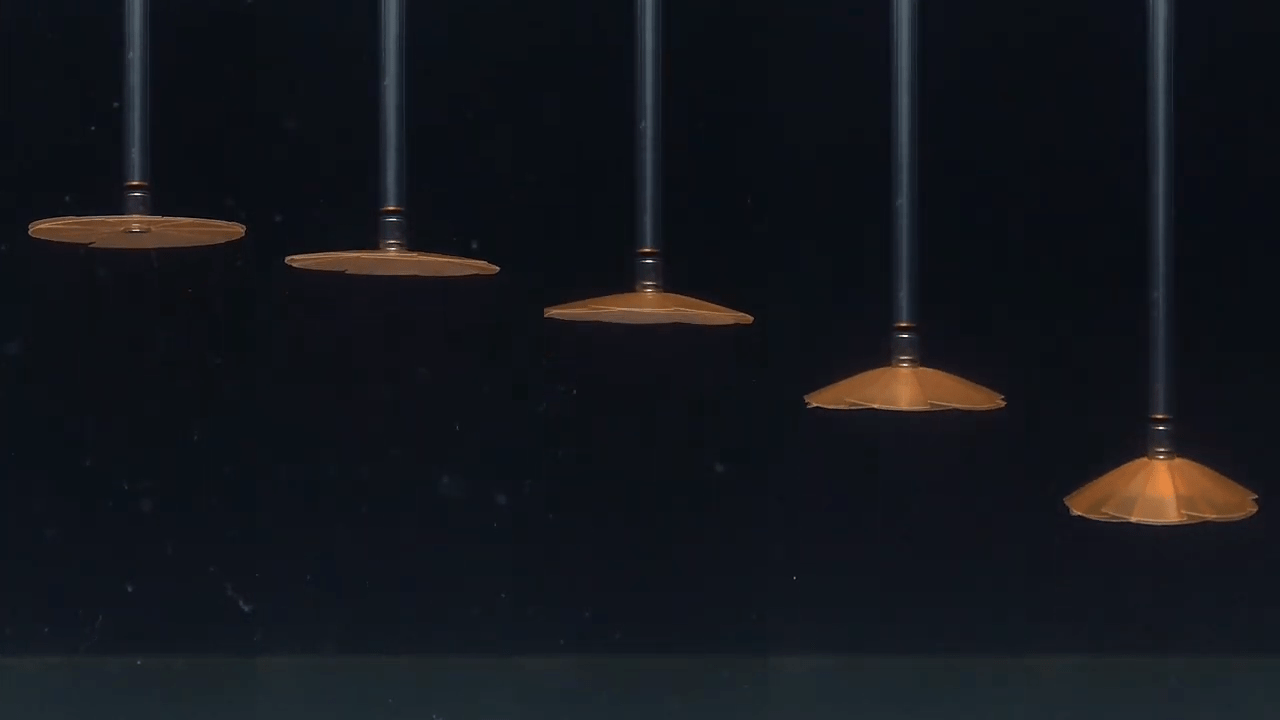
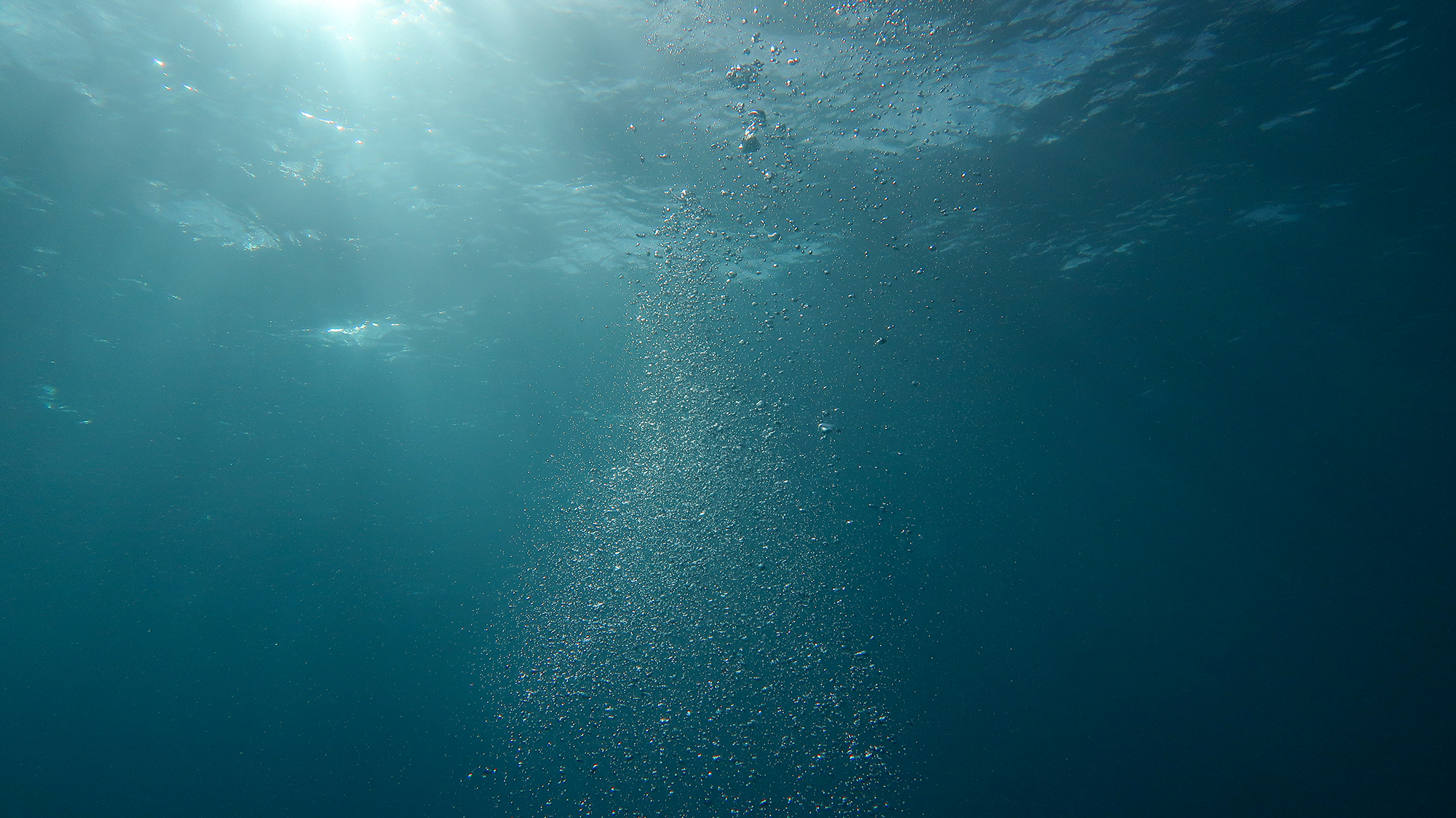
Blow a jet of air underwater and you can make a bubble ring. It takes some practice for humans, or you can use a device. In this video, a team introduced wild dolphins to a bubble-ring-making machine and observed how the dolphins reacted. After some initial wariness, the animals played with them for hours, creating games and having fun. Note that there are some dolphins who create their own bubble rings to play with, so it’s hard to say that these particular dolphins have never seen a bubble ring before. But even if they have seen the bubbles, they wouldn’t have seen a machine making them. (Image and video credit: BBC Earth)
Tag: biology

Bird Photographer of the Year 2022
Try as we might, humans cannot understand fluid dynamics as birds do. Whether they are primarily flyers or swimmers, birds have an innate understanding of lift and other aerodynamic forces that put the best engineers to shame. Shown here are a subset of winners from the 2022 Bird Photographer of the Year competition, each of them showing off fluid dynamics in some fashion. Hummingbirds hover, droplets shine like diamonds, and divers brace for impact. You can peruse more winner at BPOTY’s website. (Image credits: Various; see alt text of individual images)

Anoles Revisited
Longtime readers may recall seeing this little bubble-crowned anole previously. This species dives underwater to escape predators and will breathe and rebreathe a bubble of air for as much as 18 minutes before resurfacing. At the time of my original post, I speculated that the reptile’s hydrophobic skin might provide a large enough bubble surface area to provide some diffusion of fresh oxygen from the surrounding water.
Since then, there’s been at least one study of this anole rebreathing process. Researchers found that many anole species share this behavior, but aquatic species use it more regularly. They noted that the plastron — that flat, silvery bubble that’s spread over the lizard’s skin — helps hold the bigger, exhaled bubble in place and might facilitate a little of the diffusion I speculated about but the results are unclear on that last point. The authors note that it’s unlikely that the anoles could support their full metabolism through rebreathing and diffusion but that the plastron may yet support some rejuvenation of oxygen, which would help prolong anoles’ dives. (Image and research credit: C. Boccia et al.)

Dance of the Coral Polyps
Coral reefs are made of up small organisms, called coral polyps, that live together in a colony. Individual polyps can expand, contract, and wave in the flow around them, and, in a recent study, researchers looked at whether changing conditions in temperature and light wavelength can affect polyp movement. To do so, they built a little flow control tank around a coral nubbin containing several polyps.
Under normal light and temperature conditions, they found the polyps’ motions are correlated. (Scientists don’t know why this is the case, but it could help with foraging or photosynthesis for the organisms.) When temperatures rise and light levels shift to bluer wavelengths — simulating warmer and rising oceans — the polyps lose their coordination. Without knowing the purpose behind the motion, scientists can’t yet say what that lack of coordination means, but the team believes their experimental methods can be adapted to help answer those questions, perhaps even in natural, rather than lab-created, circumstances. (Image credit: S. Ravaloniaina; research credit: S. Li et al.; via APS Physics)

Backswimmers
Backswimmers rule the surface of ponds, streams, and other bodies of water. These insects spend much of their time clinging just beneath the air-water interface, where they hunt larvae and other insects. They use oversized, oar-shaped back legs to row, and they breathe using an air bubble that clings to their abdomen like a personal scuba tank. Oxygen from the water diffuses into the bubble, keeping the insect’s air supply fresh. When the time comes to move to greener pastures, they flip to the other side of the water’s surface, unfurl their wings, and take off. (Image and video credit: Deep Look)

Under the Sea
Deep below the ocean surface, light is in short supply. But dive photographer Steven Kovacs specializes in capturing the ethereal creatures that live in this darkness. Many of his subjects are larval fish, whose forms defy our hydrodynamic expectations. Why would young (presumably less energetic) fish have so many long, drag-inducing appendages? Clearly there’s more to life under the sea than streamlining alone!
Perhaps our instincts are wrong and these shapes are not as detrimental as they look at first glance. Flexibility can make a drastic difference in hydrodynamics, after all. And some of these species are preparing themselves for a life not spent entirely underwater, anyway. (Image credit: S. Kovacs; via Colossal)

Rain-Driven Prey Capture
Pitcher plants often entice their insect victims with sweet nectar before trapping them in inescapable viscoelastic goo. But some species go even further. Nepenthes gracilis, a species native to Southeast Asia uses its leafy springboard to lure its prey. Once an ant crawls to the underside of the leaf, a falling rain drop will spell its doom. When drops hit the leaf, it deflects down and jerks up, thanks to its shape and stiffness. The motion catapults insects into the pitcher, where digestive fluids await. While we’ve seen some fast-moving plants before, this is a rare example of a plant with an externally-driven speed mechanism. With it, the pitcher plant doesn’t have to wait or expend any metabolic effort to reset for the next insect. (Image credit: GFC Collection/Alamy; research credit: A. Lenz and U. Bauer; via New Scientist)

Absorbing Sound with Moth Wings
Manmade soundproofing tends to be porous and bulky or very limited in the range of frequencies it can handle. In contrast, moths are natural absorbers of ultrasound, having evolved to avoid reflecting those frequencies back to the bats hunting them. Researchers took the structures from a moth wing and applied them to an aluminum disk to see how the coating performed. They found that the moth wing’s structures reduced sound reflection by as much as 87% at the lowest frequency tested (20kHz, still beyond human hearing.) As researchers explore how the individual structures of the wing perform, they hope to adapt the moth’s prowess to soundproof within the human range of hearing. (Image and research credit: T. Neil et al.; via Physics World)

Escaping the Flood
Fire ants clump together into giant rafts to stay alive during floods. But these rafts won’t form with just any number of ants. Researchers found that individual ants will actually kick one another away. It’s not until there are about ten ants that the raft formation becomes stable. In this video, the team lays out their experiments and models for fire ant rafting, showing that capillary action helps draw the raft together and individual ants’ activity can destabilize rafts if they’re too small. (Image and video credit: H. Ko and D. Hu)

Swimming Together
Scientists have long pondered the possibilities of hydrodynamic benefits to the ways fish school. But most analyses of schooling have assumed a fixed spacing that’s far more orderly than what we observe in nature. In this experiment, researchers instead used a pair of robotic swimmers (essentially hydrofoils) to explore a range of swimming formations. What they found was a map of places where a second swimmer could easily “lock in” to a position relative to the leader and have their positioning stabilized by interactions with the leader’s wake (lower image). Interestingly, the beneficial regions extend much further downstream for fish positioned diagonally to the leader than they do for one directly following. With such a wide range of easily-stabilized following positions, it’s no wonder that schools of fish are amorphous instead of strictly crystalline! (Image credit: top – S. Pena Lambarri, map – J. Newbolt et al.; research credit: J. Newbolt et al.)

The shaded areas of this map represent areas where a second swimmer can passively “lock-in” relative to the leader’s position, shown in gray. This data is based on tests with robotic swimmers.