Blooms of the algae Karenia brevis — known as a red tide — bring havoc to Gulf Coast shores. The algae can kill fish and other marine life, and it causes skin irritation and even respiratory problems for humans. But in spite of the moniker, these algae can be hard to spot; they can add a green, brown, red, or black hue to the water.
The false-color image above uses a new image processing technique that reveals the bloom. Using satellite images taken over multiple days, scientists can track and study the red tide in unprecedented detail. The new technique will be a boon to those trying to monitor and understand red tides. (Image credit: Y. Yao/USF/Planet Labs/L. Dauphin; via NASA Earth Observatory)
Seals and sea lions often hunt fish in waters too dark or turbid to rely on eyesight. Instead, they follow their whiskers, using the turbulence generated by a fish’s wake. The vortices shed by the fish cause the seal’s whiskers to vibrate, giving them sensory information. To better understand what a seal can derive from this, a recent experiment looked at what a thin whisker can pick up from an upstream cylinder.
As expected, the strength of the whisker’s vibration fell off the farther away the cylinder was. But the researchers found that, if they moved the cylinder quickly — like a fish trying to dart away — the vibration of the whisker was stronger. They also found that the whisker was sensitive to misalignment. If the cylinder was placed ahead and to the side of the whisker, the whisker would still vibrate but would do so around a different equilibrium position. That result implies that a seal can get information both about the fish’s speed and direction, simply from the twitch of its whiskers. (Image credit: seal – K. Luke, illustration – P. Gong et al.; research credit: P. Gong et al.; via APS Physics)
Illustration of a seal following a fish versus the experiment, a whisker following a cylinder’s wake.
Frogs and toads shoot out their tongues to capture and envelop their prey in a fraction of a second. They owe their success in this area to two features: the squishiness of their tongues and the stickiness of their saliva. The super squishy toad tongue deforms to touch as much of the insect as possible. That shape-changing helps deliver the saliva, which is an impressively fast-acting, shear-thinning fluid. Under normal circumstances, the saliva is sticky and about as viscous as honey. But the shear from the tongue’s impact makes the saliva flow like water, spreading across the insect’s body. Then it morphs back into its viscous, sticky self, providing enough adhesive power that the insect can’t escape the toad pulling its tongue back in. (Video credit: Deep Look/KQED; research credit: A. Noel et al.)
Mussels live in rough conditions, constantly pummeled by waves and turbulent currents. They hold themselves fast in the flow using dozens of byssel threads (commonly called a mussel’s beard) that anchor them to rocks and other mussels. The threads get built within the mussel’s foot, the tongue-like protrusion mussels use to drag themselves. The threads are similar to our ligaments: strong and stretchy. Each one is cemented securely using an adhesive that hardens in water. If engineers could replicate that adhesive, it would be fantastic for use in medicine. (Video and image credit: Deep Look)
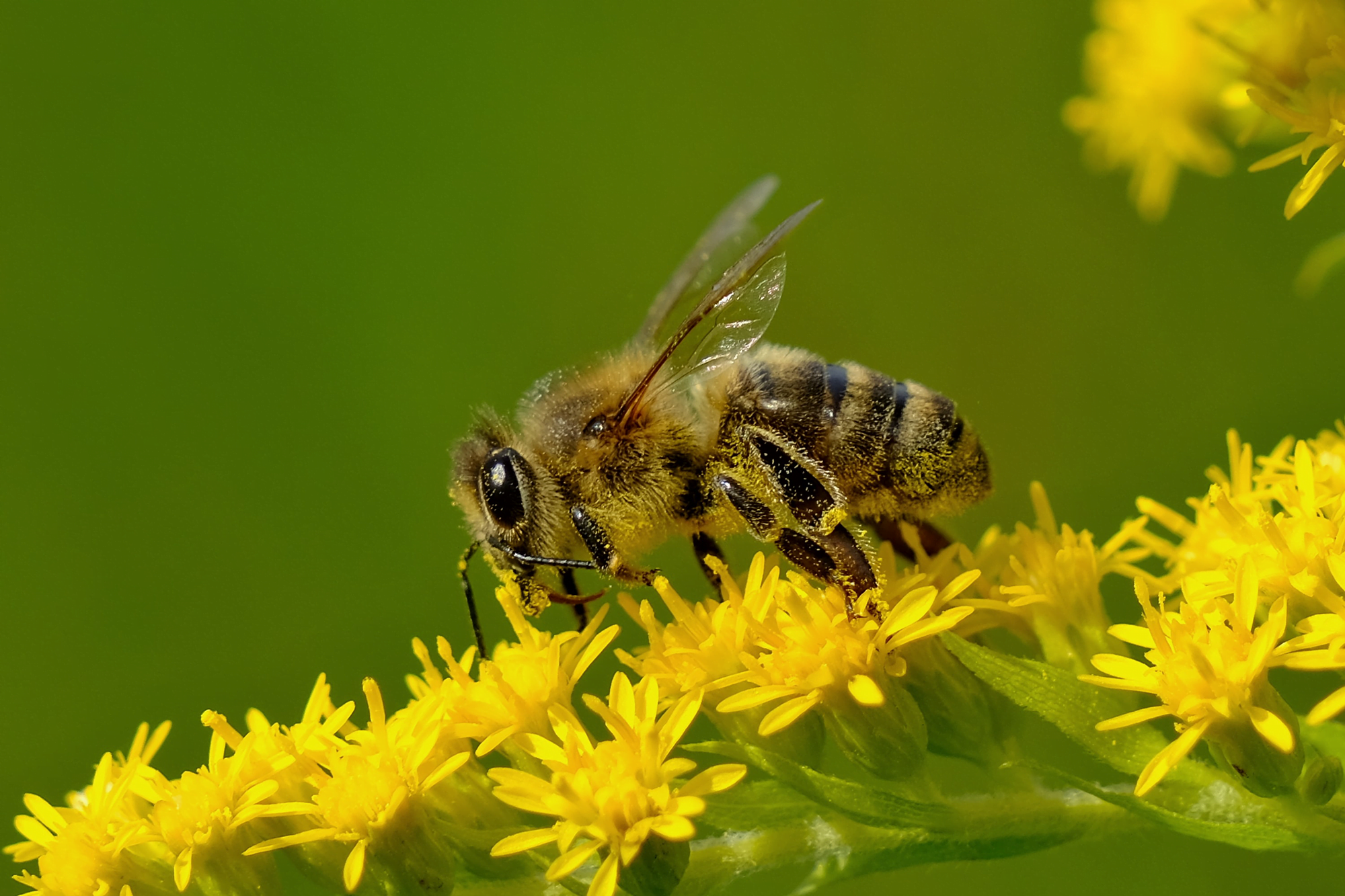
Busy bees feed on millions of flowers for each kilogram of honey they produce. To gather nectar, bees use their hairy tongues, which project out of a sheath-like cover. Protraction (i.e., sticking their tongue out) is relatively fast because all the hairs on the tongue initially lie flat. In the nectar, those hairs flare out, creating a miniature forest that traps viscous nectar and drags it back into the bee during retraction.
Bees feed by projecting their tongues into nectar. Tongue extension is faster because the tongue’s hairs lie flat. During the slower retraction phase, the hairs flare out, trapping nectar and pulling it back into the bee.
Through modeling and experiments, researchers found that the time it takes a bee to retract its tongue depends on the bee’s overall mass. Smaller bees are slower to the retract their tongues, likely to allow enough time for their shorter tongues to capture enough nectar. With bee populations on the decline, the team’s predictions may help communities select flowers with nectar concentrations that best fit their local bees’ needs. (Image credits: top – J. Szabó, bee eating – B. Wang et al.; research credit: B. Wang et al.; via APS Physics)
Springtails are small, jumping insects. Semiaquatic varieties use their tails to jump off water in order to move around and escape predation. Among these water jumpers, results vary; some, like in the third image, have little to no control over their landings and will frequently faceplant or land on their backs. But some species in the family have a better technique.
These springtails grab a water droplet with their hydrophilic ventral tube (seen in the second image with a red identifying arrow) during take-off. This tiny water droplet serves several purposes. First, it adds extra weight to the insect, allowing it to better orient its body to land belly-down. Second, the drop gives the insect a way to adhere to the water during landing, preventing it from bouncing. Check out the video to see lots of high-speed video of these tiny acrobats! (Video and image credit: A. Smith/Ant Lab; research credit: V. Ortega-Jimenez et al.)
The tiny glassy-winged sharpshooter feeds exclusively on nutrient-poor sap from plant xylem. Since the sap is 95% water, the insects have to consume massive amounts, necessitating lots of urination — up to 300 times their body weight each day! With so much urine to get rid of and so little energy to spare, the sharpshooter has developed an ingenious, low-energy method to expel its waste. The insect forms a droplet on its anal stylus and flings it. A recent study reveals just how clever the insect’s method is.
Researchers found that sharpshooters fling their droplets 40% faster than their stylus moves. This superpropulsion is only possible because the stylus’s motion is finely tuned to the droplet’s elasticity. Essentially, the insects achieve single-shot resonance with every throw. The energy-savings for the insects is substantial; researchers estimate that making a jet of urine instead would cost four to eight more times energy. (Video credit: Georgia Tech; image and research credit: E. Challita et al.; via Ars Technica; submitted by Kam-Yung Soh)
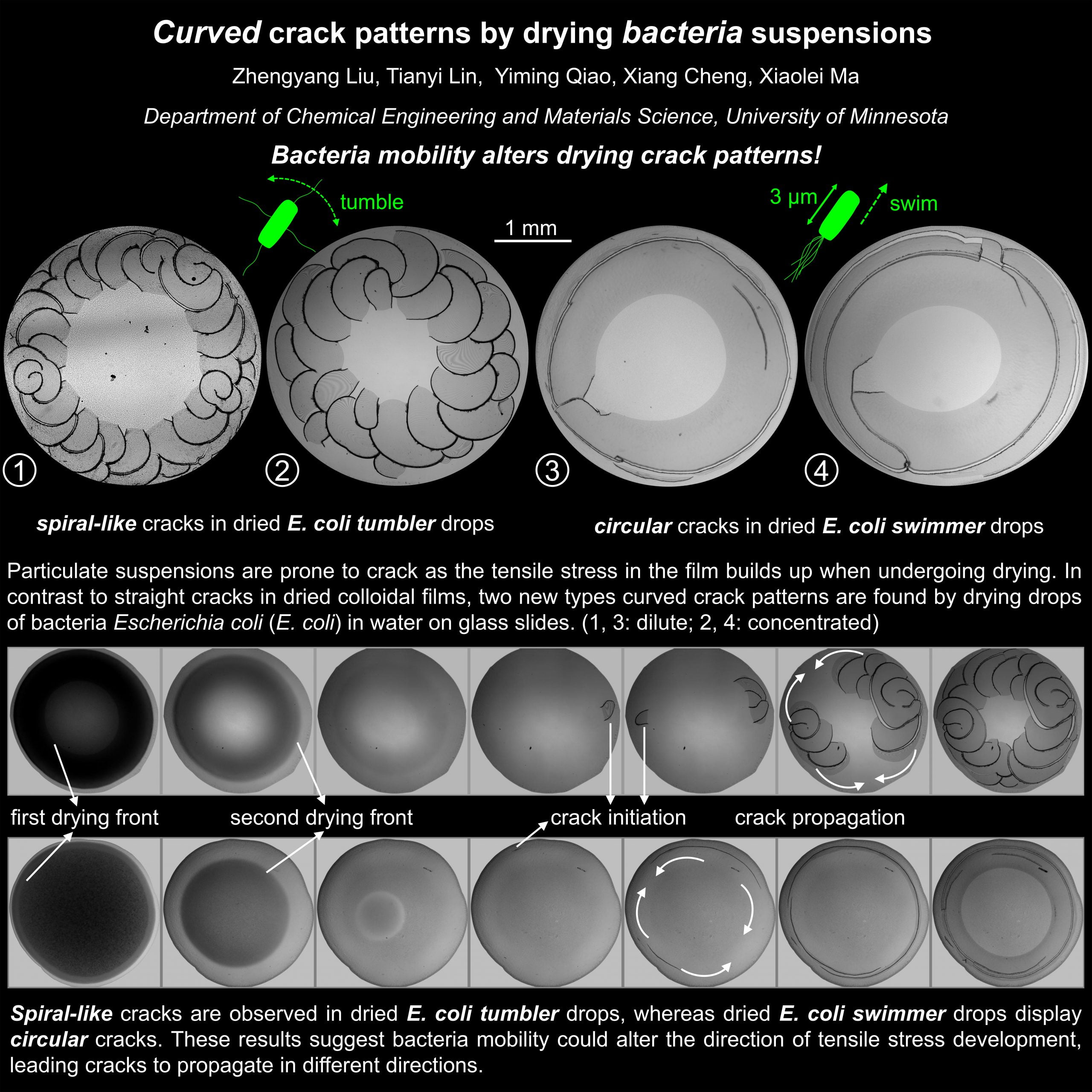
When mixtures of particles and fluids dry, they typically leave a pattern of straight cracks. Here researchers explore what happens when the drying film contains bacteria from the family E. coli. Instead of straight cracks, the films form curved ones. With bacteria that rotate or tumble, the crack pattern is spiral-like. With bacteria that swim, the remaining pattern consists of circular cracks. Thus, the motility of the bacteria affects how cracks form and spread. (Image and research credit: Z. Liu et al.)
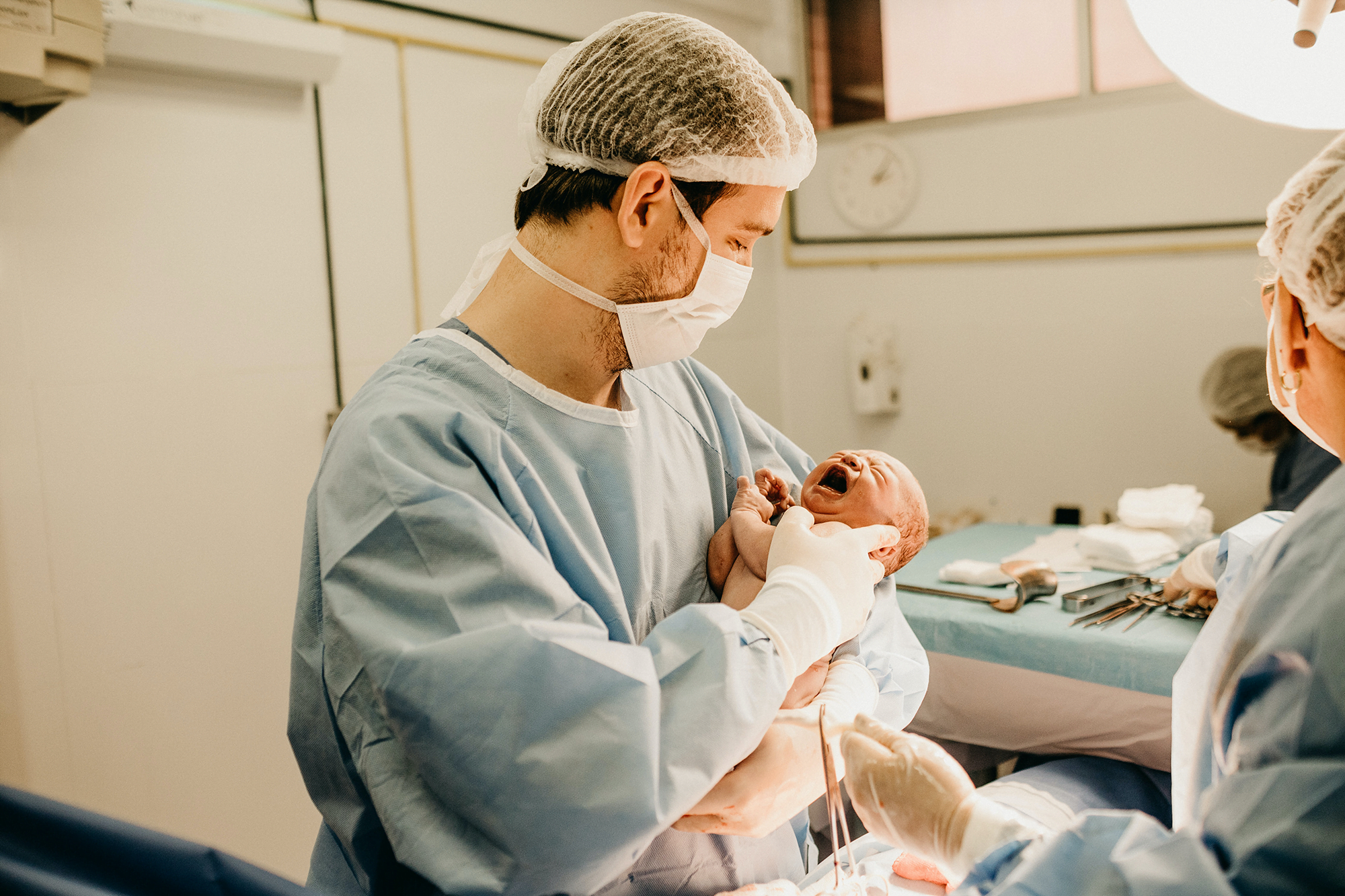
The placenta, critical as it is to human life and development, is likely the least-studied organ in the body. Reasons for that abound, from the ethics of studying pregnant people to the historical marginalization of female bodies in medical studies. But what little we do know shows that the placenta is quite incredible.
Shaped somewhat like a flattened cake, the placenta contains a tangle of fetal blood vessels — an estimated 550 kilometers’ worth — bathed in maternal blood. The enormous surface area — nearly 13 meters squared — enables the exchange of oxygen, glucose, and urea through diffusion. These exchanges don’t take place in still conditions, though; blood is always flowing through the vessel network. This means that each exchange depends on both the speed of diffusion and the speed of the flow, a relationship that’s captured with the dimensionless Damköhler number.
Illustration of the intertwined blood vessels of the placenta.
Some exchanges, like carbon monoxide and glucose, are diffusion-limited, meaning that increased blood flow cannot speed up the process (though additional blood vessel surface area could). In contrast, carbon dioxide and urea are flow-limited exchanges. Fascinatingly, oxygen is close to being both diffusion- and flow-limited, suggesting that the organ has optimized for this exchange. Since pregnancy also involves a large increase in maternal blood volume and changes in lung capacity to help provide oxygen, it seems like the pregnant body heavily emphasizes delivering oxygen to the developing fetus. (Image credit: newborn – J. Borba, placenta – iStock/Sakurra; via Physics World; submitted by Kam-Yung Soh)
Clots that block blood flow away from the brain are one of the most common causes of strokes for younger people. If caught early, anticoagulants can sometimes resolve the issue, but the treatment fails in 20-40% of cases. Now researchers are investigating a new ultrasound technique capable of quickly and effectively removing these clots.
An illustration of the vortex ultrasound technique breaking up a blood clot.
The group attached a 2 x 2 array of ultrasound transducers to the tip of a catheter like those doctors feed through blood vessels in other interventions. The offset between each ultrasound transducer creates a vortex-like flow when the array is activated. The helical wavefront creates shear stress along the clot’s face, helping to break it up faster. In one test, the new technique broke up a clot and completely restored flow in just 8 minutes. Pharmaceutical treatments take at least 15 hours and average closer to 29 hours.
The team is moving forward to animal trials next and hope, with success there, to bring the technique to clinical studies. (Image credit: abstract – C. Josh, illustration – X. Jiang and C. Shi; research credit: B. Zhang et al.; via Physics World)