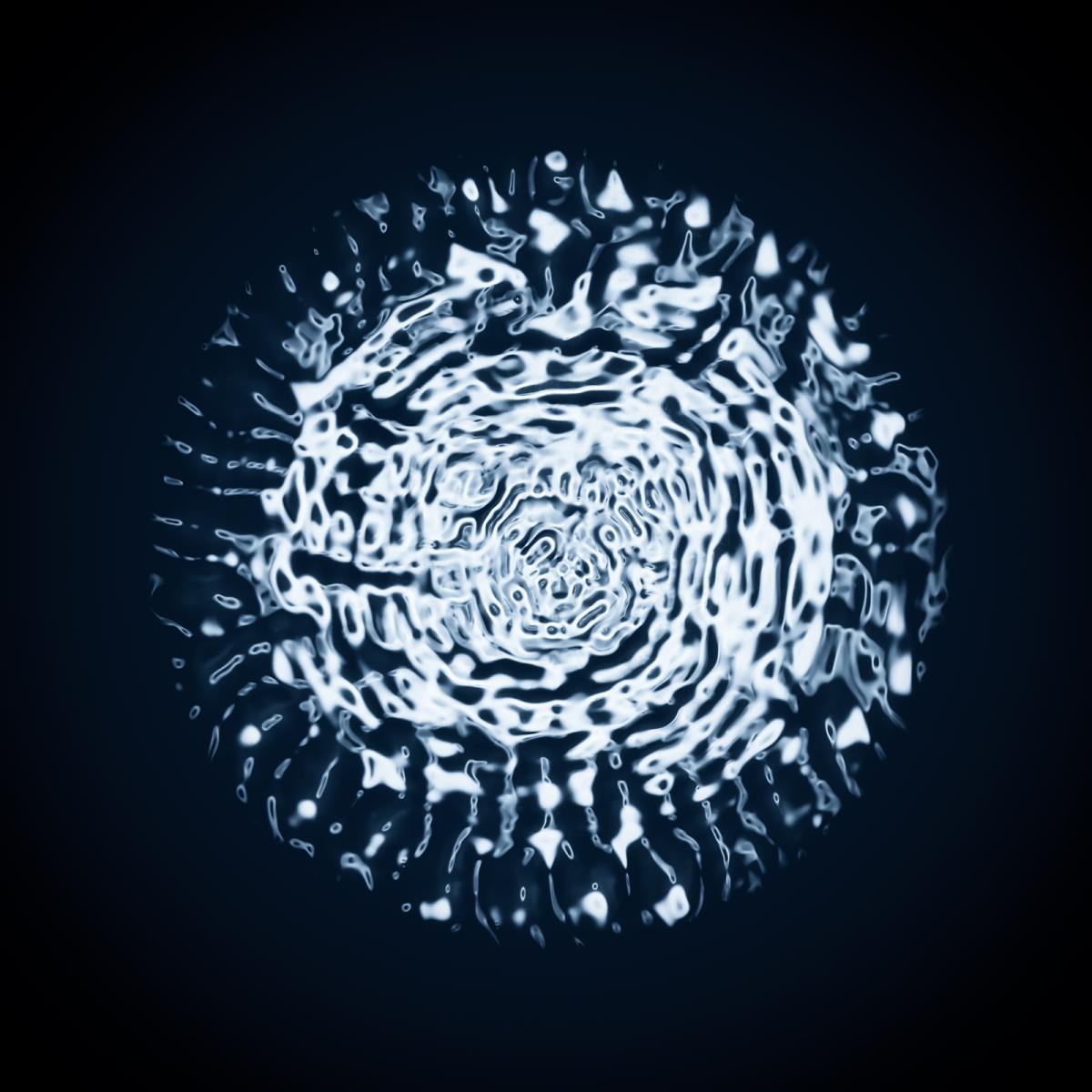
240 million years ago, pressure waves emanated from a black hole inside the Perseus Galaxy Cluster. Much later, NASA’s Chandra X-Ray Observatory intercepted those waves. Scientists raised the frequency of the signal until it fell within the range of human hearing. And then photographer John White played that sound through a petri dish of water sitting on a speaker. The result is above: a watery glimpse of a long ago black hole’s signature. Within these Faraday waves is the echo of a stellar phenomenon that took place when the very first dinosaurs walked our planet. (Image credit: J. White; via the 2023 Astronomy POTY)
Search results for: “waves”

Star YY Hya
A team of professional and amateur astronomers discovered and then imaged this previously undiscovered galactic nebula. At the heart of the stellar remnant is a binary star pair. Shock waves of the gas and dust twist and spread in the surrounding space, the remains of an earlier star’s violent eruption. (Image credit: M. Drechsler et al.; via 2023 Astronomy POTY)
Scooting Droplets
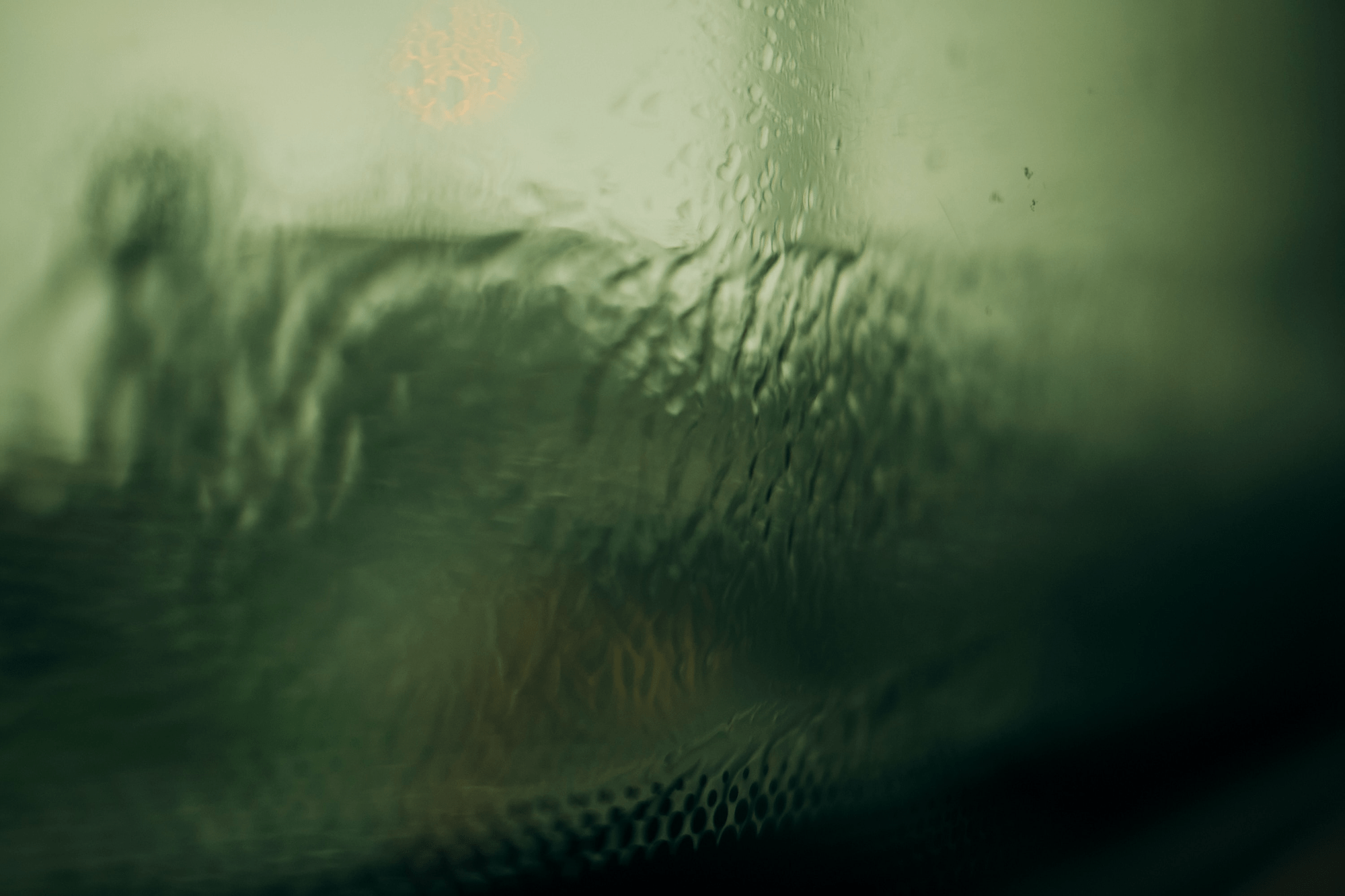
As a child, I always loved watching rain on the windows as I rode in the car. Hemispherical droplets got stretched by the wind flowing over them. But they never stretched smoothly; instead they seemed to shiver and shake unevenly. A recent study looks at a similar situation: drops of glycerin forced to slide along a horizontal surface under the force of the wind. Like the drops on my parents’ car, the glycerin gets stretched out into an elongated oval. Surface waves develop atop the drop and move downstream. The drops, the authors observe, move a bit like a crawling caterpillar, pilling up and smoothing out as they move. (Image credit: rain – A. Alves, experiment – A. Chahine et al.; research credit: A. Chahine et al.; via APS Physics)
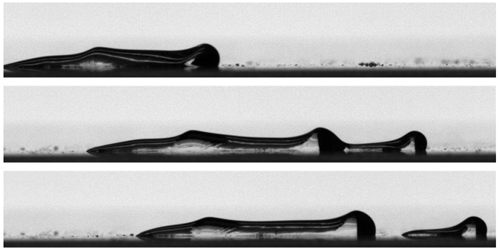
This series of images shows an elongated droplet subjected to airflow moving from left to right. Waves form on the drop and move downstream in a fashion similar to a caterpillar crawling. 
Clouds Down Under
This large and unusual cloud formation was captured one July morning over western Australia. Stretching over 1,000 kilometers, the clouds have interesting features at both the large and small scale. The small-scale ripples within the clouds are gravity waves triggered by the terrain below. The larger, arced features are tougher to explain, though they may also be related to gravity waves and terrain, just on a much larger scale. They also resemble fallstreak clouds where supercooled droplets evaporate from the inside of the cloud out. (Image credit: W. Liang; via NASA Earth Observatory)
Painting in Sediment
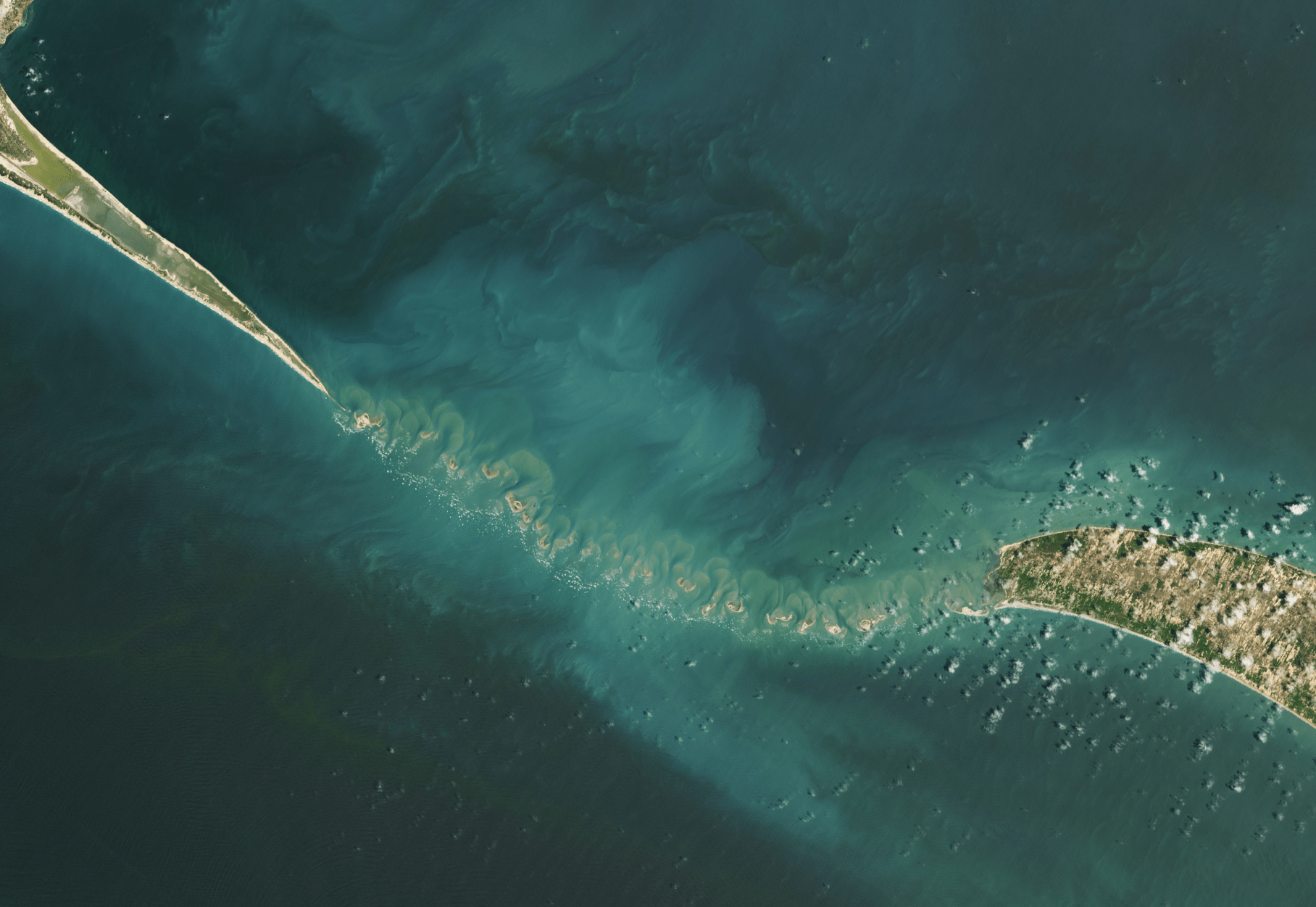
Pale plumes of sediment flow off these islands in the Gulf of Mannar between India and Sri Lanka. As waves erode the land, currents and tides carry the sediment outward, shaping it into swirls and eddies. I rarely tire of satellite images like these because there are always subtle new details of flow to notice. The photos are much like paintings, with layer after layer to decipher the closer you look. (Image credit: A. Nussbaum; via NASA Earth Observatory)

Tongan Eruption


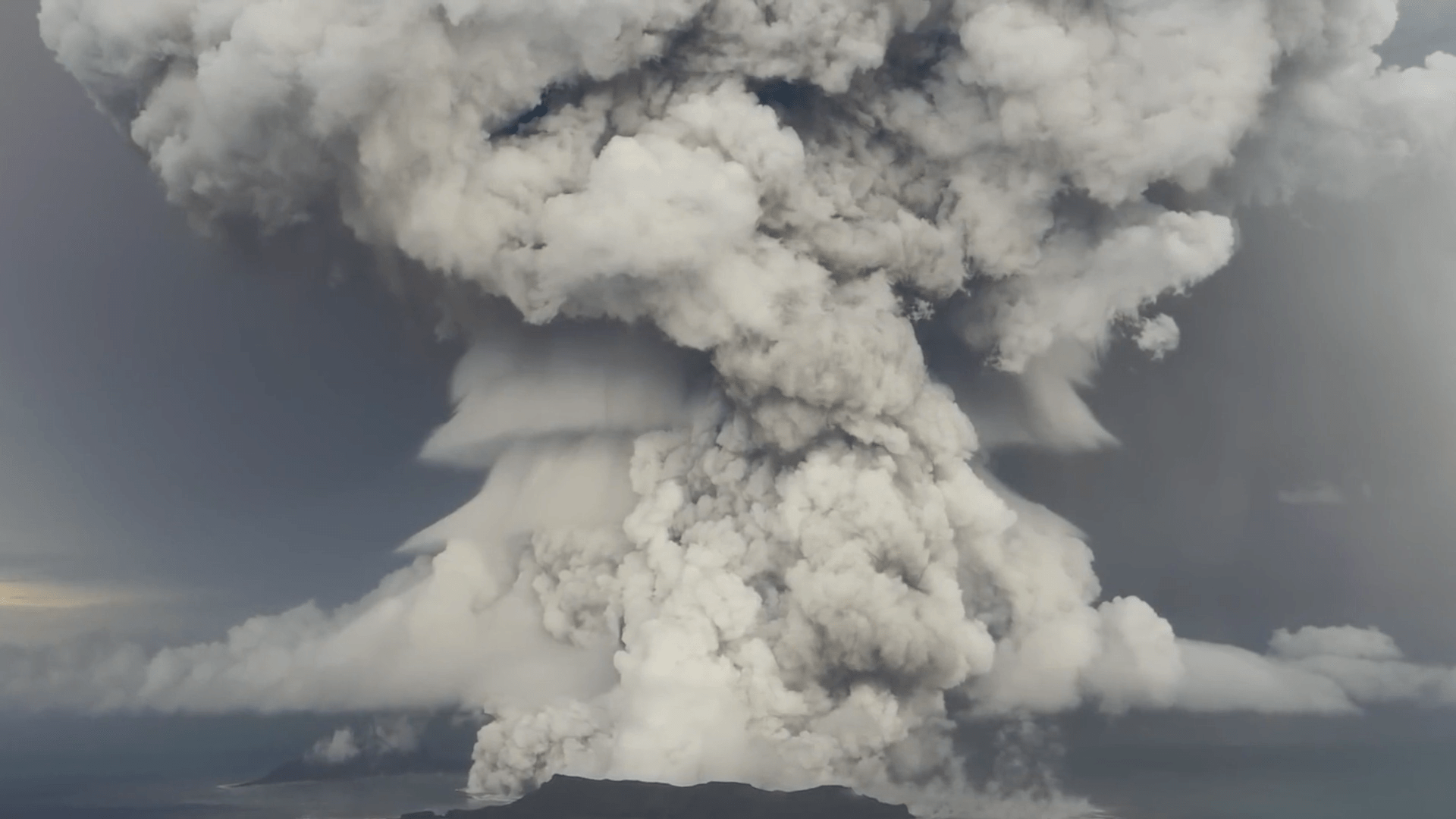

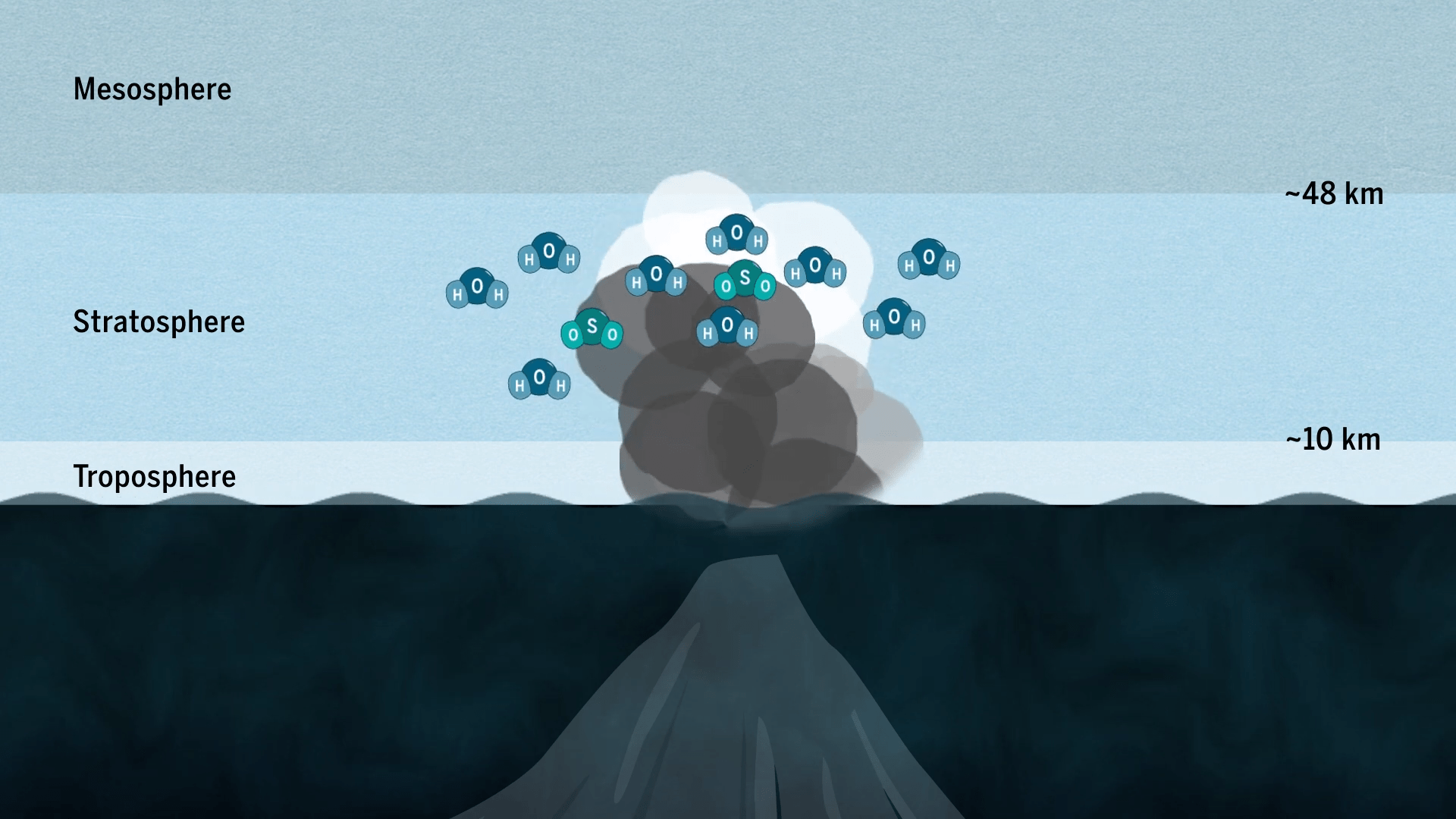
In January 2022, the Hunga Tonga-Hunga Ha’apai volcano erupted spectacularly, sending waves around the world through the air, water, and ground. In many ways, it was unlike any eruption scientists have observed, though they think it bears similarities to the 1883 eruption at Krakatoa. This video summarizes some of the research to come out of the eruption, looking at how waves propagated, what aerosols the volcano pushed high into the atmosphere, and what the long-term effects of the eruption may be. (Video credit: Science)
Studying Earth’s Interior


The Earth’s interior is almost entirely inaccessible to humanity, so how do we know what it consists of? As explained in this video, our knowledge of the planet’s interior is based on measuring waves sent out by earthquakes and nuclear blasts. Both produce two kinds of waves — pressure waves (P-waves) and shear waves (S-waves) that travel through the earth and get picked up by seismometers. Scientists noticed that pressure waves travel through the center of the planet while shear waves — which get dissipated in liquids — do not. This led them to conclude that part of Earth’s interior is a liquid. The idea of a solid inner core came from observations of pressure waves scattering in a way that only made sense if they’d hit something solid. (Video and image credit: Science)
A Sea of Pollen
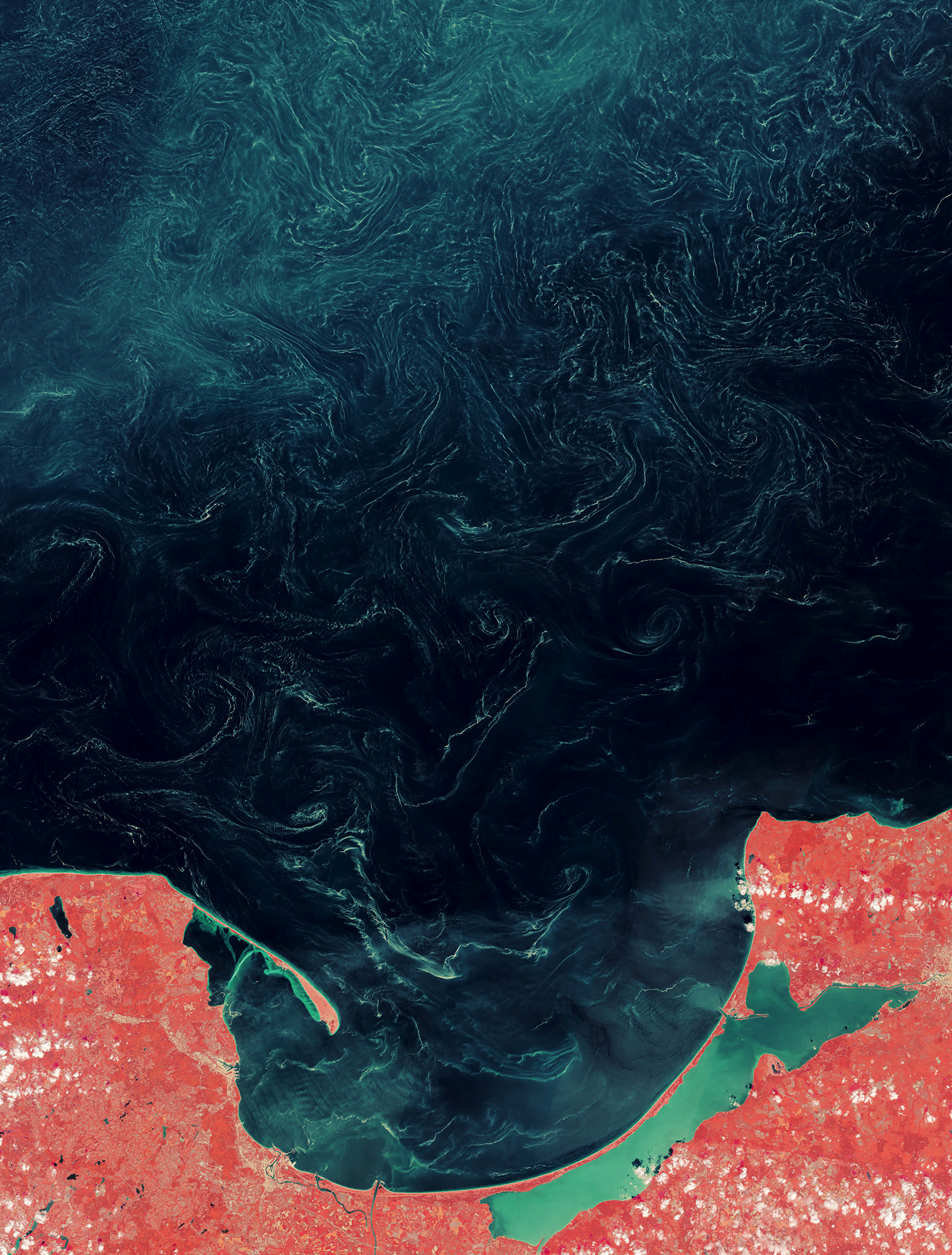
Fellow allergy sufferers, beware! This false-color satellite image of the Baltic Sea shows massive slicks made up of pine pollen. I don’t know about you, but the mere thought of enough pollen that it’s visible from space makes me want to double — triple?! — my antihistamines. The swirling patterns in the pollen come from wind-driven currents and waves moving the pollen on the surface of the water.
It took some sleuthing for scientists to identify these slicks as pollen rather than bacteria or plankton. But by combining experimental results, ground-based observations, and satellite image processing, scientists discovered that the pine pollen has a particular spectral signature. Using that, the team could trawl through older satellite imagery and locate pine pollen in previous seasons. They identified pine pollen slicks in 14 of the last 20 springs. The size of the slicks is growing over time, too, consistent with other observations of longer pollinating seasons. (Image credit: L. Dauphin; via NASA Earth Observatory)
The Architecture of Music
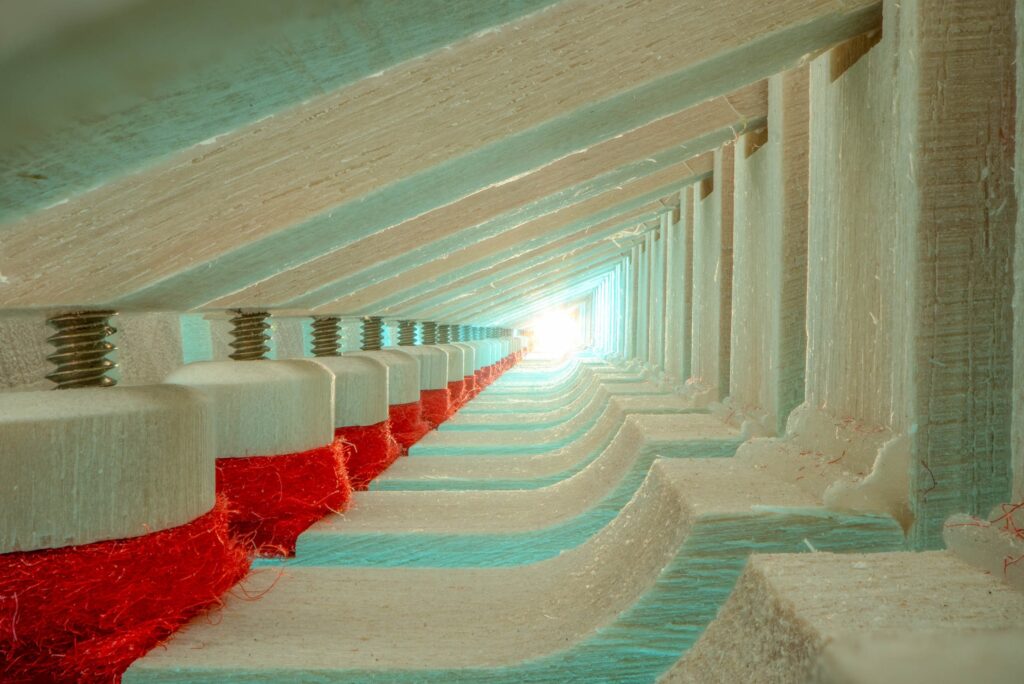
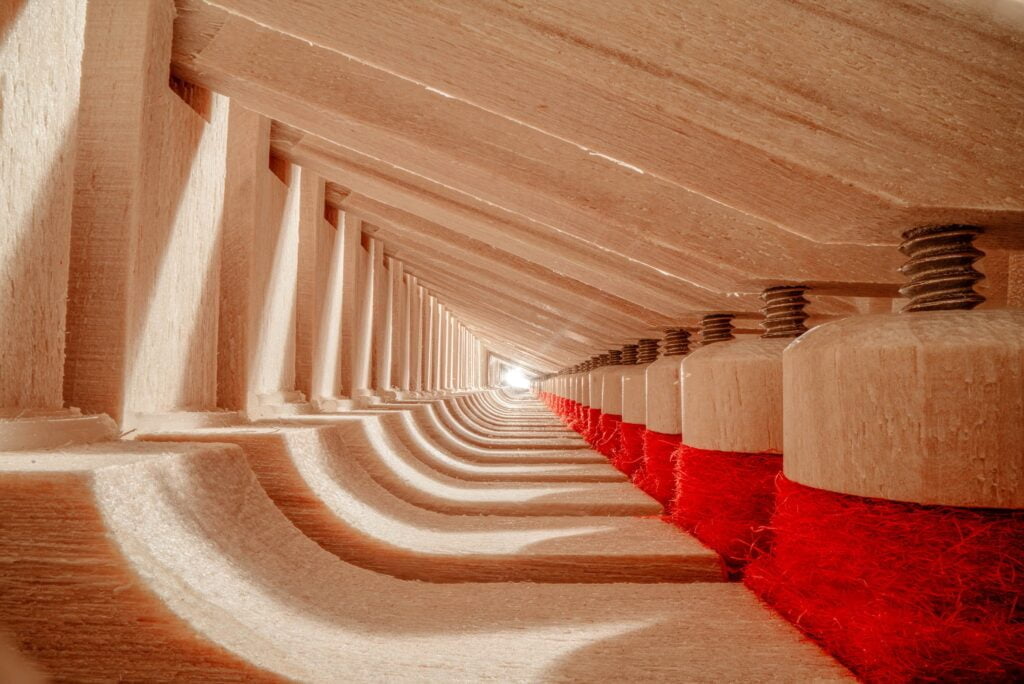
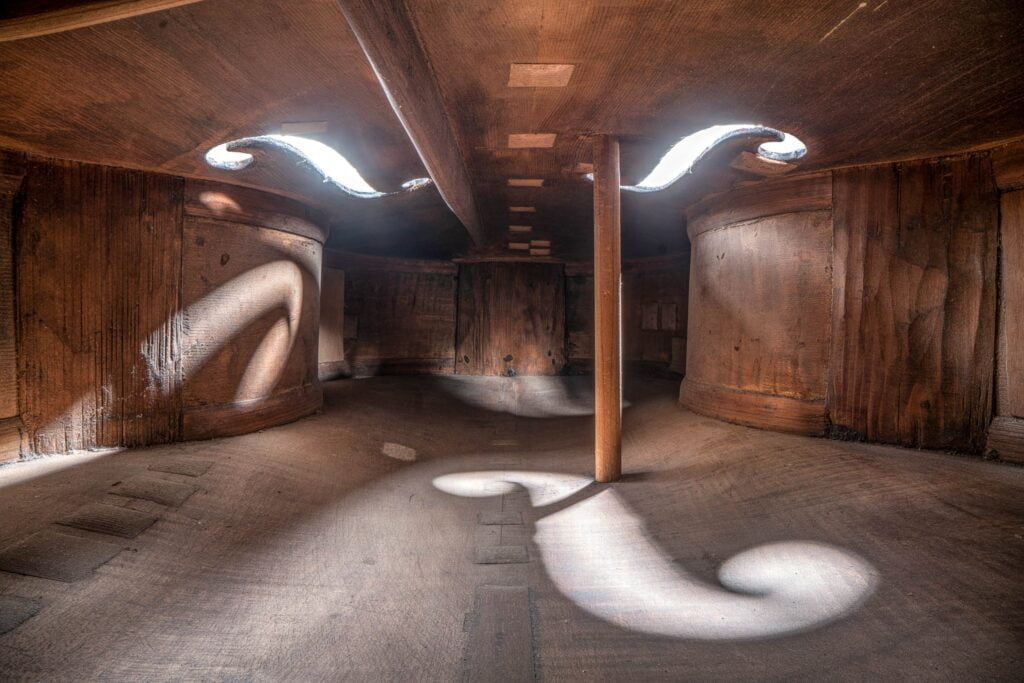

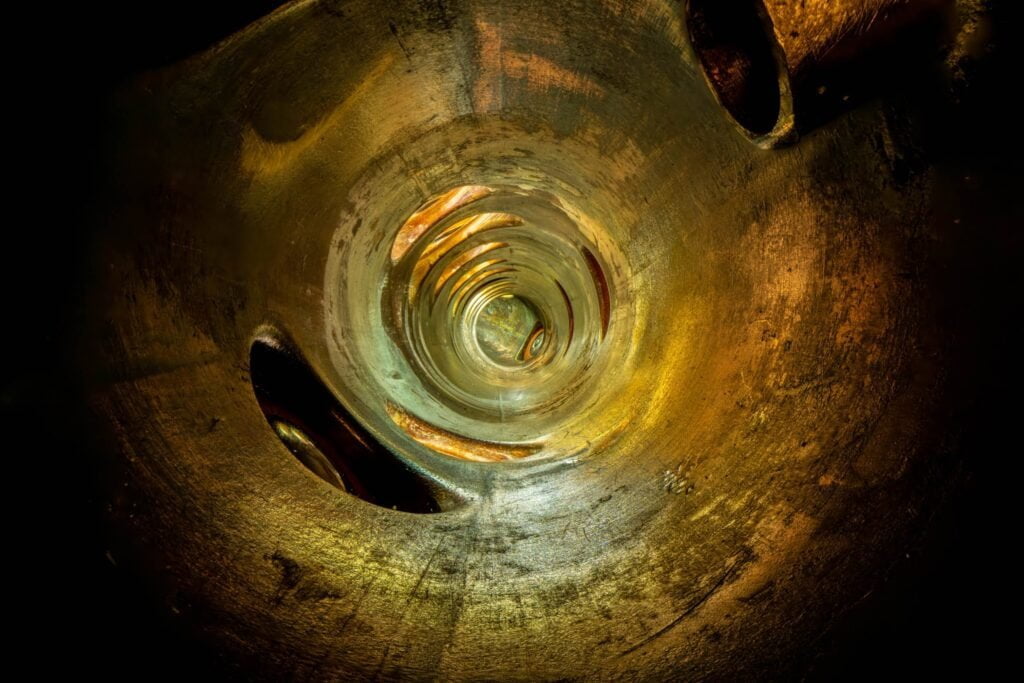


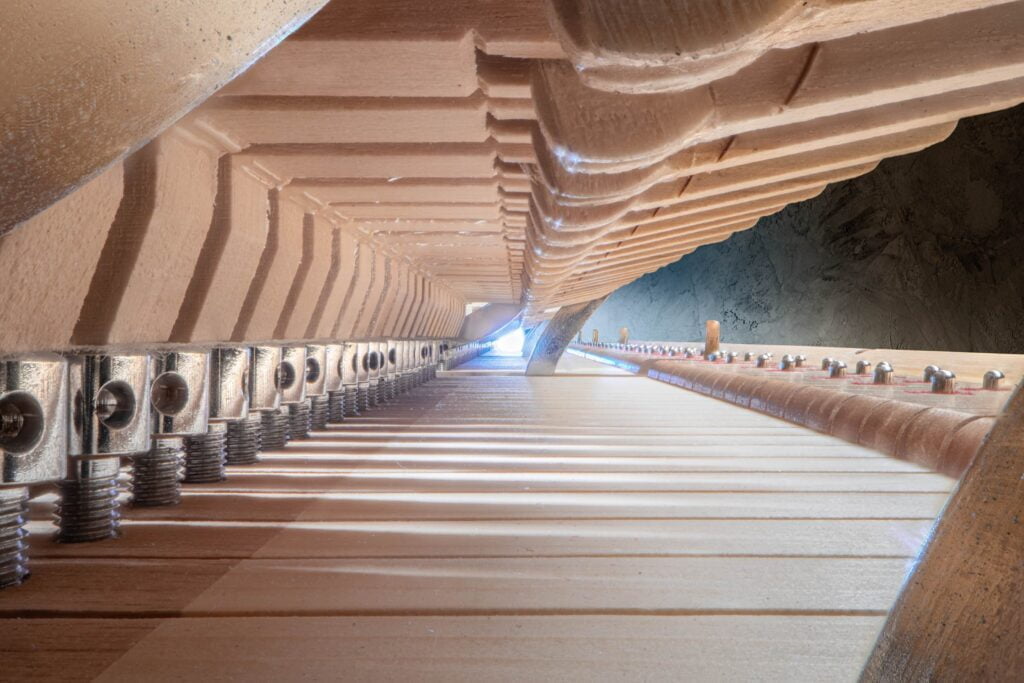
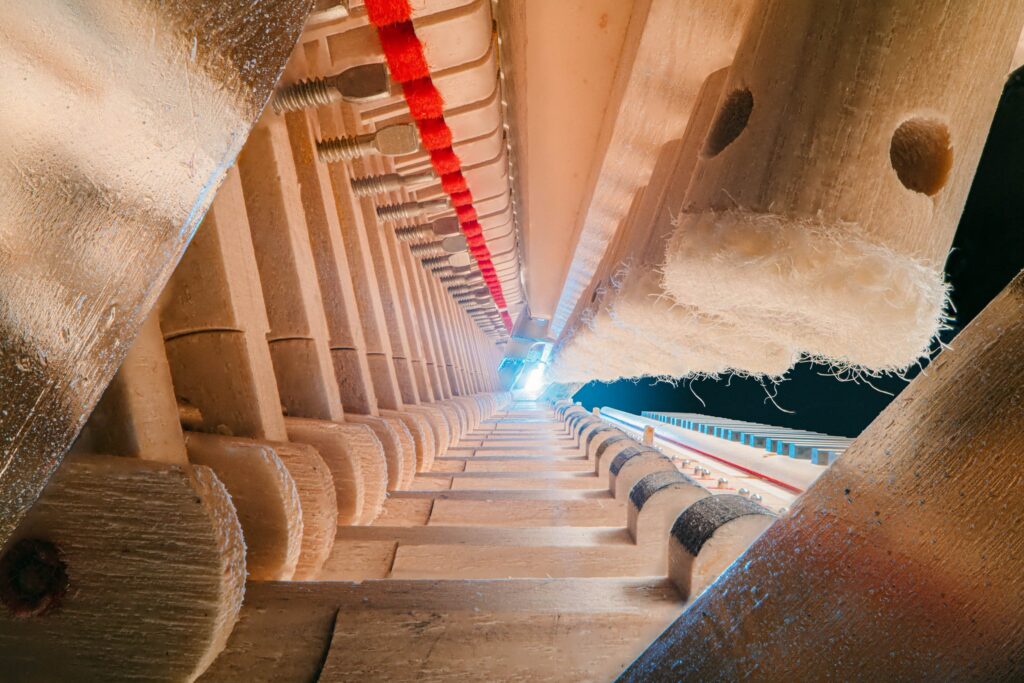




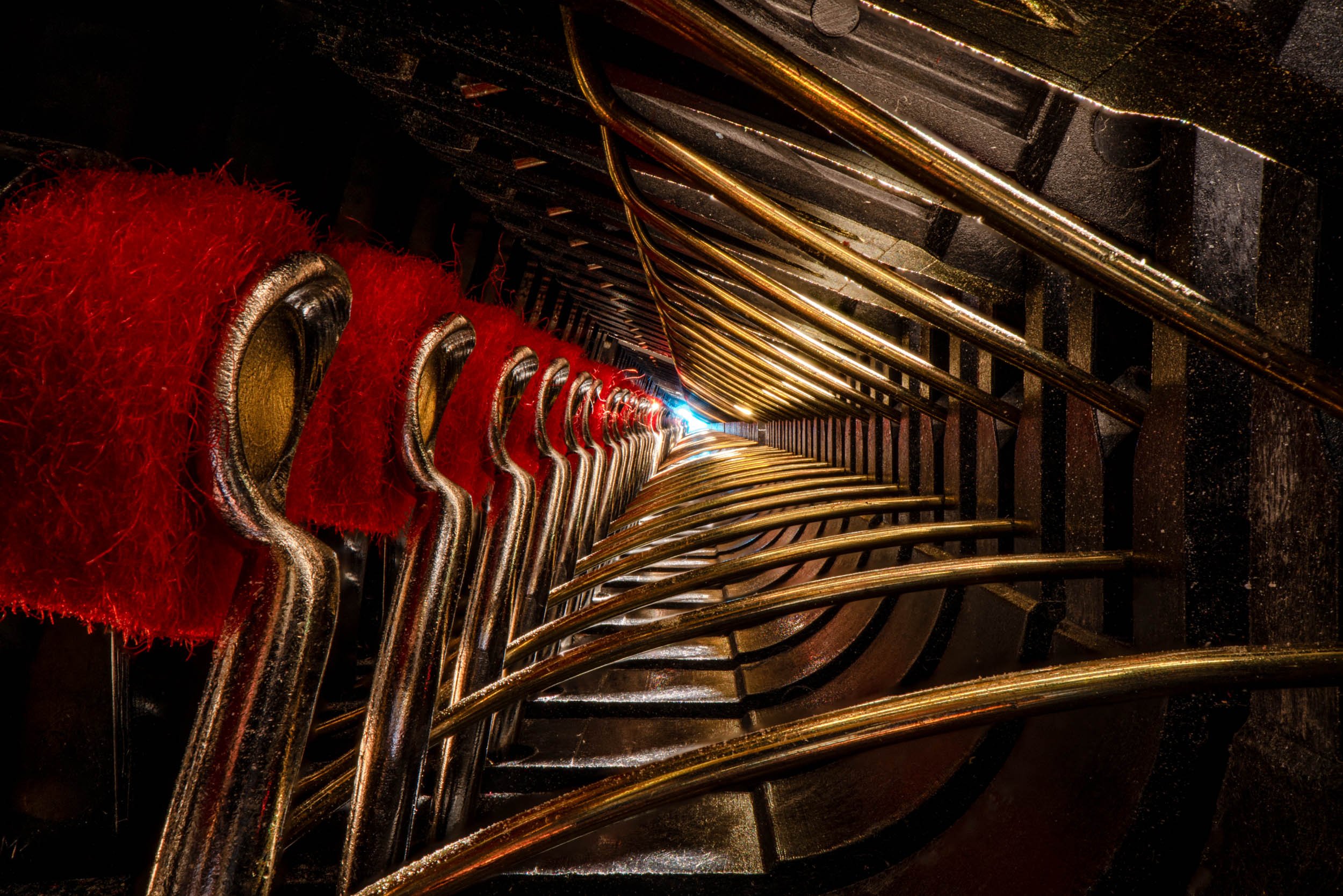
Photographer Charles Brooks offers a rare glimpse into the interiors of musical instruments in this series. Whether stringed, wind, or percussion, an instrument’s unseen interior structure creates the acoustic resonance needed for their music. Brooks makes these spaces feel like vast cathedrals of sound, which, to the pressure waves emanating from the instruments, they are. Which is your favorite? Personally, I love the graceful lines of the cello and the rough surface of the didgeridoo. (Image credit: C. Brooks; via Colossal)
Why We Can’t Control Rivers


Rivers are systems in a constant state of change, balancing flow speeds, path length, sediment deposition, and erosion, as seen in this previous Practical Engineering video. The next video in this mini-series considers what human interventions do to rivers. As convenient as it is for humanity to force a river into a straight and constant course, the long-term effects can be incredibly destructive both upstream and downstream.
In this video, Grady takes a look at several types of interventions: stream straightening, dams, river crossings, and more. With the help of a stream table, he demonstrates just how these efforts shift the river’s balance and what effects — in terms of erosion, deposition, and flooding — each can cause. These disadvantages, along with habitat destruction, are part of why stream remediation projects are on the rise. (Video and image credit: Practical Engineering)