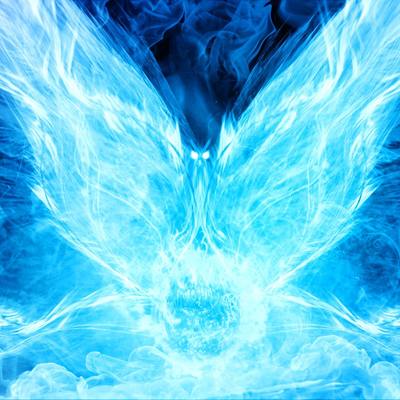
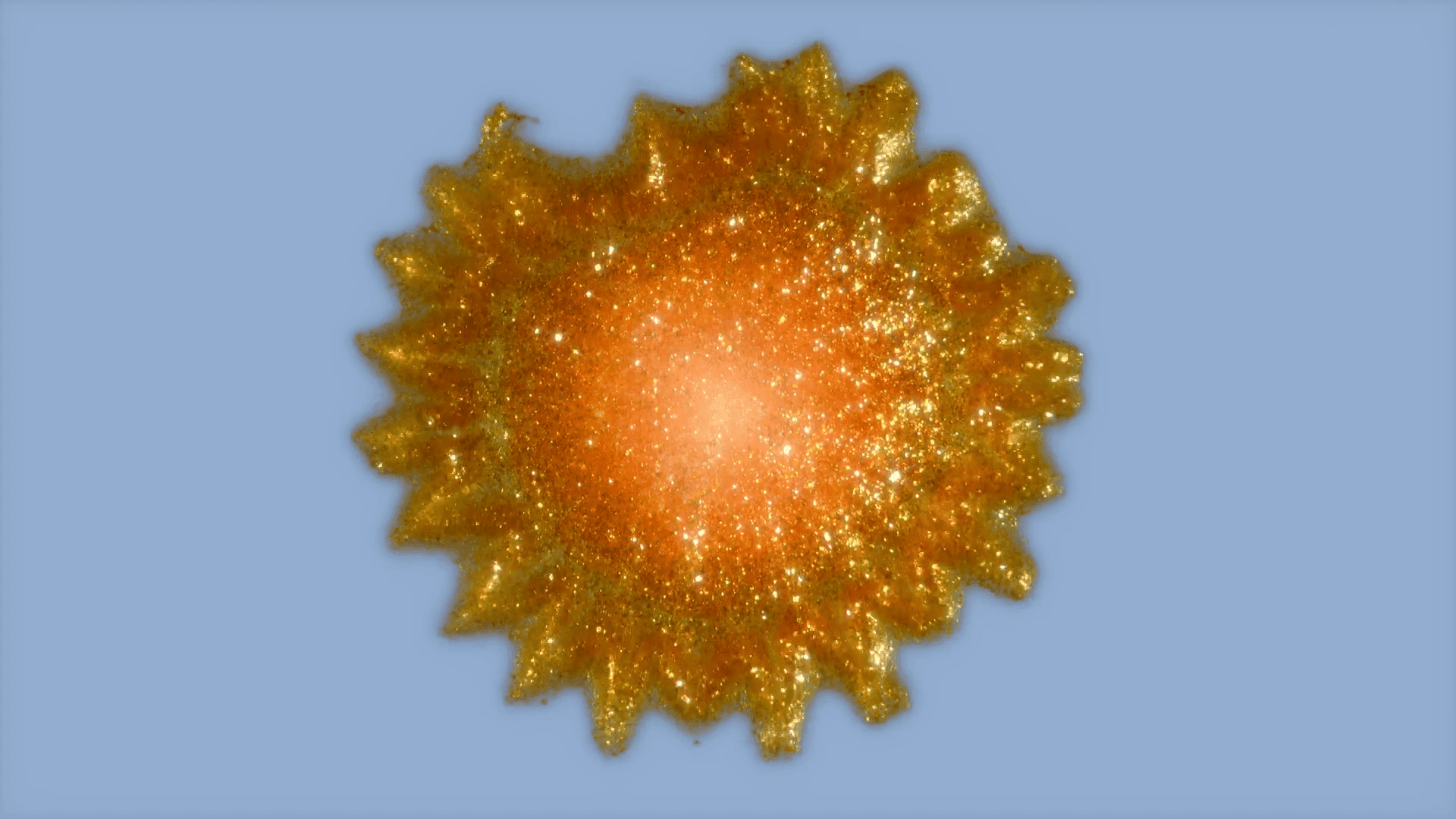
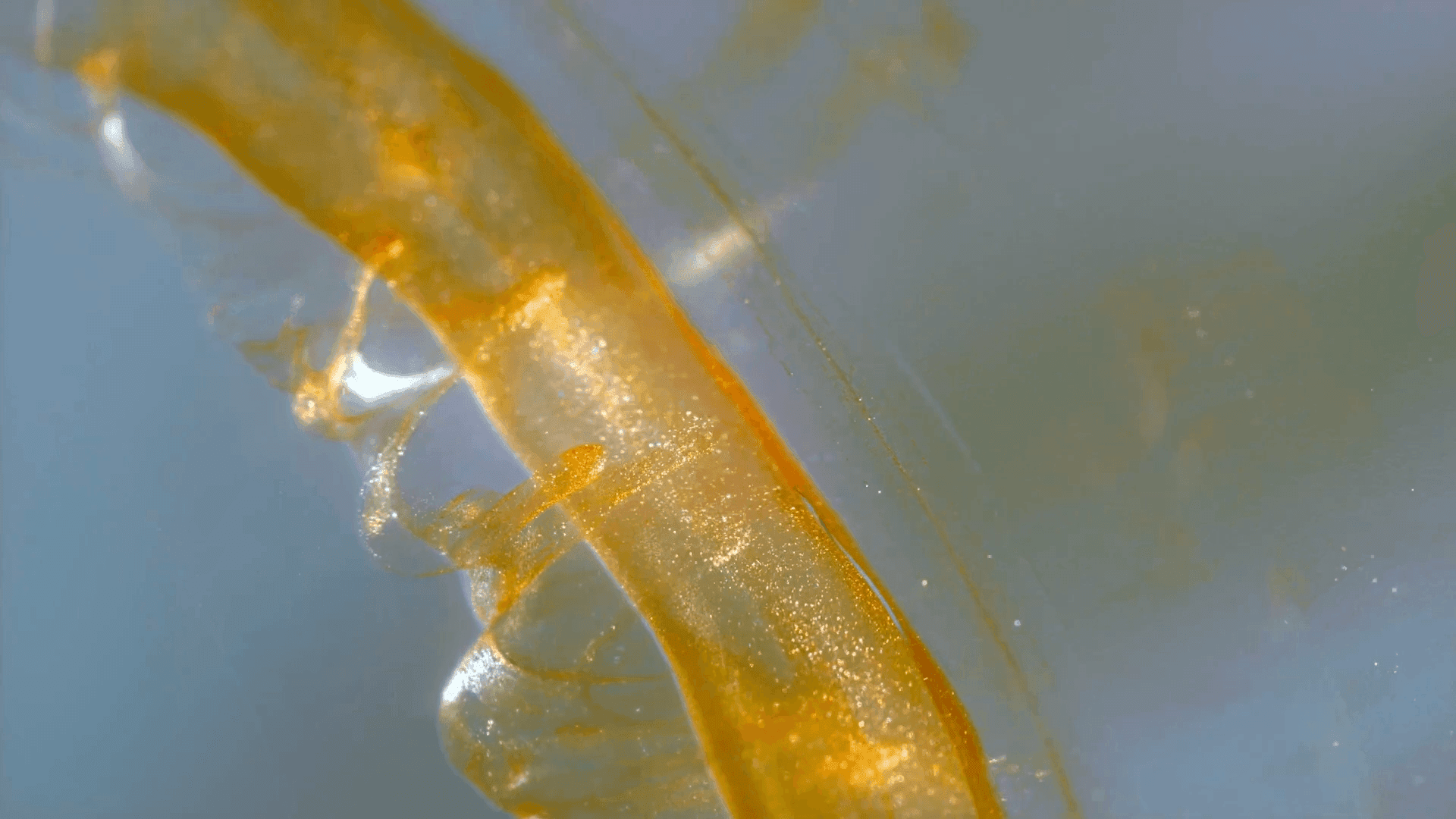
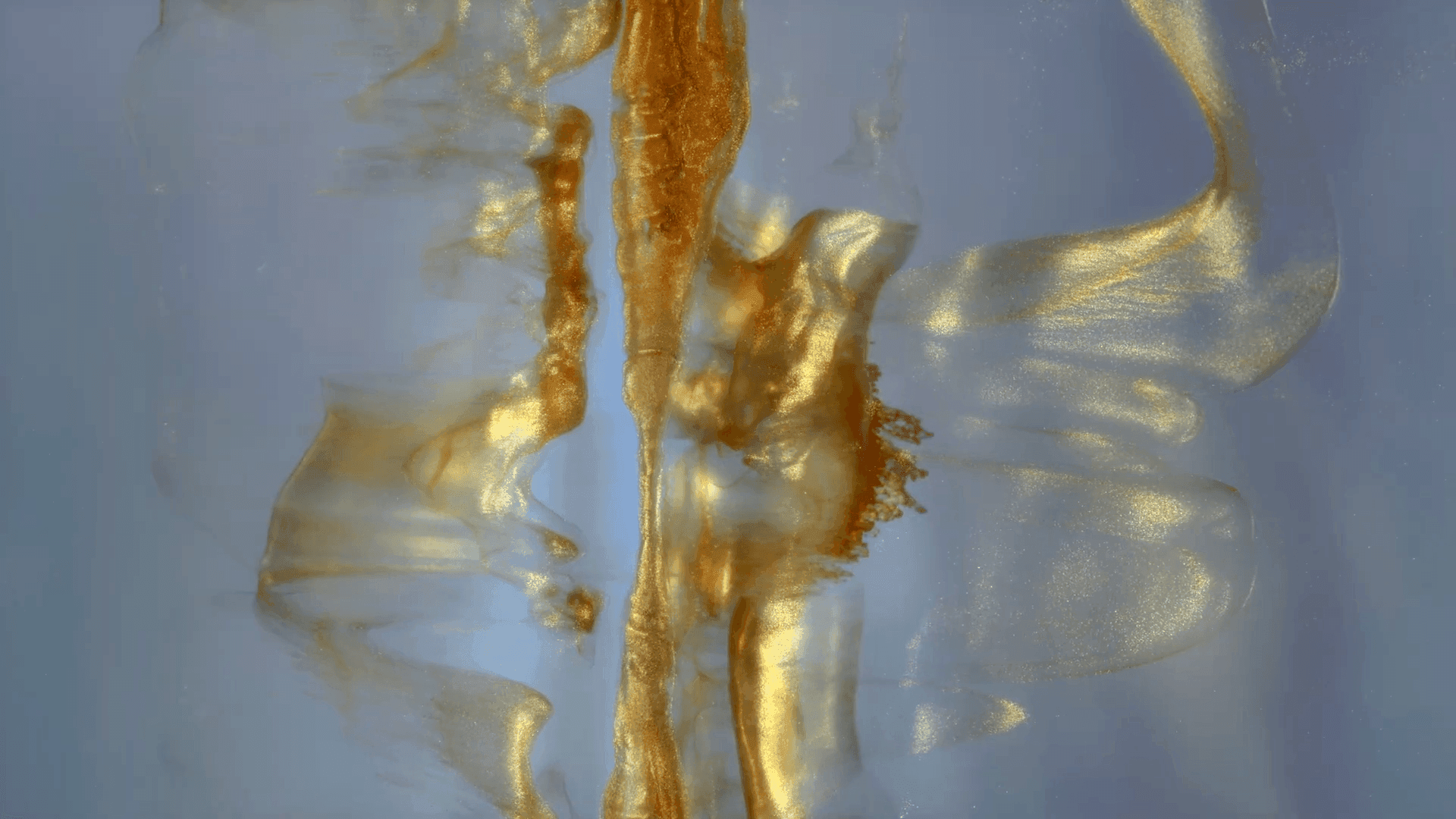
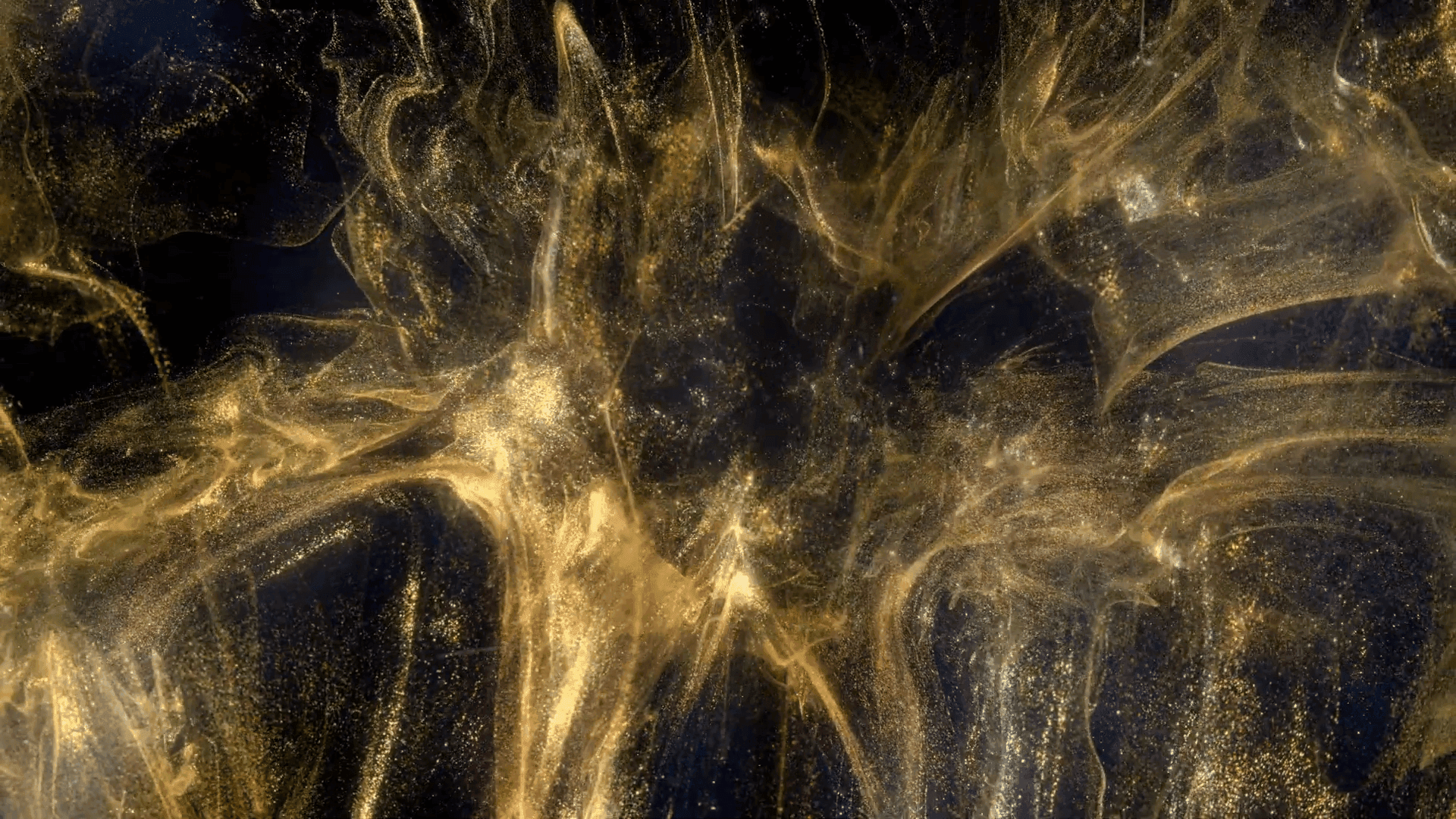
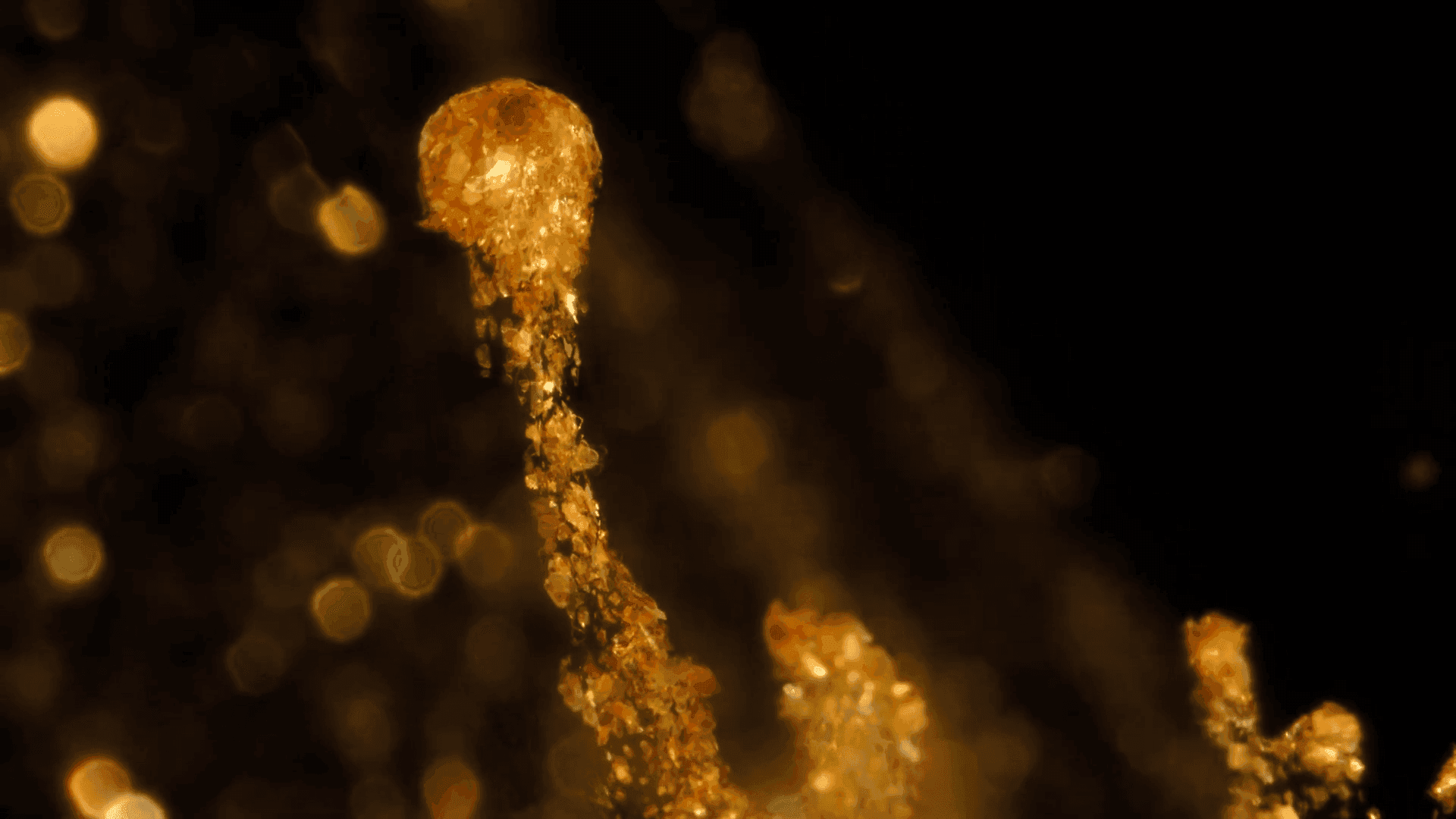
Beautiful colors, subtle flows, and sudden fractals animate Thomas Blanchard’s “Sensations,” which, like his other short films, is entirely CGI-free. It’s a lovely exploration of droplets, liquid lenses, Marangoni effects, and fingering instabilities. (Video and image credit: T. Blanchard)
Search results for: “viscous”

Venusian Gravity Currents
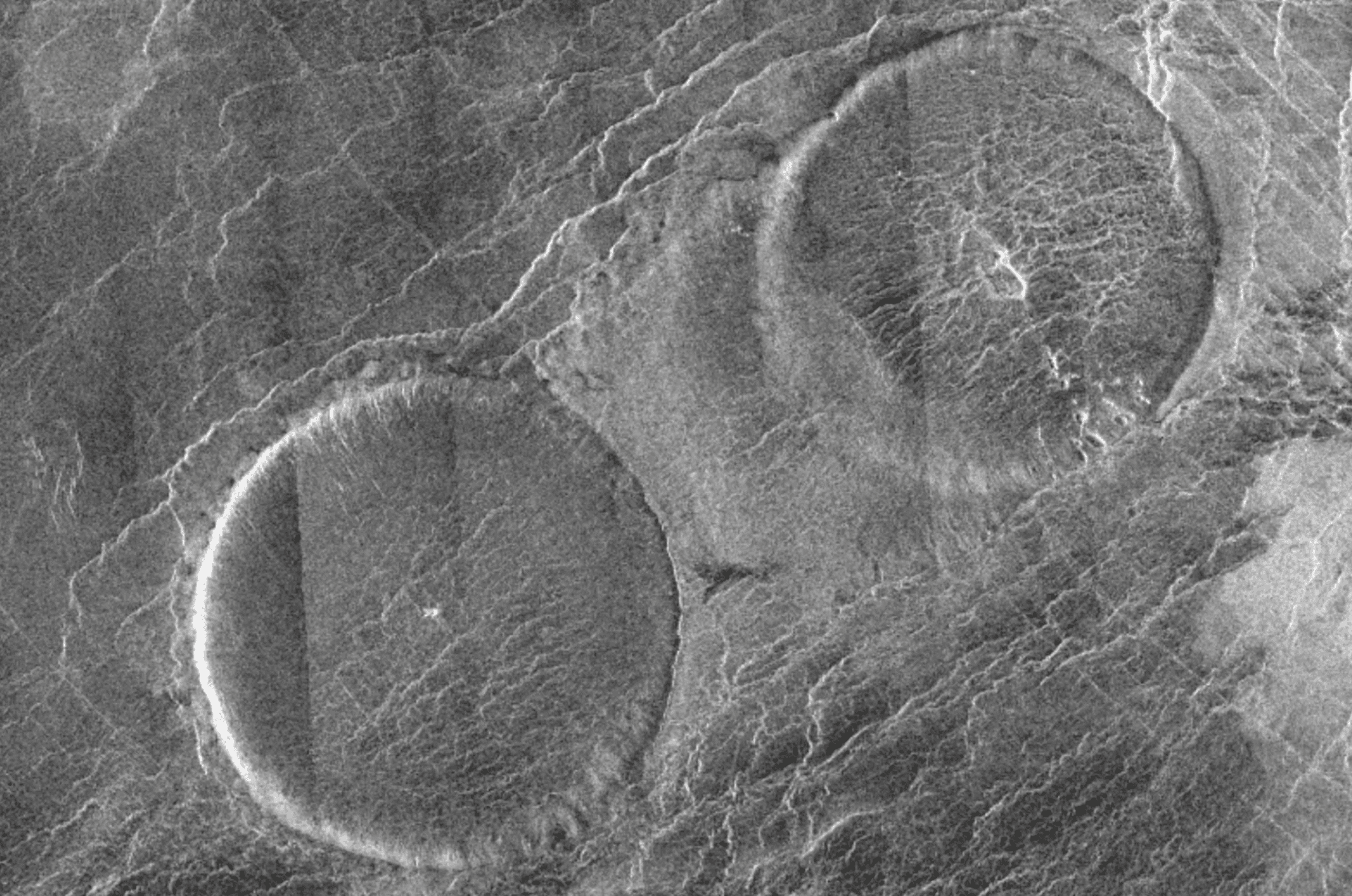
Radar measurements of Venus‘s surface reveal the remains of many volcanic eruptions. One type of feature, known as a pancake dome, has a very flat top and steep sides; one dome, Narina Tholus, is over 140 kilometers wide. Since their discovery, scientists have been puzzling out how such domes could form. A recent study suggests that the Venusian surface’s elasticity plays a role.
According to current models, the pancake domes are gravity currents (like a cold draft under your door, an avalanche, or the Boston Molasses Flood), albeit ones so viscous that they may require hundreds of thousands of Earth-years to settle. Researchers found that their simulated pancake domes best matched measurements from Venus when the lava was about 2.5 times denser than water and flowed over a flexible crust.
We might have more data to support (or refute) the study’s conclusions soon, but only if NASA’s VERITAS mission to Venus is not cancelled. (Image credit: NASA; research credit: M. Borelli et al.; via Gizmodo)
“Droplet on a Plucked Wire”
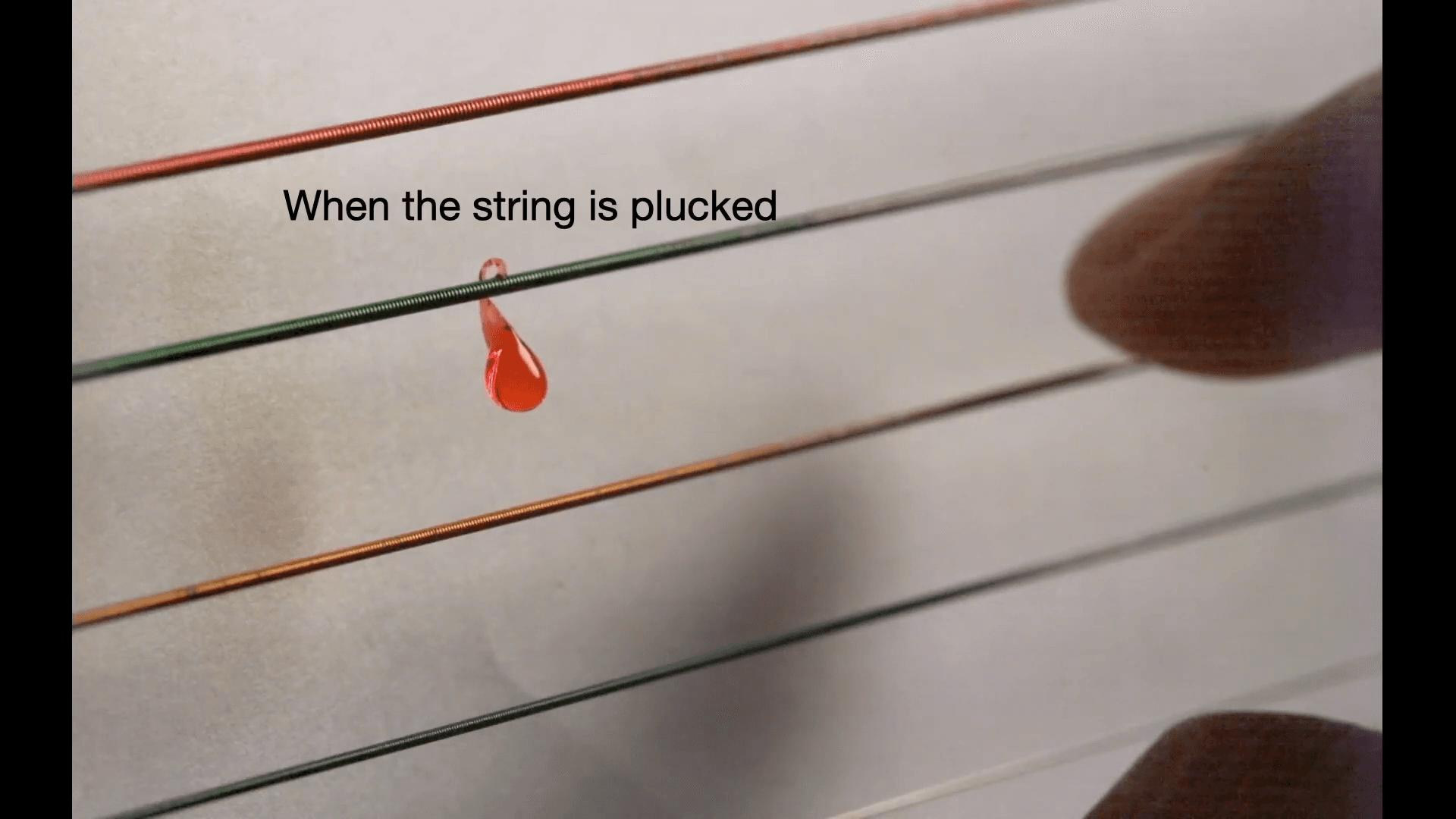
What happens to a droplet hanging on a wire when the wire gets plucked? That’s the fundamental question behind this video, which shows the effects of wire speed, viscosity, and viscoelasticity on a drop’s detachment. With lovely high-speed video and close-up views, you get to appreciate even subtle differences between each drop. Capillary waves, viscoelastic waves, and Plateau-Rayleigh instabilities abound! (Video and image credit: D. Maity et al.)

The Hidden Beauty in the Mundane
Physicist Sidney Nagel has spent his career on topics that are somewhat unexpected: how coffee stains form, how droplets splash — or don’t, and how fluid flows into viscous fingers. Often this means looking at the mechanics of everyday occurrences that we otherwise take for granted. Instead, Nagel probes carefully at things like a coffee stain, asking why it’s darker at the edges and what he could do to keep that from happening — all to ultimately uncover the forces and mechanisms at play. Quanta has a great little interview with him on this and other topics. Check it out here. (Image credit: S. Nagel and K. Norman; via Quanta)


Fractal Fingers
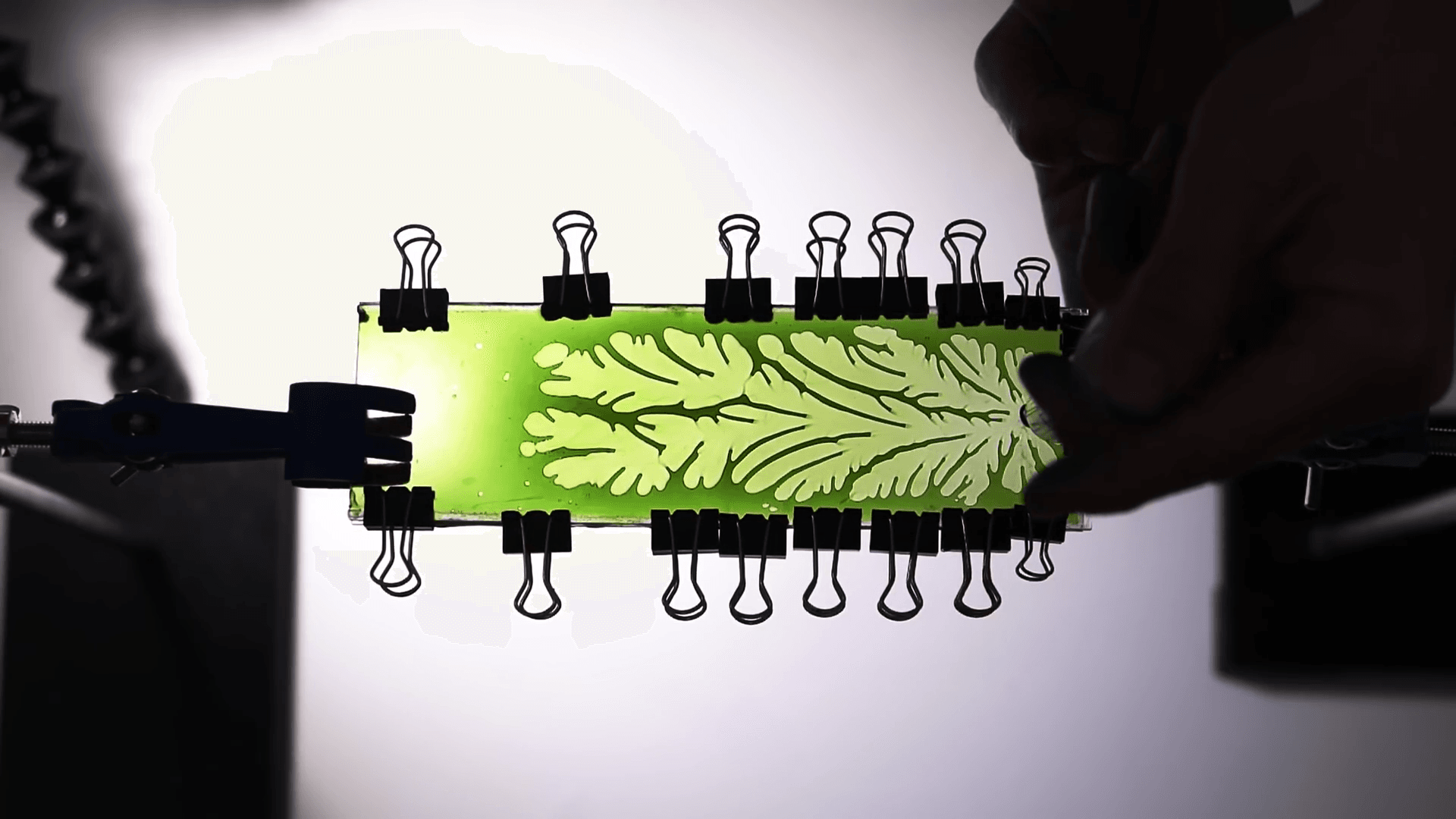
As bizarre as the branching fractal fingers of the Saffman-Taylor instability look, they’re quite a common phenomenon. In his video, Steve Mould demonstrates how to make them by sandwiching a viscous liquid like school glue between two acrylic sheets and then pulling them apart. The more formal lab-version of this is the Hele-Shaw cell, which he also demonstrates. But you may have come across the effect when pealing up a screen protector or in dealing with a cracked phone screen. In all of these cases, a less viscous fluid — specifically air — is forcing its way into a more viscous fluid, something that it cannot manage without the fluid interface fracturing. (Video and image credit: S. Mould)

“Legend”
Filmmaker Roman De Giuli returns to his roots with this short fluid-filled film inspired by the color gold. He combines paint, ink, powders, and particles in a mix of micro- and macroscale photography. As always, the results are a mesmerizing plethora of fluid phenomena: Marangoni flows, turbulence, vorticity, viscous fingering and so much more. (Video and image credit: R. De Giuli)

Why Nature Loves Fractals
Trees, blood vessels, and rivers all follow branching patterns that make their pieces look very similar to their whole. We call this repeating, self-similar shape a fractal, and this Be Smart video explores why these branching patterns are so common, both in living and non-living systems. For trees, packing a large, leafy surface area onto the smallest amount of wood makes sense; the tree needs plenty of solar energy (and water and carbon dioxide) to photosynthesize, and it has to be efficient about how much it grows to get that energy. Similarly, our lungs and blood vessels need to pack a lot of surface area into a small space to support the diffusion that lets us move oxygen and waste through our bodies. Non-living systems, like the branches of viscous fingers or river deltas or the branching of cracks and lightning, rely on different physics but wind up with the same patterns because they, too, have to balance forces that scale with surface area and ones that scale with volume. (Video and image credit: Be Smart)

Tar Pit, Sweet Tar Pit
The La Brea Tar Pits have delivered countless creatures to their doom over tens of thousands of years. But the sticky quagmire of the pits’ natural asphalt is a comfy home to at least one animal: the petroleum fly. The fly’s maggots secrete a lipophobic — in other words, oil-repelling — fluid that allows them to move freely through the viscous black tar. That freedom means they can take full advantage of the asphalt’s trapping power by consuming a smorgasbord of stuck victims. Any asphalt the maggots swallow just passes harmlessly through them. As adults, only their feet are asphalt-resistant, but the petroleum fly still spends most its time hanging out in the pit, seeding the next generation. (Video and image credit: Deep Look)

Marangoni Blossoms
When surface tension varies along an interface, fluids move from regions of low surface tension to higher surface tension, a behavior known as the Marangoni effect. Here, a drop of (dyed) water is placed on glycerol. The two fluids are miscible, but water has much a lower viscosity and density yet a higher surface tension. The drop’s interface quickly becomes unstable; viscous fingers form along the edge as the less viscous water pushes into the more viscous glycerol. Eventually, the surface-tension-driven Marangoni flow breaks those fingers off into lip-like daughter drops. The researchers also show how the interplay between viscosity and surface tension affects the size of fingers that form by varying the water/glycerol concentration. (Image and video credit: A. Hooshanginejad et al.)

Swimming With Cilia
Like most microswimmers, these Synura uvella algae use cilia to swim. Cilia are tiny, hair-like appendages that flap to produce thrust. Even under a microscope, the cilia are hard to see because they are so thin and move quickly in and out of the microscope’s narrow focus. A cilia’s stroke is always asymmetric — no simple back-and-forth motions for them — because, at the algae’s scale, symmetric motion won’t move you anywhere. This is a peculiar feature of small swimmers in viscous fluids. At the human scale, we can mimic the same physics by mixing and unmixing fluids like corn syrup. (Video and image credit: L. Cesteros; via Nikon Small World in Motion)

Synura uvella algae swimming under magnification.