Tag: hagfish

  • Watch Hagfish Slime Unfurl

    Watch Hagfish Slime Unfurl

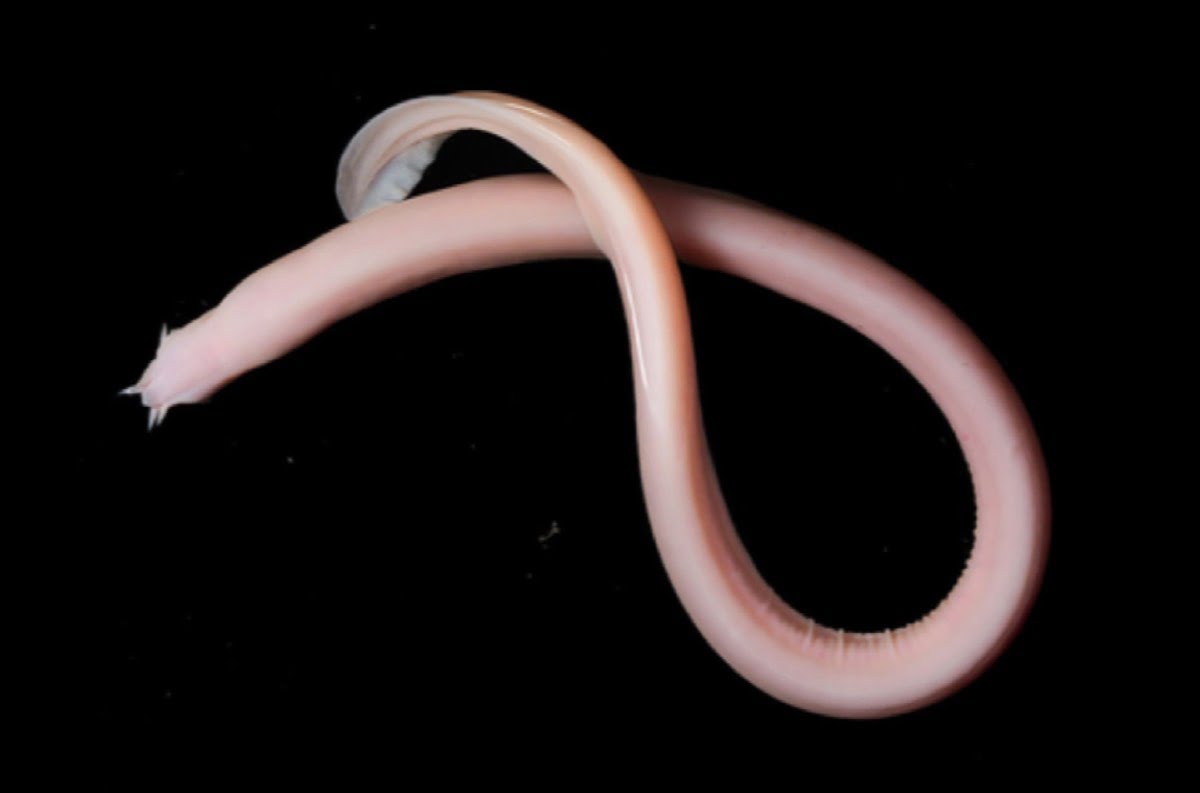
    The eel-like hagfish has one of the best defenses in the ocean. When threatened, it releases a slime that clogs the gills of its predator but allows the hagfish itself to slough off the slime and escape. The hagfish slime’s secret weapon is long protein threads, which are initially rolled into bundles called skeins. Seen above, these skeins resemble the yarn skeins knitters and crocheters buy, but a hagfish’s skeins are only as big as the width of a human hair.

    When water flows by quickly enough, the thread in a skein begins to unwind and stretch out. With enough threads unwound, the slime gets stretchy and viscous. Researchers found that it takes relatively little flow to begin this unwinding because the adhesion between threads and the surrounding fluid is higher than the thread-to-thread sticking power. (Research and image credit: M. Hossain et al., video)


    Fediverse Reactions
  • How Hagfish Slime Clogs

    How Hagfish Slime Clogs

    When attacked, the eel-like hagfish slimes its predator, clogging the fish’s gills so that it can escape. A recent study looks at just what makes the slime so effective. There are two main (non-seawater) components to hagfish slime: mucus and threads. The team’s experiments showed that the slime’s clogging is due almost entirely to the mucus; the clogging power of full slime and mucus-only slime is almost identical.

    So what are the threads for? They make it harder for the mucus to get washed away. Mucus alone isn’t able to clog as effectively after a single rinse, but, with the threads included, the slime hardly budges. That staying power makes it all the harder for a predator to clear its gills once slimed. In fact, it’s still unclear to scientists whether a slimed fish can free itself from the clogging. After all, the attacker can’t use the hagfish’s trick to free itself from slime. (Image credit: dirtsailor2003/Flickr; research credit: L. Taylor et al.)

  • Featured Video Play Icon

    A Look at Hagfish

    Hagfish are the lords of slime. Their viscoelastic protection mechanism is so effective that they’ve hardly changed up their game in the past 300 million years. Instead, at the first sign of trouble, they release a mucus that rapidly expands in salt water. When attacking fish try to pull water into their gills, they get clogged with slime instead, sometimes suffocating and becoming the hagfish’s meal instead. To get out of their slime, hagfish knot themselves and wipe it away, thanks to its shear-thinning properties. (Image and video credit: Deep Look)

  • Hagfish Slime

    Hagfish Slime

    The eel-like hagfish is a superpowered escape artist, thanks to its slime. When threatened, the hagfish releases long protein-rich threads that, when combined with turbulent sea water, unravel to form large volumes of viscoelastic slime that clog the gills of its predators. A new study shows that larger hagfish produce longer and thicker threads in their slime, enabling them to escape larger predators than their smaller brethren can.

    The properties of hagfish slime are tuned for defense. When stretched, the long protein threads resist, making the slime more viscous. Since most fish use suction methods to catch prey, that means a predator attacking a hagfish will quickly exacerbate its slimy problems. But the hagfish itself can easily escape its slime by tying itself in a knot. The threads inside the slime collapse when sheared, so the knot-tying of the hagfish slips the slime right off. (Image credit: T. Winegard; research credit: Y. Zeng et al.; via Ars Technica; submitted by Kam-Yung Soh)

  • How the Hagfish Deploys Its Slime

    How the Hagfish Deploys Its Slime

    Hagfish – an eel-like species – are known for their prodigious slime production, which helps them escape predators (and, in some cases, seriously muck up highways). Part of the hagfish’s slime consists of ~10 cm fibers that the creature deploys in tiny skeins (bottom) only a hundred microns across. To form the viscoelastic slime that thwarts its predators, those skeins of fiber have to unravel and do so in only tenths of a second. A new study shows that viscous drag plays a major role in that unraveling. 

    Most fish use a suction method to catch prey. In the hagfish’s case, that does the predator more harm than good because the very flow it creates to try and catch the hagfish pulls the slime skein apart and helps the slime expand 10,000 times in volume, creating a mess that chokes the gills of the attacking fish. (Image credit: top – L. Böni et al.; bottom – G. Choudhary et al., source; research credit: G. Choudhary et al.; via Ars Technica; submitted by Kam Yung Soh)

  • Hagfish Crash

    Hagfish Crash

    Last week a flatbed truck in Oregon overturned and released 3400 kilograms of live hagfish on the highway and nearby cars. Hagfish are eel-like fish known for their impressive slime production. When threatened, the hagfish produce mucins that, when combined with water, form an extremely viscoelastic mucus. As it’s stretched, the mucus thickens and becomes more viscous. Normally, hagfish use this property to clog the gills of fish trying to eat them. The slime is weak, however, to shearing; hagfish actually tie themselves in knots to slide the slime off when there’s too much of it. The Oregon Department of Transportation managed to clear the road of mucus (and hagfish) using bulldozers and fire hoses, but it did take them several hours. For more photos and videos from the incident, check out Gizmodo and the Oregon State Police Twitter feed. (Image credit: Oregon State Police; via Gizmodo)

  • Hagfish Escape Mechanisms

    Hagfish Escape Mechanisms

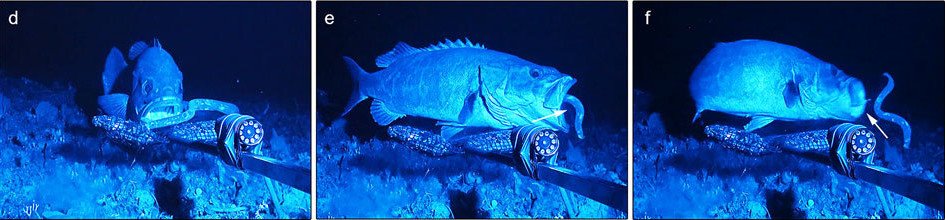
    The hagfish is an eel-like creature that has not changed much in the past 300 million years in part because the hagfish is very good at escaping would-be predators. When attacked, the hagfish excretes mucins that combine with seawater to form slime. This gel-like viscoelastic fluid forms quickly and has some handy properties. For example, when stretched, the slime becomes extremely viscous. Many fish feed using a suction method, in which they thrust their jaws forward and enlarge their mouths to suck water and prey inside. This strong unidirectional flow stretches the slime, which thickens it and clogs the fish’s gills. Suddenly, the fish is much more concerned with being unable to breathe, allowing the hagfish to flee.

    Being surrounded by all that slime could smother the hagfish, too, if it were not for another clever feature of the slime. When sheared, hagfish slime collapses, losing its viscosity. The hagfish actually ties itself in a knot to create this shear and slide the slime right off. (Image credit: V. Zintzen et al.; L. Böni et al., source)