
Walking on water may be the stuff of legend at human scales, but it’s a fact of everyday life for many smaller species. Waxy, hydrophobic coatings typically make such insects’ points of contact (feet, legs, etc.) water-repellent, and their light weight can be supported by surface tension. Navigating the interface between air and water is more complicated, though, and these creatures have evolved several mechanisms to help. Some, like water striders, use appendages they insert below the surface for propulsion. At 0:49 in the montage above, you can see flow visualization of the vortices generated by a stroke. Other insects release a chemical in their wake that lowers the local surface tension and drives them away via the Marangoni effect. For more, see here and especially this Physics Today article. (Video credit: D. Hu and J. Bush)
Search results for: “flow visualization”

Sedimentary Swirls
Local currents swirl sediments and phytoplankton blooms in this satellite image of the Tarut Bay in Saudi Arabia. Such blooms typically occur where nutrients are being washed together, thereby creating a kind of natural flow visualization of currents and matter flow in the ocean. (Photo credit: NASA Earth Observatory)
Fluids Round-up – 23 June 2013
Time for another round-up! Here are the recent fluidsy links I’ve collected:
- A new study on Mars suggests that dry ice may be forming gullies in dunes in a fashion akin to the Leidenfrost effect. Personally, I’m reminded of Death Valley’s roaming rocks.
- A recent episode of It’s Okay to Be Smart explains what wind is.
- xkcd’s What If blog explores what would happen if you row a boat on different fluids such as mercury, bromine, and liquid helium (for you superfluid aficionados).
- Those who love microfluidics may want to follow Physics in Drops for some small-scale fluid fun.
- Not explicitly fluid dynamical, but this video of a peregrine falcon chasing a downhill mountain biker has some great examples of aerodynamics and the in-flight agility of birds.
- For the Android users among you, be sure to check out Fleya, a multi-touch, real-time fluids simulator. (via Jeremy M/Flow Visualization)
(Photo credit: Fixed Point Code)

Fluids Round-up – 9 June 2013
It’s time for some more fluidsy fun around the Internet! Here are some fun links I’ve come across since our last round-up.
- NPR reviews how dolphins and others play with vortex rings.
- Lawrence Berkeley National Laboratory/UC Berkeley offer some insight into simulating bubbles popping. (Hint: it requires supercomputers.)
- FlowViz shares some awesome accidental Rayleigh-Taylor instabilities you can replicate at home.
- PhysicsBuzz brings us a podcast on tornado physics.
- Reader Cedric Vella sent in his fluids-featuring trailer.
- io9 pointed out some great cymatics footage that shows off how granular materials and vibration creates beautiful patterns.
- And finally: what happens when you drop hot charcoal into liquid oxygen? The Periodic Table of Videos shows us, in high speed! (via Flow Visualization)
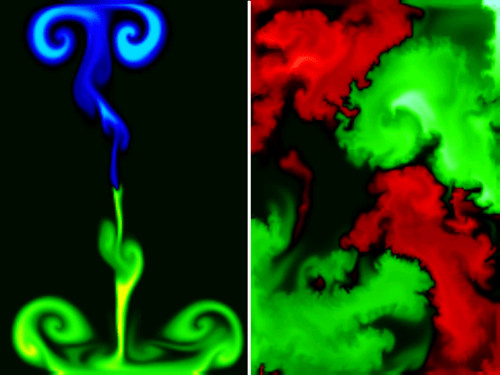
(Photo credit: L. L. A. Adams et al., multi-fluid double emulsions)
Imitating Flapping Flight
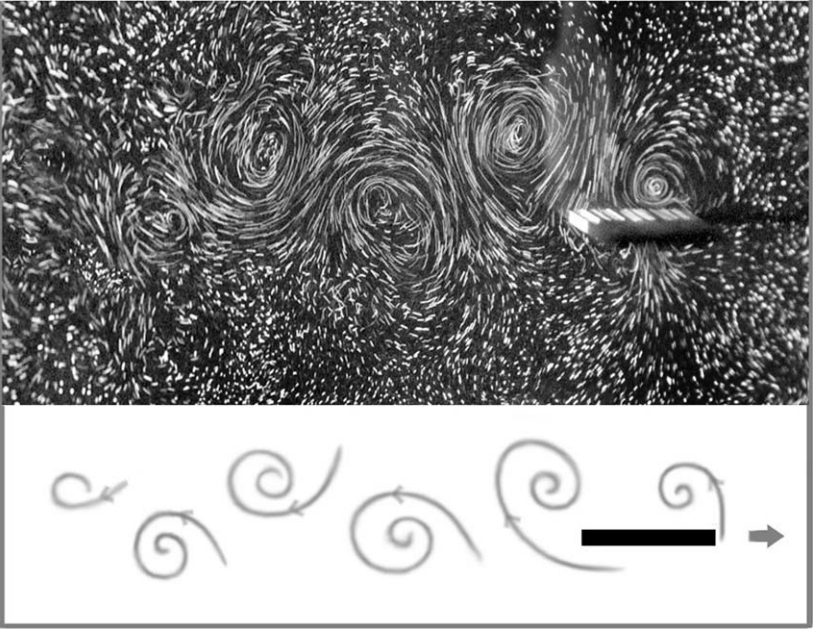
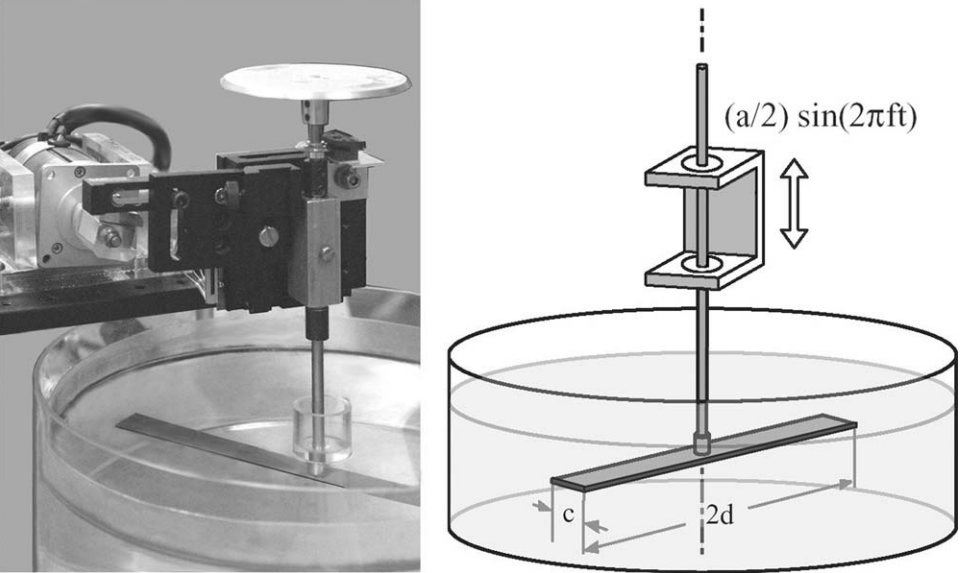
Flapping flight, despite being utilized by creatures of many sizes in nature, remains remarkably difficult to engineer. In this experiment, a simple rectangular wing is flapped up and down sinusoidally. Above a critical flapping frequency, the wing–which is free to rotate–accelerates from rest to a constant speed. This rotation is equivalent to forward flight. The upper image shows a photo and schematic of the setup, while the lower images shows flow visualization of the wing’s wake. The wing moves to the right, shedding thrust-providing periodic vortices in its wake. (Photo credits: N. Vandenberge et al.)

Stopping Jet Break-Up
When a stream of liquid falls, a surface tension effect called the Plateau-Rayleigh instability causes small variations in the jet’s radius to grow until the liquid breaks into droplets. For a kitchen faucet, this instability acts quickly, breaking the stream into drops within a few centimeters. But for more viscous fluids, like honey, jets can reach as many as ten meters in length before breaking up. New research shows that, while viscosity does not play a role in stretching and shaping the jet as it falls–that’s primarily gravity’s doing–it plays a key role in the way perturbations to the jet grow. Viscosity can delay or inhibit those small variations in the jet’s diameter, preventing their growth due to the Plateau-Rayleigh instability. In this respect, viscosity is a stabilizing influence on the flow. (Photo credit: Harsha K R; via Flow Visualization)
Ocean Waves in the Sky
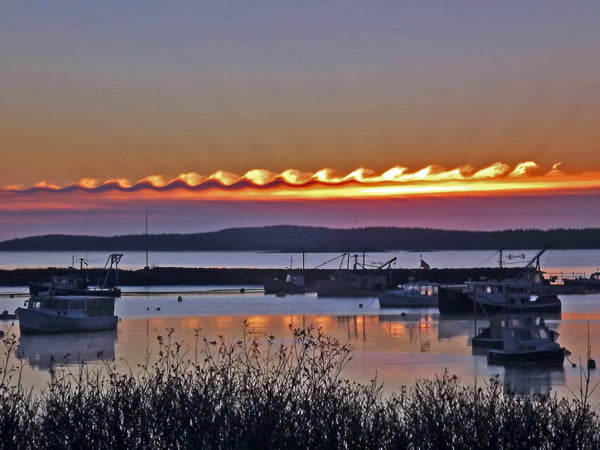
These wave-like Kelvin-Helmholtz clouds can form due to shear between different layers of air in the atmosphere. When one region of air has a higher velocity than the other, their interface forms a shear layer, which can break down in this wavy pattern. In this case, the lower layer of air was moist enough to form condensation and clouds, making the pattern visible to the naked eye. (Photo credit: Gene Hart; via Flow Visualization)

Fluorescing Shock Waves
Wind tunnel testing plays a major role in the planning of many space missions. Here a model of the Mars Sample Return Orbiter is tested at Mach 10 to determine the heat shield’s response to aerobraking off Mars’ atmosphere. The colors are the result of electron beam fluorescence, in which an electron gun is used to ionize molecules in the flow, which causes them to emit photons (light). The technique can be used for flow visualization–as in the case of the shock waves shown here–or to measure flow characteristics like density, temperature, and velocity. (Photo credit: Thierry Pot/DAFE/ONERA)

Unmanned Aerial Vehicles


In recent years unmanned aerial vehicles (UAVs) have grown in popularity for both military and civilian application and are shifting from a remotely controlled platform to autonomous control. Since no pilot flies onboard an UAV, these craft are much smaller than other fixed-wing aircraft, with wingspans that may range from a few meters to only centimeters. At these sizes, most fixed-wing airfoil theory does not apply because no part of the wing is isolated from end effects. This complicates the prediction of lift and drag on the aircraft, particularly during maneuvering and necessitates the development of new predictive methods and control schemes. Shown above are flow visualizations of a small UAV executing a perching maneuver, intended to allow the craft to land as a bird does by scrubbing speed with a high-angle-of-attack, high-drag motion. (Photo credit: Jason Dorfman; via Hizook; requested by mindscrib)
Chronoscapes
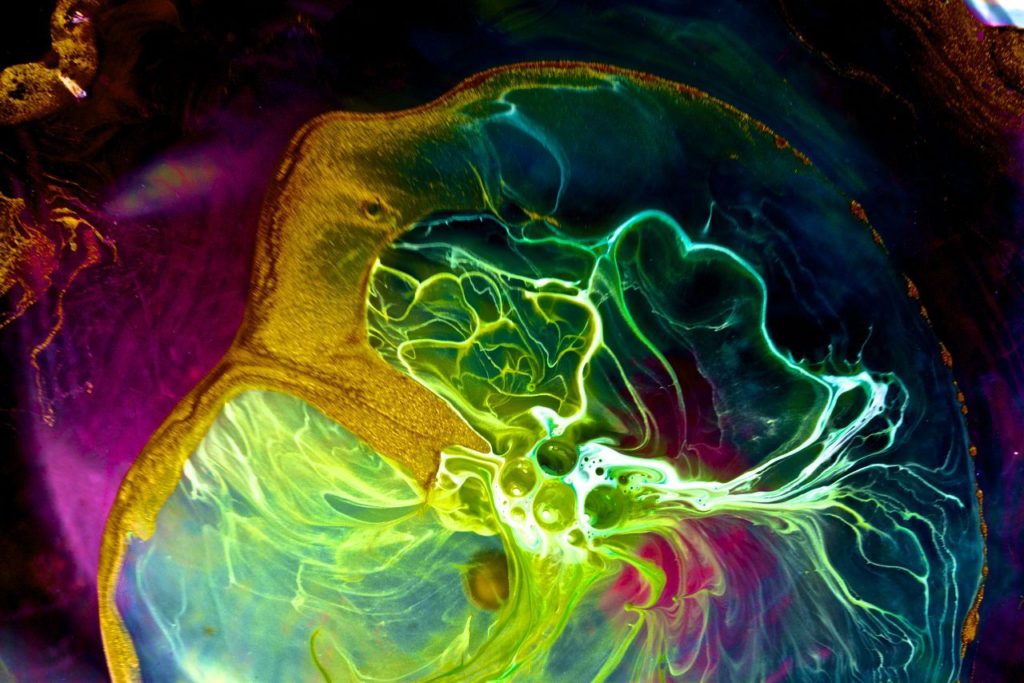
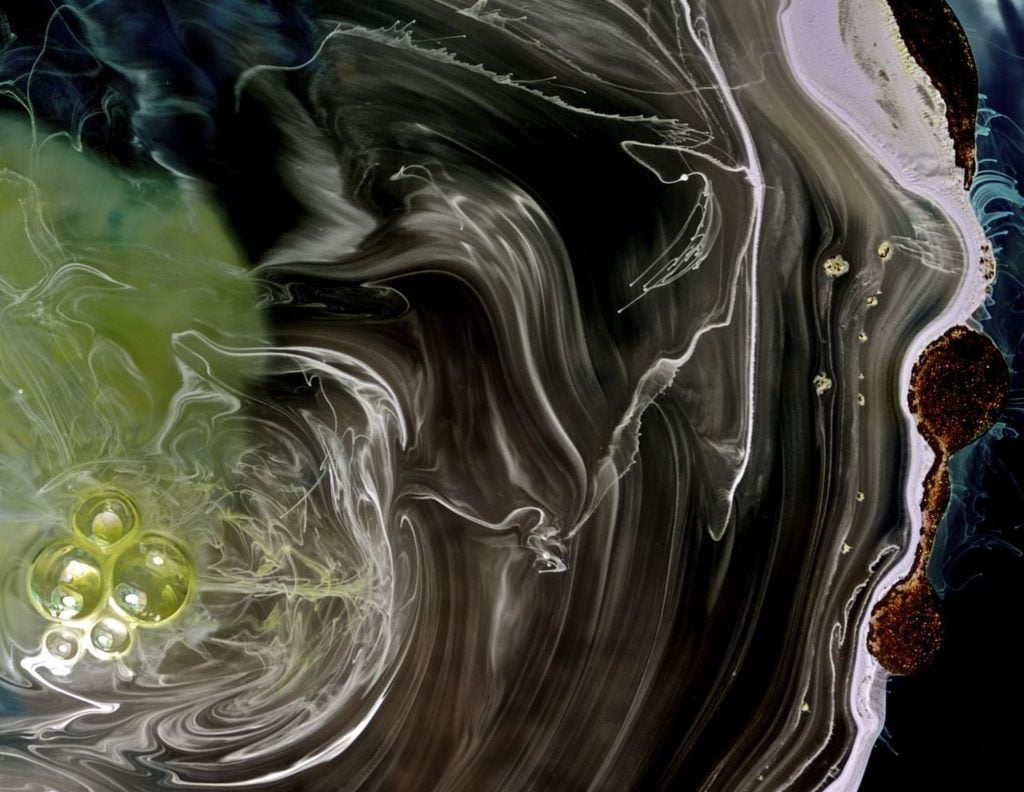
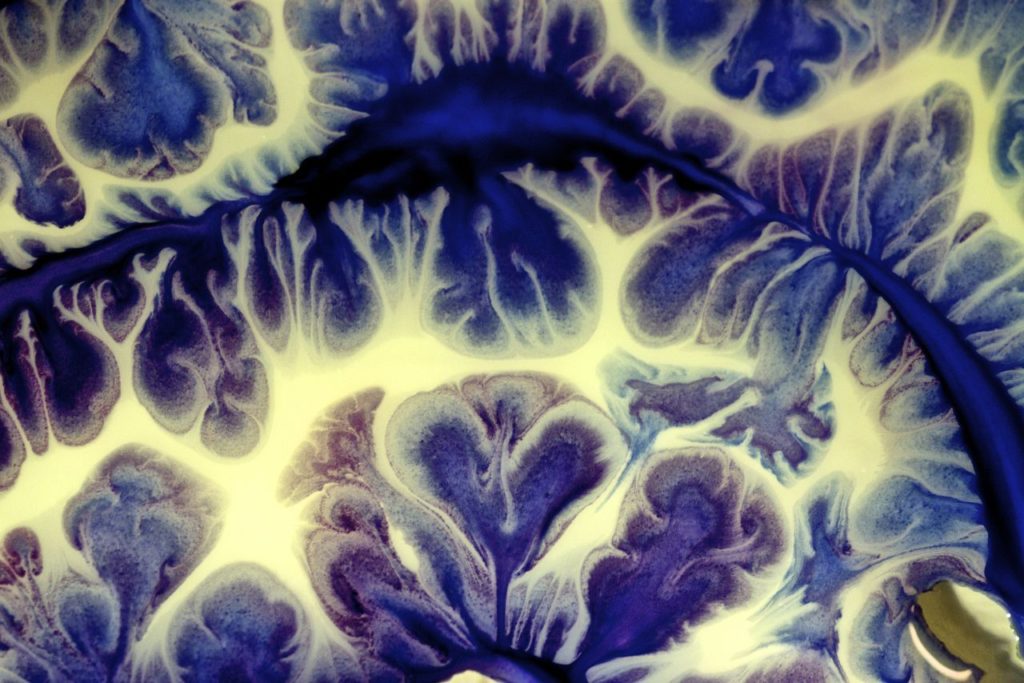
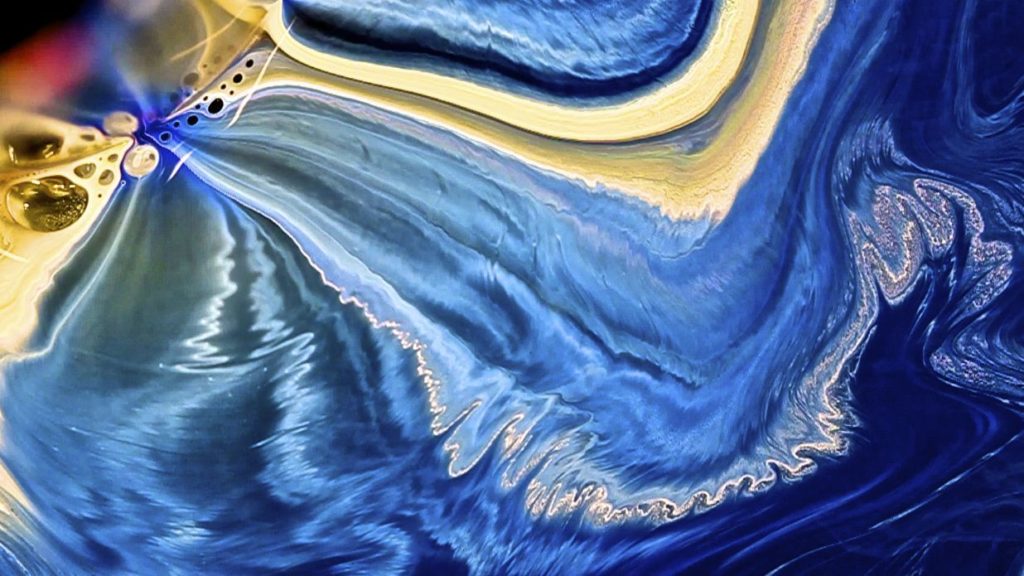
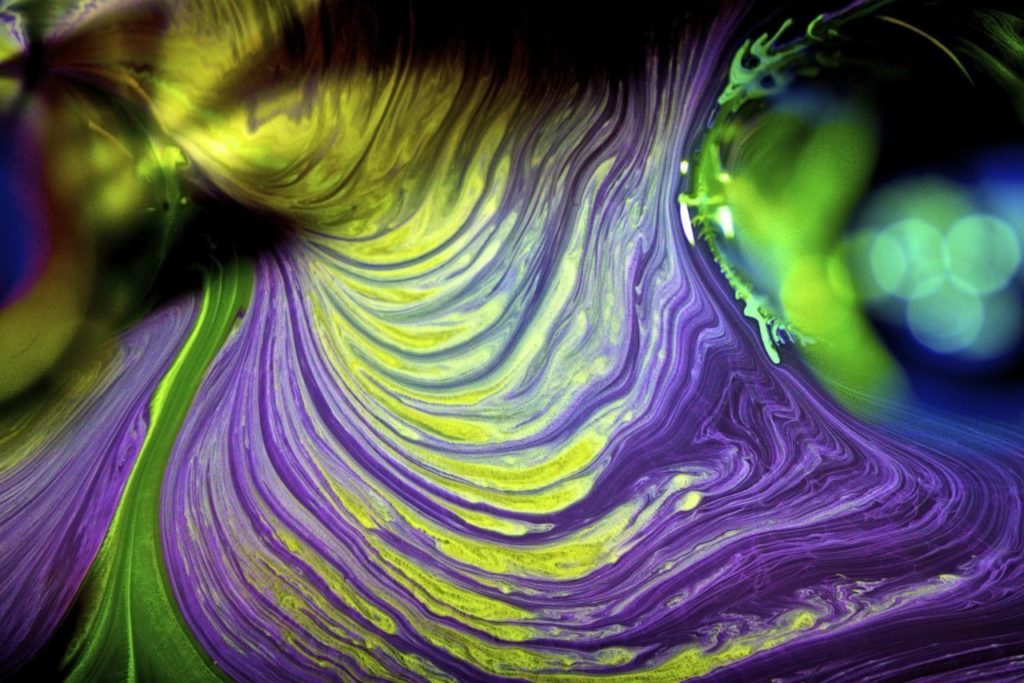
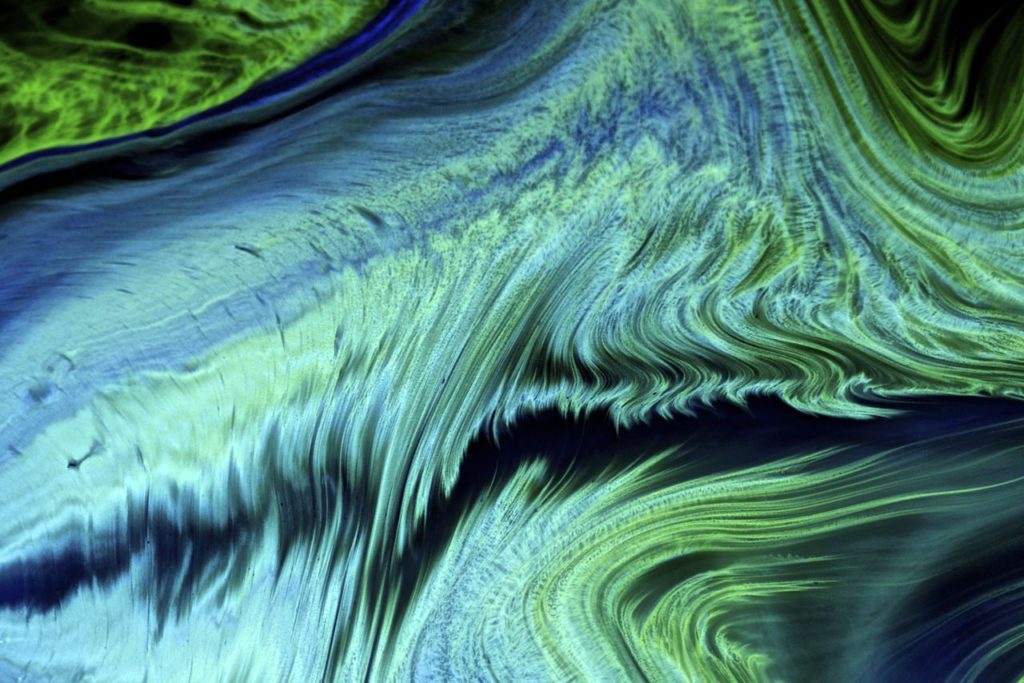
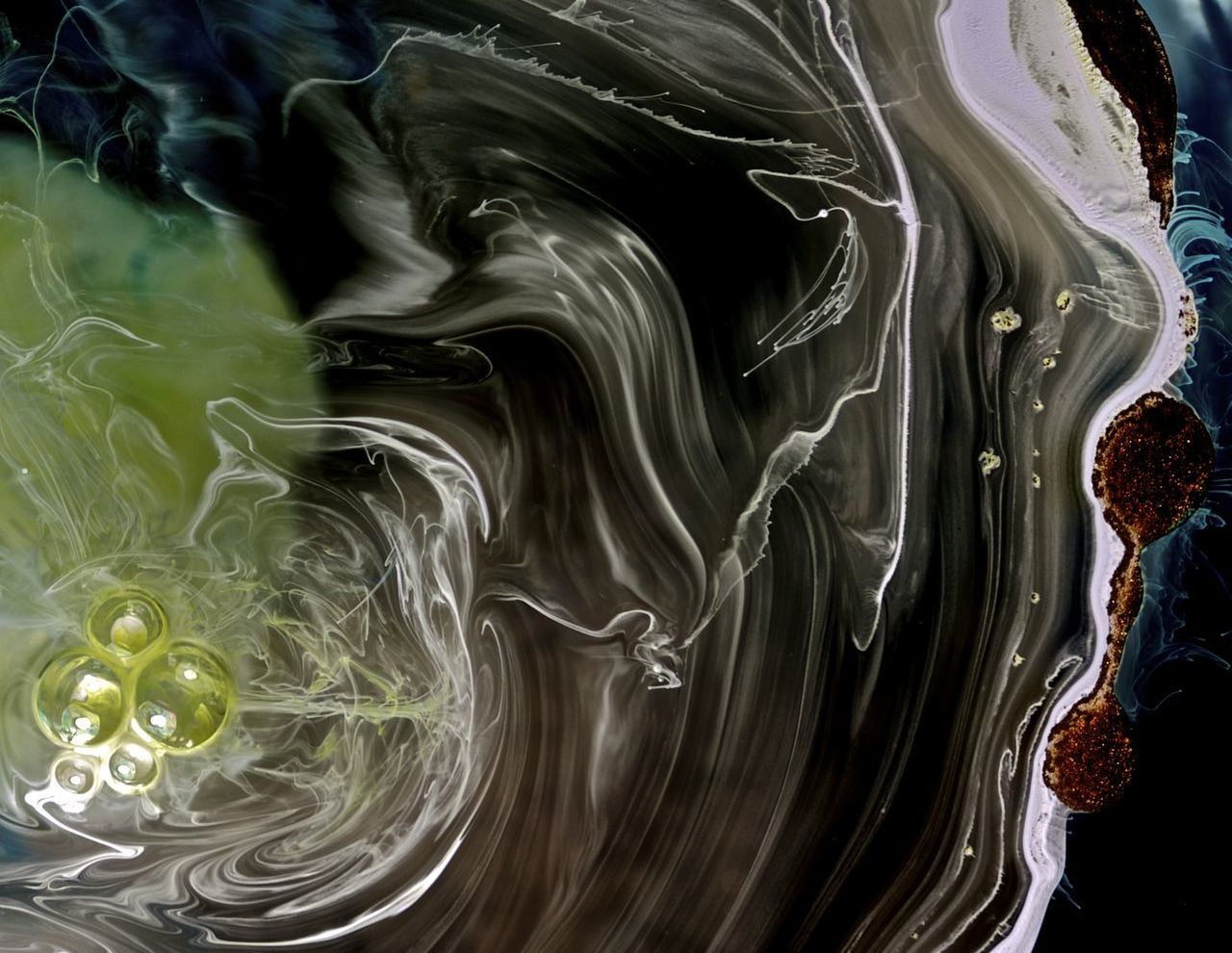
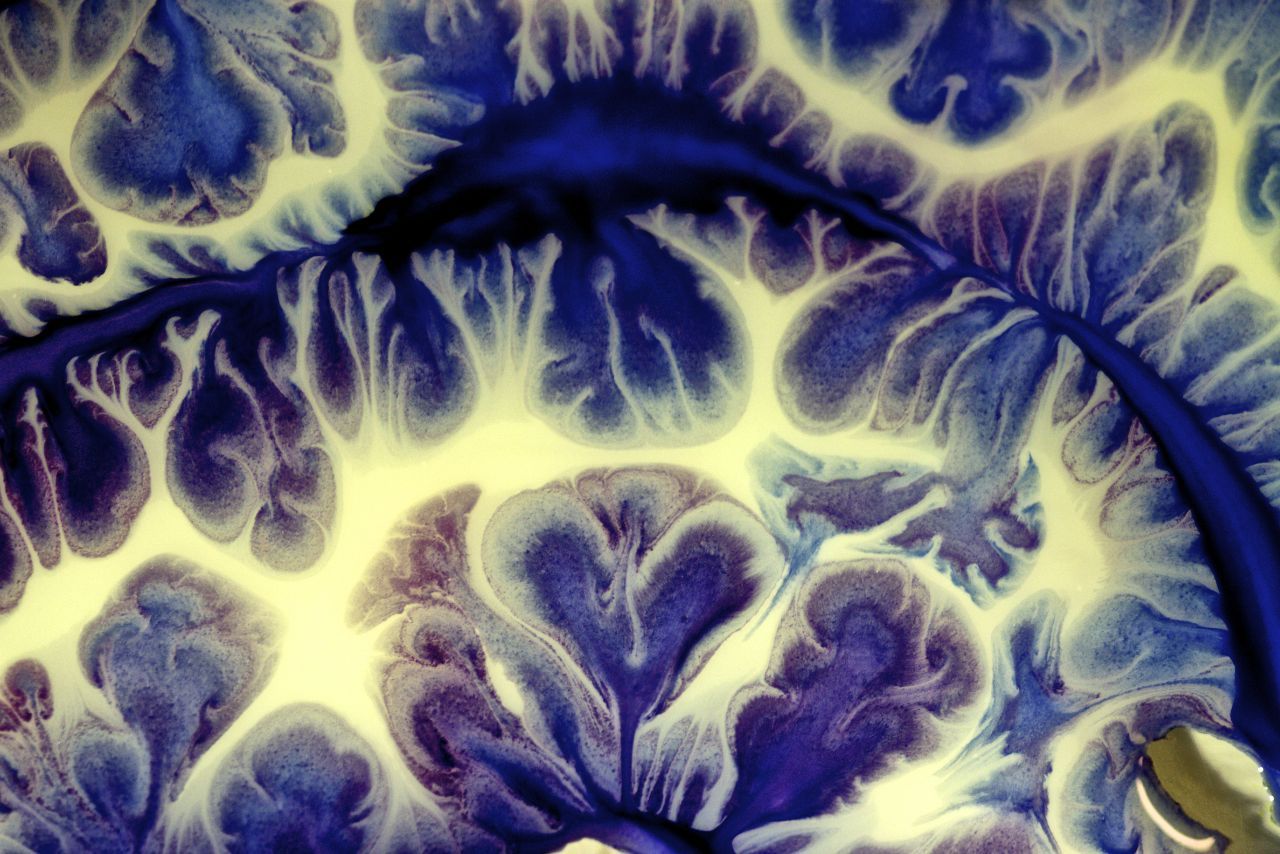
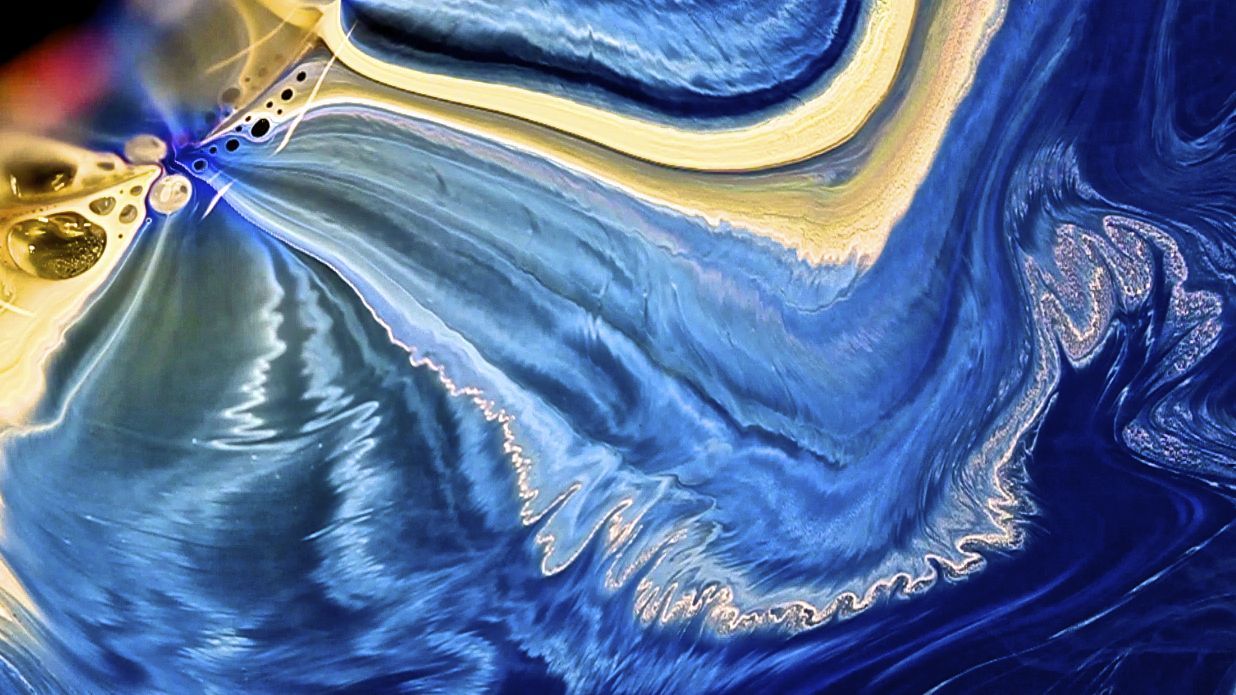
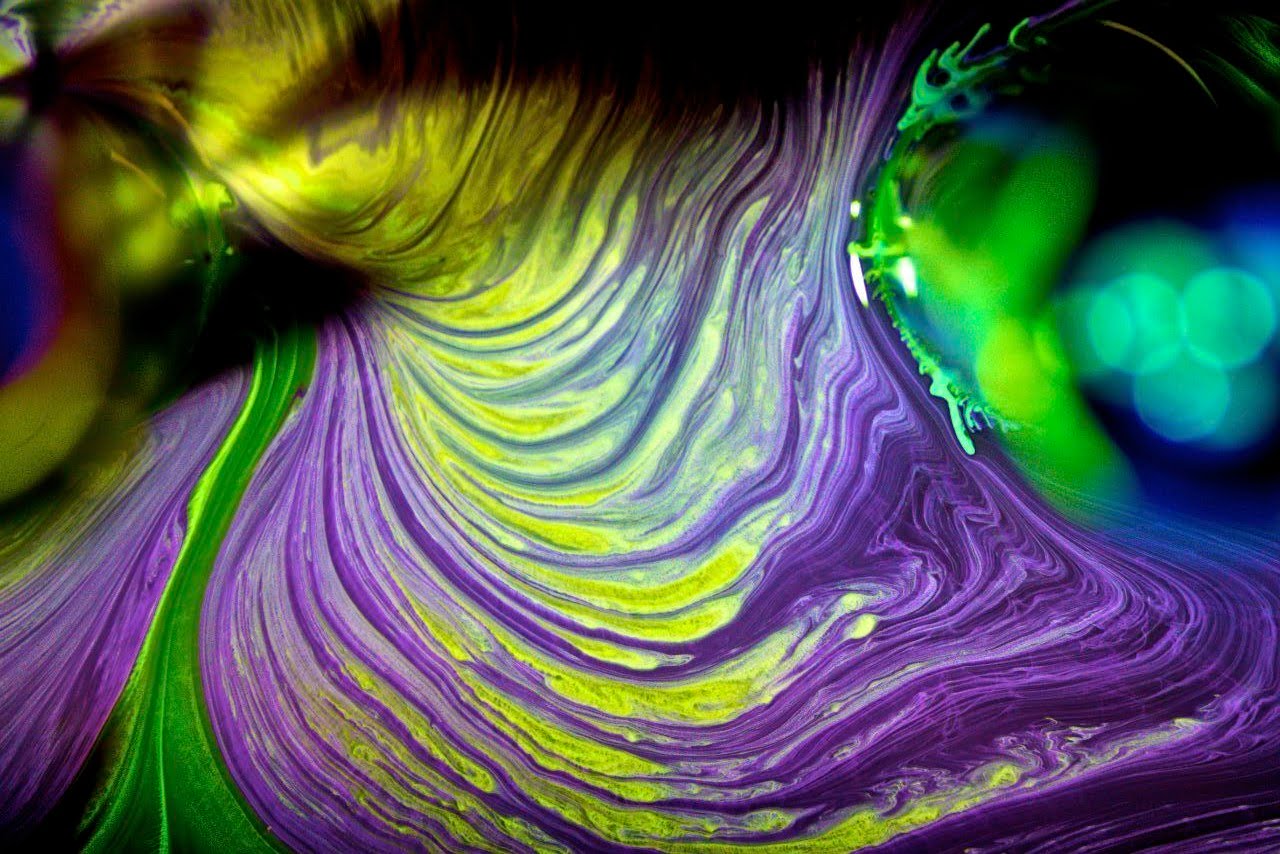
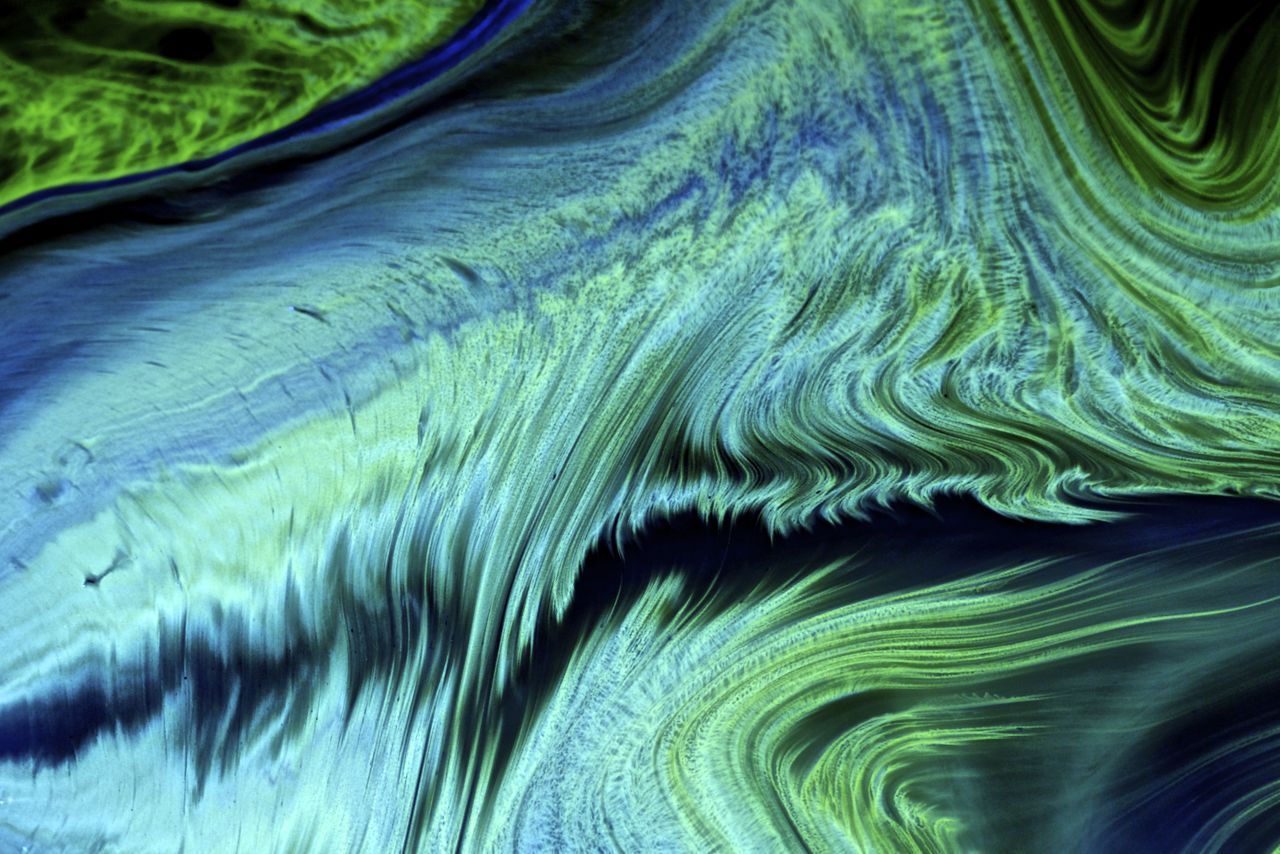
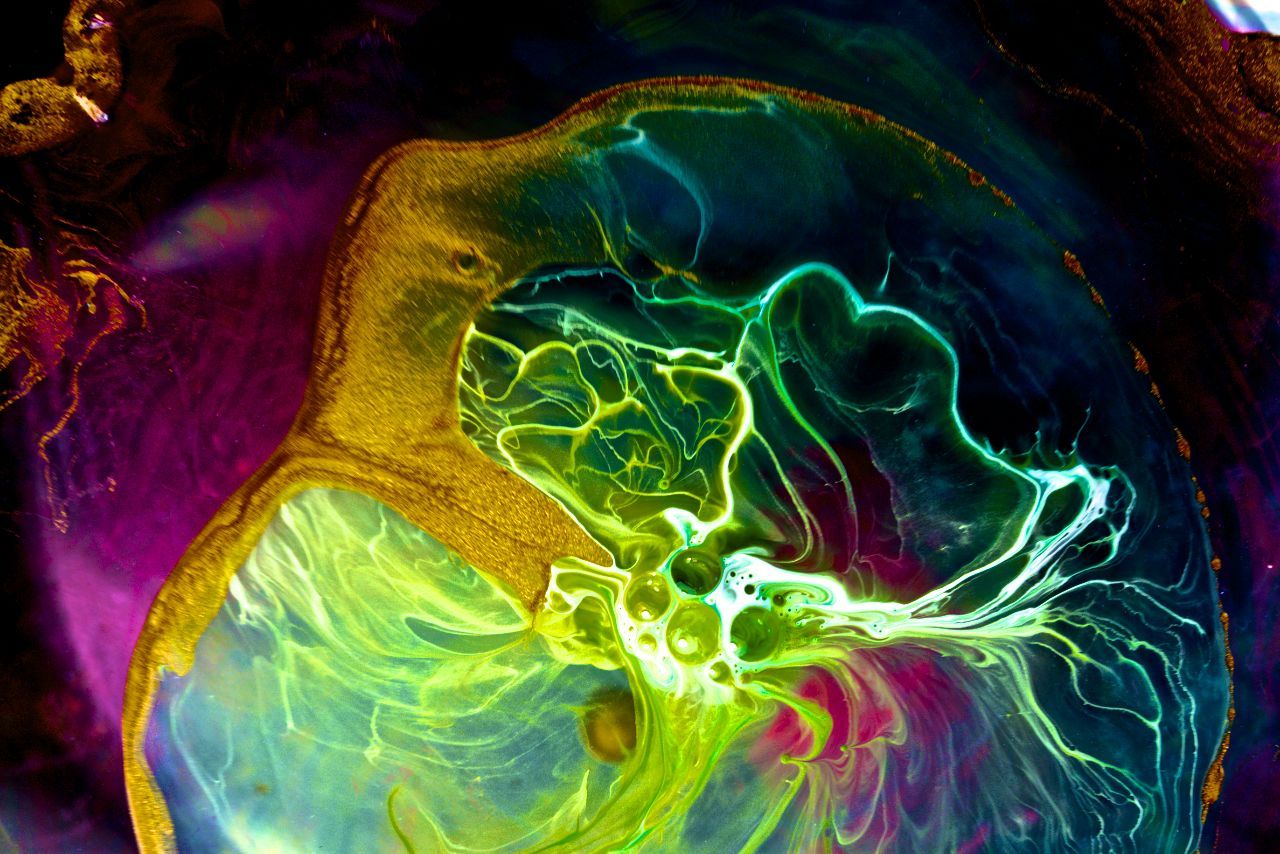
Exeter University artist-in-residence Pery Burge uses ink, water, soap films, and other fluids to create her spectacular “artistic flow visualization”. Looking closely, one sees the influence of bubbles, vortices, diffusion, and many fluid instabilities, all combined to create psychedelic and dream-like landscapes. For more on her work and additional galleries, see her website Chronoscapes. (Photo credit: Pery Burge)