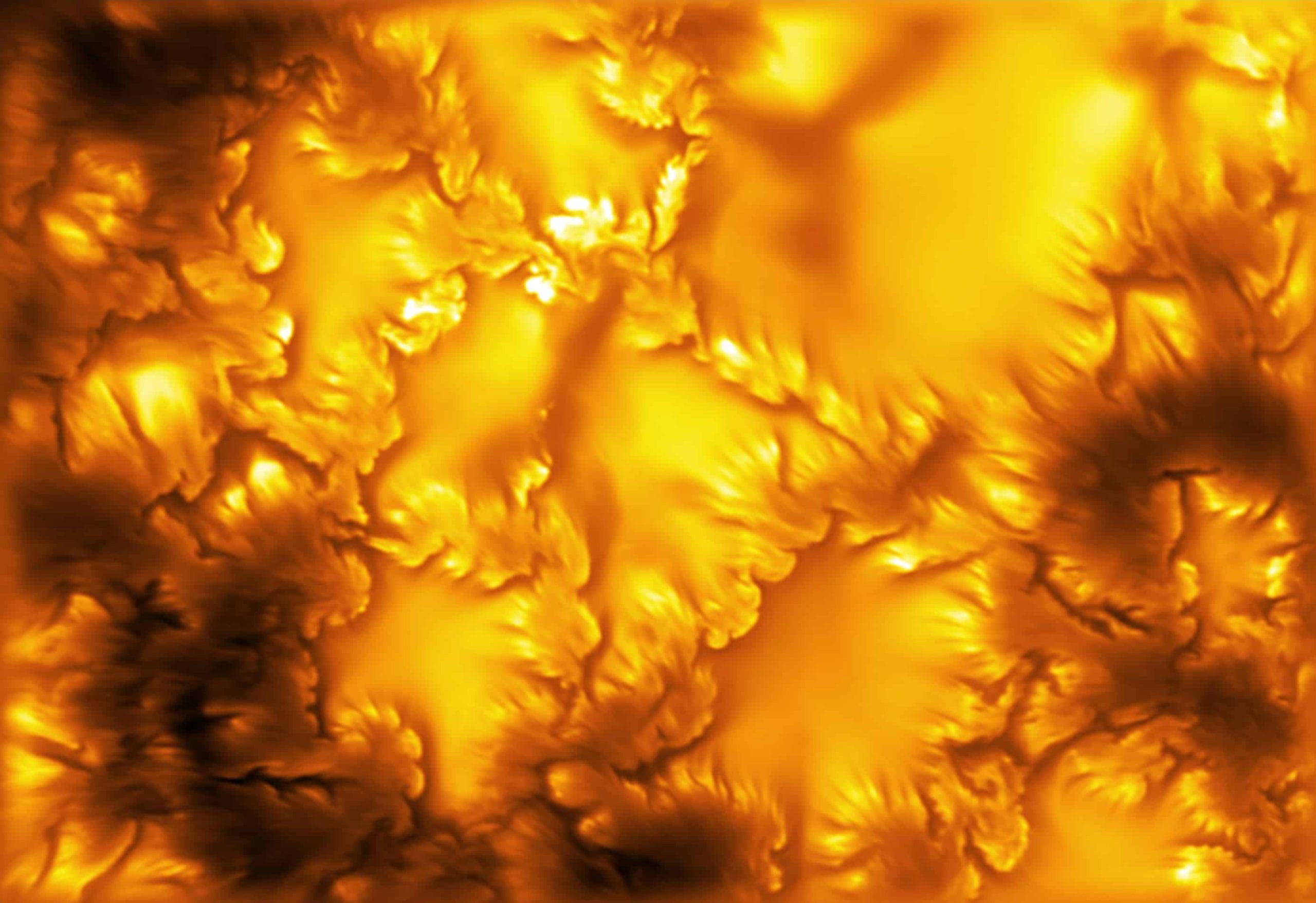
When it comes to how stars like our Sun work, scientists have long relied on theoretical predictions to describe processes we couldn’t observe firsthand. But new images from our most powerful solar telescope have finally revealed a phenomenon that’s long been predicted: Kelvin-Helmholtz waves on the Sun’s photosphere.
Even if the name is unfamiliar, you’re no stranger to Kelvin-Helmholtz waves. They occur where two fluid layers move past one another at different speeds, causing the interface between them to distort and curl into waves. They’re the reason that wind generates waves, whether it’s rippling waves on a lake or giant breaking waves on the ocean.
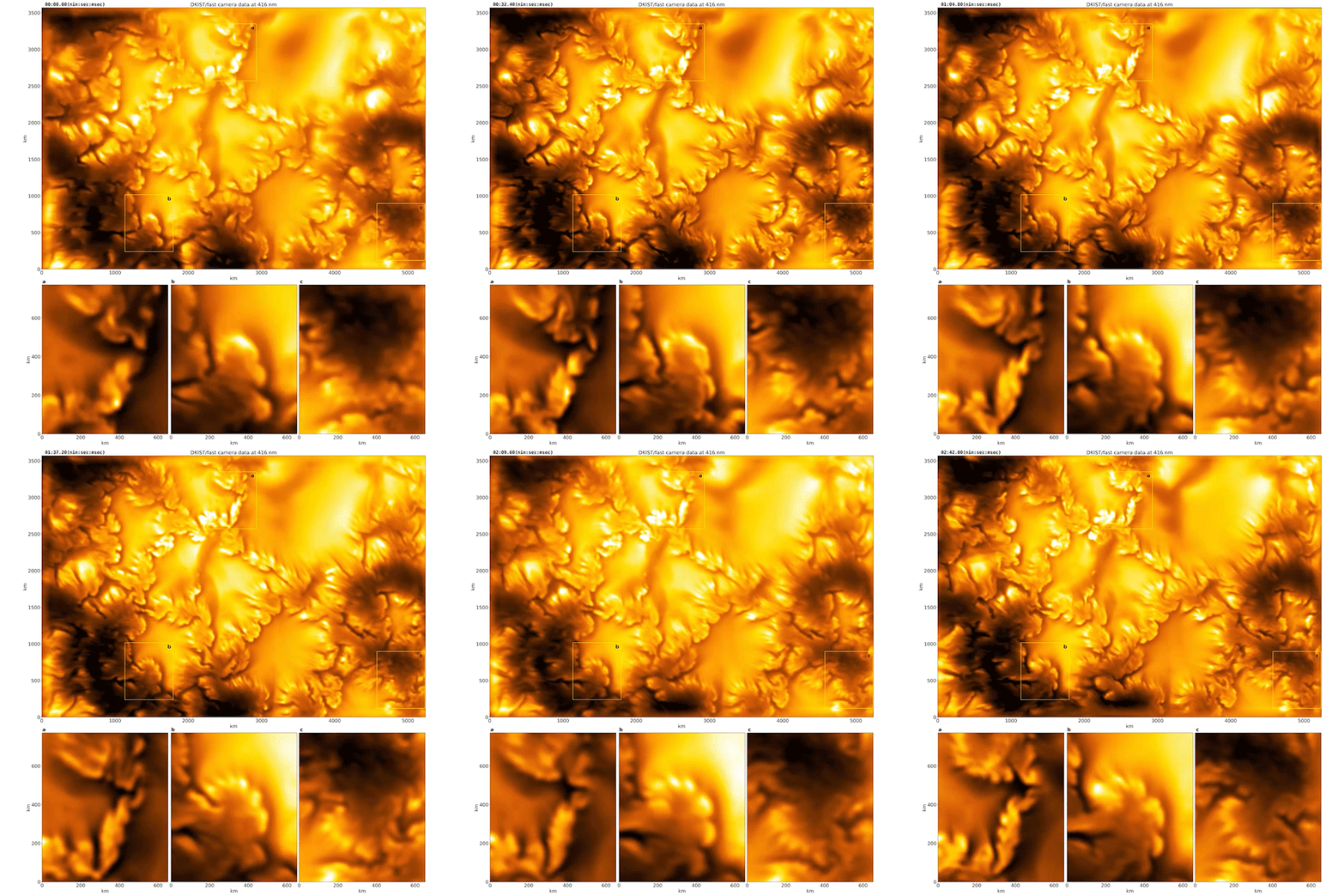
On the Sun, small-scale (roughly city-sized) Kelvin-Helmholtz waves were hypothesized to move magnetized plasma in ways that leads to magnetic lines reconnecting in the violent solar eruptions that drive space weather. Although we saw these waves in numerical simulations, this marks their first actual observation on our star. (Image credit: NSF/NSO/AURA/MPS; research credit: D. Kuridze et al.; via APOD)
Leave a Reply