Search results for: “droplet”

  • Twisting Free

    Twisting Free

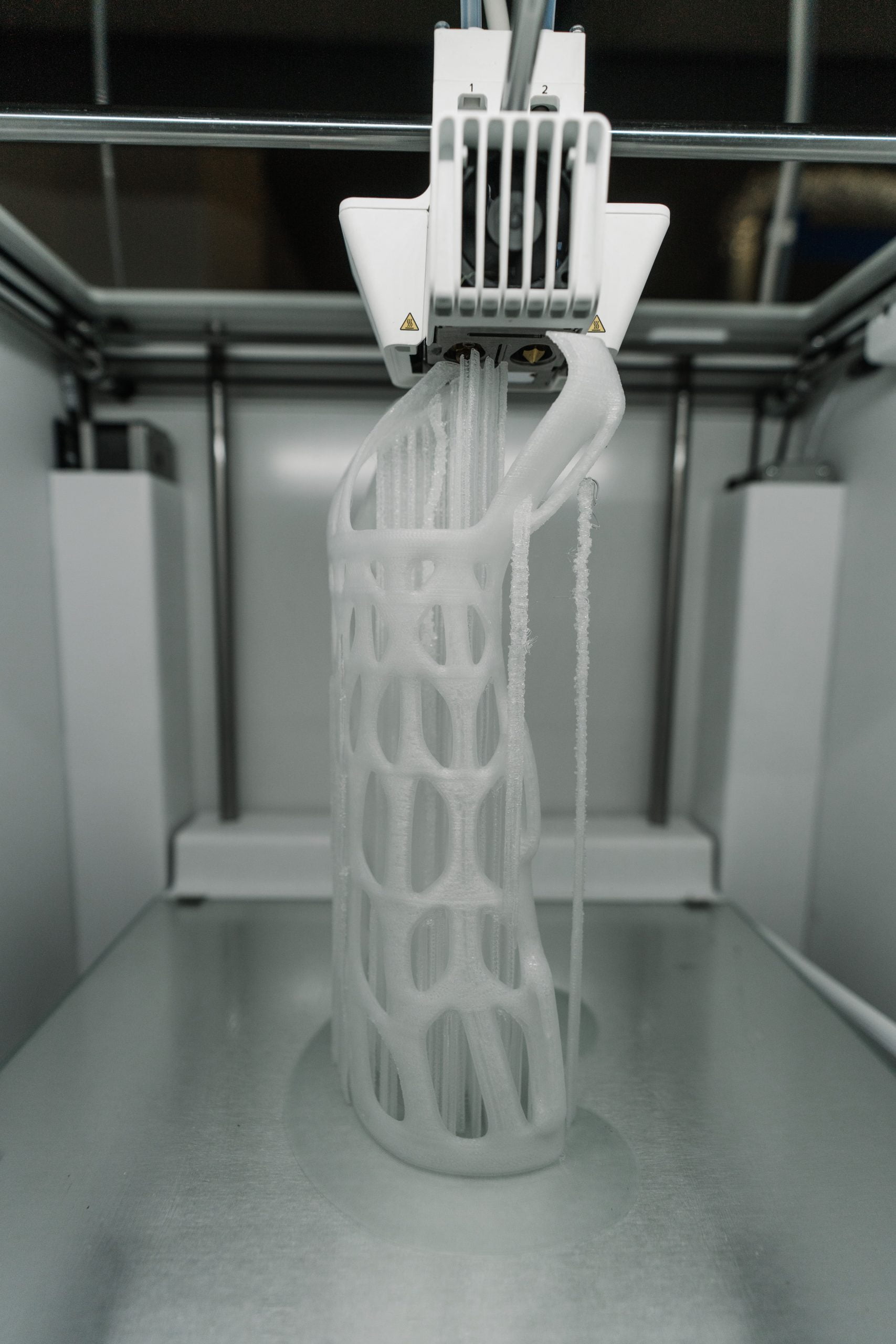
    Anyone who’s dealt with hot glue guns is familiar with the long, thin tails of glue they leave behind. 3D printers suffer from a similar problem with the nozzle pulls away from viscoelastic materials like plastics and polymers. Little tails, like the ones seen above, are left behind on the part and must be cleaned away by hand. The source of the trouble is the elasticity of the fluid. Pulling on these liquids stretches them into long thin strands as the molecules inside the fluid resist. But researchers have found an alternate method to break the liquid cleanly: twisting.

    When a viscoelastic liquid bridge gets twisted, the liquid undergoes what’s known as edge fracture, an elastic effect that creates an indentation that forces its way inward and breaks the bridge’s connection cleanly. Since the technique only requires spinning the 3D printer’s nozzle when detaching, it should be relatively easy for printer manufacturers to implement! (Image credit: 3D-print – T. Claes, illustration – H. Hill/Physics Today, animation – S. Chan et al.; research credit: S. Chan et al.; via Physics Today)

  • Why Creases Don’t Disappear

    Why Creases Don’t Disappear

    Flex your fingers and you’ll see your skin fold into well-defined creases. Many soft solids (including old apples) fold this way, and like your skin, the creases never fully disappear, even when the stress is removed. A recent study finds that surface tension and contact-line-pinning are critical to the irreversibility of these creases.

    The authors studied sticky polymer gel layers under a confocal microscope as the gel folded. In doing so, they found that surface tension dictates the microscopic geometry of a fold, causing the two sides of a surface to touch. They also found that completely unfolding a creased surface requires more energy than folding it in the first place did because the folded surfaces adhere to one another.

    When unfolded, the crease behaves somewhat like a droplet on a rough surface. Such droplets move in fits; their contact line stays pinned to the rough microscopic peaks of the surface until there’s enough energy to overcome that attachment and the contact line jumps to another position. Similarly, a creased surface cannot simply unfold smoothly. Adhesion ensures that part of the crease remains, serving as a starting point for the next fold-unfold cycle. (Image credit: C. Rainer; research credit: M. van Limbeek et al.; via APS Physics; submitted by Kam-Yung Soh)

  • Hydrodynamic Spin Lattices

    Hydrodynamic Spin Lattices

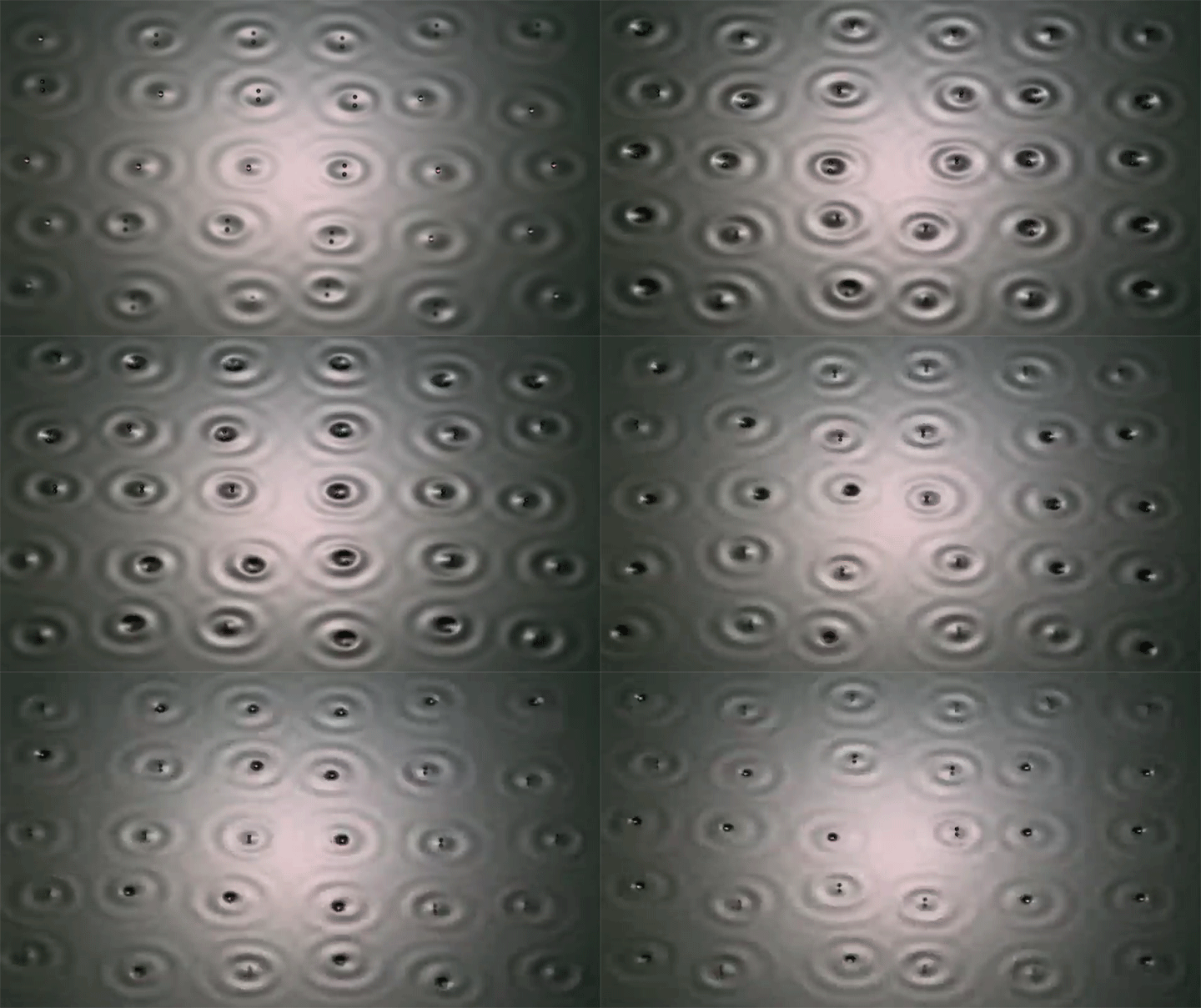
    Droplets bouncing on a fluid bath display some strikingly quantum-like behaviors thanks to the interactions between a drop and its guiding surface wave. Here, researchers use submerged wells beneath the drop to confine each droplet into a space where it bounces in a clockwise or anticlockwise trajectory.

    (a) An illustration of the experimental set-up and (b) top-down image of the spin lattice.

    With an array of these wells, the droplets form a lattice. Each drop remains in its well, but its wave travels beyond and interacts with nearby wells. Through this interaction, the researchers found that lattices tended to synchronize, similar to the way groups of fireflies will synchronize their flashing. This sort of behavior is also observed in quantum systems, and the researchers hope that further studying their bouncing droplets will give insight into quantum spin systems and their behaviors. (Image and research credit: P. Saenz et al.; via Nature; submitted by Kam-Yung Soh)

  • Breaking Up Is(n’t) Hard to Do

    Breaking Up Is(n’t) Hard to Do

    Engineers often need to break a liquid jet up into droplets. To do so quickly, they surround the jet with a ring of fast-moving air in a set-up known as a coaxial jet. Shear between the gas and liquid creates instabilities that quickly distort the jet’s initial cylinder into sheets and ligaments. Those formations then undergo their own instabilities to break up into drops. The method is, as you can see in the high-speed images above, quite effective, though the breakup mechanism itself is tough to quantify. (Image credit: G. Ricard et al.)

  • Microjets and Needle-Free Injection

    Microjets and Needle-Free Injection

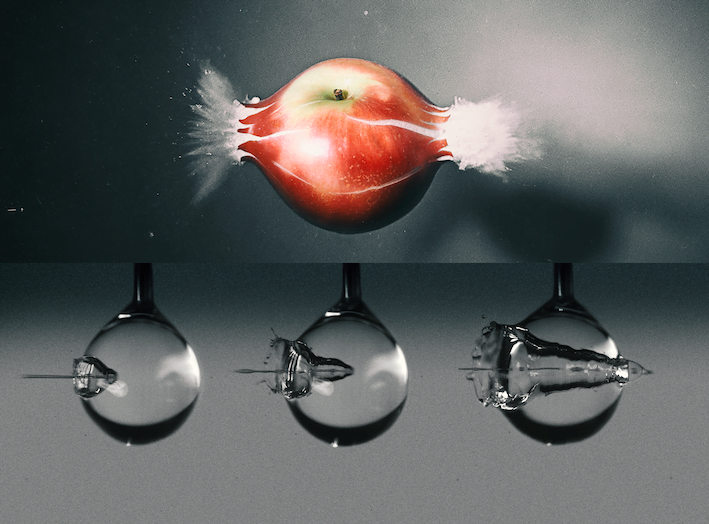
    Some people don’t mind needles, and others absolutely detest them. But to replace needles with needle-free injections, we have to understand how high-speed microjets pass through skin. Given skin’s opacity, that’s tough, so researchers are instead using droplets as a model. If we can understand the dynamics of a microjet passing through different kinds of droplets, getting jets of medicine into arms becomes easier.

    Researchers found that jets passed completely through a droplet if they impacted above a critical velocity. For Newtonian droplets, the jet creates a cavity and shoots straight through because the inertia of the impact outweighs the countering force of surface tension. But with viscoelastic drops, the jet goes through, slows down, and gets sucked back into the droplet. In this case, the combination of surface tension and viscoelasticity can, eventually, overpower the jet’s inertia. (Image, research, and submission credit: M. Quetzeri-Santiago et al.)

  • Leidenfrost Without the Heat

    Leidenfrost Without the Heat

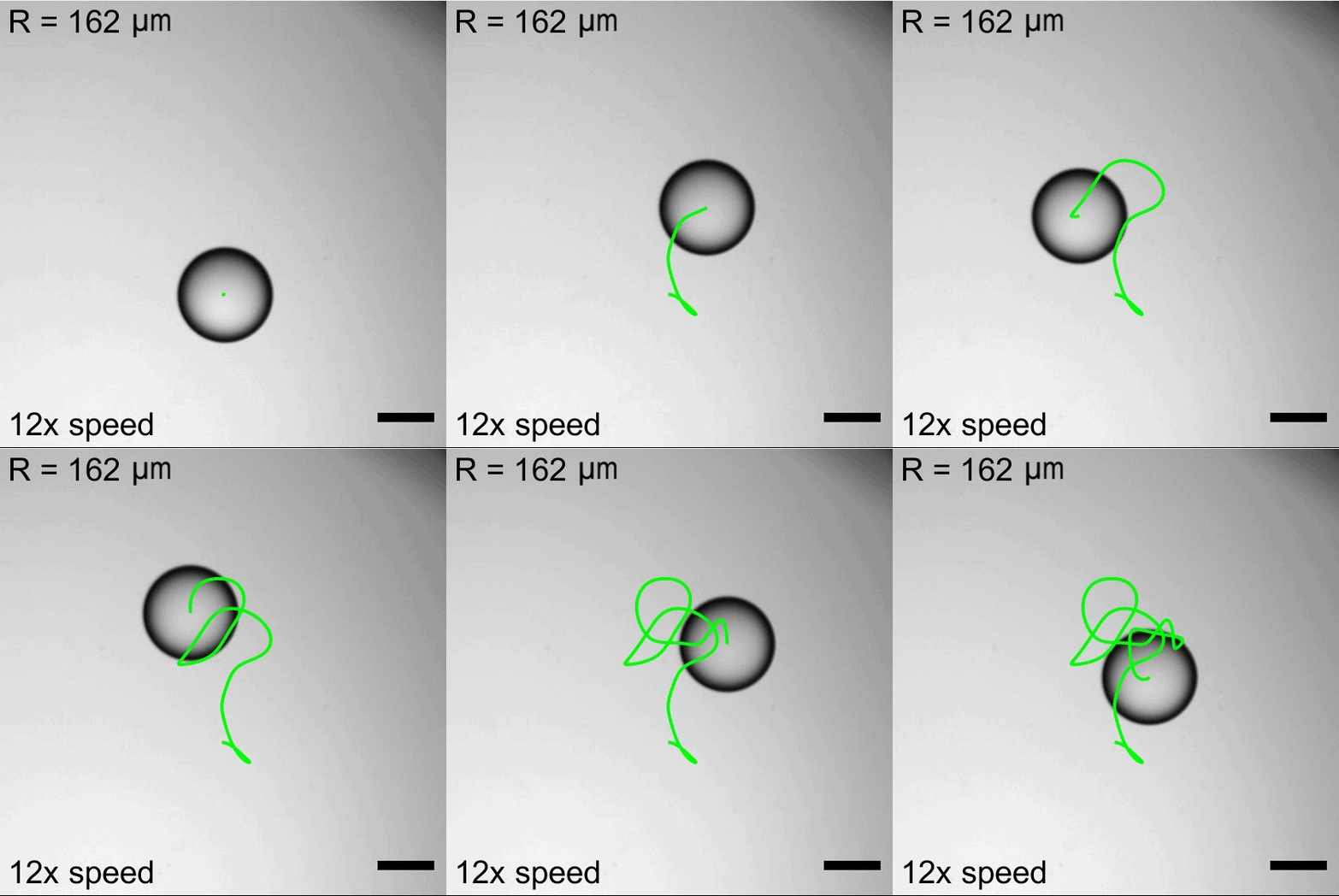
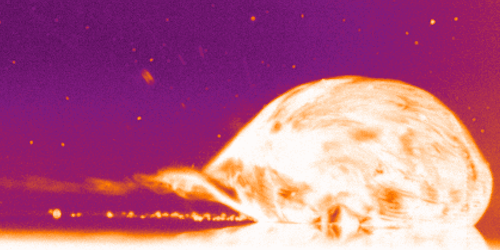
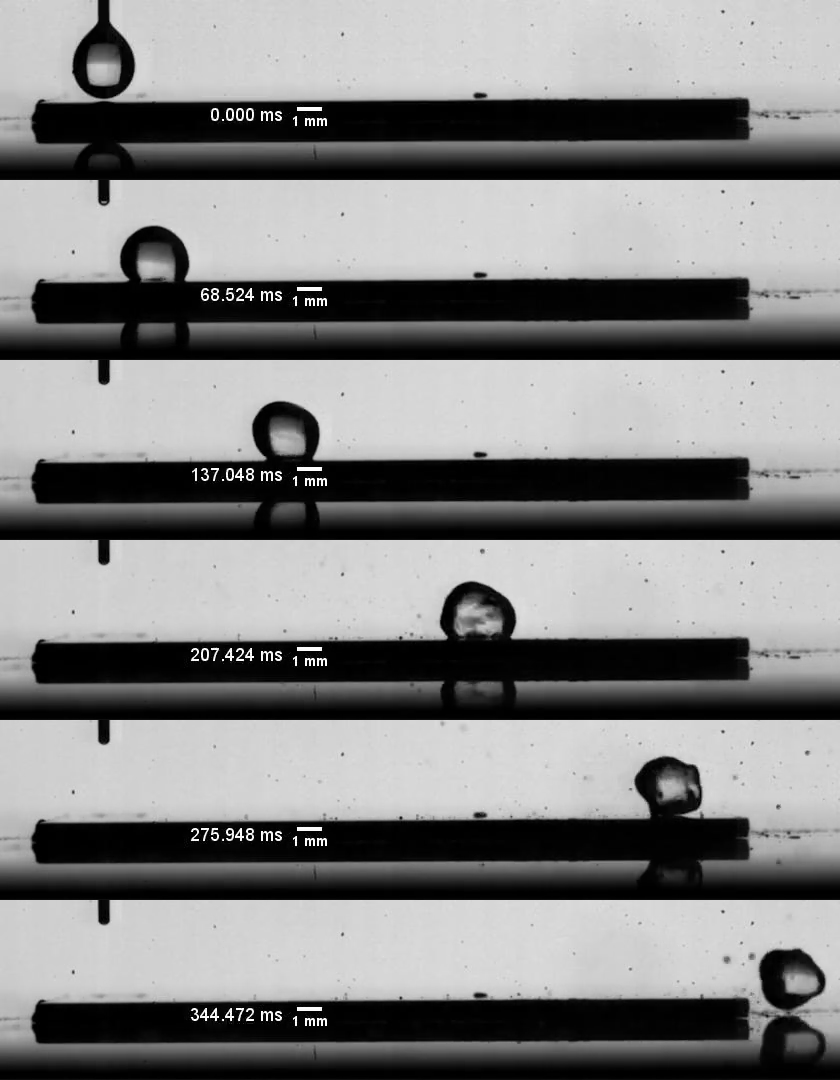
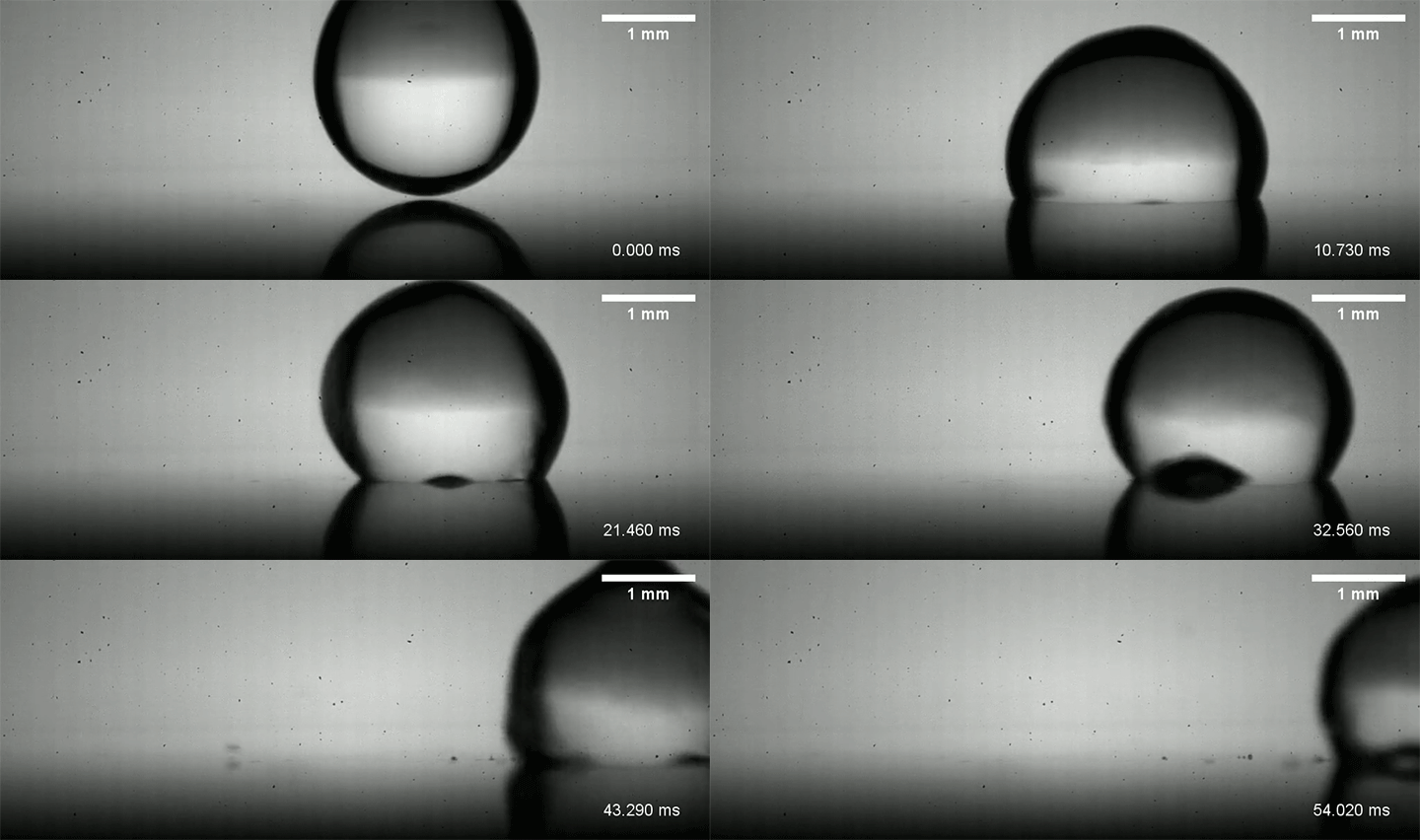
    Leidenfrost drops slide almost frictionlessly on a layer of their own vapor, generated by extremely hot surfaces nearby. But in this experiment researchers recreated many of the classic behaviors of a levitating Leidenfrost drop without the added heat. Instead, they supersaturated water droplets with carbon dioxide to create “fizzy droplets” that slide and self-propel along superhydrophobic surfaces.

    Initially, the drops don’t levitate. It takes a little while for the carbon dioxide layer to build up beneath them, as seen by the slowly appearing interference fringes in the second image. But once the layer forms, the drops behave like conventional Leidenfrost drops until their carbon dioxide is depleted. They’re even able to self-propel on a racheted surface (third image)! (Image and research credit: D. Panchanathan et al.; via Physics World; submitted by Kam-Yung Soh)

  • Featured Video Play Icon

    Shattering With Resonance

    Resonance is a phenomenon that is both familiar and somewhat mysterious. It takes place when a system is excited near its natural frequency. In this case, we’re seeing a mechanical resonance that’s driven by sound waves near the glass’s natural frequency. Once excited, the glass vibrates by flexing side-to-side along one axis and then again in a perpendicular direction. Eventually, the amplitude of this flexing is large enough to break the glass. When the glass is filled with water, its flexing instead generates a cloud of tiny droplets in a process known as vibration-induced atomization. The inverse problem — an empty glass resonating within a pool of liquid — is also an extremely cool problem. (Image and video credit: The Slow Mo Guys)

  • Featured Video Play Icon

    “Starlit”

    In “Starlit” filmmaker Roman De Giuli explores a universe in a fish tank. The planets and asteroids we see are droplets of paint and ink floating in a transparent, gel-like medium. I particularly like the sequences where paint stretches, beads up, and breaks into a string of droplets! (Image and video credit: R. De Giuli)

  • Dripping With Particles

    Dripping With Particles

    Adding just a little polymer to a fluid can make it viscoelastic and drastically change how it drips. A pure, viscoelastic fluid (left) necks down to a thin filament thanks to the polymers’ resistance to being stretched. But what happens when you add particles, too?

    That’s the focus of this recent study, which adds particles of different sizes to dripping viscoelastic fluids. The researchers found that particles sped up how quickly the filament thinned and formed bead-like droplets. And larger particles (right) made the process even faster than small ones (middle), in experiments where the overall volume fraction of particles within the fluid matched. (Image and research credit: V. Thiévenaz and A. Sauret)

  • Falling Beads

    Falling Beads

    Liquids flowing down a fiber can form bead-like droplets that may sit symmetrically (a) or asymmetrically (b) on the fiber. In general, the asymmetric droplets appear as surface tension increases or as the fiber diameter increases. The pattern of the droplets changes with flow rate. Within each subfigure, the flow rate increases from left to right. At low flow rates, we see only one or two large droplets migrating down the fiber. At moderate flow rates, a regular pattern of drops emerges. And at high flow rates, droplets coalesce on the fiber to form drops large enough that they fall and sweep up the downstream droplets. (Image and research credit: C. Gabbard and J. Bostwick)